分类: sports

  • Colombia wins Group K after 0-0 draw with Portugal; both squads already into World Cup knockouts

    Colombia wins Group K after 0-0 draw with Portugal; both squads already into World Cup knockouts

    MIAMI GARDENS, Florida – The final match of Group K play at the expanded 48-team World Cup delivered a tense, action-packed stalemate Saturday night, with Colombia securing first place in the group following a 0-0 draw against Portugal at Hard Rock Stadium, the home of the NFL’s Miami Dolphins.

    Both nations had already locked their places in the tournament’s knockout round heading into the final group fixture, with the result only serving to set their next opponents in the knockout bracket. Colombia, who missed out on qualification for the 2022 Qatar World Cup, will face Ghana in the round of 16, while Portugal, one of the pre-tournament favorites to lift the trophy, will go up against Croatia. Ghana dropped a 2-1 defeat to Croatia earlier the same day.

    Despite the fact that knockout progression was already guaranteed for both sides, neither team took the match lightly, producing a lively, competitive 90 minutes of play. In the first half, Portugal playmaker Bruno Fernandes nearly broke the deadlock to put his side ahead, but a standout save from Colombian goalkeeper Camilo Vargas kept the sheet clean. At the opposite end of the pitch, Portuguese keeper Diogo Costa turned in an exceptional performance, notching six saves – more than he recorded in Portugal’s first two group matches combined. Just one minute into second-half stoppage time, Colombian defender Davinson Sanchez thought he had snatched a late winning goal with a header at the back post, but the offside flag negated the effort, leaving the scoreline level at full time.

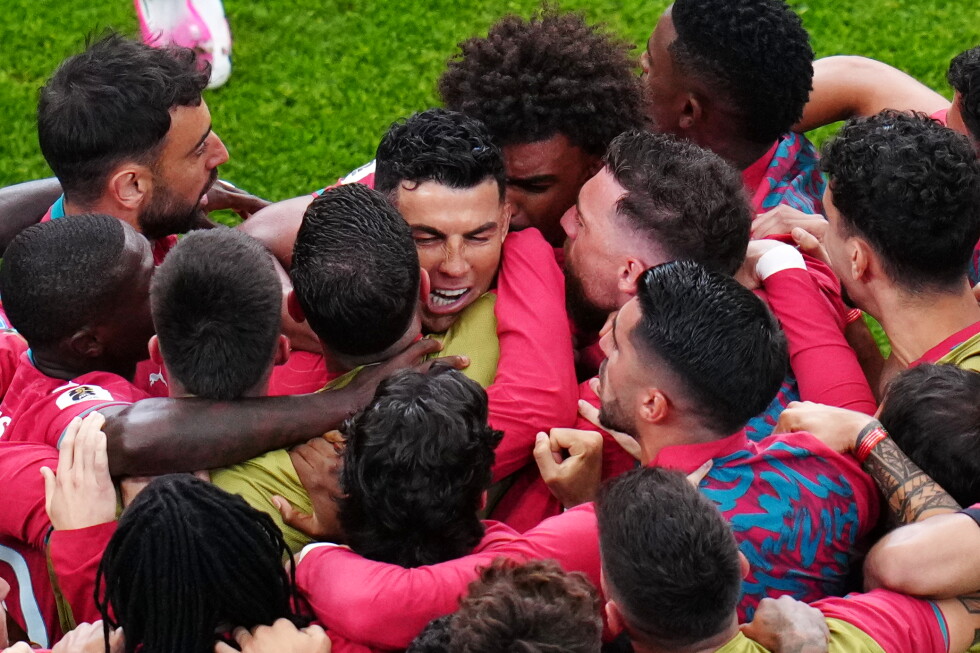
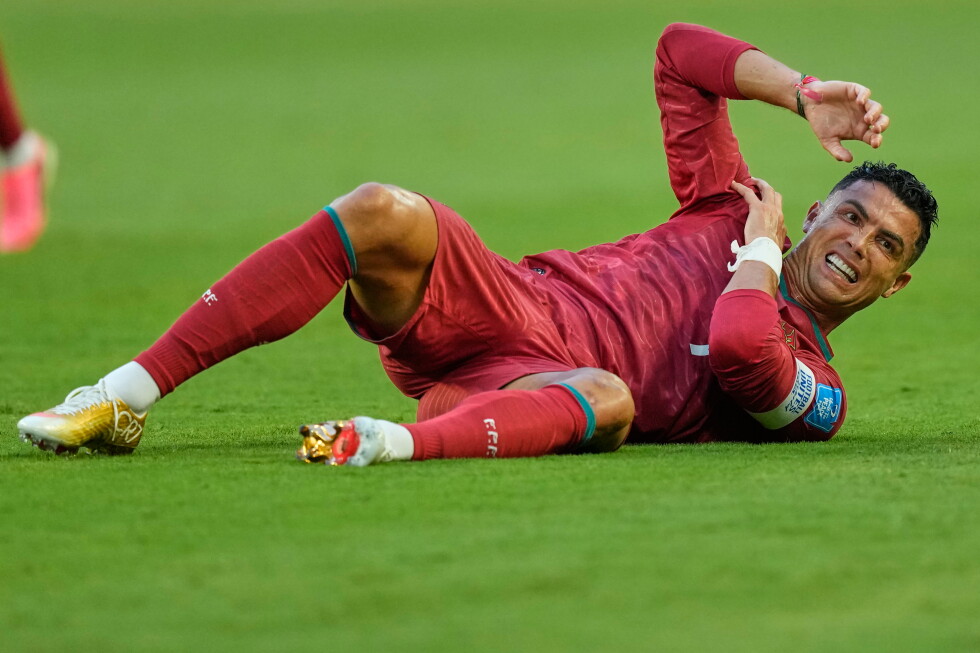
    For Portugal, the result capped off an uneven group stage for Cristiano Ronaldo’s side, who entered the tournament chasing their first-ever World Cup title. Portugal opened group play with an unexpected 1-1 draw against Congo, drawing criticism to Ronaldo after he failed to find the back of the net in that fixture. He responded emphatically in the second match, becoming the first player in history to score at six consecutive World Cup tournaments, notching two goals in a dominant 5-0 rout of Uzbekistan.

    Colombia’s road to the top of Group K followed a strong run of form in their opening two fixtures: they opened with a 3-1 win over Uzbekistan, then secured a 1-0 victory over Congo to lock in their knockout spot early.

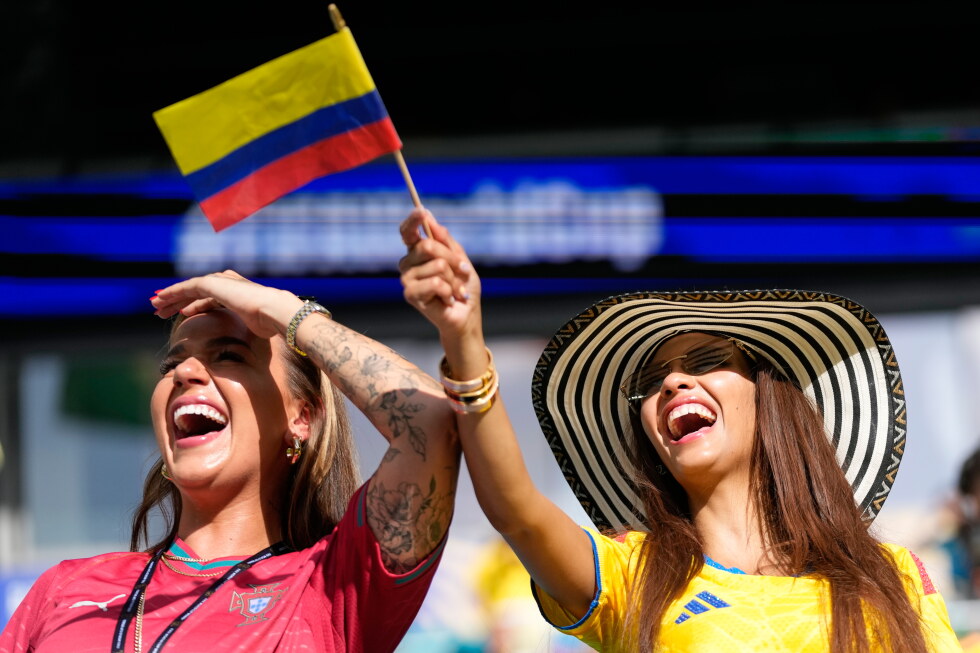
    Saturday’s high-profile clash drew a sold-out crowd of 64,478 fans to Hard Rock Stadium, with a star-studded guest list in attendance. Notable spectators included legendary former Colombian playmaker Carlos Valderrama, FIFA President Gianni Infantino (who watched from a private suite alongside FBI Director Kash Patel and U.S. Secretary of State Marco Rubio), NFL quarterback Jameis Winston, Miami Heat NBA star Jimmy Butler, Hollywood actor Matt Damon, and former NFL wide receiver Chad Johnson. Demand for tickets was so high that local organizers hosted multiple public watch parties across South Florida for fans unable to secure entry to the stadium, including one gathering that drew thousands of attendees at the BB&T Center, home arena of the NHL’s Florida Panthers.

  • Messi is out of the starting lineup but could play in Argentina’s group finale against Jordan

    Messi is out of the starting lineup but could play in Argentina’s group finale against Jordan

    ARLINGTON, Texas — With Group J’s top spot already locked in and Jordan eliminated from knockout round contention, Lionel Messi was predictably left out of Argentina’s starting 11 for their final group stage matchup at AT&T Stadium on Saturday night. The international soccer icon, who celebrated his 39th birthday just three days prior, may still see action off the bench, per head coach Lionel Scaloni.

    The match brings a major rotation for Argentina, with nine fresh starters taking the field compared to the squad’s 2-0 win over Austria earlier in the group stage. Among the new starting players is Nicolás Paz, who made his World Cup debut as a late substitute for Messi in Argentina’s opening 3-0 victory against Algeria.

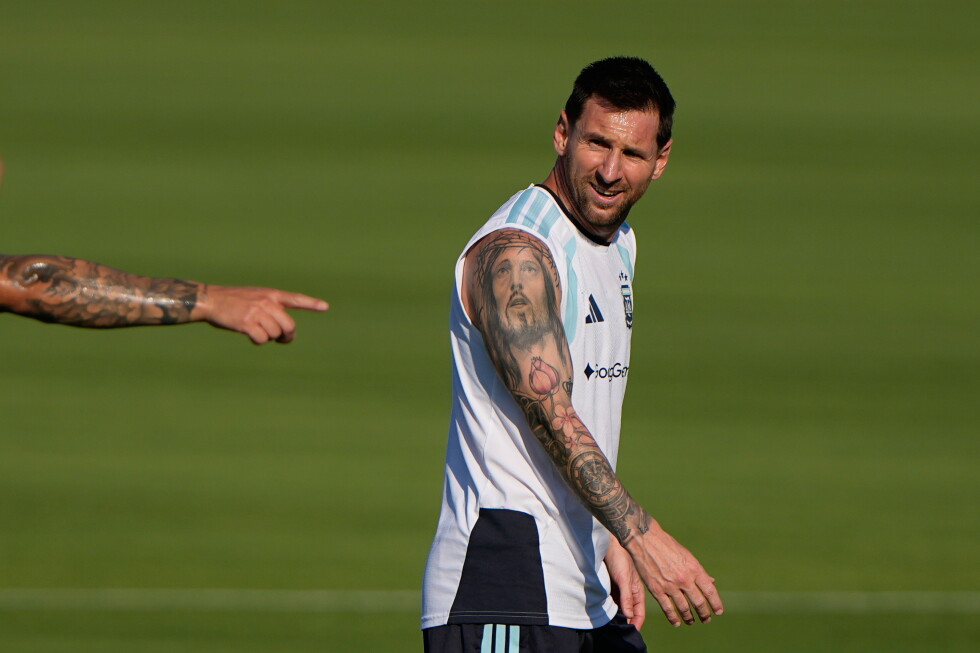
    This tournament has already cemented Messi’s place as one of the greatest World Cup players in history. Entering the final group match, the Argentine captain holds the tournament’s leading goal tally with five strikes, all of Argentina’s goals so far. He notched his first-ever World Cup hat trick against Algeria, then bagged his fifth goal of the competition in late stoppage time against Austria.

    That fifth goal against Austria pushed Messi’s all-time World Cup goal total to 18, breaking the previous record of 16 that he had shared with Germany’s legendary striker Miroslav Klose. This marks Messi’s sixth World Cup appearance, having first competed in the tournament more than two decades ago. Klose, who played in four World Cups between 2002 and 2014, scored his record-breaking final goal against Argentina in the 2014 World Cup final, handing Germany a 1-0 win over Messi’s side.

    Messi’s historic run also includes a six-game consecutive World Cup goal scoring streak, a feat only achieved by two other players in men’s World Cup history: France’s Just Fontaine and Brazil’s iconic Jairzinho. Across his entire international career, Messi has now earned 201 caps for Argentina, 28 of which have come at the World Cup — a new FIFA record for men’s tournament appearances.

    Just hours after Messi broke Klose’s all-time scoring record, France’s star striker Kylian Mbappé matched the old benchmark of 16 goals with a brace in France’s 3-0 win over Iraq. Mbappé currently sits second in this tournament’s goal rankings with four goals, one behind Messi, and did not add to his tally in France’s final group match against Norway, which ended in a 4-1 French win.

    As Group J’s winners, Argentina will advance to the round of 32, where they will face Cape Verde, a tiny island nation making its first ever World Cup qualifying appearance. The knockout round match is scheduled to take place next Friday in Miami, the home city of Messi’s current MLS club Inter Miami.

  • Colombia-Portugal World Cup match draws sky-high ticket prices, some fans make financial sacrifices

    Colombia-Portugal World Cup match draws sky-high ticket prices, some fans make financial sacrifices

    MIAMI GARDENS, Florida — When the 2026 FIFA World Cup group stage draw locked in a matchup between Colombia and Portugal at Miami’s Hard Rock Stadium, football fans across the globe immediately marked the contest as a can’t-miss event. Few understood just how high demand would climb, not even Portugal’s head coach Roberto Martínez, who secured his family’s seats months in advance, long before most fans even tried to purchase entry. What makes Martínez’s story stand out? As the Portuguese national team manager, he had one of the easiest paths to a ticket — a privilege nearly no other fan in the sold-out crowd of 64,000 could claim.

    By kickoff on Saturday, the scale of fan demand had sent resale market prices soaring to unprecedented levels for a group-stage World Cup match. Early Saturday, the cheapest available entry hovered around $3,500 per seat, and data from major ticketing platform StubHub showed prices ranging from $2,676 to more than $22,000 on the day before the match. Even with those exorbitant costs, nearly every attendee interviewed said the experience was well worth the investment, with many traveling thousands of miles and saving for months just to be in the stands.

    For many fans, the draw of the match came down to one historic factor: this could be one of the final World Cup appearances of Portuguese football legend Cristiano Ronaldo, who at 41 continues to compete at the highest level of international football. Pablo Ceballos, a 40-year-old Mexico native and lifelong Ronaldo supporter, dropped $3,000 on a single ticket for his first ever World Cup match, calling the opportunity a decades-long dream. “I am old — 40 — and this is the last time I will get to see Cristiano,” Ceballos said. “I cried when I stepped in the stadium. Forty years for this, that’s why I paid that.”

    Brothers Juan and Felipe Ramirez, Colombian expats living in Europe, made a multi-day trip to Miami specifically for the match, paying $2,400 per ticket. They framed the expense as an investment in a once-in-a-lifetime experience they would never get again. For lifelong Colombian supporter Gustova Borda and his wife, the match carried extra personal meaning: Miami is the city where she received breast cancer treatment two years prior, making the trip to watch their national team a meaningful celebration of her recovery. The pair paid $8,300 total for their two tickets, and Borda said every dollar was worth it.

    Even fans who paid lower prices described getting a deal worth celebrating. Colombian supporter Gina Barrios paid $1,500 per ticket through a family friend, a price she called a bargain compared to public resale rates. “This is my country … so I was very excited to see them here again,” she said.

    Martínez, who got to watch the match from the sidelines rather than the stands, said the outpouring of passion from fans of both nations reinforced the unifying power of global football at a time of widespread uncertainty around the world. “I think it’s fascinating, the passion of the game in a difficult moment in the world,” Martínez said. “Football still brings unity, it brings passion, it brings inspiration for the kids, all the values that you want to see in a human being. It makes me extremely proud.”

    FIFA confirmed that this matchup was one of the most sought-after group-stage matches in the entire tournament during initial ticket sales, cementing its status as a must-see event even before the first ball was kicked.

  • One Extraordinary Photo: Capturing the physicality of the Spain-Uruguay match

    One Extraordinary Photo: Capturing the physicality of the Spain-Uruguay match

    GUADALAJARA, Mexico — For Ricardo Mazalan, the Associated Press’ deputy director of storytelling and photography for Latin America, FIFA World Cup coverage is nothing new. The seasoned photojournalist has documented every iteration of the world’s biggest soccer tournament since the 1998 competition hosted by France, and he has also brought his lens to multiple Olympic Games across his decades-long career.

    In a behind-the-scenes reflection, Mazalan opened up about the creative process and narrative power of one standout photograph he captured during a recent World Cup group stage encounter between two historic champions, Spain and Uruguay.

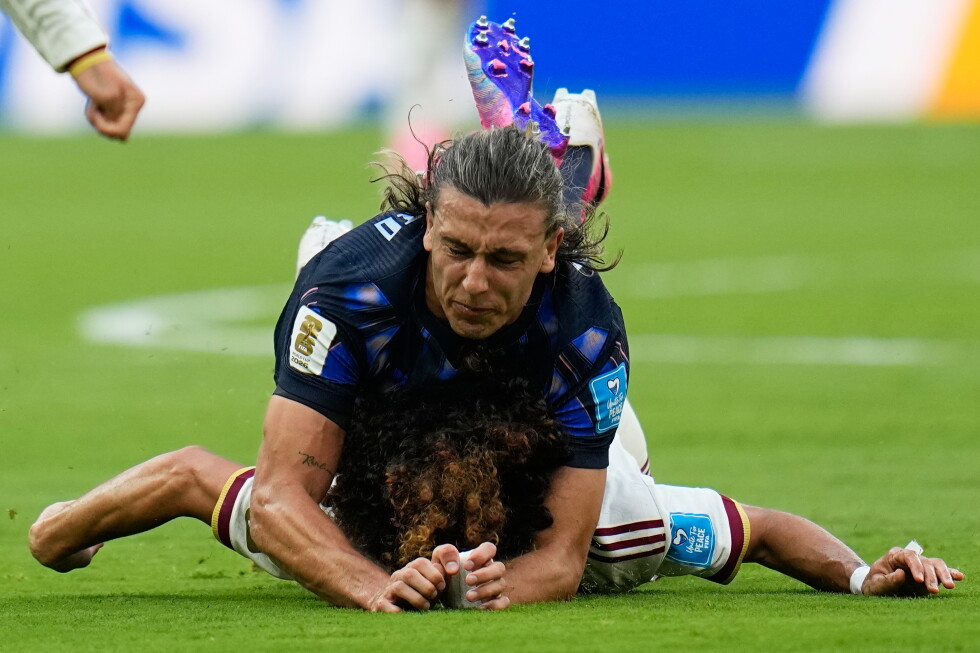
    This matchup carried unique stakes: it was the only opening-round game that pitted two prior World Cup winners against one another, making it one of the most highly anticipated fixtures of the tournament’s early slate. With Uruguay’s hopes of advancing to the knockout stage hanging in the balance, Mazalan went into the match expecting a tightly contested, physically grueling battle. He set out not just to capture generic on-pitch action, but to create images that distilled the raw emotion and unforgiving physicality that defined the high-stakes contest. The moment he landed on — a hard challenge for the ball between Uruguay’s Agustin Canobbio and Spain’s Marc Cucurella — perfectly encapsulated just how intense the 90 minutes would become.

    Mazalan emphasizes that the final, powerful image was not a product of his work alone. One of the greatest advantages of covering global elite sporting events for a major news agency is the opportunity to collaborate with seasoned, respected editors who shape work into its strongest form. For photographers, there is always a quiet thrill mixed with anticipation when a veteran photo editor or top agency photographer reviews your shots. That excitement becomes even more rewarding when an editor immediately sees the same narrative in a frame that the photographer spotted through the viewfinder. For Mazalan, the partnership between photographer and editor has always mirrored a tango: one partner feels the moment in real time, the other identifies and interprets that energy, and together they craft a story neither could create independently.

    So what makes this particular image resonate more than countless other match snapshots? It succeeds because it captures far more than a routine tackle — it captures the entire soul of the match. Early in the first half, as Canobbio and Cucurella collided and fell to the turf, Mazalan knew the moment summed up the entire contest that was unfolding. What was supposed to be a showcase of fluid attacking soccer devolved into a gritty, physical battle, and by the final whistle, the outcome matched that scrappy energy: Uruguay had been eliminated from the tournament, and Canobbio had been shown a red card and ejected from the match. Mazalan notes that iconic sports photography rarely hinges on capturing the winning goal or a game-saving stop. More often than not, one quiet, visceral moment can reveal the full unwritten story of a match long before the final whistle blows.

  • Ronaldo, Portugal set to learn Round of 32 matchup in World Cup

    Ronaldo, Portugal set to learn Round of 32 matchup in World Cup

    MIAMI GARDENS, Florida — Under scorching 38-degree Celsius heat that has gripped south Florida this weekend, global football icon Cristiano Ronaldo led his Portuguese national team into their final Group K World Cup showdown against Colombia, with the side already guaranteed a spot in the tournament’s Round of 32 ahead of kickoff Saturday.

    Despite the oppressive near-100-degree Fahrenheit temperatures that had many locals and fans seeking shade, Ronaldo cut a composed figure as he made his way from the team bus to the stadium’s player entrance. Dressed in a combination of a light outer jacket, a casual tee and athletic shorts, the five-time Ballon d’Or winner took a moment to acknowledge waiting supporters along his route, offering a cheerful thumbs-up to the small crowd gathered to catch a glimpse of the star.

    The match carries high stakes for the group’s final standings: a Portuguese victory would see Jorge Santos’ side claim the top position in Group K, while any result other than a win hands the group lead to Colombia. As widely anticipated by football pundits and fans alike, Ronaldo was named in Portugal’s starting XI for the decider, bringing his years of big-match experience to the critical encounter.

    Heading into Saturday’s fixture, Ronaldo has already cemented his place in World Cup history, with two strikes in this year’s tournament pushing his all-time men’s World Cup goal tally to 10 across six tournament appearances. He remains the only male player in the history of the competition to find the back of the net in six separate World Cup editions, a record that highlights his unprecedented longevity and consistency at the sport’s biggest stage.

    Beyond group standings, the outcome of the match carries extra narrative weight for the tournament. If Portugal emerges victorious, they will land in the same half of the Round of 32 draw as Lionel Messi’s Argentina. That alignment would open the door for a dream quarterfinal showdown between two of the greatest players in football history on July 11, a matchup that has been anticipated by football fans across the globe for years.

  • England end New Zealand’s reign of Women’s T20 World Cup and Ireland finally win

    England end New Zealand’s reign of Women’s T20 World Cup and Ireland finally win

    The 2024 Women’s Twenty20 World Cup delivered a dramatic day of group-stage cricket at London’s iconic Oval and Bristol’s County Ground on Saturday, as defending champion New Zealand saw their title defense end in a nine-wicket defeat to host England, while Ireland pulled off two historic upsets to end a 12-year winning drought.

    Heading into the final round of group matches, New Zealand’s path to the semifinal was already a long shot: the White Ferns had dropped three of their previous five matches, and only stayed in contention when Ireland defeated the West Indies by six wickets earlier the same day. That result set up a do-or-die clash between New Zealand and England, with the winner claiming the group’s second semifinal spot behind the already-qualified hosts.

    New Zealand won the toss and opted to bat first, getting off to a promising start with a 70-run opening partnership between Isabella Gaze and Melie Kerr. But a sudden mid-innings collapse turned the tide: Gaze, Kerr and Izzy Sharp were all dismissed in the space of just four deliveries. A 74-run stand between Brooke Halliday and Sophie Devine steadied the innings, only for both batters to be out in the same over just a few overs later. Late hitting from Maddy Green and Suzie Bates pushed New Zealand to a final total of 163 for six, a score that ultimately proved too small to defend.

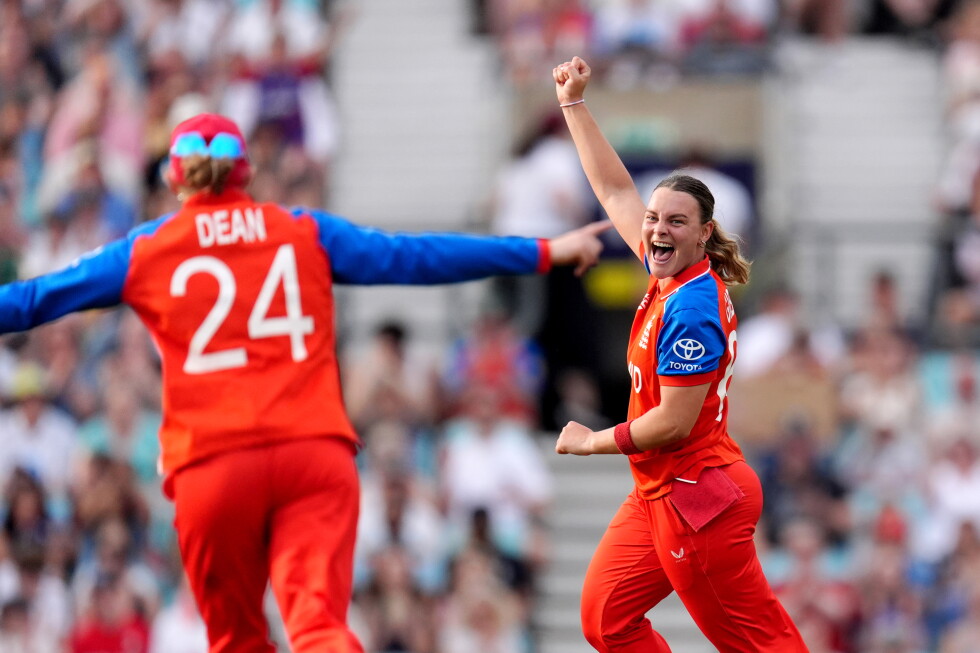
    England’s chase got a lucky break early, when Danni Wyatt-Hodge was dropped behind the stumps before she had scored, then missed a stumping opportunity when she was on 13. She made New Zealand pay dearly for those mistakes, bludgeoning an unbeaten 89 off just 53 balls, decorated with 15 fours and one six. Wyatt-Hodge shared an unbroken 128-run opening partnership with stand-in Sophia Dunkley, who contributed 49 not out off 38 balls, filling in for injured England captain Nat Sciver-Brunt. England reached the target of 164 for the loss of just one wicket with 16 full overs balls to spare, in front of a crowd of 21,018 spectators — a new tournament record for attendance at a group-stage match.

    With the win, Wyatt-Hodge also cemented her place in T20 World Cup history: she now sits atop the tournament’s run-scoring rankings with 282 runs, breaking the previous record of 259 runs set by Australia’s Beth Mooney at the 2020 edition, with potentially two more matches still to play. Speaking after the match, Wyatt-Hodge paid tribute to the Oval pitch and her batting partner, saying: “I knew it was a beauty of a pitch, and I loved batting out there with Dunks.”

    For New Zealand, the defeat marked the end of an era: star veterans Sophie Devine, Suzie Bates, and bowler Lea Tahuhu, who have accumulated a combined 900 international appearances for the White Ferns, played their final matches in a New Zealand uniform. England honored their careers with a traditional guard of honour as they walked off the field for the final time.

    Ireland’s victory over the West Indies earlier in the day was equally historic, ending a 12-year, 21-match losing streak across five T20 World Cup tournaments for the Irish women. It also marked a landmark 24 hours for Irish cricket, coming just one day after the Irish men’s team secured their first ever T20 win over India in Belfast.

    Batting first, the West Indies struggled to find momentum on a slow, tricky pitch in Bristol, finishing their 20 overs at 128 for seven. Irish spinners Cara Murray and Aimee Maguire kept the West Indies batters pinned down, with only captain Hayley Matthews (22), Deandra Dottin (21), and a late quickfire 27 not out from Chinelle Henry reaching double figures. Three dropped catches by Irish fielders did gift the West Indies three unnecessary boundaries, but the total remained within reach for the Irish side.

    Orla Prendergast led Ireland’s chase, anchoring the innings with an aggressive 63 off 44 balls that included her second fifty of the tournament. She survived an early lbw dismissal after a successful review, and shared a 62-run partnership with opener Amy Hunter before being caught in the 16th over, just 21 runs short of the target. Lower-order batters Rebecca Stokell and Louise Little finished the job, with Little hitting the winning boundary to seal a six-wicket win with 11 balls remaining. A visibly relieved Prendergast said after the match: “We have had the belief throughout but it had not come together just yet. Just so much relief to have that win and so much happiness.”

    In the final match of the day in Bristol, Pakistan picked up their first win of the tournament, beating debutant Netherlands by 37 runs in a clash between two previously winless sides. The Dutch had high hopes for their first ever World Cup win, and restricted Pakistan to 126 for six after a strong bowling performance, led by Iris Zwilling, Heather Siegers and Hannah Landheer. Only opener Gull Feroza prevented an even lower total: dropped on 10, she made the most of her second chance to carry her bat through the innings, scoring an unbeaten 52-ball 63 — her first T20 World Cup half-century — and shared a 79-run stand with Ayesha Zafar (32).

    Pakistan’s bowlers responded with a dominant performance, dismissing the Netherlands for just 89 runs in 18 overs. Zafar starred with the ball, taking a career-best three wickets for just 13 runs, before captain Fatima Sana wrapped up the win by taking three wickets in the final over, including the dismissal of Dutch top-scorer and captain Babette de Leede (30).

    The remaining two semifinal spots will be decided on Sunday, when Australia, South Africa and India face off to claim their places in the knockout stage of the tournament.

  • World Cup final day of group play will set the field for the round of 32

    World Cup final day of group play will set the field for the round of 32

    As the 2026 FIFA World Cup co-hosted by the United States, Canada, and Mexico enters its final day of group-stage competition, eight national sides remain locked in a tight battle for the four remaining spots in the tournament’s round of 32. So far, the three co-host nations have all secured their place in the knockout rounds, joining pre-tournament favorites and top-ranked sides including France, Germany, Spain, Portugal, Brazil, and Norway, among other successful qualifiers.

    With group-stage play winding down, the knockout bracket is already taking clear shape. The host United States, whose two-game winning streak was brought to a halt by a defeat to Turkey, will open their knockout campaign against Bosnia-Herzegovina on July 1 in Santa Clara, California. Ranked 62nd in the FIFA world rankings, Bosnia-Herzegovina earned its knockout spot as the third-place finisher in Group B with four points from one win, one draw, and one loss. The match marks a welcome return to full contention for U.S. star Christian Pulisic, who came off the bench in the second half against Turkey after recovering from a calf injury that forced him out early in the opening win over Paraguay. “We play every game like a knockout game,” said U.S. midfielder Sebastian Berhalter, who found the back of the net against Turkey. “You saw that in our intensity and the way we worked. For us, it’s keep doing what we’ve been doing.”

    Canada, which made history by reaching its first World Cup knockout stage as Group B runner-up with four points, will face South Africa, another historic qualifier that also earned four points as Group A runner-up including a stunning upset win over South Korea, in Southern California on June 28. This marks the first time both nations have progressed to the knockout round of a men’s World Cup.

    Other confirmed high-profile round of 32 fixtures are already set across the three host countries. Five-time World Cup champion Brazil will face Japan on June 29. Japan secured its place as Group F runner-up with a hard-fought 1-1 draw against Sweden, a matchup that carries extra narrative: Brazilian football legend Zico was brought in by Japan’s football association in 1991 to professionalize the nation’s domestic league and support its successful co-host bid for the 2002 World Cup, making this clash a full-circle moment for Japanese football to show how far the program has come against the global gold standard. After an opening draw against Morocco, Brazil bounced back to win its next two group games 3-0, with Vinícius Júnior silencing early critics and star forward Neymar returning to form after a minor injury. Japan, for its part, earned two draws and a dominant 4-0 rout of Tunisia to book its knockout spot.

    Also on June 29, the Netherlands, who topped Group F after outscoring opponents Sweden and Tunisia by a combined 8-2, will face Morocco, the 2022 World Cup semifinalists that finished unbeaten in Group C and are chasing history to become the first African nation to lift the World Cup trophy. That same day, four-time champion Germany will face Paraguay. Like the U.S., Germany clinched its group spot early and rested key players in its final group game, resulting in a late low-stakes defeat, but enter the knockout round as heavy favorites against Paraguay, who lost 4-1 to the U.S. in its opener but recovered enough to claim a knockout spot.

    On June 30, tournament favorite France, who won all three of its group matches to live up to pre-tournament expectations, will face Sweden, which holds a 5-1 win, 5-1 loss, and one draw from group play. That same day, Norway, which rested star striker Erling Haaland and nearly all of its starting lineup in its final group game after failing to catch France at the top of Group I, will face Ivory Coast at the home of the Dallas Cowboys in Arlington, Texas.

    Two more round of 32 matches are set for July 3. Australia, which picked up one win, one loss, and one draw in group play, will face Egypt, who advanced as Group G runner-up after a late late equalizer from Iran was ruled out for offside. In the other July 3 fixture, defending World Cup champion Argentina, who already sealed top spot in Group J, will face Cape Verde, the smallest nation ever to qualify for a World Cup knockout stage, who enter the match as massive underdogs.

    The path to the round of 32 for third-place teams follows a specific format: only the top eight third-place finishers across all groups advance, with tiebreakers decided first by goal differential, then by total goals scored if needed. So far, any team that has earned four points from three group games has secured a knockout spot, with Bosnia-Herzegovina, Sweden, Ecuador, and Paraguay all advancing via this route. Scotland, by contrast, is a long shot to qualify with three points, and needs multiple favorable results to break into the knockout stage, leaving its passionate fanbase waiting on a series of unlikely outcomes.

    On the final day of group play, three key matchups will decide the last remaining qualification spots. At 5 p.m. ET, Group L will wrap up with Panama facing England and Croatia taking on Ghana. Panama has already been eliminated, while England and Ghana will advance with any result other than a lopsided loss, and can still progress even in defeat if the margin is small. Croatia advances with either a win or a draw. In Group K kicking off at 7:30 p.m. ET, Colombia faces Portugal and Congo takes on Uzbekistan. Colombia has already advanced, and will finish top of the group with a win or draw against Portugal, who will advance with a draw and claim first place with a win. Congo advances with a win or draw and is eliminated with a loss, while Uzbekistan is a long shot that needs a dominant victory to qualify. Finally, at 10 p.m. ET in Group J, Algeria faces Austria and winless Jordan takes on already-qualified group winners Argentina. Jordan has been eliminated, and barring a multigoal Croatia defeat to Ghana, the winner of Algeria-Austria will advance, while the loser retains an outside chance. A draw would see Austria qualify, and would likely send Algeria through as well.
  • Brook hits unbeaten half-century for England but New Zealand on top in Trent Bridge test

    Brook hits unbeaten half-century for England but New Zealand on top in Trent Bridge test

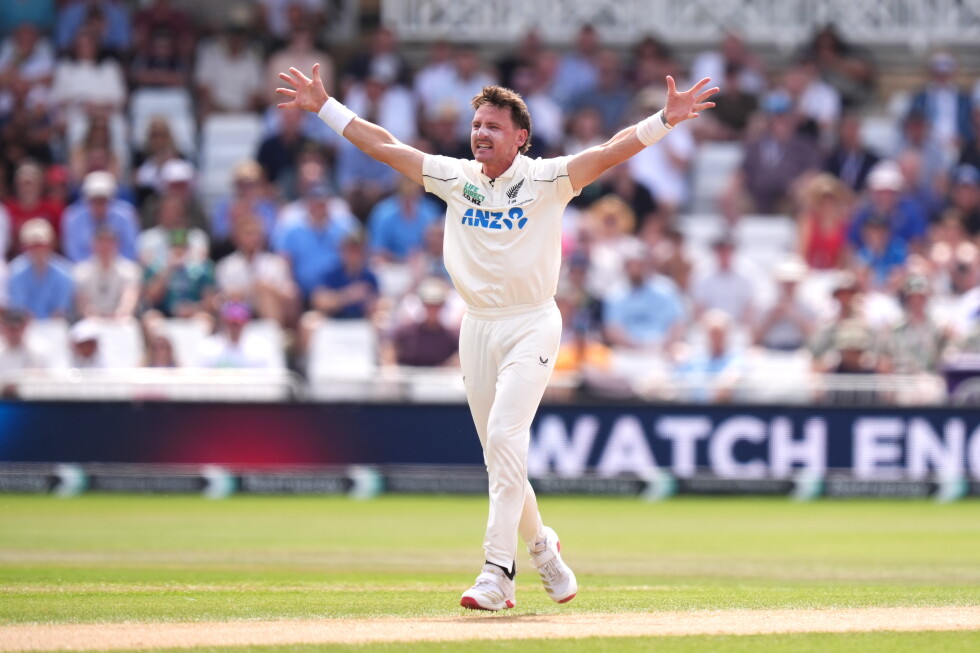
    NOTTINGHAM, England — The third and final Test between England and New Zealand remains finely poised at the lunch break on Day 3, with the visiting side holding a clear upper hand after a devastating morning session that saw New Zealand claim four key England wickets. Entering Saturday’s play already in a strong position, having posted 438 runs in their first innings, New Zealand’s bowling attack turned the screw as England resumed their first innings on 223 for 2. The breakthrough for New Zealand came early, when veteran batsman Joe Root fell leg before wicket for 21 to a swinging full delivery from seamer Nathan Smith. Not long after Root’s departure, rising England star Jacob Bethell followed him back to the pavilion. Bethell, who had crafted a solid 74, was snapped up at second slip by New Zealand captain Tom Latham off the bowling of Will O’Rourke, leaving England reeling. Wickets continued to tumble for the hosts: young batter Jamie Smith was caught low at first slip by Daryl Mitchell off Nathan Smith’s bowling after adding just one run to the scoreboard, making his total 1. England’s captain Ben Stokes survived a major scare early in his innings, when Devon Conway dropped a difficult low diving chance to his right off Nathan Smith’s bowling when Stokes had only scored 1. But Stokes, who returned to the England side alongside fast bowler Gus Atkinson after missing the second Test due to disciplinary sanctions, could not capitalise on his reprieve. The England captain was dismissed for 15 by Zak Foulkes, the concussion substitute in for injured paceman Blair Tickner, who trapped Stokes with another sharp inswinging delivery that brought the wicket. When the players left the field for the lunch interval, England’s first innings stood at 314 for 6, with Harry Brook holding firm on an unbeaten 51 and Gus Atkinson not out on 8 at the other end. Before the close of the session, Atkinson survived an lbw appeal after a Decision Review System overturn showed the ball would have cleared the stumps. By the lunch break, Nathan Smith had claimed 3 wickets for 85 runs, while O’Rourke had notched 2 wickets for 49 runs. The match remains on a knife’s edge, with the series locked at 1-1 after the first two Tests were split between the two sides. New Zealand’s first innings was built on a historic opening partnership that put the visitors in their strong early position: captain Tom Latham scored 151 and Devon Conway hit 157, combining for a mammoth 317-run opening stand that anchored New Zealand’s total of 438.

  • We have been treated unfairly by USA – Iran

    We have been treated unfairly by USA – Iran

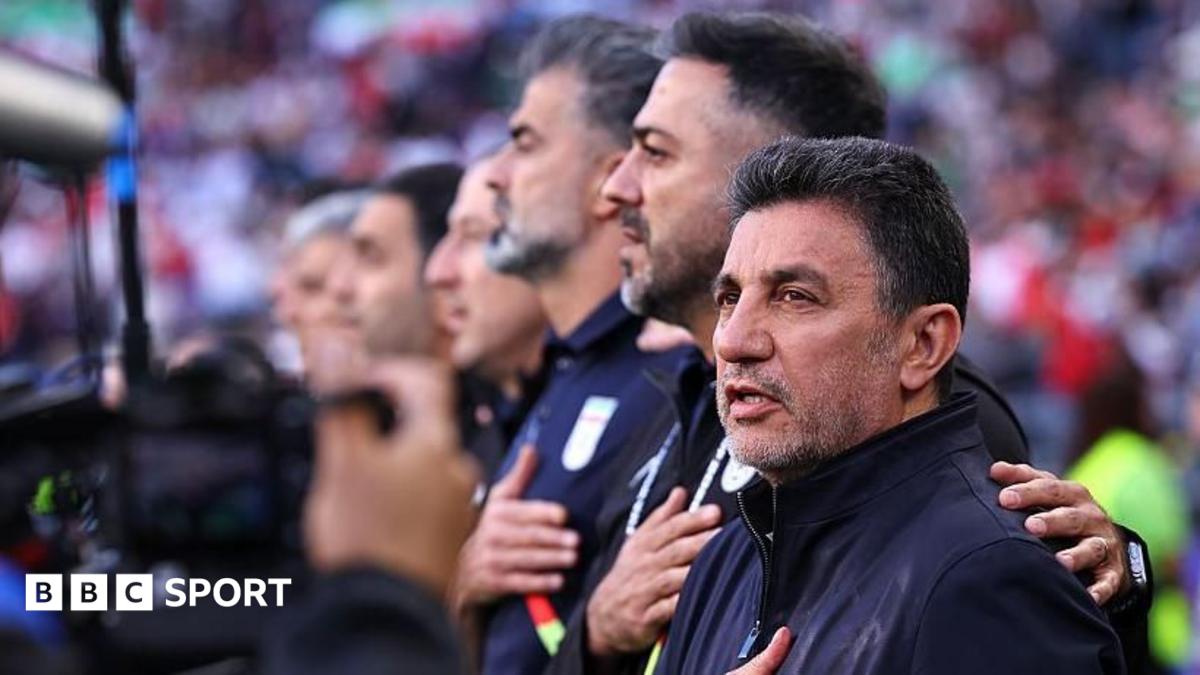
    Against the high-stakes backdrop of the 2026 FIFA World Cup Group G stage, Iran’s national football team has found itself at the center of a growing controversy, with head coach Amir Ghalenoei publicly accusing the United States of unfair treatment and calling on global football’s governing body FIFA to implement new protections for visiting teams in future tournaments.

    Iran’s participation in this World Cup has been complicated from the start by long-running geopolitical tensions between the Islamic Republic and both the United States and Israel. Long before the team kicked off its first group match, logistical disruptions upended their pre-tournament preparations: their original pre-tournament training base, planned in Arizona, had to be relocated to Tijuana, Mexico, and persistent travel restrictions imposed by U.S. authorities hampered their ability to prepare for matches held on U.S. soil.

    For Iran’s opening two group fixtures hosted in Los Angeles, visa restrictions forced the entire squad to enter the U.S. only 24 hours before kickoff and depart immediately after the final whistle, leaving no time for post-match recovery or on-site acclimatization. While restrictions were slightly loosened for their decisive final group match against Egypt in Seattle, allowing the team to arrive two days ahead of game day, they were still required to return to their Mexican base immediately after the final whistle.

    The already tense situation boiled over after a dramatic late twist in the Egypt match that ended Iran’s knockout stage hopes. With the game tied 1-1 in stoppage time, defender Shoja Khalilzadeh fired a loose ball into the back of the net, a goal that would have secured Iran a guaranteed spot in the tournament’s round of 32. Jubilant celebrations among Iranian players and fans in the stadium were cut short when video assistant referee (VAR) review chalked the goal off for offside, leaving the final score locked at 1-1.

    The result sent Egypt through to the knockout stage and left Iran’s qualification hopes hanging by a thread, depending on results from remaining groups. Speaking after the final whistle, Ghalenoei expressed immense pride in his squad’s resilience while leveling harsh criticism at the host nation’s treatment of his team. “What these young players have achieved against all odds deserves to be written into history, because the host country treated us very unfairly,” Ghalenoei said. “Despite every obstacle placed in our path, we have performed well, and the entire world can see the quality of Iran and our team. I urge FIFA: do not allow host nations to treat visiting players and teams this way in any future World Cup.”

    The coach added that the disallowed late goal compounded the team’s struggles, saying “I used to think we were just an oppressed side facing unfair treatment, but after these three matches, I see we have also had terrible bad luck.”

    Iran captain Mehdi Taremi echoed his coach’s frustrations, describing the entire tournament experience for the squad as a “logistical disaster.” While Taremi emphasized he and his teammates held great affection for the people of Tijuana and Mexico, he noted that the constant cross-border travel was incompatible with professional football competition.

    FIFA has yet to publicly respond to the criticisms, with BBC Sport confirming it has contacted the governing body for comment. This is not the first time FIFA’s handling of Iran’s participation has come up: prior to the tournament, FIFA President Gianni Infantino defended the organization’s work, saying he had personally guaranteed Iran would be allowed to compete despite widespread claims it would not be possible. “When people said it would be impossible for Iran to come to the World Cup, I promised them they would be here,” Infantino said before the tournament, adding that he did not believe any other organization could have secured Iran’s participation under the difficult circumstances. Infantino also visited the Iranian dressing room after the team’s opening draw with New Zealand earlier in the group stage.

    As of the time of reporting, Iran sits sixth among all third-placed group teams, with only three group stages remaining to be completed and the top eight third-placed sides advancing to the knockout round, leaving Iran’s qualification chances all but eliminated.

  • Watch: Cape Verdeans celebrate making history at the World Cup

    Watch: Cape Verdeans celebrate making history at the World Cup

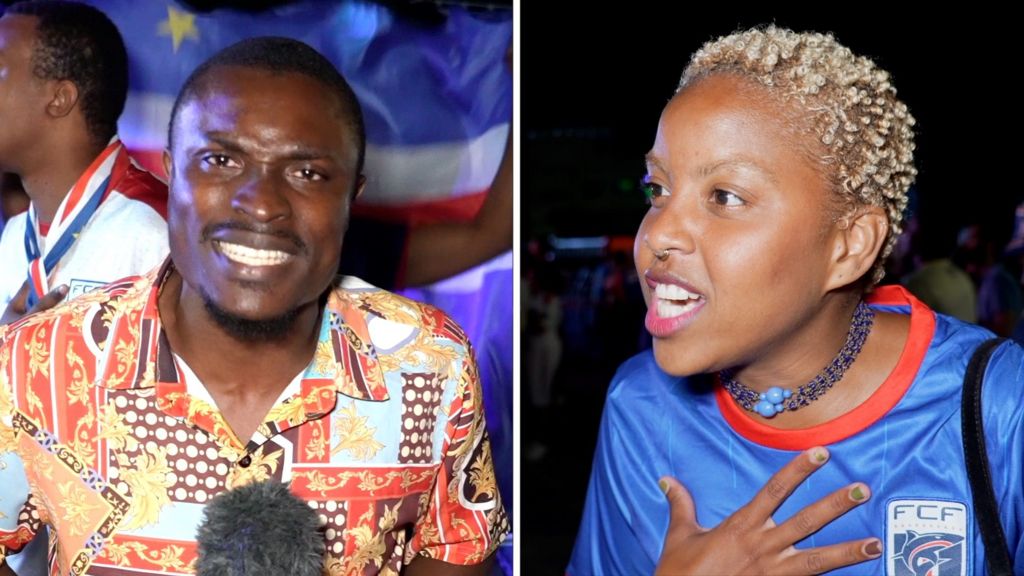
    Football fans across Cape Verde’s capital city of Praia have poured into the city’s official fan zone to toast a moment decades in the making, after the tiny West African nation held Saudi Arabia to a goalless draw in their World Cup group stage match at Houston Stadium.

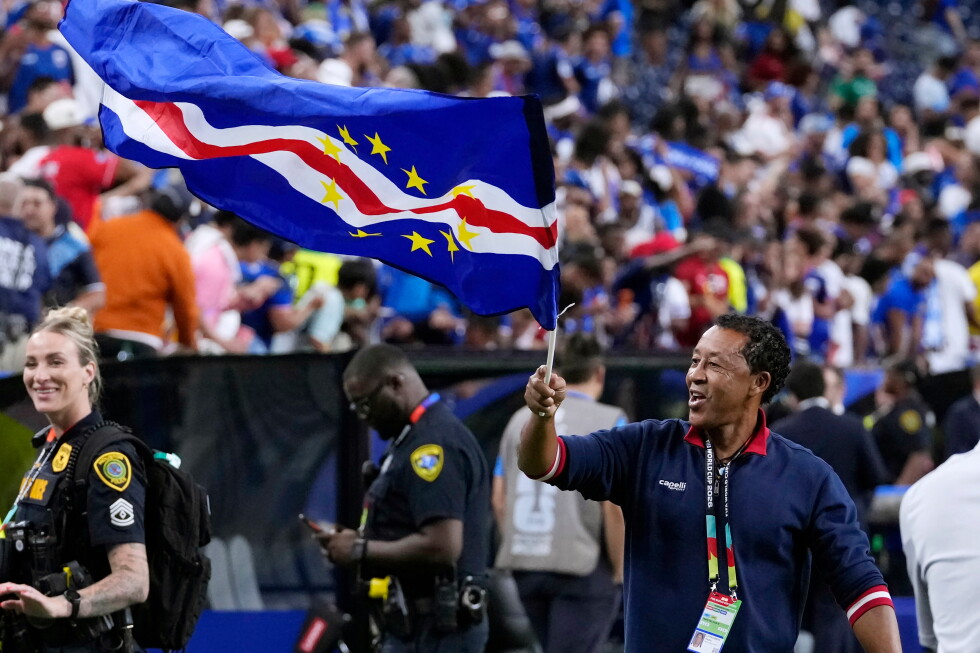
    What looked like an unassuming result on the global football stage marks a groundbreaking milestone for Cape Verde, a archipelagic nation of just over 590,000 people that has fought for decades to build its presence in international football. For local supporters packed into the open-air fan zone, braving warm evening temperatures and waving hand-painted blue national flags, the result was far more than a single point on a tournament table—it was proof that Cape Verde had arrived on the world’s biggest sporting stage.

    Widely ranked as underdogs heading into the fixture against a higher-ranked Saudi Arabian side, Cape Verde’s defensive grit and organized team play held off repeated attacking efforts from their opponents throughout the 90 minutes. When the final whistle blew at Houston Stadium, thousands of miles away the Praia fan zone erupted in cheers, with fans hugging, singing traditional Cape Verdean folk songs, and setting off small celebratory fireworks that lit up the capital’s waterfront.

    Local reporters on the ground described scenes of widespread joy, with even casual football fans joining the spontaneous street parties that spilled out from the official fan zone into surrounding neighborhoods. For a nation that has only recently emerged as a contender in African continental football, the result and the accompanying celebrations mark a moment of national pride that unites communities across the country’s 10 inhabited islands.