分类: society

  • Australia’s ‘top dogs’ awarded after helping intercept 45,000 items at airports, seaports

    Australia’s ‘top dogs’ awarded after helping intercept 45,000 items at airports, seaports

    Australia’s unsung four-legged border protectors have received national recognition for their extraordinary, life-saving work shielding the country’s unique ecosystems and agricultural industries from invasive pests and dangerous foreign diseases. Each year, the Department of Agriculture, Fisheries and Forestry honors the highest-performing detection dogs across the nation’s network of entry ports, and the 2025 awards celebrated a standout cohort of canines that helped stop tens of thousands of risky goods from reaching Australian soil.

    Leading the pack of 2025 honorees was Ghost, a four-year-old Labrador retriever stationed at Adelaide’s ports of entry, who claimed the coveted 2025 Biosecurity Top Dog title. In a single year, Ghost and his two handlers, Jade and Rebecca, notched an impressive 3,202 detections of biosecurity risk items — a new annual record for the program. The team’s seizures included a wide range of prohibited goods, from nearly 7 kilograms of fresh cassava tubers and 36 whole cassava plants to contraband food items such as lotus seeds, fresh bamboo shoots, duck eggs, sesame seeds, cured salami, and even a slice of pizza that posed hidden contamination risks.

    A second four-year-old detection dog, Quatro based in Brisbane, took home the title of Australia’s Most Versatile Biosecurity Detection Dog for 2025. Working alongside his handler Steph, Quatro intercepted 1,431 high-risk items, covering a broader range of commodity types than any other dog in the national program this year, proving his adaptability across changing screening environments.

    For first-year detection dogs, the 2025 Rookie of the Year award went to Clyde, a Brisbane-based canine who has only two years of life experience and less than 12 months on the job. Even as a newcomer to the frontline, Clyde and his handler Dennis recorded 829 confirmed risk detections in 2025, putting his performance on par with many veteran members of the detection dog team.

    Across the entire national detection dog program in 2025, all teams combined helped flag more than 45,000 high-risk items that could have carried devastating exotic pests or diseases into Australia. Agriculture Minister Julie Collins emphasized that these canine teams are an irreplaceable, critical component of the country’s frontline biosecurity defense, protecting both native biodiversity and the $100 billion Australian agricultural sector that relies on strict biosecurity controls to maintain market access.

    “Congratulations to Ghost, Quatro and Clyde and all of their skilled handlers for your amazing contribution to Australian biosecurity in 2025,” Minister Collins said at the awards ceremony. “Maintaining constant biosecurity vigilance is critical to keeping our borders open for trade and travel, and our detector dog teams are a core part of that responsibility. Australia’s strong biosecurity system, its highly skilled officers and hardworking detection dog teams are always at the ready to stop threats before they enter the country.”

    Detection dogs are deployed at every major port of entry across Australia, from international airports to seaports, international mail processing centers and border crossings. They are trained to sniff out a wide range of prohibited items that human screeners might miss, providing a fast, non-intrusive screening tool that enhances the efficiency of border operations.

    Since 2022, the Australian federal government has invested more than $2 billion into strengthening the national biosecurity system, a portion of which has gone toward expanding the detection dog program by adding 20 new canines and their dedicated full-time handlers to meet growing demand as international travel and trade volumes return to pre-pandemic levels.

  • Rescuers to use air cushions in latest effort to save stranded whale

    Rescuers to use air cushions in latest effort to save stranded whale

    For weeks, a young humpback whale that wandered far from its natural ocean habitat has been stranded in the shallow coastal waters off Germany’s Baltic Sea coast, capturing global public attention and sparking a tense debate over wildlife rescue ethics. Now, state authorities have given the green light to a new, low-impact operation to free the animal, nicknamed Timmy by local media, even as many leading wildlife experts warn the mission carries severe risks and stands little chance of success.

    Timmy was first spotted in the low-salinity waters of the Baltic Sea at the start of March, hundreds of kilometers away from the humpback’s native range in the North Atlantic Ocean. After the whale became stuck on a sandbank off the coast of Poel Island in the state of Mecklenburg-Western Pomerania, rescuers launched an earlier intervention: they dug a channel with heavy excavators to help the animal swim free, but the plan fell apart when the disoriented whale turned back into shallow water instead of following the plotted route toward the North Sea.

    Wildlife biologists who have examined the animal say Timmy has sustained extensive life-threatening injuries. Visible damage includes large patches of detached skin, caused in part by the Baltic’s much lower salt concentration that triggered a debilitating skin condition. Experts also assume significant internal organ damage, brought on by weeks of the whale’s own body weight pressing down on its frame in shallow waters. Trauma consistent with contact with a ship propeller and entanglement in commercial fishing netting has also been documented, confirming the animal has been struggling with multiple harm for an extended period. After the first rescue attempt failed, many specialists concluded the whale’s chance of long-term survival was extremely low, and authorities initially agreed that the kindest option would be to let the animal pass peacefully.

    But a recent reassessment of possible intervention methods has led state environment minister Till Backhaus to reverse that decision, approving a new plan led by a private rescue initiative. The operation relies on a simple, minimally invasive tool: large air cushions, similar in concept to inflatable arm bands, that will be positioned around the whale’s flippers to gently lift it off the seabed and onto a reinforced tarp connected to a tugboat. Once the whale is secured, the tug will transport it around Denmark’s Jutland peninsula into the North Sea, with the potential to release it further into the Atlantic Ocean, where humpback whales normally live.

    Mecklenburg-Western Pomerania officials confirmed as of this week that the injured whale is still showing clear signs of life, though it remains severely weakened. “The prognosis remains critical. But a chance of survival cannot be completely ruled out,” Backhaus said in a statement announcing the new attempt. “Against this background, it is justifiable to allow this attempt, and I thank the initiative for it.”

    Not all groups involved in earlier rescue work back the new operation, however. Greenpeace Germany, which assisted in the first attempt to free Timmy, has publicly announced it will not participate in or support the latest effort, citing the whale’s critical condition and the high risk of increasing its suffering. Independent experts from the German Oceanographic Museum and the Institute for Terrestrial and Aquatic Wildlife Research have echoed that concern, stressing that any transportation or physical manipulation of the already severely weakened animal carries substantial risk of exacerbating its injuries and hastening its death.

    Timmy’s prolonged struggle has drawn international media coverage, but it has also created problems for authorities managing the site. The state government has issued formal warnings about rampant misinformation and unfounded conspiracy theories spreading across social media about the whale’s condition and the rescue process, and a 500-meter exclusion zone has been established around the stranded animal to protect both the whale and rescue teams. Even with that restriction in place, a 67-year-old woman made headlines over the weekend when she jumped off a private boat in an attempt to swim closer to Timmy, before being stopped by on-site enforcement officers.

    Backhaus acknowledged the deep public empathy that has driven the global interest in Timmy’s fate. “The outpouring of sympathy shows how deeply the animal’s fate moves people,” he said. “At the same time, I ask that you respect the work of the emergency services and adhere to the existing protective measures.”

    To this day, researchers remain uncertain how the humpback whale ended up so far outside its normal range in the Baltic Sea. Experts say the unusual stranding highlights the growing risks large marine mammals face from human maritime activities, including shipping traffic and commercial fishing, even in well-monitored European coastal waters.

  • Tianjin students escort war veterans on ‘Heroes, Hello’ trip to Henan

    Tianjin students escort war veterans on ‘Heroes, Hello’ trip to Henan

    A moving cross-province journey honoring veterans of the 1950-1953 War to Resist US Aggression and Aid Korea concluded recently, after dozens of students and faculty members from Tianjin Binhai Vocational Institute of Automotive Engineering escorted two Tianjin-based veterans to Luoyang, Henan, for the institute’s ongoing ‘Heroes, Hello’ program.

    Spanning four days, the excursion brought the Tianjin delegation together with 34 local Henan-based veterans for a series of commemorative and recreational activities, including tours of Luoyang’s world-famous peony gardens, open shared storytelling sessions where veterans recounted their wartime experiences, and one-on-one support for veterans with mobility impairments. Collectively, the 36 veterans in attendance have an average age of 92, carrying decades of memories from the conflict that shaped modern East Asia.

    Launched two years ago by the vocational institute, the ‘Heroes, Hello’ program has rapidly expanded its scope across China, reaching more than 20 provinces and connecting with over 40,000 people, including surviving war veterans and family members of soldiers who died in service. The initiative was designed to move beyond traditional classroom-based ideological and political education, creating opportunities for young people to interact directly with national heroes in person.

    “Ideological and political education should not be locked inside four classroom walls,” explained Jia Xiufang, chairperson of the Tianjin Binhai Vocational Institute of Automotive Engineering. “Our students need to engage with living history, and meet the heroes who built our country’s safety in person.”

    For participating students, the experience transformed abstract textbook history into a tangible, deeply personal lesson. Wang Yuchuan, an automotive service and marketing major at the institute, shared that his prior understanding of the war came entirely from course materials before the trip. “Meeting these veterans face to face made the spirit of that generation feel real, not just words on a page,” he said.

    Ninety-four-year-old veteran Wang Lanju, one of the attendees, shared a harrowing firsthand account of his service: he recalled working to construct an airfield in North Korea while facing constant enemy bombing raids. “No matter how heavy the attacks were, none of us retreated,” he stated firmly.

    Beyond the excursion, the institute has already worked to preserve these veterans’ stories for future education: it has compiled hundreds of hours of oral history interviews into official teaching materials for its students. Looking ahead, the institution has scheduled a special campus event for May 18, where it will host 25 surviving female Korean War veterans to share their experiences with the student body.

  • Beijing reading campaign week kicks off on April 20

    Beijing reading campaign week kicks off on April 20

    Beijing is preparing to welcome book lovers across the capital for its annual citywide reading campaign week, running from April 20 to 26, 2026. Organizers have curated a diverse lineup of themed literary and cultural events spread across every urban district, designed to cater to a wide range of reading preferences and bring literature out of libraries and into public spaces.

    In Dongcheng District, the historic Longfu Temple market will open a curated book fair, where attendees can browse new releases and browse physical copies while soaking up the iconic, beloved aroma of freshly printed books. Xicheng District is leaning into the seasonal spirit of spring with its ongoing Centennial Lilac Poetry Gathering, an event series that ties the soft fragrance of blooming lilacs to poetic appreciation, blending natural beauty with literary art.

    For readers who prefer outdoor literary experiences, Chaoyang District has planned a series of relaxed reading sessions along the banks of the Liangma River, where attendees can enjoy leisurely reading with the gentle spring breeze off the water. In Haidian District, Beijing’s hub of higher education and scientific research, leading academicians and scientists will take part in a special book donation event, gifting their personal book collections to local public libraries to expand public access to academic and literary resources.

    Beyond district-specific events, independent and chain bookstores across the entire city are hosting special literary exhibitions to coincide with the campaign week. A major recurring attraction, the annual Spring Book Market, will be open from April 18 to 26 across four iconic Beijing locations: Chaoyang Park, Nanyuan Forest Wetland Park, Shougang Park, and the Old Summer Palace. For those who cannot attend the main campaign week, a follow-up book display tour will run from April 26 to May 17, with booksellers setting up pop-up displays in top-tier shopping malls and leading universities across the capital, extending the celebration of reading to more Beijing residents and visitors.

  • Naples bank robbers hold 25 people hostage then vanish through tunnel

    Naples bank robbers hold 25 people hostage then vanish through tunnel

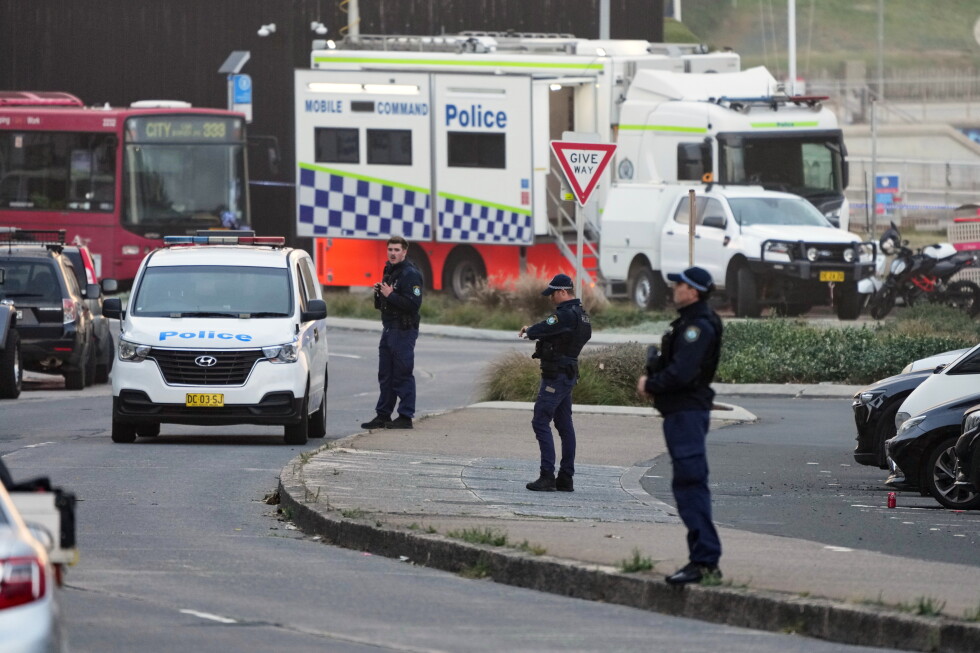
    In a brazen broad-daylight heist that shocked southern Italy, a group of armed men carried out a well-planned robbery at a Naples branch of Crédit Agricole, holding 25 people hostage before vanishing through a hand-dug tunnel connecting the bank to the city’s sewer system. The incident unfolded shortly before midday local time, 10:00 GMT, triggering an immediate massive emergency and law enforcement response across the region.

    Local police moved quickly to cordon off the entire bank block within minutes of the robbery being reported. For nearly two hours, negotiators held closed-door talks with the armed robbers to secure the release of all trapped hostages, before tactical teams prepared a final assault. Graphic footage circulated on social media captured firefighters using heavy battering rams to break through reinforced bank windows, assisting escaping hostages to climb out of the damaged building.

    Witness accounts paint a varied picture of the captives’ experiences: many hostages remained composed enough to brush glass shards off their clothing and walk away from the scene unassisted, while others were visibly traumatized, weeping and clinging tightly to waiting family members. Six people suffering from acute shock were evaluated and treated by on-site paramedics, though authorities confirmed no one suffered serious physical injuries during the standoff. One hostage who spoke to Italian local news outlet Fanpage.it confirmed that while the robbers were all heavily armed, they did not resort to physical violence against any of the people trapped inside.

    Regional official Michele di Bari praised first responders in an official statement, crediting their swift, coordinated intervention for the safe release of all hostages by shortly after 1:30 p.m. local time. As the crisis unfolded, hundreds of local residents and onlookers gathered in the adjacent public square to follow developments, while tens of thousands of people tuned in to live social media streams broadcasting the standoff in real time.

    Elite special operations units from Italy’s carabinieri national armed police were airlifted to Naples from the central region of Tuscany to assist in the raid. Several hours after the initial hostage release, tactical teams stormed the bank through a broken exterior window; live broadcasts captured the sound of multiple gunshots and deafening stun grenade detonations during the assault. However, when forces secured the building, they discovered the robbers had already fled through an underground tunnel that investigators believe links the bank basement to the city’s extensive public sewer network.

    Footage captured after the raid shows carabinieri and firefighters leaning into a nearby open manhole, launching an ongoing manhunt for the escapees. Investigators have not yet been able to calculate the total value of what the robbers stole, as the gang specifically targeted private safety deposit boxes rather than withdrawable cash stored in the bank’s main vault. The well-executed escape has raised questions about security protocols for Italian bank branches, as law enforcement continues to comb through the sewer network and surrounding neighborhoods for any trace of the attackers.

  • Ex-Virginia deputy governor kills wife and himself in alleged murder-suicide, police say

    Ex-Virginia deputy governor kills wife and himself in alleged murder-suicide, police say

    A shocking tragedy has rocked the commonwealth of Virginia, where former Democratic Lieutenant Governor Justin Fairfax and his wife were found dead at their Annandale residence early Thursday morning in what law enforcement officials have classified as a murder-suicide. Investigators have confirmed that Fairfax, 45, fired multiple shots at his wife before taking his own life at the property, a scene that the couple’s two teenage children were present for when the violence unfolded.

    Fairfax, who made history as the second Black candidate elected to a statewide office in Virginia, held the position of lieutenant governor from 2018 through 2022. His time in public office was heavily marked by controversy, however, when two women came forward with sexual assault allegations ahead of a planned 2020 gubernatorial run. Fairfax vehemently denied all accusations throughout the public fallout, and the claims were never proven in court. He ultimately launched a bid for the state’s governorship in 2021, but failed to secure his party’s nomination, falling short in the Democratic primary.

    Speaking at a press briefing Thursday morning, Fairfax County Police Chief Kevin Davis outlined initial findings from the ongoing investigation, noting that the fatal violence appears to be rooted in long-running domestic conflict tied to a pending divorce. “This has been an ongoing domestic dispute surrounding what seems to be a complicated or messy divorce,” Davis told reporters.

    Authorities were first alerted to the emergency just after midnight, when the couple’s son placed a 911 call reporting that he believed his mother had been stabbed. When first responders arrived at the home, they discovered the bodies of both Justin Fairfax and his wife, alongside bullet casings recovered near the victim’s body. Davis added that evidence at the scene does not suggest an extended confrontation prior to the shooting, indicating the incident unfolded quickly and spontaneously. “I think it all kind of happened at once,” Davis said. “There wasn’t a pause … it all happened pretty spontaneously.”

    Investigators also confirmed that while the couple had been legally separated, they continued to share the Annandale home at the time of the tragedy. Davis described the event as an stunning fall from grace for a high-profile public figure who once appeared poised to rise to the state’s highest office. “This is certainly a fall from grace for a relatively high-profile family that seemingly had a lot of things going for them,” Davis said. “Tragic for the children to lose both parents. Extra tragic for them to actually be in the home when it occurred.”

    Political figures across Virginia have quickly reacted to the news, expressing shock at the sudden deaths and extending condolences to the couple’s surviving children. Former Virginia Governor Ralph Northam, who served in office alongside Fairfax, released a statement saying he and his wife were devastated by the heartbreaking news. “I had the privilege of getting to know the Fairfaxes while our families served together,” Northam said.

    For individuals impacted by domestic abuse, support and confidential resources are available through the BBC Action Line.

  • Watch: Rising prices threaten Minnesota’s meat raffles

    Watch: Rising prices threaten Minnesota’s meat raffles

    Acquired from local bars and community gathering spots across Minnesota, meat raffles have long stood as a cherished, small-scale tradition that does double duty: entertaining patrons and raising critical funds for local charitable groups. But this beloved community institution is now facing an unprecedented challenge, as rampant inflation driving up meat prices across the country has begun to squeeze the core economics of these events, putting their long-standing impact at risk.

  • Yangtze River Delta Star train set for maiden voyage to Xinjiang

    Yangtze River Delta Star train set for maiden voyage to Xinjiang

    China’s railway sector is rolling out a new premium travel experience connecting China’s eastern economic heartland with its far northwestern frontier, as the first high-comfort dedicated tourist train from the Yangtze River Delta region, dubbed the *Yangtze River Delta Star*, is gearing up for its maiden journey to the Xinjiang Uygur Autonomous Region. Operated by China Railway Shanghai Group, the one-of-a-kind service is scheduled to depart from Shanghai on May 19, kicking off an 18-day cross-country expedition that will conclude on June 5.

    Designed around the concept of slow travel, the luxury tourist train is built to let passengers soak in the dramatic, varied landscapes that span thousands of kilometers across China. Along the route, travelers will have the opportunity to take in postcard-perfect views of snow-capped mountain ranges, rolling endless grasslands, crystal-clear alpine lakes and centuries-old historic cities, all while traveling in the comfort of the premium upgraded rail cars. A handout photo from China Railway Shanghai Group highlights the train’s core value proposition: a relaxed, immersive journey that prioritizes scenic enjoyment over rushed travel schedules.

    This new route marks a milestone in China’s expanding high-end rail tourism sector, linking one of the country’s most densely populated and economically developed coastal regions with one of its most geographically diverse and culturally rich inland destinations. The launch responds to growing domestic demand for unique, comfortable cross-country travel experiences that showcase China’s natural and cultural heritage, opening up new avenues for tourism exchange between eastern and western China.

  • Malala’s brother Khushal on fleeing the Taliban and facing the manosphere

    Malala’s brother Khushal on fleeing the Taliban and facing the manosphere

    More than 11 years after the Taliban shooting that forever altered his family’s path, 25-year-old Khushal Yousafzai has broken his silence about the lingering psychological trauma, mental health battles, and unexpected entanglement with online manosphere communities that followed the attack on his older sister, global girls’ education advocate Malala Yousafzai. In a raw, vulnerable new interview with BBC Asian Network’s Amber Haque, Khushal recounts the day that destroyed his childhood and shaped every year that followed.

    It was 2012, when Khushal was just 12 years old, and Malala — then 15 — was shot in the head by a Taliban gunman while riding home from school on a bus in Pakistan’s Swat Valley. Malala had long drawn the militant group’s anger for her outspoken activism demanding equal access to education for girls. On the day of the attack, Khushal was playing video games at home when his cousin delivered the first terrible news that his sister had been injured; minutes later, the family learned the bullet had struck her head. “I remember going into my sister’s room where you can see all the trophies. I felt like I was going to pass out,” he told Haque. “Seconds felt like minutes, minutes were hours and hours were days.”

    The attack that didn’t kill Malala would go on to launch her global advocacy work, which earned her a Nobel Peace Prize just three years later. She was immediately evacuated to the United Kingdom for urgent life-saving treatment, and Khushal and the rest of the Yousafzai family eventually resettled in the country alongside her. But for the 12-year-old Khushal, the chaos of the attack and sudden uprooting left a void of rage and grief that would fester for more than a decade. “It left me with so much hate and anger in my heart,” he said. “When I was in the UK, my life mission was like: ‘I’m going to build myself, go back and take revenge.’”

    Over the years, Khushal navigated life in the public eye surrounded by family members celebrated globally for turning their pain into transformative, world-changing good. While he rejects the narrative that he lived in his sister’s shadow, he carried a quiet pressure: watching Malala and their father Ziauddin turn their trauma into progress left him grappling with deep feelings of inadequacy. “I just thought, if I’m not bringing positive change into the world, then I’m not doing enough,” he explained. It was only a few months ago that he finally acknowledged he had spent years in denial about how unprocessed that pressure and trauma truly were. “I pretended my [own] expectations are bigger than what the world expects of me,” he said. At his lowest, he recalled feeling like a burden as the world focused its attention and support on Malala’s recovery, asking himself, “Everyone around me is helping my sister. What am I doing? I didn’t see a point in my existence.”

    That persistent sense of not being good enough left Khushal vulnerable to the toxic pull of online manosphere spaces, a network of forums, social media accounts, and influencers that promote a rigid, traditionalist vision of masculinity where men hold dominant power over women. What first drew him in, he said, was the community’s outward focus on self-improvement — a message that filled a gap when he needed it most. “Go to the gym, work on yourself. So that message really drew me in,” he said.

    But the harmful underbelly of the movement quickly trapped him in a destructive cycle. As influencers began selling harsh life lessons that framed any struggle as a personal failure, Khushal — who had spent years battling undiagnosed post-traumatic stress disorder, depression, and cannabis addiction — began to see his own mental health challenges as proof he was a “loser”. The resulting shame only fueled his unhealthy coping mechanisms, creating an unbreakable loop: “What happens is that you get into a shame cycle. So you feel like you’re a horrible human. Whenever I smoked weed, I felt like a horrible human being. You want to escape that feeling, so you fall back to that bad habit. It becomes a loop.”

    Khushal ultimately broke free from the influence of manosphere ideology after confronting its misogynistic core, a worldview that directly contradicted everything his family stands for. “My sister took a bullet for education,” he said. “They might as well be speaking about my mother and my sister. And when I started putting [things] into perspective, I started to draw myself away from those spaces.” He also credits his father’s compassion and the grace he extended when the manosphere teaches that vulnerability is unforgivable for helping him begin to heal.

    Today, Khushal is speaking out to help other people who may be struggling with unprocessed trauma and vulnerability to toxic online ideologies. He emphasizes that radicalization and harmful indoctrination do not happen in a vacuum: even he acknowledges that his own privilege of a supportive family committed to gender equality kept him from falling prey to far more dangerous extremist groups like the Taliban. “If I was born in another household where my parents were poor, couldn’t afford my education, I could have also become easily radicalised and indoctrinated by the Taliban,” he said.

    His core message for people navigating similar battles is that vulnerability is not weakness, and shame is the biggest barrier to healing. “We need to change the narrative that if you are vulnerable about your struggles, it’s a sign of weakness,” he said. For him, breaking the shame cycle required allowing himself to finally grieve and break down: “When I hit rock bottom, when it was really tough and I’d taken pride that I hadn’t cried for six months – then I broke down. I had the best cry of my life. I felt so healed and relieved after.” Access to a trusted support system of family and friends who will hold space for honest, difficult conversations, he says, is the greatest source of strength for anyone working through trauma.

    For anyone affected by the mental health issues discussed in this interview, support and resources are available via BBC Action Line. The full conversation with Khushal Yousafzai is available to listen to on BBC Asian Network Trending.

  • Chatty gibbon has fun with caretaker in Yunnan

    Chatty gibbon has fun with caretaker in Yunnan

    A sweet, playful moment between a protected white-browed gibbon and his human caretaker at Yunnan’s Taiyanghe National Forest Park has won over thousands of social media users across China, after footage of their friendly exchange spread widely online earlier this month.

    The young gibbon, known to park staff as Dingding, formed the adorable bond during a routine walk through the reserve’s protected green spaces. As caretaker Xu Yanfang made her way through the park to her next scheduled task, Dingding wrapped his long arms tightly around her wrist, chattering constantly in a playful call-and-response exchange that mirrored casual conversation with a close friend. The warm, unscripted moment was captured on camera and quickly circulated among netizens, who praised the gentle connection between the human caretaker and the wild animal.

    As a national first-class protected species in China, white-browed gibbons are one of the country’s most vulnerable wild primate populations, and Taiyanghe National Forest Park has emerged as a key hub for conservation and care for these rare animals. For Dingding, daily life at the Pu’er-based reserve is filled with low-stakes adventure and companionship beyond his interactions with human staff. He shares the sprawling, biodiverse park with a host of other native species, including red pandas, Sumatran rhinoceroses, and Asian bearcats, and regularly spends his days playing and roaming through the forest alongside his wild neighbors.

    Conservation efforts across Yunnan have expanded steadily in recent years, expanding protected habitats and boosting populations of once-declining native species. This viral moment has drawn new public attention to the work of park caretakers and conservationists, who dedicate their work to protecting vulnerable wildlife and fostering safe, sustainable environments for rare species to thrive.