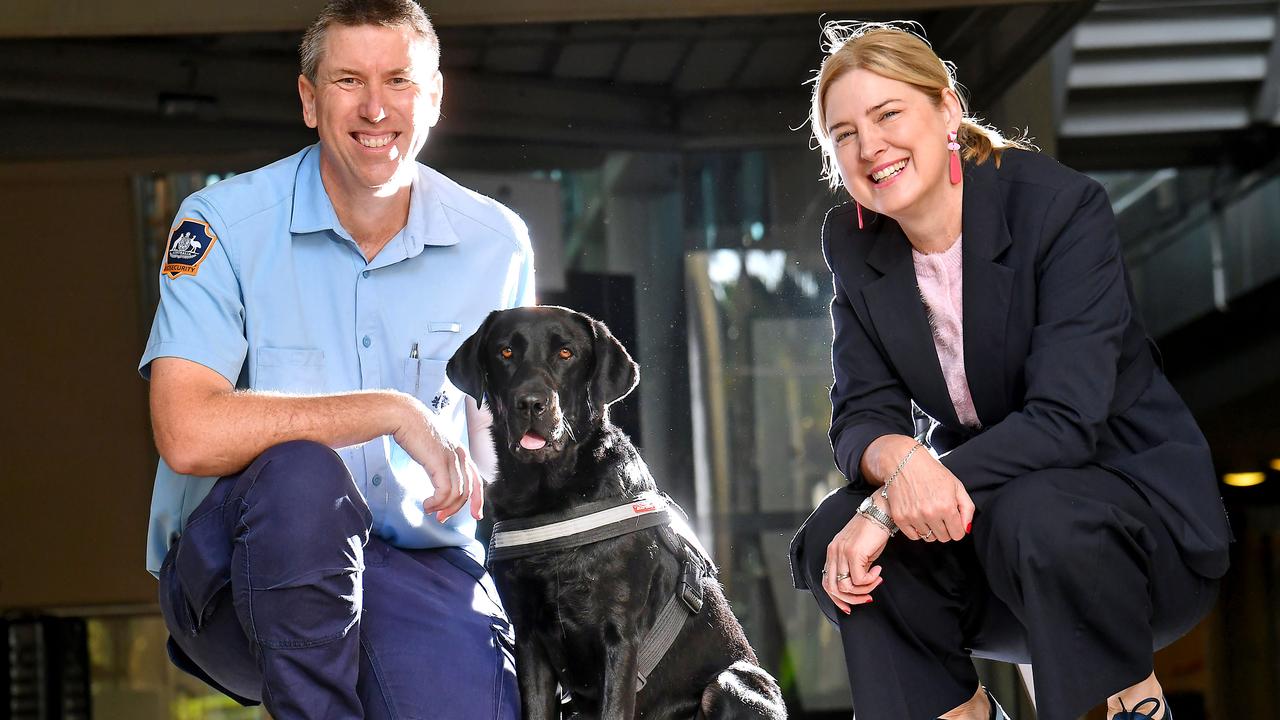
Australia’s unsung four-legged border protectors have received national recognition for their extraordinary, life-saving work shielding the country’s unique ecosystems and agricultural industries from invasive pests and dangerous foreign diseases. Each year, the Department of Agriculture, Fisheries and Forestry honors the highest-performing detection dogs across the nation’s network of entry ports, and the 2025 awards celebrated a standout cohort of canines that helped stop tens of thousands of risky goods from reaching Australian soil.
Leading the pack of 2025 honorees was Ghost, a four-year-old Labrador retriever stationed at Adelaide’s ports of entry, who claimed the coveted 2025 Biosecurity Top Dog title. In a single year, Ghost and his two handlers, Jade and Rebecca, notched an impressive 3,202 detections of biosecurity risk items — a new annual record for the program. The team’s seizures included a wide range of prohibited goods, from nearly 7 kilograms of fresh cassava tubers and 36 whole cassava plants to contraband food items such as lotus seeds, fresh bamboo shoots, duck eggs, sesame seeds, cured salami, and even a slice of pizza that posed hidden contamination risks.
A second four-year-old detection dog, Quatro based in Brisbane, took home the title of Australia’s Most Versatile Biosecurity Detection Dog for 2025. Working alongside his handler Steph, Quatro intercepted 1,431 high-risk items, covering a broader range of commodity types than any other dog in the national program this year, proving his adaptability across changing screening environments.
For first-year detection dogs, the 2025 Rookie of the Year award went to Clyde, a Brisbane-based canine who has only two years of life experience and less than 12 months on the job. Even as a newcomer to the frontline, Clyde and his handler Dennis recorded 829 confirmed risk detections in 2025, putting his performance on par with many veteran members of the detection dog team.
Across the entire national detection dog program in 2025, all teams combined helped flag more than 45,000 high-risk items that could have carried devastating exotic pests or diseases into Australia. Agriculture Minister Julie Collins emphasized that these canine teams are an irreplaceable, critical component of the country’s frontline biosecurity defense, protecting both native biodiversity and the $100 billion Australian agricultural sector that relies on strict biosecurity controls to maintain market access.
“Congratulations to Ghost, Quatro and Clyde and all of their skilled handlers for your amazing contribution to Australian biosecurity in 2025,” Minister Collins said at the awards ceremony. “Maintaining constant biosecurity vigilance is critical to keeping our borders open for trade and travel, and our detector dog teams are a core part of that responsibility. Australia’s strong biosecurity system, its highly skilled officers and hardworking detection dog teams are always at the ready to stop threats before they enter the country.”
Detection dogs are deployed at every major port of entry across Australia, from international airports to seaports, international mail processing centers and border crossings. They are trained to sniff out a wide range of prohibited items that human screeners might miss, providing a fast, non-intrusive screening tool that enhances the efficiency of border operations.
Since 2022, the Australian federal government has invested more than $2 billion into strengthening the national biosecurity system, a portion of which has gone toward expanding the detection dog program by adding 20 new canines and their dedicated full-time handlers to meet growing demand as international travel and trade volumes return to pre-pandemic levels.