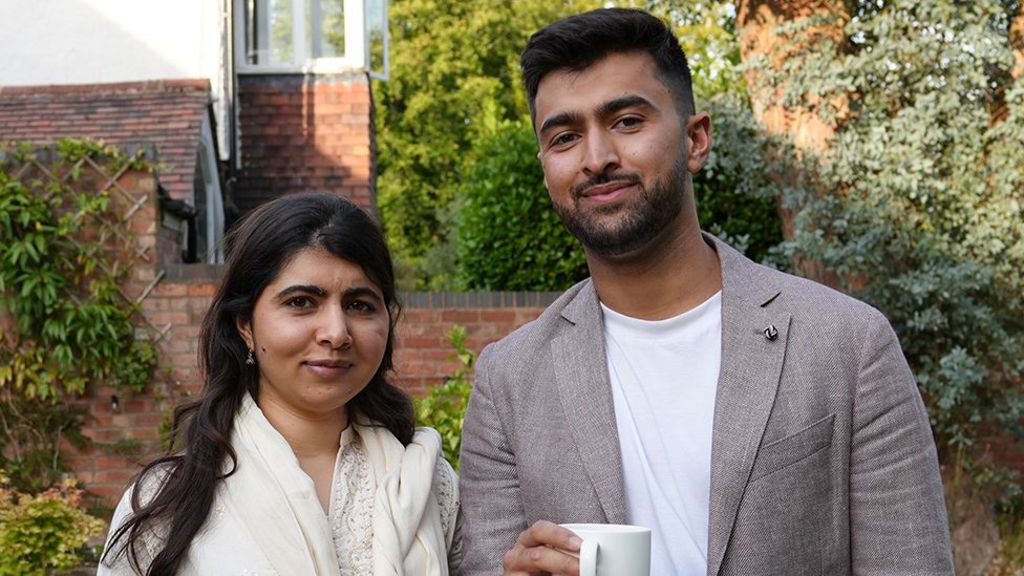
More than 11 years after the Taliban shooting that forever altered his family’s path, 25-year-old Khushal Yousafzai has broken his silence about the lingering psychological trauma, mental health battles, and unexpected entanglement with online manosphere communities that followed the attack on his older sister, global girls’ education advocate Malala Yousafzai. In a raw, vulnerable new interview with BBC Asian Network’s Amber Haque, Khushal recounts the day that destroyed his childhood and shaped every year that followed.
It was 2012, when Khushal was just 12 years old, and Malala — then 15 — was shot in the head by a Taliban gunman while riding home from school on a bus in Pakistan’s Swat Valley. Malala had long drawn the militant group’s anger for her outspoken activism demanding equal access to education for girls. On the day of the attack, Khushal was playing video games at home when his cousin delivered the first terrible news that his sister had been injured; minutes later, the family learned the bullet had struck her head. “I remember going into my sister’s room where you can see all the trophies. I felt like I was going to pass out,” he told Haque. “Seconds felt like minutes, minutes were hours and hours were days.”
The attack that didn’t kill Malala would go on to launch her global advocacy work, which earned her a Nobel Peace Prize just three years later. She was immediately evacuated to the United Kingdom for urgent life-saving treatment, and Khushal and the rest of the Yousafzai family eventually resettled in the country alongside her. But for the 12-year-old Khushal, the chaos of the attack and sudden uprooting left a void of rage and grief that would fester for more than a decade. “It left me with so much hate and anger in my heart,” he said. “When I was in the UK, my life mission was like: ‘I’m going to build myself, go back and take revenge.’”
Over the years, Khushal navigated life in the public eye surrounded by family members celebrated globally for turning their pain into transformative, world-changing good. While he rejects the narrative that he lived in his sister’s shadow, he carried a quiet pressure: watching Malala and their father Ziauddin turn their trauma into progress left him grappling with deep feelings of inadequacy. “I just thought, if I’m not bringing positive change into the world, then I’m not doing enough,” he explained. It was only a few months ago that he finally acknowledged he had spent years in denial about how unprocessed that pressure and trauma truly were. “I pretended my [own] expectations are bigger than what the world expects of me,” he said. At his lowest, he recalled feeling like a burden as the world focused its attention and support on Malala’s recovery, asking himself, “Everyone around me is helping my sister. What am I doing? I didn’t see a point in my existence.”
That persistent sense of not being good enough left Khushal vulnerable to the toxic pull of online manosphere spaces, a network of forums, social media accounts, and influencers that promote a rigid, traditionalist vision of masculinity where men hold dominant power over women. What first drew him in, he said, was the community’s outward focus on self-improvement — a message that filled a gap when he needed it most. “Go to the gym, work on yourself. So that message really drew me in,” he said.
But the harmful underbelly of the movement quickly trapped him in a destructive cycle. As influencers began selling harsh life lessons that framed any struggle as a personal failure, Khushal — who had spent years battling undiagnosed post-traumatic stress disorder, depression, and cannabis addiction — began to see his own mental health challenges as proof he was a “loser”. The resulting shame only fueled his unhealthy coping mechanisms, creating an unbreakable loop: “What happens is that you get into a shame cycle. So you feel like you’re a horrible human. Whenever I smoked weed, I felt like a horrible human being. You want to escape that feeling, so you fall back to that bad habit. It becomes a loop.”
Khushal ultimately broke free from the influence of manosphere ideology after confronting its misogynistic core, a worldview that directly contradicted everything his family stands for. “My sister took a bullet for education,” he said. “They might as well be speaking about my mother and my sister. And when I started putting [things] into perspective, I started to draw myself away from those spaces.” He also credits his father’s compassion and the grace he extended when the manosphere teaches that vulnerability is unforgivable for helping him begin to heal.
Today, Khushal is speaking out to help other people who may be struggling with unprocessed trauma and vulnerability to toxic online ideologies. He emphasizes that radicalization and harmful indoctrination do not happen in a vacuum: even he acknowledges that his own privilege of a supportive family committed to gender equality kept him from falling prey to far more dangerous extremist groups like the Taliban. “If I was born in another household where my parents were poor, couldn’t afford my education, I could have also become easily radicalised and indoctrinated by the Taliban,” he said.
His core message for people navigating similar battles is that vulnerability is not weakness, and shame is the biggest barrier to healing. “We need to change the narrative that if you are vulnerable about your struggles, it’s a sign of weakness,” he said. For him, breaking the shame cycle required allowing himself to finally grieve and break down: “When I hit rock bottom, when it was really tough and I’d taken pride that I hadn’t cried for six months – then I broke down. I had the best cry of my life. I felt so healed and relieved after.” Access to a trusted support system of family and friends who will hold space for honest, difficult conversations, he says, is the greatest source of strength for anyone working through trauma.
For anyone affected by the mental health issues discussed in this interview, support and resources are available via BBC Action Line. The full conversation with Khushal Yousafzai is available to listen to on BBC Asian Network Trending.