分类: society

  • Choosing evidence over shame

    Choosing evidence over shame

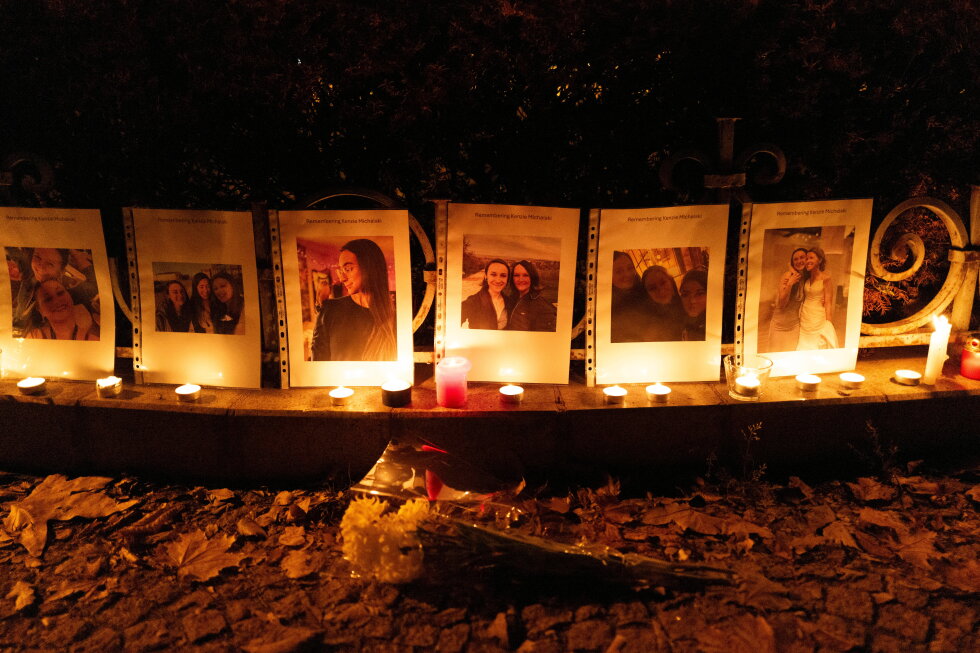
    In September 2023, six former college roommates gathered in the warm, humid air of Liuzhou, located in Guangxi Zhuang Autonomous Region, to mark a quiet milestone: half a decade of unbroken friendship after graduation. What started as a joyful, intimate moment captured in a single photograph shared publicly on the Chinese social media platform Xiaohongshu would quickly transform into a 12-month battle to reclaim their dignity and hold a content creator accountable for digital exploitation.

    Weeks after the photo was posted, the unassuming snapshot was stolen and weaponized for online traffic. A Douyin short-video creator going by the username “Business Tycoon” republished the image, overlaid a digital price tag on the frame, and shared the altered post with his 330,000 followers alongside an inflammatory caption: “The bride price is 100,000 yuan. Which one would you pick as your girlfriend?”

    For Xiaoting — a pseudonym used by one of the women in the photo to protect her privacy — and her five friends, this marked the beginning of a traumatic, extended fight to remove the defamatory content and force the creator to face consequences for his actions. Their fight would ultimately conclude a year later, in September 2024, when the Guangzhou Internet Court issued a ruling ordering the creator, identified only by his surname Luo, to pay financial damages to the women and publish a formal public apology for fabricating the viral bride price rumor using a stolen photograph.

    Xiaoting first learned of the malicious post when an online contact messaged her to alert her about the content. She immediately searched for the video on Douyin, and was stunned by what she found: hundreds of comments engaging with the dehumanizing framing of the post, treating the six women like purchasable goods rather than real people.

    Comments on the post ranged from crude jokes to outright objectifying bids. “I’m not picky, I’ll take any,” one user wrote. Another joked, “I’ll take all six as a package deal — I can’t bear to split the sisters up.”

    “We had such a beautiful memory captured in that photo, and it got turned into this. It was completely absurd,” Xiaoting recalled in an interview.

    Initially assuming the post was the result of an innocent misunderstanding, Xiaoting reached out directly to the creator to demand he remove the content. When she checked back the following weekend, the post was still live — and it had been joined by multiple altered variations. One version numbered each woman from “first sister” to “sixth sister” and repeated the false bride price claim, prompting more users to weigh in with their “choices” as if the women were being auctioned off.

    Xiaoting and her friends flooded the creator’s inbox and the post’s comment section with repeated demands to take the content down, but their requests were met with total silence. Digging deeper into the creator’s account, the women quickly realized their photo was not a one-off target: the creator had a pattern of stealing other women’s public photos, spinning false sexualized rumors about them to generate clicks and engagement, and using the traffic to promote household goods he sold through the account.

    Further investigation revealed the creator also operated a paid “dating fans group” on the platform, and had reused Xiaoting’s stolen photo as the group’s official avatar. When the six women joined the group to set the record straight and clarify the entire story was fabricated, they were immediately removed from the group and blocked by the admin.

    The women filed formal complaints about the video with Douyin’s moderation team, but the platform only responded with a generic template message stating it could not confirm that copyright infringement had occurred or that Xiaoting was the legal rights holder of the photo. Complaints to other regulatory platforms similarly went nowhere. Even when a small number of posts were removed, the creator faced no other public consequences, and he quickly reposted the content to other areas of the platform.

    As the false rumor spread, the harassment eventually spilled out of the digital space and into the women’s everyday real lives. One of the roommates faced awkward teasing at her workplace, where a colleague joked, “Are you out recruiting a husband online?” Xiaoting also received repeated messages from acquaintances, half in jest and half in earnest, asking if she really was advertising herself for a 100,000 yuan bride price — forcing her to explain the situation over and over again to people she knew in real life.

    All six women experienced severe emotional distress as the saga dragged on. Even though a court would later formally rule they were the wronged victims of intellectual property rights infringement, some members of the group found themselves internalizing a sense of misplaced shame over ever sharing the original photo. Refusing to let the harassment stand, Xiaoting made the decision to file an official report with local police. According to Xiaoting, after hearing her account, an officer told her the posts had not caused “substantial harm” and declined to open a formal case.

    Using an alternate account, Xiaoting reached out to the creator once more to inform him she had filed a police report. This time, he replied, writing “Sorry, I deleted it” and claiming he had copied the photo from another user’s post he found via a search engine. When Xiaoting pushed back, explaining that deleting one post could not undo the damage from all the other iterations he had published across the platform, his response made it clear he felt put upon by her demands. “He didn’t think he’d done anything wrong at all,” Xiaoting said. Through their persistent pursuit of legal accountability, the women ultimately secured the ruling they had fought for, setting a small but important precedent for addressing digital sexual exploitation and image theft in China’s fast-growing online ecosystem.

  • Survey reveals job concerns in time of AI

    Survey reveals job concerns in time of AI

    As artificial intelligence rapidly evolves from a supporting technical tool to a core engine reshaping global productivity, growing numbers of Chinese parents are sounding the alarm over how the technology will redefine the future job market for their children — though most have yet to turn their concern into actionable preparation, according to a new survey.

    Released in early April 2026 by the Fudan International School of Finance, the study drew on responses from 1,900 mid- to high-net-worth families across mainland China, Hong Kong and Macao. Its findings paint a clear picture of widespread anxiety paired with a notable gap between awareness and action: nearly 80 percent of participating parents expressed worry about AI’s disruptive impact on their children’s future employment. Only 25 percent have implemented concrete plans to adapt to this shift, while half have developed preliminary response strategies that remain unexecuted, and more than 20 percent admit they have no idea where to start preparing.

    When asked which occupations face the greatest risk of displacement by AI, more than 75 percent of respondents identified repetitive operational and production roles, such as factory line workers, entry-level technicians and commercial drivers. Around 73 percent flagged sales, marketing and customer service positions as similarly vulnerable, and even in established professional fields — including engineering, accounting and legal consulting — 37 percent of parents expect AI to bring major transformative change to job requirements.

    This growing anxiety has triggered a fundamental shift in parenting priorities across the surveyed group. For decades, Chinese families have centered education goals on securing admission to top-tier universities, a path widely viewed as a guarantee of stable, well-paid employment. Today, that long-held assumption is increasingly being challenged as AI reshapes employment landscapes. The Fudan survey found that only 43 percent of respondents still prioritize gaining entry to a prestigious university, compared to 60 percent who now rank soft skill development as their top education focus. These skills include character building, interpersonal communication, collaborative problem-solving and emotional adaptability — strengths that experts note are far harder for AI to replicate than technical or rote cognitive abilities.

    Shifting definitions of personal and professional success underscore this changing mindset. Around two-thirds of participating families now name economic independence and a comfortable, balanced lifestyle as their top goals for their children, compared to 45 percent who prioritize traditional career success and just 30 percent who emphasize high academic achievement. A growing share of families also report placing new value on cultivating global perspectives and nurturing children’s ability to contribute positively to broader society.

    On-the-ground examples of this shift are already visible among urban Chinese families. Zhuang Yuan, a Shanghai-based mother of a 10-year-old, explains that her awareness of AI’s capacity to replace standardized, repetitive work has led her to refocus her child’s development on human-centric skills. “I don’t spend all my energy pushing for top test scores,” she explained. “Instead, I prioritize building my son’s communication abilities, teamwork skills and capacity to solve unfamiliar, open-ended problems — these are the strengths AI can’t copy.”

    For Ni Wenwen, a 12-year-old girl’s mother who works in Shanghai’s advertising industry, firsthand experience of AI’s disruption to her own field drove her to reimagine daily parenting. Since the start of the 2026 spring semester, Ni has required her daughter to cycle the 2-kilometer route to and from school alone, rather than driving her. “This small daily task forces her to assess road risks, take responsibility for her own safety, and manage her own schedule,” Ni explained. “These aren’t skills kids pick up from studying for exams — you learn them through real, hands-on experience.”

    Sociologists and education experts agree that AI’s disruption demands a complete rethinking of what future-ready education should look like. As AI transitions from an auxiliary tool to a core driver of economic output, it is fundamentally restructuring both traditional education systems and global labor markets, eroding the long-held certainty that academic achievement at elite institutions automatically translates to job security. Experts emphasize that future-focused education should not aim to train people to compete directly with AI, but rather to cultivate human strengths that complement and leverage technology, even amid uncertainty.

    “Right now, we’re living through an era of profound transformation where there is no single ‘best’ path to success anymore,” noted Zhao Zizi, a 30-year veteran senior high school teacher in Shanghai’s Xuhui District. “The most important thing families can do is help children build the adaptability to navigate change and maintain emotional stability, no matter what shifts the future brings.”

  • Seal population rebounds in NE China’s Liaodong Bay

    Seal population rebounds in NE China’s Liaodong Bay

    Decades of targeted habitat protection and enforcement efforts have yielded a remarkable win for wildlife conservation in Northeast China, as official data confirms the spotted seal population in Liaodong Bay has bounced back from the brink of steep decline to exceed 2,000 individuals.

    The rebound marks a dramatic reversal from the 1980s, when unregulated human activity and habitat degradation pushed the population down to fewer than 1,000 seals, according to Chinese authorities who announced the milestone on Thursday.

    Native to the waters of the North Pacific, spotted seals hold unique ecological significance for China: they are the only pinniped species that naturally breeds in Chinese territorial waters, and have been listed as a Class 1 protected wild animal under China’s national wildlife conservation legislation, granting them the highest level of legal protection.

    In recent years, regional and national conservation authorities have rolled out a comprehensive suite of measures to reverse the species’ decline. These include the adoption of a dedicated, long-term action plan focused specifically on spotted seal conservation, expanded monitoring of breeding habitats, and regular targeted law enforcement operations to crack down on illegal poaching, habitat destruction, and other activities that threaten the species’ survival. Conservation teams have also carried out sustained work to reduce water pollution and restore critical coastal breeding grounds that had been damaged by industrial and coastal development.

    The population milestone, announced alongside a spotted seal release event off the coast of Dalian, Liaoning Province on April 16, 2026, is widely seen as a major success story for China’s community-based wildlife conservation efforts, offering a model for reversing declines in vulnerable marine mammal populations across the region.

  • Animal detectives follow trail of dollars and scents

    Animal detectives follow trail of dollars and scents

    In an era where pets have become cherished members of millions of households across China, a unique niche profession has emerged to solve one of pet owners’ greatest crises: missing animals. Zhang Zhanfei, one of the country’s growing cohort of professional pet detectives, stumbled into the line of work several years ago, after watching a viral short video featuring desperate pet owners searching for their lost companions.

    Intrigued by the urgent need for this service, Zhang searched online for opportunities, eventually connecting with a hiring team and launching his new career. In the years since he began, Zhang and his team have successfully recovered more than 1,900 lost animals, bringing relief to countless distraught owners who view their pets as irreplaceable family members.

    When anxious pet owners reach out to Zhang’s team, they almost always convey a frantic sense of urgency, Zhang explained. For most of these clients, losing a pet is equivalent to losing a child, and the emotional weight of the loss can feel overwhelming.

    Unlike service models that require full payment only for a successful recovery, Zhang’s team charges a daily rate that clients pay regardless of the final outcome. “We charge for the work we put in, not for the outcome we deliver,” he said.

    When Zhang first entered the industry, only a handful of teams across China offered similar pet detective services. Today, that number has ballooned to hundreds, transforming the once-obscure niche into a crowded market with cutthroat competition. This rapid expansion has not only created opportunity but also opened the door for widespread problems that damage the reputation of legitimate operators.

    The most harmful issue, Zhang noted, is the proliferation of scammers who exploit the anxiety of grieving pet owners. These fraudsters guarantee a 100% success rate for finding lost pets, collect large upfront deposits, and then vanish without completing any work. For the profession to work, responsibility is the most critical requirement, Zhang emphasized, a trait that unethical scammers completely lack.

    Over years of working in the field, Zhang has refined specialized strategies for different types of cases, as search protocols for lost cats and lost dogs differ dramatically. For missing dogs, which can roam 10 kilometers or more from their home, the work requires extensive neighborhood canvassing, reviewing public and private surveillance footage, and posting hundreds of flyers across a wide search area.

    By contrast, most lost cats stay within 500 meters of their home, but they instinctively hide in small, hard-to-reach spaces when they feel frightened. “You have to think like a scared cat — where would you hide if everything felt unfamiliar and dangerous?” Zhang said.

    Technological innovation has reshaped the work of modern pet detectives, with Zhang’s team now integrating tools like drones, thermal imaging cameras, and specialized pipe inspection equipment to expand their search capabilities. Even with these high-tech advances, however, the core skills of the job remain unchanged: patience, sharp observational skills, and the ability to spot subtle clues that untrained searchers would overlook.

    “A clump of cat fur caught on a door latch, a faint paw print someone would just step over — those small details are the clues that point you straight to where the pet is hiding,” Zhang explained.

    For Zhang, working closely with grieving pet owners has only deepened his commitment to the profession, as he sees first-hand how critical his work is to people who consider their pets family. Even so, one particularly memorable case left a lasting mark on him, and it ended in tragedy rather than a happy reunion.

    The case involved a 24-year-old female fitness trainer living in Liuzhou, Guangxi Zhuang Autonomous Region, who lost her 9-year-old cat — a constant companion that had moved with her through multiple jobs and apartment changes as she built her life alone. “She lived by herself, and that cat was her only companion,” Zhang recalled.

    Immediately after taking the case, Zhang traveled by train from Shanghai to Liuzhou to lead the search. Clues from paw prints led him to the fifth floor of the woman’s apartment building, directly above her unit. There, he detected a strong scent of blood, found visible bloodstains on the apartment’s white walls, and spotted cat hair on the windowsill.

    When confronted, the fifth-floor resident admitted that she had seen the cat on her window ledge and called property management to remove it, claiming she suffered from rhinitis and could not tolerate cat hair. According to Zhang, the property management staff hit the cat so hard that it died from its injuries, and a security guard later disposed of the cat’s body to cover up the incident.

    When the cat’s owner received the devastating news, she collapsed from shock. “She was sobbing so hard she couldn’t catch her breath, and she looked like she was going to faint,” Zhang said.

    To ease the woman’s overwhelming grief, Zhang made the decision to tell a gentle white lie, telling her that the cat had only been injured and had escaped alive to somewhere nearby. “I knew it wasn’t true, but she needed that false hope to get through that moment,” he explained. A full year after the tragedy, Zhang still sees the woman posting about her lost cat on social media, marking its birthday and sharing how much she longs for its return.

    As pet ownership continues to grow across China, the demand for pet-focused services like pet detective work has expanded rapidly, turning once-unthinkable niche jobs into viable career paths for people like Zhang — who balance the thrill of solving clues with the heavy weight of supporting clients through one of their hardest emotional trials.

  • Pet lovers propel rise of niche jobs

    Pet lovers propel rise of niche jobs

    Across China, a booming love for companion animals has created an unexpected economic ripple effect: the rapid emergence of specialized, niche careers in pet care that would have been unthinkable a decade ago. One of the most prominent examples of this trend is the growing popularity of traditional Chinese veterinary medicine (TCVM), a once-overlooked specialty that is now drawing pet owners from across the country seeking alternative care for their furry family members.

    Zhang Kaiyan, who now operates a busy TCVM clinic in Beijing, got his first taste of the potential of this niche field back in 2012, when he was still a veterinary student at Northeast Agricultural University in Heilongjiang. That year, he was presented with a seemingly hopeless case: a paralyzed dachshund that had stopped responding to conventional Western steroid treatment. The dog’s owner had been forced to wake at 5 a.m. every day to manually empty the pet’s bladder, a exhausting routine that showed no sign of ending.

    Encouraged by a supervisor to experiment with TCVM, Zhang spent three days testing different herbal formulations with no success. When he adjusted the prescription, however, the results came faster than he expected. Just 24 hours later, the dachshund regained the ability to urinate on its own, and after a full course of Zhang’s therapy, the dog eventually regained the ability to walk. That breakthrough, which came in a field that made up just two out of nearly 100 courses in Zhang’s veterinary degree program, set the course for his entire career.

    Today, pet owners travel hundreds of kilometers to seek out Zhang’s care, with many coming from as far as Liaoning Province in northeast China and renting local accommodation for weeks while their pets undergo treatment. What is most striking, Zhang says, is how much client demand has shifted over the course of his career.

    “In the early days, almost all of my clients only came to me after Western veterinary options had failed — TCVM was seen as a last-ditch effort,” he explained. “Now, more and more owners are coming directly to me, because they’ve already heard about the benefits of this approach. Many want to avoid invasive surgery, or they’re worried about the side effects of long-term medications like steroid injections.”

    Unlike Western veterinary medicine, which Zhang notes excels at rapid diagnosis and emergency acute care, TCVM focuses on long-term health management and improving an animal’s quality of life. “We’re trained to look at whole-body patterns, not just isolated health problems,” he said. “Sometimes the best treatment isn’t the most aggressive one — it’s the one that lets the animal live comfortably with as little medical intervention as possible.”

    This growing demand for alternative, personalized pet care is just one example of how the rising status of pets as core family members is driving the creation of new niche roles across China’s pet industry. As owners continue to demonstrate a willingness to pay premium prices for services that prioritize their pets’ well-being, more specialized care careers like Zhang’s are expected to continue growing in popularity.

  • Millions to shiver through coldest nights of 2026 as cold snap hits southeastern Australia, temperatures plunge

    Millions to shiver through coldest nights of 2026 as cold snap hits southeastern Australia, temperatures plunge

    As Australia enters the deep chill of its southern winter, a sweeping, intense cold front is advancing across large swathes of the country, pushing millions of residents toward what forecasters confirm will be some of the coldest overnight temperatures recorded this year. The sharp temperature drop is primarily focused on the nation’s southeastern corner this weekend, with sub-zero and near-freezing conditions projected for multiple populated and regional areas, leading weather service Weatherzone has confirmed.

    Meteorologist Anthony Sharwood notes that the alpine ski resort town of Thredbo is on track to log the country’s lowest temperature, with a forecast low of -5 degrees Celsius set for Saturday morning. Neighboring Victoria’s alpine region will also see overnight minimums drop well below the freezing mark. For Australia’s second-largest city, Melbourne, Saturday will open with a crisp, brisk 5-degree Celsius morning, while the South Australian southeast and national capital Canberra are both projected to drop to 0 degrees Celsius, bringing heavy frost across exposed areas.

    Unlike the frozen southeast, Australia’s tropical northern regions and parts of the inland are facing an entirely different set of weather hazards, as a separate band of unstable weather brings heavy rain, thunderstorms, and elevated flood risk. Formal flood warnings are currently active for the far western Queensland towns of Birdsville, Roseberth Station, and Glengyle. Heavy downpours and thunderstorm activity are forecast across the Eyre Creek and upper catchment areas of the Diamantina River, the primary water systems in this remote part of the state.

    Across Western Australia, unstable conditions are bringing mixed weather across the length of the state’s western coast. Gale-force winds are scheduled to impact the southern WA coast around Leeuwin and Albany on Friday, with the strong wind band moving north to reach Perth by overnight. Overnight rain is expected in Perth, but Bureau of Meteorology (BOM) forecasters project that showers will clear by Saturday morning, with the rain band shifting further north to reach Geraldton by Saturday afternoon.

    BOM meteorologist Angus Hines explained that ongoing wet season patterns, which have fluctuated through this week, remain active across the northern half of the country. “From Darwin all the way through the northern east coast and south as far as Tennant Creek, we’re seeing continued unstable conditions,” Hines said. “There is a small chance of light rain across parts of the northern Kimberley, but most other areas outside the northern flood zone will stay dry, with clear, sunny conditions across most of the country this weekend.”

  • South Koreans breath sighs of relief as escaped wolf is returned to zoo safely

    South Koreans breath sighs of relief as escaped wolf is returned to zoo safely

    For nine straight days, the entire South Korean public held its breath, following every update on the adventure of a young gray wolf that slipped away from a municipal zoo. That tension turned into widespread national celebration across South Korean social media Friday, after search teams confirmed they had safely captured 2-year-old male wolf Neukgu, ending a high-stakes manhunt that turned the fugitive animal into an unexpected national celebrity. Neukgu had burrowed out of his enclosure at Daejeon’s O-World Zoo on April 8, prompting a massive multi-agency search that quickly became a nationwide talking point. The escape sparked urgent concern from the public and animal welfare advocates alike: observers worried the young wolf, born and raised in human care, would not be able to survive the wild terrain surrounding the zoo, and many recalled a 2018 incident where a puma that escaped the same facility was killed during capture operations. The outpouring of public anxiety even reached the highest levels of government, prompting South Korean President Lee Jae Myung to publicly address the nation, confirming that police, fire services, and military personnel were all coordinating their efforts to bring Neukgu back alive. Search teams came close to capturing the wolf earlier this week, after spotters located him on a wooded mountain just a few kilometers from the zoo. But Neukgu managed to slip past the containment perimeter rescuers had set up, extending his time on the run. The wolf’s journey was briefly captured by a passing motorist, who filmed Neukgu trotting along a dark mountain highway, illuminated by the driver’s headlights, and shared the footage that spread widely across social platforms. Early Friday, a coordinated search effort using thermal drones, canine units, and dozens of personnel from law enforcement, emergency services, and veterinary teams finally located Neukgu on a wooded hill adjacent to a major urban expressway. Teams moved in to sedate the young wolf, and transported him back to the Daejeon zoo immediately. Initial medical assessments found Neukgu in stable overall condition. The only major medical issue veterinarians discovered was a discarded fishing hook lodged in the wolf’s stomach, which was successfully removed via endoscopic procedure, with no other serious injuries or health complications reported. Daejeon municipal authorities released behind-the-scenes footage of the capture and recovery process on social media, showing search crews moving the sedated wolf from a roadside ditch into a transport carrier, followed by Neukgu undergoing full medical checks at the zoo’s veterinary clinic. Within hours of the safe capture announcement, South Korean social platforms were flooded with thousands of celebratory posts from members of the public. Common messages included relieved greetings like “Welcome home, Neukgu” and playful warnings that “the outside world is way too dangerous for you.” Daejeon Mayor Lee Jang-woo issued a public statement of his own on Facebook, expressing his sincere gratitude to residents of Daejeon and people across the entire country for their patience and support throughout the nine-day search that ended in a happy outcome. A quick look at Neukgu’s background explains why the young wolf holds such significant conservation value: Neukgu was born at O-World Zoo in 2024, and is a third-generation descendant of a group of wolves brought to South Korea from Russia in 2008. The import was part of a long-running national conservation project to reestablish a population of Korean gray wolves, a subspecies that was completely extirpated from the Korean wild by the 1960s. O-World Zoo director Lee Kwan Jong told reporters that Neukgu will be held in a separate, dedicated enclosure away from the zoo’s other animals while he completes his recovery and stabilizes after his nine-day ordeal. The zoo, which has faced repeated public criticism for a string of recent animal escape incidents, shut its doors to the public immediately after Neukgu’s escape, and has not yet announced a timeline for reopening. Zoo management is currently conducting a full review of all perimeter security measures across the facility, and Lee Kwan Jong emphasized that Neukgu’s full recovery is the institution’s top priority right now. Even amid the security review, zoo officials acknowledge that Neukgu’s newfound national fame is expected to make him the park’s biggest draw when it eventually opens its doors again to visitors.

  • Moment wolf on the run in South Korea is found

    Moment wolf on the run in South Korea is found

    For days, Neukgu, a young two-year-old wolf, held South Korea’s public interest captive after breaking free from its enclosure at a Daejeon metropolitan zoo. The unexpected escape sparked immediate coordinated search efforts across residential and wooded areas surrounding the urban zoo, as local officials and wildlife teams worked around the clock to track down the missing predator. News of the at-large wolf spread rapidly across South Korean social media and national news outlets, turning the small-scale wildlife incident into a major talking point that captured the attention of people across the entire country. After days of intensive searching, authorities have now confirmed that the runaway wolf has been found, bringing an end to the public anxiety and widespread curiosity that surrounded the days-long search. While additional details about the wolf’s condition during its time on the run and the exact circumstances of its escape are still emerging, the successful location of Neukgu has reassured local residents who had expressed concerns about potential safety risks from a wild carnivore roaming near populated areas.

  • RSPCA issues major warning over use of ‘barbaric’ steel-jaw traps after cat euthanised from being caught in trap

    RSPCA issues major warning over use of ‘barbaric’ steel-jaw traps after cat euthanised from being caught in trap

    Over the recent Easter long weekend in South Australia, three domestic cats fell victim to illegal steel-jaw traps, leaving one euthanized due to catastrophic injuries and sparking a urgent public warning from the Royal Society for the Prevention of Cruelty to Animals (RSPCA) SA about the inherent danger of these banned devices. The first incident occurred in Nairne, where a black and white domestic cat was discovered caught in a triggered steel-jaw trap. The damage to the animal’s body was so extensive that humane euthanasia carried out by RSPCA animal welfare officers became the only possible option to end its suffering. In two separate cases across the same weekend, a second adult cat was recovered from a trap in Birdwood, while a young kitten was found snared in Port Augusta. Though both survived and did not require euthanasia, each suffered serious, permanent damage to their legs, leaving them with lasting harm. Andrea Lewis, head of animal welfare at RSPCA SA, emphasized that the ban on steel-jaw traps is rooted in profound humanitarian concern. Describing the devices as inherently barbaric, Lewis noted that they do not only target domestic cats—wild native species and other animals are equally at risk. Common victims include foxes and possums, and the organization has recently responded to reports of a young magpie that suffered a trapped leg. Several years prior, an echidna was also found stuck in one of the traps on the Fleurieu Peninsula. For animals that are not discovered quickly by rescue teams, Lewis explained, the outcome is a prolonged, agonizing death from untreated injury, dehydration or starvation. The RSPCA SA is reminding the public that setting steel-jaw traps carries serious legal consequences, pointing to a high-profile 2025 case as a clear precedent. In March of that year, a cat named Lunar endured two hours of unrelenting pain after being caught in a trap set in Rosewater. The man responsible was later convicted, and ordered to pay more than $4,000 to cover the cat’s veterinary treatment costs. Under South Australia’s current Animal Welfare Act, anyone caught setting an illegal steel-jaw trap faces an immediate fine of $2,500. If the case proceeds to prosecution, offenders can face maximum penalties of up to $20,000 in fines or two years of prison time. The RSPCA is urging members of the public who spot any suspicious traps to report the location to authorities immediately, to prevent further unnecessary animal deaths and suffering.

  • Escaped wolf in South Korea recaptured, returned to zoo

    Escaped wolf in South Korea recaptured, returned to zoo

    After nine days of evading hundreds of search personnel, roaming through wooded and urban areas of South Korea’s Daejeon, and triggering a series of public disruptions and official missteps, a young escaped gray wolf named Neukgu has been safely recaptured and returned to his home zoo, local authorities confirmed Friday.

    The 2-year-old male wolf, weighing 30 kilograms, first broke free from his Daejeon zoo enclosure on April 8 by digging an escape tunnel under his compound fence and breaking through an outer boundary. What followed was one of the most high-profile fugitive searches in the region in recent years: local officials mobilized a joint team of hundreds of police officers, firefighters, and military troops, deploying drones equipped with thermal imaging cameras and encouraging residents to report any potential sightings to authorities. But for nearly a week and a half, the young wolf repeatedly avoided capture, slipping out of search cordons even after multiple confirmed sightings across the city.

    The search concluded in the early hours of Friday, after officials received a credible citizen tip that the wolf had been spotted resting in a local Daejeon park, according to South Korea’s Yonhap News Agency. Search teams moved in quickly, firing a tranquilizer dart to subdue the animal without injury, taking him into custody alive.

    In a celebratory post on the social platform X shortly after the capture, the Daejeon Metropolitan City government wrote: “Welcome back, #Neukgu!” The city also released official footage and photos of the capture, showing search teams carrying a sedated, sleepy Neukgu in a canvas sack before moving him into a secure transport crate. Subsequent images released by the city showed the shaggy-furred wolf sedated and resting on a veterinary examination table, fitted with a soft muzzle to protect medical staff.

    Preliminary veterinary checks completed after the capture confirmed Neukgu is in good condition, with normal pulse and body temperature readings, the city government added in an official statement. “We would like to thank everyone who offered their support to ensure Neukgu’s safe and healthy return. We also apologise to the public for the anxiety and concern this incident has caused,” the statement read.

    Neukgu’s escape sparked immediate public safety concerns across Daejeon, prompting a local elementary school to suspend in-person classes for at least one day out of caution. The incident also drew embarrassment for city officials after a fake AI-generated image, purporting to show Neukgu trotting across a busy Daejeon intersection, was widely shared by the city government and multiple major South Korean and international media outlets, including AFP, which later withdrew the image after an AFP analysis confirmed it was inauthentic.

    Now that Neukgu has been returned to the zoo, South Korean animal welfare advocates are calling for sweeping reforms to captive animal safety standards, pointing to a 2018 escape from the exact same Daejeon facility that ended in tragedy. In that earlier incident, a puma named Bborong escaped the zoo and was shot and killed by responding authorities.

    “The fact that Neukgu has returned to his cage at the zoo does not signify a ‘happy ending’ to the incident,” the Korean Animal Welfare Association said in a statement following the recapture, arguing that repeated escape incidents point to systemic failures in enclosure safety and captive animal care at the facility.