分类: society

  • France makes reusable period products free for young women

    France makes reusable period products free for young women

    In a landmark step to address the growing crisis of period poverty across the country, the French government announced Thursday that it will fully reimburse the cost of reusable menstrual products, including menstrual cups and reusable period underwear, for two vulnerable groups of women: those under the age of 26, and low-income women of all ages experiencing financial hardship.

    The policy, which is set to take effect at the start of the 2024 autumn academic year, is projected to benefit approximately 6.7 million people — a figure that equals nearly one-tenth of France’s total population of 69 million. To access the reimbursement, eligible individuals need only present their state-issued French health insurance card when purchasing items at a registered pharmacy, with costs returned directly to their accounts after purchase.

    The measure was originally approved by French parliament as a key component of the country’s 2024 social security budget, but a months-long delay in issuing the formal executive decree required to put the policy into practice sparked widespread frustration from both feminist advocacy organizations and manufacturers of sustainable sanitary products, who had pushed for the reform to launch on schedule.

    Data from the French anti-poverty charity Dons Solidaires underscores the urgent need for this intervention. A November 2023 survey of 4,000 French women conducted by the organization found that 1 in 10 respondents have been forced to use makeshift alternatives to commercial period products — including ripped up clothing — because they cannot afford standard sanitary items.

    This new policy is the latest in a series of progressive reforms France has rolled out to improve menstrual equity over the past decade. Back in 2016, the country cut the sales tax on period products from 20 percent to 5.5 percent, reducing the financial burden for all women purchasing menstrual supplies. France is not alone in its push for global menstrual equity: in 2020, Scotland made history as the first nation in the world to pass legislation guaranteeing free universal access to period products in all public buildings, setting a benchmark for other countries to follow.

  • Singer D4vd arrested in connection to death of runaway teen

    Singer D4vd arrested in connection to death of runaway teen

    A rising American music artist and viral TikTok personality known professionally as d4vd has been taken into custody by Los Angeles law enforcement, linked to the fatal killing of a teenage girl who disappeared last year, officials confirmed this week. The 21-year-old performer, whose legal full name is David Anthony Burke, was named as the target of an ongoing grand jury investigation centered on the murder of 19-year-old Celeste Rivas Hernandez. Human remains belonging to Hernandez were discovered inside the entertainer’s personal Tesla vehicle back in September 2024, a key discovery that advanced the investigation that had begun after the teen was reported missing.

    The Los Angeles Police Department announced Thursday that Burke is currently being held in custody without the option of bail ahead of his first formal court processing. Per department protocol, the full case file will be submitted to the Los Angeles County District Attorney’s office next Monday for prosecutors to review and decide on formal criminal charges to be filed against the singer.

    To date, Burke has not made any public statement addressing the allegations against him. Prior to his arrest, representatives for the artist confirmed that he was actively cooperating with law enforcement authorities as they carried out their investigative work into the teen’s death. The case has sent shockwaves through the global online music community, where d4vd built a massive fanbase through his viral hit tracks released via the TikTok platform in recent years.

  • South Korea’s runaway wolf finally captured after nine-day search

    South Korea’s runaway wolf finally captured after nine-day search

    For nine days, a young wolf on the run from a South Korean zoo held the entire nation’s attention, capturing public imagination and sparking widespread concern for his safety. Now, that tense search has come to a successful end: Neukgu, the two-year-old grey wolf that slipped his enclosure at Daejeon’s O-World zoo and theme park, has been captured alive and healthy near a local expressway.

    According to official statements from Daejeon’s municipal government, the capture went down at 00:44 local time Friday, equal to 16:44 GMT, in the city’s Anyeong-dong district. A routine medical check conducted immediately after recapture confirmed Neukgu’s vital signs — including pulse and body temperature — were completely normal, easing worries about his condition after more than a week navigating unfamiliar wild and suburban terrain.

    The months-long captive wolf was never an easy target for the hundreds of rescue officials deployed to track him down. The search was marked by multiple near-misses that kept the public on edge. The first close call came earlier this week, when authorities received a Monday night sighting report placing Neukgu on a mountainside just 2 kilometers (1.2 miles) from the O-World enclosure he escaped from. A short time later, a viral video circulated on South Korean social media showing the young wolf darting across a dark road, lit only by the headlights of a passing car. Search teams swarmed the area immediately after both leads, but each time, the elusive wolf managed to slip away before crews could close their net.

    Neukgu’s daring escape and days-long run from capture resonated far beyond local search operations. He became a viral cultural sensation, even inspiring a cryptocurrency meme coin that positioned the wolf as a “symbol of independence” and the “wolf that wouldn’t stay caged” to online audiences.

    For conservationists, Neukgu carries far more meaning than viral fame. Born in 2024, he is part of a captive breeding program at O-World focused on restoring Korean wolves, a subspecies that once roamed the entire Korean Peninsula but is currently classified as extinct in the wild. Even before his recapture, the public raised widespread concerns about his well-being: many feared the captive-born wolf would not be able to survive for long in the wild, while animal welfare advocates warned he could be killed during search efforts — echoing the 2018 death of Porongi, an escaped puma from the same zoo that was killed during capture operations.

    The concern crossed all levels of South Korean society, even reaching the country’s highest office. South Korean President Lee Jae Myung publicly shared a social media post praying for Neukgu’s safe return ahead of the successful capture.

    All those public fears were laid to rest after Thursday’s final search operation. Acting on a new tip-off, authorities deployed search teams to the Anyeong-dong area Thursday evening, and this time, the net held. Crews used a tranquillizer gun to safely subdue Neukgu before transporting him back to his zoo enclosure. Official footage of the operation, released by the Daejeon city government, shows sedated Neukgu being carefully carried by rescue workers and placed in a secure transport carrier. Subsequent photos released by the city show the wolf receiving routine medical care from zoo staff after his return.

    In a public social media statement following the capture, Daejeon’s municipal government expressed gratitude to all parties involved. “Thank you to everyone who worked hard to bring Neukgu home,” the post read. “To everyone who worried about Neukgu’s safety and cheered us on, thank you all so much.”

  • Attacks on US Muslims rose eleven-fold this year alone, advocacy group says

    Attacks on US Muslims rose eleven-fold this year alone, advocacy group says

    Hate violence targeting Muslim-American people and community institutions has surged to its highest level in 15 months during the current Trump administration, a prominent Muslim civil rights and advocacy organization has confirmed. The Muslim Public Affairs Committee (MPAC) documented this alarming upward trajectory in a new policy paper released Thursday, revealing an eleven-fold jump in targeted hate incidents in just the first three months of the year alone.

    According to MPAC’s analysis, at least nine of these recorded attacks took place in March alone. The incidents span a wide spectrum of violence and intimidation, ranging from property vandalism and bomb threats targeting houses of worship to sexual assault directed at Muslim women wearing traditional religious attire.

    Khuram Zaman, founding director of MPAC’s Center for Security, Technology and Policy, tied the sharp spike in attacks to the U.S.-led military campaign against Iran that launched at the end of February. Speaking to independent outlet Middle East Eye, Zaman noted that this military escalation created a clear dividing line between lower baseline levels of anti-Muslim hate seen earlier in the year and the sharp rise seen after the conflict began.

    “What has been most striking is how mainstream extreme anti-Muslim rhetoric has become in public discourse since the war started,” Zaman explained. “Comments calling for burning mosques or planting improvised explosive devices at Islamic centers would once have been relegated to the darkest corners of the internet. Now, that violent language is increasingly normalized and accepted on mainstream social media platforms.”

    Zaman’s assessment is backed by separate research from the Center for the Study of Organized Hate (CSOH), which tracked a sharp and immediate surge in explicitly anti-Muslim content on X, the social platform owned by Elon Musk, in the hours immediately after the Iran campaign began. Between January 1 and March 5, CSOH documented a wave of posts that dehumanize Muslim people, push for their exclusion from public life, and incite direct violence. Content analyzed ranged from individual hate-filled rants to formal calls for extremist legislation, including a proposed “Muslim Exclusion Act” and demands for the mass deportation of all Muslim people from the U.S.

    MPAC’s policy paper emphasizes that this violent rhetoric is not limited to anonymous social media users: it is increasingly being voiced by sitting Republican members of Congress, a trend that has further normalized anti-Muslim bigotry across the country. Florida Representative Randy Fine has emerged as one of the most high-profile voices of this movement, having called for the deportation of New York City’s Muslim mayor Zohran Mamdani and publicly stated, “If they force us to choose, the choice between dogs and Muslims is not a difficult one.” While Fine has faced criticism from Democratic lawmakers, he has faced no repercussions from his own party or from President Trump.

    Tennessee Representative Andy Ogles has similarly stated openly that he believes “Muslims don’t belong in American society.” Both Fine and Ogles are members of the newly launched “Sharia-Free America” congressional caucus, which now counts more than 60 Republican members. That makes the caucus larger than the Congressional Hispanic Caucus and the House Freedom Caucus, and comparable in size to the Congressional Black Caucus. Zaman stressed that caucus members have explicitly called for the denaturalization and deportation of Muslim American citizens, a policy he described as ethnic cleansing.

    While anti-Muslim sentiment in the U.S. has persisted at varying levels since the aftermath of the September 11 attacks, MPAC’s report warns that the current shift toward mainstream acceptance of open bigotry represents a dangerous new phase. The organization’s analysis confirms a long-documented trend: periods of heightened U.S. military engagement in the Middle East consistently correspond to rises in domestic anti-Muslim hate, fueled by skewed media coverage and political rhetoric designed to mobilize public support for military action.

    The report pushes back against the common political claim that restricting the rights of Muslim Americans strengthens national security, noting that no evidence supports this assertion. Instead, the group warns, the erosion of Muslim Americans’ civil rights undermines the social cohesion and community trust that effective domestic security depends on.

    At its core, MPAC’s primary policy demand is a permanent end to the U.S.-Israeli military campaign in Iran. The report warns that prolonged conflict will likely lead to a revival and expansion of the intrusive domestic security policies that defined the post-9/11 era, including targeted mass surveillance of Muslim American communities and expanded investigative authority for the FBI. Historically, such policies have led to widespread erosion of civil liberties, from expanded watchlists to intrusive monitoring of religious and community spaces, ultimately weakening U.S. civil society as a whole.

    The impact of rising anti-Muslim hate extends beyond Muslim communities, the report adds. So-called “adjacent communities” — people of color who are often misidentified as Muslim, including Sikh, Hindu, Armenian, and Christian Arab Americans — have also seen a rise in hate attacks as bigotry becomes more normalized.

    MPAC is calling on the Trump administration and all U.S. public institutions to take urgent action: to swiftly condemn all anti-Muslim hateful rhetoric and violence, hold perpetrators of hate crimes accountable, and proactively engage with affected communities to address their safety needs.

    Zaman added that meaningful progress will not be possible until major social media companies take decisive action to remove content inciting violence and restrict accounts that spread anti-Muslim misinformation. “When targets of hate are Muslim people, our mosques and our communities, there is simply no sense of urgency from the platforms or from political leaders to address the threat,” he said.

  • ‘I was tortured and lost my hand’ – one student’s struggle to get an education in Nigeria

    ‘I was tortured and lost my hand’ – one student’s struggle to get an education in Nigeria

    Six years after Nigeria passed landmark anti-discrimination legislation for people living with disabilities, widespread systemic barriers continue to lock millions of citizens out of education, employment and public life, even as activists push for faster, more meaningful inclusive reform across the country.

    For 19-year-old Ovey Friday, the lifelong trauma of a childhood attack nearly cost him the educational opportunity he had worked his entire life to earn. At age 13, Friday’s stepmother falsely accused him of witchcraft and turned him over to a traditional herbalist in Nigeria’s central Nasarawa State, where he was brutally tortured. When a neighbor finally intervened and alerted police, the damage to his hands was too severe to repair. Surgeons were forced to amputate his entire left hand, and remove or permanently scar most of the fingers on his right hand, leaving him without usable thumbprints for biometric verification.

    When Friday qualified to take Nigeria’s national university entrance exam administered by the Joint Admissions and Matriculation Board (Jamb) two years ago, the testing system’s mandatory fingerprint scan could not recognize his damaged hands. It was only through the urgent advocacy of his guardians and disability rights activists that officials agreed to accept a toe print as a valid form of identification. Today, Friday is the first member of his family to attend university, where he studies English and literary studies, re-learning how to write and adapt to independent life on campus. Despite his traumatic past and the barriers he has faced, Friday has emerged as an example of what disabled people can achieve when given access to opportunity. “Not everyone has someone to push for them. Some people will just stop trying,” he reflected.

    Friday’s struggle is far from unique. Scarlett Eduoku, a radio presenter based in Nigeria’s northern Kano State, lost her left eye when she was just 18 months old, and she now faces constant barriers to basic digital services. Most modern facial recognition-enabled identity verification apps are unable to scan her face correctly, preventing her from completing routine tasks remotely. When she needed to upgrade her mobile SIM card from 3G to 5G, she was forced to travel across the city to her provider’s main headquarters to complete the process in person, a time-consuming and frustrating inconvenience that most Nigerians never have to navigate.

    Invisible disabilities bring their own unique set of challenges. Opeyemi Ademola, a 28-year-old project manager based in Lagos, lives with mixed hearing loss, an invisible condition that creates constant communication barriers. “People assume that if you can speak fluently, you don’t experience communication challenges,” Ademola explained. He requires intense focus to follow conversations in meetings, and crowded, noisy environments leave him completely mentally exhausted. Simple, low-cost adjustments like post-meeting written summaries and closed captions for video calls would drastically improve his ability to participate fully in the workplace, he said. “Accessibility is not about ability. It’s about support.”

    Experts estimate that more than 35 million Nigerians – roughly 15% of the country’s total population – live with some form of disability. In 2019, Nigeria’s national parliament passed landmark legislation that banned discrimination against disabled people and guaranteed equal access to public services, leading to the creation of the National Commission for Persons with Disabilities (NCPWD) to advocate for disabled rights. But according to NCPWD executive secretary Ayuba Burki-Gufwan, progress on implementation has moved at a glacial pace.

    Burki-Gufwan notes that small, incremental gains have already proven how impactful policy change can be. Jumb has eliminated exam fees for disabled students and set up dedicated testing centers for people with diverse accessibility needs. At the Federal University of Lafia in Nasarawa State, officials have waived up to 75% of tuition fees for disabled students, which led to an immediate surge in disabled enrollment as hundreds of students rushed to access the opportunity they had long been denied.

    Disability advocates emphasize that true inclusion requires far more than incremental adjustments. Lagos-based special educator Chukwuemeka Chimdiebere argues that accessibility extends well beyond physical building ramps, a common afterthought in most Nigerian infrastructure. True inclusion requires sign-language interpreters in all classrooms, adaptive learning materials for students with visual impairments, specialized training for educators, and digital platforms designed from the start to accommodate diverse user needs. “Many persons with disabilities are not limited by their impairment. They are limited by systems that were never designed with them in mind,” Chimdiebere said. “Inclusion is not a favour. It is a responsibility.”

    Physical infrastructure remains one of the most persistent daily barriers for disabled Nigerians, especially for people who use wheelchairs. Abiose Falade, a 48-year-old author and wheelchair user based in Ibadan in southwestern Nigeria, says disability “is part of the circle of life,” but public spaces are not built to welcome people like her. In most Nigerian cities, sidewalks are uneven, blocked by open drainage ditches, or non-existent, and accessibility-focused dropped curbs are extremely rare. Rural areas have no paved sidewalks at all, forcing wheelchair users to travel on unsafe, unpaved public roads. Most public buildings, from banks to hospitals to government offices, do not have ramps, meaning wheelchair users cannot enter without physical assistance from another person. “There’s a list of places I can go and a list I can’t,” Falade said. “When I want to go out, I take someone with me so that when people start staring, start pointing, I don’t notice. It’s easier than facing it alone.”

    Compounding these challenges is a total lack of local manufacturing for assistive devices. Every wheelchair, hearing aid and mobility aid used in Nigeria must be imported, driving up costs and making critical tools inaccessible to most low-income disabled Nigerians. “If nine out of every 10 person with disabilities requires some form of assistive device and none are locally manufactured, then we have a huge challenge on our hands,” Burki-Gufwan said.

    Disability advocates are calling for all levels of Nigerian government to set aside 1% of public budgets for accessibility initiatives and disabled rights. They acknowledge that limited public funding and competing national priorities slow progress, even for government leaders who support inclusion. Expanding accessible infrastructure and local assistive device production will require significant upfront investment, but activists stress that stronger political commitment and consistent enforcement of existing anti-discrimination laws are just as critical as increased funding.

    For Burki-Gufwan, the end goal is clear: true accessibility that leaves no one behind, in education, in employment, and in public life. For young students like Ovey Friday, that vision is already becoming a reality – one hard-won victory at a time.

  • ‘How does one survive?’: Factory protests expose strain in India’s industrial system

    ‘How does one survive?’: Factory protests expose strain in India’s industrial system

    A grassroots movement of discontented factory workers has erupted across major industrial hubs in northern India, bringing rare mass unrest to the region as thousands demand living wages and improved working conditions that have stagnated for years amid soaring living costs.

    What began a week ago as small, largely peaceful demonstrations across Uttar Pradesh state and neighboring regions has escalated rapidly, with major disruptions in Noida — a key manufacturing satellite city adjacent to India’s capital New Delhi. Thousands of mostly non-unionized contract workers, employed across small-scale factories producing auto components, electronics, and ready-made garments, blocked major highways and industrial access roads in coordinated actions this week. The movement has since spread beyond factory floors, with domestic workers in Noida joining the protests to demand better pay, affordable housing, and improved access to healthcare and education for their children.

    Most of the participating factory workers earn between 10,000 and 15,000 Indian rupees ($107 to £79) per month, a pay rate that has remained frozen for years despite sharp increases in the cost of basic goods. The vast majority are migrant workers from poorer rural regions, who live paycheck to paycheck in cramped, low-cost informal housing on the outskirts of industrial cities. Even a single missed day of work cuts deeply into their already strained household budgets.

    The anger that fueled the protests was partially triggered by a stark example of regional pay inequality: neighboring Haryana state recently approved a 35% increase to its minimum wage after a separate round of worker demonstrations, highlighting the large gaps in pay for similar work across Indian state borders. As protests intensified, the Uttar Pradesh state government, where Noida is located, announced a temporary wage hike for two districts and promised additional policy adjustments. But workers widely rejected the proposal, arguing the increase failed to keep up with rising costs and did not address longstanding systemic issues.

    Worker accounts reveal the daily exploitation many face. Soni Singh, a Noida factory worker, told reporters he works 12 to 14-hour shifts six days a week, but only receives overtime pay for three of the four hours beyond his mandatory 8-hour shift, bringing his monthly income to roughly 13,000 rupees. Another anonymous female worker explained that her monthly costs leave no room for savings: “I pay 5,000 rupees in rent and spend another 4,000 on groceries and necessities. What do we save? Nothing. We just get by.”

    Labor experts and activists emphasize the unrest is rooted not just in low pay, but in the inconsistent enforcement of India’s existing labor regulations. Minimum wage rates are set by individual Indian states, leading to massive geographic variations for identical work, and periodic required revisions are routinely delayed across much of the country. Weak enforcement means many small-scale employers simply ignore minimum wage mandates, and workers have little leverage to push back because formal jobs remain scarce.

    What makes this wave of protests unusual for India is the absence of leadership from major national trade unions, marking a spontaneous grassroots uprising of informal and contract workers who are typically excluded from formal labor organizing. The movement has quickly taken on political overtones: Uttar Pradesh Chief Minister Yogi Adityanath has labeled instances of protest violence a “conspiracy” to undermine the state’s economic development, while leading opposition figure Rahul Gandhi has backed the workers, accusing the ruling government of ignoring their legitimate grievances.

    Beyond immediate political tensions, the protests expose deep structural flaws in India’s rapidly growing economy. Official government data shows that nine out of 10 Indian workers earn less than 25,000 rupees (roughly $300) per month — a figure that aligns with the highest minimum wage for skilled workers in the country, underscoring how low earnings remain for most of the workforce. More than 310 million Indians work in the informal sector, which offers almost no job security or social protections. Wages have failed to keep pace with skyrocketing living costs, with recent global supply disruptions linked to Middle East conflicts pushing up cooking gas and other essential energy prices, adding additional strain to working households.

    The situation creates a difficult bind for all sides, analysts note. Small and micro enterprises, which form the backbone of India’s manufacturing sector and employ the vast majority of industrial workers, typically operate on extremely thin profit margins. Vaibhav Gupta, who owns a small plastic utensil factory in Delhi with 50 employees, acknowledged workers’ pressure to keep up with rising costs, but said sudden mandatory wage hikes threaten the survival of small businesses like his. “When labour comes together to demand a raise, we have to listen, but that often means cutting into already thin margins or absorbing losses on existing purchase orders,” he explained.

    Recent national labor code reforms, which consolidated dozens of overlapping existing labor laws into four streamlined frameworks, were intended to both strengthen worker protections and simplify compliance for employers, but many analysts say the reforms have not delivered on their promises. Arvind Goel, co-chair of the industrial relations committee at the Confederation of Indian Industry, has proposed that the government cover part of social security costs for micro and small enterprises to help them comply with minimum wage rules and reduce labor conflict.

    As of this week, most Noida workers have returned to their jobs, though small-scale protests continue across the region. State officials have announced steps to enforce existing overtime pay rules and ensure timely wage payments, and news reports indicate that a broader national minimum wage revision is currently under consultation. But many workers remain skeptical that meaningful change will come. “We’re working more every year, but not getting ahead,” one Noida factory worker said. “If this is the future, how will we ever live a decent life — or save anything for our children?”

  • Taiwan forum hears calls for protection of resistance war history

    Taiwan forum hears calls for protection of resistance war history

    On Thursday, attendees of the seventh annual forum for social groups of Taiwan compatriots gathered in Beijing, where a resonant call emerged to preserve the historical memory of the Chinese People’s War of Resistance Against Japanese Aggression for future generations. Organized by the All-China Federation of Taiwan Compatriots, the event brought together participants from across global Taiwanese communities, who kicked off their forum schedule with a visit to the Museum of the War of Chinese People’s Resistance Against Japanese Aggression in the Chinese capital.

    Among the attendees was Cheng Tung-ping, honorary president of the World Federation of Taiwan Chambers of Commerce and a Taiwanese businessman based in Germany. Following his tour of the museum, he emphasized that every person of Chinese descent, regardless of where they reside, has a responsibility to understand the immense suffering and unyielding spirit of the Chinese people during the 14-year resistance against Japanese aggression, which ran from 1931 to 1945. This chapter of national history, he stressed, can never be erased or forgotten.

    Cheng praised the Chinese mainland’s meticulous work in safeguarding historical sites, archives and memorials related to the resistance war, noting that these well-preserved resources create a tangible space for the legacy of the era to be passed down to younger generations. He extended a call to young Chinese people from all regions, including Taiwan, to visit the museum in person, engage directly with the historical artifacts and firsthand accounts on display, and carry forward the collective memory of the nation.

  • School shootings a new trauma for Turkey as nation mourns

    School shootings a new trauma for Turkey as nation mourns

    On a gray, somber day in Kahramanmaras, a southeastern Turkish city long known for its creamy, renowned pistachio ice cream, a grim procession unfolded outside a local morgue. A dozen men stepped forward quickly to lift a simple wooden coffin, and those watching caught their breath when they felt how light it was: it held the body of just a 10-year-old child. Behind the group of bearers walked the boy’s father, held upright by relatives flanking his sides, his entire frame bent under the unbearable weight of unthinkable loss. “Oh, my martyred child,” he wailed into the quiet air, “oh my darling.”

    This 10-year-old boy was one of eight children cut down in a shooting rampage that shook Turkey on Wednesday, carried out by a 14-year-old fellow student who also took the life of a teacher before being killed at the scene. The attack marks the first deadly mass school shooting in Turkish history, a new, horrific milestone for a country that had previously avoided this particular type of public tragedy that has become all too common in other parts of the world.

    As coffins wrapped in the red and white Turkish flag were carried out one by one, hundreds of grieving relatives, neighbors and first responders crowded the surrounding streets, their sorrow mixing with raw anger. One woman shouted angrily at a line of standing police officers, repeating “Too late, too late” through her tears, blaming authorities for failing to stop the attack and save the children. Another demanded the teenage attacker be publicly hanged in the city’s main square, a demand that went unanswered – the gunman had already died at the scene before any arrest could be made.

    Outside the city’s main mosque, a mother leaned over the casket of her 10-year-old daughter Zeynep, her shoulders shaking with sobs as she stroked the flag covering the wood. From the family home, just steps away from Ayser Calik Secondary School, she had heard the gunshots that ended her child’s life, shots that have sent shockwaves across the entire country. Zeynep’s uncle Mahmut described his niece as a clever, respectful girl who had her whole life ahead of her. “She became an angel, and she flew away,” he told reporters, his voice breaking with emotion. “My only wish is to have more security at the schools, so this does not happen again. This pain landed on us. I do not want it to fall on anyone else.”

    The Kahramanmaras shooting was the second school attack in the same region in 48 hours. Just a day earlier, a former student entered another local school, opened fire on those inside, wounded 16 people and ultimately killed himself. Experts warn that these clustered attacks could signal a dangerous new trend for Turkey. Asli Carkoglu, a professor specializing in teen psychology, noted that both attacks took place in lower-income cities within a short window of time, and that high-profile acts of violent violence often have a contagion effect. “These things do have a way of spreading,” she explained. Carkoglu added that she fears this deadly attack could become a template for other young people who are struggling with anger and frustration. While the shooting is an unthinkable tragedy, it is not a surprise to experts who work with Turkish adolescents, she said: “There have been stabbings, beatings and attempted suicides in the school system. The guns weren’t there before, but the violence was.”

    As the last victims were being lowered into their graves, new details emerged about the 14-year-old Kahramanmaras attacker. Turkish authorities say the teen referenced American mass killer Elliot Rodger – who murdered six people near a University of California campus in 2014 – in posts he shared on social media. They also found an entry on his computer dated April 11 that warned a major attack would come “in the near future.” The gunman did not have to travel far to obtain his weapons: he took them from the bedroom of his father, a former police officer who is now in police custody. Local media reports quote the father’s statement to investigators, which describes a boy who was academically bright but deeply troubled, spent hours playing violent war games online, and had previously been attending therapy with a psychologist.

    While mass school shootings have been a recurring nightmare for the United States for decades, this pair of attacks is an unprecedented trauma for Turkey. In an effort to calm public panic and control public discussion of the tragedy, Turkish authorities have taken aggressive action online: around 150 people have been detained over social media posts about the killings, with authorities accusing them of spreading misinformation or glorifying the attacker and his crime. More than 1,000 social media accounts and Telegram discussion groups have been blocked. Police have confirmed there is no evidence linking the two recent attacks, and initial investigations show the Kahramanmaras gunman acted alone with no connections to any terrorist organization.

    Today, the gates of Ayser Calik Secondary School remain locked, guarded by uniformed police. Outside, teachers have laid a small, growing pile of flowers at the entrance, a quiet tribute to the nine victims who lost their lives in a place that was supposed to keep them safe.

  • Garda vehicle rammed by NI registered car

    Garda vehicle rammed by NI registered car

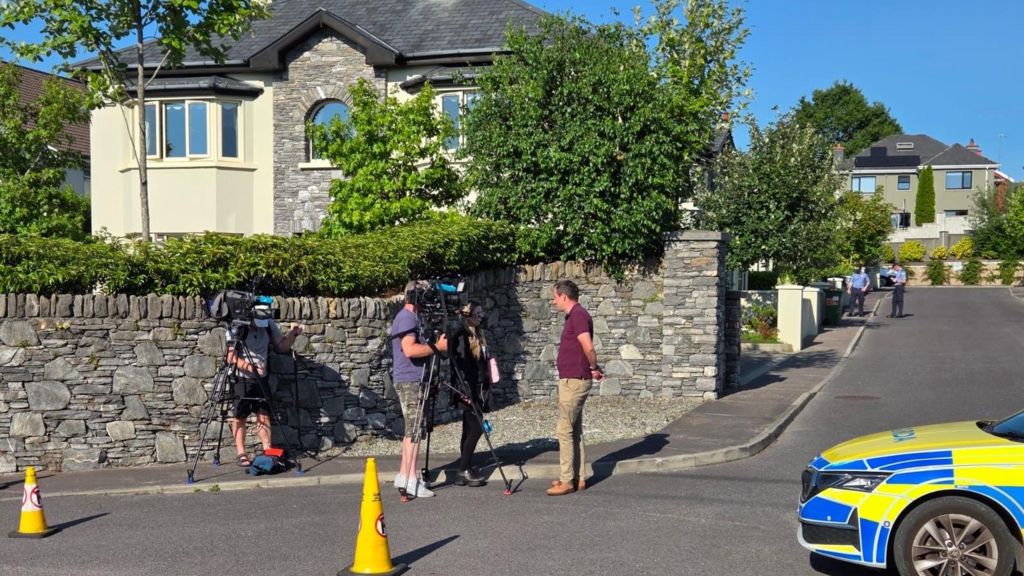
    A violent incident in rural County Monaghan, Republic of Ireland, has left two Irish police officers (gardaí) hospitalized and triggered a widespread manhunt for a fleeing suspect on Thursday afternoon, local law enforcement confirmed. The incident unfolded in two connected phases, beginning just before 11:30 a.m. local time when two plain-clothes gardaí on routine patrol stopped to question a man in his 20s. What started as a routine interaction quickly escalated: the suspect became physically aggressive and assaulted one of the attending officers before fleeing into nearby open fields. An initial search operation failed to locate the man, leaving law enforcement searching for leads.

    Less than two hours later, shortly after 1 p.m., a marked garda patrol car was traveling along the R184 route in Tullycorbett when it was deliberately rammed by an Audi vehicle registered in Northern Ireland. Immediately after the collision, both people inside the Audi abandoned the vehicle and ran from the scene, prompting an emergency, large-scale search of the surrounding area.

    Quick action from responding officers led to the arrest of the passenger, the same 20-something man linked to the earlier assault on the plain-clothes officers. However, the driver of the striking vehicle remains at large. Law enforcement has released a public description of the at-large suspect: he is also in his 20s, of medium height and build, and was last seen wearing a dark grey tracksuit top paired with grey tracksuit bottoms.

    The two gardaí in the rammed patrol car, one male and one female, were transported to Our Lady of Lourdes Hospital in Drogheda to receive medical assessment for their injuries sustained in the collision. As of Thursday afternoon, the search operation is still active, with specialized resources deployed including regional armed support units and the garda air support unit to cover the large search area.

    Gardaí have issued a public appeal for information, asking any member of the public who was traveling along the R184 in Tullycorbett on Thursday, or anyone with details about the Audi vehicle or the at-large suspect that have not yet shared their information to contact local law enforcement immediately.

  • New garden unveiled to celebrate Shanghai-Hamburg friendship

    New garden unveiled to celebrate Shanghai-Hamburg friendship

    On April 16, 2026, a symbolic new public green space — the Hamburg Garden — was officially opened to visitors in Shanghai’s bustling downtown Xintiandi neighborhood, Huangpu District. The launch of this installation, a featured attraction of the 2026 Shanghai International Flower Show, marks a major celebration of the 40th anniversary of the sister city friendship between Shanghai, China and Hamburg, Germany.

    Designed as a living tribute to the decades-long bond between the two major port cities, the garden masterfully blends the characteristic minimalist, natural aesthetic of northern German landscape design with distinct cultural markers tied to Hamburg. Every element of the space is intentionally crafted to reflect the deep connection between the two regions, turning a floral installation into a tangible symbol of cross-cultural partnership.

    The opening ceremony drew a diverse group of high-level guests from both cities. Attendees included Ma Yinghui, Director of the Foreign Affairs Office of the Shanghai Municipal People’s Government; Gao Hongjian, Director of the Shanghai Landscaping and City Appearance Administrative Bureau; and a cross-party delegation of members from the Hamburg Parliament, led by Carola Veit, the parliament’s president.

    Speaking at the ceremony, Veit highlighted the historic nature of the project, noting that this marks the first time a German city has been featured as a dedicated guest participant in the Shanghai International Flower Show. She emphasized that the garden’s design, which prominently features bridges and blooms, carries profound symbolic meaning for the relationship between the two cities. “The garden is a beautiful symbol for the partnership and friendship because there are bridges and flowers, and so there’s always hope,” Veit said.

    The project represents more than a horticultural exhibition; it stands as a lasting public monument to people-to-people exchange and decades of collaborative friendship between the two port cities, inviting residents and visitors of Shanghai to engage with German culture and learn more about the longstanding bilateral connection.