分类: science

  • Chinese large telescope releases over 30m spectra to international collaborators

    Chinese large telescope releases over 30m spectra to international collaborators

    China’s National Astronomical Observatories has unveiled a monumental astronomical dataset from its Large Sky Area Multi-Object Fiber Spectroscopic Telescope (LAMOST), distributing over 30 million celestial spectra to researchers worldwide. The newly released DR13 dataset, covering observations from 2011 through June 2025, represents the most extensive spectral survey ever conducted, solidifying China’s position at the forefront of astronomical research.

    The comprehensive data release includes approximately 13.47 million low-resolution spectra and 17.35 million medium-resolution spectra, accompanied by a stellar parameter catalog containing nearly 12.94 million entries. This unprecedented collection continues LAMOST’s reign as the world’s leading spectral survey project in both data volume and stellar parameter scale.

    Since becoming operational as China’s first major national scientific infrastructure in astronomy, LAMOST has revolutionized large-scale spectroscopic sky surveys. The telescope’s pioneering design has enabled 14 years of efficient and stable operation, during which it has transformed our understanding of the Milky Way’s structure and evolution.

    The scientific impact of LAMOST’s data is demonstrated by its widespread adoption across the global astronomy community. Researchers from 278 institutions worldwide, including significant participation from the United States, Germany, Belgium, and Denmark, have utilized the telescope’s data to produce more than 2,200 high-quality research publications. Recent years have seen particularly robust output, with over 300 annual publications—more than 40 percent authored by international astronomers—placing LAMOST’s scientific productivity among the world’s elite 6-to-10-meter class telescopes.

    Beyond galactic studies, LAMOST’s spectra have facilitated groundbreaking discoveries across multiple astronomical domains, including the identification of compact objects, advances in stellar physics, exoplanet detection, and quasar research. This latest data release promises to further accelerate astronomical discovery and international collaboration in the coming years.

  • Negative ions found on moon solve old mystery

    Negative ions found on moon solve old mystery

    A groundbreaking discovery by a Chinese-led international research team has unraveled a long-standing cosmic mystery through the first direct detection of negative hydrogen ions on the lunar surface. The findings, captured by specialized instrumentation aboard China’s Chang’e 6 lunar lander, reveal how solar wind interactions generate these elusive particles on airless celestial bodies.

    The research team employed the Negative Ions at the Lunar Surface (NILS) detector, a pioneering instrument co-developed by the Swedish Institute of Space Physics and the Chinese Academy of Sciences. During its operational window, the instrument recorded six distinct energy signatures of negative hydrogen ions over a 48-hour period, marking the first direct measurement of such particles on another planetary body.

    Negative ions—atoms or molecules that have gained extra electrons—represent a crucial component of universal plasma but have remained notoriously difficult to study due to their fragility. Solar radiation typically strips away their additional electrons almost immediately, making remote detection virtually impossible.

    The investigation confirmed these ions form through a scattering process where solar wind particles collide with lunar regolith and rebound, capturing electrons from the soil in the process. By cross-referencing data with the European Space Agency’s Artemis satellites, researchers established a direct correlation between solar wind intensity and negative ion production rates.

    Simulations revealed dramatically different behaviors between the moon’s illuminated and dark sides. On the sunlit surface, ions survive mere moments within an extremely thin surface layer, while on the night side, they persist significantly longer, being carried by electromagnetic fields to form a massive tail extending thousands of kilometers behind the moon.

    This discovery provides critical insights into space weathering—the gradual physical and chemical alteration of celestial surfaces by the space environment. The researchers suggest these ions may contribute to lunar water formation and help maintain the moon’s tenuous exosphere, with ion density surging over 1,000% during periods of intense solar activity.

    The findings establish a new framework for studying similar phenomena on other airless solar system bodies, including asteroids and planetary moons, advancing our understanding of universal plasma behavior and celestial evolution.

  • Dirty diapers born again in Japan recycling breakthrough

    Dirty diapers born again in Japan recycling breakthrough

    In a groundbreaking environmental initiative, Japan has developed revolutionary recycling technology that transforms soiled diapers into new sanitary products. This world-first pilot program addresses the dual challenges of Japan’s mounting waste management crisis and its rapidly aging demographic profile.

    The innovative process, spearheaded by hygiene product manufacturer Unicharm, operates in two forward-thinking municipalities—Shibushi and Osaki—where residents achieve an impressive 80% household waste recycling rate, quadruple the national average. These communities implemented radical waste management solutions a quarter-century ago when facing imminent landfill saturation.

    The sophisticated recycling methodology involves collecting specially marked diapers, then subjecting them to shredding, washing, and separation into core components: pulp, plastic, and super-absorbent polymer (SAP). Through proprietary ozone treatment technology, the materials undergo complete sterilization, bleaching, and deodorization. This breakthrough enables the reuse of diaper pulp—constituting the bulk of each product—to manufacture new diapers meeting strict hygiene standards.

    Japan’s demographic reality drives this innovation: the nation now produces more adult diapers (9.6 billion annually) than infant variants (8 billion), with projections indicating annual disposal of 2.6 million tons of soiled diapers by 2030. Currently, Japan recycles less than 20% of municipal waste, significantly trailing Germany (67%), Britain (44%), and the United States (32%).

    Unicharm’s ambitious roadmap targets full circularity by 2028, aiming to recycle both plastic and absorbent polymer components alongside pulp. The company plans to expand collaboration to 20 municipalities by 2035 while developing water-reduction techniques to enhance process sustainability. Although currently available at a 10% price premium in local markets, these recycled products represent a paradigm shift in sustainable hygiene solutions for an aging society.

  • It’s go time: historic Moon mission set for lift-off

    It’s go time: historic Moon mission set for lift-off

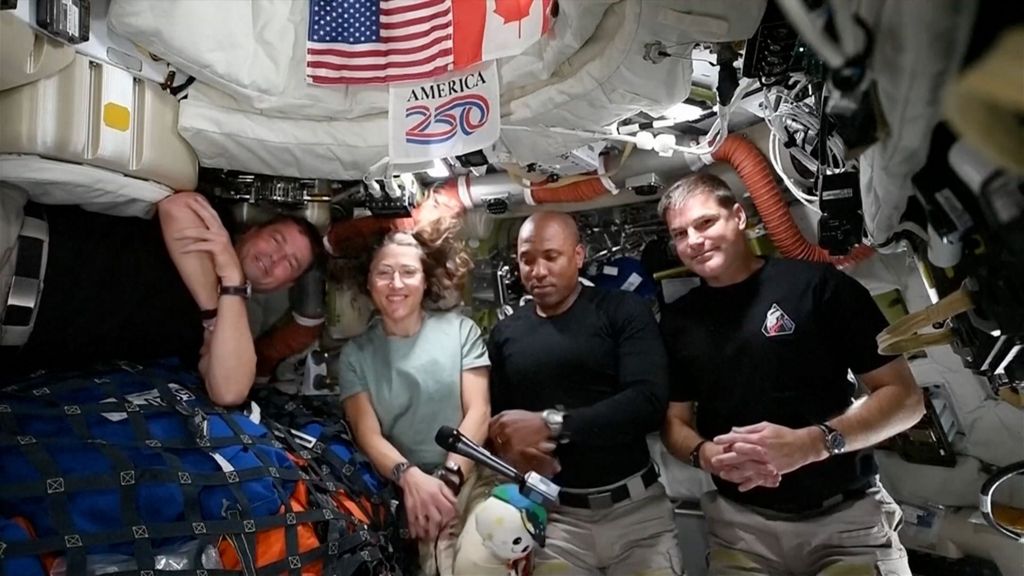
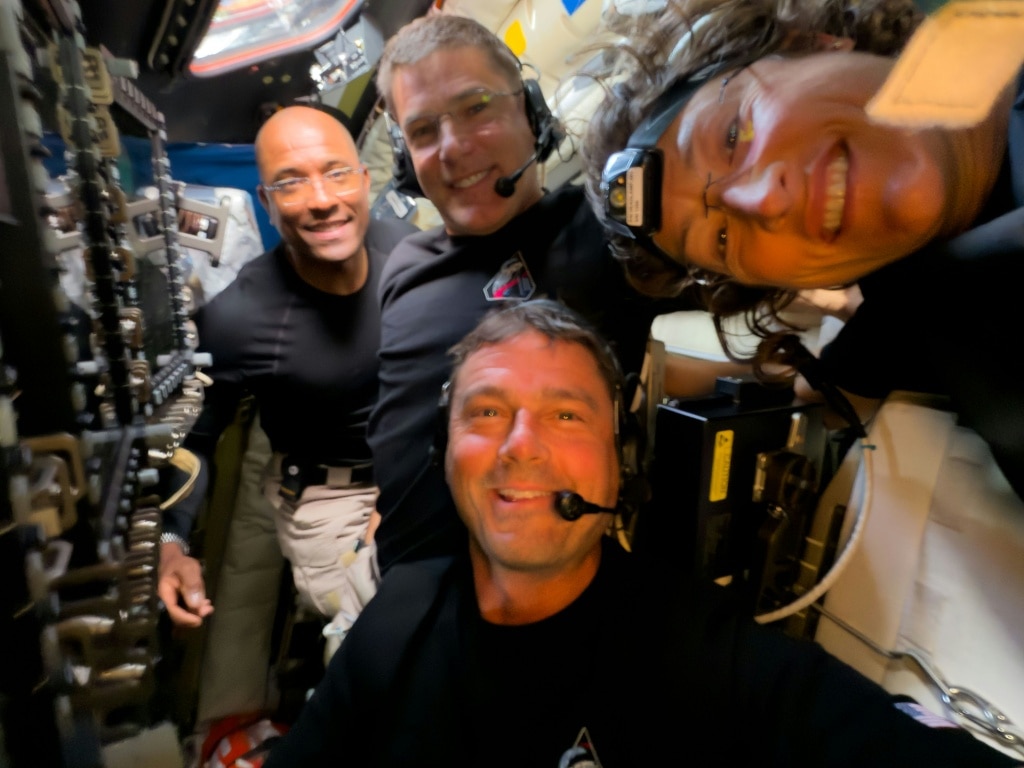
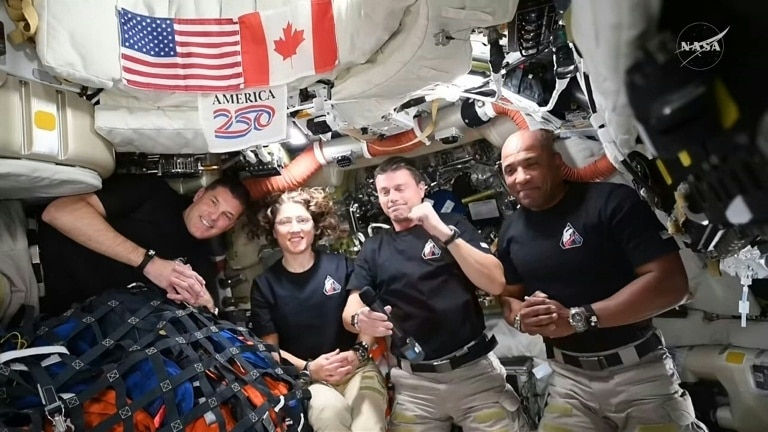
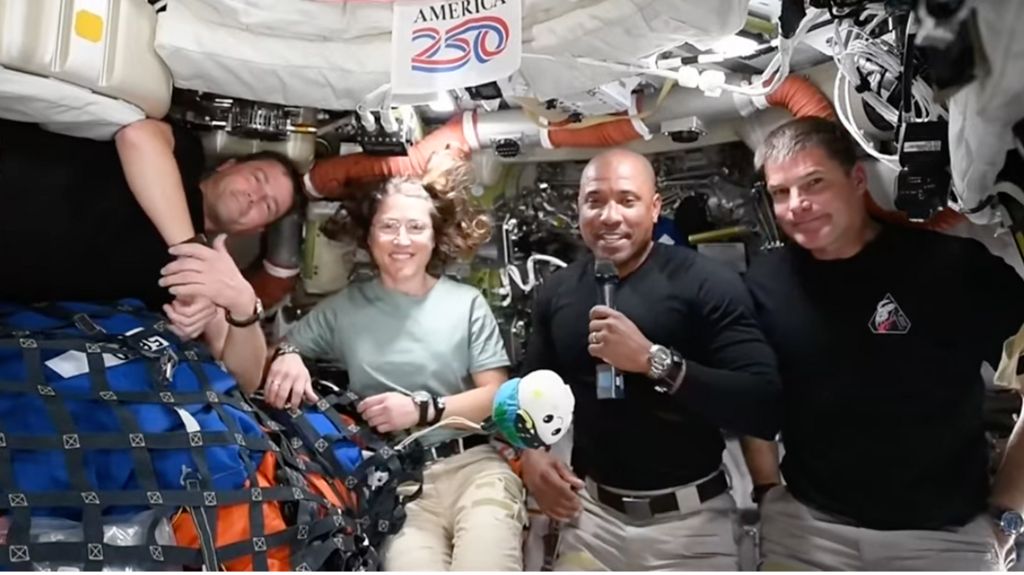
    NASA’s groundbreaking Artemis II mission is preparing for its historic April launch, marking America’s first crewed lunar expedition in over fifty years since the conclusion of the Apollo program. The diverse four-member crew—Americans Reid Wiseman, Victor Glover, and Christina Koch alongside Canadian Jeremy Hansen—will embark on an approximately ten-day journey to orbit the Moon without landing, echoing the pioneering trajectory of Apollo 8 in 1968.

    This mission represents multiple historic firsts: the first woman, first person of color, and first non-American to participate in a lunar mission. The crew will travel aboard the newly developed Space Launch System (SLS) rocket, a monumental orange-and-white vehicle engineered to enable sustained lunar exploration. The SLS is designed to support America’s ambitious plan to establish a permanent lunar base as a strategic stepping stone for future Mars colonization.

    “Our return to the Moon represents the crucial next phase in our ultimate journey to Mars,” stated mission commander Wiseman during a recent NASA podcast. The Artemis program—named after Apollo’s mythological twin sister—aims to test technologies essential for eventual human missions to the Red Planet.

    The mission unfolds against a backdrop of renewed global space competition, with China targeting a human lunar landing by 2030 and focusing particularly on the resource-rich lunar South Pole. While comparisons to the Cold War space race emerge, Harvard professor Matthew Hersch notes fundamental differences: “The Chinese are primarily competing with themselves rather than engaging in direct competition like the US-Soviet rivalry.”

    Despite advanced technology that would be “almost unimaginable” to Apollo-era astronauts, significant risks remain. The crew will travel in a spacecraft that has never carried humans or ventured to the Moon, navigating a distance of over 384,000 kilometers from Earth—approximately 1,000 times farther than the International Space Station.

    NASA maintains rigorous safety protocols, with former chief astronaut Peggy Whitson emphasizing: “We accept nothing less than perfection. Our spaceflight history reminds us that when accidents occur, lives are lost.”

    The mission faces an ambitious timeline, with plans for a lunar landing by 2028 dependent on developing lunar landers through private sector partnerships with companies led by Elon Musk and Jeff Bezos. The program has encountered substantial delays and budget overruns, yet NASA hopes Artemis II can recreate the unifying inspiration of Apollo 8, which famously “saved 1968” during a period of global turmoil.

    As the world again faces division and uncertainty, Artemis II carries the potential to inspire a new generation and demonstrate humanity’s continuing capacity for extraordinary achievement in space exploration.

  • NASA to build $20 bn moon base, pause orbital lunar station plans

    NASA to build $20 bn moon base, pause orbital lunar station plans

    In a significant strategic shift for America’s space exploration agenda, NASA Administrator Jared Isaacman announced the agency will suspend development of the Gateway lunar orbital station and instead channel approximately $20 billion toward establishing a permanent surface base on the Moon. The declaration came during a major policy address at NASA headquarters in Washington, D.C., marking a substantial reallocation of resources within the Artemis program.

    The revised approach prioritizes ‘infrastructure that enables sustained surface operations’ over the orbital transfer station concept. While existing Gateway hardware will be repurposed where feasible, and international partnerships will be redirected toward surface objectives, the orbital component has been effectively paused in its current form. This decision follows internal evaluations criticizing Gateway as potentially redundant and diverting resources from more critical lunar surface ambitions.

    NASA’s revised blueprint outlines an ambitious seven-year timeline involving dozens of missions conducted alongside commercial and international collaborators. This methodical approach aims to construct ‘humanity’s first permanent surface outpost beyond Earth,’ creating a foundational presence that would eventually support missions to Mars. The overall target of returning American astronauts to the lunar surface by 2028 remains unchanged despite these architectural changes.

    The strategic reassessment occurs alongside scheduling adjustments for the Artemis 2 mission. Originally slated for February, this crucial lunar flyby—the first in over fifty years—is now targeting an early April launch. This mission serves as a vital test flight to rebuild operational ‘muscle memory’ before attempting a subsequent landing. The U.S. effort maintains its competitive dimension, with China pursuing its own crewed lunar mission objectives by 2030, relying heavily on advancements from private sector partners like SpaceX and Blue Origin, who are developing the essential lunar landing systems.

  • China discovers world’s 2nd-largest light rare earth deposit in Sichuan

    China discovers world’s 2nd-largest light rare earth deposit in Sichuan

    China has announced a groundbreaking geological discovery with the identification of the world’s second-largest light rare earth deposit in Mianning County, Sichuan Province. The Ministry of Natural Resources revealed on Tuesday that the find adds a substantial 9.67 million metric tons of rare earth oxides to the nation’s reserves, representing a remarkable 300 percent increase in current inventory.

    The newly discovered deposit contains rare earth oxides that are critically important for modern industrial applications and advanced manufacturing sectors. These materials serve as essential components in the production of magnetic and fluorescent materials that power various high-technology devices and industrial equipment.

    Beyond the rare earth elements, geological surveys identified significant associated resources within the Maoniuping mining area. The discovery includes massive deposits of fluorite totaling 27.14 million tons and barite reserves measuring 37.23 million tons, both classified as ultra-large deposits according to international mining standards.

    Fluorite, a non-renewable mineral resource, represents the primary source of industrial fluorine that is indispensable for emerging and future-oriented industries. Barite, valued for its unique chemical properties including resistance to acids and alkalis, high density, and exceptional radiation absorption capabilities, serves as a critical raw material across multiple sectors including petroleum, chemical manufacturing, pharmaceutical production, and construction industries.

    This discovery significantly enhances China’s strategic mineral resources position globally while providing substantial raw material security for high-tech manufacturing sectors dependent on these specialized materials.

  • Zhejiang University researchers pioneer major protein breakthrough

    Zhejiang University researchers pioneer major protein breakthrough

    In a landmark study with profound implications for treating genetic disorders, scientists from Zhejiang University have developed a novel method to engineer artificial proteins capable of rectifying malfunctions in critical cellular receptors. The research, recently published in the prestigious journal Nature, represents a significant departure from conventional drug design paradigms.

    The multidisciplinary team focused on G protein-coupled receptors (GPCRs), a large family of membrane proteins that facilitate cellular communication by transmitting external signals into cells. These receptors are targeted by approximately 30% of all approved pharmaceuticals worldwide, typically through interaction with their primary binding pocket, known as the orthosteric site.

    According to Professor Zhang Yan, Vice-Dean of Zhejiang University’s School of Medicine and a lead researcher on the project, genetic mutations in these receptors can impair their signaling functions, leading to hundreds of clinical conditions including Parkinson’s disease, obesity, and hypercalcemia. Traditional drugs designed to target the receptors’ ‘switches’ generally cannot repair these structural dysfunctions, often leaving patients with long-term chronic burdens.

    The innovative approach developed by the Zhejiang team involves creating artificial transmembrane proteins that function as customizable molecular ‘armor’ or exoskeletons. These modulators attach to malfunctioning receptors, enabling precise regulation of their functions. Professor Zhang likened the technology to ‘installing prosthetic limbs for persons with disabilities, or implanting medical devices supported by brain-computer interface technologies, only at the molecular level.’

    The research team selected the dopamine D1 receptor (D1R) as their prototype model, successfully engineering four modulators that could bind to the receptor and restore activities in various loss-of-function mutants. The complexity of this endeavor was immense—designing a modulator composed of 60 amino acids from 20 available types presents approximately 20^60 possible combinations.

    Critical to overcoming this challenge was the implementation of artificial intelligence. As explained by Professor Zhang Min from the University’s College of Computer Science and Technology, AI-driven protein design, particularly generative models for de novo design, provided tools to create entirely novel proteins with unprecedented speed and accuracy. The team developed an AI-guided probe to thoroughly profile targeted receptor structures and identify potential binding sites, using ‘structural prompts’ analogous to inputs for language models like ChatGPT but specifically for protein structures.

    The resulting technology not only enables precise switching of receptor functions but also offers programmability to a certain degree. More significantly, the team’s findings establish a platform for similar research, potentially revolutionizing treatment approaches for disorders stemming from genetic mutations in cellular receptors.

  • Geneva’s CERN hails delicate test on transporting antimatter as a scientific success

    Geneva’s CERN hails delicate test on transporting antimatter as a scientific success

    In a landmark scientific achievement, researchers at the European Organization for Nuclear Research (CERN) have successfully completed the world’s first road transport of antiprotons—a form of antimatter that annihilates upon contact with ordinary matter. The delicate operation, conducted on Tuesday, involved moving approximately 100 antiprotons in a specially designed container during a 30-minute truck journey from CERN’s Geneva facility.

    The antiprotons were contained within a 1,000-kilogram (2,200-pound) apparatus called a ‘transportable antiproton trap,’ which maintained the particles in suspension using superconducting magnets cooled to -269°C (-452°F). This sophisticated containment system prevented the antiprotons from contacting the inner walls of the chamber, which would have resulted in immediate annihilation.

    CERN spokeswoman Sophie Tesauri confirmed the experiment’s success, noting that approximately 91 of the original 100 antiprotons survived the transportation process. The minuscule mass of the transported antimatter—equivalent to less than 100 hydrogen atoms—meant that even in a worst-case scenario, any energy release would have been undetectable without specialized equipment.

    This breakthrough represents a critical step toward CERN’s broader objective of establishing antimatter transport to research facilities across Europe. The organization ultimately aims to deliver antiprotons to Heinrich Heine University in Düsseldorf, Germany—an eight-hour drive under normal conditions. However, technical challenges remain, as the current containment system can preserve antiprotons for only about four hours, half the required duration for the intended German journey.

    The successful transport demonstrates significant progress in antimatter handling, building upon CERN’s decades of experimentation with these elusive particles. The organization’s Antiproton Decelerator facility remains the world’s sole source of low-energy antiprotons available for scientific study.

  • Splendid auroras witnessed in NE China’s Heilongjiang

    Splendid auroras witnessed in NE China’s Heilongjiang

    Residents and skywatchers in Northeast China’s Heilongjiang province were treated to a spectacular natural light show as vibrant auroras painted the night sky from March 22 through the early hours of March 23, 2026. The celestial phenomenon, typically associated with polar regions, became visible across multiple locations in China’s northernmost province due to intensified geomagnetic activity.

    The auroral display was particularly prominent in Mohe city, China’s northernmost settlement, where photographers captured stunning images of the dancing lights. The phenomenon occurred as charged particles from solar winds interacted with Earth’s magnetosphere, creating the colorful patterns that shimmered across the heavens.

    Scientists note that such visible aurora displays at relatively low latitudes remain uncommon, making this event particularly noteworthy for both astronomical observers and the general public. The occurrence provides valuable research opportunities for space weather specialists studying the effects of solar activity on Earth’s magnetic field.

    The event attracted significant attention from photography enthusiasts and nature lovers who braved the cold nighttime temperatures to witness the rare atmospheric spectacle. Local tourism officials reported increased visitor interest in the region following the celestial event.

  • From forecasts to the future: a sci-fi journey on World Meteorological Day

    From forecasts to the future: a sci-fi journey on World Meteorological Day

    In a groundbreaking fusion of science fiction and meteorological advocacy, Chinese authorities have launched an innovative educational campaign marking the 66th World Meteorological Day. The China Meteorological Administration, in collaboration with China Daily, has developed an extensive illustrated series inspired by the acclaimed sci-fi film “The Wandering Earth” to communicate the vital importance of weather observation.

    The narrative follows protagonist Liu Xiaoqiang, a maintenance technician stationed at Earth Engine C0323 in a dystopian future where planetary rotation has ceased and atmospheric phenomena have disappeared. Experiencing existential doubts about his repetitive duties, Liu’s perspective transforms when he encounters a mysterious communication directing him to the abandoned “Museum of Countless Weather.”

    This repository of meteorological history, constructed within a derelict observation station, contains preserved instruments and records documenting centuries of scientific dedication. Through interactive exhibits, Liu discovers the extensive legacy of human commitment to weather monitoring—from research stations in polar extremes to high-altitude observatories where generations of scientists meticulously documented climate patterns.

    The exhibition reveals how continuous meteorological observation protected civilizations through advanced warning systems and climate research. Liu emerges with profound understanding of this year’s World Meteorological Day theme: “Observing Today, Protecting Tomorrow.”

    The initiative represents a creative approach to public science education, using compelling storytelling to highlight how contemporary meteorological work safeguards future generations. By connecting current climate observation efforts with humanity’s long-term survival, the project underscores the critical role of sustained environmental monitoring in building climate resilience.