分类: science

  • NASA’s Artemis II splashes down off southern US California coast

    NASA’s Artemis II splashes down off southern US California coast

    In a landmark moment marking humanity’s return to crewed lunar exploration after more than half a century, four astronauts on NASA’s Artemis II mission have completed their 10-day voyage around the moon and touched down safely off the California coast, the U.S. space agency confirmed.

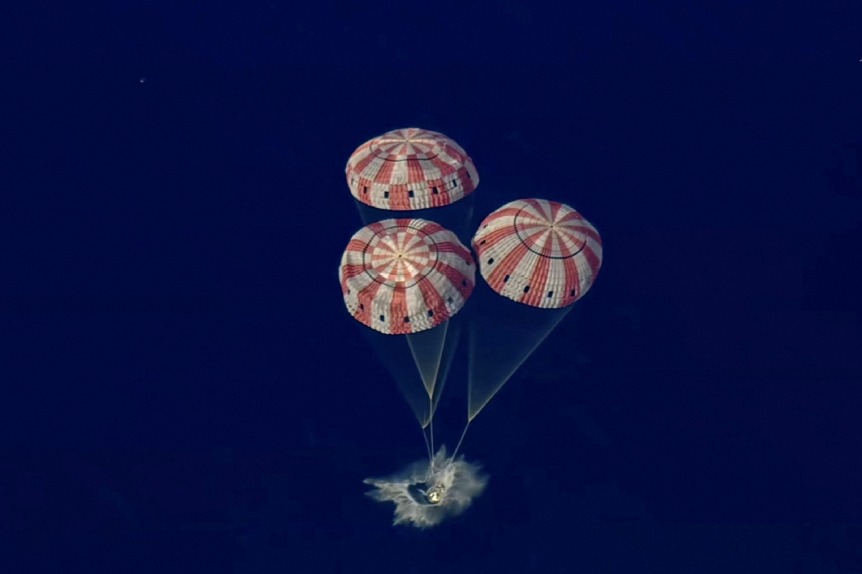
    The mission’s Orion capsule splashed down in the Pacific Ocean at approximately 17:07 local time on Friday (00:07 GMT Saturday), roughly 96 kilometers off the coast of San Diego, according to NASA’s official mission updates. This successful return caps a milestone journey: it is the first crewed lunar mission launched by the United States since NASA’s Apollo 17 mission lifted off from the moon in 1972, ending the first era of human lunar landings.

    Shortly after the capsule completed its splashdown, Artemis II Commander Reid Wiseman announced that all four members of the crew are in good condition, easing any post-mission health concerns that followed the high-speed atmospheric reentry. The successful conclusion of Artemis II paves the way for the upcoming Artemis III mission, which plans to land the first woman and first person of color on the lunar surface, advancing NASA’s long-term goals of establishing a sustainable human presence on the moon and preparing for future crewed missions to Mars.

  • Chang’e 7 lunar probe to be launched later this year

    Chang’e 7 lunar probe to be launched later this year

    China’s ambitious next step in lunar exploration is on track for liftoff in the second half of 2026, with the Chang’e 7 robotic probe now fully prepared for final pre-launch operations at its coastal launch site, China’s human spaceflight authority has confirmed.

    As of April 9, all structural components and scientific instruments of the Chang’e 7 probe have arrived at the Wenchang Space Launch Center in southern China’s Hainan Province, transported via a combination of air and road shipments, according to an official statement from the China Manned Space Agency (CMSA). In the coming months, engineering teams will complete on-site assembly of the spacecraft and conduct a full suite of functionality and integration tests to confirm the probe is flight-ready.

    The core objective of the Chang’e 7 mission is to map the unique geological environment and natural resource reserves of the moon’s south polar region, an area that has emerged as a high-priority target for global lunar exploration in recent years. To achieve this goal, the mission will pursue major breakthroughs in several cutting-edge space technologies, including high-accuracy soft landing on the uneven lunar surface, legged rover mobility, and controlled hopping detection for permanently shadowed craters – regions that never receive sunlight and are thought to hold large deposits of water ice.

    Unlike previous lunar missions that relied on a single flight architecture, Chang’e 7 will use a combined multi-phase operation approach: an orbiter will survey the region from lunar orbit, while a lander, a mobile rover, and a small hopping flying probe will conduct on-site surface investigations. The mission will also host multiple collaborative scientific projects with international research institutions, underscoring China’s commitment to open space exploration.

    In a notable shift from past Chang’e program announcements, CMSA, rather than the China National Space Administration (CNSA), which has overseen robotic lunar exploration updates for decades, released this latest progress update. Agency officials explained the change is part of a broader plan to integrate China’s existing capabilities in both manned lunar exploration development and unmanned robotic lunar research.

    “By combining the technological advances and decades of mission experience accumulated through both the national manned space program and the Chang’e robotic exploration initiative, we can greatly improve the overall efficiency of China’s lunar exploration efforts,” the statement noted.

    Per pre-launch mission design documents, Chang’e 7 consists of four integrated modules: the orbiter, lander, rover, and the small hopping flying probe. The latter craft is specifically engineered to descend into permanently shadowed craters to search for and analyze water ice, a resource that is critical for future long-term human lunar outposts and deep space exploration missions. In a nod to international collaboration, the probe carries six scientific payloads developed by research teams from around the world. These include laser retroreflector arrays from Italy’s National Institute for Nuclear Physics Frascati National Laboratory, a lunar dust and electric field instrument from the Russian Academy of Sciences’ Space Research Institute, and an international lunar-based telescope from the International Lunar Observatory Association.

    China’s Chang’e program has already completed six landmark robotic lunar missions since its inception, cementing the country’s position as a global leader in deep space exploration. Previous missions have achieved a series of historic firsts: Chang’e 3 and Chang’e 4 successfully deployed two rovers on the lunar near side and far side respectively, while Chang’e 5 and Chang’e 6 retrieved lunar surface samples from both the near and far sides of the moon – a feat no other space program has accomplished to date.

    With pre-launch preparation moving forward according to schedule, Chang’e 7 is set to open a new chapter of detailed scientific exploration of the lunar south pole, generating data that will inform both future unmanned research and China’s planned manned lunar landing missions targeted for before 2030.

  • Watch the Artemis II re-entry: Separation, blackout, then splashdown

    Watch the Artemis II re-entry: Separation, blackout, then splashdown

    After a landmark 10-day journey around the Moon, the four-person crew of NASA’s Artemis II mission has successfully completed their voyage and returned safely to Earth, capping off a critical milestone in humanity’s push to return humans to the lunar surface. The final phase of the mission unfolded in a carefully choreographed sequence that space agencies and space enthusiasts around the world watched in real time.

    Before the crew could touch down back on our planet, the spacecraft first executed its planned separation maneuver, detaching the crew capsule from the service module that had supported the vehicle through its deep space voyage. This separation is a critical step that clears the way for the capsule’s atmospheric entry, and mission controllers confirmed the maneuver happened exactly as planned.

    Following separation, the capsule entered the period of communications blackout that is standard for all atmospheric re-entry from deep space missions. As the vehicle streaks through Earth’s atmosphere at hypersonic speeds, friction with atmospheric particles creates an intense layer of ionized gas around the capsule that blocks all radio signals, leaving mission controllers on the ground waiting anxiously for contact to be restored. For those watching the live broadcast of the mission’s conclusion, this 10-minute period of silence built palpable tension, even though engineers had run countless simulations to confirm the capsule’s heat shield could withstand the 2,800-degree Celsius temperatures generated during re-entry.

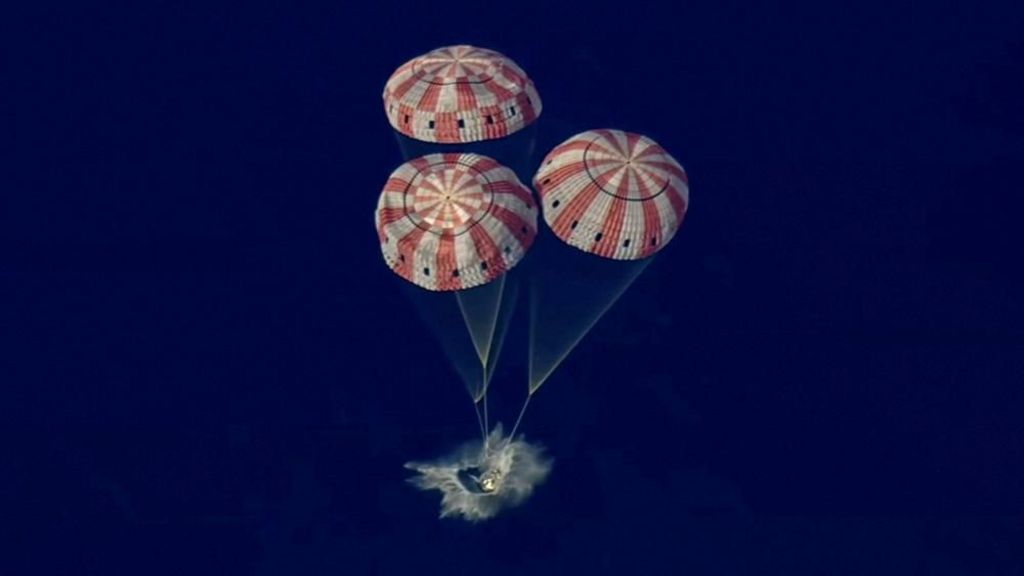
    When the blackout ended and signals from the capsule reconnected with ground control, the room at NASA’s mission control center erupted in applause. The capsule then deployed its parachute system in stages, slowing from hypersonic speed to a gentle descent before making a smooth splashdown in the Pacific Ocean, as planned. Search and rescue teams were already on station to retrieve the crew and the capsule, and initial reports confirm all four astronauts are in good health.

    This mission marks the first crewed voyage around the Moon in more than 50 years, since the final Apollo mission in 1972. It serves as a final full test of NASA’s Space Launch System rocket, Orion capsule, and all supporting systems before the Artemis III mission, which is planned to land the first woman and first person of color on the lunar surface. Data collected during Artemis II will help engineers refine designs for future lunar landings and lay the groundwork for long-term lunar exploration and eventual human missions to Mars.

  • Artemis II mission was a triumph. Now comes the hard part

    Artemis II mission was a triumph. Now comes the hard part

    NASA’s Artemis II mission has made history, delivering a flawless 10-day mission that carried four astronauts on a circumlunar flight around the Moon’s far side and returned the crew safely to Earth. The Orion spacecraft exceeded performance expectations throughout the journey, and the stunning high-resolution imagery captured by the crew has reignited widespread public excitement, particularly among young people, about the future of human deep-space exploration. But this milestone immediately raises a pressing question: will the children now captivated by Artemis actually get to see humans live and work on the Moon in their lifetimes, or even travel to Mars, as the broader Artemis program promises? While it may sound pessimistic, the reality is that a single circumlunar loop was always the relatively straightforward step. The massive, unprecedented engineering and logistical challenges that come next leave the answer to that question very much open: it could happen, or it might not.

    This is not the first time the world has stood on the cusp of a new era of lunar exploration. When Neil Armstrong and Buzz Aldrin became the first humans to walk on the Moon in July 1969, widespread public expectation held that this was just the beginning, that permanent lunar outposts and regular crewed missions to deep space would follow quickly. That future never materialized, because the Apollo program was never rooted in a long-term commitment to exploration—it was a product of Cold War geopolitics, designed explicitly to prove U.S. technological superiority over the Soviet Union. Once that goal was achieved with Armstrong’s iconic “one small step,” the program lost its political momentum. Just a few years after the first landing, public interest plummeted, television viewership for subsequent Apollo missions dropped off sharply, and all remaining planned lunar landings were canceled mid-program.

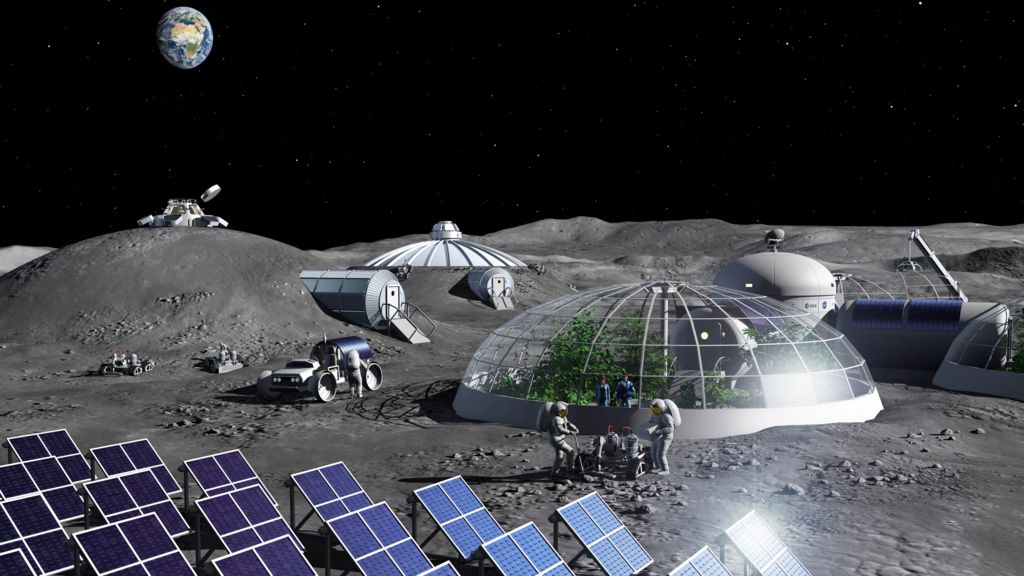
    Today, NASA says its ambitions are fundamentally different. Under current administrator Jared Isaacman, the agency has laid out an ambitious roadmap: the first crewed Artemis lunar landing will take place in 2028, followed by one landing per year after that. By the fifth Artemis mission, scheduled for the end of 2028, NASA plans to begin assembling the first long-term lunar base, developed in partnership with international space agencies including the European Space Agency (ESA). Josef Aschbacher, ESA’s Director General, frames this long-term vision as a scientific and economic certainty. “The Moon economy will develop,” he says. “It will take time to set up the various elements, but it will develop.”

    Yet for all the grand plans, the program already faces significant headwinds, to paraphrase the famous line from Apollo 13’s commander: “Houston, we’ve had a problem.” To put the first boots back on the lunar surface since 1972, NASA relies on two private contractors to build next-generation lunar landers: Elon Musk’s SpaceX, which is developing a 35-meter tall lunar variant of its Starship rocket, and Jeff Bezos’s Blue Origin, which is building the more compact but equally ambitious Blue Moon Mark 2 lander. Both programs are running well behind their original schedules, according to a stark March 10 report from NASA’s own Office of Inspector General.

    The report found that SpaceX’s lunar Starship is at least two years behind its original delivery target, with additional delays widely expected. Blue Origin’s Blue Moon is no less troubled: it is already at least eight months behind schedule, and nearly half of the design issues flagged in a 2024 review remain unresolved more than a year later. These new landers are a world away from the tiny Apollo-era Eagle module that carried just two astronauts to the lunar surface in 1969, only large enough for a short surface stay to collect rock samples before returning to Earth. The new generation of landers must carry massive amounts of infrastructure: scientific equipment, pressurized rovers capable of supporting long-duration exploration, and the core initial components for the lunar base itself.

    Moving this much mass to the lunar surface requires unprecedented amounts of propellant—far more than can be launched on a single rocket. To solve this problem, the Artemis program plans to build an orbital propellant depot in Earth orbit, which would be refilled by more than 10 separate tanker rocket launches over the course of months. The concept is elegant on paper, but executing it is extraordinarily difficult. Keeping super-cold liquid oxygen and methane stable in the vacuum of space, then transferring them between multiple spacecraft, is one of the most demanding engineering challenges in the entire program.

    Dr. Simeon Barber, a space scientist at the Open University, notes that Artemis II itself was delayed twice this year before launch, all due to problems with fueling on the ground. “If it’s difficult to do on the launch pad, it’s going to be much more difficult to do in orbit,” he points out. The next major milestone, Artemis III, is scheduled for mid-2027, and is designed to test how the Orion crew capsule docks with one or both landers in Earth orbit. But given that SpaceX’s Starship has yet to complete a successful orbital test flight, and Blue Origin’s heavy-lift New Glenn rocket has only managed two launches to date, Barber describes the 2027 target as “a very steep ask.”

    NASA’s decision to stick to a 2028 target for the first crewed landing is partially driven by political considerations. The deadline now aligns with the current U.S. administration’s space policy, which requires an American crew back on the lunar surface by 2028, a timeline that falls within the current presidential term. Independent analysts almost universally reject the 2028 target as unrealistic, but Congress has backed the date with billions of dollars in taxpayer funding, in large part because of a new geopolitical competitor in lunar exploration: China.

    Over the past two decades, China has emerged as a global economic and military superpower, and its space capabilities have expanded at a dramatic pace. China has publicly committed to landing its own taikonaut on the lunar surface by around 2030, with a far simpler technical approach than NASA’s plan: China uses two rockets, carrying a separate crew module and lander, and avoids the complex in-orbit refueling that is a core part of the Artemis architecture. If Artemis slips as widely expected, China could beat the U.S. back to the lunar surface.

    Beyond the Moon, the long-term goal of sending humans to Mars looms large. Elon Musk has publicly said he intends to put the first humans on Mars before the end of the 2020s, but most independent experts agree that the earliest feasible timeline for a human Mars landing is the 2040s. The challenges of a Mars mission dwarf even the hardest problems of lunar exploration: the journey alone takes seven to nine months, exposing the crew to lethal levels of deep space radiation with no possibility of a rescue mission if something goes wrong. Mars’s thin, unpredictable atmosphere makes landing a full-sized crewed spacecraft, then launching it back to Earth, an engineering problem of almost unimaginable complexity.

    Even with all these delays and challenges, Artemis II has indisputably put human deep-space exploration back on the global agenda. Private space companies are building new rockets and landers with unprecedented urgency, and international partners are actively debating the depth of their long-term engagement. A drive around the Kennedy Space Center following the Artemis II launch makes that shift tangible: new facilities built by Blue Origin, ongoing construction of SpaceX infrastructure, all clustered near the historic NASA centers that sent the first Apollo missions to the Moon. This new public-private partnership marks a fundamental shift in how human spaceflight is organized, and even if timelines slip, it has already restored NASA’s pioneering momentum that faded after the Apollo era.

    As ESA astronaut Alexander Gerst told Aschbacher after returning from a mission on the International Space Station, the view of Earth from space changes everything. Gerst said he wished every one of the eight billion people on Earth could go to space just once, to see the small, fragile, beautiful blue planet that we all share, and recognize how poorly we have cared for it. As Aschbacher put it: “That would create a very different life on planet Earth.”

  • Back to Earth: What happens to the Artemis II astronauts now?

    Back to Earth: What happens to the Artemis II astronauts now?

    After a groundbreaking journey that pushed the boundaries of human space exploration, the four-member Artemis II crew has completed their mission and splashed down safely off the coast of California, re-entering Earth’s atmosphere at a blistering speed of 25,000 miles per hour (40,000 kilometers per hour). This mission marks a historic milestone: the crew traveled farther into deep space than any human group before, surpassing the 1970 Apollo 13 record of 248,655 miles by more than 4,000 additional miles.

    During their lunar fly-by, the crew carried out a rare, unforgettable observation: using specialized eclipse viewers to watch a solar eclipse from their unique vantage point in space, capturing stunning images of the Moon backlit by the Sun from NASA’s Orion spacecraft. Even before their landing, the crew connected with audiences back on Earth, holding conversations with reporters, their families, and former U.S. President Donald Trump while still in orbit.

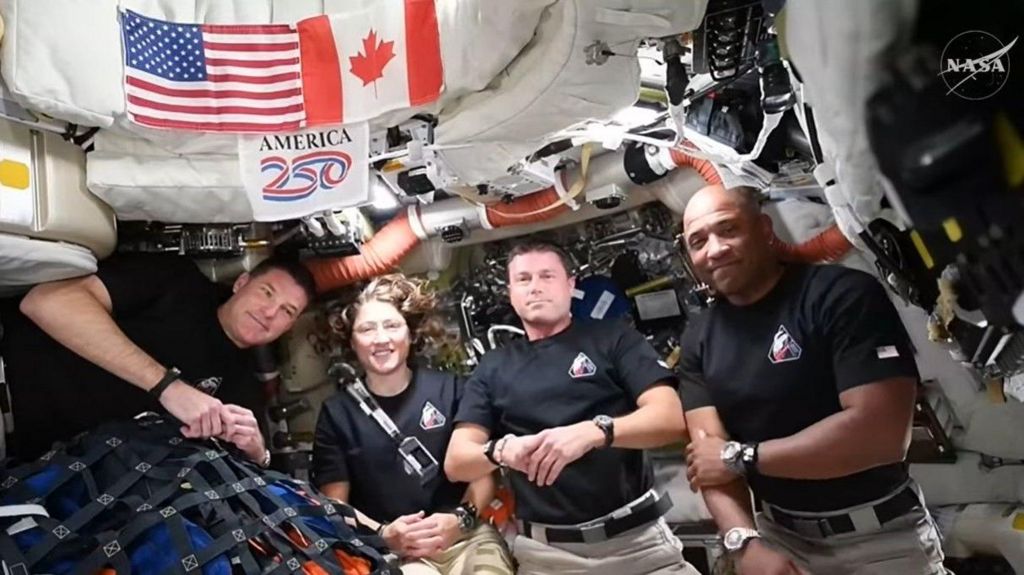
    For astronauts, space travel remains the defining peak of their professional lives, despite the unique hardships that come with extended time off-planet. Mission specialist Christina Koch noted ahead of splashdown that even minor inconveniences – from freeze-dried meals to limited private facilities for hygiene – were a small price to pay for the opportunity to explore deep space. The four crew members, commander Reid Wiseman, mission specialists Christina Koch and Victor Glover, and Canadian astronaut Jeremy Hansen, now begin their transition back to life on Earth, following a standard post-mission protocol.

    Immediately after splashdown, the crew was retrieved by a waiting U.S. warship, where medical teams conducted urgent initial health assessments. They were then airlifted by helicopter to shore, before transferring to NASA’s Johnson Space Center in Houston for further evaluation. Extended time in microgravity inevitably causes physiological changes: without Earth’s gravitational pull, muscle and bone mass deteriorate, particularly in the postural muscles of the back, neck, and calves. Even with the crew’s rigorous in-orbit exercise routine, some muscle loss is unavoidable, with up to 20% mass loss possible over just two weeks. However, NASA experts note the Artemis II mission’s relatively short duration means long-term health impacts are expected to be minimal. Compared to the five to six month typical stays on the International Space Station, the Artemis II crew’s time in space aligns with the short two to three week missions of the 1981-2011 space shuttle era, putting them at far lower risk of severe physiological degradation.

    Psychologically, returning to Earth brings a mix of emotions for the crew, all seasoned, highly trained space explorers selected for their emotional stability. Koch already shared from orbit that she will deeply miss the close teamwork and shared sense of purpose that defines life on a deep space mission. Like many astronauts before them, the Artemis II crew gained a profound new perspective on Earth from space: seeing the planet hanging in the black void of space reinforced how interconnected all humanity is, and how fragile our shared home is. “It truly emphasized how alike we are, how the same thing keeps every single person on planet Earth alive,” Koch explained. While many astronauts report being reluctant to leave the excitement and purpose of space work, the crew expressed immense excitement to reunite with their loved ones after the high-risk mission.

    For Wiseman, who lost his wife to cancer in 2020 and has raised their two teenage daughters as a single father, the reunion holds particular weight: he had prepared his daughters for the worst-case scenario before launch, showing them where his will was kept in case of a fatal accident. For Hansen’s family, the anticipation has been building for months. “Our two daughters and son were so, so excited to see their dad living his dream,” Dr. Catherine Hansen, Jeremy Hansen’s wife, told BBC World Service’s Newsday. “When Jeremy is back safely, we will absolutely come together. First just the five of us in a quiet environment to hear some of those private stories, and then we will absolutely celebrate with the world.”

    Looking ahead, the Artemis II crew’s futures remain tied to NASA’s ambitious lunar exploration program. While NASA does not disclose private details of crew members’ post-mission plans, the three NASA-affiliated astronauts remain active members of the agency’s astronaut corps, and all four Artemis II crew members are eligible to fly on future Artemis missions. The program is already gearing up for Artemis III, currently scheduled for 2027, and Artemis IV in 2028 – with Artemis III marked as the mission that will return human boots to the lunar surface for the first time since Apollo 17 in 1972, though industry analysts widely expect the landing date to be pushed back.

    One confirmed upcoming engagement is a visit to the White House: former President Trump, who first established the Artemis program during his first term in 2017, called the crew while they were in space to extend an invitation for a formal reception in the Oval Office. “I’ll ask for your autograph, because I don’t really ask for autographs much, but you deserve that,” Trump told the crew, adding that he planned to give them “a big salute on behalf of the American people and beyond that.” It remains unclear whether Canadian astronaut Jeremy Hansen will join the Washington visit.

    The biggest change the crew can expect after their mission is a sharp rise in public profile. Unlike many recent astronaut crews, the Artemis II four have captured global public attention, with round-the-clock news coverage and viral social media content turning them into household names. Adjusting to this new level of fame will likely be one of the biggest transitions they face as they settle back into life on Earth.

  • Artemis astronauts hours away from high-stakes re-entry

    Artemis astronauts hours away from high-stakes re-entry

    As the clock ticks down to the final, most dangerous phase of their groundbreaking 10-day lunar flyby mission, the four crew members of NASA’s Artemis II mission have entered the final hours of preparation for re-entry and splashdown off the California coast. What began as a historic voyage that pushed human spaceflight further from Earth than ever before now hangs on the successful completion of a step that has carried extraordinary risk for the program, dating back to its first uncrewed test flight in 2022.

    The international crew — NASA astronauts Reid Wiseman, Victor Glover, and Christina Koch, alongside Canadian Space Agency astronaut Jeremy Hansen — has already notched a series of historic firsts during their journey beyond low-Earth orbit. Glover became the first person of color to circumnavigate the Moon, Koch the first woman, and Hansen the first non-American to take part in a lunar flyby mission. Over the past week and a half, the team has captured breathtaking new images of the lunar surface, witnessed a rare Earth-viewed solar eclipse from their vantage point, and shared vivid, awe-inspiring accounts of our planet’s place in the cosmos that have captured public attention across the globe.

    Mission commander Wiseman summed up the crew’s core hope for the voyage in reflective remarks shared mid-mission: “What we really hoped in our soul is that we could, for just a moment, have the world pause — and remember that this is a beautiful planet in a very special place in our universe. We should all cherish what we have been gifted.”

    Now, all eyes turn to the scheduled splashdown set for 5:07 pm local time in the Pacific Ocean, roughly 90 miles off the coast of San Diego. After the capsule lands, joint teams from NASA and the U.S. military will extract the astronauts from the Orion spacecraft and transport them to a waiting recovery ship for initial medical checks. To mark the crew’s final day in space ahead of return, NASA mission control woke the astronauts Friday to a curated playlist featuring Live’s “Run to the Water” and Zac Brown Band’s “Free.”

    While the mission has already achieved nearly all of its test and exploration objectives, senior NASA officials emphasize that no mission success can be declared until the crew is safely back on Earth. “When we can start celebrating is when we have a crew safely in the medbay of the ship,” NASA Associate Administrator Amit Kshatriya told reporters during a Thursday briefing. “That’s really when we can allow the emotions to take over, and, you know, start talking about success. We need to have the crew home before we do that.”

    The high stakes of the re-entry phase stem from unresolved concerns surrounding the Orion capsule’s critical heat shield, first uncovered during the 2022 Artemis I uncrewed test flight. During that mission, the heat shield experienced unexpected excessive erosion during its return through Earth’s atmosphere. The heat shield is designed to slowly ablate, or burn away, to dissipate the extreme heat generated during re-entry: the capsule will hit Earth’s atmosphere at speeds approaching Mach 35, generating searing surface temperatures around 2,700 degrees Celsius — roughly half the temperature of the Sun’s surface.

    NASA engineers have confirmed that even with the unexpected erosion seen on Artemis I, a crew would have survived the return. Still, the agency has adjusted the re-entry trajectory for Artemis II to reduce risk, after determining the shallower flight path used in the uncrewed test contributed to the abnormal erosion. The new trajectory is steeper and shorter, a change the Artemis II crew has reviewed and approved, with Kshatriya noting the team is comfortable with the adjusted plan.

    “We have high confidence in the system and the heat shield and the parachutes and the recovery systems we put together,” Kshatriya said. “The engineering supports it, the Artemis I flight data supports it. All of our ground test supports it. Our analysis supports it. The crew is going to put their lives behind that confidence.”

    Still, the lingering questions around the heat shield have drawn uncomfortable public comparisons to the 1986 Challenger and 2003 Columbia space shuttle disasters, both of which claimed the lives of entire crews after known safety risks were overlooked ahead of flight. When asked about ongoing concerns among ground teams, Kshatriya acknowledged unavoidable anxiety, but stressed that all rational risks have been addressed. “It’s impossible to say you don’t have any irrational fears left,” he said. “But I would tell you, I don’t have any rational fears about what’s going to happen.”

    As the world waits for the capsule’s return, family members of the four astronauts have gathered at NASA’s Mission Control Center in Houston to watch the final phase of the mission unfold. Catherine Hansen, wife of Canadian astronaut Jeremy Hansen, described the week as a rollercoaster of conflicting emotions in an interview with Agence France-Presse. “It has been a very emotional week,” she said. “There’s been a lot of happiness and excitement, a lot of joy, but also some anxiety and some wanting to get him home safely.”

    For the Artemis program as a whole, the success of Artemis II is a critical prerequisite for the next phase of NASA’s goal to return humans to the lunar surface for the first time since the Apollo program ended in 1972. This mission serves as the final crewed test of the Orion capsule, proving the spacecraft can safely carry humans to lunar orbit and back before the Artemis III mission that will land the first woman and person of color on the Moon.

  • Chimpanzees in Uganda locked in vicious ‘civil war’, say researchers

    Chimpanzees in Uganda locked in vicious ‘civil war’, say researchers

    For eight years, a once-cohesive, record-sized community of wild chimpanzees in Uganda has been consumed by brutal internal conflict, leaving dozens dead and offering anthropologists groundbreaking new perspective on the evolutionary roots of human warfare, according to a new study published in the journal *Science*.

    The study centers on the Ngogo chimpanzee population in Kibale National Park, which for decades hosted nearly 200 chimpanzees living in relative harmony. Though the large community was informally split into two clusters researchers labeled the Western and Central groups, the subpopulations interacted peacefully, shared resources, and even socialized for generations. That quiet stability began to unravel in 2015, when lead researcher Aaron Sandel, an anthropologist at the University of Texas at Austin and co-director of the Ngogo Chimpanzee Project, first observed clear polarization between the two clusters.

    Ordinary chimpanzee disputes typically resolve quickly, Sandel explained: after posturing, screaming, and short chases, rivals often reconcile through grooming and cooperative behavior. But the 2015 confrontation was different. Instead of reconciling, the two clusters avoided one another for six weeks, and every subsequent interaction grew more hostile and aggressive. By 2018, the split was complete, and what followed has been one of the longest and deadliest instances of intra-group chimpanzee violence ever documented. Since the formal split, researchers have recorded 21 targeted lethal attacks, leaving at least seven adult Central males and 17 Central infant chimpanzees dead. The research team notes the true death toll is likely higher, as many bodies are never recovered. “These were chimps that would hold hands,” Sandel said. “Now they’re trying to kill each other.”

    While the exact root cause of the conflict remains unclear, researchers have identified three sequential catalysts that disrupted the community’s social fabric. The first came in 2014, when five adult males and one adult female died from unknown causes, breaking key social bridges between the two clusters. The following year, a shift in the community’s alpha male leadership aligned with the first prolonged period of separation; the study notes that changes to dominance hierarchies often increase aggression and social avoidance in chimpanzee groups. The final blow came in 2017, when a respiratory outbreak killed 25 chimpanzees, including one of the last remaining individuals that maintained close social ties with both clusters. A year later, the groups fully separated into rival factions.

    Beyond documenting the unprecedented conflict, the study’s authors say their findings challenge common assumptions about the origins of human conflict. Chimpanzees, humanity’s closest genetic relatives, do not organize conflict around human ideological constructs like religion, ethnicity, or political ideology. Yet in the Ngogo split, individuals that spent decades living, feeding, grooming, and patrolling together became lethal enemies solely based on their new group membership. This leads researchers to argue that inter-group relational dynamics may play a larger causal role in human conflict than mainstream scholarship often acknowledges.

    James Brooks, a researcher at the German Primate Center who was not involved in the study, called the findings a critical warning for human societies. “Humans must learn from studying the group-based behaviour of other species, both in war and at peace, while remembering that their evolutionary past does not determine their future,” Brooks wrote in a commentary on the study for *Science*.

  • China to launch Chang’e 7 lunar probe in second half of 2026

    China to launch Chang’e 7 lunar probe in second half of 2026

    China’s ambitious lunar exploration program has marked a key milestone, with the China Manned Space Agency confirming on Friday that the Chang’e 7 lunar probe is on track for launch in the second half of 2026. The mission’s spacecraft has already completed its journey to the Wenchang Spacecraft Launch Site, located on China’s southern tropical island province of Hainan, where pre-launch integration and testing procedures will proceed according to the pre-approved timeline.

    As one of the most anticipated missions in China’s expanding deep space exploration roadmap, Chang’e 7 carries forward the legacy of China’s earlier Chang’e program missions, which have already achieved landmark feats including the first soft landing on the far side of the moon and the first Chinese sample return from lunar surface. The upcoming mission is expected to advance global scientific understanding of the moon’s polar regions, an area that remains poorly mapped and studied by previous exploration efforts.

    The Wenchang site, China’s newest coastal launch facility, was selected for the mission due to its unique geographic advantages, including lower latitude positioning that improves launch vehicle efficiency and capacity for large payloads. It has served as the launch site for many of China’s recent high-profile deep space and space station missions, making it the logical hub for this next step in lunar research.

  • First comprehensive survey in 40 years maps Cangshan wildlife in Yunnan

    First comprehensive survey in 40 years maps Cangshan wildlife in Yunnan

    After more than four decades since the last major international joint expedition to the region, a landmark three-year scientific effort has produced the first comprehensive map of wildlife populations and ecosystem health across Cangshan Mountain in southwest China’s Yunnan province, solidifying the site’s reputation as one of the world’s critical biodiversity hotspots. The large-scale collaborative project, which wrapped up its field and analytical work ahead of the April 2026 announcement, spanned nearly 1,000 square kilometers of the mountain range located within Dali Bai Autonomous Prefecture, bringing together experts and resources from multiple leading Chinese research institutions. Zhong Mingchuan, core team member and director of the Yunnan Academy of Forestry and Grassland, noted that this new study marks the most rigorous, systematic assessment of the mountain’s full ecological profile since international researchers conducted joint surveys of the area in the 1980s. Prior to this initiative, much of the existing data on Cangshan’s diverse flora and fauna was fragmented, outdated, or limited to specific taxonomic groups, leaving major gaps in scientific understanding of how the region’s ecosystems have shifted amid global climate change and local human activity over the past generation. The comprehensive mapping effort deployed a mix of traditional field observation, camera trapping, genetic sampling, and habitat assessment techniques to document every documented and newly discovered species across the mountain’s varied elevation zones, from subtropical lowland valleys to alpine tundra at the highest peaks. Researchers involved in the project emphasized that the data collected will serve as a critical baseline for future long-term ecological monitoring, as well as inform evidence-based conservation policies and sustainable land management practices for the protected area. The findings are also expected to support broader global research into patterns of biodiversity in the Hengduan Mountains region, a global priority area for conservation due to its exceptionally high concentration of endemic species found nowhere else on Earth.

  • 4,000-year-old water channel network discovered in Central China

    4,000-year-old water channel network discovered in Central China

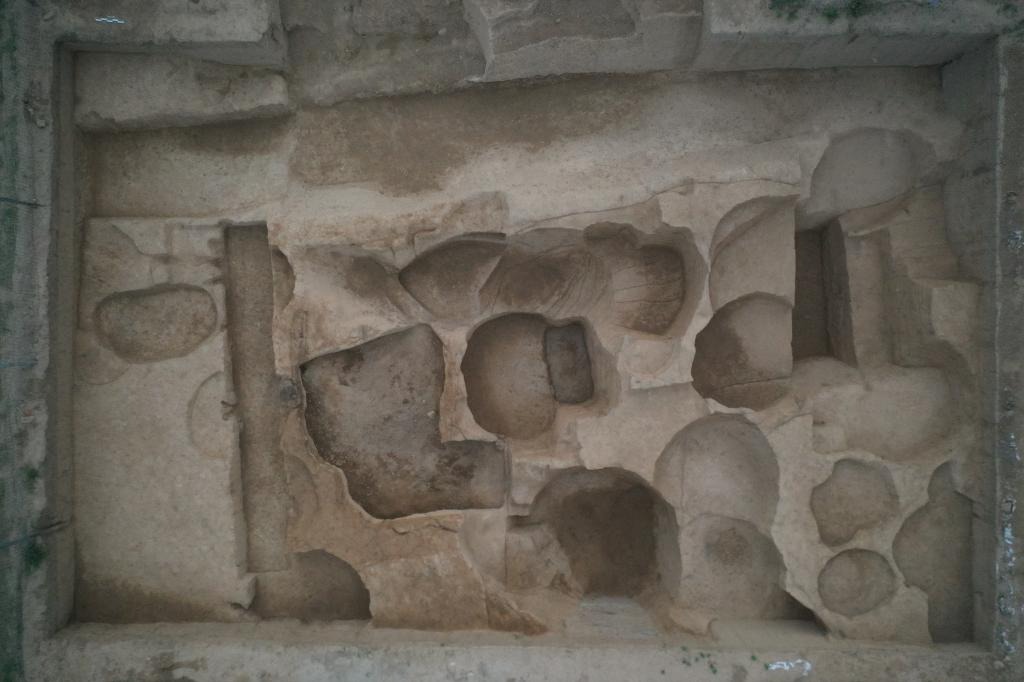
    Zhengzhou, China – A well-preserved, purpose-built water channel network dating back approximately 4,000 years has been excavated at the Wangchenggang archaeological site in Dengfeng, central China’s Henan province. The landmark find, announced Thursday by Chinese archaeological authorities, is providing groundbreaking new evidence that confirms the advanced state-level organizational capabilities and structured urban planning of China’s first recorded dynasty, the Xia Dynasty, which ruled from approximately 2070 BC to 1600 BC.

    The discovery was publicly unveiled at a academic forum highlighting Henan province’s most recent archaeological breakthroughs. Lead on-site excavation director Ma Long, a veteran local archaeologist, reported that two large early Xia Dynasty artificial ditches have been fully mapped at the site. Each ditch measures roughly 3 meters wide, with a confirmed excavated length exceeding 120 meters. Aligned on a consistent north-south axis, the two main ditches connect to a larger moat spanning approximately 10 meters in width, creating a fully integrated system that delivered water, removed waste, and divided the ancient settlement into distinct functional zones.

    According to Ma, the uniform construction and alignment of the two main ditches reflect a remarkably high level of pre-construction planning, sophisticated design, and advanced engineering execution for the era. Preliminary calculations estimate that workers moved thousands of cubic meters of earth to complete the project – a feat that would only have been possible with the coordination of large, well-organized labor forces under a centralized governing authority.

    Beyond the large main ditches and perimeter moat, archaeologists also uncovered a network of smaller secondary channels, ranging from just 0.3 meters to 1 meter in width. These smaller branches extend directly to individual residential buildings and ancient kiln sites across the settlement, allowing for fast and efficient removal of rainwater and domestic wastewater to keep living and working spaces dry.

    Yang Wensheng, deputy director of the Henan Provincial Institute of Cultural Heritage and Archaeology, explained the broader significance of the find. The large, hierarchically organized artificial water network demonstrates that even in the early Xia Dynasty, the Wangchenggang site operated under a unified governing authority with the capacity to organize large public works projects and enforced standardized engineering practices. Yang emphasized that this system serves as critical tangible archaeological evidence confirming the maturity of early state formation in ancient China.

    Additional excavation and academic analysis of the site and newly uncovered features is ongoing, with researchers expecting to reveal more details about urban life and governance during China’s earliest dynastic period in coming months.