分类: science

  • Study maps depression in chronic pain

    Study maps depression in chronic pain

    Neuroscientists at Fudan University have made a groundbreaking discovery in understanding the biological mechanism that connects chronic pain with clinical depression. Their research, published in the prestigious journal Science, reveals a specific neural gateway within the hippocampus that determines whether persistent physical pain transforms into debilitating mental health conditions.

    The comprehensive study, conducted at the university’s Institute of Science and Technology for Brain-inspired Intelligence, analyzed neuroimaging data from 30,000 human subjects alongside animal models. The research team identified that the hippocampus, traditionally known for memory and navigation functions, serves as a critical mood regulation center. During initial pain exposure, this brain region demonstrates enhanced functionality and temporary enlargement as a defensive mechanism.

    Dr. Xiao Xiao, co-corresponding author and executive director of the institute’s behavioral and cognitive neuroscience center, explained the transformative process: “As pain transitions from acute to chronic, we observe progressive hippocampal atrophy accompanied by diminished regulatory capacity. This deterioration coincides with the emergence of depressive symptoms.”

    The investigation pinpointed the dentate gyrus (DG) sub-region as the specific neurological gatekeeper. This area possesses unique neuroplasticity capabilities, generating new neurons to help the brain adapt to stress. However, chronic pain triggers microglia—the brain’s immune cells—to become hyperactive, disrupting electrical signal balance and causing the emotion gate to malfunction.

    The findings suggest revolutionary clinical applications. Rather than solely addressing pain symptoms, medical professionals could employ brain imaging to monitor hippocampal health and implement preventive interventions before structural deterioration occurs. The research team successfully tested an established clinical drug that regulates microglia activity, demonstrating its potential for rapid translation to patient treatment.

    Initiated in 2018, the research program now incorporates artificial intelligence to screen for novel small-molecule drugs targeting specific brain cells. The scientists believe genetic predispositions and environmental factors contribute to individual variations in emotional resilience among pain patients.

  • Planet trapped record heat in 2025: UN

    Planet trapped record heat in 2025: UN

    A dire warning has been issued by the United Nations World Meteorological Organization (WMO), confirming that Earth’s energy imbalance reached a record high in 2025, with consequences projected to persist for millennia. The agency’s annual State of the Global Climate report reveals that the eleven hottest years in recorded history all occurred between 2015 and 2025, with last year ranking as the second or third warmest at approximately 1.43°C above pre-industrial levels.

    UN Secretary-General Antonio Guterres characterized the situation as a ‘climate emergency,’ stating that ‘every key climate indicator is flashing red.’ For the first time, the WMO incorporated measurements of planetary energy imbalance—the disparity between incoming solar radiation and outgoing energy—revealing a dangerous disruption to Earth’s natural equilibrium. Concentrations of heat-trapping greenhouse gases, including carbon dioxide, methane, and nitrous oxide, have reached their highest levels in at least 800,000 years.

    Scientific advances have enabled improved understanding of this energy imbalance, which has particularly accelerated over the past two decades. WMO Chief Celeste Saulo emphasized that human activities are fundamentally disrupting planetary systems, with consequences that will endure for hundreds and thousands of years.

    The oceans have absorbed more than 91% of excess heat, reaching unprecedented temperatures in 2025. The rate of ocean warming has more than doubled since the 1960-2005 period, causing severe degradation of marine ecosystems, biodiversity loss, and reduced capacity for carbon absorption. This warming intensifies tropical and subtropical storms while accelerating polar ice loss.

    Both the Antarctic and Greenland ice sheets have experienced significant mass reduction, with Arctic sea ice extent in 2025 ranking among the lowest ever recorded. Global mean sea levels now stand approximately 11 centimeters higher than when satellite measurements began in 1993, with continued rise projected for centuries.

    While current weather patterns remain under the influence of cooling La Niña conditions, forecasts indicate a potential shift to warming El Niño conditions by late 2026. WMO scientific officer John Kennedy warned that this development could lead to elevated temperatures in 2027, potentially challenging records.

    WMO Deputy Chief Ko Barrett described the outlook as a ‘dire picture,’ acknowledging that climate indicators are moving in concerning directions. Guterres connected climate instability to global security concerns, noting that ‘our addiction to fossil fuels is destabilizing both the climate and global security.’ The report concludes with an urgent call to action, emphasizing that ‘climate chaos is accelerating and delay is deadly.’

  • China releases global high-quality journal list for medicine, life sciences

    China releases global high-quality journal list for medicine, life sciences

    China has introduced a groundbreaking academic evaluation framework with the release of its independently compiled Global High-Quality Journal List for medicine and life sciences. The comprehensive catalog, jointly developed by Dongbi Technology Data Co Ltd in partnership with the Chinese Academy of Medical Sciences and Shanghai Jiao Tong University, presents a distinctive Chinese perspective on scholarly journal assessment.

    The newly published inventory encompasses 4,027 medical journals and 3,064 life sciences publications worldwide, systematically organized into a four-tier pyramidal structure. Tier A represents the pinnacle of academic excellence, while Tiers B and C form the core academic foundation. Tier D incorporates emerging and specialized publications, creating a holistic representation of global research output.

    This innovative evaluation system was developed through rigorous analysis of global citation big data spanning from 2023 to 2025, utilizing authoritative seed journals as its foundation. The initiative aims to provide Chinese researchers with enhanced guidance for publication decisions while offering academic institutions and research management authorities a refined framework for journal assessment and tier optimization.

    Qiu Xiaochun, Deputy Director of the Medical Committee of the Library Society of China, emphasized the significance of this development, noting that it represents a substantial advancement in establishing China’s independent voice within international research evaluation systems. The project reflects China’s growing influence in global academic circles and its commitment to shaping scholarly communication standards in critical scientific domains.

  • China releases images from Fengyun 4C satellite

    China releases images from Fengyun 4C satellite

    China has unveiled the first operational imagery from its cutting-edge Fengyun-4C meteorological satellite, demonstrating unprecedented monitoring capabilities spanning from solar phenomena to terrestrial weather patterns. The China Meteorological Administration confirmed the satellite’s successful deployment following its December 27 launch from Xichang Satellite Launch Center in Sichuan Province.

    Equipped with six sophisticated payloads meeting international advanced standards, the Fengyun-4C represents the most comprehensive geostationary meteorological satellite currently operational worldwide. The newly released images showcase exceptional clarity and detailed atmospheric textures captured by the satellite’s advanced geostationary radiation imager.

    Among its breakthrough technologies, the satellite’s interferometric atmospheric vertical sounder delivers highly refined spectral data capable of mapping atmospheric vertical structures. This innovation promises to enhance numerical weather prediction models and significantly improve forecasting accuracy for meteorological events.

    The spacecraft’s lightning imager has already generated continuous observation animations that precisely track electrical activity during severe convective storms, providing crucial data for early warning systems and extreme weather monitoring. Simultaneously, the multiband ionospheric ultraviolet spectrometer has conducted sustained observations of airglow phenomena across the Eastern Hemisphere, mapping ionospheric changes that impact communication and navigation signals.

    Complementing these capabilities, the solar extreme ultraviolet imager—working in concert with solar X-ray and ultraviolet flux sensors—has successfully captured detailed sequences of solar flare eruptions and radiation variations. This enhances China’s capacity for solar activity tracking and space weather forecasting.

    With ten Fengyun satellites now operational across four distinct orbital types, China maintains the world’s most comprehensive meteorological satellite network, providing continuous global environmental monitoring capabilities.

  • Record-breaking heat wave grips western US

    Record-breaking heat wave grips western US

    An extraordinary early-season heatwave has engulfed the western United States, shattering historical temperature records and prompting climate scientists to declare the event a clear manifestation of human-induced climate change. The phenomenon, described as a one-in-500-year occurrence for this time of year, has transformed the region’s weather patterns with alarming intensity.

    Meteorological history was rewritten on Friday when four locations along the California-Arizona border registered a staggering 44.4°C (112°F), establishing a new national heat record for March. The affected areas included regions near Yuma and Martinez Lake in Arizona, alongside Winterhaven and Ogilby in California. According to Weather.com, an unprecedented 65 cities across multiple western states have already documented new March temperature highs.

    The heatwave’s reach has been both extensive and peculiar. Death Valley experienced scorching 40°C temperatures on Thursday, while typically cool San Francisco matched its historic March record at 29°C. Even winter sports enthusiasts in Colorado found themselves skiing shirtless under the unusual thermal conditions.

    The National Weather Service responded by issuing extreme heat warnings across much of the southwest, encompassing major metropolitan areas from Los Angeles to Las Vegas. Authorities simultaneously issued urgent warnings against leaving children or pets in vehicles, highlighting the immediate dangers posed by the extreme temperatures.

    Climate scientists from the World Weather Attribution network presented compelling evidence linking this event directly to anthropogenic climate change. Their research concluded that such a heatwave would be “virtually impossible” during this season without human influence on the climate system. Professor Friederike Otto of Imperial College London emphasized the severity of the situation, stating: “The seasons that people and nature were used to for centuries are disappearing, putting many, including outdoor workers and those without air conditioning, in danger.”

    The ecological consequences are already emerging across the region. Vegetation growth has accelerated dramatically, fueled by earlier heavy rains in December and January, while many plants and trees have begun blooming prematurely. This disruption to natural cycles demonstrates how climate change is fundamentally altering environmental patterns.

    As the northern hemisphere transitioned into astronomical spring on Friday, the record-breaking temperatures served as a stark reminder that climate impacts are not distant threats but present realities requiring immediate policy responses and adaptation strategies.

  • Deep plowing can disrupt soil’s porous network, study finds

    Deep plowing can disrupt soil’s porous network, study finds

    An international scientific collaboration has fundamentally challenged conventional agricultural wisdom through innovative seismic technology, revealing how common farming practices damage soil’s natural hydraulic infrastructure. The breakthrough research, spearheaded by Dr. Shi Qibin from the Institute of Geology and Geophysics at the Chinese Academy of Sciences and published in the prestigious journal Science, demonstrates that intensive deep plowing and heavy machinery compaction severely compromise soil’s sponge-like architecture.

    Unlike traditional laboratory methods, the research team from China, the United States, and the United Kingdom deployed fiber-optic cables—identical to those forming the backbone of global internet connectivity—across a 160-meter experimental farm in the UK. This distributed acoustic sensing technology enabled scientists to ‘listen’ to subsurface hydrological activity by transmitting modulated laser pulses through the cables and analyzing returning vibrational signals.

    The investigation uncovered that healthy soil maintains an intricate network of microscopic pores and channels that function as a natural plumbing system. This complex architecture facilitates deep water penetration and storage, creating underground reservoirs that sustain crops during drought conditions. Conversely, conventionally farmed soils exhibit compromised porosity where rainfall accumulates superficially rather than permeating deeply, resulting in rapid evaporation and diminished drought resilience.

    The research team developed a novel ‘dynamic capillary stress’ theoretical model that contradicts established beliefs about soil mechanics. Their model demonstrates how microscopic water films within soil pores generate surface tension forces that structurally reinforce soil when partially hydrated. Agricultural compaction destroys these capillary networks, altering hydrological dynamics and accelerating moisture loss.

    Dr. Shi emphasized the ecological implications: ‘Soil constitutes a sophisticated porous medium rather than merely particulate matter. Its capillary vessel-like structures maintain critical hydrological cycles that support ecosystem stability.’ The findings suggest that while deep tillage may provide short-term yield improvements, it ultimately jeopardizes long-term agricultural sustainability by disrupting these fundamental mechanical and hydrological relationships.

    The study highlights the potential for integrating fiber-optic monitoring with artificial intelligence to enable real-time soil diagnostics across agricultural landscapes. This technological synergy could revolutionize farming practices by promoting water-conserving strategies, enhancing climate change adaptation, and contributing to global food security through scientifically-informed land management approaches.

  • Watch timelapse of Artemis II rocket rollout to launch pad

    Watch timelapse of Artemis II rocket rollout to launch pad

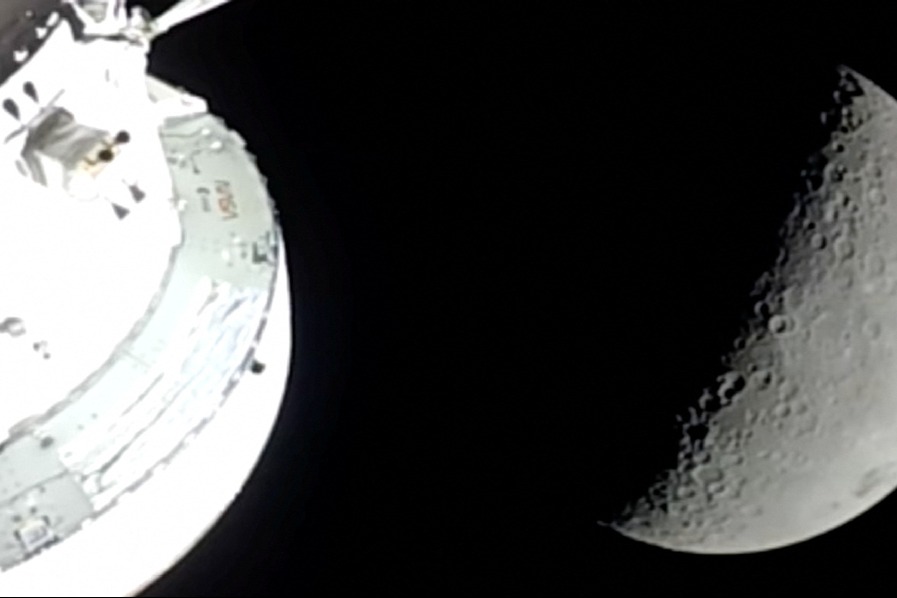
    In a critical prelaunch milestone, NASA has successfully transported its colossal Space Launch System (SLS) rocket and Orion spacecraft to the launch pad. The 322-foot-tall (98-meter) integrated stack embarked on a meticulously orchestrated, four-mile journey from the iconic Vehicle Assembly Building (VAB) to Launch Pad 39B at Florida’s Kennedy Space Center. The slow-moving crawl, captured in a dramatic timelapse video, signifies a major step forward for the ambitious Artemis II mission. This rollout operation is a repeat of procedures validated during the Artemis I campaign, ensuring the ground infrastructure and vehicle are poised for the next phase of preparations. The mission, which will carry a crew of four astronauts around the Moon, represents humanity’s first return to lunar space in over 50 years. The rocket will now undergo a series of final checkouts and testing at the pad before its scheduled launch.

  • Chinese researchers decode oriental fruit fly’s egg-laying mystery to curb mango damage

    Chinese researchers decode oriental fruit fly’s egg-laying mystery to curb mango damage

    Researchers at Southwest University in Chongqing have made a groundbreaking discovery that explains why oriental fruit flies target unripe mangoes, potentially revolutionizing pest control methods for one of agriculture’s most damaging insects.

    Led by Professor Wang Jinjun, the scientific team identified that female oriental fruit flies (Bactrocera dorsalis) possess a sophisticated sensory mechanism in their ovipositor—a specialized egg-laying organ—that detects hesperidin, a chemical compound naturally present in maturing mangoes. This finding, published in the prestigious Proceedings of the National Academy of Sciences, reveals the evolutionary adaptation that drives the pest’s destructive behavior.

    The study demonstrates that as mangoes ripen, hesperidin concentrations increase to levels that become toxic to fruit fly offspring. The compound significantly reduces egg hatching rates, suppresses larval development, and decreases adult emergence success. To avoid these detrimental effects, female flies have evolved the ability to ‘taste’ hesperidin levels using sensory receptors located at the tip of their ovipositor, which they use to pierce fruit before egg deposition.

    Professor Jiang Hongbo, a key member of the research team, explained that this discovery enables two innovative approaches to pest management: developing targeted interventions that exploit the fly’s sensory system, and creating early warning systems that monitor chemical changes in fruit to predict infestation risks before damage occurs.

    The oriental fruit fly causes substantial economic losses across tropical and subtropical regions by triggering premature fruit drop before farmers can detect infestations. This research provides the first comprehensive understanding of the biological mechanisms behind the pest’s selective egg-laying behavior, offering hope for more effective and environmentally friendly control strategies.

  • New research targets Parkinson’s, genetic disorders

    New research targets Parkinson’s, genetic disorders

    A groundbreaking medical advancement emerging from China offers new hope for treating Parkinson’s disease, rare genetic disorders, and age-related degeneration. Researchers have successfully engineered a novel delivery mechanism that safely transplants healthy mitochondria into impaired cells, overcoming a critical barrier in regenerative medicine.

    The innovation, detailed in the prestigious journal Cell, addresses the fundamental challenge of mitochondrial fragility during transplantation procedures. Mitochondria, the microscopic power generators within cells, possess their own distinct DNA and are essential for converting nutrients into life-sustaining energy. When these organelles malfunction due to genetic mutations or aging, they affect approximately 1 in 5,000 people worldwide and contribute to progressive health deterioration.

    Led by Dr. Liu Xingguo at the Chinese Academy of Sciences’ Guangzhou Institutes of Biomedicine and Health, the research team collaborated with Guangzhou Medical University to develop an ingenious solution using red blood cell membranes. These biological materials form protective shells measuring merely one micrometer in diameter—effectively creating microscopic ‘capsules’ that shield mitochondria during delivery.

    This protective suit functions as a biological bypass, enabling the capsule to evade cellular defenses and integrate seamlessly with the cell’s interior. Once inside, the healthy mitochondria begin cooperating with the cell’s existing structures, essentially ‘recharging’ the cellular power system.

    Experimental trials on mouse models demonstrated remarkable outcomes. In Parkinson’s disease simulations, the treatment prevented neuronal death, restored energy production, and nearly normalized motor functions. For mitochondrial DNA depletion syndrome—a condition where the body cannot sustain sufficient mitochondrial DNA—the therapy significantly extended lifespans and prevented multiple organ failure.

    The breakthrough establishes a new paradigm in organelle therapy, which utilizes the cell’s intrinsic components as therapeutic agents rather than relying on conventional chemicals or complex gene editing. While acknowledging the promising results, researchers emphasize that further clinical trials are necessary to validate the safety and efficacy of this approach for human patients.

  • Study paves the way for growing perennial rice

    Study paves the way for growing perennial rice

    Chinese researchers have achieved a groundbreaking advancement in agricultural science by identifying and cloning a crucial “longevity gene” from wild rice varieties. This discovery, published on the cover of the journal Science, represents a significant step toward transforming rice from an annual crop into a perennial plant capable of regrowing year after year without replanting.

    The research team from the Chinese Academy of Sciences’ Center for Excellence in Molecular Plant Sciences spent eight years investigating the genetic mechanisms that distinguish perennial wild rice from domesticated annual varieties. Their research revealed that a mutation in the EBT1 gene during early domestication caused rice to lose its perennial characteristics as humans selectively bred for higher grain production and faster growth cycles.

    Lead scientist Han Bin explained that by reintroducing the EBT1 gene into high-yield cultivated rice, researchers have successfully created a perennial “wild-like rice” that has survived in field conditions for over two years in Hainan province. The plant demonstrates a unique biological capability to reverse its developmental program, transitioning back from the reproductive stage to vegetative growth every three to four months, effectively resetting its physiological age.

    This biological mechanism enables “one planting, multiple harvests”—a feature that could revolutionize rice farming practices. The bred perennial rice shows remarkable productivity, generating approximately 70 secondary tillers compared to the dozen typically produced by wild-type parent plants.

    The development holds profound implications for sustainable agriculture, potentially reducing labor requirements, minimizing soil erosion through eliminated tilling, and contributing to carbon sequestration efforts. Science journal highlighted the environmental benefits, noting that perennial rice could significantly slow soil erosion while ensuring food security through reduced planting cycles.

    Field observations continue as scientists monitor the long-term viability and agricultural performance of this genetically enhanced rice variety, which could fundamentally transform global rice production methods.