分类: science

  • Arctic sea ice at lowest level ever this winter

    Arctic sea ice at lowest level ever this winter

    In a stark indicator of climate change’s accelerating impact, Arctic sea ice has reached its lowest winter extent since satellite monitoring began 48 years ago. According to data released by the National Snow and Ice Data Center (NSIDC) in Colorado, the ice cover peaked at just 14.29 million square kilometers on March 15—marking a statistical tie with last year’s record low of 14.31 million square kilometers.

    This premature maximum, occurring a full week earlier than in 2022, provides a concerning head start to the spring and summer melt season. Scientists warn that diminished winter ice formation creates conditions for potentially faster and more extensive summer melting—a trend consistently observed since 2016.

    The ecological implications are profound. Species including polar bears and emperor penguins rely on stable sea ice for breeding and hunting grounds. Oceanographer Gilles Garric notes that newly exposed ocean surfaces in regions like the Beaufort Sea are absorbing atmospheric heat that would previously have been reflected by ice, creating warming feedback loops.

    Beyond environmental consequences, the disappearing ice is transforming geopolitical dynamics. Elizabeth Chalecki, climate security expert, characterizes the increasingly navigable Arctic as ‘the new Mediterranean’—a contested maritime space surrounded by competing nations. This assessment gains relevance amid renewed interest in Arctic shipping routes and mineral resources, including former President Trump’s expressed ambitions regarding Greenland.

  • China-Europe space science SMILE mission set for April 9 launch

    China-Europe space science SMILE mission set for April 9 launch

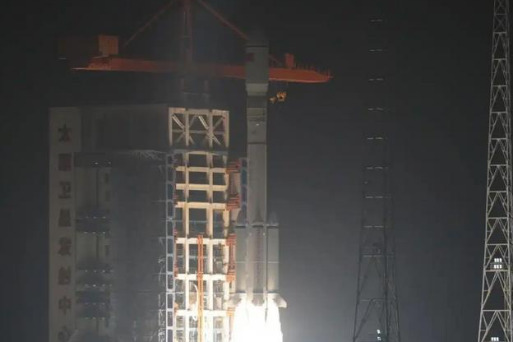
    The groundbreaking Solar wind Magnetosphere Ionosphere Link Explorer (SMILE) mission, a collaborative endeavor between the Chinese Academy of Sciences and the European Space Agency, has completed all preparatory phases and is scheduled for launch on April 9 from Europe’s Spaceport in French Guiana. This announcement was made by China’s National Space Science Center on March 26, 2026.

    The sophisticated spacecraft has been successfully integrated onto the Vega-C rocket, marking the mission’s transition into its final countdown sequence. The SMILE mission represents a significant milestone in international space cooperation, particularly between Chinese and European scientific communities.

    This ambitious project aims to study the interaction between solar winds and Earth’s magnetosphere through advanced imaging technology. Unlike previous missions that primarily relied on in-situ measurements, SMILE will utilize cutting-edge ultraviolet and X-ray imaging equipment to provide unprecedented visual data of how solar particles interact with our planet’s protective magnetic field.

    The mission’s launch from South America signifies the global nature of space exploration, with equipment having been previously shipped from the port of Amsterdam. This joint venture demonstrates how international partnerships can advance our understanding of space weather phenomena that potentially affect satellite communications, navigation systems, and power grids on Earth.

  • China’s experimental satellite constellation lays foundation for future lunar exploration

    China’s experimental satellite constellation lays foundation for future lunar exploration

    China has achieved a significant breakthrough in space exploration infrastructure with its experimental satellite constellation successfully operating for two consecutive years in a specialized lunar orbit. The Technology and Engineering Center for Space Utilization (CSU) under the Chinese Academy of Sciences announced this milestone during the 2026 Zhongguancun Forum’s sub-forum on Earth-Moon space development.

    The three-satellite constellation, positioned in the Distant Retrograde Orbit (DRO) within Earth-moon space, represents a pioneering achievement in orbital mechanics and space infrastructure. This orbital region, extending approximately 2 million kilometers from Earth, provides a highly stable environment for spacecraft operations. The constellation consists of DRO-A and DRO-B satellites developed by CAS, which have established successful inter-satellite measurement and communication links with the previously launched DRO-L satellite in near-Earth orbit.

    This project marks the world’s first successful low-energy insertion into the DRO and has demonstrated stable spacecraft residency and efficient maneuvering capabilities within this unique orbital environment. Notably, the mission accomplished the unprecedented feat of touring all Lagrange points in the Earth-moon system during a single flight, showcasing advanced navigation and propulsion technologies.

    The technological verification provided by this constellation establishes critical infrastructure for future lunar exploration missions. According to space experts participating in the forum, these advancements will play a vital role in supporting China’s ambitious space program and its goal of becoming a leading space power.

    The forum brought together more than 200 representatives from over 20 institutions, focusing on key developmental aspects including Earth-moon space infrastructure, cost-effective access to lunar space, and sustainable resource utilization strategies. Ding Chibiao, Vice-President of CAS, emphasized that the Earth-moon space serves as a strategic hub connecting Earth to deep space and represents a new frontier for scientific and industrial transformation.

    Concurrent with these developments, Beijing is positioning itself as a commercial aerospace innovation hub, hosting more than half of China’s core space research institutions. The successful operation of this satellite constellation demonstrates China’s growing capabilities in space technology and its commitment to advancing lunar exploration through international cooperation and technological innovation.

  • China to open 10 major scientific facilities to international academia in 2026

    China to open 10 major scientific facilities to international academia in 2026

    In a groundbreaking move for global scientific collaboration, China has announced it will grant international researchers access to ten of its most advanced scientific facilities throughout 2026. The announcement was made during the opening ceremony of the Zhongguancun Forum Annual Conference in Beijing, marking a significant step in international scientific cooperation.

    The facilities opening to global academia represent China’s cutting-edge research infrastructure, including the remarkable Five-hundred-meter Aperture Spherical Radio Telescope (FAST) in Guizhou province—the world’s largest single-dish radio telescope. Also available will be the Space Environment Simulation and Research Infrastructure in Heilongjiang province and the Experimental Advanced Superconducting Tokamak nuclear fusion research facility in Anhui province, among other premier installations.

    This initiative forms part of the Action Plan for International Cooperation in Open Science, launched collaboratively by China and international partners in 2025. The program aims to establish a more transparent, equitable, and non-discriminatory global environment for scientific and technological advancement. The move aligns with China’s broader strategy of driving innovation through high-level international partnerships, as outlined in the recently released 15th Five-Year Plan (2026-30) for national economic and social development.

    The policy framework emphasizes creating an open innovation ecosystem with global competitiveness while supporting collaborative efforts among scientists worldwide to address fundamental and frontier scientific challenges. This unprecedented access to China’s scientific infrastructure represents a new chapter in global research cooperation, potentially accelerating breakthroughs across multiple scientific disciplines.

  • Northern China sees unusual warm spell

    Northern China sees unusual warm spell

    Meteorological authorities report that Northern China is currently experiencing an extraordinary warm spell, with temperatures forecasted to reach unprecedented seasonal highs of approximately 25°C (77°F) in specific regions this week. The unusual warming phenomenon began manifesting across most northern territories on Tuesday, with numerous urban centers already recording temperatures exceeding 20°C (68°F).

    According to Weather China, the official platform of China Meteorological Administration, the thermal peak is projected to occur during Wednesday and Thursday. The 20°C isotherm—a meteorological boundary indicating equal temperature points—is anticipated to extend unusually northward, reaching northern Hebei province and western Liaoning province. This pattern suggests central and southern North China along with northern Huanghuai region may experience midday temperatures approaching 25°C.

    Notable milestones include Hohhot in Inner Mongolia Autonomous Region potentially recording its first 20°C reading of 2026, while Jinan in Shandong Province might reach 25°C—temperatures typically characteristic of late April or early May in climatological records. Nocturnal temperatures will similarly rise, with central and southern North China and Huanghuai region expected to experience minimum temperatures above 10°C by Thursday.

    Meteorological analyst Tang Xiaojing attributes this anomalous warming to optimal atmospheric conditions: “The warming effect is particularly pronounced in North China, Huanghuai region and Northeast China due to predominantly clear skies or limited cloud cover, which significantly enhances daytime radiative heating.”

    Conversely, southern China remains largely unaffected by this thermal anomaly, with temperatures aligning with seasonal averages. Weather models indicate a potential temperature inversion phenomenon around Wednesday, where northeastern cities including Shenyang, Changchun and Harbin might paradoxically experience higher daytime temperatures than southeastern urban centers like Shanghai, Hangzhou and Nanjing, where highs may not exceed 15°C due to cloud cover and precipitation.

    Residents in northern regions are advised to implement layered clothing strategies as substantial diurnal temperature variations—exceeding 10-15°C—will persist despite daytime warmth. Northeastern areas will maintain near-freezing overnight temperatures while North China experiences single-digit nocturnal readings.

    The China Meteorological Administration confirms that suppressed cold air activity through March’s conclusion will facilitate the persistence and intensification of this unusual early spring warmth across northern territories.

  • Oldest dog DNA suggests 16,000 years of human companionship

    Oldest dog DNA suggests 16,000 years of human companionship

    Groundbreaking genetic research has fundamentally reshaped our understanding of canine domestication, revealing that dogs became humanity’s companions approximately 16,000 years ago—5,000 years earlier than previously documented. Two landmark studies published in Nature utilized advanced genome sequencing techniques on archaeological remains to unravel the mysterious origins of our four-legged friends.

    The research team, including geneticists from the Francis Crick Institute in the UK and Ludwig Maximilian University of Munich, identified the world’s oldest canine DNA from a 15,800-year-old puppy skull fragment discovered in Pinarbasi, modern-day Turkey. Additional genetic evidence from southwest England dating back 14,300 years further confirmed the early presence of domesticated dogs across Europe during the last Ice Age.

    According to lead researchers Pontus Skoglund and Laurent Frantz, these ancient canines likely descended from two distinct gray wolf populations. The archaeological evidence suggests these early dogs maintained a significant relationship with humans despite the challenges of feeding them during harsh climatic conditions. Burial sites showing puppies interred above human graves indicate deep emotional bonds that transcended mere utility.

    The studies also revealed surprising patterns in canine migration during the Neolithic agricultural revolution approximately 10,000 years ago. While human populations experienced extensive genetic mixing as farmers migrated from southwest Asia to Europe, dogs maintained a separate evolutionary trajectory. This suggests hunter-gatherer communities already had established relationships with domesticated dogs before the arrival of agricultural societies.

    Despite these breakthroughs, researchers acknowledge that a ‘genetic abyss’ still separates modern dogs from wolves, indicating that the complete story of canine domestication remains partially concealed within ancient DNA. The ongoing search for the ‘missing link’ continues to drive archaeological genetics forward, promising further revelations about humanity’s oldest interspecies relationship.

  • China’s land geochemical conditions improve over past 30 years

    China’s land geochemical conditions improve over past 30 years

    A comprehensive national assessment reveals significant improvements in China’s land geochemical composition over the past three decades, signaling enhanced soil productivity and ecological functionality across the country. The China Geological Survey, operating under the Ministry of Natural Resources, released these findings in its landmark National Land Geochemical Monitoring Report 2025, which analyzed over 500,000 data points collected from nationwide monitoring conducted in 1995, 2016, and 2023.

    The report demonstrates that 92.6% of China’s land area now qualifies as medium grade or higher in quality—a notable increase of 0.4 percentage points since baseline measurements began in 1995. According to lead researcher Peng Min, this evaluation framework assesses critical chemical elements directly linked to soil nutrient content and ecological health.

    Scientific analysis indicates that essential mineral components—including silicon, aluminum, iron, calcium, sodium, and magnesium—have maintained remarkable stability throughout the 28-year observation period. Researchers characterize these elements as the fundamental ‘skeletal structure’ of soil, whose balance prevents degradation phenomena such as acidification, salinization, and desertification.

    More significantly, monitoring data confirms measurable increases in both macronutrients vital for plant development (nitrogen, phosphorus, and potassium) and micronutrients essential for human health (manganese, selenium, and iodine). These elevated nutrient levels suggest positive implications for agricultural productivity and food security.

    The study further documents a substantial 16.4% rise in organic carbon content, with concentrations increasing from 6.7 grams to 7.8 grams per kilogram of soil between 1995 and 2023. This enhancement strengthens soil water retention capabilities and nutrient preservation while establishing a virtuous cycle of carbon sequestration through plant photosynthesis.

    Regionally, the Qinghai-Xizang Plateau exhibited extraordinary progress with organic carbon levels surging by 141.4%. Researcher Cheng Hangxin attributes this dramatic improvement to climate change effects—specifically warmer and wetter conditions—coupled with conservation initiatives including modified grazing protocols. As one of Earth’s critical carbon sinks, the plateau’s enhanced capacity for atmospheric carbon dioxide absorption strengthens its role in mitigating global greenhouse effects.

    Looking forward, the China Geological Survey plans intensified monitoring during the 15th Five-Year Plan period (2026-2030), with 6,000 additional monitoring sites scheduled for establishment this year alone. The agency commits to continuing decadal national surveys and quinquennial regional assessments to track environmental progress and inform future conservation strategies.

  • New studies of old dogs help scientists understand where they came from

    New studies of old dogs help scientists understand where they came from

    Groundbreaking genetic research has fundamentally reshaped our understanding of canine domestication, revealing that dogs have been humanity’s companions for at least 15,800 years—5,000 years longer than previously established. Two landmark studies published in Nature have employed innovative DNA extraction techniques to analyze over 200 ancient canine and wolf specimens, providing unprecedented insights into the origins of our furry friends.

    Scientists have long theorized that dogs descended from ancient gray wolf populations in Europe or Asia through a gradual process of domestication where wolves became less aggressive while adapting to human coexistence. However, the precise timeline and geographical origins remained elusive until researchers developed specialized methods to isolate and study degraded ancient DNA, which is typically heavily contaminated and difficult to extract.

    The genetic evidence demonstrates that by 14,200 years ago, dogs had already established widespread presence across Western Europe and Asia, coexisting with hunter-gatherer societies long before the advent of agriculture. Remarkably, European dog genomes remained relatively consistent despite major human migrations during the agricultural revolution, suggesting canine populations were less affected by incoming human groups than previously thought.

    Unlike their Asian and American counterparts whose genetic patterns closely mirror human migration, European dogs maintained genetic continuity through thousands of years of societal changes. While the exact appearance of these earliest dogs remains uncertain, researchers speculate they likely resembled smaller wolves and may have assisted humans with guarding, hunting, and potentially even providing companionship to children.

    This research represents a significant advancement in paleogenomics while underscoring the enduring bond between humans and dogs—a relationship that has persisted for millennia and continues to evolve today.

  • Musketeer d’Artagnan’s remains believed found under Dutch church

    Musketeer d’Artagnan’s remains believed found under Dutch church

    Archaeologists have unearthed skeletal remains beneath St. Peter and Paul Church in Maastricht that may belong to Charles de Batz de Castelmore, the historical inspiration for Alexandre Dumas’ legendary character d’Artagnan. The discovery occurred during exploratory digging beneath broken floor tiles where the church altar stood two centuries ago.

    Church deacon Jos Valke, who participated in the excavation, expressed 99% certainty that the remains belong to the famous musketeer based on multiple evidentiary factors. The skeleton was found in sacred ground directly beneath the former altar position, accompanied by a bullet believed to have caused d’Artagnan’s death and a 1660 coin from a bishop who conducted Mass for Louis XIV.

    Archaeologist Wim Dijkman, who has researched d’Artagnan’s potential burial site for 28 years, maintains scientific caution despite his high expectations. ‘This could be the highlight of my career,’ Dijkman told regional broadcasters, emphasizing the need for DNA confirmation before definitive identification.

    The remains have been subjected to advanced forensic analysis, with samples sent to German laboratories for DNA testing and additional bones transported to Deventer for anthropological examination to determine age, geographical origin, and biological sex.

    Historical records indicate d’Artagnan perished during the 1673 Siege of Maastricht while serving as a close aide to Louis XIV. Contemporary accounts suggest he was struck in the throat by a musket ball during the French campaign to capture the Dutch city. Given the midsummer timing of his death, French forces buried him locally near their encampment in what is now southwestern Maastricht.

    While Dumas’ Three Musketeers were fictionalized characters, they were inspired by members of an elite military corps that provided royal protection and participated in military engagements. This discovery potentially bridges literary legend with historical reality, offering tangible connection to one of literature’s most enduring adventure figures.

  • China unveils top 10 scientific advancements of 2025

    China unveils top 10 scientific advancements of 2025

    China has officially recognized its most significant scientific achievements of 2025 during the opening ceremony of the 2026 Zhongguancun Forum in Beijing. The National Natural Science Foundation of China (NSFC) unveiled the annual selection of top 10 scientific advancements, showcasing remarkable progress across multiple disciplines of basic research.

    Leading the prestigious list was a groundbreaking lunar discovery stemming from the Chang’e 6 mission. Chinese scientists analyzing the first-ever lunar farside samples identified that the farside basalts originated from an extremely depleted mantle source. This critical finding suggests that giant impact events may have triggered melt extraction from the lunar mantle, providing essential evidence for understanding the moon’s hemispheric dichotomy.

    In medical science, a Chinese research team achieved a world-first by successfully transplanting a gene-edited pig liver into a human patient. This pioneering xenotransplantation procedure overcame fundamental barriers of immune rejection and functional compatibility, establishing crucial data and technological foundations for clinical translation.

    The recognized advancements spanned numerous critical domains including advanced material sciences, controllable nuclear fusion technology, deep-sea exploration capabilities, cutting-edge chipmaking processes, and next-generation solar cell development. These achievements demonstrate China’s comprehensive approach to scientific innovation.

    NSFC Director Dou Xiankang emphasized that the annual selection process, maintained since 2005, serves to motivate researchers to address fundamental research bottlenecks and produce more original scientific accomplishments. The initiative simultaneously aims to enhance public understanding and support for basic research fields.

    The 2025 selections emerged from a rigorous evaluation process involving more than 600 basic research projects. The transparent procedure incorporated expert screening, real-time online voting, and committee deliberation, ensuring broad participation and scientific credibility.