分类: science

  • Artemis mission headed for first lunar flyby since 1972

    Artemis mission headed for first lunar flyby since 1972

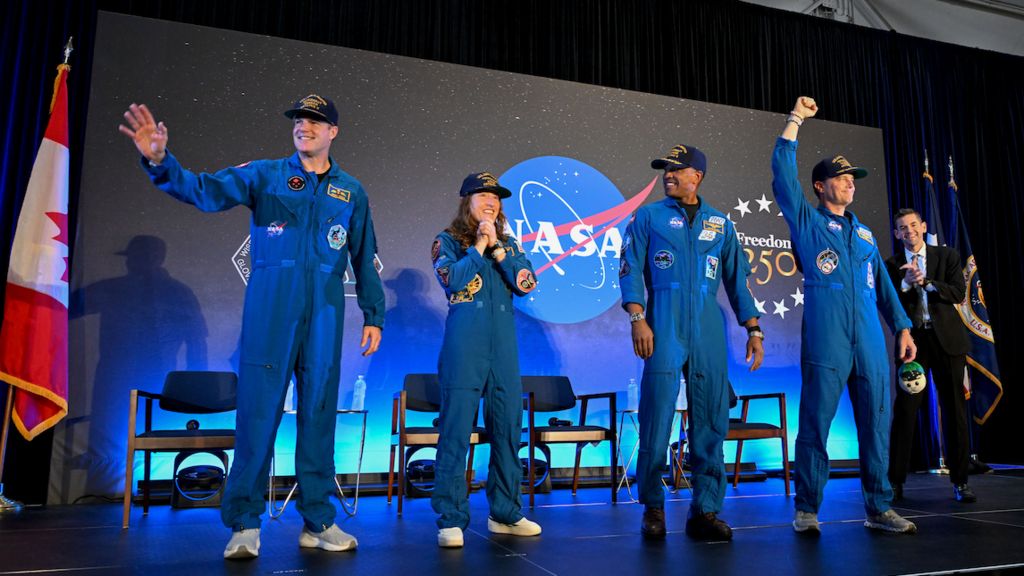
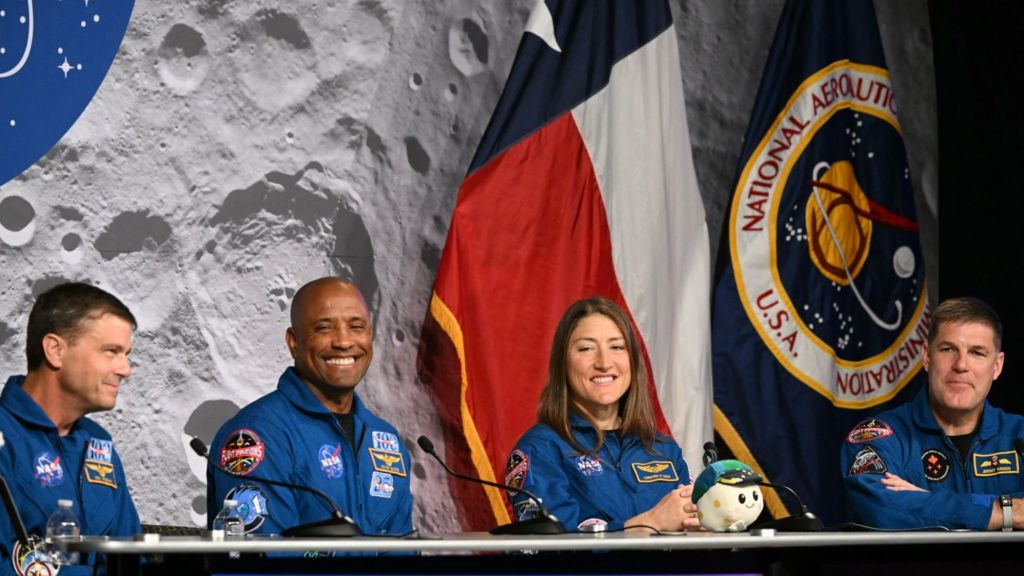
    Fifty-two years after the final Apollo mission departed the Moon’s vicinity, NASA’s groundbreaking Artemis program is on the cusp of a new era of human lunar exploration, with four international astronauts approaching the historic milestone of the first crewed lunar flyby since 1972. The four-person crew — mission commander Reid Wiseman, Christina Koch, Victor Glover of the United States, and Jeremy Hansen representing the Canadian Space Agency — is closing in on the moment when lunar gravity will capture the Orion capsule’s trajectory, slinging it into a loop around the Moon that marks a turning point for modern deep-space human spaceflight.

    This mission is packed with unprecedented firsts that expand the face of space exploration. Koch will make history as the first woman to fly around the Moon, while Glover, a Black astronaut, will go down in textbooks as the first person of color to complete a lunar flyby. For Hansen, the mission cements his place as the first non-American astronaut to accomplish the feat. The mission’s core objectives stretch far beyond symbolic milestones, however: during their planned flyby on Monday, the crew will spend hours documenting lunar surface features, collecting critical data that will lay the groundwork for future crewed lunar landings.

    Days ahead of the planned flyby, the crew has already achieved a first in observational astronomy. Early Sunday, NASA released a new image captured by the Artemis crew showing the massive Orientale basin on the Moon’s far side, marking the first time human eyes have ever viewed the entire sprawling crater directly. The bullseye-shaped impact crater, often called the Moon’s equivalent of the Grand Canyon, had only ever been photographed by robotic orbital cameras before this mission. Speaking in a live question-and-answer session with Canadian schoolchildren from space, Koch described the crew’s excitement at the unprecedented view. “It’s very distinctive and no human eyes previously had seen this crater until today, really, when we were privileged enough to see it,” she said.

    As the capsule swings around the far side of the Moon near the end of the flyby, the crew will also get a rare front-row seat to a deep-space solar eclipse, where the Moon will pass directly between the Orion capsule and the Sun, leaving only the Sun’s wispy outer corona visible. In addition to observational work, the mission carries a critical engineering mandate: the astronauts are the first to test NASA’s new Orion Crew Survival System (OCSS) spacesuits in the actual space environment. The bright orange suits, designed to protect the crew during launch and atmospheric reentry, can also provide up to six days of breathable air in an emergency scenario. The crew will run through functional tests to assess how quickly they can don and pressurize the suits, gathering real-world performance data that cannot be replicated in ground simulations.

    While the Artemis II crew will not land on the lunar surface itself, they are on track to break a 50-plus-year-old record: they will travel farther from Earth than any human in history. NASA Administrator Jared Isaacman outlined the mission’s broader significance in a televised interview with CNN on Sunday, noting that the data collected on this flight is irreplaceable for upcoming Artemis missions. Over the coming day, while the crew operates on the far side of the Moon out of direct communication with Earth, they will eclipse the previous distance record, and engineers will collect vital performance data on Orion’s systems. “This is the first time astronauts have ever flown on this spacecraft before,” Isaacman said. “That’s what we’re most interested in getting data from.”

    As of Sunday, the crew had already completed a successful manual piloting demonstration and walked through their full flyby plan, reviewing all lunar surface features scheduled for analysis and photography. The data collected during this mission will be critical to preparing for Artemis III, the first crewed lunar landing scheduled for 2027, and the subsequent landing mission Artemis IV planned for 2028, Isaacman added. “The information will be pretty paramount to set up for subsequent missions,” he said, emphasizing that Artemis II is far more than a demonstration flight — it is the foundational step for NASA’s long-term goal of establishing a sustained human presence on and around the Moon.

  • The 40 minutes when the Artemis crew loses contact with the Earth

    The 40 minutes when the Artemis crew loses contact with the Earth

    When NASA’s Artemis II mission crew glide into the shadow of the Moon on Monday, they will enter a rare and profound chapter of human space exploration that few have experienced before. Scheduled to begin at approximately 23:47 BST, the Moon’s bulk will completely block the radio and laser signals that connect the four astronauts aboard the Orion capsule to mission control 240,000 miles away on Earth. For nearly 40 minutes, the Artemis II crew will travel through the dark of the lunar far side, completely cut off from all contact with home.

    This moment of intentional isolation is not an unplanned mishap—it is an unavoidable milestone of any lunar mission, one that links the current generation of Artemis explorers directly to the Apollo astronauts who first blazed this trail more than half a century ago. No human has ever traveled farther from Earth than the Artemis II astronauts, who have maintained a steady, calming connection with Houston mission control through every phase of their journey so far. That steady link, which has anchored the crew to home throughout their outward voyage, will vanish abruptly when they dip behind the lunar horizon.

    In a pre-mission interview with BBC News, Artemis pilot Victor Glover shared his reflection on the coming silence, asking people across the globe to seize the 40 minutes as a moment of shared connection rather than distance. “When we’re behind the Moon, out of contact with everybody, let’s take that as an opportunity,” Glover said. “Let’s pray, hope, send your good thoughts and feelings that we get back in contact with the crew.”

    The experience of lunar radio blackout carries heavy echoes of the 1969 Apollo 11 mission, when command module pilot Michael Collins faced a nearly identical period of isolation while Neil Armstrong and Buzz Aldrin made their historic first steps on the lunar surface. For 48 minutes as his module circled the far side of the Moon, Collins lost all contact with both his crewmates on the surface and mission control back on Earth. In his 1974 memoir *Carrying the Fire*, Collins wrote that he felt “truly alone” and “isolated from any known life,” but noted that he felt no fear or crippling loneliness. In later years, he even recalled the silence as a moment of unexpected peace, a welcome break from the constant stream of communications from mission control that filled his active workday.

    While the astronauts themselves will get a rare, undisturbed window to focus on lunar observation during the blackout—capturing high-resolution imagery, mapping lunar geology, and simply absorbing the unparalleled view of the Moon up close—teams on the ground will spend the 40 minutes in quiet anticipation. At Goonhilly Earth Station in southwest England, a massive deep-space antenna has been tracking Orion’s position throughout the mission, feeding precise location data back to NASA headquarters. This marks the first time the facility has tracked a human-crewed lunar mission, and Goonhilly chief technology officer Matt Cosby admits the team will feel a flicker of tension during the blackout.

    “We’re going to get slightly nervous as it goes behind the Moon, and then we’ll be very excited when we see it again, because we know that they’re all safe,” Cosby told the BBC. For the future of lunar exploration, however, communication blackouts like this one are expected to become a thing of the past. As NASA and other global space agencies work toward establishing a permanent sustainable lunar base and expanding exploration of the far side of the Moon, constant, reliable communications coverage will be a non-negotiable requirement.

    “For a sustainable presence on the Moon, you need the full comms – you need the full 24 hours a day, even on the far side, because the far side will want to be explored as well,” Cosby explained. Initiatives like the European Space Agency’s Moonlight program are already moving forward with plans to deploy a network of communications satellites in lunar orbit, designed to deliver uninterrupted coverage for all future missions, regardless of where a craft or surface outpost is located around the Moon.

    As the Artemis II crew prepare for their 40 minutes of silence, millions around the world will be waiting alongside ground teams for the moment the Orion capsule emerges from the Moon’s shadow. When the signal reconnects, the world will breathe a collective sigh of relief, and the history-making crew will once again be able to share their unprecedented views of the Earth and Moon with everyone waiting back home. The stunning new image of Earth captured by the crew from Orion in the past week, which has already captivated the public, offers a small preview of the breathtaking sights the astronauts will share once contact is restored.

  • Artemis II astronauts have toilet trouble on their way towards the Moon

    Artemis II astronauts have toilet trouble on their way towards the Moon

    Nearly 54 years after the last Apollo mission left lunar orbit, NASA’s groundbreaking Artemis II mission is making history as it carries four astronauts deeper into space than any human mission in half a century. While the 10-day lunar flyby mission has hit a small, unexpected snag with intermittent malfunctions in the Orion capsule’s waste management system, the crew and ground teams have worked around the issue, keeping the historic mission on track.

    Launched from Earth last Wednesday, Artemis II marked the first time humans have traveled beyond low-Earth orbit since NASA’s Apollo 17 mission in 1972. The four-person crew — NASA astronauts Reid Wiseman, Victor Glover, and Christina Koch, joined by Canadian Space Agency astronaut Jeremy Hansen — is housed in a compact Orion cabin roughly the size of a standard camper van, measuring just 5 meters wide and 3 meters tall.

    Troubles with the capsule’s toilet emerged just days into the flight. Mission specialist Koch first noted a minor priming issue during a live video downlink with Earth on Thursday, joking that she was proud to claim the title of “space plumber” and calling the toilet “probably the most important piece of equipment on board.” By Saturday, the problem escalated when the wastewater vent line became clogged, likely due to frozen blockage that prevented the crew from dumping waste overboard, NASA confirmed in an official press release.

    To resolve the blockage, ground controllers instructed the crew to reorient the capsule to point the clogged vent directly toward the Sun, leveraging solar heat to melt any accumulated ice. Engineers also activated dedicated vent heaters to clear the line. NASA officials emphasized that this temporary orientation adjustment did not alter the mission’s core trajectory around the Moon. While the maneuver freed up space in the waste tank, it did not fully resolve the clog. As a precaution, the crew was instructed to use backup collapsible plastic urine collection containers when needed overnight. As of mission day five, the wastewater tank remains well below capacity and the toilet remains partially operational, NASA reported.

    The widespread public fascination with the space toilet issue did not go unnoticed by mission leadership. “I think the fixation on the toilet is kind of human nature,” John Honeycutt, chair of the Artemis II Mission Management Team, told reporters during a Saturday evening press briefing. “Everybody knows how important that is to us here on Earth. And it’s harder to manage in space.” NASA Administrator Jared Isaacman echoed that observation during a Sunday interview on CNN’s *State of the Union*, acknowledging that while the agency can accomplish extraordinary feats in deep space today, perfecting basic life support capabilities like waste management remains an area for improvement.

    Beyond the unexpected life support snag, the mission is proceeding according to plan, and the crew has already gotten a first look at the little-seen far side of the Moon, an experience crew members have described as entirely unprecedented. “That is something we have never seen before,” crew members shared of the view.

    Artemis II is currently traveling along a looping trajectory that will take it around the far side of the Moon before returning the crew safely to Earth. Unlike later Artemis missions, this flight will not attempt a lunar landing; instead, its core goal is to test Orion’s deep space performance and systems, including manual steering tests in orbit and alignment checks that will pave the way for the program’s first crewed lunar landing, currently planned for the coming years. For the first time in more than five decades, humans are back on a path to the Moon, and even a clogged toilet has not derailed that decades-long milestone.

  • Artemis astronauts begin fifth day on historic Moon mission

    Artemis astronauts begin fifth day on historic Moon mission

    Four astronauts aboard NASA’s groundbreaking Artemis II mission entered their fifth day of lunar exploration Sunday, having already captured unprecedented views of a massive lunar crater never before seen directly by human observers.

    As the crew woke to start their day on the 10-day voyage, NASA’s real-time mission dashboard placed the Orion spacecraft roughly 215,000 miles (346,000 kilometers) from Earth and 65,000 miles away from the Moon. The ceremonial wake-up call came from 90-year-old former Apollo 16 astronaut Charlie Duke, who walked on the lunar surface in 1972. In his message, Duke told the crew he had left a photograph of his family on the Moon, reminding them that people across the United States and the globe are rooting for their success, praising them for extending the historic legacy of the Apollo program through the Artemis initiative.

    Overnight Saturday into Sunday, NASA released a new image captured by the Artemis II crew showing the Moon from a distance, with the sprawling Orientale basin clearly visible. Space agency officials confirmed this marks the first time humans have ever viewed the entire massive basin with their own eyes. While previous orbital spacecraft have photographed the bullseye-shaped crater, which is often nicknamed the Moon’s “Grand Canyon,” no human mission has ever brought crew close enough to observe it directly. During a live question-and-answer session with Canadian schoolchildren hosted by the Canadian Space Agency, astronaut Christina Koch said the basin was the feature the entire team was most eager to see. “It’s very distinctive and no human eyes previously had seen this crater until today, really, when we were privileged enough to see it,” Koch told the young audience.

    The mission’s next major milestone is scheduled to occur between Sunday overnight and Monday, when the Orion capsule will enter the “lunar sphere of influence” — the zone where the Moon’s gravitational pull becomes stronger than Earth’s pull on the spacecraft. If all systems continue to operate as expected, the four-person crew, made up of American astronauts Koch, Reid Wiseman and Victor Glover, plus Canadian astronaut Jeremy Hansen, will break a decades-old space record as they swing around the Moon, becoming the humans that have traveled the farthest distance from Earth in history.

    So far, the crew has already checked off key mission objectives, including completing a manual piloting exercise and conducting a full review of their lunar flyby plan, which outlines the surface features they will document and photograph during their pass. In a televised interview with CNN Sunday, NASA chief Jared Isaacman explained that core priority of this mission is to test the Orion spacecraft’s critical systems ahead of future crewed landings. “We’re focusing very much on the ecosystem, the life support system of the spacecraft,” Isaacman said. “This is the first time astronauts have ever flown on this spacecraft before. That’s what we’re most interested in getting data from.”

    For the fifth day of the mission, NASA’s schedule calls for comprehensive testing of the crew’s bright orange emergency survival suits, which are worn during launch and re-entry and designed to protect the crew in crisis scenarios including cabin depressurization. The testing protocol will walk the crew through a full sequence of suit operations: donning and pressurizing the garments, running leak tests, simulating seat entry, and evaluating how easily the astronauts can move, eat and drink while wearing the suits.

    While the Artemis II crew will not land on the lunar surface during this test flight, their record-breaking distance milestone is expected to be reached over the next 24 hours, when the Orion capsule travels to the far side of the Moon. “They will eclipse that record, and we’re going to learn an awful lot about the spacecraft,” Isaacman noted, adding that the data collected on this mission will be critical for paving the way for future lunar missions, including the Artemis III landing currently scheduled for 2027 and the subsequent Artemis IV landing in 2028.

  • Artemis’s stunning Moon pictures – science or holiday photos?

    Artemis’s stunning Moon pictures – science or holiday photos?

    More than five decades after the final Apollo mission carried humans farther from Earth than any expedition in history, NASA’s Artemis II mission is making new headlines for a cascade of breathtaking high-definition imagery of the Moon and our home planet captured by its four-person crew. Shared widely across social media platforms, where the photos have racked up millions of likes, the shots showcase both celestial bodies from rarely seen vantage points, bringing the awe of deep space exploration directly to the public. But the striking visuals have sparked a key debate: do these images offer groundbreaking new scientific insight, or are they simply the space equivalent of scenic holiday snapshots?

    To build public buy-in for the ambitious program, NASA has leaned into transparency and accessibility throughout the 10-day mission. The entire journey is live-streamed for global audiences, and the four astronauts deliver regular video updates, narrating their progress with palpable excitement. The crew has been so eager to observe the passing Moon and Earth that the viewing window of the Orion spacecraft even became smudged, forcing mission control to send step-by-step instructions for the astronauts to clean it mid-flight.

    This mission marks the first time consumer digital cameras have been deployed this deep into space. The Orion capsule is outfitted with 32 imaging devices total: 15 mounted to the craft’s exterior and 17 held by the crew for handheld shooting. Contrary to assumptions that NASA would rely on cutting-edge custom hardware, most of the equipment consists of off-the-shelf models more than a decade old, including Nikon D5 DSLRs, GoPro action cameras, and standard smartphones. NASA even publishes photo metadata on its Flickr photostream that explicitly notes which device captured each publicly released shot.

    The first major set of images from the mission dropped last Friday. The iconic shot “Hello, World” was captured by Commander Reid Wiseman when the capsule was positioned nearly equidistant between Earth and the Moon: 142,000 miles from our home planet and 132,000 miles from lunar surface. The image captures a rare double aurora during an Earth eclipse of the Sun, with the planet Venus glowing brightly at the frame’s bottom. Earth appears upside down in the composition, with the Sahara Desert and Iberian Peninsula visible on the left, and eastern South America on the right. While widely praised as a visually stunning shot, astronomers note it holds little new scientific data; NASA’s own Deep Space Climate Observatory, which launched in 2015 with the Earth Polychromatic Imaging Camera (Epic), regularly captures imagery of Earth from nearly one million miles away, far farther than Artemis II’s current position.

    A day later, NASA released a second historic image, tagged “history in the making”, that captures the Orientale basin: a massive impact crater located on the Moon’s little-seen far side, a region defined by a thicker crust and a far higher density of impact craters than the near side that always faces Earth. The image was released in advance of the mission’s Monday lunar flyby, when the crew will circle the far side and pass within just 4,600 miles of the lunar surface. NASA says the shot marks the first time the entire Orientale basin has been observed directly by human eyes; even Apollo mission astronauts never got a full view of the crater, limited by their orbital paths and illumination conditions during their flights.

    NASA has emphasized that the unique contribution of this mission lies in human observation, rather than data collected by robotic explorers. The agency notes that the human eye and brain are far more sensitive to subtle variations in color, texture, and lunar surface characteristics than automated instruments, a capability that could lead to unexpected new discoveries and a deeper, more nuanced understanding of the Moon’s geologic features.

    But not all experts agree. Chris Lintott, an astrophysics professor at the University of Oxford and co-host of the BBC’s long-running astronomy series *The Sky at Night*, argues that the primary value of the Artemis II images is aesthetic and cultural, not scientific. Lintott explains that ever since the Apollo program of the 1960s and 1970s, robotic missions have comprehensively mapped the Moon’s far side. In 2023, India’s Chandrayaan-3 probe captured highly detailed imagery of the same Orientale basin terrain, and in 2024, China’s Chang’e-6 mission collected the first ever surface samples from the far side, following up China’s 2019 milestone as the first nation to land a robotic probe on the region.

    “Unless something very unusual happens, there will be nothing for the [Artemis] astronauts to discover,” Lintott explained. While he acknowledges that the crew could potentially spot an impact flash if a large meteoroid strikes the far side’s dark surface, any systematic survey of such events would be far better conducted with automated video cameras than human observers scanning from a capsule window. Still, Lintott stresses that the lack of new scientific discovery does not make the mission meaningless. “The [images] we already have back are beautiful, stunning and iconic – taken by astronauts not by robots. This is a voyage of exploration, not lunar science and that’s fine!” he said.

    While NASA frames the mission and its imagery around scientific progress, a closer look reveals broader political and institutional context that shapes the program. The United States is currently locked in a new 21st century space race with other global powers, most notably China, with both nations competing to be the first to return humans to the lunar surface. A successful Artemis II mission would signal that the U.S. has taken a decisive early lead in this competition for now.

    The mission also comes at a critical moment for NASA’s institutional standing. Current U.S. policy has cut funding for many federal scientific institutions, putting increased pressure on NASA to demonstrate its public value at a time when private space companies like SpaceX are rapidly advancing their own human spaceflight capabilities and raising expectations for accessible deep space travel. As history shows, scientific progress is driven by inquiry and evidence, but it is never isolated from political and institutional priorities.

    This is not the first time a NASA lunar mission has produced culturally transformative imagery. In 1968, Apollo 8 astronaut Bill Anders captured the iconic “Earthrise” photograph from lunar orbit, which showed our blue planet rising above the gray lunar surface. The image highlighted Earth’s fragility at the height of Cold War global tension, reminding audiences across the world that all humans share a single home planet. It proved that a single powerful image could reshape public understanding of our place in the universe, and NASA is hoping Artemis II will deliver a similarly resonant cultural moment for a new generation. For now, audiences across the world can only sit back, enjoy the journey, and marvel at the stunning new views of space captured by the Artemis II crew.

  • Artemis astronauts glimpse Moon’s ‘Grand Canyon’ ahead of historic lunar flyby

    Artemis astronauts glimpse Moon’s ‘Grand Canyon’ ahead of historic lunar flyby

    Nearly five decades after the last Apollo lunar mission, humanity is once again on the cusp of a groundbreaking space milestone. Four astronauts traveling aboard NASA’s Orion capsule as part of the Artemis II mission have already captured never-before-seen views of the Moon’s surface, even before completing their highly anticipated close lunar flyby, the U.S. space agency confirmed Sunday.

    By the end of their fourth day in orbit, the 10-day mission had passed its two-thirds completion mark. Per NASA’s real-time mission tracking dashboard, the crew was positioned roughly 200,000 miles from Earth and 82,000 miles from the Moon as they ended their workday Sunday. The handout image released by NASA, taken by a crew member earlier that day, reveals the massive Orientale Basin—nicknamed the Moon’s “Grand Canyon”—stretching across the distant lunar surface, a sight no human had ever witnessed directly before this mission.

    “This mission marks the first time the entire basin has been seen with human eyes,” NASA stated in an official release. While orbiting robotic probes have previously photographed the bullseye-shaped impact crater, the crater formed by an ancient asteroid collision has only now been observed by human vision.

    During a live public Q&A session with Canadian schoolchildren hosted by the Canadian Space Agency, mission specialist Christina Koch shared the crew’s excitement over the unprecedented view. “It’s very distinctive and no human eyes previously had seen this crater until today, really, when we were privileged enough to see it,” she said. Koch also added that the crew had already observed the Moon’s far side for the first time, describing the view as “absolutely spectacular.”

    The mission’s next key milestone is scheduled for overnight Sunday into Monday, when Orion will enter the Moon’s sphere of influence—the point where lunar gravity exerts a stronger pull on the spacecraft than Earth’s gravity. If all systems operate as planned, the flyby that follows will make history: the four-person crew, made up of Americans Reid Wiseman, Victor Glover, and Christina Koch, alongside Canadian Jeremy Hansen, will travel farther from Earth than any human in history.

    To prepare for the flyby, the crew has already completed a manual piloting test and a full review of their flight plan, which includes mapping and photographing key lunar surface features during their pass. The crew’s day-to-day operations have blended rigorous mission work with small, personal moments: the team began one recent day with a breakfast of scrambled eggs and coffee, woken by Chappell Roan’s hit pop song “Pink Pony Club,” and mission commander Wiseman noted that morale onboard remains high following a chance to video call his two daughters.

    “We’re up here, we’re so far away, and for a moment, I was reunited with my little family,” Wiseman told a live press conference. “It was just the greatest moment of my entire life.” Wiseman called the entire mission a Herculean feat, one humanity has not attempted in more than 50 years.

    Unlike the Apollo missions of the 1960s and 1970s, which orbited just 70 miles above the lunar surface, Artemis II will make its closest approach at roughly 4,000 miles from the Moon. This higher vantage point allows the crew to observe the entire circular face of the Moon, including polar regions never before seen by human observers. Crew members completed extensive geology training ahead of launch to help them identify and document key lunar features, from ancient lava flows to massive impact craters. The crew has even been permitted to use personal smartphones to capture imagery, a new policy approved by NASA for crewed spaceflights.

    Before the release of the Orientale Basin image, NASA had already published a stunning full portrait of Earth captured from Orion, showing the planet’s deep blue oceans and swirling cloud formations against the black of deep space.

    Artemis II serves as a critical crewed test flight for NASA’s broader Artemis program, which aims to establish a permanent sustainable outpost on the Moon as a stepping stone for future crewed missions to Mars. For the astronauts on board, however, the mission is also the fulfillment of decades-long dreams of space exploration, with crew member Jeremy Hansen describing the simple joy of floating in microgravity: “It just makes me feel like a little kid.”

  • ‘Absolutely spectacular’: Artemis II crew see first glimpse of far side of Moon

    ‘Absolutely spectacular’: Artemis II crew see first glimpse of far side of Moon

    In a landmark moment for human space exploration, the four-member crew of NASA’s Artemis II mission has become the first group of astronauts in more than 50 years to lay eyes on the Moon’s little-seen far side, marking a major milestone on their four-day lunar flyby journey.

    Wednesday marked the third day of the mission, which launched earlier this week from NASA’s Kennedy Space Center in Florida. As the Orion capsule completed its critical maneuver to swing around the far side of the Moon — the portion of the lunar surface that never faces Earth — the crew pulled back the capsule’s observation window covers and got their first unobstructed look at the rugged, crater-pocked landscape that is rarely viewed directly by human eyes.

    Mission control confirmed that the crew described the view as “absolutely spectacular”, sharing the first crew-captured images of the far side back to Earth for both scientific analysis and public release. Unlike the familiar near side of the Moon, which features large, dark maria (ancient volcanic plains), the far side is dominated by heavily cratered highland terrain, a geological difference that has puzzled planetary scientists for decades.

    This mission is the first crewed lunar voyage since NASA’s Apollo program ended in 1972, and it serves as a critical test flight to validate all systems for future crewed landings, including the first Artemis III landing that will put the first woman and person of color on the lunar surface as early as 2026. Data and observations from Artemis II will help engineers refine safety protocols and navigation systems ahead of the landing mission, while also giving the crew a chance to test human observation capabilities in deep space that cannot be replicated by robotic probes.

  • Artemis II crew now halfway to Moon as they take ‘spectacular’ image of Earth

    Artemis II crew now halfway to Moon as they take ‘spectacular’ image of Earth

    Fifty-four years after the final Apollo lunar mission, NASA’s Artemis II program has delivered a breathtaking new look at our home planet, marking a historic milestone in human deep space exploration. The first crewed mission beyond low Earth orbit since 1972 has reached the halfway point between Earth and the Moon, and NASA has released the first batch of high-resolution Earth photographs captured by the mission’s crew aboard the Orion capsule.

    The stunning shots were captured by mission commander Reid Wiseman shortly after the team completed a critical final engine burn that locked the Orion spacecraft onto its trans-lunar trajectory. By 07:00 BST on mission day two, NASA’s real-time tracking dashboard logged the craft at 142,000 miles (228,500 km) from Earth, and just 132,000 miles away from its destination. This milestone was achieved 2 days, 5 hours, and 24 minutes after the mission’s launch from Florida’s Kennedy Space Center, and astronaut Christina Koch shared that the entire crew reacted with a shared outburst of excitement when the milestone was confirmed.

    The first released image, dubbed *Hello, World*, offers a striking perspective of Earth that can only be achieved from deep space. The frame captures the deep blue expanse of the Atlantic Ocean, edged by the soft glowing halo of Earth’s atmosphere. The shot is taken during a solar eclipse from the capsule’s perspective, as Earth passes directly between Orion and the Sun, and vivid green auroras are visible at both the north and south poles. Earth appears upside down in the frame, with the western Sahara and Iberian Peninsula visible on the left side of the shot and the eastern coast of South America on the right; the bright celestial body visible in the bottom right corner has been confirmed by NASA as Venus.

    A second shot, titled *Artemis II Looking Back at Earth*, was taken through one of Orion’s four primary observation windows, offering a wider panoramic view of our planet hanging in the black of deep space. A third image captures the so-called “terminator” — the sharp dividing line between night and day as it cuts across Earth’s surface. A fourth final shot captures Earth fully eclipsing the Sun, with the warm twinkle of human-made city lights glowing across the dark night side of the planet.

    The historic trans-lunar injection burn that set Orion on its path was completed in the early hours of Friday, pulling the craft out of its initial Earth orbit and setting the four-person crew on a more than 200,000-mile journey to the Moon. The mission is following a looping flight path that will carry the crew around the far side of the Moon, with the lunar pass scheduled for April 6, before the craft returns to Earth for a Pacific Ocean splashdown on April 10.

    In communications with mission control in Houston, mission specialist Jeremy Hansen shared that immediately after the burn was completed, the entire crew was “glued to the windows” capturing the view, saying “We are getting a beautiful view of the dark side of the Earth, lit by the Moon.” Commander Wiseman even joked with controllers after the shooting session, asking for instructions to clean the spacecraft’s windows after all the pressing and handling from eager astronauts. Wiseman also noted that he initially struggled to adjust his camera settings for the long-distance shot, comparing the challenge to taking a photo of the Moon from a backyard on Earth — but he soon worked through the issue to capture the crisp, vivid images released this week.

    To mark the milestone, NASA also released a side-by-side comparison of the 2026 Artemis II view of Earth and an equivalent shot captured by the 1972 Apollo 17 mission, the last human mission to the lunar surface. In a social media post accompanying the comparison, NASA wrote, “We’ve come so far in the last 54 years, but one thing hasn’t changed: our home looks gorgeous from space!”

  • Watch: Artemis II’s journey so far as it leaves Earth orbit… in 85 seconds

    Watch: Artemis II’s journey so far as it leaves Earth orbit… in 85 seconds

    A newly released 85-second timelapse video has condensed months of preparation and progress for NASA’s Artemis II mission, offering audiences a sweeping look at the spacecraft’s journey from development through its eventual departure from Earth orbit. This condensed visual chronicle pulls back the curtain on one of the most anticipated space exploration initiatives of the decade, highlighting key milestones that have brought NASA one step closer to returning human explorers to deep space near the Moon.

  • NASA launches Artemis II crewed moon mission

    NASA launches Artemis II crewed moon mission

    CAPE CANAVERAL, Fla. — NASA has made history on Wednesday, marking the first launch of a crewed mission around the moon since the final Apollo mission more than half a century ago, when its long-awaited Artemis II lifted off from Kennedy Space Center in Florida.

    Carrying four astronauts from two nations, the 322-foot Space Launch System heavy-lift rocket roared off Launchpad 39B at 6:35 p.m. Eastern Time, carrying the Orion deep-space crew capsule atop its frame to begin a landmark 10-day lunar flyby expedition. The international crew includes three NASA astronauts — commander Reid Wiseman, pilot Victor Glover, and mission specialist Christina Koch — alongside mission specialist Jeremy Hansen from the Canadian Space Agency, who walked to the astronaut transport van for their trip to the launchpad as crowds of aerospace officials and spectators watched.

    By all initial accounts, the opening phases of the mission unfolded largely according to NASA’s pre-planned timeline. Just eight minutes after liftoff, the rocket’s core main engines completed their burn and separated from the interim cryogenic propulsion stage and the Orion capsule. By 24 minutes post-launch, all four of Orion’s extended solar array wings had fully deployed and started generating the electrical power required for the spacecraft’s deep-space operations. In the coming days, the mission team will carry out key scheduled maneuvers: a perigee-raise burn to raise Orion’s closest approach to Earth, followed by an apogee-raise burn to position the capsule for its trans-lunar journey. When complete, the crew will travel roughly 7,400 kilometers beyond the moon’s far side before heading back for an Earth splashdown.

    However, the mission encountered an early technical anomaly. Speaking at a post-launch press briefing, NASA Administrator Jared Isaacman confirmed that 51 minutes into the flight, Orion suffered a temporary partial communications outage during a planned handover between tracking satellites. The agency has not yet identified the root cause of the disruption, and engineering teams are currently reviewing telemetry data to trace the issue.

    This mission marks the first crewed flight test of NASA’s $93 billion Artemis lunar exploration program, first unveiled in 2017 with an initial goal of landing the first woman and person of color on the moon by 2024. Artemis II is designed to test and validate a wide range of critical deep-space capabilities, most notably the Orion capsule’s life support systems that will sustain crew members during long-duration deep space missions, while allowing the four-person team to practice operational procedures that will be central to future lunar landing missions. The program’s first test flight, Artemis I, was an uncrewed lunar orbiting mission completed successfully in November 2022.

    The launch of Artemis II comes after years of repeated delays driven by persistent technical setbacks. Just two months prior, in early February, a countdown dress rehearsal was halted by dangerous hydrogen fuel leaks in the Space Launch System, forcing NASA to roll the rocket back to the vehicle assembly building for repairs and conduct a second full pre-launch test. After completing that retest later that month, teams discovered a second issue with helium flow to the rocket’s upper stage — a system critical to purging engine lines and maintaining fuel tank pressure — requiring additional corrective work before launch could be cleared.

    In February, NASA released an updated timeline for the Artemis program that pushed the first crewed lunar landing from 2027 to 2028, and added a new mission to the sequence to reduce technical risk ahead of the landing. Under the revised roadmap, Artemis III will now focus on testing core mission systems in low Earth orbit in 2027, while the Artemis IV mission will carry out the first crewed lunar landing near the moon’s south pole in 2028.