Against a backdrop of rising climate-driven threats to global staple crop production, a collaborative team of Chinese plant scientists has announced a landmark discovery: a newly identified gene that confers robust resistance to bacterial leaf blight, a globally destructive rice pathogen that threatens food security across continents.
Published in the leading academic journal *Nature* on April 13, 2026, the breakthrough comes after 20 years of rigorous research led by the Center for Excellence in Molecular Plant Sciences at the Chinese Academy of Sciences, with partners from Shanghai Jiao Tong University and Zhejiang University. Bacterial leaf blight, which erodes rice plants’ ability to carry out photosynthesis, causes stunted, shriveled grains and can result in complete total crop loss in severe outbreaks. Climate change has amplified the spread of this pathogen, as rising temperatures and more frequent extreme weather events including typhoons and floods create ideal conditions for the bacteria to move between fields and regions.
To pinpoint the new resistance gene, the research team systematically screened more than 3,000 distinct rice varieties, ultimately isolating the unique gene, which they have named Xa48. Scientists explain that Xa48 functions like a customized biological security system for the rice plant: it detects a specific effector protein produced by the blight-causing bacteria, then immediately triggers the plant’s natural immune defenses to neutralize the invader. Unlike older previously identified resistance genes that primarily target bacterial strains prevalent only in Southeast Asia, Xa48 delivers particularly strong protection against pathogen variants common in Northeast Asia.
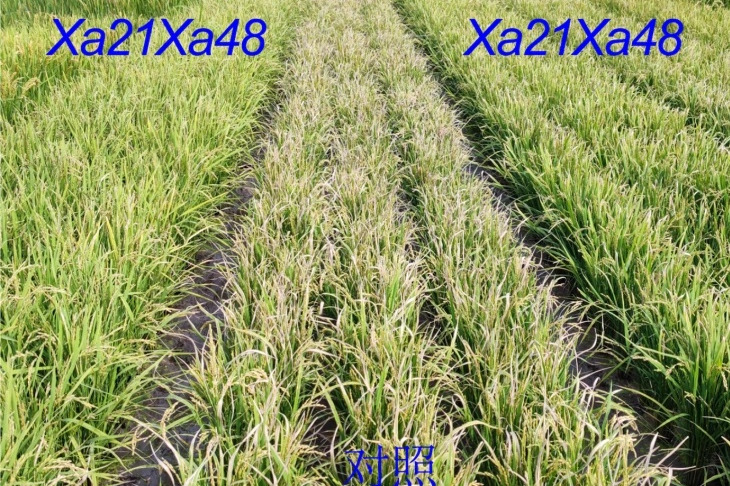
Building on this finding, the researchers combined Xa48 with an older, broad-spectrum resistance gene called Xa21 to engineer a “dual-layer” immune defense for cultivated rice. This innovative approach replicates the natural, robust disease resistance seen in wild rice — a trait that has largely been lost from modern commercial rice varieties, as decades of selective breeding prioritized high yields over defensive traits.
The discovery is already moving beyond laboratory testing into real-world agricultural application. Multiple leading seed companies and national agricultural research institutions, including Longping High-Tech Agriculture Co and the China National Rice Research Institute, are already integrating the gene into breeding programs to develop new disease-resistant rice cultivars.
Beyond protecting crop yields, the breakthrough offers notable environmental benefits. “Improving disease resistance of crops will also reduce pesticide use, contributing to greener agricultural production,” explained He Zuhua, a senior researcher and co-corresponding author of the *Nature* study. Even with current widespread pesticide application, experts estimate that China loses a minimum of 18 million metric tons of grain to pests and diseases each year. Preliminary field trials of the new rice lines developed through this research have already demonstrated that the modified cultivars maintain high yields and retain strong resistance even when exposed to flood and typhoon stress.
“This is the first time in crops that the combination of two immune networks has been shown to reconstruct such broad-spectrum disease resistance like wild rice,” noted Lin Hui, co-first author of the research paper. For agricultural communities grappling with growing climate uncertainty, the discovery marks a critical step toward developing more resilient staple crops that can protect global food supplies for decades to come.