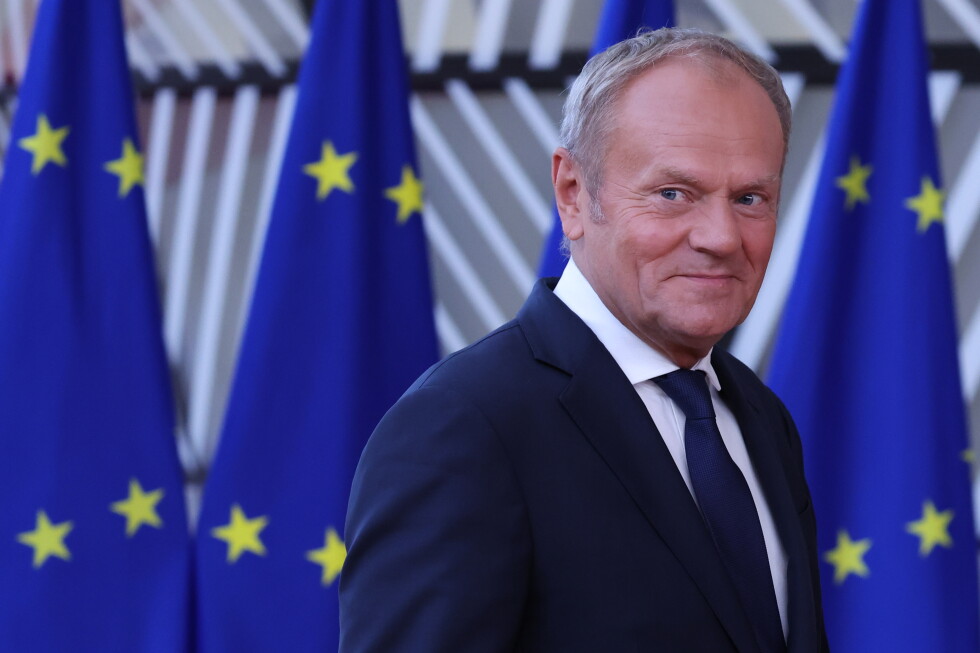
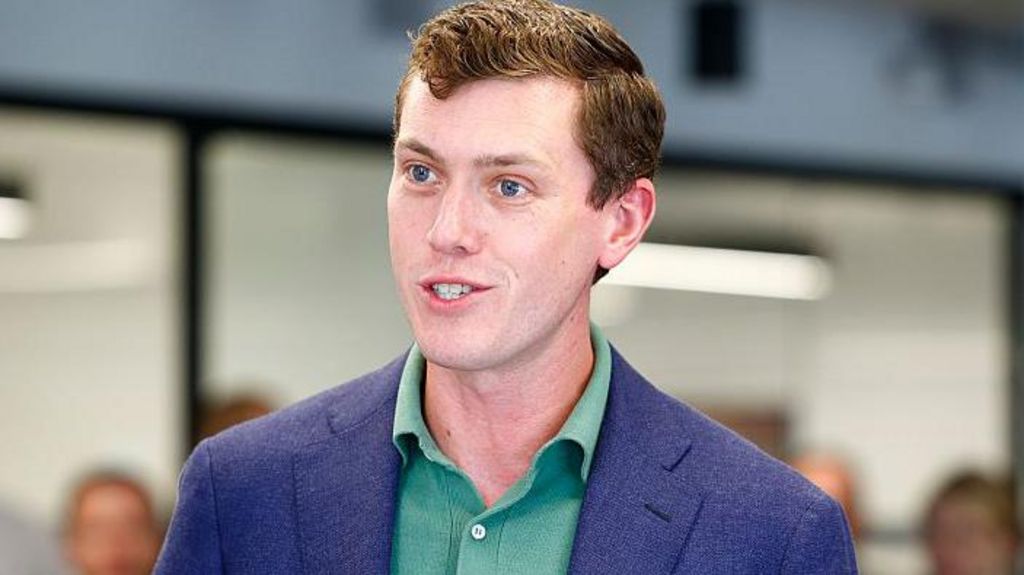
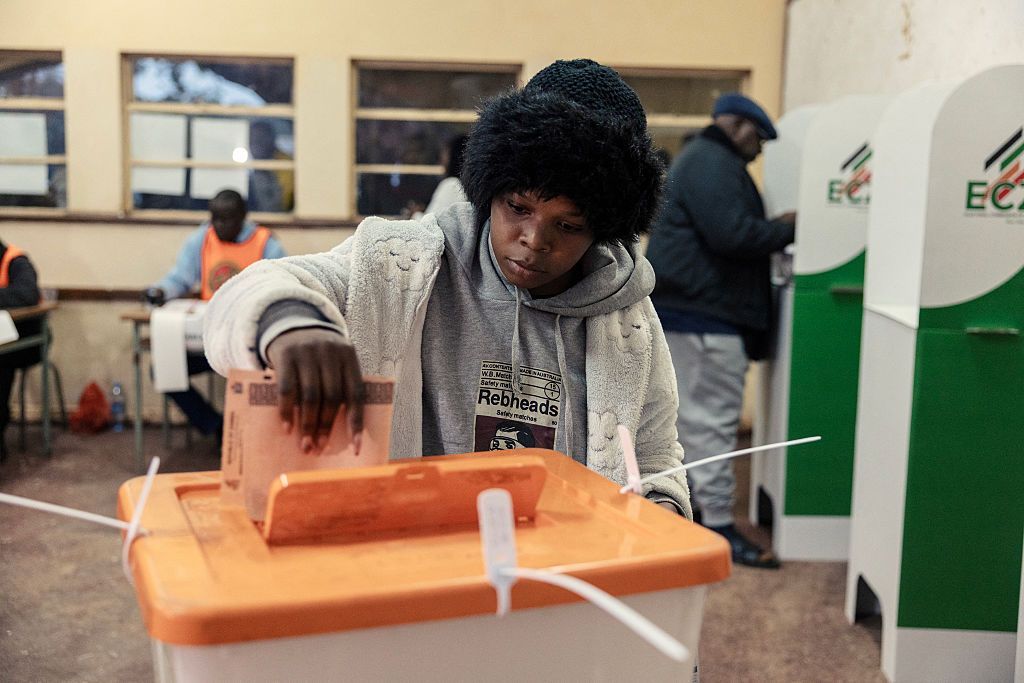
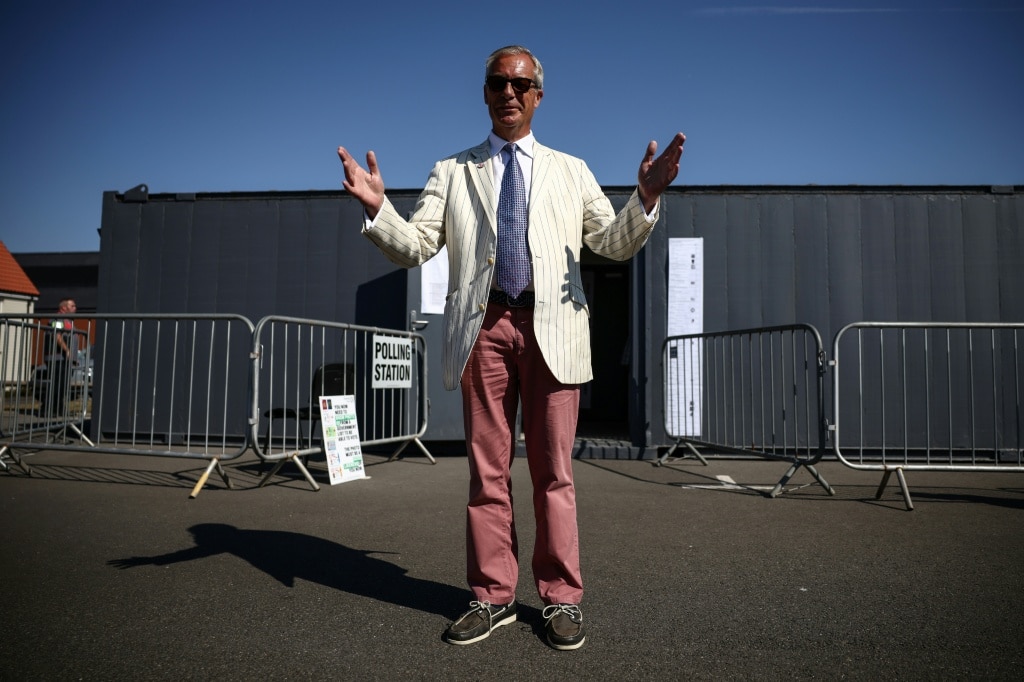
Just two years after securing a landslide general election victory, UK Prime Minister Keir Starmer finds himself trapped in an existential battle for his political future, triggered by catastrophic, unexpected losses for the Labour Party in last week’s local elections. This challenge to his leadership has been months in the making: earlier this year, Starmer already nearly fell from power following the Peter Mandelson scandal, when damning connections between the now-former US ambassador, a close Starmer ally, and convicted sex offender and financier Jeffrey Epstein came to light. Back then, internal Labour sources confirm, party figures opted to hold off on a leadership challenge solely to avoid upheaval ahead of the local elections, allowing Starmer to cling to his position. Today, that reprieve is over, and Starmer is surrounded by potential successors ready to step in if he steps down or is forced out. Whitehall insiders name four leading contenders for the top job: Health Secretary Wes Streeting, former deputy prime minister Angela Rayner, Energy Secretary Ed Miliband, and Greater Manchester Mayor Andy Burnham. What is most notable about this unfolding leadership crisis is its likely ripple effect on British foreign policy, particularly regarding Israel — a topic that has dominated UK political discourse for more than two years amid Israel’s military campaign in Gaza and the recent economic shocks stemming from the US-Israeli war on Iran. Leading pollster Sir John Curtis has confirmed that the Green Party, the most prominent UK political voice opposing British support for Israel, inflicted far more damage on Labour’s local election vote share than right-wing challenger Reform UK. With left-wing and progressive voters abandoning Labour in droves over its Israel policy, any new leader will be forced to shift course to win back disaffected voters and undercut the Green Party’s growing momentum. That shift would almost certainly mean a far firmer stance against documented Israeli war crimes, analysts say. Of the four main contenders, Andy Burnham has staked out the most distinct position on Israel, diverging sharply from Starmer’s pro-Israeli stance over the last two years. A popular soft-left figure within Labour, Burnham’s history on the issue is layered: he voted for the 2003 UK invasion of Iraq under Tony Blair, joined the pro-Israel lobby group Labour Friends of Israel in 2015, and during that year’s Labour leadership campaign described the Boycott, Divestment and Sanctions (BDS) movement as “spiteful”, called Israel a “democracy with a long history of protecting minorities”, and argued the Balfour Declaration should be celebrated in UK schools as an example of British values. But even in his early career, Burnham positioned himself as a critic of hardline Israeli government policy. A little-documented 2012 trip to the occupied West Bank with the pro-Palestine group Labour Friends of Palestine foreshadowed his later shift. After Benjamin Netanyahu’s 2015 re-election, he called the result “depressing” on social media, noting Netanyahu had run on a pledge to expand illegal settlements and arguing the Palestinian people would need increased international support. That same year, he told the Palestine Solidarity Campaign he backed full recognition of Palestinian statehood as a right, not a gift, called for an end to Israeli occupation and illegal settlement expansion, and condemned Hamas rocket and terror attacks. In the wake of the 7 October 2023 Hamas attack on Israel and Israel’s subsequent siege and bombardment of Gaza, Burnham openly broke with Starmer’s approach. While the then-opposition Labour Party aligned with the Conservative government to give Israel unqualified support — with Starmer infamously backing Israel’s “right” to cut off all power and water to Gaza’s 2 million Palestinian civilians — Burnham released a statement just two days later that drew a clear line between himself and his leader. He condemned Hamas’ attacks but only backed Israel’s right to self-defense “in line with international law”, explicitly ruling out carte blanche for Israel and calling for urgent humanitarian access to Gaza. As the Palestinian death toll climbed into the thousands, Burnham went even further, joining London Mayor Sadiq Khan and Scottish Labour leader Anas Sarwar in breaking ranks to call for an immediate bilateral ceasefire, at a time when Starmer was still pressuring rebel MPs to fall in line. In a column explaining his decision, he warned Starmer against labeling dissenting MPs as disloyal, argued Israel’s response to 7 October had to be targeted to avoid being seen as disproportionate and indiscriminate, and publicly recanted his 2003 vote for the Iraq War, acknowledging the US-led invasion had caused massive harm to innocent civilians and fueled terrorist recruitment rather than rooting out extremism. This positioning paid off electorally in 2024: while Labour lost a third of its vote share in UK areas with majority Muslim populations, Burnham comfortably retained his Greater Manchester mayoral post, just as Khan held London despite both having large Muslim constituencies. Over the following two years, Burnham continued to push the Starmer government for bolder action on Palestine, joining a group of senior Labour figures in June 2025 to urge immediate recognition of Palestinian statehood, noting the UK’s historic role in carving up the Middle East via the Sykes-Picot agreement created a moral obligation to endorse Palestinian self-determination. The Starmer government ultimately granted recognition that September. Burnham also remains a prominent supporter of the Council for the Advancement of Arab-British Understanding, which organizes parliamentary trips to the occupied Palestinian territories. His stance puts him sharply at odds with the other three leading contenders, all of whom have largely stuck to Labour’s official pro-Israel line on Gaza. While Ed Miliband, a figure seen as more left-leaning on foreign policy, privately opposed British participation in the recent US-Israeli war on Iran before it launched, he has not broken with the party’s public stance. For his part, Wes Streeting — who narrowly held his seat in 2024 against a challenge from British Palestinian independent candidate Leanne Mohamad — privately acknowledged earlier this year that Israel was “committing war crimes before our eyes” and accused Israel of “rogue state behavior” in leaked text messages with disgraced former ambassador Mandelson, but he has yet to repeat these claims publicly or push for concrete action such as sanctions. Even under Starmer, UK-Israel diplomatic relations have been strained, with London imposing a partial arms embargo on Israel, but the British government has continued deep military and political collaboration with Israel throughout its campaign in Gaza. If Starmer departs, analysts agree that any replacement will face overwhelming electoral pressure to ramp up criticism of Israel, and the UK government could finally move forward with sanctions on goods produced in illegal Israeli settlements in the occupied West Bank. Burnham’s path to the premiership does face significant barriers: as a sitting mayor, he would first need to secure a parliamentary seat to be eligible for the Labour leadership. Even so, he remains the candidate most likely to pull Labour back to its traditional center-left roots if he clears those hurdles. Regardless of which candidate ultimately prevails, all contenders will be forced to take a public stance on Starmer’s handling of the Gaza conflict, and a fundamental shift in British foreign policy is all but guaranteed in the coming months.
分类: politics
-

Pressure grows on UK’s Starmer to quit as PM
Just 22 months after sweeping to power in a historic landslide that ended 14 years of Conservative rule, UK Prime Minister Keir Starmer is facing the most severe crisis of his premiership, as growing numbers of ruling Labour Party lawmakers demand his resignation in the wake of catastrophic local and regional election outcomes. The 63-year-old leader, who took office in July 2024 on a promise of systemic change after years of Conservative austerity, Brexit infighting and mismanaged COVID-19 response, doubled down on Monday on his pledge to hold his position and reframe his agenda to win back disillusioned voters.
However, his vows to deliver bolder policy action have failed to calm internal dissent. More than 60 of Labour’s 403 sitting members of Parliament have now publicly called for Starmer to step down, including four junior government aides who resigned from their posts over the weekend to register their no confidence. Joe Morris, former parliamentary private secretary to Health Secretary Wes Streeting, a figure long rumored to be considering a leadership bid, wrote on social media platform X that it was “now clear that the prime minister no longer has the trust or confidence of the public to lead this change”.
Tom Rutland, a former aide to Environment Secretary Emma Reynolds, argued Starmer had “lost authority” among the parliamentary party and would never be able to rebuild that credibility. Melanie Ward, former assistant to Deputy Prime Minister David Lammy, acknowledged Starmer’s early work reshaping the Labour Party before the 2024 general election, but said the public’s verdict in last week’s polls was unambiguous. “The message from last week’s elections was clear; the Prime Minister has lost the confidence of the public to lead this change,” she wrote on X. Naushabah Khan, a former Cabinet Office aide who also resigned, added that new leadership was the only way to rebuild public trust and deliver the progressive agenda British voters backed at the 2024 general election.
Under Labour Party rules, any potential challenger needs the backing of 81 MPs – 20 percent of the party’s parliamentary caucus – to trigger an official leadership contest. A leadership battle would almost certainly plunge the party into crippling internal infighting, with factions on the left and right of the party scrambling to elevate their preferred candidates or shore up Starmer’s remaining support.
Since taking office, Starmer’s premiership has been marked by a string of missteps. He was recently embroiled in major controversy after the sacking of his appointed UK ambassador to Washington Peter Mandelson, following the exposure of long-concealed ties between Mandelson and convicted sex offender Jeffrey Epstein. Critically, Starmer has also failed to deliver tangible economic growth to ease the ongoing cost of living crisis that has left millions of British households struggling financially, though he has earned cross-party praise for taking a firm stance against former US President Donald Trump’s policy on Iran.
Last week’s local and regional elections delivered a damning judgment on Starmer’s tenure. Labour hemorrhaged seats to the hard-right Reform UK and left-wing Green Party, both of which recorded historic gains at Labour’s expense. For the first time since the devolved Welsh parliament was established in 1999, Labour lost control of the legislature to Welsh nationalist party Plaid Cymru. The party also failed to cut into the Scottish National Party’s dominant position in the Scottish Parliament, leaving Labour’s ambition for UK-wide unity unfulfilled.
In a make-or-break speech to the party on Monday, Starmer acknowledged the widespread public frustration with his leadership and the current state of national politics. “I know I have my doubters, and I know I need to prove them wrong, and I will,” he said. He abandoned his previous incremental policy approach, promising a far more ambitious agenda focused on accelerating economic growth, rebuilding closer ties with the European Union, and overhauling UK energy policy. In a major break from years of muted political discussion on Brexit, Starmer admitted for the first time that the 2020 UK departure from the EU has left the country “poorer, weaker and less secure”. He also announced plans to fully nationalize British Steel, a significant shift from his previously cautious industrial policy. He launched a scathing attack on Reform UK leader Nigel Farage, whose party was the biggest beneficiary of Labour’s election collapse, calling Farage a “chancer” and “grifter” who deceived the British public during the 2016 Brexit referendum. Starmer warned that if the Labour Party failed to reset its course, the UK would slide toward “a very dark path” under far-right leadership.
Despite the speech, internal dissent has not abated. Senior Labour MP Catherine West, who previously threatened to trigger a leadership challenge this week, announced after the address that she was now collecting signatures from MPs calling on Starmer to outline a formal timetable for a leadership election to be held in September. Starmer has hit back, pledging to fight any challenge and warning that voters would never forgive Labour if it repeated the chaotic turnover of Conservative governments, which saw five different prime ministers take office between 2010 and 2024, including three in just four months in 2022.
Speculation has long centered on Health Secretary Wes Streeting and former deputy prime minister Angela Rayner as the most likely candidates to oust Starmer. However, neither figure commands universal support across the divided parliamentary party. Rayner, who has not yet explicitly called for Starmer’s resignation, echoed the mood of frustration in her own remarks on Monday, saying “what we are doing isn’t working, and it needs to change.”
-

Text scheme as ‘honest mistake’ costing NSW motorists thousands
Tens of thousands of drivers across New South Wales (NSW), Australia, have faced hundreds of dollars in fines over a single preventable mistake each year, but a new state government initiative aims to eliminate these costly penalties for accidental oversights. In 2025 alone, more than 50,000 motorists in NSW were penalized for driving with expired vehicle registration or without valid insurance — violations that most often stem from simple forgetfulness rather than intentional misconduct.
Currently, more than one million NSW drivers already access digital registration reminders through email or in-app notifications in their official MyServiceNSW and Service NSW accounts, with alerts sent two weeks and one day before expiration. Under a new expansion of the existing opt-in reminder program rolled out by the state’s Labor government, drivers will now be able to add free SMS text message alerts to their reminder suite, delivering a final critical notification directly to their mobile devices.
Addressing the rationale behind the policy change, NSW Digital Government Minister Jihad Dib noted that late registration renewals almost always stem from everyday disruptions to busy modern lives, not intentional noncompliance. “We know people lead busy lives and can carry huge mental to-do lists. Paperwork gets misplaced, deadlines slip off the radar, and before you know it, your registration has expired,” Dib explained. “By introducing an overdue SMS notification one day after expiry as a final reminder to get your registration sorted, we could save you hundreds of dollars in fines while keeping everyone safe on our roads. This is a simple idea that could make a huge difference to people; by giving drivers this option we are offering you a convenient reminder in the palm of your hand.”
NSW Roads Minister Jenny Aitchison echoed Dib’s comments, emphasizing that the consequences of an accidental late renewal extend far beyond financial penalties. “Driving unregistered doesn’t just risk a fine, it means being uninsured and putting yourself and others at risk on our roads,” Aitchison said. “These SMS reminders are a simple, practical way to help people stay on top of their rego and avoid an honest mistake that can have serious outcomes.”
Current penalty structures for unregistered driving in NSW reflect the state’s commitment to road safety, but the government recognizes that penalizing accidental oversights is unfair to residents. Light vehicle drivers face maximum fines of $818 for driving or parking an unregistered vehicle on public roads or related areas, while penalties for unregistered heavy vehicles jump sharply to $1,728.
The reminder scheme remains entirely optional for NSW motorists. Drivers who choose not to opt in to digital or SMS reminders will continue to receive printed paper reminders via standard mail six weeks before their registration expiration date. As part of a public outreach blitz to boost participation, the NSW government will send invitation messages to more than four million eligible drivers throughout May and June, encouraging them to add SMS reminders to their account settings.
-

EU agrees sanctions on Israeli settlers over West Bank violence
After months of political gridlock that stalled action against escalating settler violence in the occupied West Bank, the European Union’s 27 foreign ministers formally approved new targeted sanctions against extremist Israeli settlers and settlement-affiliated organizations on Monday. The breakthrough came after a recent change in Hungary’s government removed the veto that had blocked the measure under former Prime Minister Viktor Orbán, a longstanding close ally of Israel.
The approval marks a significant shift in the EU’s approach to the escalating crisis in the West Bank, where the United Nations has recorded a dramatic surge in settler-led attacks on Palestinian communities since the outbreak of the Gaza war in October 2023. Settlements constructed on Israeli-occupied West Bank and East Jerusalem land are universally recognized as illegal under international law, and the territories remain the core of Palestinian claims for an independent future state.
EU High Representative for Foreign Affairs Kaja Kallas emphasized the urgency of the action, stating, “It was high time we move from deadlock to delivery… extremisms and violence carry consequences.” French Foreign Minister Jean-Noël Barrot echoed this sentiment in a social media post, clarifying that the sanctions target the leading Israeli organizations responsible for advancing the “extremist and violent colonisation of the West Bank.”
According to EU diplomatic sources and Israeli media reports, seven individual settlers and settler organizations will be subject to the new measures. The sanctioned list includes Daniella Weiss, a veteran figure widely referred to as the “godmother of the settler movement,” who is already subject to United Kingdom sanctions. Four leading settlement promotion and support organizations are also targeted: Nachala and Regavim, which push for the expansion of Israeli settlements on occupied land, and HaShomer Yosh and Amana, which provide financing and logistical support for unauthorized outposts built without Israeli government approval. Senior leaders of Regavim and HaShomer Yosh, Meir Deutsch and Avichai Suissa respectively, are also named on the sanction list; Suissa was previously sanctioned by the U.S. in 2024 before being removed from the list during the second Trump administration.
The sanctions also expand EU restrictive measures to include additional Hamas representatives, a move that Israeli officials have criticized as an unfair moral equivalence between Israeli civilians and the designated terrorist group.
Israeli Foreign Minister Gideon Sa’ar rejected the decision in sharp terms, dismissing it as “arbitrary and political.” He asserted that Israel will continue to uphold “the right of Jews to settle in the heart of our homeland,” and added that the EU’s move “is equally outrageous… imposing sanctions on Israeli citizens and entities because of their political views and without any basis.” He also condemned the joint sanctions on both settlers and Hamas representatives, calling the comparison “completely distorted.”
Successive Israeli governments have overseen the expansion of settlements since the 1967 Middle East War, when Israel occupied the West Bank and East Jerusalem. Today, roughly 700,000 Israeli settlers reside across approximately 160 established settlements in the occupied territories. Settlement expansion accelerated sharply after Prime Minister Benjamin Netanyahu returned to office in late 2022 at the head of a far-right, pro-settler coalition, and the pace of both expansion and settler violence has grown even more rapidly since the start of the Gaza war.
United Nations data underscores the scale of the ongoing violence: in 2025 alone, the UN documented more than 1,800 settler attacks that caused Palestinian casualties or property damage across 280 West Bank communities. Recent high-profile incidents have included an incident where settlers allegedly forced local Palestinians to exhume a grave – which the UN Human Rights Office condemned as “appalling” – the fatal shooting of a Palestinian man during a settler raid on the village of Tayasir, and multiple arson attacks targeting Palestinian homes, civilian vehicles, and agricultural land. One recent example cited earlier this year was an attack south of Nablus, where settlers set fire to a Bedouin tent and two civilian vehicles. Just weeks before the EU’s sanction vote, Israeli activists confirmed that the former Sa-Nur settlement had been reestablished on a hill southwest of Jenin, marking another expansion of settler presence in the northern West Bank.
Before the sanctions can be formally implemented, the EU must complete remaining technical and legal procedural steps. While several EU member states have also pushed for a broader ban on goods produced in Israeli settlements, the bloc has not yet reached a collective consensus to move forward with that additional measure.
-

Venezuela’s acting president defends country’s territory and rejects Trump’s 51st state remarks
THE HAGUE, Netherlands — During closing arguments at a high-stakes International Court of Justice (ICJ) territorial hearing on Monday, Venezuela’s acting President Delcy Rodríguez publicly pushed back against an extraordinary remark from former U.S. President Donald Trump, who recently claimed he was “seriously considering” recognizing Venezuela as the 51st U.S. state.
The hearings, which concluded this week, center on a long-running territorial dispute between Venezuela and neighboring Guyana over the Essequibo region — a 62,000-square-mile territory that accounts for two-thirds of Guyana’s current land area. The resource-rich region holds extensive gold, diamond, and timber reserves, and sits adjacent to massive offshore oil deposits that currently produce 900,000 barrels of crude daily, a volume nearly matching Venezuela’s total daily output of 1 million barrels and lifting Guyana from one of South America’s smallest economies to a major global energy player.
Addressing reporters after her court appearance, Rodríguez made clear Venezuela has no interest in becoming part of the United States. Standing on the ICJ’s public platform, she emphasized, “We will continue to defend our integrity, our sovereignty, our independence, our history.” She added that Venezuela is “not a colony, but a free country,” noting that the country remains open to constructive dialogue with U.S. officials. “Venezuelan and U.S. officials have been in touch and are working on cooperation and understanding,” she said.
Trump first made the 51st state comment during an interview with Fox News earlier on Monday, as shared on social media by Fox co-anchor John Roberts. The White House has not yet issued an official response to requests for comment on the remark, which is not unprecedented for Trump: he has previously floated similar suggestions about absorbing Canada into the U.S.
Before responding to Trump’s comment, Rodríguez laid out Venezuela’s formal legal position to the ICJ’s panel of international judges on the Essequibo dispute. The territorial conflict stretches back more than a century: Venezuela has claimed the region as its own since Spanish colonial rule, when the jungle territory fell within its administrative boundaries. A 1899 arbitration ruling, led by representatives from Britain, Russia and the U.S., redrew the border along the Essequibo River and awarded almost the entire region to what is now Guyana. Venezuela has long contested this decision, arguing a 1966 Geneva agreement negotiated between the two sides effectively invalidated the 19th century ruling.
The current legal process at the ICJ was triggered in 2018, three years after U.S. energy giant ExxonMobil announced major oil discoveries off the Essequibo coast. Guyana brought the case to the United Nations’ highest court, asking judges to formally uphold the 1899 border decision. Rodríguez called Guyana’s move “opportunistic,” noting that “at a time when the mechanisms established in the Geneva agreement were still fully in force, Guyana unilaterally chose to shift the dispute from the negotiating arena to a judicial resolution. This change was not accidental; it coincided with the discovery in 2015 of the oil field that would become world-renowned.”
Tensions between the two South American nations escalated sharply in 2023, when then-President Nicolás Maduro held a national referendum on converting Essequibo into a Venezuelan state and threatened military annexation of the region. Maduro was ousted from power in January during a U.S. military operation in Caracas, captured, and taken to New York to face federal drug trafficking charges, to which he has pleaded not guilty. Rodríguez assumed the acting presidency following the operation.
In opening remarks to the court last week, Guyana’s Foreign Minister Hugh Hilton Todd described the dispute as “a blight on our existence as a sovereign state from the very beginning,” noting that 70% of the country’s current territory is at stake in the ruling.
The ICJ is expected to take several months to issue a final, legally binding decision on the case. Venezuela has repeatedly stressed that its participation in the hearings does not constitute consent to or recognition of the court’s jurisdiction over the dispute, maintaining that only direct bilateral negotiations aligned with the 1966 Geneva agreement can deliver a lasting resolution to the conflict.
-

War on Iran: Senior royal says Saudi Arabia avoided Israeli plan to ‘plunge region into ruin’
A high-ranking member of the Saudi royal family has publicly confirmed that the Gulf kingdom has deliberately rejected falling into an Israeli scheme designed to spark a catastrophic full-scale war between Riyadh and Tehran. Prince Turki al-Faisal, a former longtime intelligence chief who led Saudi Arabia’s intelligence agency for more than 20 years and the son of the kingdom’s former ruler King Faisal, laid out this position in an opinion piece published over the weekend in Arab News, a major Saudi-owned regional publication.
In the commentary, Prince Turki emphasized that under the leadership of Crown Prince Mohammed bin Salman, Saudi Arabia’s de facto ruler, the kingdom has prioritized diplomatic de-escalation to resolve a conflict Riyadh sought to prevent from its outset. He detailed that when regional actors including Iran pushed to draw Saudi Arabia into what he called a “furnace of destruction,” the kingdom’s leadership chose to absorb the harm caused by regional tensions to safeguard its citizens’ lives and property.
The former intelligence head acknowledged that if Saudi leadership had opted to launch retaliatory strikes against Iranian infrastructure and interests, it had the capability to carry out such attacks. However, he warned that any military response would have had devastating consequences, triggering further attacks on critical Saudi assets including vital oil production facilities and the kingdom’s strategic desalination plants that supply the arid nation with drinking water.
“Had the Israeli plan to ignite war between us and Iran succeeded, the region would have been plunged into ruin and destruction,” Prince Turki wrote in the piece. “Thousands of our sons and daughters would have been lost in a battle in which we had no stake. Israel would have succeeded in imposing its will on the region and remained the only unchecked actor in our surroundings.”
He added that Saudi Arabia is currently working alongside Pakistan to head off additional regional escalation and prevent tensions from spiraling out of control. In a sharp rebuke to proponents of military action, he noted that “As for the advocates of war, they continue in their arrogance and cawing, perhaps unaware that the rug has been pulled from under their feet.”
Prince Turki’s comments come amid a sharply escalated regional crisis that unfolded after the U.S. and Israel launched military operations against Iran on February 28. In retaliation, Iran carried out strikes against every Gulf state that hosts U.S. military bases, including Saudi Arabia. The kingdom has also suffered major economic and strategic disruption from Iran’s effective closure of the Strait of Hormuz, the vital maritime chokepoint through which roughly one-fifth of the world’s daily crude oil shipments pass.
Last month, Saudi Arabia officially announced that attacks on its key East-West Pipeline had cut 700,000 barrels per day of the kingdom’s production capacity, equal to approximately 10 percent of its current total oil exports. The pipeline is a critical strategic asset that allows Saudi Arabia to ship oil from its Gulf coast fields to the Red Sea port of Yanbu, bypassing the closed Strait of Hormuz entirely.
Beyond pipeline infrastructure, Iranian strikes have also targeted key refining facilities in major Saudi energy hubs including Jubail, Ras Tanura, Yanbu, and the capital Riyadh. These attacks have directly disrupted the kingdom’s exports of refined petroleum products to global consumer markets, adding additional strain to already volatile global energy supplies.
-

Trump says Iran ceasefire is on ‘massive life support’
Tensions between the United States and Iran have escalated sharply in recent days, after U.S. President Donald Trump publicly declared that the month-long bilateral ceasefire is barely clinging to survival, dismissing Iran’s counter-proposal for a lasting peace as entirely unacceptable. Speaking to reporters from the Oval Office on Monday, Trump characterized the current truce, which has held since mid-April despite sporadic cross-fire exchanges, as \”unbelievably weak\”, drawing a grim comparison to a terminally ill patient with only a 1 percent chance of survival. \”I would say the ceasefire is on massive life support… when the doctor walks in and says, ‘Sir, your loved one has approximately a 1 percent chance of living’,\” Trump told reporters.
-

Yemen: The rise of Saudi-backed Salafi commanders
For decades, Yemeni Salafi preacher Gawed cut a familiar figure across Lahj governorate’s mosque circuit. Dressed in traditional Yemeni attire—a mawaz, the men’s sarong-like garment common across the region—and sporting a full beard, the 43-year-old Quranic sciences graduate spent his days proselytizing, teaching a Salafi interpretation of Islam that strictly separated religious guidance from political affairs, a framework he learned from iconic Salafi leader Muqbil al-Wadi’i, who founded the movement’s foundational Dammaj religious center in Yemen’s Saada governorate in the 1980s after studying in Saudi Arabia.
The Salafi movement, a Sunni Islamist current that adheres to a literalist reading of Islamic scripture centered on the practices of Islam’s earliest three generations, would see its apolitical posture upended by decades of escalating conflict with Yemen’s Houthi movement. A Zaydi Shia faction rooted in Saada governorate, the Houthis share with other Shia sects a core belief that leadership of the Muslim community following the Prophet Muhammad rightfully belonged to Ali ibn Abi Talib, the Prophet’s cousin and son-in-law, and his line of descendant Imams, a doctrine that places it at ideological odds with Salafi thought.
Tensions between the two groups simmered for more than a decade in Saada, their shared historic stronghold, before boiling over in 2013, when Houthi forces laid siege to Dar al-Hadith, the prominent Salafi center in Dammaj. The siege left more than 250 people dead, and by 2014, Salafis were forced to evacuate the facility entirely. Thousands fled to other Yemeni governorates, including Gawed and a contingent that resettled in Lahj. Shortly after the Salafi evacuation, Houthi forces advanced on Yemen’s capital Sanaa, securing a decisive victory that brought roughly 30 percent of the country—most of the densely populated northern and western regions—under their control.
When Houthi forces pushed into Lahj in 2015, Gawed and his fellow displaced Salafis abandoned their apolitical tradition and picked up arms. “We didn’t fight for political reasons; we fought to protect our lands and our faith from the Houthis as they tried to invade our villages and distort Islam,” Gawed told Middle East Eye in an interview. For the Salafi preacher and his followers, the fight against the Houthis has never paused: Gawed says his group has remained on the front lines continuously since 2015, vowing not to stop until the entire country is “liberated” from Houthi control. “If we purify our intentions for Allah, we will defeat them across the nation. That is all that is required now,” he said.
Though Salafis fought alongside various anti-Houthi factions for nearly a decade, 2023 brought a major strategic shift. Backed by Saudi Arabia, Yemen’s internationally recognized Presidential Leadership Council (PLC) launched the National Shield Forces (NSF), a new unified military formation led by Salafi commanders. Drawing on Gawed’s years of frontline combat experience and religious standing, the NSF appointed him a commander despite his lack of formal military academy training.
Gawed explained that the decision to form an independent, Salafi-led force grew out of longstanding friction fighting alongside factions that did not share the movement’s core ideological commitments. “At times, fighting under groups that did not share our beliefs was a struggle, so forming the NSF was a priority,” he said, adding that the NSF welcomes all committed anti-Houthi fighters regardless of ideological background. “I am not speaking only of Salafis; I believe in any fighters committed to liberating Yemen from the Houthis above all other purposes.” Today, the NSF includes hundreds of non-Salafi fighters serving alongside Salafi troops.
After its formation, the NSF first operated quietly, but it emerged as a decisive player amid rising tensions between the PLC and the Southern Transitional Council (STC), a rival southern Yemeni separatist faction. Moving from positions along the Saudi border and in Marib governorate, NSF forces successfully pushed STC influence out of large swathes of Hadhramout, Shabwa, and Abyan before advancing into Aden, the PLC’s temporary headquarters. Though this campaign was not directed at the Houthis, Salafi fighters took an active role, with Gawed noting that Salafi doctrine frames obedience to legitimate governing authority as a core religious duty rooted in Quranic teachings that command believers to obey Allah, the Prophet, and those placed in authority over the community. “We fight under the banner of Islam, and our faith commands us to obey Wali Al-Amr (the leader in authority). Therefore, we fought alongside the PLC against those attempting to create chaos,” Gawed said. “If a new faction emerges today to sow disorder and hinder our primary goal of fighting the Shia, we will fight them as well.”
This shift from mosque outreach to formal military power is an unprecedented turning point for Yemeni Salafis, who have only intermittently engaged in armed conflict in the past. The movement played a key allied role in the 1994 Yemeni Civil War, backing former president Ali Abdullah Saleh’s northern government against southern secessionist forces, but for most of modern Yemeni history, Salafis remained focused on religious outreach and avoided formal political or military leadership roles.
Salafis’ formal entry into high-level Yemeni governance began in 2022, when the PLC was formed, and prominent Salafi anti-Houthi commander Abu Zara’a al-Maharami was given a seat on the council. A new milestone was reached in April 2026, when PLC head Rashad al-Alimi appointed Salafi Brigadier General Hamdi Shukri as Commander of the Fourth Military Region, a strategic command that covers Aden, Lahj, Taiz, Abyan, and parts of al-Dhale. Today, Salafis hold top military leadership positions across nearly all PLC-controlled Yemeni territory, with other anti-Houthi forces—including fighters affiliated with the Islamist Islah party and the Yemeni Republican Guard—now operating under Salafi command in multiple governorates.
Gawed, for his part, says he welcomes the movement’s growing institutional power, framing it as part of a broader push to unify fragmented anti-Houthi forces under a single PLC-aligned military umbrella. “It is not only the Salafis; the Yemeni army is currently restructuring military groups to fight under a single umbrella, the PLC, represented by the Ministry of Defence. Once unified, we will all direct our weapons toward the Houthis,” he explained. After years of debilitating internal infighting between anti-Houthi factions—including repeated violent clashes between Islah and the STC—Gawed says internal tensions have calmed as military restructuring progresses.
Not all Yemeni military officials frame the rise of Salafi leadership through an ideological lens, however. Speaking to Middle East Eye on condition of anonymity due to restrictions on speaking to media, a senior Yemeni Defence Ministry source said he opposes dividing military forces along factional, regional, or religious lines. “I am against the division of military groups based on party, region or religious beliefs. We are all Yemenis, and we fight to liberate Yemen from the Iran-backed militia,” he said. The source pushed back against framing top commanders exclusively by their Salafi affiliation, noting: “If there is a good leader, he is promoted to commander because he is skilled and loyal to the country, not because he is a Salafi, an Islahi or anything else. All military regions and units have official names and should be referred to by their designated unit, brigade or region title, rather than being called ‘the Salafi forces’.” Even so, the source acknowledged Salafis’ critical frontline contributions, confirming they have played a major role in battles across multiple governorates and deserve representation in top military leadership, and noted that military restructuring to unify command is largely complete.
Political analyst Mohammed Sultan, however, argues that Salafis’ rapid rise to power is less a product of institutional restructuring and more a reflection of Saudi geopolitical priorities in Yemen. “The National Shield Forces were formed by Saudi Arabia under the exclusive leadership of Salafis,” Sultan explained. “Saudi Arabia took this step in 2023 when it felt it had almost no other reliable forces on the ground to support its interests.” By 2023, Sultan noted, the STC and Republican Guard were backed by the United Arab Emirates, while the Islah party was no longer viewed as loyal to Riyadh, leaving Salafis as the only major faction aligned with Saudi goals. When STC forces positioned themselves near Saudi borders in Hadhramout in late 2025, it was Salafi NSF forces that successfully displaced them, cementing Saudi trust in the movement. “Since then, Saudi Arabia has placed greater trust in the Salafis. Consequently, they have secured more positions within the Yemeni army, as Saudi Arabia is the primary benefactor funding the military,” he said.
While Sultan acknowledges that Salafi fighters are brave, effective, and loyal to their command, he warns that their rise to power carries long-term risks for Yemen’s future governance. The core challenge, he argues, is that top positions are being allocated based on factional loyalty rather than professional proficiency—a dynamic that will complicate efforts to build a unified civil state if a peace deal with the Houthis is ever reached. “If a reconciliation with the Houthis is reached or the war ends, establishing a civil state will be extremely difficult,” he said.
-

Netanyahu hints at US troop deployment against Iran in CBS interview
In a televised interview with CBS’s iconic news program *60 Minutes* that aired Sunday evening, Israeli Prime Minister Benjamin Netanyahu has raised the possibility of deploying United States ground forces inside Iranian territory, confirming that the ongoing Middle East crisis is far from over. Netanyahu argued that on-the-ground military operations would be required to seize and secure Iranian nuclear material, though he declined to share any specific timeline for when such an operation might be launched.
“I’m not going to discuss specific military tactics, but what President Trump told me is that he is prepared to go in,” Netanyahu stated in the interview, adding that he believes a ground incursion is physically achievable. This current conflict, widely viewed as having been orchestrated by Netanyahu, first erupted in late February when a joint surprise strike by U.S. and Israeli forces targeted multiple sites across Iran, including Iranian political leadership hubs, a girls’ school, and key military infrastructure.
According to reporting from multiple U.S. media outlets, U.S. President Donald Trump did not anticipate the initial wave of attacks would fail to force Iran to surrender. Contrary to Trump’s expectations, Tehran mounted a fierce resistance campaign against the U.S.-Israeli coalition: it targeted American military bases across the Persian Gulf, struck Israeli military infrastructure, and blocked all commercial traffic through the Strait of Hormuz, the world’s most critical energy chokepoint that carries roughly 20% of global oil supplies.
Trump negotiated a ceasefire with Iran on April 8, but subsequent talks have failed to produce a permanent end to hostilities. Iranian public and political sentiment remains deeply skeptical of the U.S. and Israel, with widespread belief that the coalition will resume attacks once it has regrouped and replenished its military capabilities.
In a surprising announcement during the interview, Netanyahu also said he favors ending the long-standing annual U.S. military aid package to Israel, which currently stands at $3.8 billion per year and balloons substantially during periods of open conflict. In place of traditional aid, Netanyahu proposed a new bilateral military partnership under which the U.S. would share advanced weapons technology with the Israeli military.
This proposal comes amid growing criticism within the U.S. over Israel’s outsized influence over American foreign policy and its decades-long reliance on U.S. military funding. While establishment politicians on both sides of the aisle continue to express unwavering support for Israel, American public opinion has shifted sharply against the country in recent months. A Gallup poll conducted in February found that 41% of U.S. adults now hold more sympathetic views of Palestinians, compared to just 36% who sympathize more with Israel. This marks a dramatic reversal from 2023, when 54% of respondents sympathized more with Israel and only 31% leaned toward Palestinians.
On social media and in public discourse, three key factors are most frequently cited to explain the shift in U.S. public opinion: the ongoing humanitarian crisis and allegations of genocide in Gaza, Israel’s extensive lobbying efforts to influence U.S. political decision-making, and Israel’s long track record of pushing the U.S. to enter into foreign wars that primarily serve Israeli interests.
-

Elon Musk and Tim Cook among CEOs expected to accompany Trump on China trip
As Washington prepares for a high-stakes official visit to Beijing this week, U.S. President Donald Trump is set to be accompanied by an unprecedented roster of 17 chief executives from America’s most influential business and technology sectors, according to a senior White House official familiar with the travel itinerary who spoke to the BBC.
The lineup of corporate leaders joining the presidential delegation includes some of the most high-profile names in global industry: Apple CEO Tim Cook, Tesla and SpaceX founder Elon Musk, and BlackRock Chairman and CEO Larry Fink, alongside senior representatives from other major American firms spanning technology, finance, aviation, and agriculture. These additional companies include tech giant Meta, global payments processor Visa, leading investment bank JP Morgan, aerospace manufacturing leader Boeing, and agribusiness conglomerate Cargill, among others.
The four-day state visit comes at a particularly consequential juncture for bilateral relations between the world’s two largest economies, with mounting frictions over trade, market access, and technological competition creating heightened tensions in recent months. During the trip, President Trump is scheduled to hold formal bilateral talks with Chinese President Xi Jinping, with the business delegation’s presence widely interpreted as a signal of Washington’s priority on expanding commercial opportunities for U.S. companies in the Chinese market while addressing longstanding bilateral economic and trade concerns.
Analysts note that the inclusion of so many top C-suite leaders from key sectors underscores the depth of American corporate interest in stabilizing U.S.-China economic ties, even as geopolitical and technological disagreements continue to test the bilateral relationship. For both governments, the meeting is seen as a critical opportunity to ease escalating tensions and open new pathways for constructive engagement on shared economic and trade priorities.