In India’s northern Sikh-majority state of Punjab, a newly enacted stricter law targeting sacrilege against the Guru Granth Sahib — Sikhism’s highest spiritual and temporal authority — has ignited a high-stakes political and religious controversy that is roiling the state ahead of upcoming 2027 elections.
The ruling Aam Aadmi Party (AAP) government, led by Chief Minister Bhagwant Mann, pushed the legislation through the state assembly in April 2026. Framed as a fulfillment of a key 2022 election campaign promise, the law was designed to deliver harsher penalties for desecration of the Guru Granth Sahib, which Sikhs revere not just as a holy scripture containing the hymns of Sikh Gurus and interfaith saint-poet compositions, but as their eternal living Guru. The new legislation marks the first time sacrilege has been formally defined in Indian state law, covering a wide range of acts from deliberate physical damage, theft, and defacement to verbal, written, and digital communications intended to insult the scripture or offend Sikh religious sensibilities. Convictions carry prison sentences ranging from seven to 20 years, plus fines between 200,000 and one million Indian rupees, with steeper penalties for offences tied to criminal conspiracies targeting communal peace or religious harmony. All offences under the law are classified as cognisable and non-bailable, permitting police to make arrests without a warrant and making bail extremely difficult to secure.
What makes this law the third failed attempt in a decade to enact stricter sacrilege penalties in Punjab, and what has sparked the current firestorm, is not the harsher sentencing itself, but new administrative provisions added to the existing 2008 Jaagat Jot Sri Guru Granth Sahib Satkar Act. The 2008 legislation, originally passed by the previous Shiromani Akali Dal-Bharatiya Janata Party (SAD-BJP) government, only regulated the printing, publication, and distribution of the Guru Granth Sahib. The 2026 amendments add new rules for scripture registration, custody, administrative oversight, and grant the state government broad authority to draft implementing regulations, including a provision requiring unique ID numbers for all physical copies of the scripture and a central government-held registry.
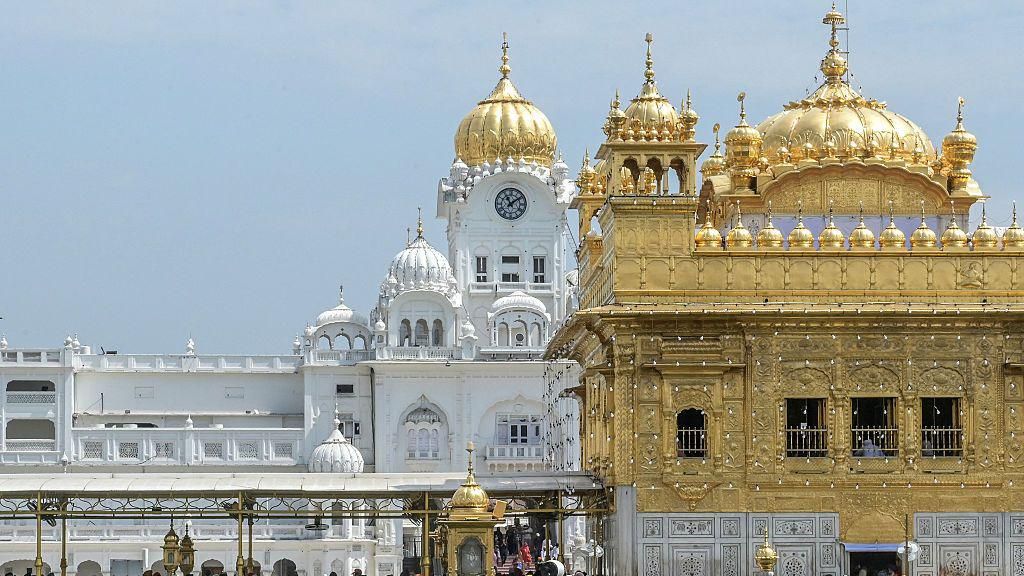
These provisions have drawn fierce pushback from the Akal Takht, the highest governing body for Sikh temporal and spiritual affairs, which is headquartered steps from the Golden Temple in Amritsar. The Akal Takht argues that the law oversteps its bounds: while it supports harsh penalties for sacrilege, it says administrative and religious matters related to the Guru Granth Sahib fall exclusively under the purview of Sikh religious institutions, not the state government. Critically, the Akal Takht says it was never consulted during the drafting process, a omission it has decried as unacceptable.
The controversy is rooted in decades of religious and political tension in Punjab. A string of high-profile Guru Granth Sahib desecration incidents in 2015 sparked massive statewide protests that culminated in police opening fire on demonstrators in Behbal Kalan, killing two protesters. The issue quickly became a persistent political flashpoint: the 2015 incident’s poor handling was widely cited as a key factor in the SAD-BJP government’s 2017 election defeat, and the succeeding Congress government also faced widespread backlash for delays in investigating the unresolved cases. The AAP made delivering accountability for these 2015 incidents a core campaign pledge ahead of its 2022 state election victory, and after taking office, it reopened stalled investigations before advancing the new sacrilege law.
Previous attempts to enact stricter sacrilege laws failed over constitutional and procedural hurdles. In 2016, the SAD-BJP government proposed a bill that would have imposed life imprisonment for desecration, but India’s federal government blocked it on the grounds that a law protecting only one faith violated the country’s secular constitution. The Congress government tried again in 2018, expanding the proposal to cover holy texts from all major Indian religions, but the bill never secured presidential assent and never took effect. The AAP initially pursued a similar broadly inclusive bill in 2025, but after it was referred to a legislative committee for further review, the government opted to amend the existing 2008 law focused exclusively on the Guru Granth Sahib to avoid the same gridlock.
In the weeks after the law’s passage, the Akal Takht escalated its objections, summoning AAP speaker Kultar Singh Sandhwan in early May to answer for the lack of consultation. Sandhwan appeared before the body and defended the legislation as a necessary protection for the Sikh faith, but the Akal Takht continued to press its case. It later summoned all Sikh legislators and ministers from across Punjab’s political parties who had supported the bill, and according to reports from India’s Press Trust of India, multiple lawmakers admitted they had not read the full legislation before voting, as copies of the bill were distributed only hours before the assembly debate. Akal Takht head Kuldip Singh Gargajj called the admission an example of “serious negligence” and gave the Mann government a one-month deadline to amend the disputed provisions, ordering the government not to implement the administrative rules in the interim.
While the Akal Takht holds no formal constitutional authority over Punjab’s elected government, it wields enormous informal religious and social influence among the Sikh community, a force no state government can afford to ignore, given Punjab’s long history of intertwined religion and politics. The controversy has also quickly become a political cudgel for the state’s opposition parties: the Congress, SAD, and BJP have all united in criticizing the AAP for rushing the bill through the assembly without proper consultation with Sikh religious leaders, accusing the government of playing politics with a sensitive religious issue.
The dispute comes at a particularly sensitive moment for Mann, with state legislative elections scheduled for early 2027. Mann is already grappling with a separate personal controversy, after opposition parties shared an alleged video they claim shows Mann consuming alcohol and splashing it on photographs of Sikh Gurus — an accusation Mann has dismissed as a fabricated political smear. On the sacrilege law, Mann has stood firm, reiterating that the government has no intention of withdrawing the legislation entirely, but has acknowledged the government is open to reviewing the Akal Takht’s suggestions and considering targeted amendments to resolve the deadlock.