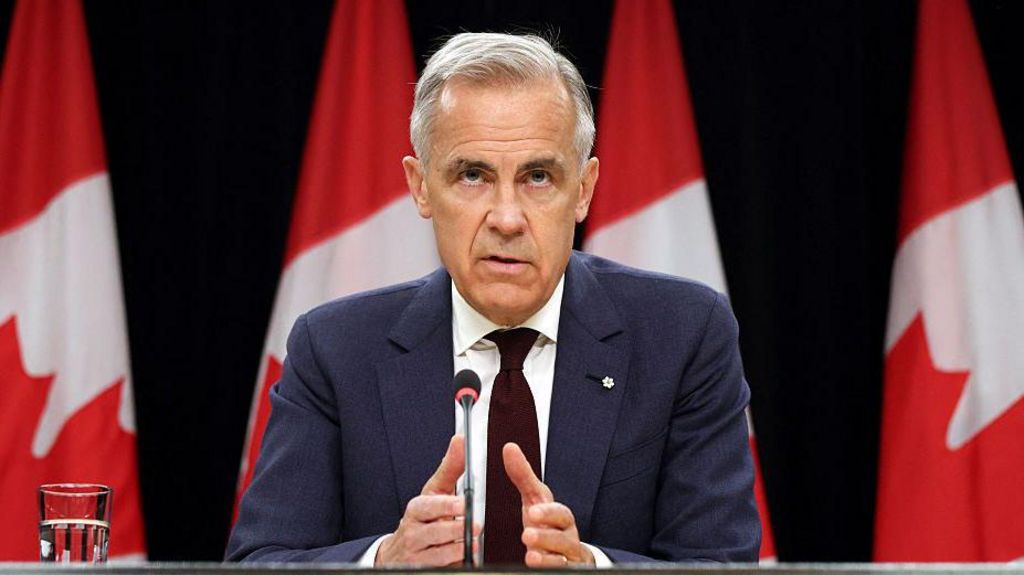
Just days ahead of a critical NATO summit in Turkey, Canadian Prime Minister Mark Carney has announced one of the most consequential defence investments in the nation’s modern history: a massive contract to build a new 12-vessel submarine fleet awarded to German defence firm Thyssenkrupp Marine Systems (TKMS), the world’s leading builder of non-nuclear submarines.
The deal marks the largest military procurement in Canadian history, and forms a core pillar of Carney’s sweeping pledge to ramp up national defence spending. Since taking office, Carney has already lifted Canada’s defence expenditure to 2% of national GDP, with a binding commitment to hit 5% by 2035 – a target that aligns with longstanding pressure from NATO, and more recently from former U.S. President Donald Trump, who has pushed all 32 alliance members to boost their military investment. The timing of the announcement, delivered on Monday in Halifax, Nova Scotia, puts Carney in a strong position to demonstrate Canada’s commitment to collective defence when he meets with other NATO leaders this week.
Canada’s need for a new submarine fleet has grown increasingly urgent in recent years. The country’s current aging Victoria-class vessels, purchased in 1998, are in a state of severe disrepair: official government data confirms only one out of the four existing submarines is currently seaworthy. For a nation that boasts the longest coastline on the planet, shifting geopolitical and environmental conditions have amplified security risks dramatically: rapid climate change is melting Arctic sea ice, opening new navigable waterways that create potential flashpoints for adversarial activity and threaten Canadian sovereignty over its northern territories.
TKMS beat out South Korea’s Hanwha Ocean in a competitive bidding process to secure the contract. The German bid is structured as a joint partnership with Norway, which TKMS says offers Canada a low-risk, NATO-aligned solution that includes shared provisions for maintenance, training, logistics, and operations. Unlike Canada’s current fleet, the new conventionally-powered submarines will be purpose-built with advanced under-ice operational capabilities, tailored to meet the unique security challenges of the Arctic.
While the federal government has not publicly released a full cost estimate for the project, officials confirmed negotiations to finalize the formal contract will now launch, a process expected to take several months. Beyond just military capability, Carney emphasized that the investment will drive long-term domestic economic growth, noting the project will build and expand sustainable Canadian industrial capacity in the defence and shipbuilding sectors.
The procurement project moves at an unprecedented pace for Canadian defence policy. Canada first launched the search for a contractor to replace its aging fleet in July 2024, with Carney pledging to select a winning bidder by June 2025 – a timeline that analysts describe as remarkably fast by Canadian standards. David Perry, president of the Canadian Global Affairs Institute, called the timely selection a major win for Carney’s government, saying the contract delivers significant credibility to the prime minister’s promise to accelerate and expand defence spending.
Perry noted that the decision to award the contract to a German firm also aligns with Carney’s broader geopolitical strategy. As Canada navigates growing trade tensions with its southern neighbor and longstanding ally the United States, Carney has actively prioritized strengthening economic and security partnerships with Europe. “This project will push our core defence modernization forward consequentially,” Perry explained, adding that the new fleet will transform Canada’s maritime operational capacity. Once completed, the fleet is expected to maintain three reliably operational submarines at any given time – a massive upgrade from the current status of just one occasionally operational vessel, which has been Canada’s reality for years.
In a statement ahead of the announcement, Carney framed the investment as a necessary response to an increasingly unstable global environment. “In a more dangerous and divided world, Canada must be prepared to defend our interests, protect our citizens, build our economy, and secure our future,” he said. “To that end, we are making the largest defence procurement in our nation’s history with speed, ambition, and discipline.” Canadian federal officials have reaffirmed that the new submarine fleet is an critical investment to protect the country’s maritime sovereignty and national security across its vast territorial waters, particularly in the fast-changing Arctic region.