分类: politics

  • ‘It’s not a swimming pool’ – Americans react to Trump’s reflecting pool makeover

    ‘It’s not a swimming pool’ – Americans react to Trump’s reflecting pool makeover

    A multi-million dollar renovation project at one of Washington DC’s most iconic public spaces has sparked sharp division among visitors and city residents, after former President Donald Trump launched the effort as part of his broader pledge to clean up and beautify the US capital. The $13 million makeover of the historic reflecting pool has drawn particular public pushback, with many critics taking to social media and on-the-street interviews to push back against the changes—most notably dismissing the updated design by quipping “it’s not a swimming pool.”

    The initiative grew out of Trump’s campaign promise to transform Washington DC into a safer, more aesthetically welcoming destination for the millions of domestic and international tourists who visit the National Mall and its surrounding landmarks every year. Proponents of the project argue that the reflecting pool had fallen into disrepair over decades of heavy use and neglect, with cracked pavement, murky water, and failing infrastructure posing safety hazards to visitors. The renovation, they note, updates critical utility systems, improves accessibility for guests with disabilities, and preserves the landmark for future generations to enjoy.

    But critics, ranging from casual tourists to long-time DC locals, say the finished product bears little resemblance to the tranquil, understated landmark they remember. Many have pointed to the project’s $13 million price tag as a waste of public funds that could have been allocated to more pressing needs in the city, from affordable housing to infrastructure improvements in underserved neighborhoods. Others have criticized the aesthetic changes, arguing that the updated design feels overly polished and out of step with the reflecting pool’s original historic character, drawing unflattering comparisons to a residential backyard swimming pool rather than a solemn national landmark.

    The mixed response highlights the ongoing tension around large-scale public renovation projects in major tourist destinations, where balancing infrastructure updates, historical preservation, and public preference often proves a fraught challenge. What was intended as a signature achievement for the administration’s urban beautification agenda has instead become a flashpoint for debate over public spending priorities and the future of Washington DC’s most cherished public spaces.

  • In diplomacy, pomp and protocol matter, especially when Trump goes to China

    In diplomacy, pomp and protocol matter, especially when Trump goes to China

    As U.S. former President Donald Trump prepares to touch down in Beijing this Wednesday, global diplomatic observers are fixing their attention not on pre-summit policy leaks or meeting agendas, but on the small, symbolic details of his official reception: which ranking Chinese official will greet him on the tarmac, what ceremonial anthems will be played, and whether young Chinese and American attendees will line the route waving national flags and floral arrangements. In China’s long-standing tradition of hierarchical diplomatic practice, ceremonial protocol carries far more than aesthetic weight—it serves as a deliberate tactical signal of how Beijing views the current state of bilateral ties.

    Analysts broadly agree that this year’s welcome for Trump will be warm, flattering and carefully calibrated to appeal to the former president’s well-documented preference for grand pageantry, but it will not match the extraordinary “state visit plus” extravaganza Beijing rolled out for Trump’s first trip to China in 2017. That 2017 event remains unprecedented: it is the only “state visit plus” China has ever extended to a foreign head of state, packed with one-of-a-kind gestures that included a private after-hours tour of Beijing’s Forbidden City Palace Museum, an intimate dinner hosted by President Xi Jinping and his wife Peng Liyuan, and a traditional opera performance in a royal theater that had sat unused for a century. Trump himself has frequently reminisced about the 2017 welcome, praising Xi’s hospitality and highlighting the precision of the honor guard he inspected.

    A lot has changed for U.S.-China relations in the nine years since that first visit. What began as a framework defined by broad engagement has shifted into an era of systemic competition, with ties hitting new lows during the height of the U.S.-China trade war and the global COVID-19 pandemic. That shifting context is reflected directly in the scaled-back nature of Trump’s 2025 itinerary. The visit was originally scheduled for the end of March, but it was delayed by the outbreak of the U.S.-Israeli led war in Iran, which has blocked the Strait of Hormuz and sent shockwaves through global energy markets. When Trump finally arrives, his stay will be far shorter than it was in 2017, and first lady Melania Trump will not accompany him. According to Danny Russel, a former senior U.S. diplomat specializing in East Asian affairs, the compressed itinerary has been stripped down to core essential meetings, lasting barely one full day.

    That said, analysts emphasize that China still plans to roll out a full red-carpet welcome for Trump, as the U.S. retains a unique position in Beijing’s foreign policy priorities. Just as in 2017, Trump can expect a gold-edged red carpet stretching down the stairs from Air Force One, a 21-gun ceremonial salute, and an inspection of a neatly ranked Chinese People’s Liberation Army honor guard. A formal welcome ceremony will be held with President Xi Jinping in attendance, and the rank of other Chinese officials present will itself be a signal of bilateral priorities.

    Beijing has also planned a special, symbolic gesture for this visit that marks a warm welcome, while still falling short of the 2017 “state visit plus” standard. Xi will personally accompany Trump on a private tour of Beijing’s Temple of Heaven, the 600-year-old former imperial ceremonial site where Chinese emperors once prayed for abundant harvests. To accommodate the visit, the entire Temple of Heaven Park will be closed to the public for Wednesday and Thursday, with core attractions including the iconic circular Hall of Prayer for Good Harvests and the Echo Wall closing a day early for pre-visit preparations. This full closure marks a departure from recent practice: earlier this year, when the prime ministers of Britain and Spain visited Beijing’s major historical sites, no full park closure was implemented, and Xi did not personally accompany either leader on their tours.

    Russel notes that the pageantry is no accident: it is an open secret across global diplomatic circles that Trump responds far more positively to flattering spectacle than dry policy negotiations. “The pomp and pageantry is designed both to flatter Trump and to pacify him, making him more amenable to Chinese asks and reducing the risk of an embarrassing public confrontation,” he explained.

    Beyond flattery, the scaled-back nature of this year’s reception carries its own message. Rush Doshi, C.V. Starr Senior Fellow for Asia Studies at the Council on Foreign Relations and an assistant professor of security studies at Georgetown University who previously served on former President Joe Biden’s National Security Council and helped plan Biden’s 2022 and 2023 summits with Xi, argues that the more muted welcome reflects three key shifts in Beijing’s perspective. “That reflects greater Chinese confidence in their position, greater skepticism of Trump, and the awkwardness of the current relationship,” he said.

    The ongoing Iran war has further shifted the bargaining dynamic ahead of the summit, analysts add. The conflict has disrupted global energy supplies and roiled international markets, putting Beijing in a stronger negotiating position as China’s control over key global supply chains and its expanding economic clout give it added leverage. This has already pushed the Trump administration to adopt a far more pragmatic policy approach toward China than many initially expected, experts note.

    For Doshi and other China-watchers, every detail of this week’s reception will act as a window into the future of bilateral ties. “China uses diplomatic protocol as a method of signaling favor or disfavor. That is why we should pay close attention to how President Trump is received,” Doshi said.

  • ‘Within the next few months’: Massive problem budget failed to fix

    ‘Within the next few months’: Massive problem budget failed to fix

    Australia’s federal government has tabled what is widely labeled the most sweeping set of budget and tax reforms in a quarter century, but independent analysts warn that even these ambitious changes will not stop the nation’s gross central government debt from crossing the $1 trillion threshold in the coming years.

  • Rubio, with new Chinese name, heads to Beijing despite sanctions

    Rubio, with new Chinese name, heads to Beijing despite sanctions

    A surprising diplomatic workaround has cleared the way for U.S. Secretary of State Marco Rubio to join President Donald Trump on a high-stakes state visit to Beijing this week, even though the top American diplomat has been hit with multiple entry bans and sanctions from Chinese authorities over his past criticism of Beijing. This unorthodox solution, which centers on changing the Chinese transliteration of Rubio’s surname, has broken a months-long diplomatic deadlock that once appeared to block him from joining the historic trip.

    This is the first visit to China for the 54-year-old Cuban-American secretary of state. Before he joined the Trump cabinet as the nation’s top diplomat, Rubio served decades in the U.S. Senate, where he built a reputation as one of Washington’s most vocal hardliners on China. He led the drafting of landmark congressional legislation that imposed sweeping economic sanctions on China over unsubstantiated claims of forced labor among the Uyghur ethnic minority in Xinjiang, and he repeatedly spoke out against Beijing’s policy in Hong Kong. During his Senate confirmation hearing for secretary of state earlier this year, Rubio openly labeled China an “unprecedented adversary” to the United States, a stance that aligned with his long-held anti-communist views.

    China first imposed sanctions and an entry ban on Rubio during his time in the Senate, retaliating for his sharp criticism of Chinese policy — a move that mirrored the sanctions the U.S. regularly imposes on foreign officials it accuses of human rights violations. By the time Trump nominated Rubio to serve as Secretary of State after the 2024 presidential election, the existing sanctions tied to his name had created a major diplomatic stumbling block.

    Two anonymous senior diplomats familiar with the behind-the-scenes negotiations have confirmed that Chinese officials found a creative way to bypass the entry restriction: adjusting the Chinese character used for the first syllable of Rubio’s surname, “lu”, in official government documents and state media coverage shortly before he took office in January 2025. Because the original entry ban and sanctions were formally issued under the old transliteration of his name, the small linguistic adjustment effectively unties Rubio’s new role as secretary of state from the existing restrictions.

    As of Tuesday, the Chinese Embassy in Washington had not issued any immediate response to requests for comment on the name change and the upcoming visit. A spokesperson for the U.S. State Department declined to share additional details about the negotiations, confirming only that Rubio would be traveling with Trump. Photo and on-the-ground reporting from Joint Base Andrews outside Washington shows Rubio boarding Air Force One alongside the president ahead of the trans-Pacific trip.

    Since taking office as Secretary of State, Rubio has aligned his public stance with President Trump’s approach to China. Trump has repeatedly described Chinese President Xi Jinping as a personal friend, and has prioritized expanding bilateral trade relations while downplaying public discussion of human rights issues. Even so, Rubio has broken with softer approaches on some matters: last year, before he took office, his public statement that the Trump administration would not negotiate away Taiwan’s status as a self-governing democracy in exchange for a new trade deal was widely welcomed by government officials in Taipei.

  • As Trump heads to China, past US flubs on US policy toward Taiwan can be a warning

    As Trump heads to China, past US flubs on US policy toward Taiwan can be a warning

    For close to 50 years, every sitting U.S. president has been forced to navigate an extraordinarily delicate diplomatic verbal minefield when addressing U.S. policy toward Taiwan and China. Even the smallest misstatement or off-script comment can send immediate shockwaves through global geopolitics, triggering widespread alarm across major capitals.\n\nUnder the long-standing U.S. \”One China\” policy, Washington formally acknowledges Beijing’s position that Taiwan is part of China, while maintaining only unofficial, people-to-people and security ties with the self-governing island democracy. The framework has intentionally been crafted to remain vague, a diplomatic approach widely referred to as \”strategic ambiguity.\” Under this doctrine, the U.S. pledges to ensure Taiwan retains the necessary capabilities to defend itself against any forced unification attempt by Beijing, but deliberately refuses to explicitly state how far it would go militarily to counter a Chinese attack. As far back as 1995, former Assistant U.S. Defense Secretary Joseph Nye summed up the approach for Chinese officials asking about U.S. responses to a Taiwan crisis: \”We don’t know, and you don’t know.\”\n\n\”The whole idea is that you stick rigidly to the carefully crafted language that’s been built up over decades, you don’t deviate from it at all,\” explained Mike McCurry, former White House press secretary during the Bill Clinton administration. \”Because there are so many stakeholders on all sides listening and paying extremely close attention to every word.\”\n\nCarefully calibrated to preserve Taiwan’s security and de facto autonomy without making explicit irreversible security commitments, while also avoiding unnecessary provocation of Beijing, this long-standing policy is poised to return to the center of global attention ahead of former President Donald Trump’s visit to China this week. A review of modern diplomatic history makes clear that past U.S. leaders have repeatedly stumbled over the wording of the policy, requiring rushed, high-stakes diplomatic damage control to reset expectations.\n\n\”The entire thing relies on the precision of the language,\” said John Kirby, who has served as a spokesperson for the State Department, the Pentagon, and the White House across multiple Democratic administrations. \”You have to be extraordinarily precise when talking about Taiwan because, quite frankly, the stakes could not be higher.\”\n\n### A History of Missteps: When Presidents Strayed From Script\nPresident Joe Biden has repeatedly overstepped the long-standing parameters of the policy, four separate times publicly suggesting the U.S. would intervene militarily if China invaded Taiwan, each time forcing White House officials to quickly step in to clarify that decades of U.S. policy had not changed.\n\nDuring an August 2021 interview with ABC News, Biden was discussing U.S. commitments to mutual defense for NATO allies when he added, \”Same with Taiwan.\” The White House was immediately forced to issue a correction reaffirming that U.S. policy toward Taiwan remained unchanged. That October, during a CNN town hall, Biden again stated the U.S. was committed to defending Taiwan if China launched an attack, prompting an identical walkback from White House staff.\n\nIn May 2022, during a press conference held in Tokyo, Biden answered \”yes\” when asked if he would commit U.S. military forces to defend Taiwan, adding \”That’s the commitment we made.\” The comment forced Defense Secretary Lloyd Austin to publicly reaffirm Washington’s long-standing commitment to the \”One China\” framework just days later. Biden made a similar comment during a September 2022 interview with CBS’ *60 Minutes*, leading to another round of official clarifications from the White House.\n\nThe Trump administration also faced its own share of verbal and protocol blunders during its first term. Then-President-elect Trump broke with decades of precedent in 2016 when he took a direct phone call from Taiwanese President Tsai Ing-wen – a move no U.S. president-elect or president had made since Washington formally cut official diplomatic ties with Taiwan in 1979. Trump later dismissed the backlash to the call, posting on social media: \”Interesting how the U.S. sells Taiwan billions of dollars of military equipment but I should not accept a congratulatory call.\”\n\nThe following year, the Trump White House made another high-profile misstep when a statement about a meeting between Trump and Chinese President Xi Jinping in Germany incorrectly referred to Xi as the president of the Republic of China – the formal name for Taiwan – rather than the People’s Republic of China. The official White House transcript was quickly altered after the error was spotted to correct the wording.\n\nMiles Yu, who served as principal China policy advisor to former Secretary of State Mike Pompeo during the first Trump administration and now leads the China Center at the conservative Hudson Institute, argued that the frequent missteps are inevitable because the framework itself is a \”conceptual trap\” set by Beijing. \”You cannot explain something that’s unexplainable,\” Yu said, noting that he has pushed for the U.S. to abandon ambiguity and explicitly state its commitment to defending Taiwan. He added that the \”One China\” principle, as Beijing frames it to assert Taiwan is an inalienable part of Chinese territory, is \”completely of Chinese making.\”\n\nYu argued that even under the policy of strategic ambiguity, there has never been any real uncertainty about U.S. intentions among China’s top leadership. \”No one inside the Chinese high command has ever believed there is any ambiguity as to America’s resolve to defend Taiwan,\” he said. Instead, he pointed to repeated U.S. military mobilizations in the Taiwan Strait over decades of heightened tensions as clear evidence that Washington has long planned to defend Taiwan in proportion to any threat from Beijing. Today, Trump’s team says U.S. policy has not changed, but rejects the need for the traditional careful verbal gymnastics, pointing to Trump’s approval of multiple major arms sales packages to Taiwan during his time in office.\n\n### The Policy Has Always Been Hard to Articulate\nThe origins of the modern U.S. framework date back to the end of the Chinese Civil War in 1949, when Washington initially recognized Chiang Kai-shek’s Nationalist government as the legitimate ruler of all China, even after that government retreated from the mainland to Taiwan. It was not until 1979, when President Jimmy Carter normalized diplomatic relations with Beijing, that the U.S. formally adopted the \”One China\” policy, after months of closed-door negotiations between the two countries. Even so, Carter later acknowledged that the agreement did nothing to block a future president or Congress from committing U.S. military forces to defend Taiwan if needed.\n\nSubsequent presidents have repeatedly stumbled over the wording of the policy. During a 1998 roundtable in Shanghai, President Bill Clinton committed to the widely accepted \”Three No’s\” pledge: the U.S. does not support Taiwan independence, does not support a \”two Chinas\” or \”one Taiwan one China\” framework, and does not support Taiwan’s membership in international organizations that require statehood for membership. But just one year later, Clinton made off-script comments seeming to suggest he could pursue a military intervention in Taiwan similar to past U.S. military actions abroad.\n\nIn 2001, during an interview with The Associated Press, President George W. Bush was asked whether the U.S. would use military force to counter a Chinese attack on Taiwan, and responded simply \”It’s certainly an option.\” He later was forced to clarify the comment to CNN, saying it did not represent a toughening of U.S. policy, repeating his commitment to do \”what it takes to help Taiwan defend itself.\” Five years later, during a state visit to Washington by then-Chinese President Hu Jintao, a White House announcer mistakenly announced that the national anthem of the Republic of China would be played, instead of the People’s Republic of China, though the error was corrected before the anthem was played.\n\n### Staying On Message Requires Discipline\nA small number of presidents have managed to stick to the carefully crafted script over the years. In 1989, during a state banquet in Beijing, President George H.W. Bush stated that while the U.S. adheres to \”the bedrock principle that there is but one China, we have found ways to address Taiwan constructively without rancor.\” In 2014, during a joint press conference with Xi Jinping in Beijing, President Barack Obama struck a careful balance, saying \”We encourage further progress by both sides of the Taiwan Strait towards building ties, reducing tensions and promoting stability on the basis of dignity and respect.\”\n\nEven so, getting the wording right remains one of the hardest tasks in modern U.S. diplomacy. \”Anybody who has been at the State Department, the Pentagon or even the White House podium can tell you: When the issue of Taiwan came up, you went to your notes,\” Kirby said. \”You didn’t freelance it.\” Kirby admitted that even he once made a mistake when he got overconfident and spoke off-script, mischaracterizing the policy and causing what he called a \”little kerfuffle.\” Any major misstatement, Kirby explained, almost immediately draws pushback from senior U.S. policy officials, who demand an immediate correction: \”You’ll be highly encouraged to make a statement correcting it right away.\”

  • Trump set to meet with Xi in Beijing as war and inflation weigh on his presidency

    Trump set to meet with Xi in Beijing as war and inflation weigh on his presidency

    WASHINGTON and BEIJING – As global anxieties over armed conflict, trade frictions, and accelerating artificial intelligence development reach a fever pitch, former U.S. President Donald Trump has departed the White House en route to Beijing, where he will meet Wednesday with Chinese President Xi Jinping for what is shaping up to be one of the most consequential bilateral summits in recent years.

    Speaking to reporters ahead of his departure Tuesday, Trump framed the U.S.-China dynamic as a meeting of the world’s two preeminent global powers, noting, “We’re the two superpowers. We’re the strongest nation on Earth in terms of military. China’s considered second.” Despite this public projection of U.S. strength, the trip unfolds at a precarious moment for Trump’s domestic standing, with his approval ratings dragged down by fallout from the U.S.-Israeli war against Iran, which has sent U.S. inflation soaring.

    Against this backdrop, Trump is prioritizing trade negotiations, aiming to secure tangible wins through new agreements that would expand Chinese purchases of American agricultural products and civilian aircraft. His administration is also pushing to launch a new bilateral “Board of Trade” mechanism designed to resolve ongoing economic disputes, a step that grows out of the 12-month trade truce reached last October. That truce ended a tense year-long trade war sparked by Trump’s unilateral tariff hikes on Chinese goods, which China countered by leveraging its global dominance of rare earth mineral supplies.

    Even as trade sits atop the agenda, the Iran conflict continues to overshadow all other U.S. policy priorities. The war has forced the effective closure of the Strait of Hormuz, a critical global chokepoint for energy shipments, stranding countless oil and liquefied natural gas tankers and pushing energy prices to multi-year highs that threaten to derail fragile global economic growth. Though Iran’s foreign minister Abbas Araghchi held talks in Beijing just last week, Trump played down the need for Chinese mediation, telling reporters, “We have a lot of things to discuss. I wouldn’t say Iran is one of them, to be honest with you, because we have Iran very much under control.”

    Two other high-stakes issues will also feature heavily in the closed-door talks: the status of Taiwan and global nuclear arms control. The Chinese government has repeatedly voiced strong objection to planned U.S. arms sales to Taiwan, the self-governing island that Beijing claims as an inalienable part of its sovereign territory. The $11 billion weapons package, authorized by the Trump administration in December but not yet implemented, will be on the agenda, according to Trump himself. Trump has long signaled ambivalence about U.S. commitments to Taiwan, a stance that has sparked widespread speculation that he may be open to rolling back American support for the island democracy. At the same time, Taiwan’s position as the world’s leading producer of advanced semiconductors has made it central to the global AI race, with the U.S. importing more chips and related goods from Taiwan than from mainland China so far this year. Like his predecessor, Trump has pushed policy initiatives to reshore more advanced chip manufacturing to the U.S.

    Despite the many sticking points between the two sides, Trump struck an optimistic tone ahead of the meeting, declaring that the U.S.-China relationship will remain strong for decades to come. He also confirmed that Xi has agreed to a reciprocal visit to the U.S. before the end of the year, joking that he only regretted that a new White House ballroom currently under construction would not be completed in time for the high-profile visit. Trump departed Washington on Air Force One accompanied by a delegation of senior aides, family members, and leading tech industry figures, including Nvidia CEO Jensen Huang and Tesla and SpaceX CEO Elon Musk. Following his Wednesday evening arrival in Beijing, Trump will attend a formal state banquet Thursday before holding a working lunch with Xi on Friday and returning to the U.S.

    Analysts note that China enters the talks from a far stronger negotiating position than during previous summits with the Trump administration. “Even if they don’t get much on any of their core goals, as long as there’s not a blow-up in the meeting and President Trump doesn’t go away and look to re-escalate, China basically comes out stronger,” explained Scott Kennedy, senior adviser on Chinese business and economics at the Center for Strategic and International Studies, a Washington-based think tank. Key Chinese priorities for the summit include rolling back U.S. restrictions on Chinese access to advanced semiconductors and reducing remaining bilateral tariffs, Kennedy added.

    On the global security front, a senior anonymous Trump administration official confirmed that Trump will also propose a new three-way nuclear arms control pact that would include the U.S., China, and Russia, placing binding caps on each country’s deployed nuclear arsenal. China has long rejected participation in such agreements, pointing out that its current stockpile of roughly 600 operational nuclear warheads — per Pentagon estimates — is far smaller than the more than 5,000 warheads each held by the U.S. and Russia. The last remaining bilateral arms control pact between Washington and Moscow, New START, expired in February, ending more than 50 years of binding caps on the world’s two largest nuclear arsenals. As the treaty approached expiration, Trump rejected a Russian proposal to extend the bilateral agreement for one additional year, instead calling for “a new, improved, and modernized” deal that includes Beijing. Pentagon projections estimate China’s nuclear arsenal will grow to more than 1,000 operational warheads by 2030.

  • Trump’s ‘Golden Dome’ to cost $1.2 tn, watchdog estimates

    Trump’s ‘Golden Dome’ to cost $1.2 tn, watchdog estimates

    Washington D.C. — A new independent analysis from the nonpartisan Congressional Budget Office (CBO) has delivered a staggering cost projection for U.S. President Donald Trump’s ambitious national missile defense initiative, the “Golden Dome,” finding that developing, deploying, and sustaining the program over 20 years will reach roughly $1.2 trillion (£882 billion) — nearly seven times the total cost the Trump administration initially cited for the project. The CBO report, released publicly this Tuesday, breaks down the unprecedented spending, noting that acquisition costs alone for the multi-domain system will top $1 trillion. That price tag includes development and manufacturing of layered interceptor systems, as well as the construction of a new space-based network for missile warning and tracking, the congressional watchdog confirmed. Unveiled by President Trump just days into his second term in the White House this January, the Golden Dome is designed to blanket the entire continental United States in defensive coverage, capable of countering a wide range of aerial threats ranging from intercontinental ballistic missiles to advanced cruise missiles. The project was framed from its announcement as a response to the growing sophistication of next-generation offensive weapons developed by potential global adversaries. When Trump first announced the outlines of the plan last year, he said the program would require an initial $25 billion investment, with total long-term costs capped at $175 billion (£129.25 billion) — a figure that the new CBO analysis now completely invalidates with its far higher projection. Democratic Senator Jeff Merkley, who formally requested the independent cost estimate from the CBO, issued a sharp rebuke of the proposal following the report’s release. “The President’s so-called ‘Golden Dome’ is nothing more than a massive giveaway to defense contractors paid for entirely by working Americans,” Merkley said in a statement Tuesday. The BBC has reached out to both the White House and the U.S. Pentagon to request comment on the CBO’s findings and the criticism from lawmakers, but has not yet received a response. Beyond the sticker shock of the new cost projection, the report also underscores longstanding technical and strategic doubts surrounding the program. Defense experts and government officials have previously questioned whether a comprehensive nationwide defensive shield can actually be built to cover the United States’ massive landmass, while existing defense systems are already acknowledged to have fallen behind the pace of advanced weapons development by peer adversaries. The CBO’s analysis adds another critical warning: even if the full system is built as designed, it could still be overwhelmed by a large-scale full attack launched by major nuclear powers like Russia or China. The framework for the Golden Dome traces back to an early executive order from President Trump, which initially framed the initiative as an “Iron Dome for America” — a reference to the Israeli regional defense system. The order noted that the threat of advanced next-generation offensive weapons has “become more intense and complex” over time, creating a potentially “catastrophic” vulnerability for the United States. A week into his second term, the President directed the Department of Defense to draft formal development plans for the system, which the White House identified as the top priority to counter “the most catastrophic threat” facing the United States. Per Trump’s original description, the Golden Dome will integrate cutting-edge next-generation technologies across all operational domains: land, sea, and space. Key components include space-based tracking sensors and interceptor capabilities, with the President claiming last year that the system will be “capable even of intercepting missiles launched from the other side of the world, or launched from space.”

  • Ein Hod: The ethnically cleansed Palestinian village that became an Israeli artists’ colony

    Ein Hod: The ethnically cleansed Palestinian village that became an Israeli artists’ colony

    Nestled along the sun-dappled slopes of Mount Carmel, with sweeping views of the blue Mediterranean stretching out below, the quiet Israeli artists’ village of Ein Hod draws visitors with its winding cobblestone paths, weathered cactus hedges, and dozens of sunlit art galleries tucked into centuries-old stone structures. But for Palestinian artist Yara Mahajneh, the picturesque facade of this community hid a jarring, unspoken reality when she arrived one evening to set up her graduate exhibition at the village’s Janco Dada Museum: gated entrances, uniformed guards, and restricted access that cut off the original inhabitants of this land from the homes their ancestors built.

    “What kind of protection does a peaceful, liberal artists’ village need?” Mahajneh asked in reflection on that night. For Mahajneh, the question cut deeper than just unexpected security. It opened up a long-buried history that she had never been taught during her four years studying fine art at the University of Haifa: Ein Hod was once Ein Hawd, a thriving Palestinian village that was emptied of its residents during the 1948 Nakba, then repurposed as a cultural hub for Israeli artists. Throughout her degree, she learned European and Israeli art history, but the story of the village just kilometers from campus, and the legacy of Palestinian art itself, was never part of the curriculum.

    The documented history of Ein Hawd stretches back more than 800 years, tied to the Abu al-Hija clan, whose ancestral roots in the area trace back to fighters who arrived with Salah al-Din al-Ayyubi during the Crusader period. By 1948, the village was home to roughly 800 to 850 residents, who built a livelihood around Mediterranean agriculture: growing wheat, barley, olives, and carob, raising sheep, and producing charcoal for trade, according to Sameer Abu al-Hija, a Palestinian historian and direct descendant of the village’s displaced population.

    That self-sufficient community came to an abrupt end in July 1948, weeks after Israeli forces seized the northern port city of Haifa and a string of nearby Palestinian villages. Palestinian historian Mustafa Kabha explains that the fall of Haifa shattered morale across the southern Haifa district, triggering a wave of displacement that swept through Ein Hawd. For residents, reports of massacres at Tantura and Deir Yassin stoked urgent fear for the safety of women, children, and elderly residents. After two fierce battles against heavily armed Zionist forces, the village fell, and its population was forced into exile.

    Some families fled to Wadi Ara and Jenin, while others sheltered in nearby Daliyat al-Karmel. A small number of residents later attempted to return, but were blocked from reoccupying their original village lands. They built makeshift homes first from brush, then from tin and mud, and eventually from concrete, on a small plot of hillside land adjacent to the original village — a makeshift community that exists to this day. Unlike hundreds of other Palestinian villages destroyed during the Nakba, Ein Hawd’s stone structures were left standing; they were just emptied of their people.

    In the early 1950s, after a short period housing North African Jewish immigrants, the abandoned village was spotted by iconic Israeli artist Marcel Janco, who recognized its preserved stone homes and dramatic coastal landscape as an ideal setting for an artists’ retreat. The site was rebranded as Ein Hod, and slowly transformed into the arts colony that exists today. Over decades, former family bedrooms were converted into exhibition spaces, living rooms became performance venues, and the village’s original mosque was repurposed into a restaurant and bar. Today, tourists wander the same narrow lanes that once echoed with the voices of Abu al-Hija villagers, browsing galleries and cafes built inside the stolen homes.

    For Kabha, this transformation lays bare a profound injustice at the heart of the site: “They are using one of the highest forms of human expression and documentation on the remains of other people.”

    That layered contradiction came into sharp focus for Mahajneh when she was invited to exhibit her graduation project, *Katibet Mheileh*, an exploration of intergenerational trauma among Palestinian women, inside the Janco Dada Museum located in the heart of the former village. At first, she saw the invitation as a career-making opportunity for a young emerging artist. But as she began installing her work, the setting forced her to confront an unignorable question: why exhibit this exploration of Palestinian memory in a space that was built on the erasure of Palestinian memory?

    In her performance, participating women stood silent with personal objects bound to their bodies, while recorded fragments of memory echoed through the gallery: “The house was demolished. Iron my shirt.” For Mahajneh, the irony became unavoidable: her exploration of Palestinian displacement was being hosted in a displaced Palestinian village, where the descendants of the original inhabitants still lived uphill, barred from entering the land their families built. “At some point, I felt that we also became objects in the gallery,” she said. “We were serving a purpose inside this space.”

    For Sameer Abu al-Hija, the injustice is not an abstract political question — it is a daily, personal reality. “There are people here who pass their father’s house every morning on the way to work,” he said. “But they still cannot enter it.”

    The story of Ein Hawd raises far broader questions about who controls the narrative of Palestinian history, Kabha argues. The erasure of the village is not just physical: after 1948, hundreds of destroyed and depopulated Palestinian villages were written out of official Israeli curricula, public memory, and mainstream narratives. Even in spaces that frame themselves as progressive and inclusive, like Haifa University’s art department, that erasure persists, says Mahajneh. For Palestinians living inside Israel, this systemic erasure leaves generations disconnected from the land and history that is rightfully theirs.

    Today, Ein Hawd’s physical legacy remains intact: the stone houses, the old mosque, the cactus fences, and the village paths all still stand. But they exist within an official narrative that erases the people who built them. For older generations of displaced residents, there has long been a fear that the narrative of erasure will succeed — that as the elders pass, the young will forget their connection to the land. But for Abu al-Hija, a recent moment put those fears to rest: when his seven-year-old grandson asked him to take a trip to the original village, to see the home his family built, it proved that the memory of Ein Hawd cannot be erased. That, he says, is his answer to the old prediction that the young would forget: “The young did not forget.”

  • Mass protests in Argentina decry Milei’s funding cuts to prized public universities

    Mass protests in Argentina decry Milei’s funding cuts to prized public universities

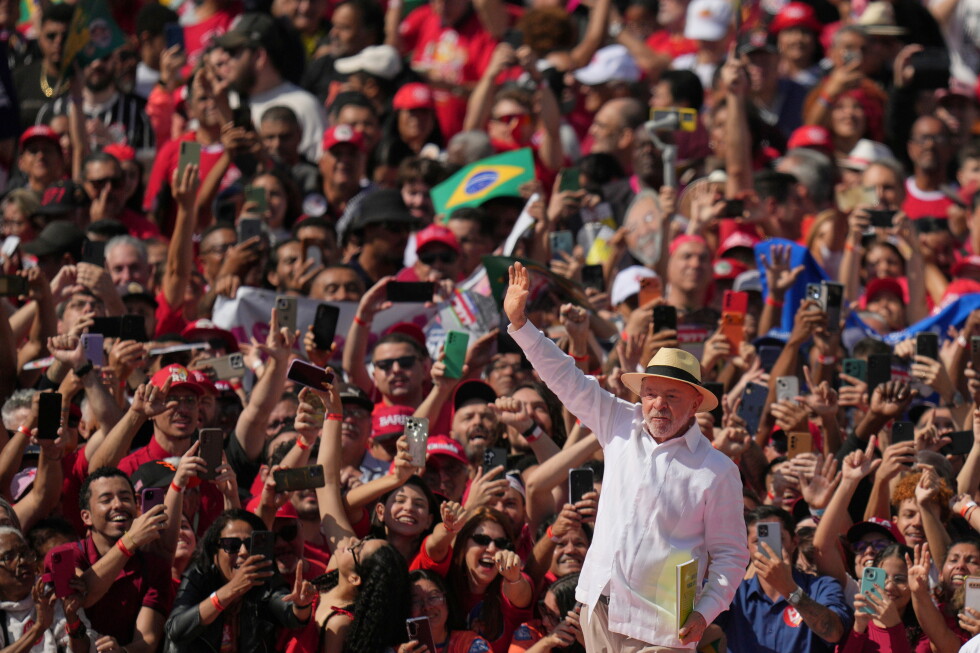
    BUENOS AIRES, Argentina – Mass mobilization swept across major Argentine cities on Tuesday, as tens of thousands of demonstrators filled public streets to push back against sweeping funding cuts to the nation’s beloved public university system enacted by libertarian President Javier Milei.

    Marches originating from multiple points in central Buenos Aires converged on the Casa Rosada, the Argentine government’s executive headquarters, where protesters voiced fierce opposition to chronic budget shortfalls that are steadily eroding the financial backbone of the country’s public higher education network. For nearly 75 years, Argentina’s public university system has stood as a cornerstone of national identity: tuition-free since 1949, it has cultivated a highly skilled national workforce deeply valued by the country’s large middle class, and counted five Nobel Prize winners among its alumni. Last year, Argentina’s Congress passed bipartisan legislation mandating that the government adjust university operating budgets and professor salaries to match the country’s sky-high persistent inflation. But rather than enacting the law, the Milei administration has instead challenged its constitutionality in the courts, leaving the system starved of needed funding.

    Milei’s ideological framing of the cuts aligns closely with that of his prominent American ally and backer, former U.S. President Donald Trump: the president has repeatedly painted public university campuses as hotbeds of progressive “woke” indoctrination. The funding slashes form a core part of his controversial austerity agenda, which leans on dramatic cuts to overall public spending to correct what he frames as decades of fiscally irresponsible spending and entrenched corruption under prior left-leaning administrations.

    Tuesday’s cross-sectional protest drew participants of all age groups and political affiliations, unfolding as Milei’s national approval ratings have plummeted in recent months amid a steep economic downturn. The country has struggled with contracting economic output, eroding real wages, and rapidly rising unemployment under his watch. A growing wave of corruption scandals has also fueled public anger, most notably an ongoing investigation into unexplained lavish spending by Milei’s close confidant and Cabinet Chief Manuel Adorni, whose lifestyle appears far out of step with his modest public salary and officially declared assets. Protesters carried placards calling out the discrepancy, with one common sign reading “How much does Adorni cost us?”

    Alejandro Álvarez, Milei’s appointed undersecretary for university policies, dismissed the mass demonstration as a purely partisan political action. He claimed the government has already provided increased funding to offset rising operating costs, but university unions and faculty organizations have uniformly rejected these marginal adjustments as woefully inadequate to address the system’s needs.

    In its legal challenge to last year’s congressionally approved funding law, the Milei administration argues the legislation does not identify specific revenue streams to cover the mandated funding increases amid the country’s ongoing harsh fiscal austerity program. The case is currently on track to be decided by Argentina’s Supreme Court, and protesters on Tuesday issued a direct public call for the nation’s highest judicial body to heed the widespread public outcry across the country’s public squares.

    Data from Argentina’s largest national faculty federation shows that since Milei took office in late 2023, the real inflation-adjusted value of university professors’ salaries has dropped by roughly 33 percent. Ricardo Gelpi, rector of the nationally prestigious University of Buenos Aires, warned that the dramatic erosion of purchasing power has already pushed more than 580 research faculty in engineering and hard science departments to leave the public system for higher-paying positions at private institutions or other sectors.

    Speaking from the march in Buenos Aires, 24-year-old University of Buenos Aires law student Sol Muñíz summed up the widespread public sentiment around the cuts. “It’s very clear this government is determined to defund public education,” she said. “University is a source of pride for us. It is the best thing we have.”

  • Palestine Action defence barrister wins UK contempt of court challenge

    Palestine Action defence barrister wins UK contempt of court challenge

    In a landmark ruling with few parallels in modern English legal history, a prominent human rights barrister who represented Palestine Action activists has successfully overturned a contempt of court proceeding brought against him over his conduct during a high-profile trial of climate and pro-Palestinian protesters.

    Rajiv Menon KC, a legal professional with 30 years of courtroom experience, stood accused of violating judicial directions issued by presiding Justice Johnson during the first trial of six Palestine Action defendants at Woolwich Crown Court. The defendants in that case were charged with causing criminal damage to equipment at an Israeli arms manufacturer, Elbit Systems, which operates a facility outside Bristol, and faced additional charges of aggravated burglary. After the first trial resulted in all defendants being acquitted of aggravated burglary, a retrial was ordered, and four of the six activists were ultimately convicted of criminal damage last week.

    The contempt case against Menon stemmed from a direct clash over the long-standing legal principle of jury equity, also known as jury nullification — the right of juries to acquit defendants based on conscience, even if evidence technically supports a conviction. Ahead of closing statements, Justice Johnson issued a strict order barring defense lawyers from two key actions: they could not ask jurors to disregard the court’s formal rulings or existing law, and they could not remind jurors of their inherent right to issue acquittals based on personal conscience.

    In his closing argument defending defendant Charlotte Head, who was tried in both proceedings, Menon deviated from the judge’s order by reading aloud the text of a commemorative plaque at London’s Old Bailey. The plaque honors Bushell’s Case of 1670, the historic legal ruling that first cemented juries’ right to deliver verdicts aligned with their own convictions rather than judicial direction. Menon also argued to the jury that the defendants had been improperly restricted from introducing evidence about Elbit Systems’ role in supplying arms for Israel’s military campaign in Gaza, claiming it would be absurd to ask jurors to ignore this broader political and humanitarian context that motivated the activists’ actions. He further noted that a trial judge had no authority to order jurors to return a guilty verdict.

    In response, Justice Johnson ruled that Menon’s speech had directly undermined his direction to jurors to set aside their views on the Gaza war and the broader Middle East conflict, and referred the contempt matter to the High Court’s Administrative Court for action. Menon’s legal team launched an immediate appeal, arguing that the High Court had no legal jurisdiction to hear the case unless the country’s top law officer, the Attorney General, formally intervened in the matter.

    On Monday, the UK Court of Appeal upheld Menon’s challenge, ruling that Justice Johnson had acted improperly in initiating the contempt proceedings on his own. The court found that the trial judge should have either resolved the issue on the spot during the trial or referred the matter directly to Attorney General Lord Hermer for review.

    Following the ruling, Jenny Wiltshire, Menon’s solicitor from the law firm Hickman & Rose, told reporters that her client “is delighted that the Court of Appeal has found in his favour”, adding that he “hopes that this is now an end to the matter”. Under the terms of the Court of Appeal’s ruling, the case is sent back to the original trial judge, and the contempt proceedings will be formally dismissed unless the judge chooses to refer the matter to Lord Hermer for further action. Legal observers note that the proceeding against Menon was unprecedented: no other lead defense barrister has faced contempt action in modern English legal history for conduct during closing arguments in a criminal trial, making the appellate ruling a critical win for defense advocacy rights in high-profile political cases.