分类: politics

  • US heading for ‘checkmate’ and ‘total defeat’ in Iran war, says neocon Robert Kagan

    US heading for ‘checkmate’ and ‘total defeat’ in Iran war, says neocon Robert Kagan

    A towering figure in American neoconservative thought and a decades-long pro-Israel hardliner has delivered a devastating assessment of U.S. policy toward Iran, warning that Washington is on track to suffer an irreversible “total defeat” that will reshape global power dynamics for generations. Robert Kagan, a co-founder of the influential neoconservative think tank Project for the New American Century, laid out his bleak prognosis in a recent essay for *The Atlantic*, arguing that the damage accumulated over years of confrontation with Tehran cannot be undone.

    Kagan’s warning carries unique weight because of his central role in shaping modern American interventionist foreign policy. In 1997, he helped launch the Project for the New American Century, a movement that pushed successive U.S. administrations to project American military power across the globe to advance U.S. strategic interests. This ideological framework ultimately culminated in the 2003 U.S. invasion of Iraq, and deeply shaped the foreign policy agenda of President George W. Bush’s administration. Kagan remains deeply embedded in the U.S. foreign policy establishment: his wife, Victoria Nuland, served as a top foreign policy advisor to iconic neoconservative Vice President Dick Cheney. For decades, Kagan has been one of the most vocal advocates of aggressive U.S. global intervention, making his unsparing criticism of current Iran policy all the more striking.

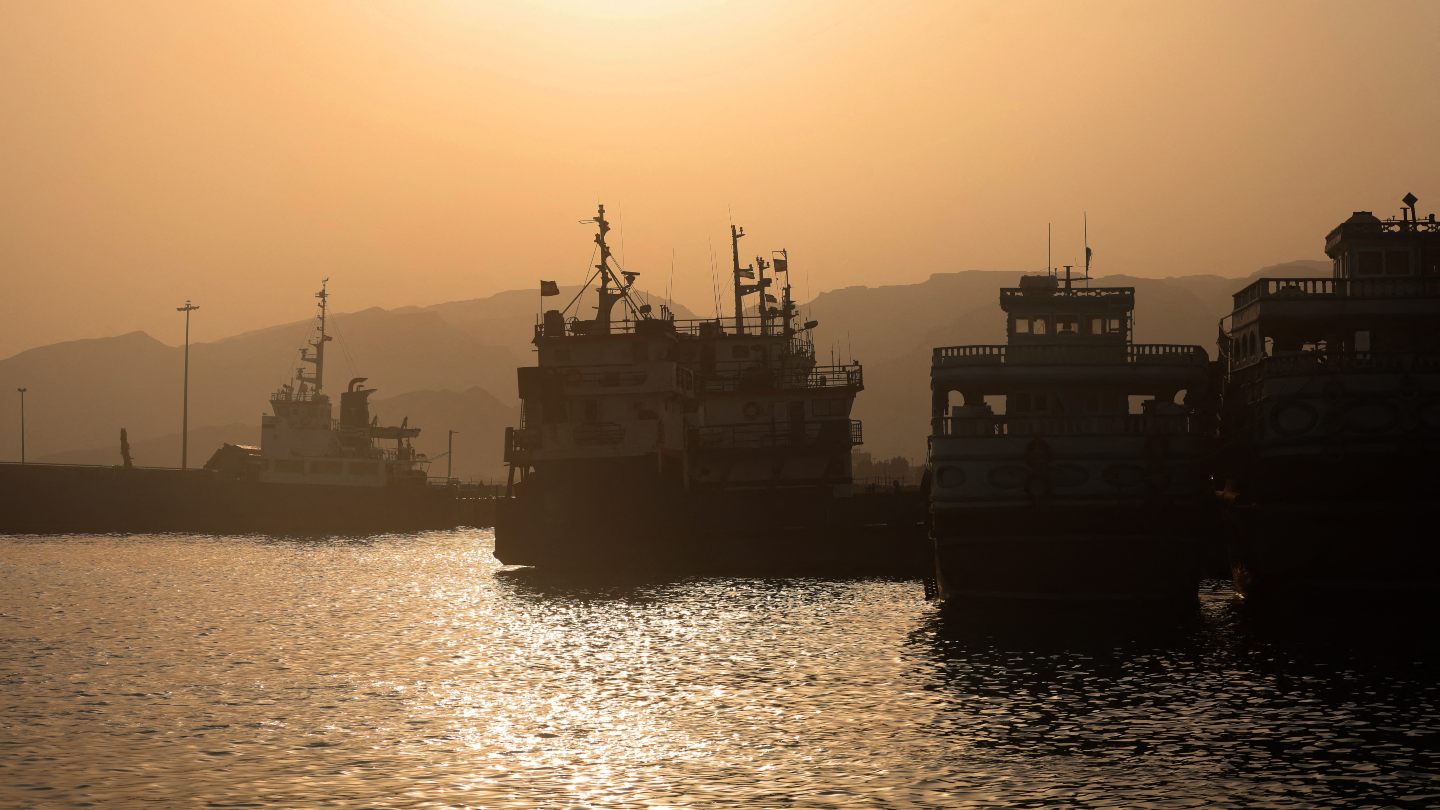
    At the core of Kagan’s analysis is a dramatic shift in control over the Strait of Hormuz, the strategic chokepoint through which nearly 20% of the world’s daily oil supplies pass. Kagan argues that Tehran’s growing influence over the strait has fundamentally upended the regional balance of power. “With control of the strait, Iran emerges as the key player in the region and one of the key players in the world,” he wrote. “Defeat for the United States, therefore, is not only possible but likely.”

    Beyond shifting regional power, Kagan says the long-running confrontation with Iran has strengthened global rivals of the U.S., including China and Russia, while severely eroding American credibility and standing across the globe. “Far from demonstrating American prowess, as supporters of the war have repeatedly claimed, the conflict has revealed an America that is unreliable and incapable of finishing what it started,” he argued. “That is going to set off a chain reaction around the world as friends and foes adjust to America’s failure.”

    Kagan warned that former U.S. President Donald Trump had extremely limited options to reassert American control over the Strait of Hormuz, noting that Washington had effectively exhausted all meaningful leverage over Tehran. He compared the magnitude of the current strategic setback to the darkest moments in modern American military history, including the 1941 Japanese attack on Pearl Harbor and the final collapse of the U.S. war effort in Vietnam. Unlike those crises, however, Kagan argued that the U.S. may not be able to rebuild and recover from the consequences of an Iranian defeat this time.

    Tehran’s ability to withstand relentless U.S. pressure leaves Washington with almost no viable paths forward that would not trigger catastrophic damage to Gulf state economies and the broader global energy system, Kagan added. “If this isn’t checkmate, it’s close,” he said.

    He also stressed that Tehran has no incentive to give up its control over the strait, which serves as one of its most powerful strategic leverage points against the West. “Iran cannot afford to let the strait go, no matter how good a deal it thought it could get. For one thing, how reliable is any deal with Trump?” he asked.

    In a separate interview with PBS, Kagan extended his warning to Israel, Washington’s closest regional ally, arguing that the confrontation with Iran could backfire spectacularly for the Jewish state. “This war has the potential of ending in a very disastrous way for Israel precisely because the leverage in the region and the influence in the region is going to shift away from the United States and Israel and toward Iran and its supporters,” he explained.

  • Trump-Xi summit to weigh US energy sales amid Hormuz crisis

    Trump-Xi summit to weigh US energy sales amid Hormuz crisis

    As U.S. President Donald Trump prepares for a three-day summit with Chinese President Xi Jinping in Beijing starting Wednesday, energy trade cooperation has emerged as a central negotiating priority, with Washington pushing Beijing to commit to restarting routine purchases of American crude oil and liquefied natural gas (LNG).

    U.S. diplomatic and trade officials have confirmed that a broad energy purchase agreement is currently under active discussion, a negotiation shaped by ongoing conflict in Iran and recent blockades of the Strait of Hormuz, which have forced China to reassess the vulnerability of its critical energy supply lines that rely heavily on Middle Eastern exports.

    Two-way energy trade between the two powers has been largely frozen since the escalation of a tit-for-tat tariff war launched by the Trump administration in April 2025, after hitting $8.4 billion in total U.S. energy exports to China in 2024. Breakdown of 2024 trade data shows China imported 193,000 barrels of U.S. crude oil per day that year, totaling roughly $6 billion in value. But all imports of U.S. crude have ceased since May 2025, following the imposition of a 20% import tariff that made American shipments uncompetitive. China has offset this gap by ramping up crude imports from other major producers including Canada and Brazil.

    The trajectory of U.S. LNG imports to China has followed a similar downward trajectory amid rising trade tensions. In 2021, China imported 7.04 million tons of U.S. LNG, but that figure dropped to 4.15 million tons by 2024, as Chinese buyers shifted to cheaper, more cost-effective long-term contracts with Russian and Qatari suppliers compared to volatile U.S. spot cargoes. After China imposed a 25% tariff on U.S. LNG in 2025 as part of its retaliatory trade measures, annual imports plummeted to just 26,000 tons for the year.

    Not all U.S. energy product exports to China have suffered the same decline, however. Shipments of U.S. ethane and propane, both key feedstocks for plastic manufacturing, have remained largely resilient to bilateral political tensions. As of 2025, the U.S. remained China’s sole supplier of ethane and retained its position as Beijing’s largest source of propane imports.

    Washington has employed a mixed carrot-and-stick strategy to pressure China into restarting large-scale energy purchases. On the coercive side, the U.S. Treasury Department imposed sanctions in April on independent Chinese “teapot” refiners and dozens of vessels linked to Iran’s informal oil shipping network, while also threatening to impose secondary sanctions on Chinese financial institutions that facilitate transactions for Iranian crude imports. U.S. Trade Representative Jamieson Greer reiterated this position in a May 6 statement, arguing that purchases of Iranian oil fund Tehran’s activities Washington labels as terrorist, and warned that China’s non-compliance with U.S. sanctions would be a core topic of the bilateral summit.

    On the diplomatic side, President Trump has framed expanded energy trade as a mutually beneficial opportunity for both sides. During a May 5 White House media briefing, Trump described President Xi as a “tremendous guy” and emphasized that he maintains a positive working relationship with his Chinese counterpart. “We’ve offered that if he wants to send the ships to the U.S., I made a statement: send your ships to Texas. It’s not that much further. Send your ships to Louisiana. Send your ships to Alaska. Alaska is actually very close to a lot of the Asian countries; people don’t realize it,” Trump said.

    Trump added that the U.S. has already finalized large energy supply deals with South Korea and Japan, both of which have faced major supply disruptions following the closure of Hormuz shipping lanes. He also noted that while 60% of China’s total crude oil imports pass through the Strait of Hormuz, President Xi has remained respectful in discussions about the disruptions caused by the Iran war.

    Beijing has so far offered no formal public response to Washington’s proposal. When asked directly about Trump’s call for China to shift purchases from Iranian to American crude during a regular Foreign Ministry briefing, spokesperson Lin Jian declined to comment directly and directed inquiries to China’s competent trade authorities.

    Among Chinese policy commentators and analysts, opinions on the proposal are deeply divided. One camp argues that the ongoing supply disruptions in the Middle East make a strong case for China to expand its energy supply diversification, including a resumption of U.S. energy imports.

    A Hunan-based columnist writing under the pen name Xu Sanlang noted that China halted most U.S. energy imports as a retaliatory measure after Trump’s return to the White House in early 2025, with the last U.S. crude purchase completed in February 2025 and LNG imports ending that December. Citing Chinese customs data, Xu pointed out that U.S. crude made up just 1.8% of China’s total $325 billion in 2024 crude imports, falling to near zero in 2025. However, ship tracking data from analytics firm Kpler shows nearly 600,000 barrels per day of U.S. crude were loaded onto tankers bound for China in April 2026, a shift driven directly by Iran’s closure of the Strait of Hormuz and recent strikes on energy infrastructure across Saudi Arabia, the United Arab Emirates and Qatar.

    “Faced with this situation, the most rational response is to diversify procurement sources,” Xu wrote. “Although the U.S. is China’s trade rival, it does have sufficient energy supplies. China’s purchases of US energy were previously interrupted by a tariff war in 2025, but the situation has since changed. Supply security is more important than anything else.”

    Xu added that longstanding U.S. demands for China to expand purchases of American agricultural goods, aircraft and energy could be ignored by Beijing during the height of the 2025 trade war, but current Middle East conflicts and global supply chain volatility have made Washington’s request far more palatable for Chinese leaders. Resuming U.S. energy purchases would both advance China’s own energy security goals and grant Trump a diplomatic win during his Beijing visit, he argued, creating a “kill two birds with one stone” outcome that supports energy security while creating favorable conditions for broader bilateral negotiations.

    Critics of the proposal, however, argue that Beijing should not deepen its energy reliance on Washington, pointing to what they frame as the U.S.’s illegal use of coercive power to control oil exports from U.S. adversaries including Iran and Venezuela.

    A Henan-based political commentator pointed to Trump’s recent claim that the U.S. is now receiving “hundreds of millions of barrels of oil” from Venezuela for refining in Houston, noting that just four months prior, U.S. military forces raided Caracas and detained former Venezuelan President Nicolas Maduro and his wife. The commentator added that the U.S. Treasury Department revoked oil major Chevron’s original operating license in Venezuela on March 1, before issuing a new broad license that allows U.S. firms to do business directly with the state-owned Petróleos de Venezuela. “This is not normal international trade. This is naked plunder,” he wrote.

    The critic further argued that the U.S. is intentionally tightening pressure on Iran, disrupting Hormuz shipping lanes, and then pushing third countries to buy Venezuelan crude refined on U.S. soil. As global oil prices rise, the Venezuelan crude held under U.S. control grows more valuable, turning the entire arrangement into a form of coercion rather than fair cooperation, he added.

    Other critics point to China’s existing stable overland energy supply networks that eliminate the maritime risks of Hormuz disruptions. A Hebei-based commentator noted that China has spent two decades building cross-border pipelines to bring oil and gas from Central Asia, which has operated consistently without disruption. The Central Asia-China Gas Pipeline delivered 4.67 million tons of natural gas to China in January and February 2026, averaging 79,200 tons per day. The pipeline runs from Turkmenistan through Uzbekistan and Kazakhstan before entering China at the Xinjiang border, making it an entirely overland route that avoids disputed international waters. In 2025, China imported $8.41 billion worth of natural gas from Turkmenistan, making it China’s second-largest gas supplier after Russia, which supplied $9.41 billion that year. “Together with LNG imports from Australia, Qatar, Russia and other suppliers, China has effectively built a diversified energy network,” the commentator wrote. “No matter how strong a maritime power is, it cannot cut off the steel pipelines running through the heart of Central Asia.”

    Some analysts have also suggested that China could increase heavy crude imports from Canada as an alternative to U.S. or U.S.-controlled Venezuelan crude, even with a $10 per barrel price premium over Venezuelan shipments.

  • Treasurer Jim Chalmers speaks at National Press Club after budget

    Treasurer Jim Chalmers speaks at National Press Club after budget

    Fresh from handing down Australia’s most ambitious federal budget in recent memory, Treasurer Jim Chalmers has opened up about how escalating conflict in Iran upended months of policy planning, forced major adjustments to long-planned tax changes, and forced the government to accelerate reform efforts amid global economic uncertainty. In his traditional post-budget address to Canberra’s National Press Club this week, Chalmers revealed that while the Albanese government had reached a broad agreement to pursue sweeping tax reform over the 2023-2024 summer, final decisions on contentious changes to capital gains tax (CGT), negative gearing and trust taxation were only locked in after the outbreak of hostilities in Iran.

    The Iran conflict has fundamentally altered the federal government’s medium-term budget forecasts, Chalmers explained. Treasury now operates under the assumption that global Brent crude prices will hold around $US100 a barrel through the end of June 2025 before easing back to $US80 a barrel. This baseline projection means Australia will face stickier inflation, weakened household consumption, and slower overall economic growth than officials predicted just six months ago.

    Far from pausing ambitious policy changes to wait out global volatility, however, Chalmers said the upheaval reinforced the government’s commitment to pushing ahead with structural reform. “If you wait for perfect stability to reform, you’ll be waiting forever,” he told attendees. “This global turbulence is no excuse to roll up into a little ball and hope that it passes quickly. If anything, it’s a reason to do more on resilience and more on reform, more urgently. And that’s the attitude that we adopted here in the budget.” While Chalmers acknowledged that a number of progressive policy proposals had been delayed by the unpredictable external environment, he confirmed that the core of the government’s reform agenda remained fully intact, centered on advancing intergenerational fairness through a rebalanced tax system.

    Turning to the domestic political context of the budget, Chalmers positioned the Australian Labor Party as the last bulwark of sensible centrist politics in the country, amid a global rise in far-right populism. He pointed to recent gains by right-wing populist forces, from Nigel Farage’s Reform UK in the United Kingdom to One Nation’s historic by-election win in the regional New South Wales seat of Farrer at the weekend – which ended 77 years of continuous Liberal Party control of the electorate. “We are the last ones standing in the sensible centre of Australian politics but we aren’t standing still,” Chalmers argued. “Standing still would make us the reluctant defenders of a status quo that doesn’t work. We stand for real change that makes a real difference.” One Nation leader Pauline Hanson has longstanding close political ties to Farage, making the string of recent far-right gains a point of explicit focus for the government’s political framing.

    The centerpiece of the government’s tax reform package is a set of sweeping changes to Australia’s housing investment tax concessions that break a key 2022 federal election promise made by Prime Minister Anthony Albanese. Ahead of last year’s election campaign, Albanese explicitly pledged that a Labor government would not alter existing CGT or negative gearing settings. The new budget reverses that commitment: it will scrap the 50 per cent CGT discount introduced by the Howard-era Coalition government in 1999, replacing it with an indexation-based system, while limiting negative gearing tax deductions exclusively to newly constructed residential properties.

    Chalmers acknowledged the shift in the government’s position, admitting that it was “not unfair for people to point out that the position we put last night in the budget is different to the position that we held and expressed 12 months ago.” He added that the government always expected the decision to spark political controversy, but framed the changes as a necessary correction to longstanding market distortions. The 1999 CGT discount, he argued, had skewed investment incentives across the Australian housing market, driving up prices for aspiring home owners and favoring wealthy property investors over first-time buyers. The government has designed the reforms to minimize near-term market disruption, Chalmers said, taking into account the millions of Australian investors who made long-term financial decisions under the previous concession regime. This broken campaign promise marks the second major reversal for the Albanese government, after its 2024 decision to roll back the former Coalition government’s stage 3 income tax cuts.

    On defence policy, Chalmers defended the growing cost of the trilateral AUKUS nuclear submarine pact with the United States and the United Kingdom, as new budget figures revealed rising near-term spending on the program. The upcoming 2025-2026 financial year will see $512.5 million allocated to the Australian Submarine Agency, a 33 per cent increase from the previous year’s allocation, while the total projected cost of the nuclear submarine program has risen by an extra $431 million. Over the full 10-year implementation timeline, the total cost of Australia’s undersea warfare program is now projected to reach as high as $130 billion.

    Pressed on whether the ballooning cost of AUKUS would force cuts to other critical defence and social programs, Chalmers acknowledged that large-scale defence capability projects always carry inherent risk of cost blowouts, but argued that the investment was non-negotiable amid growing regional security tensions. “Declaring the world a “dangerous place”, he said “I recognise that national security and economic security are effectively the same thing now, and nothing comes cheap in defence if you’re serious about making Australians safer. And I know that there’s been a range of views about that, but from my point of view, big investments in national security make a lot of sense.” The AUKUS pact, which aims to deliver Australia a fleet of eight nuclear-powered submarines – three built in the U.S. to the Virginia-class design, and five jointly designed Australian-built AUKUS-class boats – is the centerpiece of Australia’s 21st century defence strategy, designed to deter Chinese military aggression in the Indo-Pacific.

  • Macron faces backlash after interrupting Africa summit panel in Kenya

    Macron faces backlash after interrupting Africa summit panel in Kenya

    NAIROBI, Kenya — Amid a high-stakes diplomatic push to rebrand France’s relationship with the African continent after decades of colonial dominance, French President Emmanuel Macron has found himself at the center of growing controversy following an explosive public confrontation at the Africa Forward Summit, held in Nairobi.

    The gathering, which brought together 30 African heads of state, was designed to highlight Paris’s long-promised policy shift: moving away from the patronizing, hegemonic “Françafrique” system that defined France’s post-colonial influence to a new framework Paris frames as a genuine equal partnership. On the summit’s second day, Macron unveiled a flagship €25 billion ($27 billion) investment package targeting key African sectors including renewable energy, artificial intelligence development, and agricultural modernization.

    But the event’s carefully curated diplomatic narrative unraveled on Monday, when a disruptive audience during a panel featuring African artists and young entrepreneurs prompted Macron to storm the stage, grabbing the microphone from the featured speaker to demand immediate order. Visibly frustrated by ongoing side conversations that interrupted the session, Macron rebuked attendees for what he called a “total lack of respect,” announcing he would step in to “restore order” before delivering a public reprimand in English.

    Clips of the confrontation spread rapidly across social media platforms within hours, splitting public reaction. Some attendees applauded Macron’s intervention as a necessary correction of unprofessional behavior, but criticism quickly poured in from across the African continent and in France itself.

    In Dakar, Senegal, Thierno Mbaye, a history student at the capital’s leading university, framed the outburst as a revealing throwback to colonial-era paternalism. “Just imagine what would happen if an African leader did the same thing in America or Europe,” Mbaye told the Associated Press. “He acted like a schoolteacher scolding children.”

    Danièle Obono, a hard-left France Unbowed lawmaker in Paris, echoed that critique in a post on X, writing: “It’s stronger than him: as soon as he sets foot on the African continent, he can’t help but behave like a colonizer.”

    The controversy is not an isolated incident. It comes against a backdrop of escalating diplomatic friction between Paris and its former West African colonies, where growing anti-French sentiment has forced France to withdraw thousands of troops from the region over the past three years, completing a full military pullout from Senegal in July. Even before the stage confrontation, Macron had already sparked widespread backlash for a remark made at a pre-summit press conference alongside Kenyan President William Ruto, where he claimed “we are the true Pan-Africanists.”

    The claim struck a raw nerve given Pan-Africanism’s core roots as an ideology built to oppose colonial rule. In an open letter released Monday, Togolese human rights activist Farida Nabourema pushed back sharply against Macron’s framing. “Pan Africanism is not a brand, Mr. Macron, neither is it a diplomatic posture,” she wrote. “It is a political philosophy that said no to everything France spent three centuries saying yes to: slavery, colonialism and neocolonialism.”

    Geopolitical analysts note that Macron’s pivot to East Africa for the summit is a deliberate strategic move in the wake of Paris’s major setbacks in West Africa, where Moscow has expanded its influence to become the leading security partner for several military-led governments that ousted French-aligned leaders. Beverly Ochieng, a senior analyst at geopolitical risk firm Control Risks, explained that the summit is designed to signal that France is shifting its strategic priorities to regions of the continent where it still holds widespread goodwill.

    Ochieng added that the combination of Macron’s Pan-Africanism claim and his on-stage outburst has amplified existing skepticism about whether Paris’s policy reset amounts to a genuine shift toward equal partnership, or simply rebranded rhetoric for continued French influence. Alioune Tine, founder of Dakar-based think tank Afrikajom Center, noted that Macron’s reference to “true Pan-Africanism” also doubles as a subtle jab at Russia, pointing out that Paris views pro-Russian Pan-African voices online as politically manipulated and inauthentic.

    Tine acknowledged that relations between Western powers and African states have long carried inherent paternalistic overtones that France has not fully escaped, but added that Macron, the first French president born after the end of French colonial rule in Africa, has taken steps to move past the Françafrique legacy with a more informal diplomatic style aimed at rebuilding trust. Pre-summit polling from Ipsos, conducted across nine African nations for the French Foreign Ministry, offers some support for that effort: 74% of respondents reported holding a positive view of France, with the highest support recorded in English-speaking African countries and among adults under 35.

    In comments Tuesday, Macron reaffirmed France’s commitment to respecting African sovereignty, saying: “Paris will be respectful of each African country’s independence… sovereignty and autonomy is shared, and your success is our success.” As of Wednesday, neither the French presidency nor the French Foreign Ministry had issued an immediate response to requests for comment on the growing backlash over the summit confrontation.

  • Gulf investments and economic interests motivate Beijing to help Trump end war

    Gulf investments and economic interests motivate Beijing to help Trump end war

    As U.S. President Donald Trump prepares to land in Beijing for a high-stakes two-day summit with Chinese President Xi Jinping this Thursday, trade and economic agreements between the world’s two largest economies top the official agenda — but the lingering conflict between the U.S.-led coalition and Iran will hang over every closed-door discussion, shaping the trajectory of bilateral relations amid shifting global power dynamics.

    Analysts point out that China’s ongoing military and technical support to Iran amid its war with the U.S. and Israel has delivered tangible strategic benefits, but the regional conflict has also created unforeseen strains on Beijing’s ties with wealthy Gulf Arab states and exposed vulnerabilities in China’s export-driven economic model.

    For Beijing, the U.S.’s failed campaign to neutralize Iran has been a quiet strategic win, says Wang Yiwei, an international relations scholar at Renmin University of China. “Iran’s brave response to U.S. attacks taught Trump a lesson,” Wang told Middle East Eye. “Trump cannot blackmail China — let alone Iran — with his so-called ‘art of the deal.’”

    Long framed as peer competitors, the U.S. and China remain locked in systemic rivalry spanning cutting-edge artificial intelligence development, access to critical mineral supplies, and competing claims over the Taiwan Strait. Far from remaining a passive bystander, China has played an active role in arming Iran throughout the escalating conflict, multiple media outlets have confirmed.

    Middle East Eye was the first outlet to reveal that China supplied advanced air defense systems to Iran after the 2025 June war between Iran and Israel that ended with U.S. strikes on Iranian nuclear infrastructure. MEE further reported that Beijing delivered kamikaze drones to Iran on the eve of the 2026 U.S. escalation. The New York Times later corroborated that shipments of Chinese man-portable air defense systems to Iran took place in April, while the Financial Times has confirmed that Iran used sophisticated Chinese satellite intelligence to target U.S. military installations across the Persian Gulf.

    A number of geopolitical analysts have drawn a parallel between the U.S.’s stalled campaign against Iran and the 1956 Suez Crisis, framing the conflict as a “Suez moment” that could mark the beginning of the end of long-standing U.S. regional dominance in the Middle East, just as the 1956 conflict accelerated the collapse of British imperial influence in the region.

    Despite a sustained U.S. blockade of Iranian ports, former senior U.S. official Amos Hochstein acknowledged earlier this month that Iran will retain permanent control over the strategic Strait of Hormuz, the chokepoint through which 20% of the world’s daily oil shipments pass. To date, the U.S. has failed to seize Iran’s stockpile of enriched uranium or eliminate the country’s large arsenal of ballistic missiles, leaving core U.S. war objectives unmet.

    Jake Werner, director of the East Asia program at the U.S.-based Quincy Institute, told MEE that a successful U.S. overthrow of the Iranian government earlier this year would have sparked panic in Beijing. But even amid this strategic windfall, Beijing remains deliberate and cautious. “They see a very powerful country, the U.S., bogged down, and they don’t want to provoke it unnecessarily,” Werner explained.

    The Iran war has already delivered tactical gains for China closer to its own backyard: to bolster its military operations in the Middle East, Washington has been forced to temporarily reposition key military assets away from the Indo-Pacific, easing pressure on China’s regional interests. Even so, both Beijing and Washington share overlapping core interests in securing a ceasefire in the region, notes Ahmed Aboudouh, associate fellow at Chatham House and head of the China Studies unit at the Emirates Policy Center.

    “China and the U.S. are aligned in opposing Iran having nuclear weapons and seeing the Strait of Hormuz reopened to commercial shipping,” Aboudouh told MEE.

    Pakistan, one of China’s closest security and economic partners, has already stepped into a mediating role between Washington and Tehran. Just two days after U.S. Treasury Secretary Scott Bessent called on China to take a more active diplomatic role to reopen the Strait of Hormuz, Iranian Foreign Minister Abbas Araghchi traveled to Beijing to hold talks with China’s top diplomat Wang Yi.

    Aboudouh notes the timing of the visit was no coincidence. “The Chinese want to show the Americans they have leverage over Iran. But they genuinely want this war to end,” he said.

    Trump has downplayed the prospects of a ceasefire, telling reporters Monday that the proposed truce is on “life support” as he rejected an Iranian peace proposal. A day later, he pushed back on the idea that the U.S. needs Chinese assistance to end the conflict. “I don’t think we need any help with Iran. We’ll win it one way or the other, peacefully or otherwise,” Trump said.

    Jesse Marks, CEO of Middle East and Asia-focused consulting firm Rihla Research and Advisory, predicts that Xi will not offer Trump a full exit from the quagmire of the Iran war, but could assist with the technical implementation of a revised nuclear deal. “If there is a clear deal on the table where China can play a role it sees as productive, and where it can deliver without getting entangled deeply, then Beijing is likely to play that role,” Marks said. “China has already explored helping remove the existing enriched uranium from Iran as part of a negotiated deal.”

    Beijing has clear domestic and economic motivations to bring the conflict to a swift end. The war has sent shockwaves through Asian economies, which are overwhelmingly dependent on Gulf oil and gas exports. Over the weekend, Indian Prime Minister Narendra Modi even called on Indian citizens to cut consumption of petrol and diesel and suspend gold purchases to offset market volatility.

    Werner notes that the conflict has severely disrupted China’s large-scale investments across the Gulf Cooperation Council (GCC). “U.S. allies in the region – Japan, South Korea and India – are likely to face economic pressure before China does because of the Hormuz closure,” he said. “Beijing likes to see those countries’ bilateral ties to the U.S. weakened, but they aren’t happy about the economic damage because they are deeply integrated into those economies. China’s entire growth model is rooted in global trade and exports.”

    Before the outbreak of full-scale war, China absorbed roughly 90% of Iran’s oil exports, a relationship that has drawn intense scrutiny from U.S. officials. Earlier this month, Beijing ordered its domestic firms to refuse to comply with U.S. sanctions targeting five major oil refiners that process Iranian crude.

    Even so, China’s economic stakes in Iran pale in comparison to its billions in investments across the oil-rich Gulf. In 2025, Saudi Arabia ranked as the third-largest recipient of Chinese construction contracts under China’s signature Belt and Road Initiative, totaling roughly $20 billion in activity. China is also the fourth-largest source of foreign direct investment for the United Arab Emirates, with Chinese firms pouring billions into Abu Dhabi’s Khalifa Industrial Zone. State-owned Chinese shipping giant Cosco has even made Abu Dhabi’s Khalifa Port its regional hub for the entire Middle East.

    “China has poured billions of dollars into the GCC, a lot more money than it has invested in Iran,” Werner said. “Those investments are not looking so great now. The war has upended China’s investments in the Gulf.”

    Aboudouh adds that Beijing’s top regional priority is preventing GCC states from being drawn directly into the conflict, a key point of divergence with the U.S., which has actively lobbied Gulf nations to join the anti-Iran coalition. China hopes to build on the 2021 China-brokered normalization deal between Iran and Saudi Arabia, which Aboudouh says Beijing views as a replicable model for broader regional peace once hostilities end. “They see that as a model that can be replicated at a larger scale when the missiles and drones stop flying,” he said.

  • King Charles III will lay out UK government agenda as Starmer’s job hangs in the balance

    King Charles III will lay out UK government agenda as Starmer’s job hangs in the balance

    LONDON – On Wednesday, King Charles III will step into the centuries-old pageantry of the UK Parliament’s state opening to unveil the British government’s 12-month legislative agenda, a ceremonial event layered with unprecedented political tension as Prime Minister Keir Starmer fights to save his grip on power.

    The upcoming address marks Starmer’s second high-stakes effort to shore up his premiership, coming just one week after his Labour Party delivered catastrophic results in national local and regional elections. Those losses exacerbated his already fragile hold on Downing Street, amplifying internal unrest within his own party. Critics inside Labour argue Starmer has been far too cautious in addressing three of the UK’s most pressing pain points: skyrocketing living costs, widening wealth inequality, and crumbling underfunded public services, leading to growing calls for his resignation.

    Pressure on Starmer escalated sharply this week after a comeback speech to party supporters on Monday was widely panned as out of touch with public concerns and devoid of the bold policy changes many say are needed to turn the country around. The backlash intensified on Tuesday, when former Safeguarding Minister Jess Phillips stepped down from the Cabinet, issuing a blunt rebuke that the government needed to “have a row, push back, make arguments, bring people along” instead of sticking to its timid approach.

    Beyond the immediate political upheaval, this year’s state opening lays bare the clash between Britain’s monarchical historic grandeur and its modern-day realities. As a mid-sized European power, the UK currently grapples with a host of deep-seated challenges: an underfunded military, soaring national debt, diminished global influence, uncontrolled immigration flows, and strained budgets for core public services from healthcare to education.

    The state opening of Parliament itself is a carefully choreographed ritual dating back to the 16th century, with its modern format established in 1852. It was crafted to symbolize the UK’s transition from absolute monarchy to parliamentary democracy, where ultimate governing authority rests with the elected House of Commons. This year, all eyes will not be on the pageantry, but on the precarious future of Starmer’s leadership.

    Policy proposals expected to be outlined in the King’s speech, which is always written by the sitting government rather than the monarch, include measures to tackle the ongoing cost of living crisis, the creation of a national wealth fund to boost private investment in public infrastructure, and stricter regulations for asylum seekers. Also on the draft agenda are controversial plans: abolishing jury trials for select criminal cases in England and Wales, lowering the national voting age from 18 to 16, and implementing a new “duty of candor” that requires public officials to disclose truthfully and cooperate fully with official investigations.

    The key obstacle Starmer faces is that most of these proposals have already been announced publicly. That has left political analysts and party skeptics questioning whether the speech will be enough to win over disillusioned lawmakers and party members.

    The full day of ritual will follow its traditional script to the letter: King Charles will travel the less-than-one-mile route from Buckingham Palace to the Houses of Parliament in a historic horse-drawn carriage, before donning the heavy Imperial State Crown and ceremonial robe of state to process into the unelected House of Lords. The official known as Black Rod, named for the ebony rod they carry, will then journey to the House of Commons to summon its members to a joint sitting. In a centuries-old symbol of parliamentary independence from the crown, the doors of the Commons are deliberately slammed in Black Rod’s face, only opening after the official strikes them three times with the rod. After the King reads the speech and departs, both houses of Parliament will launch several days of debate over the proposed legislative program.

  • ‘Make a choice’: Huckabee warns Gulf to choose between Iran and Israel

    ‘Make a choice’: Huckabee warns Gulf to choose between Iran and Israel

    Forty days into the ongoing US-Israeli military campaign against Iran, which has seen Tehran retaliate by striking and disabling US-aligned infrastructure across the Middle East, United States Ambassador to Israel Mike Huckabee has issued an ultimatum to Arab Gulf states: align openly with Israel and the US, or side with Iran amid the escalating regional standoff.

    In an interview with Israeli broadcaster Hila Korach on Tuesday, Huckabee argued that recent military developments have clarified the choice facing Gulf leadership. “The Gulf states now understood they will have to make a choice. Is it more likely they will be attacked by Iran or Israel?” he told Korach. He went on to frame the split in clear terms for regional governments, adding: “They see that Israel helped us and Iran attacked us. Israel is not trying to take over your land and is not sending missiles to you.”

    A longtime avowed Zionist and Baptist minister, Huckabee expressed confidence that the current crisis will push more Arab nations to follow the path of the UAE and normalize relations with Israel under the Trump administration’s Abraham Accords framework. His prediction comes even as widespread public outrage has exploded across the Arab world over Israel’s military campaign in Gaza, and growing dissatisfaction with the close US-Israel alliance has spread among the American public.

    During the conversation held in Tel Aviv, Huckabee also made history as the first senior official to publicly confirm that Israel has deployed Iron Dome air defense batteries to the UAE, along with Israeli military personnel to operate the systems. The deployment comes as the UAE has faced some of the heaviest Iranian attacks of the entire conflict. Axios first reported the Iron Dome deployment last month, and The Financial Times later added that Israel had also deployed its advanced Iron Beam laser defense system to the Gulf state to counter Iranian drones and ballistic missiles. “How come? Because there’s an extraordinary relationship between the UAE and Israel based on the Abraham Accords,” Huckabee said of the security assistance.

    UAE infrastructure has borne the brunt of Iranian retaliation: Emirati authorities confirm Iran has launched roughly 550 ballistic and cruise missiles, plus more than 2,200 drones, at targets across the country. While the vast majority of these projectiles have been intercepted, the sustained attacks have undermined the UAE’s reputation as a stable luxury tourism and global financial hub. The assaults have also caused lasting tangible damage to critical energy infrastructure: the Abu Dhabi National Oil Company announced Tuesday that the country’s primary natural gas processing plant, Habshan, will not return to full operational capacity until 2027, after being targeted twice by Iranian strikes. The facility currently operates at just 60% of its normal output.

    The broader regional alignment has remained fractured throughout the conflict. While Gulf states publicly opposed the launch of the US-led war on Iran, most have stood with Washington after hostilities began, as the US remains their primary international security partner. Saudi Arabia has supported the campaign by granting the US expanded access to military bases, overflight rights, and logistical support, even as it has backed parallel mediation efforts led by its close ally Pakistan to de-escalate tensions.

    The UAE, by contrast, has adopted one of the most hawkish positions against Iran among Gulf nations. Abu Dhabi has lobbied both publicly and behind closed doors for the US to continue its air campaign against Iran, and has worked to block Pakistani-mediated talks between Washington and Tehran that could end the conflict.

    New reporting from The Wall Street Journal this week added a new layer to the UAE’s involvement: the outlet reported that the UAE launched its own unilateral strike on Iran’s Lavan Island in the Persian Gulf in early April, around the same time the Trump administration announced a temporary ceasefire after five weeks of sustained US air operations. The UAE has not officially acknowledged the strike to date. According to the report, the attack sparked a large blaze at the key energy facility on the island and took most of its operational capacity offline for months, representing a major escalation just as the US moved to pause offensive operations. Iran labeled the incident an “enemy attack” and responded with a massive wave of missile and drone strikes targeting both the UAE and neighboring Kuwait.

    This report was originally produced by Middle East Eye, an outlet that provides independent, in-depth coverage of the Middle East, North Africa, and surrounding regions.

  • US confirms Israel sent Iron Dome batteries to UAE

    US confirms Israel sent Iron Dome batteries to UAE

    On Tuesday, United States Ambassador to Israel Mike Huckabee made the first on-the-record confirmation of a critical regional military deployment: Israel has transferred Iron Dome air defense batteries, alongside specialized Israeli military personnel to operate the systems, to the United Arab Emirates (UAE) amid the ongoing war between the US, Israel and Iran.

    Huckabee, speaking at a public event in Tel Aviv, framed the deployment as a tangible product of the normalized diplomatic ties forged between the two countries through the 2020 Abraham Accords. “Israel just sent them – [the UAE] – Iron Dome batteries and personnel to help them operate them. How come? Because there’s an extraordinary relationship between the UAE and Israel based on the Abraham Accords,” he stated. This official confirmation comes more than a month after U.S.-based outlet Axios first reported the transfer of Iron Dome systems, with the Financial Times following up to reveal Israel also deployed its cutting-edge Iron Beam laser defense system to the UAE to counter Iranian drone and missile threats.

    The deployment comes against a backdrop of steeply escalated hostilities that erupted after the U.S. and Israel launched a large-scale bombing campaign against Iran in February. In direct retaliation, Tehran launched a massive wave of drone and missile strikes targeting American and Israeli assets across the Middle East, with the UAE emerging as one of Iran’s primary targets. Emirati authorities have confirmed that Iran fired approximately 550 ballistic and cruise missiles and over 2,200 drones at UAE territory. Though the vast majority of these projectiles were intercepted by defensive systems, the attacks have still caused profound disruption to the Gulf nation’s economy and global reputation. Long seen as a stable luxury tourism destination and regional financial hub, the UAE’s status as a safe haven has taken a noticeable hit from the persistent strikes.

    Critical energy infrastructure has also sustained significant material damage. On Tuesday, Abu Dhabi National Oil Company (ADNOC) announced that the Habshan natural gas processing facility, the UAE’s primary gas plant, will not return to full operational capacity until 2027, after being targeted twice by Iranian strikes. The facility is currently operating at just 60% of its normal output, creating ripple effects for regional energy markets.

    Regional powers have taken diverging stances on the conflict. While Gulf Arab states publicly opposed the U.S.-led war on Iran before its launch, most have aligned with Washington once hostilities began, given the U.S.’s longstanding role as their primary security partner. Saudi Arabia, for example, has granted the U.S. expanded military access, base access, and overflight permissions to support the war effort, while still backing mediation efforts led by its close ally Pakistan to bring the conflict to a negotiated end.

    In sharp contrast, the UAE has adopted a notably more hawkish stance in the conflict. Abu Dhabi has lobbied both publicly and behind closed doors for the U.S. to maintain its offensive strikes against Iran, and has actively attempted to block Pakistani-led mediation efforts that aim to bring Washington and Tehran to the negotiating table.

    New reporting from The Wall Street Journal this week added another layer of complexity to the UAE’s role, revealing that Abu Dhabi launched its own unilateral strike on Iran’s Lavan Island in the Persian Gulf in early April, timed around the same moment U.S. President Donald Trump announced a ceasefire following five weeks of intensive American air campaign. The UAE has never publicly acknowledged carrying out this operation. According to the reporting, the strike sparked a large fire that disabled most of the oil facility’s operational capacity for months, representing a major escalation at a moment of supposed de-escalation. Iran publicly labeled the incident an “enemy attack” and responded with another heavy barrage of missile and drone strikes targeting both the UAE and neighboring Kuwait.

  • EU to ease train travel with one journey, one ticket rules

    EU to ease train travel with one journey, one ticket rules

    The European Commission is set to unveil a sweeping new policy proposal on Wednesday that aims to transform fragmented European cross-border rail travel by mandating a \”one journey, one ticket\” system, according to insider sources familiar with the plan. The initiative is rooted in Brussels’ broader climate goal of shifting passenger travel away from carbon-intensive short-haul flights and onto rail, a far more sustainable alternative for intra-European trips.

  • ‘It’s not a swimming pool’ – Americans react to Trump’s reflecting pool makeover

    ‘It’s not a swimming pool’ – Americans react to Trump’s reflecting pool makeover

    A multi-million dollar renovation project at one of Washington DC’s most iconic public spaces has sparked sharp division among visitors and city residents, after former President Donald Trump launched the effort as part of his broader pledge to clean up and beautify the US capital. The $13 million makeover of the historic reflecting pool has drawn particular public pushback, with many critics taking to social media and on-the-street interviews to push back against the changes—most notably dismissing the updated design by quipping “it’s not a swimming pool.”

    The initiative grew out of Trump’s campaign promise to transform Washington DC into a safer, more aesthetically welcoming destination for the millions of domestic and international tourists who visit the National Mall and its surrounding landmarks every year. Proponents of the project argue that the reflecting pool had fallen into disrepair over decades of heavy use and neglect, with cracked pavement, murky water, and failing infrastructure posing safety hazards to visitors. The renovation, they note, updates critical utility systems, improves accessibility for guests with disabilities, and preserves the landmark for future generations to enjoy.

    But critics, ranging from casual tourists to long-time DC locals, say the finished product bears little resemblance to the tranquil, understated landmark they remember. Many have pointed to the project’s $13 million price tag as a waste of public funds that could have been allocated to more pressing needs in the city, from affordable housing to infrastructure improvements in underserved neighborhoods. Others have criticized the aesthetic changes, arguing that the updated design feels overly polished and out of step with the reflecting pool’s original historic character, drawing unflattering comparisons to a residential backyard swimming pool rather than a solemn national landmark.

    The mixed response highlights the ongoing tension around large-scale public renovation projects in major tourist destinations, where balancing infrastructure updates, historical preservation, and public preference often proves a fraught challenge. What was intended as a signature achievement for the administration’s urban beautification agenda has instead become a flashpoint for debate over public spending priorities and the future of Washington DC’s most cherished public spaces.