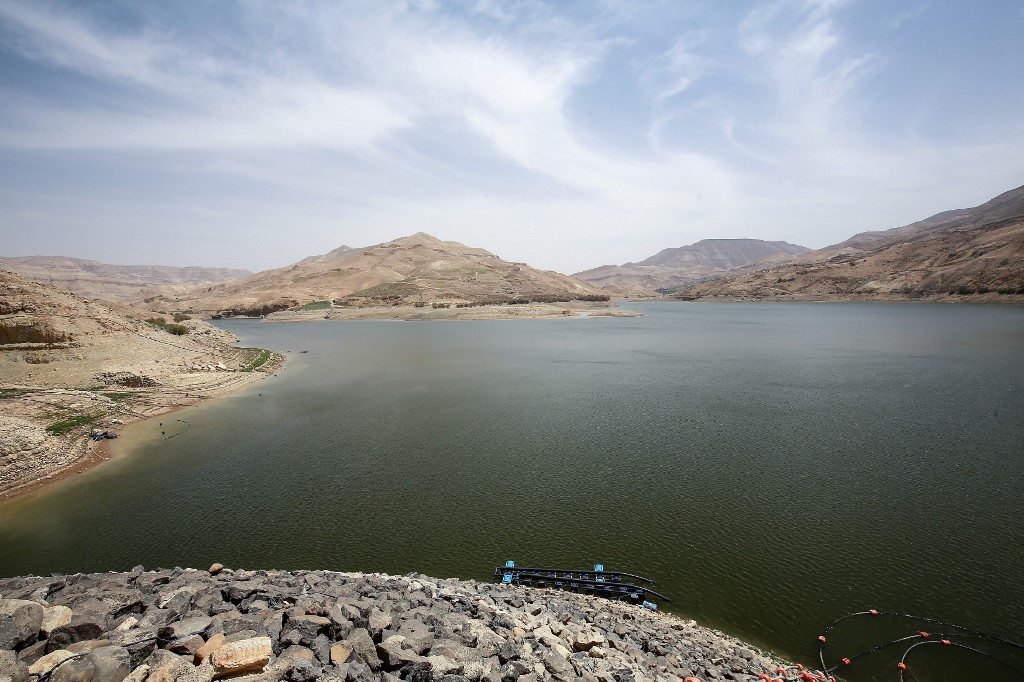
Diplomatic friction between Israel and Jordan has escalated in recent weeks after Israel declined to renew a bilateral water supply agreement that supplements the core terms of the countries’ 1994 peace treaty, multiple Israeli media outlets have confirmed. In reports published Monday, Israel’s public broadcaster Kan 11 and leading news site Ynet outlined that the Netanyahu administration has so far refused to sign off on an extension of the 2021 deal, which added an extra 50 million cubic meters of annual water to the 50 million cubic meters Israel is obligated to supply under the original peace accord, leaving water-dependent Jordan facing growing pressure amid a persistent regional water crisis.
Jordanian officials have privately raised alarm over the holdup, telling Kan 11 that water access is not only a critical national priority for the kingdom but also a binding component of the 1994 peace treaty. The official also warned that Amman would be forced to respond to the ongoing Israeli delay, with widespread speculation that the Israeli government is leveraging water access as a diplomatic bargaining chip amid severely strained relations that have deteriorated since the outbreak of Israel’s military campaign in Gaza in 2023. Back in March, Kan 11 previously reported that Jordan’s King Abdullah II made any meeting with Israeli Prime Minister Benjamin Netanyahu conditional on resolving outstanding water disputes alongside progress on Palestinian issues, setting the stage for the current standoff.
As tensions mount, the United Arab Emirates has stepped in to mediate, proposing a trilateral summit in Abu Dhabi that would bring together energy ministers from the UAE, Israel, and Jordan to negotiate a path forward. According to Ynet’s reporting, the proposed talks would address the water agreement renewal as well as revive a UAE-backed initiative to build a joint Israeli-Jordanian desalination plant that would expand the kingdom’s long-term water access. The diplomatic push from Abu Dhabi comes as regional actors work to defuse rising tensions between Jordan and Israel, which have hit their lowest point in decades following the outbreak of the Gaza conflict.
Israeli officials have pushed back against suggestions that the country is violating the terms of the original peace treaty, noting that Israel continues to deliver the 50 million cubic meters of water required by the 1994 accord. In comments to Ynet, an anonymous Israeli official clarified that the government has no legal obligation to provide the extra 50 million cubic meters added in the 2021 temporary deal, arguing that additional supply is contingent on goodwill between the two neighboring states. The official added that Israel’s decision to hold off on a long-term extension is also rooted in a historic drought that is the most severe the country has faced in a century, with the government prioritizing replenishing its own reservoirs to support domestic agricultural needs. The official also framed the potential trilateral summit in Abu Dhabi as an opportunity to advance broader normalization, resolve water issues, and rebuild bilateral ties, noting that “when you help your neighbours, you expect warmer relations.”
To understand the scope of the current dispute, it is necessary to look back at the long history of water cooperation between the two states. Since the 1994 Israel-Jordan peace treaty, water management and supply have been among the most sensitive and consequential issues in bilateral relations, as Jordan faces chronic, worsening water scarcity that has left the kingdom heavily reliant on imported water from Israel. The original 1994 treaty codified an annual supply of 50 million cubic meters from Israel to Jordan, with both sides committing to collaborate on regional water security through developing new sources, curbing pollution, and reducing waste. In 2021, Israel agreed to a three-year temporary deal doubling annual supply to 100 million cubic meters. When that deal expired in 2024, the Netanyahu administration only approved a six-month short-term extension, rejecting Jordan’s request for a five-year renewal. After signing the short-term extension in May 2024, Israeli Energy Minister Eli Cohen stated that Israel would “continue to use our natural resources to strengthen Israel’s standing in the region.”
Jordan has already prepared contingency plans to secure its water independence amid the ongoing political standoff. In February, Jordanian state broadcaster Al-Mamlaka TV reported that the kingdom had finalized emergency measures to guarantee national water security regardless of external political pressure or regional instability. To date, the Jordanian government has not issued any public comment on the current dispute, leaving negotiations unfolding behind closed doors.
The current water clash comes against a backdrop of severely deteriorated bilateral relations since the start of Israel’s military campaign in Gaza. Jordan formally recalled its ambassador to Israel, Ghassan Majali, in November 2023 in protest of the campaign, and last week King Abdullah issued a royal decree officially ending Majali’s posting with no replacement planned. This development aligns with broader reporting that Israel is increasingly using water access as a diplomatic tool across the region, including in Gaza, where Israel has been widely accused of restricting water access as a weapon of war. Notably, Jordan has cooperated with regional partners to intercept Iranian drone and missile attacks targeting Israel in recent conflicts, a step that has not softened Israel’s current stance on water negotiations.
Beyond the bilateral diplomatic standoff, the dispute underscores a growing global crisis of water insecurity that is particularly acute in the arid Middle East. Climate change has amplified drought conditions and water scarcity across the region, with a recent United Nations report warning that the world has entered an era of “Global Water Bankruptcy,” with nearly three-quarters of the global population living in countries classified as either water-insecure or critically water-insecure. Interestingly, Israel has emerged as a global leader in desalination technology, with 70 to 80 percent of domestic household water coming from domestic desalination plants that currently produce 804 million cubic meters of potable water annually. Last month, the Israeli government approved an ambitious expansion plan that will boost the country’s desalination production capacity to 2 billion cubic meters per year by 2050, cementing its status as a regional water power.