分类: politics

  • How China quietly erased Taiwan from coffee’s world stage

    How China quietly erased Taiwan from coffee’s world stage

    In April 2026, barista Bala claimed the top prize at the World Latte Art Championship in San Diego, wowing judges with intricate latte art of a raccoon, giraffe, and red pandas to secure a winning score of 531 points. The event counted Chinese coffee chain Luckin Coffee as an official sponsor, and when Bala stepped onto the winner’s podium, competition organizers initially listed him as representing Taiwan.

    What followed just one week later was a quiet, unannounced revision that has exposed how geopolitical pressure can penetrate even niche, seemingly apolitical global cultural industries. The Specialty Coffee Association (SCA), which oversees the World Coffee Championships (WCC), altered Bala’s affiliation in official records, changing the listing from “Taiwan” to “Chinese Taipei” with no public explanation. The organization went further, removing older ranking documents from its website that had for years listed past Taiwanese champions under the same original designation.

    This small bureaucratic change is far more than a trivial footnote to broader geopolitical tensions between Beijing and Taiwan. It marks a clear signal that Chinese coercive pressure has expanded into an under-monitored domain: the global governance infrastructure of the international specialty coffee sector. The incident also lays bare a stark truth: when private non-governmental organizations that manage global cultural and industrial activities face large-scale geopolitical pressure, their long-proclaimed neutrality collapses almost immediately.

    Taiwan’s specialty coffee community climbed to global prominence gradually, building its legacy over more than two decades of competition. The World Barista Championship launched in 2000, but it was not until 2007 that the first Taiwanese competitor, national champion Lin Tung-Yuan (Van Lin), stepped onto the international stage. What came next was an extraordinary streak of success: Pang-Yu Liu took gold at the 2014 World Cup Tasters Championship, while Jacky Lai won the 2014 World Coffee Roasting Championship in the same year. Berg Wu became Taiwan’s first World Barista Champion in 2016, followed by Chad Wang’s win at the 2017 World Brewers Cup, and Xie Yi-chen claimed the 2024 World Latte Art Championship title. Bala’s 2026 victory was the latest milestone in this decades-long journey.

    As recently as 2022, the SCA itself celebrated Taiwan’s thriving specialty coffee scene when it announced it would bring the WCC event to Taipei, highlighting the island’s estimated 4,000 roasters and 16 world championship finalists, explicitly naming the island’s top competitors under their Taiwanese affiliations. Through 19 years of advocacy, the Taiwan Coffee Association had fought to retain the “Taiwan” designation for its competitors — a fight that ended in defeat with the 2026 revision.

    The name change did not occur in a vacuum. Just six months prior, in October 2025, the SCA made another consequential institutional shift: it absorbed the widely recognized Q Grader Program — a global certification for coffee quality assessment held by roughly 10,000 professionals worldwide — from the Coffee Quality Institute, which had managed the program for 20 years. The SCA restructured the certification around its 2023 Coffee Value Assessment (CVA) framework, which for the first time formally recognizes origin, processing method, and cultural context as core components of a coffee’s overall value, noting publicly that “coffee is more than a score — it is culture, craftsmanship and context.”

    The contrast between this rhetoric and the quiet renaming of Taiwan is not a contradiction, but a reflection of a single underlying logic. Once origin becomes a formal part of commercial coffee value, the question of who controls how an origin is named shifts from a mundane administrative task to an exercise of geopolitical power. The progressive language of respect for cultural context serves as a market positioning tool, while the renaming demonstrates how that power is actually exercised.

    In a May 1 statement, the SCA defended its decision, framing it as a routine administrative change and pointing to the naming conventions used by the International Olympic Committee and FIFA as precedent. That comparison confirms the core issue: like these large international sports bodies, the SCA is a private organization that governs a global cultural activity while remaining highly vulnerable to pressure from its largest single market, China. Its commitment to neutrality holds only until pressure becomes too great to resist.

    Coinciding with the SCA’s revision was another major shift in the global coffee industry that underscores growing Chinese influence. In late April 2026, just days before the name change was implemented, Centurium Capital — the controlling shareholder of Luckin Coffee, the official sponsor of Bala’s winning championship — announced it had acquired iconic American third-wave coffee chain Blue Bottle Coffee from Nestle in a deal worth under $400 million. While the two events have not been publicly linked, their timing tells a broader story: Chinese capital is not only lobbying for policy changes in global coffee governance, it is actively buying up the cultural infrastructure that these global bodies regulate.

    For analysts and policymakers tracking Chinese “sharp power” expansion, the incident carries a clear warning: coercive pressure has now reached niche global sectors that have flown under the radar of most monitoring efforts. The Taipei Times reported that the name change followed suspected behind-the-scenes political pressure from China, with sources noting Luckin’s role as a top championship sponsor points to implicit Chinese influence. If a global standards body for a cultural industry can be pressured into such a change with no public pushback, no similar private global governance body is immune to the same pressure — from industry consortia to certification groups to sports federations across the world.

    For consumers who see purchasing ethically sourced specialty coffee as a small political act of supporting producers and their identities, the lesson is equally sobering. The specialty coffee industry’s widely used progressive language of honoring origin, terroir, and cultural context did not protect Taiwan’s coffee community from erasure of its identity. In fact, it created the conditions for that erasure, by shifting authority over defining origin from producers themselves to global certifying bodies.

    In response to the change, Taiwan’s coffee community has launched a public pushback, organizing a “one-person-one-email” campaign calling on the WCC to reverse the revision. Berg Wu, the 2016 world champion, was among the first to speak out publicly. “Taiwan is not just a name,” he wrote on Facebook shortly after the change. “It is an identity and a shared memory built by many competitors, coaches, judges, cafes, roasters, and all the consumers who have supported us along the way.” That 26-year-old shared legacy was altered in just seven days, a quiet reminder of how geopolitical power can reshape even the most unexpected corners of global culture.

  • EU auditors sound alarm over billions in COVID recovery funds that can’t be clearly traced

    EU auditors sound alarm over billions in COVID recovery funds that can’t be clearly traced

    BRUSSELS – In a newly released audit report published Wednesday, the European Court of Auditors has raised critical transparency concerns around the EU’s landmark €577 billion ($679 billion) post-COVID-19 economic recovery fund, stating that auditors cannot fully trace how billions in public funding are allocated across the bloc’s 27 member states.

    The Recovery and Resilience Facility (RRF), the largest component of the EU’s collective pandemic response, was established in 2020 at the height of the global health crisis. When national governments imposed border closures, strict lockdowns, and raced to secure vaccine supplies to curb the spread of the deadly coronavirus, the EU fell into its deepest post-WWII recession. Designed to deliver targeted grants and loans to member states for projects focused on sustainable growth, digital transition, and green transformation, the fund departed from traditional EU budget processes: instead of disbursing funds based on projected project costs, payments are released only after pre-agreed policy and reform milestones are met. To ensure public accountability, RRF rules require national governments to publish the identities of their top 100 funding beneficiaries.

    Despite these safeguards, the audit found major gaps in public disclosure. Examining reporting from 10 selected member states, auditors found that the published top 100 beneficiaries are almost entirely public entities – national ministries, government agencies, and subnational governments – with almost no transparency around private sector recipients, including businesses and large industry consortiums that receive billions in funding. Thousands of final recipients remain unlisted in public records.

    “Without clear, complete information on where the money goes, we cannot verify if funds are distributed fairly, if dangerous concentration of funding exists, or if EU taxpayer money delivers tangible value for ordinary citizens,” explained Ivana Maletić, the European Court of Auditors member who led the audit. Maletić emphasized that transparency is not a trivial administrative detail, but a foundational requirement for public trust and democratic accountability. She added that EU legislators investigating potential misuse of public funds have repeatedly requested details on transfers to private companies and consortiums, information that auditors were unable to obtain. The audit specifically noted that French authorities cited excessive administrative burden as a reason for failing to share details on final private recipients, even upon formal request.

    Cases of fraudulent diversion of RRF funding have already been documented: two years ago, law enforcement agencies in Italy, Austria, Romania and Slovakia arrested 22 people as part of a crackdown on a criminal ring accused of siphoning more than €600 million ($700 million) in pandemic relief funds.

    The European Commission, the EU’s executive branch which manages the RRF, has pushed back against the auditors’ criticism. Commission officials noted that the framework for the fund was negotiated and approved by all 27 member states, limiting the executive’s ability to impose stricter transparency rules unilaterally. It defended the milestone-based payment model, arguing that its existing system of payment review, progress reporting, and ongoing engagement with member states to resolve reporting inconsistencies is functioning as designed.

    The auditors’ broader concern extends beyond the current RRF: they warn that the flexible, conditions-based model used for the recovery fund is gaining support among policymakers, and could be expanded to major spending areas in the EU’s next seven-year long-term budget (2028-2034), which is expected to total roughly €2 trillion ($2.4 trillion). If adopted for traditional spending lines such as agricultural subsidies and infrastructure grants, the same lack of transparency could become systemic, Maletić argued. The milestone model, she said, is unacceptably opaque and boils down to arbitrary allocation of funds to recipients, making it unsuitable for longstanding EU budget policies. The commission dismissed this concern, noting that any future changes to EU budget architecture will be decided jointly by member states and the directly elected European Parliament.

  • Trump pauses Hormuz plan 50 hours after he announced it – what happened?

    Trump pauses Hormuz plan 50 hours after he announced it – what happened?

    In a stunning political reversal that has sent ripples across global energy and diplomatic circles, US President Donald Trump has announced a pause to his highly publicized ‘Project Freedom’ — a mission designed to escort stranded commercial ships through the blocked Strait of Hormuz — just 48 hours after formally launching the operation. The abrupt shift in policy comes amid a fragile backdrop of escalating regional conflict sparked by the US-Israel war with Iran, which has seen Tehran effectively close off one of the world’s most critical energy chokepoints. The strait, which carries roughly 20% of global oil and gas supplies, has been the center of growing tensions after Iran issued threats to transiting vessels, sending global crude prices soaring and stoking widespread fears of a catastrophic hit to the already fragile global economy.

    The chain of events unfolded rapidly over 48 hours, starting when Trump first announced the operation on his Truth Social platform at 21:35 BST on Sunday. In his initial post, the president framed the mission as a humanitarian gesture, writing: “For the good of Iran, the Middle East, and the United States, we have told these Countries that we will guide their Ships safely out of these restricted Waterways, so that they can freely and ably get on with their business.” He added that he had instructed US representatives to work to ensure the safety of all ships and crews trapped in the region, where the Baltic and International Maritime Council estimates roughly 1,000 vessels carrying 20,000 seafarers remain stranded. Trump announced the operation would kick off “Monday morning Middle East time,” noting that ongoing diplomatic talks with Iran were progressing positively and could lead to a breakthrough agreement for all parties.

    Shortly after midnight UK time on Monday, US Central Command (Centcom) confirmed the operation was underway, releasing details of the massive military deployment assembled for the mission: guided-missile destroyers, more than 100 land and sea-based aircraft, and 15,000 active-duty service members. UK maritime security agency UKMTO also confirmed that US officials were advising commercial vessels to transit through a secured corridor off the coast of Oman. By later that day, Centcom announced the first milestone of the mission: two US-flagged merchant ships had successfully completed transit through the strait and were continuing on their routes.

    Tensions flared quickly, however, as competing claims emerged over a reported strike on Iranian boats. Trump claimed that US forces had destroyed seven Iranian fast boats in the strait during the operation’s first day, but Iranian state media outlet Tasnim disputed the account. The outlet instead reported that US strikes had hit two small civilian cargo vessels, killing five civilian seafarers. The same day brought a wave of additional attacks across the region: an Adnoc-affiliated oil tanker owned by the United Arab Emirates was hit in the strait, a South Korean-flagged vessel anchored off the UAE coast suffered an explosion, and a fire broke out at the key Fujairah oil port following what the UAE called an Iranian strike — a claim Iran quickly denied.

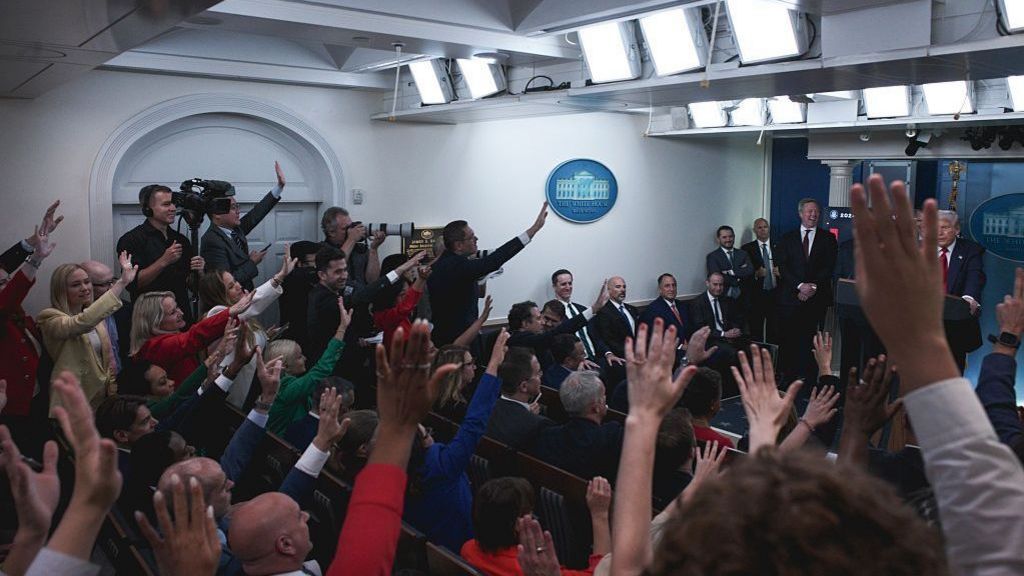
    On Tuesday, top US defense officials doubled down on their commitment to the mission during a press briefing at the Pentagon. Defense Secretary Pete Hegseth told reporters that “hundreds more ships from nations around the world are lining up to transit,” and emphasized that “Project Freedom is under way, commerce will be flowing, and America is once again leading with strength, clarity and purpose for the benefit of the entire world. Our will is unshakable.” Chairman of the Joint Chiefs General Dan Caine added that the military expected more vessels to complete transits in the coming days, though neither official provided a clear timeline for how long the operation would continue. Secretary of State Marco Rubio echoed the administration’s confident tone at a separate White House briefing, framing the operation as a global public good, saying the US was acting as a “favour to the world” because it remained “the only country that can project power in that part of the world the way we’re doing now.”

    Just hours after these bold public statements, Trump upended the entire mission. At 18:52 Washington time, he posted another announcement on Truth Social: the entire operation would be paused “for a short period of time.” The president framed the pause as a mutual agreement reached with Iran, citing “great progress” in ongoing diplomatic talks aimed at finalizing a new deal. He wrote: “Project Freedom (The Movement of Ships through the Strait of Hormuz) will be paused for a short period of time to see whether or not the Agreement can be finalized and signed.”

    The sudden reversal came just hours after another attack: a French-owned CMA CGM container ship was hit in the strait, leaving multiple crew members injured and the vessel heavily damaged. Even before the pause, the global shipping industry had expressed deep skepticism of the mission. Shipping industry publication Lloyd’s List reported that ship owners and marine insurers said Project Freedom had failed to provide “sufficient clarity or credible protection to justify resuming transits” through the strait. As of the announcement, transit volumes through the strategic waterway continue to fall as security concerns escalate across the region.

  • German police raid neo-Nazi criminal youth groups

    German police raid neo-Nazi criminal youth groups

    Over the past two years, a worrying new wave of explicitly neo-Nazi youth organizations has sprung up across multiple regions of Germany, prompting a large-scale coordinated law enforcement operation targeting two of the most prominent violent groups. On Wednesday, more than 600 police officers carried out raids across approximately 50 residential and commercial locations spanning 12 German states, with operations concentrated in the country’s eastern and southern regions including Bavaria, Berlin, Brandenburg, and Saxony. Federal prosecuting authorities confirmed that the operation targeted individuals linked to two groups: Jung & Stark (JS, translating to Young and Strong) and Deutsche Jugend Voran (DJV, or Forwards German Youth). While no arrests were made during the search operation itself, investigators have laid out detailed allegations of organized criminal violence and extremist networking against the suspects. According to a formal statement from federal prosecutors, the targeted individuals are suspected of coordinating violent attacks through encrypted social media platforms and building interconnected extremist networks that span the entire country. Prosecutors detailed that multiple accused group members have carried out brutal assaults on people they categorized as political enemies, including left-wing activists, as well as individuals they falsely accused of being pedophiles. In each documented attack, victims were beaten by multiple attackers and left with severe, lasting injuries. Internal group meetings, authorities add, regularly include open calls for violent action against political opponents and the groups’ perceived enemies. This is not the first time members of these networks have faced legal consequences: last year, a leading figure in DJV was sentenced to over three years in prison following a series of violent assaults on political opponents in Berlin. Twenty-four-year-old Julian M. was convicted alongside a cell of attackers aged 16 to 23 for brutally beating multiple people who displayed visible symbols associated with left-wing political movements. Unlike older generations of German far-right extremist groups, these new youth networks operate with unprecedented openness, maintaining active, public profiles on major mainstream and encrypted social platforms including Telegram and Instagram. Experts on extremism warn that this intentional openness is a deliberate recruitment strategy targeting young, disillusioned men who feel alienated from mainstream society. Jakob Guhl, a researcher at the Institute for Strategic Dialogue, notes that the majority of people joining JS and DJV are extremely young, typically teenagers or in their early 20s. Guhl emphasizes that unlike more established, mainstream far-right political movements in Germany such as the Alternative for Germany (AfD) or the Identitarian movement, which aim to build broad public support and enter mainstream political discourse, JS and DJV center their activities on militant training, public protest participation, and direct physical violence against perceived enemies. Since 2024, hundreds of smaller, local offshoots of these groups have emerged across eastern Germany in particular, following JS’s model of open online organizing and militant activity. German security and political officials have repeatedly voiced deep, growing concern over the rising rates of young people being radicalized and drawn into far-right extremist activity, which has increasingly targeted not only left-wing political figures but also members of Germany’s LGBT community. Today’s coordinated raids mark one of the largest law enforcement actions against this new wave of openly militant far-right youth groups, underscoring the German state’s growing alarm over the spread of violent neo-Nazi organizing among young people.

  • China is stepping up its Iran war diplomacy ahead of Trump’s summit with Xi

    China is stepping up its Iran war diplomacy ahead of Trump’s summit with Xi

    As a highly anticipated bilateral meeting between U.S. President Donald Trump and Chinese President Xi Jinping approaches, China’s growing diplomatic influence in the ongoing Iran conflict has moved into the global spotlight, following high-stakes talks Wednesday between the two nations’ top foreign policy officials in Beijing.

    Over the past decade, Beijing has steadily expanded its footprint in global diplomacy, shifting from its long-standing policy of avoiding entanglement in distant regional conflicts to emerge as a key power broker mediating disputes spanning from Southeast Asian border tensions to the war in Eastern Europe. While Beijing has not taken on the formal title of mediator in the Iran war, both Washington and Tehran have publicly acknowledged its outsized quiet influence in pushing for de-escalation of the conflict.

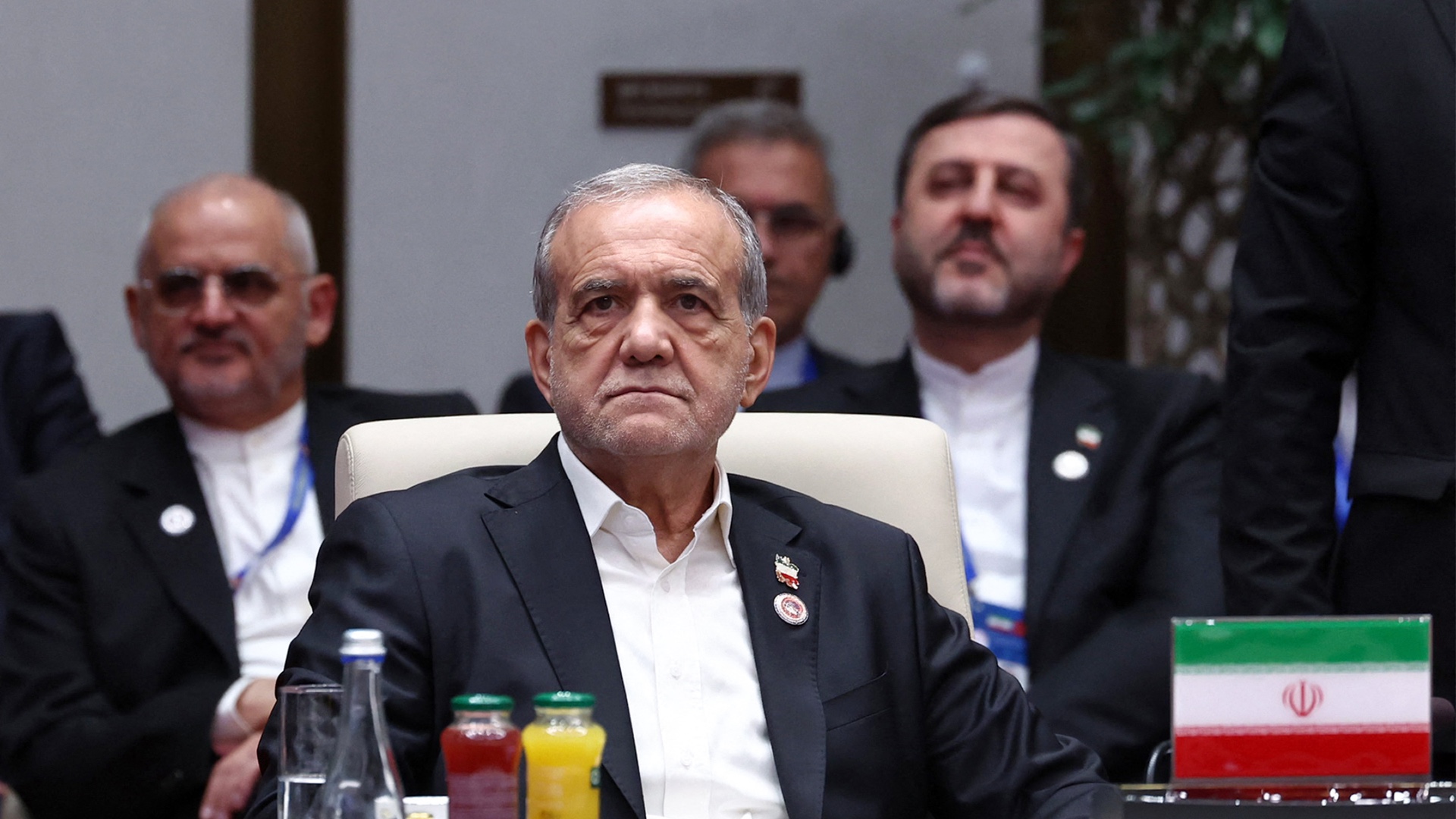
    The Trump administration has repeatedly pushed Beijing to leverage its close economic ties with Tehran to force the reopening of the Strait of Hormuz, a critical global oil chokepoint that Iran has blockaded amid the fighting. During Wednesday’s talks with Iranian Foreign Minister Abbas Araghchi — his first visit to Beijing since the war began on February 28 — Chinese Foreign Minister Wang Yi reiterated China’s call for an immediate comprehensive ceasefire, stating that Beijing is deeply troubled by the human and security costs of the ongoing conflict.

    “The entire international community shares a urgent collective goal of restoring normal, secure passage through the Strait of Hormuz, and China hopes all relevant parties will move quickly to answer the strong calls from the global community,” Wang told Araghchi, according to China’s official state news agency Xinhua. Wang also added that Beijing recognizes Iran’s legitimate right to develop peaceful nuclear energy and welcomes Tehran’s long-standing pledge to refrain from pursuing nuclear weapons.

    The timing of Araghchi’s visit is not accidental, with the Trump-Xi summit scheduled for next week in Beijing, where the Iran conflict is expected to top the bilateral agenda. A day ahead of the Beijing talks, U.S. Secretary of State Marco Rubio urged Chinese officials to use the meeting to pressure Tehran to lift its blockade of the strategic waterway.

    Araghchi signaled that progress on reopening the strait could be within reach, telling reporters through Xinhua that “currently, it is possible to resolve the issue of reopening the Strait of Hormuz as soon as possible.” Wang’s renewed public call for the strait’s reopening has already created new momentum for behind-the-scenes negotiations between Washington and Tehran to end the conflict, analysts note.

    Regional and global policy experts have offered mixed assessments of what the high-profile meeting signals about China’s evolving role. Tuvia Gering, a nonresident fellow at the Atlantic Council’s Global China Hub, noted that the coordinated visit demonstrates Beijing and Tehran’s aligned messaging, and reinforces China’s ambition to secure a permanent seat at the table for any future regional security agreement. “However, unless Beijing rolls out a concrete, actionable peace initiative, I would not characterize this as a meaningful shift in China’s approach to the conflict,” Gering added.

    Hoo Tiang Boon, a professor of Chinese foreign policy at Singapore’s Nanyang Technological University, pointed out that the visit was arranged at Beijing’s initiative, marking a deliberate display of China’s leverage over Tehran. “By summoning the Iranian foreign minister and holding high-profile talks, Beijing cannot be accused of sitting on the sidelines and refusing to engage,” Hoo noted.

    Many analysts highlight that China holds a unique position in any mediation efforts thanks to its status as a leading economic power with deep ties to all key stakeholders in the conflict, from Iran to major Gulf Arab states and Pakistan. Unlike most other global powers, Beijing is positioned to offer large-scale postwar reconstruction investment and targeted economic relief to war-impacted regions, tools few other actors can match.

    George Chen, a partner at the international advisory firm The Asia Group, argued that China’s role in the Iran dispute is irreplaceable. As Tehran’s largest crude oil buyer, Beijing’s policy positions carry significant weight with Iranian leadership, he noted, adding that China is also one of the few major powers that has publicly expressed sympathy for Iran’s position at the United Nations. The U.S. government has additionally noted that Iran’s ballistic missile program was developed with early Chinese technology support, and Beijing continues to sell Iran dual-use industrial components that can be repurposed for missile manufacturing.

    This is not China’s first high-profile mediation success in the Middle East. In 2023, Beijing played a central role in brokering the restoration of formal diplomatic relations between longtime regional rivals Saudi Arabia and Iran, a breakthrough that drastically reduced the risk of direct and proxy conflict across the Gulf. Muhammad Zulfikar Rakhmat, a researcher at Indonesia’s Center of Economic and Law Studies, called the 2023 deal a major geopolitical win for China, but noted that Beijing is deliberate about when it chooses to engage. “Its mediation tends to be opportunistic and low-risk, often occurring when conditions are already ripe for an agreement,” Rakhmat explained, noting that both Riyadh and Tehran already had strong incentives to re-engage before Beijing stepped in.

    Beyond the Middle East, Beijing has built a growing track record of conflict mediation in recent years. It hosted multiple rounds of talks between Thailand and Cambodia during their 2024 border conflict, and joined the U.S. for initial ceasefire negotiations in Malaysia, helping broker a second ceasefire when fighting resumed late last year. Beijing has also put forward formal peace proposals for the war in Ukraine, and even hosted Ukraine’s foreign minister for talks, despite its public “no-limits” strategic partnership with Russia.

    Experts note that China’s diplomatic messaging in global conflicts follows a consistent pattern, with Beijing repeatedly emphasizing respect for the U.N. Charter and national sovereignty. Amid the Iran conflict, President Xi last month reiterated this framing, calling for “upholding the principles of peaceful coexistence, upholding national sovereignty, upholding the rule of international law, and coordinating development and security.” Hoo noted that this consistent messaging has become a hallmark of China’s mediation efforts.

    Thitinan Pongsudhirak, a professor of international relations at Thailand’s Chulalongkorn University, argued that for distant conflicts, Beijing often faces low tangible stakes but can reap major diplomatic benefits, particularly as the world adjusts to the Trump administration’s unconventional negotiating style. “What the U.S. is doing under Trump is deeply damaging, and everyone suffers from it … and China is displaying global leadership and exerting its global role by speaking to the rules-based international system,” Pongsudhirak said. “It’s an inescapable contrast” between the two approaches to global diplomacy, he added.

    Wu contributed reporting from Bangkok.

  • Zelensky says Russia choosing war as dual ceasefires falter

    Zelensky says Russia choosing war as dual ceasefires falter

    As a pair of overlapping ceasefire proposals aimed at pausing hostilities during Russia’s annual May 9 Victory Day celebrations collapsed into renewed bloodshed, Ukrainian President Volodymyr Zelensky has publicly accused Moscow of deliberately choosing war over diplomacy and the protection of civilian life.

    The breakdown of the tentative truce talks has raised urgent fears that Ukraine could launch retaliatory strikes against Russian territory during Saturday’s major Red Square parade, which marks the Soviet Union’s victory over Nazi Germany in World War II. The Kremlin had earlier announced it would pause offensive operations on May 9 in the expectation that Kyiv would match the gesture, but the agreement fell apart before it could take full effect.

    “Russia’s choice is an obvious spurning of a ceasefire and of saving lives,” Zelensky wrote in a social media post Wednesday. He noted that Ukraine had previously committed to matching any Russian ceasefire over the Victory Day weekend, when millions of Russians gather for public commemorations across the country. “It is obvious to any reasonable person that a full-scale war and the daily murdering of people are a bad time for public ‘celebrations,’” he added.

    Hours before Zelensky’s statement, Ukrainian officials confirmed that Russia launched a massive overnight drone assault targeting multiple regions across eastern and southern Ukraine, deploying more than 100 unmanned aerial vehicles. The attack came just one day after a wave of Russian strikes killed nearly 30 Ukrainian civilians across the country. As of Wednesday morning, Kyiv confirmed at least one civilian death from the overnight drone assault, with additional casualties reported after Russian forces hit a kindergarten in the northeastern border region of Sumy, killing the facility’s on-site security guard.

    The chain of collapsed truce efforts began when Moscow first announced a unilateral ceasefire to cover its May 9 Victory Day parade in Red Square, one of the most politically significant events on Russia’s annual calendar for President Vladimir Putin. In response, Zelensky put forward a counter-truce, calling on Russia to halt all offensive operations starting midnight May 6. The Kremlin never publicly confirmed it would abide by Kyiv’s proposal, only repeating its call for Ukraine to pause attacks on May 9.

    Zelensky has already decried what he calls Russia’s “utter cynicism” in calling for a ceasefire solely to protect its holiday celebrations, while continuing to launch deadly strikes on Ukrainian population centers. Frontline Ukrainian commanders confirmed Wednesday that combat intensity has remained unchanged, with Russian forces continuing infantry raids and assault operations against Ukrainian defensive positions across the eastern front.

    “The enemy continued to carry out infantry raids and attempts to storm our positions,” an anonymous Ukrainian officer on the eastern front told Agence France-Presse. Since Russia “did not comply” with the Kyiv-suggested ceasefire, “our unit responded in kind and countered all provocations,” he added. Another frontline commander echoed the assessment, noting that combat intensity has held steady, and his unit is responding to every Russian incursion: “An eye for an eye, a tooth for a tooth!”

    Moscow’s defense ministry reported Wednesday that it had downed 53 Ukrainian drones between 21:00 Tuesday and 07:00 Wednesday GMT, a lower number than recorded in previous days. The ministry did not address whether any of the Ukrainian drone activity occurred after Kyiv’s unilateral truce was supposed to go into effect at midnight Tuesday.

    The escalating exchange of strikes follows a deadly 24-hour period of cross-border attacks. Late Tuesday, Moscow-appointed authorities in Russian-annexed Crimea said a Ukrainian drone strike on the northern part of the peninsula killed five people. The attack came just hours after Russia launched one of the deadliest waves of strikes on Ukrainian cities in weeks, killing at least 28 civilians across the country, including 12 people in a strike on the central city of Zaporizhzhia that Zelensky said had “absolutely no military justification.” Zelensky has since called on Ukraine’s international allies to issue formal condemnation of the Russian attack.

    In recent weeks, both sides have significantly ramped up long-range strikes deep into each other’s territory. On Tuesday, a Ukrainian strike hit Cheboksary, a Volga River city hundreds of kilometers inside Russian territory far from the Ukrainian border, killing two people.

    The rising strike frequency has stoked widespread nervousness across Russia ahead of Saturday’s parade. For the first time in nearly 20 years, Moscow has announced it will remove all heavy military hardware from the Red Square procession, and has implemented intermittent city-wide internet shutdowns that will remain in place through Saturday. Zelensky has framed these moves as a clear sign of Russian weakness, saying “They fear drones may buzz over Red Square.”

    Now in its fifth year, the full-scale Russian invasion of Ukraine has evolved into Europe’s deadliest and largest conflict since World War II, with hundreds of thousands of soldiers and tens of thousands of civilians confirmed killed. Diplomatic efforts to negotiate a end to the war have stalled in recent months, largely sidelined by growing regional tensions tied to the ongoing Iran-Israeli conflict. Moscow has set preconditions for peace that Kyiv deems unacceptable, including a demand that Ukraine withdraw all military forces from four eastern and southern Ukrainian regions that Russia illegally claims as its own territory.

  • Australian court rejects convicted murderer’s appeal of deportation to small island nation

    Australian court rejects convicted murderer’s appeal of deportation to small island nation

    In a landmark unanimous ruling by Australia’s highest judicial body, an Iranian man convicted of murdering his wife has lost his final legal challenge to prevent his deportation to the Pacific island nation of Nauru, clearing the way for the Australian government’s controversial multi-million-dollar resettlement deal to move forward.

    The 61-year-old perpetrator, identified in court documents only as TCXM to protect refugee confidentiality standards in Australia, had appealed a lower court’s 2023 ruling that greenlit his deportation to Nauru under a 30-year visa arrangement. All seven High Court justices rejected his appeal, closing off the last avenue of legal recourse for the convicted murderer.

    TCXM first arrived in Australia from Iran in 1990 and was granted a protection visa five years later. In 1999, he was sentenced to 22 years in prison for the fatal murder of his wife. His visa was canceled in 2015 following his conviction, and he was moved from prison to immigration detention, where he remained for eight years. Iran does not allow the forced repatriation of its citizens from other countries, and Australia maintains a longstanding policy of not refouling refugees to nations where they would face persecution, leaving Australian authorities with no clear path to remove him from the country until the Nauru deal was struck.

    The Nauru resettlement agreement emerged as a policy solution to a political and legal crisis created by a 2023 High Court ruling. That earlier decision found that Australia could no longer hold stateless people or non-citizens who cannot be returned to their home countries in indefinite immigration detention with no path to third-country resettlement. In response to that ruling, more than 350 non-citizens — many of them convicted criminals, including TCXM — were released from detention on temporary bridging visas, creating widespread public and political pressure on the government to find a long-term solution.

    Under the 2023 bilateral deal, Australia agreed to pay Nauru a total of AU$408 million (US$296 million) to host up to an agreed number of unwanted non-citizens over a 30-year period, with an additional annual ongoing payment of AU$70 million (US$51 million) to the small island nation, which has a total population of just 12,000 people. To date, eight men have already been resettled in Nauru under the agreement, which has faced fierce domestic criticism for what opponents call its exorbitant and unjustified cost to Australian taxpayers.

    In his appeal to the High Court, TCXM put forward two core arguments against his deportation. First, he claimed that Nauru’s limited public health infrastructure could not provide adequate care for his severe chronic asthma. Second, he argued that the bilateral resettlement agreement between Canberra and Nauru was unlawful, and that his deportation amounted to punitive action by the executive branch of government, which violates the Australian Constitution — the document reserves the power of punishment exclusively to the judicial system, not the government. Both arguments were rejected by the court’s full bench.

    Immigration Minister Tony Burke, who had defended the deportation order through the legal process, praised the High Court’s outcome as a critical victory for Australia’s sovereign control of its immigration system. “I welcome the decision of the court. A canceled visa must have consequences in our migration system,” Burke said in a post-ruling statement.

    TCXM was permitted to remain in Australian territory during his legal challenge, and no official timeline has been announced for when his deportation will be carried out. He was one of the first three non-citizens selected for resettlement in Nauru under the new program, and his legal challenge was widely viewed as a key test case for the validity of the government’s entire deal with the Pacific nation.

    This is not the first time Australia has partnered with Nauru to manage irregular migration and unwanted non-citizens. For more than a decade, Canberra funded offshore detention camps on Nauru and in Papua New Guinea for asylum seekers who attempted to reach Australia by boat, a policy that largely ended the large-scale people smuggling trade that once flourished in Southeast Asia, as thousands of asylum seekers attempted the dangerous crossing on rickety, overloaded fishing vessels.

  • China calls for Strait to be reopened ‘as soon as possible’ in Iran talks

    China calls for Strait to be reopened ‘as soon as possible’ in Iran talks

    In a high-stakes diplomatic gathering in Beijing on Wednesday, Chinese Foreign Minister Wang Yi held talks with his newly appointed Iranian counterpart Abbas Araqchi, marking Araqchi’s first visit to China since the outbreak of the US-Israeli military conflict against Iran. At the top of the agenda was the ongoing crisis in the Strait of Hormuz, with Wang pressing for the immediate reopening of the critical global waterway that has been largely blocked by reciprocal restrictions from Iran and the US since the war began.

    As one of the world’s most vital chokepoints for global energy trade, the Strait of Hormuz carries roughly a fifth of the world’s daily crude oil supplies. Its prolonged closure has sent ripples through energy markets, leaving the international community on edge about potential price spikes and supply disruptions. Wang emphasized in the meeting that restoring safe and unobstructed navigation through the strait aligns with the shared interests of the entire global community, and he called on all relevant parties to answer the international community’s urgent call to lift the blockades without delay.

    On the broader conflict, Wang stressed that reaching a lasting, comprehensive ceasefire remains the world’s most urgent priority. He warned that any resumption of large-scale hostilities would only deepen the region’s crisis and bring more catastrophic harm to civilians and infrastructure. Reaffirming China’s consistent neutral mediation position, Wang noted that Beijing has long avoided direct entanglement in the conflict while working quietly behind the scenes to push all sides toward dialogue. He reiterated that China remains fully ready to facilitate further talks and support international efforts to de-escalate tensions across the Middle East.

    In a notable gesture of diplomatic engagement, Wang also publicly recognized Iran’s longstanding commitment to not developing nuclear weapons, a point that aligns with China’s broader efforts to preserve the non-proliferation framework in the region. According to Iranian state media readouts of the meeting, Araqchi used the occasion to reaffirm Iran’s commitment to deepening bilateral cooperation with China, telling Wang that partnership between the two countries will grow even stronger in the coming years.

    This meeting comes as the international community prepares for a landmark summit next week between US President Donald Trump and Chinese President Xi Jinping, a meeting that was originally scheduled for March but postponed after the US and Israel launched their wide-ranging military strikes on Iran. If the summit proceeds as planned next week, it will mark the first visit by a sitting US president to China in nearly a decade, and the Iran conflict and the Strait of Hormuz impasse are widely expected to top the bilateral agenda.

    Notably, both US and Iranian officials have already credited Chinese diplomatic mediation for helping broker the April ceasefire between the two sides, which was formally arranged through Pakistan. China has also repeatedly criticized the US naval blockade of Iranian ports, describing the move as “irresponsible and dangerous” that risks unraveling the fragile ceasefire agreement that has been in place for months.

    For China, the stakes of the Strait of Hormuz reopening are deeply personal. China is one of the largest buyers of Iranian crude oil, even as the oil remains under US unilateral sanctions. Data from the Center on Global Energy Policy shows that China imported an average of 1.38 million barrels of Iranian crude per day in 2025, accounting for roughly 12 percent of China’s total crude imports. Despite this heavy reliance on energy supplies that pass through the strait, Trump told reporters at the White House earlier this week that Xi Jinping has acted with “very respectful” posture toward the US in recent months. He claimed that China has not challenged US positions on the conflict, adding that “Xi would not challenge the US because of me.”

    As diplomatic activity ramps up on multiple fronts ahead of the Trump-Xi summit, the outcome of the talks on the Strait of Hormuz could have far-reaching implications for global energy security, the future of the Iran conflict, and the trajectory of bilateral relations between the world’s two largest economies.

  • China’s top envoy tells his Iranian counterpart a ‘comprehensive ceasefire’ is needed

    China’s top envoy tells his Iranian counterpart a ‘comprehensive ceasefire’ is needed

    BEIJING – In a high-profile diplomatic meeting marked by growing international concern over protracted military hostilities, China’s top foreign policy official Wang Yi conveyed deep unease Wednesday about the more than two-month-long conflict involving Iran, Israel and the United States, while stressing that an immediate full cessation of fighting is the only acceptable path forward.

    The talks held in Beijing marked a significant milestone: it was the first in-person visit to China by Iranian Foreign Minister Abbas Araghchi since active hostilities broke out between the three parties on February 28. The face-to-face engagement comes as global pressure mounts for major powers to step in and de-escalate tensions that threaten to spiral into a wider regional conflict.

    Captured on video from the closed-door meeting, Wang laid out China’s clear stance on the escalating crisis. “We believe that a comprehensive ceasefire is urgently needed, that a resumption of hostilities is not acceptable, and that it is particularly important to remain committed to dialogue and negotiations,” Wang stated, emphasizing Beijing’s long-held position that diplomatic negotiation is the only sustainable solution to protracted international conflict.

    The meeting comes amid heightened global attention on China’s role in Middle Eastern diplomacy, as the country has positioned itself as a neutral broker working to reduce tensions across the region. The in-person talks between the two top diplomats signal ongoing diplomatic outreach to bring all parties back to the negotiating table amid months of stalled de-escalation efforts.

  • NSW motorists claim back $284 million in toll relief amid cost of living crisis

    NSW motorists claim back $284 million in toll relief amid cost of living crisis

    Since the New South Wales (NSW) government launched its permanent weekly $60 toll cap scheme in January 2024 to counter soaring cost-of-living pressures, more than 862,000 local motorists have collectively claimed $284 million in cashback relief, new official data reveals. Fifty-eight suburbs across the state have now crossed the threshold of $1 million in total returned toll payments, earning them a place in the scheme’s so-called “$1 million club”, with 10 suburbs even pushing past the $2 million mark for collective claims.

    The latest suburbs to secure a spot in the $1 million club include Mount Druitt, Bella Vista, Coogee, Austral, Kings Langley, Oakhurst, Macquarie Park, South Wentworthville and Box Hill. Top-performing suburbs by total relief claimed include 10 suburbs that have each received more than $2 million: Carlingford, West Pennant Hills, Punchbowl, Greystanes, Bankstown, Kellyville, Lakemba, Quakers Hill, Marsden Park and Castle Hill. At the upper end of the scale, four major areas have racked up more than $4 million in total cashback. Blacktown leads the pack with 12,030 individual claims averaging $398 per driver, followed by Auburn where the average claim hits $674, with Baulkham Hills and Merrylands rounding out the $4 million-plus group.

    NSW Premier Chris Minns emphasized that the targeted relief is reaching the communities hit hardest by ongoing economic pressures, including rising interest rates, persistent inflation and volatile fuel prices. “We’re seeing that support land where it’s needed most, across Western Sydney with suburbs like Mount Druitt, Blacktown, Auburn and Baulkham Hills claiming more than $1 million in toll relief,” Minns said. The premier noted that making the $60 weekly toll cap a permanent policy change has eliminated the uncertainty of unpredictable monthly toll bills for regular commuters, putting much-needed disposable income back into household budgets and delivering consistent financial certainty week to week.

    The toll relief scheme is part of the NSW government’s broader push to address toll inequity across Sydney. In line with that commitment, the government is set to introduce two-way tolling for the Sydney Harbour Bridge and Sydney Harbour Tunnel by 2028, a reform designed to end the current system that places disproportionate toll burden on Western Sydney motorists, who currently pay tolls in both directions for cross-city trips while Harbour crossing users only pay for one direction of travel. The existing one-way toll structure for the Harbour crossings has not seen a price increase between 2009 and 2023.

    For the 2025 calendar year, more than $100 million in unclaimed toll relief remains available to eligible motorists. Commuters who have not yet claimed their cashback for the first three months of 2025 are encouraged to visit the official Service NSW website to check their eligibility and submit their claims before closing deadlines.