分类: politics

  • Vivek Ramaswamy wins Republican nomination for Ohio governor

    Vivek Ramaswamy wins Republican nomination for Ohio governor

    On Tuesday, a seismic shift in Ohio Republican politics took place, as former presidential candidate and loyal Donald Trump ally Vivek Ramaswamy locked up the GOP nomination for governor, clearing a path for him to lead the traditionally manufacturing-heavy Rust Belt state in what is already shaping up to be one of the most watched general election races of 2026.

    Unconfirmed preliminary results from the Ohio primary confirm Ramaswamy, a 38-year-old health tech entrepreneur, easily defeated his only remaining primary challenger Casey Putsch – a car designer best known for his automotive-focused YouTube channel – to advance to the November general election, multiple U.S. media outlets reported Wednesday.

    Ramaswamy first catapulted onto the national political stage in 2023, when he launched a long-shot bid for the 2024 Republican presidential nomination opposite Trump. Though his rapid-fire speaking style and unapologetically conservative tone made him a viral favorite during primary debates and earned him a nationwide social media following, he dropped out of the presidential race early after failing to gain traction with Republican voters. Immediately after exiting the race, he threw his full support behind Trump, quickly rising to become one of the former president’s most prominent and visible surrogates during the 2024 general election. He also played a key early role in developing Trump’s proposed Department of Government Efficiency initiative before handing off leadership of the project to billionaire entrepreneur Elon Musk.

    When he announced his candidacy for Ohio governor, Ramaswamy cleared the field of most high-profile Republican contenders. To fuel his campaign, he has drawn heavily from his personal wealth, loaning his campaign committee $25 million, according to a report from The Columbus Dispatch. On Tuesday, he benefited from both his pre-existing national name recognition and a reshuffling of Ohio’s Republican Party leadership triggered when former U.S. Senator JD Vance of Ohio ascended to the vice presidency. Vance, a fellow Trump-aligned Republican, traveled to Cincinnati on Tuesday to cast his ballot for Ramaswamy and other GOP candidates.

    Trump publicly celebrated Ramaswamy’s primary victory in a post to his Truth Social platform Tuesday, writing: “I know Vivek well, competed against him, and he is something SPECIAL. He is Young, Strong, and Smart!” Current Ohio Republican Governor Mike DeWine, who is barred from seeking re-election this year due to strict state term limits, has also endorsed Ramaswamy.

    The general election will pit Ramaswamy against Democratic nominee Amy Acton, Ohio’s former state public health director who rose to prominence for guiding the state’s response to the COVID-19 pandemic. Acton ran unopposed for the Democratic nomination, and the contest is already shaping up to center heavily on the ongoing political fallout of pandemic-era public health policies.

    In 2020, under DeWine’s leadership, Ohio adopted a more moderate approach to pandemic restrictions than many other Republican-led states, implementing measures including temporary bans on in-person dining at restaurants and a last-minute postponement of the state’s 2020 presidential primary to slow virus spread. Six years later, widespread conservative backlash to those policies – including mask mandates and school closures – has given Ramaswamy a opening to attack Acton, who was the public face of Ohio’s pandemic response.

    Ramaswamy recently released a campaign ad accusing Acton of abusing her power by unilaterally postponing the 2020 primary in defiance of a court order. In an unusual rebuke that upended expectations, DeWine, who has endorsed Ramaswamy, stepped forward to defend Acton from the claims. “I told her to issue the health order,” DeWine told local NBC affiliate NBC4. “The decision was mine.”

    Ohio has trended sharply toward the Republican Party in recent election cycles, but political analysts expect the general election race to be highly competitive, with spending projected to skyrocket as both parties pour resources into the contest ahead of the November vote.

    In adjacent Indiana, another high-stakes Republican primary drama unfolded Tuesday, as seven incumbent GOP state senators who defied Trump’s demands to pass a partisan pro-Republican redistricting map last December faced primary challengers backed by the former president. Last year, 21 Senate Republicans joined all 10 Democratic lawmakers to block Trump’s preferred redistricting plan, defying intense public pressure from the former president, who warned that any Republican who voted against the plan would risk losing their seat in a primary challenge.

  • What do a teenager’s clothes tell us about North Korea’s future?

    What do a teenager’s clothes tell us about North Korea’s future?

    For decades, outside observers have pored over every small clue emerging from North Korea’s closed political system to unpack the country’s long-term leadership plans. Today, a new focal point of speculation has emerged: the public presentation of Kim Jong Un’s daughter, and what subtle clues in her public appearances and wardrobe reveal about a potential coming succession.

    In recent months, the teenage daughter of North Korea’s supreme leader has made increasingly frequent high-profile public appearances alongside her father, joining him at military parades, state events, and on-site inspections of key national facilities. What has drawn particular attention from regional security analysts and Korea watchers is not just her growing visibility, but the careful curation of her public image – from the formal, authoritative clothing choices she has worn at state occasions to the measured, poised demeanor she displays in front of state media cameras.

    These analysts argue that the intentional styling of Kim Jong Un’s daughter is far more than a matter of personal taste. Rather, they frame it as a deliberate, gradual process of political grooming, laying the groundwork for a eventual transfer of power that would continue the Kim family’s three-generation grip on North Korean governance. Where previous generations of the Kim leadership maintained strict secrecy around family members until late in the succession process, the gradual, incremental public rollout of the leader’s daughter marks a noticeable shift in how the North Korean regime is preparing for its next chapter.

    While no official confirmation of a succession plan has been released by Pyongyang, the pattern of public appearances and curated image has led many experts to conclude that North Korea’s elite is already laying the institutional groundwork for a transition. This slow, visible preparation is being read as a signal that the regime is focused on ensuring stability and continuity of the ruling family’s control, even as it faces mounting international pressure over its nuclear program and ongoing economic challenges.

    For regional powers and global observers, these subtle shifts in North Korea’s public political landscape carry significant implications. Any long-term leadership transition in the reclusive nuclear state carries the potential to reshape regional security dynamics on the Korean Peninsula and across Northeast Asia more broadly. As such, every new public appearance, every detail of presentation, continues to be scrutinized for insight into what comes next for one of the world’s most isolated nations.

  • US intel says war on Iran has not set back Iran’s nuclear programme: Report

    US intel says war on Iran has not set back Iran’s nuclear programme: Report

    More than two months of coordinated military strikes by the United States and Israel against Iranian nuclear infrastructure have failed to meaningfully slow Tehran’s nuclear development, leaving the timeline for Iran to build a nuclear weapon unchanged from last summer, according to a declassified US intelligence assessment cited in reporting from Reuters.

    Per Reuters’ Tuesday reporting, which drew on two anonymous sources familiar with the intelligence, US agencies previously estimated that prior to Washington’s June 2025 pre-war airstrikes, Iran could produce enough weapons-grade uranium and assemble a functional nuclear device in a window of three to six months. Following those initial June attacks on key Iranian nuclear sites at Natanz, Fordow, and Isfahan, intelligence analysts adjusted that timeline to between nine months and one year. Despite the full-scale air campaign that began in late February, that projection has not shifted, indicating the sustained bombing has not delivered the strategic outcome US and Israeli leaders promised.

    The conflict itself kicked off on February 28 while the Trump administration was still in nuclear negotiations with Tehran. From the moment of the June 2025 preemptive strikes, the impact of the attacks has been a subject of sharp public dispute. Then-President Trump claimed the operation, codenamed “Midnight Hammer”, had completely “obliterated” Iran’s nuclear program, declaring the issue effectively resolved ahead of his planned post-strike policy shift.

    When asked about prospects for restarting nuclear negotiations in mid-2025, Trump downplayed the need for a new diplomatic deal, telling reporters: “We may sign an agreement…I don’t care if I have an agreement or not…We destroyed the nuclear… It’s blown up to kingdom come. I don’t care very strongly about it.”

    Even within the Trump administration, his sweeping claims faced immediate pushback. The Pentagon contradicted his assertion that the entire program had been destroyed, instead stating the June strikes had set Iran’s nuclear progress back by up to two years — double the timeline adjustment confirmed by the latest intelligence reviewed by Reuters. This new assessment confirms what independent analysts have argued since the start of the campaign: that repeated US and Israeli airstrikes have failed to deliver a lasting, substantive setback to Iran’s nuclear ambitions.

    Speaking with Middle East Eye, regional security experts note that any path to a diplomatic resolution will require Washington to offer substantial sanctions relief to Tehran in exchange for new limits on its nuclear activities. The US has offered a shifting set of justifications for launching the full-scale war, from protecting anti-government protesters inside Iran to eliminating Tehran’s ballistic missile arsenal and disabling its nuclear program. But in a Tuesday interview with conservative radio host Hugh Hewitt, Trump centered the conflict on the nuclear issue, downplaying the urgency of the ballistic missile threat.

    “Look, missiles are bad, but yeah, and they do have to cap it, but this is about they cannot have a nuclear weapon,” Trump said, adding that any end-of-war deal would require Iran to completely remove its stockpile of highly enriched uranium from the country.

    While the air campaign launched February 28 has targeted a broad range of Iranian assets including conventional military units, state government institutions, and core industrial infrastructure, Israel has prioritized additional strikes on dispersed nuclear-related sites. The current crisis traces its roots back to 2018, when Trump unilaterally withdrew the US from the Joint Comprehensive Plan of Action (JCPOA), the multilateral nuclear agreement reached with Iran three years earlier. Under the terms of the JCPOA, Iran had agreed to cap uranium enrichment at 3.67 percent — a level suitable for civilian energy production — and open all its nuclear facilities to rigorous international inspections from the United Nations, in exchange for broad relief from crippling economic sanctions.

    After withdrawing from the deal, the Trump administration reimposed and tightened sweeping sanctions on Iran. In response, Tehran gradually abandoned its JCPOA-enforced limits, building up a stockpile of uranium enriched to 60 percent, just a short technical step away from weapons-grade material. Iran has repeatedly stated that its entire nuclear program is intended for peaceful civilian purposes, including energy production and medical isotope manufacturing. The late Iranian Supreme Leader Ayatollah Ali Khamenei also issued a formal religious fatwa prohibiting the development and possession of nuclear weapons. Many independent analysts, however, argue Iran has deliberately positioned itself as a nuclear threshold state, maintaining the technical capacity to rapidly develop a nuclear weapon should it choose to do so.

    This reporting comes from Middle East Eye, an independent outlet covering global affairs focused on the Middle East and North Africa region.

  • India’s fiercest female politician faces a fight for survival

    India’s fiercest female politician faces a fight for survival

    For 15 consecutive years, Mamata Banerjee and her regional Trinamool Congress (TMC) party held unbroken control over India’s West Bengal state, defying every political challenge to reinforce their grip on power. That long streak of political survival came to an abrupt end on Monday, when Prime Minister Narendra Modi’s Bharatiya Janata Party (BJP) handed Banerjee a decisive defeat, ending her bid for a fourth straight term as chief minister. A fourth term would have positioned the 71-year-old firebrand populist alongside India’s most long-serving regional political heavyweights, such as Jyoti Basu and Naveen Patnaik. Instead, her loss throws one of contemporary India’s most extraordinary political careers into profound uncertainty, closing a chapter that began as a grassroots street protest movement and culminated in the collapse of the political stronghold she built from scratch.

    Few would have predicted Banerjee’s path to power when she first entered the political scene. A diminutive figure often seen in plain cotton saris and rubber sandals, she did not fit the mold of the elite politicians who had long dominated West Bengal. Yet in 2011, she pulled off one of the most shocking upsets in Indian electoral history: she ended the 34-year uninterrupted rule of the Communist Party of India (Marxist), overturning a political order that had defined the state for generations. Once India’s intellectual and commercial heart, West Bengal had spent decades mired in industrial stagnation and widespread public weariness of Communist rule. At the time, The New York Times famously described Banerjee as “the blunt instrument knocking down their own Berlin Wall”, and Time magazine included her on its list of the world’s 100 most influential people.

    Banerjee’s rise was forged in West Bengal’s notoriously combative political culture, where elections often play out like prolonged street-level conflicts. Her supporters affectionately dubbed her the “fire goddess”, and later “Didi” — the Bengali term for elder sister — a name that encapsulated the fiercely protective maternal persona she cultivated for decades. Born into a lower-middle-class Kolkata family, she cut her political teeth in the student wing of the Indian National Congress, emerging as one of the state’s most prominent anti-Communist voices by the 1980s before splitting from Congress to found the TMC.

    Decades of street-level conflict shaped her political identity permanently. In 1990, during a protest march, she was allegedly assaulted by Communist cadres, suffering a fractured skull that required hospitalization. The incident solidified the public image she would maintain for decades: that of a street fighter and political martyr, a perpetual insurgent even after she took power. Her political ascent accelerated sharply in the mid-2000s, when she led mass opposition to the Communist government’s plan to acquire farmland for a Tata Motors car factory in Singur and a chemical hub in Nandigram in 2007. Casting herself as a champion of smallholder farmers against forced industrialization, she earned fierce loyalty among rural and low-income voters. But the movement also alienated much of the state’s urban middle class and business elite, who accused her of driving away much-needed private investment from West Bengal.

    Unlike most high-profile women in Indian politics, Banerjee built her political career without dynastic backing or a powerful patron. “No-one set up their own party, took on an invincible force like the Communists, ousted them after 34 years and then held power for three terms,” explains Mukulika Banerjee, an anthropologist at the London School of Economics. The LSE scholar notes that the state’s ruling elite, upper-caste, educated bhadralok Communist men, long dismissed Banerjee for her dark skin and rejection of upper-class social norms, which only deepened her commitment to advocating for working-class and marginalized Bengalis. “Those early battles made her fearless, realising she could make others feel the same, if she stood by them,” Mukulika Banerjee says. She also actively elevated other women in politics; her party fielded 52 women candidates in the 2026 election, a marked departure from the male-dominated status quo of regional Indian politics.

    For years, Banerjee’s unique personal charisma, targeted welfare programs for women and rural poor, and fierce defense of Bengali regional identity blunted the impact of anti-incumbency sentiment, widespread corruption allegations, and the gradual rise of the BJP across the state. Political analysts note her success rested on a carefully crafted balance: she positioned herself as both an uncompromising street fighter and an austere, maternal figure delivering lifelines to economically vulnerable Bengalis. Even critics acknowledged her innate ability to connect with the emotional needs of her electorate. But charisma alone cannot sustain a political machine indefinitely.

    Political scientist Dwaipayan Bhattacharyya once described Communist-ruled Bengal as a “party society”, where the organization became deeply embedded in everyday rural life and livelihoods. Banerjee’s TMC inherited this structure but reorganized it around a new model: unlike the Communists’ disciplined, hierarchical cadre system, the TMC revolved almost entirely around Banerjee’s personal charisma and authority. Bhattacharyya labeled the system a political “franchisee model”: local strongmen and grassroots leaders were allowed to expand their personal influence and often their private business interests in exchange for unwavering loyalty to Banerjee. As early as 2023, Bhattacharyya presciently warned that this model left the TMC deeply vulnerable. “Its leaders’ voracious appetite for material gains has made transactional interests undermine even a pretence of ethical politics, straining the party’s bonding with the people,” he wrote.

    During Banerjee’s third term, the state also grappled with a growing fiscal crisis. West Bengal’s public debt ballooned, with the central bank estimating that just four of Banerjee’s flagship women’s welfare schemes consumed nearly a quarter of the state’s own-source revenue. Widespread anger over thousands of vacant government posts, a massive corruption scandal in teacher recruitment, and growing public concern over rising violence against women further eroded public trust in her government.

    Now, in the wake of defeat, Banerjee faces an existential challenge: securing her own political survival, and holding the TMC together. West Bengal’s political history has long been unforgiving to ousted ruling parties, with local leaders and power brokers quickly shifting their allegiance to the new incumbent. Political analyst Sayantan Ghosh warns that many sitting TMC leaders may drift to the BJP — some voluntarily, others under mounting pressure — raising the real prospect of a full split within the party. Proma Raychaudhury of Krea University adds that the TMC’s apparent lack of strong ideological cohesion leaves the party and its leader particularly vulnerable after a defeat of this scale. For Banerjee personally, the shift will be jarring: she has held public office since the late 1980s, and a life without executive power is almost unprecedented in her decades-long career.

    Writing off the 71-year-old leader entirely, however, may be premature. Even so, this defeat marks a far more fundamental rupture than the many crises she weathered during her time in power. Mukulika Banerjee argues that leaders like Mamata thrived in an era of relatively level political competition, a condition that no longer exists amid the growing national dominance of Modi’s BJP. Monday’s election result, she suggests, reflects not just voter discontent, but a systemic imbalance that has reshaped Indian electoral politics.

    The question now hangs over Indian politics: can Mamata Banerjee reinvent herself once again, returning to her roots as a fiery grassroots outsider that first captured the imagination of Bengal’s voters? Or will she slowly fade into the same status she spent her career fighting against: a remnant of an outdated old political order?

    As Mukulika Banerjee puts it: “Where will she go next? She knows no other life other than politics.”

    Raychaudhury suggests one likely path is a return to the oppositional street politics that first made Banerjee a force to be reckoned with. That transition appears to already be underway. Just one day after her defeat, Banerjee told reporters she was now a “free bird, a commoner” without the trappings of office, and vowed to work to strengthen the national opposition INDIA alliance against the BJP. She has levied allegations of favoritism against the Election Commission, warned against the danger of one-party rule, and claimed the election mandate was effectively stolen from her party. “We didn’t lose the election. They forcefully took it from us,” she said, a charge the state’s Chief Electoral Officer has said he will examine in context. When asked what comes next, she gave an answer that echoed the fiery leader Bengal first met decades ago: “I can be anywhere, I can fight anywhere. So I’ll be on the streets.”

  • Trump says pausing Hormuz operation in push for Iran deal

    Trump says pausing Hormuz operation in push for Iran deal

    Just 24 hours after launching a new U.S. military escort mission through the strategic Strait of Hormuz, former President Donald Trump announced Tuesday that the operation will be put on hold, as international mediators push to finalize a comprehensive peace agreement with Iran to end the ongoing Middle East conflict.

  • Trump advisers step up their calls on China to help open Strait of Hormuz ahead of Beijing summit

    Trump advisers step up their calls on China to help open Strait of Hormuz ahead of Beijing summit

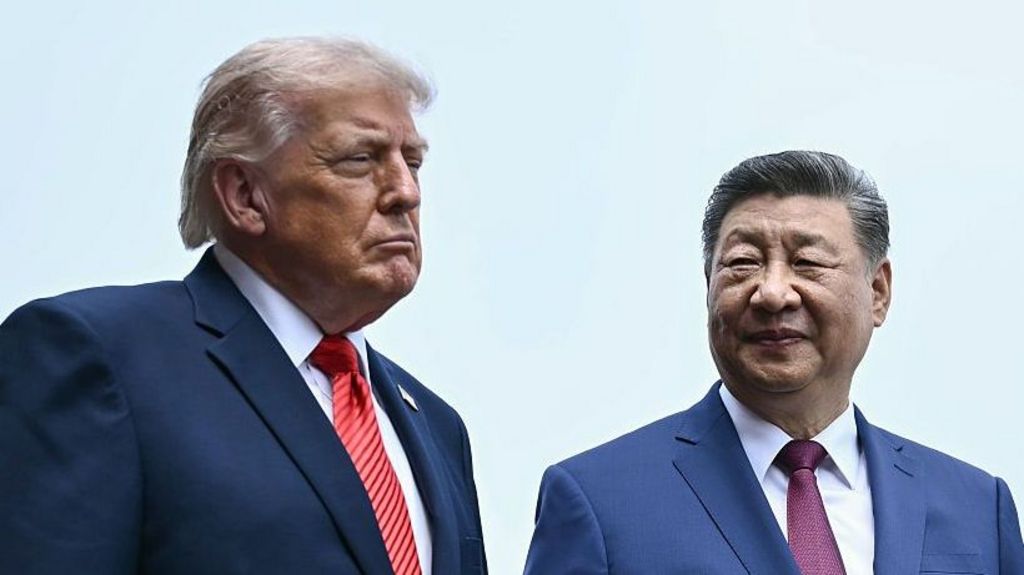
    As U.S. President Donald Trump prepares for his highly anticipated summit with Chinese President Xi Jinping in Beijing, the White House has launched an urgent push for China to leverage its considerable economic and political sway over Iran to reopen the strategically vital Strait of Hormuz, a key global energy chokepoint whose closure has shaken global energy markets over two months of ongoing conflict.

    Speaking at a White House press briefing on Tuesday, Secretary of State Marco Rubio made a direct public appeal, noting that Iranian Foreign Minister Abbas Araghchi was scheduled to travel to Beijing for talks the following day. Rubio called on Chinese leaders to deliver a clear, uncompromising message to Tehran: its actions to restrict traffic through the strait have left Iran globally isolated, casting the country as the primary aggressor in the unfolding crisis. “I hope the Chinese tell him what he needs to be told,” Rubio stated.

    Rubio emphasized that opening the strait aligns directly with Beijing’s own core economic interests. Official data from China’s General Administration of Customs shows that roughly half of China’s total crude oil imports and one-third of its liquefied natural gas supplies originate from the Middle East, nearly all of which pass through the Strait of Hormuz. Unlike the United States, which has reduced its dependence on Middle East energy supplies in recent years, China’s export-driven economy is far more exposed to the disruptions caused by the closure, Rubio argued.

    Beyond direct appeals to Beijing over the strait, a senior anonymous diplomat confirmed to the Associated Press that U.S. diplomatic teams have also been engaged in intensive negotiations to convince China not to veto a new U.S.-backed United Nations Security Council resolution that would condemn Iran’s actions and demand the immediate reopening of the waterway. Last month, China and Russia — Iran’s closest allies on the 15-member council — blocked an earlier draft resolution, arguing that it failed to address the U.S. and Israeli strikes that triggered the current two-month conflict and unfairly targeted only Tehran.

    Rubio’s public push follows remarks from Treasury Secretary Scott Bessent, who confirmed on Monday that the Strait of Hormuz dispute and Iran policy would feature prominently on the summit agenda, marking the first meeting between the two leaders during this U.S. administration and the first official presidential visit to China from the U.S. since 2017.

    The closure of the strait has sent shockwaves across Asian energy and trade markets, prompting Beijing to already pursue behind-the-scenes diplomatic outreach: Chinese officials have worked with Pakistan to help broker a fragile two-week ceasefire between warring parties, and multiple anonymous diplomatic sources have confirmed that Beijing — the world’s largest purchaser of Iranian crude oil — used its economic leverage to bring Tehran back to the negotiating table last month when talks faltered. President Trump himself has previously acknowledged China’s role in encouraging Iran to agree to that temporary ceasefire.

    Despite these existing diplomatic efforts, the Republican U.S. administration argues Beijing can and should do more to secure the permanent reopening of the strait. “The threat of attacks from Iran has closed the strait — we are reopening it,” Bessent said during an interview on Fox News. “So I would urge the Chinese to join us in supporting this international operation.”

    Trump struck a more measured tone when discussing China’s role during remarks to reporters in the Oval Office on Tuesday, noting that Beijing has not directly challenged U.S. policy even as Washington continues to press Tehran to abandon its nuclear program and reopen the waterway. Still, China has repeatedly criticized U.S. military action against Iran, one of its longest-standing economic partners in the Middle East. Trump also noted that China relies heavily on the Strait of Hormuz for energy supplies, slightly exaggerating the share of China’s oil that transits the waterway at 60%.

    Tensions over Iran-China ties have already strained bilateral relations in recent weeks. The U.S. government has long accused Beijing of supporting Iran’s ballistic missile program by supplying dual-use industrial components that can be diverted to weapons production. Last month, Trump said Xi had given assurances that China would not send weapons to Iran, amid circulating reports that Beijing was considering arms transfers. Just days after Trump confirmed receiving the assurance, he claimed U.S. forces had intercepted a vessel carrying a “gift” of military supplies from China to Iran, though he offered no additional evidence or details to back up the claim.

    The U.S. has also moved to ramp up economic pressure on Beijing over its trade ties with Tehran. On April 24, the Treasury Department announced sweeping new sanctions targeting a major Chinese oil refinery, as well as roughly 40 shipping companies and tankers involved in transporting Iranian crude. The sanctions cut all of the targeted entities off from the U.S. financial system and impose secondary penalties on any third-party business that engages with the sanctioned firms.

    Beyond the Iran dispute, the summit will also address longstanding tensions over Taiwan, the self-governing island that Beijing claims as an inalienable part of its territory. Rubio confirmed Tuesday that the issue will be on the agenda, noting that Beijing has already signaled it will push the U.S. to roll back recent arms sales to Taipei. “I think both countries understand that it is neither one of our interests to see anything destabilizing happen in that part of the world,” Rubio said. “We don’t need any destabilizing events to occur with regards to Taiwan or anywhere in the Indo-Pacific. And I think that’s to the mutual benefit of both the United States and the Chinese.”

    In December, the Trump administration announced a record $11.1 billion arms sale package to Taiwan, a move that drew fierce condemnation from Beijing. Trump later suggested he would open discussion of the arms sales with Xi during the summit, a shift that has sparked alarm among Taiwanese government officials. Last week, Chinese Foreign Minister Wang Yi emphasized in a call with Rubio that the U.S. must “make the right choices” on Taiwan to preserve bilateral stability, according to an official statement from the Chinese Foreign Ministry.

  • Dressed for succession: What Kim Ju Ae’s outfits tell us about North Korea

    Dressed for succession: What Kim Ju Ae’s outfits tell us about North Korea

    When a 9-year-old girl stepped out beside her father, North Korean leader Kim Jong Un, in front of a massive intercontinental ballistic missile in November 2022, the world’s attention quickly turned beyond the display of military power to the young figure at his side: his daughter, Kim Ju Ae. Now 13, Ju Ae’s increasingly frequent public appearances alongside her father have sparked widespread speculation that she is being groomed as Kim Jong Un’s eventual successor. What many analysts have zeroed in on, however, is not just her growing public profile, but the subtle political messaging woven into every outfit and hairstyle she wears.

    Ju Ae’s public wardrobe has evolved steadily from her debut, when she wore simple black trousers and a white padded jacket with tied-back hair, to increasingly elaborate hairstyles and sophisticated, tailored ensembles. South Korea’s National Intelligence Service has already concluded that Kim Jong Un has designated her as his heir apparent, given her prominent placement at major state events ranging from missile tests and military parades to official overseas visits. Analysts argue that her carefully curated fashion choices are no accident, but a deliberate strategy crafted by North Korea’s ruling Propaganda and Agitation Department to shape public perception of her as a future leader.

    Cheong Seong-chang, deputy director of the South Korea-based Sejong Institute, explains that the regime’s styling choices are designed to address Ju Ae’s biggest perceived vulnerability: her youth. By dressing her in formal, tailored suits and skirts that closely mirror the style of her mother, First Lady Ri Sol Ju, the regime works to project an air of maturity and authority that defies her young age. For visits to rugged locations such as military bases, Ju Ae is often styled in sharp leather jackets – a choice that balances a strong, authoritative impression with approachable casualness, while also creating a visual parallel with her father, who is famously fond of black leather jackets and trench coats.

    This pattern of “image replication” is a well-documented tactic North Korean leaders have used for generations to consolidate power and legitimize dynastic succession. When Kim Jong Un first took power, he deliberately adopted the clothing and styling of his grandfather, Kim Il Sung, the founding leader of North Korea who is revered as a near-deity within the country. Cheong notes that this deliberate resemblance helped offset concerns about Kim Jong Un’s youth and lack of experience, even spurring widespread rumors among North Korean citizens that Kim Il Sung had been reincarnated in his grandson. Today, the same strategy is being deployed to build legitimacy for a new young successor.

    Beyond shoring up legitimacy, Ju Ae’s fashion also serves a second purpose: reinforcing the unique social status of the Kim family at the top of North Korean society. High-quality leather garments, fur coats, and Western-designed luxury pieces are largely inaccessible to ordinary North Korean citizens, so Ju Ae’s frequent wear of these items sends a clear signal that she belongs to a privileged ruling class. “Wearing clothing made of high-quality leather is a way of showing off one’s special status,” Cheong explains. “Luxury brands, leather jackets and fur coats are precious clothes that can’t be worn by ordinary North Koreans.”

    This contrast between the ruling family’s wardrobe and the restrictions placed on ordinary citizens could not be starker. In 2020, North Korea passed the Reactionary Ideology and Culture Rejection Act, which bans the spread of “external culture” including Western fashion trends. Yet in 2023, state media released footage of Ju Ae wearing a black padded jacket worth an estimated $1,900 from luxury French fashion house Christian Dior. The following year, she wore a semi-sheer blouse that exposed her arms to a Pyongyang residential development completion ceremony. Shortly after that appearance, state authorities released a public directive warning ordinary citizens that such hairstyles and clothing qualify as “anti-socialist” threats to the socialist system that must be eliminated, according to a local source cited by Radio Free Asia.

    This double standard is nothing new in North Korea, where the ruling Kim family exists above the laws that apply to the general population. As Lee Woo-young, a professor at the University of North Korean Studies, points out, “Although jeans are banned in North Korea as a Western fashion item, Kim Jong Un has appeared wearing them. No matter how much they ban foreign culture and even enact laws, North Korea is a place where there is nothing the supreme leader is unable to do.”

    Even with these restrictions on ordinary citizens, Ju Ae’s high-profile fashion has already created subtle ripple effects across North Korean society. Multiple reports indicate that demand for luxury goods including Chanel cosmetics and perfumes has risen among affluent North Koreans, while fur coats have grown popular in border cities near China. Photos have emerged of children at elite Pyongyang kindergartens wearing semi-sheer blouses matching Ju Ae’s 2024 look, and leather trench coats and sunglasses modeled after the styles worn by Ju Ae and Kim Jong Un have become trendy among wealthy young North Koreans.

    This pattern of copying the ruling family’s style is also not new: for years, young North Korean men have adopted the signature hairstyle of Kim Jong Un. With most ordinary North Koreans cut off from global fashion trends and outside information, the Kim family has become an unlikely source of style inspiration for the country’s population. Now, as Ju Ae steps further into the public eye, she has taken on a new, unintended role: North Korea’s newest fashion icon.

  • Man charged with attempted Trump assassination indicted for assaulting Secret Service officer

    Man charged with attempted Trump assassination indicted for assaulting Secret Service officer

    A 31-year-old California man accused of plotting to assassinate former President Donald Trump during a high-profile Washington DC gala has been hit with an additional felony charge, federal prosecutors announced this week. Cole Tomas Allen, a resident of Torrance, California, now faces a fourth count of assaulting a U.S. law enforcement officer with a deadly weapon, following the brazen April 25 attack at the annual White House Correspondents Dinner.

    The new indictment, which was unsealed Tuesday and signed by U.S. Attorney Jeanine Pirro, replaces the initial criminal complaint filed against Allen last week. It comes amid ongoing public questions about the circumstances of the April 25 incident, specifically whether a wounded Secret Service officer was hit by friendly crossfire from a fellow agent responding to the threat. The officer suffered a non-life-threatening injury in the exchange of gunfire, authorities confirmed.

    Allen already faced three core charges from the initial complaint: attempted assassination of the sitting U.S. president, illegal transportation of a firearm and ammunition across state lines with intent to commit a felony, and weapons violations related to discharging a firearm during the commission of a violent crime. A grand jury formally voted to indict Allen on all four counts last week, and he made his first in-person court appearance in Washington DC last week, though he has not yet entered a formal plea to the charges. He remains in federal custody as the case proceeds.

    According to unsealed court documents, Allen arrived at the Washington Hilton hotel — the venue for the annual dinner — heavily armed: he was carrying a semi-automatic handgun, a pump-action shotgun, and three sharp-edged weapons when he attempted to breach a security checkpoint one level above the dinner’s basement ballroom space. When gunfire erupted, current President Donald Trump, Vice President JD Vance, members of the presidential cabinet, and dozens of other senior White House officials were immediately evacuated from the event, while hundreds of attendees took shelter under their dining tables.

    The attack has triggered a full internal review of White House and Secret Service security protocols for major public events attended by senior leadership. Background checks into Allen’s history show he is an alumnus of the prestigious California Institute of Technology, and attended a local congregation in the Los Angeles area. Federal campaign finance records also show he made a $25 donation to a Democratic PAC supporting Kamala Harris’s 2024 presidential campaign.

    Court filings also include details of a message Allen allegedly sent to his family immediately before the attack, stating that senior administration officials were pre-designated targets, ranked by their position in government. He added that he was willing to confront anyone in the venue to reach his intended targets, according to the documents. If convicted on all counts, Allen faces the possibility of life imprisonment, federal prosecutors confirmed.

  • Israel appoints settler who backs annexation to head powerful land authority

    Israel appoints settler who backs annexation to head powerful land authority

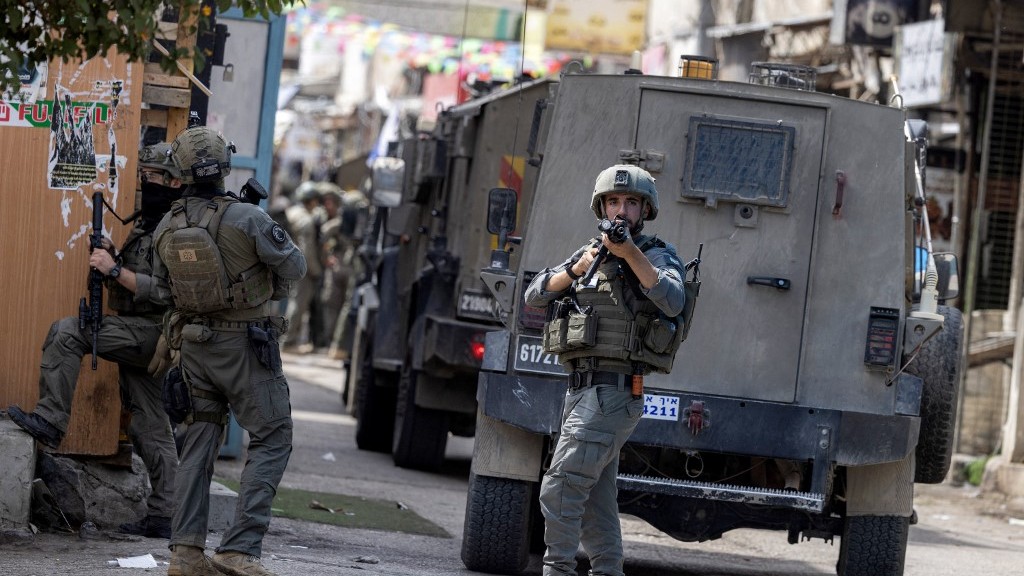
    In a move that has ignited fierce political and public controversy, the Israeli government has installed Yehuda Eliyahu, a West Bank settler and long-time close associate of far-right Religious Zionism leader Bezalel Smotrich, as the new director of the Israel Land Authority (ILA), the powerful state body that controls all national land allocation and management, including territory in the occupied West Bank.

    The appointment received formal approval from Prime Minister Benjamin Netanyahu on Monday, after advancing through a public appointments committee the previous week. The approval was not unanimous: the committee’s own legal adviser formally opposed the nomination, citing that Eliyahu’s decades-long personal and political ties to Smotrich create an unavoidable conflict of interest.

    Eliyahu brings a well-documented hardline record to the new role. Prior to taking this post, he led the Settlement Administration within Israel’s Ministry of Defense, a position where he oversaw what watchdog groups describe as the largest seizure of Palestinian land in the West Bank in modern Israeli history. Alongside Smotrich, he co-founded Regavim, an influential hardline nationalist group that frames its mission as protecting Israeli national land and resources. Originally focused on the West Bank, where the organization has repeatedly pushed to remove Palestinian communities from their land to expand Jewish settlements, Regavim has shifted its scope in recent years to target areas in the Negev and Galilee, regions where a large share of Israel’s Palestinian citizen population resides.

    The ILA is one of the most powerful administrative bodies in Israel, controlling roughly 92% of all state land—equaling approximately 20 million dunams of territory— and managing a multi-billion shekel annual budget. It dictates land allocation for residential housing, public infrastructure, and national development projects across the country, and holds direct authority over land management for Israeli settlements in the occupied West Bank.

    Supporters of the appointment have framed it as a critical strategic shift aligned with the current Netanyahu government’s core nationalist policy goals. Diaspora Affairs Minister Amichai Chikli, who has himself proposed a controversial large-scale land redistribution plan in the Negev that local Palestinian village leaders have decried as a “violent dispossession plan”, called the appointment as impactful as installing a new chief for the Shin Bet, Israel’s domestic intelligence agency. Chikli criticized what he called the ILA’s previous restrained stance on expanding Jewish settlement in the Galilee and Negev, saying he expects Eliyahu to pivot the agency’s policy to advance Jewish population growth in both regions—an explicit government goal designed to shift the demographic balance in favor of Jewish Israelis. Likud Knesset member Ariel Kallner, who chairs the parliamentary Galilee caucus, echoed that praise, highlighting Eliyahu’s work in the West Bank and claiming he “led a revolution” in cutting through bureaucratic barriers to expand settlement, and has long pushed for Jewish growth in northern Israel’s Galilee region.

    Critics, however, have denounced the appointment as a dangerous escalation of the government’s anti-Palestinian, ethno-nationalist agenda. Israeli NGO Kerem Navot, which monitors land policy and settlement expansion in the West Bank, documented that Eliyahu himself resides in an unauthorized West Bank settlement outpost, where Israeli forces and settlers block local Palestinian farmers from accessing and working their agricultural land. The group added that during Eliyahu’s tenure leading the Settlement Administration, he oversaw “the largest project of land dispossession and illegal construction since Israel’s 1967 occupation of the West Bank”, and charged that his entire public service career has been dedicated to violating Israeli law. In a harsh statement, Kerem Navot called the appointment further proof that the current Israeli government is “corrupt, racist, and lawbreaking”, with extreme destructive goals.

    Israel’s leading environmental umbrella group Life and Environment also condemned the nomination as inappropriate, warning it will deepen systemic discrimination against Palestinian citizens in southern Israel’s Negev, who already face widespread neglect and exclusion from planning and development processes.

    Eliyahu’s own public statements leave little doubt about his long-term policy aims. He has openly supported the full formal annexation of the occupied West Bank, and has previously stated the defense ministry was laying the groundwork for that move. He has also called for a full reoccupation of the Gaza Strip and the rebuilding of Israeli settlements there, advocating for an all-out war to “eliminate this evil” and claiming the entire Palestinian population of Gaza should be expelled “down to the very last one” to make way for Jewish settlements on what he calls Israel’s “ancestral land”.

    According to a report from Israeli financial daily Calcalist, legal challenges to the appointment are already in the works, with multiple petitions expected to be filed with Israel’s High Court of Justice in the coming days. The report notes that Eliyahu’s close ties to Smotrich and questions about his professional qualifications may limit his chances of keeping the senior post.

  • Road tax proposal could end fuel excise as EV uptake surges

    Road tax proposal could end fuel excise as EV uptake surges

    Australia’s electric vehicle market is seeing its fastest growth driven by middle-income families on the outskirts of the country’s largest cities, and a new progressive policy proposal aims to overhaul the nation’s road taxation system to replace the decades-old fuel excise, delivering thousands of dollars in annual savings for low-income motorists.

    Data from a new report released by progressive think tank the McKell Institute, backed by the Electric Vehicles Council, highlights a surprising trend in Australian EV adoption: outer suburban regions have posted explosive growth in new registrations, outpacing uptake among high-income households. Since 2021, annual EV registrations have jumped 119% in western Sydney, and grown an even more dramatic 125% in Melbourne’s west. Contrary to common assumptions that EV uptake is led exclusively by wealthy buyers, the report confirms middle-income earners are accelerating adoption faster than the top income brackets.

    To address the growing gap in road tax revenue as more drivers switch to EVs, which currently do not contribute to fuel excise that funds road maintenance, the McKell Institute has put forward a bold long-term plan to phase out the fuel excise entirely and replace it with a national, progressive road user charging system tied directly to driver income.

    Under the proposed model, the per-kilometre charge would be adjusted across four income bands to protect lower-earning road users. Drivers in the lowest income bracket would pay just 3.74 cents per kilometre, working out to an average annual road tax bill of roughly $444. By comparison, highest-income earners would pay 12.88 cents per kilometre, totaling an average of $1,531 per year. Lower-income motorists and concession card holders would be automatically enrolled in the reduced rate, with charge adjustments handled through existing individual tax return systems to avoid administrative complexity.

    McKell Institute chief executive Edward Cavanough explained that the plan relies on built-in road usage tracking technology that will become standard in new vehicles over time, particularly as EV adoption grows. Once EVs make up 30% of Australia’s national light vehicle fleet, they would be integrated into the new charging system, creating a path to fully eliminate the fuel excise over the coming decades.

    “Over time, if our model is adopted, more and more vehicles will include this tracking technology and fall under this taxation framework,” Cavanough said. “This transition will eventually allow us to phase out the fuel excise entirely.” Cavanough noted that full elimination of the fuel excise, which stood at 48.2 cents per litre before a temporary cut during the 2022 global fuel crisis, would likely take around 20 years to complete. In the interim, the new system would protect vulnerable motorists from the wild price volatility that has shaken global fuel markets in recent years, he added.

    “Lower-income earners are the most exposed to swings in petrol prices,” Cavanough said. “We want to move away from a system that exposes everyday drivers to this kind of unpredictable pricing at the bowser. This model creates a far more predictable tax revenue stream for governments, and gives drivers clear visibility into exactly how much road tax they are paying each year, based on how much they actually drive.”

    The think tank has also proposed an alternative simpler model, which would introduce a flat $600 annual charge for all light vehicles regardless of fuel type starting in 2031, a policy that McKell estimates would generate roughly $12 billion in annual revenue for road maintenance.

    The proposal comes as state governments have begun rolling out their own standalone EV road user charging policies, a move the McKell Institute and Electric Vehicles Council have criticized as disjointed and counterproductive to Australia’s EV transition targets. New South Wales has already legislated to introduce an EV road user charge starting July 1, 2027 – or when EV uptake hits 30% of the state’s fleet – which will set a flat rate of 2.97 cents per kilometre for EV drivers. Cavanough argues that this state-by-state approach creates a messy patchwork of tax rules, and that a coordinated national system is the only sustainable long-term solution.

    “This is not the best path forward,” Cavanough said of the NSW plan. “State governments are correct to identify declining fuel excise revenue from growing EV uptake as a major fiscal problem, but we need a coordinated national approach to build a universal system, not a hodgepodge of inconsistent state tax rules.”

    Electric Vehicles Council chief executive Julie Delvecchio added that the flat NSW EV charge risks discouraging the outer suburban working families who are currently driving EV growth from making the switch, trapping them in higher ongoing petrol costs. “Working households in outer Sydney who are switching to EVs are doing so to cut their monthly household costs after seeing how much they spend on petrol,” Delvecchio said. “This EV-specific tax will shut the door on those families in Parramatta and Penrith who are trying to reduce their cost of living.”

    NSW Premier Chris Minns has defended the state’s policy, framing it as an unavoidable step toward long-term tax reform to protect funding for critical road infrastructure. “I know this is a difficult truth, but as EV use continues to grow – and it will only grow, not decline – falling fuel excise revenue will put enormous pressure on our ability to fund road repairs,” Minns said. “Anyone who drives around Sydney right now can see our roads are full of potholes that need fixing, and we have relied on fuel excise to fund that maintenance for generations. We need a new source of revenue to keep our road network in good repair.”