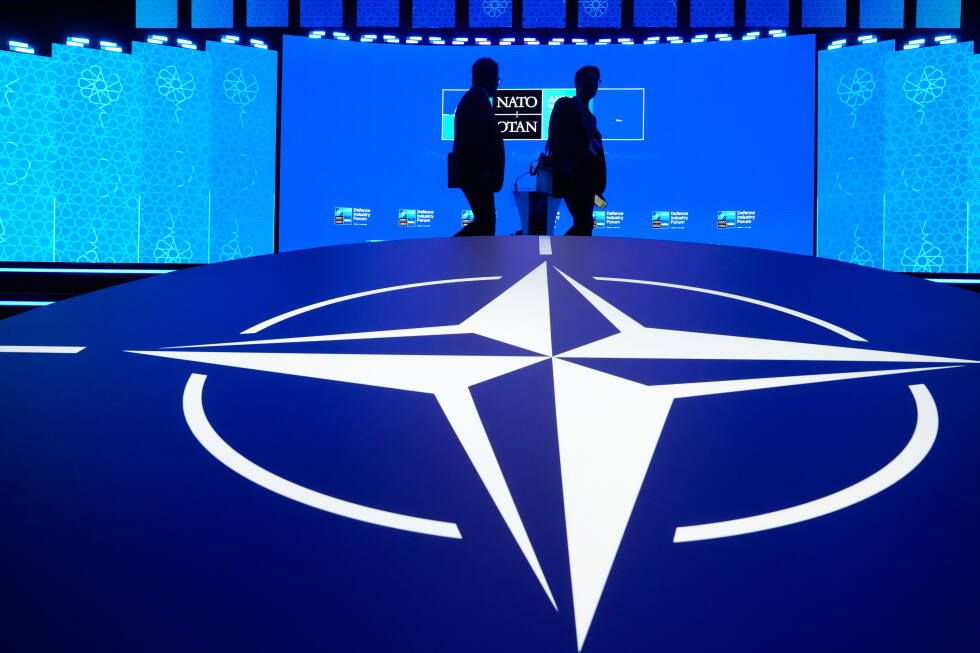
On the eve of a critical NATO summit in Ankara, Turkey, a sudden announcement from U.S. President Donald Trump upended months of careful planning by alliance leaders, throwing a gathering meant to celebrate rising defense spending and unified support for Ukraine into geopolitical chaos. Late Tuesday, not long after leaving a welcoming dinner hosted by Turkish President Recep Tayyip Erdogan for all 32 NATO member leaders, Trump ordered a new round of military strikes against Iran and revoked the export license that allowed Tehran to sell its crude oil on global markets. The U.S. action came in retaliation for recent attacks that damaged three commercial merchant vessels in the strategic Strait of Hormuz, and it immediately highlighted the extreme fragility of a temporary ceasefire deal that had paused months of open conflict between Washington and Tehran.
Unusual for a sitting U.S. president, Trump authorized the military action while traveling abroad; the only recent precedent came in 2011, when former President Barack Obama approved Libya strikes during an official visit to Brazil. Trump did not issue any direct public statement on the strikes on Tuesday night, but the move was not entirely unforeseen: European NATO allies and Canada had spent weeks warning that Trump could suddenly escalate tensions over the ongoing U.S.-Iran conflict, a conflict they were never consulted on before it began.
Relations between Trump and many alliance members have already been strained by his past criticism of NATO’s Iran policy. When several allies refused to grant U.S. forces open access to their military bases for operations against Iran, Trump publicly called NATO a “paper tiger” and demanded unwavering loyalty from member states. Speaking during a bilateral meeting with Erdogan earlier Tuesday, Trump doubled down on that critique, confirming his public questioning of ally commitments. “Italy turned us down and Germany turned us down and France turned us down,” he said. “And that’s OK. But, you know, why are we spending hundreds of billions of dollars and they’re not there for us?” Trump added that his request for base access had been a test of alliance solidarity, a remark that deepened unease among participating leaders.
The summit was originally structured to showcase NATO unity at a moment of heightened global risk, as Russia continues its full-scale invasion of Ukraine and fears grow that other European nations could face future aggression. To pre-empt Trump’s long-standing complaints that the U.S. carries an unfair share of NATO’s defense burden, alliance leadership had worked for weeks to frame progress on spending as a win for the U.S. president. Last month, NATO Secretary-General Mark Rutte traveled to Washington D.C. to promote what he called the “Trump Trillion” — the $1.2 trillion in additional defense spending that European allies and Canada have committed to since Trump first took office in 2017. As leaders arrived in Ankara, Rutte even hosted a public event to highlight planned spending projects, a large share of which will go to U.S. defense contractors, generating thousands of American jobs in the process.
Despite these outreach efforts, NATO diplomats and officials acknowledge they remain bracing for new public criticism from Trump. Tensions rose even before the summit opened when Trump reopened a long-simmering dispute with Denmark, a core NATO ally, repeating his claim that the U.S. should take control of Greenland, the semiautonomous Danish island. The remark struck at the heart of NATO’s founding principle, which is based on mutual respect for member state territory and collective defense against external aggression.
Trump’s core grievance against NATO remains his argument that the U.S. bears too much of the alliance’s defense cost. Last year’s summit saw allies agree to a new target of investing 5% of total gross domestic product in defense-related spending: 3.5% for formal defense budgets, and 1.5% for upgrading critical infrastructure including roads, bridges, and ports to enable rapid movement of troops and equipment during a crisis. Ahead of this year’s gathering, Rutte demanded all member states submit detailed, credible plans to meet the new spending targets. New NATO data released Tuesday shows that Slovenia, Belgium, Spain, and the Czech Republic are already at risk of pushback from the Trump administration, as they continue to fall short of the alliance’s original 2% of GDP defense spending target.
The Trump administration is pushing for a restructuring of the alliance it calls “NATO 3.0,” a leaner, more combat-ready framework where European states take full responsibility for their own conventional security, including support for Ukraine’s war effort, while the U.S. continues to provide its nuclear deterrent umbrella. European allies and Canada still lack clarity, however, on how large a drawdown of U.S. troop deployments in Europe Trump intends to carry out. The Pentagon has launched a six-month review of U.S. force presence on the continent, and the scale of any cuts will reportedly depend on how quickly allies increase their spending and whether they agree to expand U.S. access to their military bases.
Alongside the tensions over Iran and spending, the summit has also drawn attention to Ukraine’s ongoing push for NATO membership. Ukrainian President Volodymyr Zelenskyy, who is scheduled to meet one-on-one with Trump in Ankara on Wednesday, issued a renewed appeal for membership on Tuesday, arguing that Ukraine’s battle-tested armed forces would add significant strength to the alliance. Zelenskyy highlighted Ukraine’s operational capabilities, including its ability to strike deep inside Russian territory and target key Russian energy infrastructure such as oil refineries, claiming that Ukrainian forces eliminate roughly 30,000 Russian troops on average each month. Many NATO members in northern, central, and eastern Europe share growing concern that Russian President Vladimir Putin, bogged down and unable to secure a decisive victory in Ukraine, could launch a large-scale hybrid attack combining conventional military action with cyber and disinformation tactics across the European continent.
Beyond NATO business and the Iran escalation, Trump has a full schedule of bilateral meetings on the summit’s sidelines. He is set to hold talks with Syrian President Ahmad al-Sharaa, the former insurgent leader whose offensive ousted long-time autocrat Bashar al-Assad in December 2024. Despite al-Sharaa’s past ties to al-Qaida, Trump has already publicly backed the new Syrian leader as he works to rebuild the war-ravaged country and restore diplomatic relations with Western nations. Trump has repeatedly claimed that al-Sharaa would be more effective at rooting out the Iran-aligned militia Hezbollah from Lebanon than the Israeli military, a remark that has sparked deep alarm in both Lebanon and Israel. Al-Sharaa has repeatedly rejected that claim, saying he has no interest in conducting such an operation.