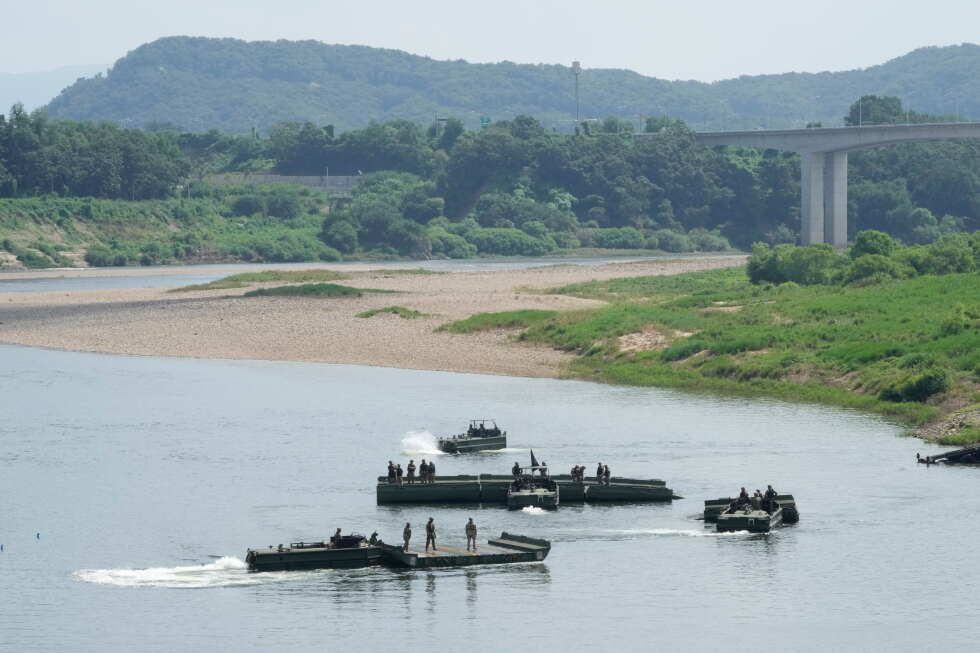
In a move that has sent ripples through Northeast Asian security dynamics, South Korean government officials confirmed Wednesday that the joint military exercises between South Korean and United States forces will be cut short, a change implemented at Washington’s formal request. This adjustment comes just days after former U.S. President Donald Trump issued a directive to downsize the long-planned drills.
The annual Ulchi Freedom Shield summer drills kicked off on Monday morning, originally scheduled to run for 11 days through August 27. The drills were already slated for adjustment immediately after Trump ordered the U.S. Secretary of Defense to enact “substantial” cuts to the exercise program. In explaining his decision, Trump pointed to two key factors: what he described as a productive, positive personal relationship with North Korean leader Kim Jong Un, and South Korea’s decision not to participate in the U.S.-led military conflict against Iran.
In an official statement released this week, South Korea’s defense command confirmed that the ongoing combined exercises will now wrap up on Friday, a significant reduction from the original timeline. Beyond cutting the overall length of the main drills, the two allied nations have also reached an agreement to scale back the scope of several joint field training components that were part of the scheduled exercise package.
The sudden downsizing of the exercises has drawn sharp scrutiny from defense analysts across the globe. A large number of regional security experts have warned that Trump’s last-minute order risks eroding the combined combat readiness that U.S. and South Korean forces have built up through decades of regular joint training. In the long term, they argue, repeated adjustments of this nature could weaken the foundation of the bilateral security alliance that has anchored Northeast Asian security for over 60 years.
As of Wednesday, North Korean officials had not issued a direct public response to Trump’s decision to scale back the drills. However, earlier the same day, the country’s official state news agency released a strongly worded denunciation of the U.S.-South Korean exercise as a whole, labeling the drills “frantic” and “extremely dangerous.” The statement included a formal vow that North Korea would work to completely thwart what it called the hostile actions of its regional rivals.