分类: politics

  • G7 finance chiefs meet to seek common stance on unstable ground

    G7 finance chiefs meet to seek common stance on unstable ground

    Against a backdrop of escalating geopolitical tension, global economic volatility, and ongoing conflict in the Middle East, top finance officials from the Group of Seven major industrialized nations kicked off two days of closed-door negotiations in Paris on Monday. The core goal of the summit, hosted by France in its term as rotating G7 president, is to build a coordinated collective stance amid a landscape of overlapping economic and political risks that have put global growth projections on shaky ground.

    Even before the first session convened, French Finance Minister Roland Lescure publicly acknowledged the significant challenges facing negotiators, admitting candidly that reaching full consensus across all topics would not be a simple task. The gathering comes at a moment of unprecedented friction, with trade disputes triggered by U.S. President Donald Trump’s aggressive tariff policies amplifying existing geopolitical divides, alongside the economic shockwaves rippling out from the Middle East conflict.

    One of the highest-priority items on the meeting agenda is a coordinated push to reduce the G7’s collective reliance on China’s dominant position in global rare earth supplies, a critical input for the artificial intelligence boom that has driven much of advanced economy growth in recent years. Lescure outlined his view that the current trajectory of the global economy, shaped over the past decade, is no longer structurally sustainable. He highlighted a series of interconnected threats: the rapidly expanding U.S. federal budget deficit, stagnant technological progress across European economies, and China’s efforts to counter falling domestic consumer demand and persistent industrial overcapacity by pushing its domestic firms to increase their market share in international export markets.

    “Multilateralism can work,” Lescure told reporters ahead of the summit, “but these discussions are not easy — I’m not going to tell you that we agree on everything, including obviously with our American friends.” Trump’s combative, transactional approach to international relations with both allies and adversaries has left many G7 leaders uneasy, as they simultaneously grapple with dual threats of stagnant growth and persistent elevated inflation fueled by the Middle East war.

    German Finance Minister Lars Klingbeil emphasized that the G7 serves as the ideal forum for discussions with the U.S. focused on bringing the conflict to an end, noting that the war has inflicted severe damage on global economic development. “This war is massively damaging economic development. That is why everything must be done to bring the war to a permanent end, to stabilise the region again, and to ensure free shipping lanes through the Strait of Hormuz,” Klingbeil said in a pre-summit statement. The G7 finance chiefs are scheduled to wrap up their talks with a closing press conference at midday on Tuesday.

    For the French presidency, even a collective shared recognition of the core challenges on the table would be counted as a major success. Officials aim to release two joint statements following the conclusion of negotiations. To set the stage for the full G7 heads of state summit scheduled for June 15-17 in Evian, France, finance ministers from four major emerging and advanced economies — Kenya, Brazil, India, and South Korea — have been invited to join Tuesday’s discussions.

    The meeting comes just days after Trump’s high-profile trip to Beijing for talks with Chinese President Xi Jinping failed to deliver a clear breakthrough on two critical issues: rolling back U.S.-China tariffs and advancing progress on ending the Middle East conflict. In recent years, China has expanded its economic influence across regions traditionally aligned with G7 powers, and as a key global supplier of both critical raw materials and low-cost finished goods, it has become increasingly willing to take hardline stances in trade negotiations.

    Pierre Jaillet, a senior researcher at France’s Institute for International and Strategic Affairs (IRIS), explained that the G7’s approach to global economic imbalances has shifted dramatically in recent years. “Up to now, the problem of macroeconomic imbalances was addressed… with regards to global financial stability,” Jaillet told AFP. “But now officials are looking through the optic of economic security: trade surpluses or deficits can reflect vulnerabilities or dependencies, in particular with critical minerals or energy, and the risk of supply chain disruptions.”

    While Lescure avoided publicly naming China, he made the G7’s goal clear: “The G7 goal is to ‘ensure that we don’t depend on any one country… for our rare earth supplies.” Beyond critical minerals, energy security has moved to the top of the agenda as well, driven by the ongoing conflict in the oil-rich Middle East. Lescure framed the current challenge as parallel to the global energy crisis of the 1970s, saying “We must do for critical materials what we did with energy in the 1970s,” and build a shared framework to respond to future crises.

    To address these risks, the French presidency is pushing for the creation of a “common toolbox” that member states can use to counter market disruptions affecting key raw material supplies. Proposed measures include targeted strategic trade agreements, and interventionist policy tools such as price floors, import quotas, and targeted tariffs. France is also seeking to promote multilateral collaborative projects to build out domestic rare earth extraction and refining capacity across G7 nations. A key example currently underway is a joint French-Japanese factory under construction in southwest France that will produce and recycle rare earths, magnets, and other critical minerals. The French state has already committed 106 million euros ($124 million) to the project, which is on track to meet 100 percent of France’s domestic rare earth demand by 2030. Leveraging public development finance to secure agreements in developing countries that encourage private sector investment in critical mineral supply chains is another core policy path on the table, Lescure added.

  • Israel expands death penalty regime in the occupied West Bank

    Israel expands death penalty regime in the occupied West Bank

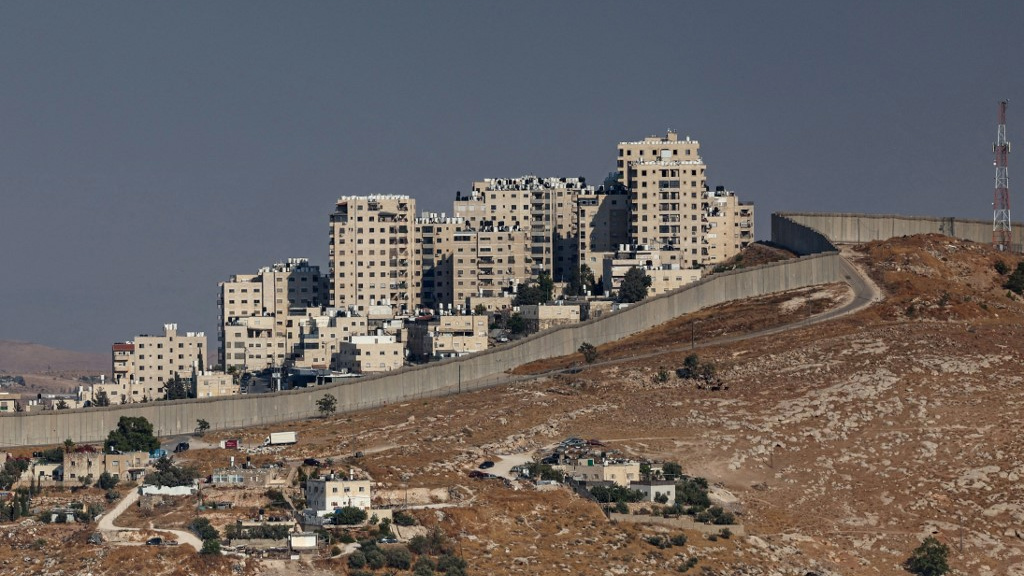
    On Sunday, Israel formally activated a controversial new law that mandates the death penalty as the default sentence for Palestinians convicted of killing Israelis in the occupied West Bank, following the signing of a required military order by Central Command Major General Avi Bluth.

    Under the terms of the new regulation, Israeli military courts — the only judicial bodies with jurisdiction over Palestinian residents of the West Bank — are required to hand down death sentences to Palestinians found guilty of murdering Israeli occupation soldiers or civilians. Life imprisonment can only be applied in rare, explicitly defined exceptional circumstances, shifting the entire sentencing framework to favor capital punishment as the standard outcome.

    First approved by Israeli lawmakers in March, the legislation codifies a dual-track legal system that operates exclusively along identity lines in the occupied territory. Israeli citizens and permanent residents living in West Bank settlements fall under the jurisdiction of Israeli civilian courts, and are thus entirely exempt from the new law’s provisions. This separation reinforces a longstanding legal structure that has been widely labeled by human rights groups as an apartheid system.

    The law’s wording further expands its reach to target acts of Palestinian resistance to occupation: one of the criteria for applying the death penalty requires only that the convicted person’s act was intended to “negate the existence of the State of Israel or the authority of the military commander in the area” — a broad standard that human rights advocates say overwhelmingly criminalizes Palestinians opposing Israeli occupation.

    Top Israeli officials have welcomed the activation of the measure, framing it as a critical tool to counter Palestinian resistance. National Security Minister Itamar Ben Gvir, leader of the far-right Jewish Power party, celebrated the order as a campaign promise fulfilled. “We promised and we fulfilled,” Ben Gvir said, adding, “we do not capitulate or contain murderous terrorism, we defeat it.” Israeli Defence Minister Israel Katz also endorsed the move.

    The new law has sparked fierce condemnation from Palestinian, Israeli, and international human rights organizations, which warn it formalizes systematic discrimination against Palestinians and erases what remains of their basic legal protections. Critics say the policy deepens the already entrenched apartheid-style dual legal regime in the West Bank, where two separate populations live side by side under entirely separate systems of justice.

    Multiple human rights groups have labeled the move a dangerous escalation of Israeli repressive policy in the occupied territories, pointing to a sharp surge in mass arrests of Palestinians on broad, vague security charges in recent months. Since the intensification of Israel’s military campaign in Gaza, rights monitors have also documented a steep rise in reports of torture, abuse, and deaths of Palestinian detainees in Israeli custody.

    Palestinian prisoners’ rights organizations have described the legislation as an “unprecedented act of savagery,” accusing Israel of codifying state violence against detainees at a time when conditions for Palestinian prisoners have deteriorated dramatically. Even leading Israeli human rights advocacy groups, including Adalah, the Public Committee Against Torture in Israel, HaMoked, and Physicians for Human Rights-Israel, have joined the condemnation, warning the law creates a deliberately “discriminatory punitive framework” that denies Palestinians equal protection under the law and removes legal safeguards against abuse.

  • No new funding under Albanese’s affordable housing scheme in 2026-27, inquiry told

    No new funding under Albanese’s affordable housing scheme in 2026-27, inquiry told

    Australia’s deepening national housing affordability crisis has hit a new stumbling block, with the Albanese government’s cornerstone social and affordable housing initiative falling well behind its initial delivery timeline, a recent Senate inquiry has heard.

    Launched as a signature policy to address growing intergenerational housing inequality, the $10 billion Housing Australia Future Fund (HAFF) was designed to deliver 40,000 new social and affordable homes over five years starting in 2022, with completion targeted by mid-2029. The fund operates as a dedicated investment vehicle, issuing grants and low-interest loans to community housing providers and developers to deliver housing accessible to low-income and vulnerable households.

    Scott Langford, chief executive of Housing Australia, the government body overseeing the scheme, outlined the latest delivery progress to the Senate inquiry on Monday. As of the latest update, only 1,432 homes across the country have been completed – just over 3.5% of the total 40,000 target. Of those finished homes, 979 were completed in the current 2025-26 financial year, and 670 were classified as turnkey projects, where developers complete construction before handover to funding recipients. Langford confirmed that the agency does not directly purchase existing homes, but he was unable to immediately provide a breakdown of how many completed units were refurbished existing properties rather than entirely new builds, saying he would release full data at a later date.

    The most significant delay confirmed during the hearing involves the third round of HAFF funding, which opened for applications from industry and community groups in January this year. Langford told the inquiry that contracting for this round of funding has “slipped” from its original timeline, with contracts no longer expected to be finalized before the end of the current financial year. Despite the delay, Langford emphasized that all funding for round 3 will be fully allocated by the 2026-27 financial year, adding that the extended timeline will actually give the agency more time to assess proposals and ensure projects have sufficient runway for delivery.

    When pressed on whether the delay would put the overall 40,000-home target at risk, Langford maintained that Housing Australia remains fully committed to hitting the target by 2029. “We are coming towards the end of the second year of a five-year delivery window, and with funding commitments to be made in the second half of this financial year, we see a clear pathway to completion of all those projects,” he said, noting that the delay would not have a material impact on overall delivery and is actually a suitable adjustment to keep the project on track. To date, funding has already been contracted for 18,650 homes across the first two rounds of the scheme.

    The latest update on HAFF comes as Australia faces intensifying public and political pressure to tackle the country’s decade-long housing affordability crisis, which has pushed home ownership far out of reach for millions of would-be buyers and driven record rental prices. The Albanese government has positioned HAFF as its core policy to boost housing supply, and recently expanded its housing agenda with new proposed reforms to capital gains tax (CGT) and negative gearing, aimed at curbing excessive investor activity and freeing up more stock for first-home buyers.

    The conservative Coalition opposition has taken a sharply different approach to the housing crisis, promising to scrap both the planned CGT and negative gearing reforms and abolish the HAFF entirely if elected. Instead, the opposition has proposed cutting planning red tape to speed up construction and adjusting migration intake levels to be tied directly to the number of new housing completions each year.

    Advocacy groups have offered mixed reactions to the government’s recent policy changes. Maiy Azize, national spokesperson for the housing campaign group Everybody’s Home, told the inquiry that her organization is broadly supportive of the proposed CGT and negative gearing changes. She noted that the reforms are not retrospective, a key win for policy stability, but added that they do not grandfather new investments, which will help deliver long-term change to the market. Azize described CGT reform as the most impactful of the proposed changes, but raised questions about whether the adjustments will be enough to shift investor behaviour after 25 years of the existing policy framework becoming entrenched in Australia’s property market. “There is a strong case to be made for doing more on negative gearing,” Azize said, pointing out that the current changes heavily protect existing investors and leave room for further reform to free up more housing stock for owner-occupiers.

  • Taiwan will not provoke conflict nor give up sovereignty, says president

    Taiwan will not provoke conflict nor give up sovereignty, says president

    Following the high-profile summit between U.S. President Donald Trump and Chinese leader Xi Jinping that centered heavily on cross-Strait tensions, Taiwan’s leader Lai Ching-te has issued his first public direct response, laying out the island’s stance while emphasizing the critical need for the United States to maintain its longstanding arms sales policy to Taiwan.

    During the meeting, Chinese state media reported that Xi framed the Taiwan issue—where Beijing claims the self-governing democratic island as an inalienable part of its territory—as the single most consequential matter in bilateral U.S.-China ties. Xi warned that mishandling the question of Taiwan could open the door to direct conflict between the two major global powers. After wrapping up his trip to Beijing, Trump made his own position clear in an interview with Fox News, stating he did not support any move toward formal Taiwan independence, while adding that U.S. policy toward the island had not shifted, and he had no intention of provoking a confrontation with Beijing. Trump also noted that Xi held deeply entrenched views on the Taiwan issue, but he had made no binding commitments to China on the matter during their talks.

    For years, under the administrations of Lai Ching-te and his predecessor Tsai Ing-wen, Taiwan’s government has held the position that no formal declaration of independence is necessary, as the island already considers itself a sovereign nation. Lai reiterated this long-held stance in a public post on his Facebook page, his first direct public comment following the Trump-Xi summit. He wrote, “Taiwan, the Republic of China, is a sovereign and independent democratic country,” and added that “Taiwan’s future must follow the will of all the Taiwanese people.” Public opinion data consistently shows that a majority of Taiwan’s residents identify as citizens of a sovereign nation, though most also support maintaining the current cross-Strait status quo: rejecting both immediate unification with China and an official formal declaration of independence.

    Beijing has repeatedly condemned Lai, labeling him a dangerous “troublemaker” and a threat to cross-Strait peace. In his Facebook post, Lai pushed back against these characterizations, emphasizing that Taiwan has no intention of initiating aggression or escalating tensions. “Taiwan will not provoke, will not escalate conflict, but will not under pressure give up national sovereignty and dignity, as well as the democratic and free way of life,” he wrote. He further clarified that Taiwan is a committed defender of the existing cross-Strait status quo, not a party seeking to unilaterally alter the current arrangement. Lai added that Taiwan is open to holding healthy, structured exchanges and dialogue with Beijing, as long as those talks take place on the basis of equal dignity and mutual respect. However, he firmly rejected Beijing’s practice of framing dialogue under the precondition of “unification” as a pretext to coerce Taiwan into accepting its terms.

    This position echoes an earlier statement from Lai’s presidential spokesperson, who affirmed that it is self-evident Taiwan is a sovereign, independent democratic nation, and the government remains dedicated to upholding the cross-Strait status quo. For its part, Beijing has consistently stated it prefers peaceful reunification with Taiwan, but has never formally ruled out the use of military force to bring the island under its control. In recent years, Beijing has ramped up military pressure on Taiwan, conducting regular large-scale military drills—including simulated blockades of the island—around Taiwan’s territorial waters and airspace.

    For more than four decades, the United States has supplied defensive arms to Taiwan under the terms of the Taiwan Relations Act, a U.S. law that requires the U.S. to provide Taiwan with the means to defend itself against potential aggression. The U.S. remains Taiwan’s most powerful international ally and its largest supplier of military equipment. In December prior to the summit, the Trump administration approved a massive $11 billion arms package for Taiwan, one of the largest single arms deals in the history of U.S.-Taiwan relations. That approval drew sharp condemnation from Beijing, which has long opposed all U.S. arms sales to the island.

    After leaving Beijing, Trump told reporters aboard Air Force One that he had discussed the proposed arms sale in great depth with Xi, and would make a final decision on whether to move forward with the transaction later. When pressed on the longstanding 1982 U.S. commitment that it would not consult Beijing on arms sales decisions to Taiwan, Trump dismissed the commitment, noting the 1980s were “a long time ago.”

    Over the weekend following the summit, Lai expressed gratitude to Trump for his continued support for peace across the Taiwan Strait, and reaffirmed that sustained U.S. arms sales are non-negotiable for regional stability. “Given that China has never given up the use of force to annex Taiwan and continues to expand its military power to try to change the regional and cross-strait status quo, America’s continued sale of arms to Taiwan and deeper U.S.-Taiwan security cooperation is necessary and a key factor in maintaining regional peace and stability,” Lai wrote.

  • Treasurer orders investors dump shares of WA rare earths miner over Chinese control fears

    Treasurer orders investors dump shares of WA rare earths miner over Chinese control fears

    Australian Treasurer Jim Chalmers has issued binding divestment orders compelling six investors linked to China to sell their entire 17.5% stake in Northern Minerals, the ASX-listed developer of a strategically critical rare earths project in remote Western Australia, over national security and foreign investment rule compliance concerns. The forced sale, which impacts nearly 1.68 billion shares valued at around AU$40.4 million, marks the latest escalation in a months-long regulatory battle over control of the Browns Range project, which is set to produce heavy rare earth elements critical to global semiconductor manufacturing, defense supply chains, and clean energy technologies. The investors subject to the orders include three companies registered in Beijing, Hong Kong, and the British Virgin Islands, as well as two individual Chinese citizens, all of whom have been given a 14-day deadline to complete the full divestment of their holdings. In a public statement released Monday, Chalmers emphasized that Australia maintains a rigorous, even-handed foreign investment regulatory framework designed to protect core national interests. “We operate a robust and non-discriminatory foreign investment framework and will take further action if required to protect our national interest in relation to this matter,” Chalmers said. Northern Minerals, which has already received full regulatory approval to bring the Browns Range mine into production, paused trading on the Australian Securities Exchange shortly before market open on Monday before publishing full details of the divestment orders in an official filing an hour later. When operational, the project will produce two of the most strategically vital heavy rare earths globally: dysprosium, where China controls roughly 60% of total global supply, and terbium, where China dominates approximately 90% of global refining capacity. Both elements are irreplaceable components in high-strength permanent magnets used for everything from electric vehicle motors to advanced defense weapons systems. Breakdown of the required divestments, as outlined in Northern Minerals’ ASX filing, shows the largest single stake to be sold is the 619 million shares held by British Virgin Islands-registered Real International Resources, which accumulated the holding between 2023 and early 2025. Hong Kong-based Qogir Trading and Service Co. is ordered to offload 523.5 million shares, while Beijing-registered Vastness Investment Group and Chinese national Chuanyou Cong have each been directed to sell 130 million shares. Hong Kong’s Ying Tak must dispose of 93 million shares it acquired last November, and a second Chinese national, Zhongxiong Lin, has to sell 39.8 million shares. This latest action builds on prior regulatory enforcement against non-compliant foreign investors in the project. Back in June 2025, Chalmers took two other investors to the Federal Court of Australia over alleged breaches of the country’s Foreign Acquisitions and Takeovers Act. One of those entities, Indian Ocean International Shipping and Service Company, and its sole director, Chinese national Jing Tian, had already been ordered to divest their Northern Minerals stake a year prior, but failed to comply. The Federal Court ultimately imposed a combined AU$14 million fine for the violation, one of the largest penalties ever issued for foreign investment non-compliance in Australia. Vastness Investment Group, which already holds a 7.7% stake in Northern Minerals, escalated tensions earlier this year when it called for an extraordinary general meeting to vote on the removal of independent director Adam Handley. The legality of that move has been contested in court, with a ruling requiring the meeting to be held no later than June 30, 2025. The ongoing regulatory dispute dates back to 2024, when Chalmers issued his first round of divestment orders covering 613 million Northern Minerals shares. In April 2025, Northern Minerals disclosed to the ASX that roughly 60% of those ordered shares had been transferred to Ying Tak, prompting Chalmers to immediately issue a separate order barring the company from recognizing Ying Tak’s voting rights on any of its holdings.

  • White House mass prayer event seeks to reclaim US Christian roots

    White House mass prayer event seeks to reclaim US Christian roots

    On a Sunday on Washington’s National Mall, thousands of conservative Christian supporters gathered for a high-profile mass prayer rally organized by the Trump White House, kicking off a controversial event tied to the United States’ 250th anniversary celebrations that has reignited fierce national debate over the intersection of faith and government. The gathering was framed by organizers as a mission to revive what they frame as the nation’s forgotten founding principles rooted in Christianity, but critics immediately decried it as a blatant embrace of Christian nationalism that erodes the constitutional separation of church and state.

    The day-long outdoor event featured a lineup of political leaders and prominent evangelical figures, mixing religious worship with overt political messaging. Attendees filled the open green space of the Mall, singing contemporary Christian hymns and listening to a series of addresses from both pastors and top Trump administration officials. Vice President JD Vance and Defense Secretary Pete Hegseth delivered pre-recorded video remarks to the assembled crowd, while former and current President Donald Trump made a brief video appearance, reading a well-known biblical passage promising divine healing for nations that turn to God. House Speaker Mike Johnson opened the event with a prayer targeting what he called “sinister ideologies” spreading across the country, arguing that the nation’s core moral and spiritual identity had come under sustained attack. “We’ve witnessed attacks on our history, on our heroes and the cherished moral and spiritual identity of this great nation,” Johnson told the gathering. “We turn to you once again to save us from these afflictions.”

    The event comes as muscular Christian nationalism – an ideology that binds American national identity explicitly to Christian faith – has gained unprecedented access to power following Trump’s return to the presidency, with white evangelical voters remaining one of the president’s most loyal and vocal base of support. Hegseth, one of the most high-profile evangelical figures in the cabinet, is a member of an ultra-conservative evangelical congregation and has drawn attention for framing ongoing U.S. conflicts including the Iran war through bellicose religious rhetoric. Speaking to the crowd, Virginia pastor Gary Hamrick doubled down on this framing, framing the moment as an existential spiritual conflict for the nation’s future. “Today, friends, we are in a spiritual war,” Hamrick said. “This is a battle for the very soul of America.”

    The U.S. Constitution’s First Amendment explicitly prohibits the federal government from establishing an official national religion, while also guaranteeing the free exercise of all religious beliefs, a balance that has been at the center of debate around the event. Ahead of the rally, Johnson pushed back against critics during an appearance on Fox News Sunday, arguing that the term “Christian nationalism” is nothing more than a pejorative label invented by opponents seeking to censor Christian voices in public life. For many attendees who traveled from across the country to attend the rally, the event was a long-overdue correction to what they see as decades of declining religious influence in American public life. Jeana Dobbins, a 67-year-old retiree who made the trip from North Carolina, told Agence France-Presse she came to “rededicate our country back to God. Our country has fallen away in so many areas.” Sarah Tyson, who traveled from New York with a church group and held a hand-painted “Jesus Saves” sign, echoed that sentiment, saying she believes Trump was divinely chosen to lead a national spiritual revival. “God ordained him for a time like this, because these United States needs to wake up,” Tyson said.

    While every modern U.S. administration has hosted or attended faith-based gatherings to mark national holidays or moments of national significance, Sunday’s event stands out for its massive scale and the direct involvement of nearly the entire top tier of the Trump administration. Of the 20 scheduled “faith leader” speakers, nearly all were evangelical Protestant, with only a single rabbi and one retired Catholic archbishop included on the roster. Religious studies scholars note that while blending conservative Christianity and nationalist rhetoric is not a new tactic in American politics, the scope of official government backing for the event marks a significant shift.

    “It’s not unprecedented to have a group of evangelical pastors or conservative clergy come together for something like this and blend a certain kind of nationalism with a certain kind of conservative Christianity,” said Sam Perry, a professor at Baylor University, a prominent Christian higher education institution in Texas. But “the Trump administration taking the lead on this celebration at this scale is different than previous events,” Perry added. Julie Ingersoll, a professor of religious studies at the University of North Florida, argued that the narrow lineup of speakers reveals an underlying vision of American identity that excludes non-Christians and people of color. While the event’s official website claims it welcomes “Americans of every background,” Ingersoll said the speaker list reflects “an idea of American identity that is rooted in whiteness and Christianity.” The event, she added, “sends a specific message… that they are the mainstream Americans, and the rest of us are sidelined.”

    The rally took place on the National Mall, the iconic stretch of federal parkland between the U.S. Capitol and the Lincoln Memorial that has hosted decades of defining mass gatherings for American democracy, most notably the 1963 March on Washington for Jobs and Freedom, where 250,000 people gathered to hear Martin Luther King Jr. deliver his historic “I Have a Dream” speech.

  • From escaping child marriage ‘to an old pervert’ to becoming Sierra Leone’s first lady

    From escaping child marriage ‘to an old pervert’ to becoming Sierra Leone’s first lady

    Against the backdrop of decades of civil conflict, public health crises, and persistent economic inequality in Sierra Leone, one woman has risen to become the country’s most debated public figure: Fatima Bio, the wife of President Julius Bio. Her life story is one of extraordinary escape, reinvention, and unapologetic activism that has split public opinion, turning her into both a beacon of women’s empowerment and a lightning rod for political criticism.

    Fatima Bio’s fight for gender equality began long before she entered the presidential residence. Born to a diamond miner in Kano district, she was just 13 when her father arranged her marriage to a man in his 30s, a family acquaintance she had grown up knowing as an uncle. “There was no discussion. It was decided,” she recalls of the forced union. It was only the chaos of Sierra Leone’s 1996 civil war that created a window for her to escape, with help from relatives, and flee to the United Kingdom to claim asylum.

    She arrived at London’s Gatwick Airport on Christmas Eve, clad only in a thin T-shirt, shocked by the biting British cold but overwhelmed with relief at the chance of a new life. Moving in with a distant relative, she carved out a new future for herself: building a career as an actress, and eventually meeting Julius Bio during an interview about prominent Sierra Leonean diaspora figures. Today, she still retains that humble starting point: she holds a subsidized council tenancy in Southwark, central London, where her children reside. This arrangement has drawn fierce criticism from media on both sides of the Atlantic, given that more than 18,000 people are on Southwark’s social housing waiting list, with even the most high-need applicants facing years of waiting. But Fatima Bio has vigorously defended her right to the home, noting her children are British citizens and she pays rent on the property herself, having broken no rules. Southwark Council has declined to comment on individual tenancies, confirming only that it conducts regular compliance checks for all tenants.

    As first lady, Fatima Bio has broken long-held norms that frame the role as largely ceremonial. She has leveraged her personal experience of near child marriage to successfully champion a landmark national ban on child marriage, which came into force in 2024. She has also taken on the largely taboo issue of period poverty in Sierra Leone, where no national policy guarantees free sanitary products for schoolgirls. Unicef research confirms girls here often miss weeks of school each year due to a lack of access to hygiene products, and Fatima Bio has made free distribution of sanitary towels a core personal campaign. “If you miss 80 days of the school year, it is almost like missing an entire term. They are still not getting the equality they deserve,” she explains. “I want girls to get the education so they can be at the table, making decisions for themselves.”

    This accessible, unfiltered approach has won her widespread acclaim, particularly among young Sierra Leoneans, and saw her elected as head of the Organization of African First Ladies for Development (OAFLAD). She has cultivated a huge social media following, regularly posting informal content, dancing, and engaging directly with supporters, pushing back against the outdated international narratives that have long defined Sierra Leone only by conflict and blood diamonds. An interfaith Muslim-Christian couple, Fatima and President Bio also highlight the country’s long history of religious tolerance, she notes, pointing to the fact that sub-Saharan Africa’s first girls’ high school was built in Sierra Leone.

    But her refusal to stay in a traditional, ceremonial role has sparked fierce backlash. She is an active, visible member of the ruling Sierra Leone People’s Party (SLPP), openly campaigning for favored candidates, speaking at rallies without her husband, and publicly criticizing fellow politicians – even within her own party – and the Speaker of Parliament. During the 2025 State Opening of Parliament, she was booed and subjected to derogatory chants by opposition MPs. She responded by putting in earphones and listening to music, and shrugs off the hostility now: “It just shows that not all men are educated. Not all men believe in women’s empowerment and women’s equality. I have been an activist for far too long to be a calendar wife,” she says, rejecting the expectation that she only fill a symbolic role.

    Further controversy has followed her over a 2025 incident in which a notorious European drug kingpin, Jos Leijdekkers – known as “Chubby Jos,” who was sentenced in absentia to 24 years in prison for cocaine trafficking – appeared in a deleted social media video behind the first couple at a public church service. Fatima Bio flatly denies knowing Leijdekkers, dismisses rumors of a family connection to him as lies, and notes that as a Muslim, she does not control access to church events she attends alongside her husband. Critics have also raised unsubstantiated questions about unreported properties the first family is alleged to own, including mansions in The Gambia, which Fatima Bio has declined to address, saying she will only respond when proof is presented.

    Against the current backdrop of crippling cost-of-living pressures in Sierra Leone – exacerbated by global inflation, the fallout of the Russian invasion of Ukraine, and decades of uneven distribution of the country’s rich mineral wealth – most ordinary citizens prioritize daily survival over these controversies, political analysts note. Still, speculation has grown that Fatima Bio is laying groundwork to run for the presidency herself when her husband’s second and final term ends in 2028. While she dismisses claims of personal ambition, she leaves the door open to divine possibility: “I’m not hungry to be president. It’ll have to be the will of God. I’m a very fervent believer that when God wants something, he does it… If it is what God wants, no man can stop it.”

    This profile is part of the BBC World Service’s Global Women series, which elevates underreported stories of impactful women across the globe.

  • France moves to deport prominent Palestinian-Egyptian activist over criticism of Israel

    France moves to deport prominent Palestinian-Egyptian activist over criticism of Israel

    A prominent Egyptian-Palestinian human rights defender and long-time political activist is facing expulsion from France, after French authorities labeled his pro-Palestinian advocacy a ‘serious threat to domestic public order’, escalating a wider crackdown on pro-ceasefire speech in the country that has alarmed rights campaigners.

    Ramy Shaath, a key organizing figure in the 2011 Arab Spring uprisings and former coordinator of the Egyptian branch of the Boycott, Divestment, Sanctions (BDS) movement, was released from arbitrary political detention in Egypt in January 2022 after direct intervention from French President Emmanuel Macron. At the time of his release, Paris framed his freedom as a victory for human rights, welcoming Shaath to reunite with his French wife on French soil.

    Now, just over two years later, the French government is moving to deport him. Shaath is scheduled to appear before a national deportation committee on May 21, and his attorney Damia Taharraoui confirmed that local prefecture officials could issue an immediate enforceable deportation order as soon as the hearing concludes.

    A copy of the deportation notice from Nanterre Prefecture, reviewed by Agence France-Presse, explicitly cites Shaath’s public pro-Palestinian activism and commentary as the justification for the expulsion. The activist confirmed to AFP that he has participated in multiple peaceful demonstrations calling for an immediate ceasefire in Gaza, an end to what he describes as Israeli genocide in the enclave, the imposition of economic sanctions and arms embargoes on Israel, and urgent multilateral international intervention to protect Palestinian civilians.

    “My stance has never changed since the time France worked to secure my release from Egyptian prisons where I was a political prisoner… but today, it seems they want to silence me,” Shaath told reporters.

    French authorities have specifically called out Shaath’s public descriptions of Israel’s military campaign in Gaza as a criminal occupation, and his references to Israeli forces as “terrorists” for targeting residential homes and civilian healthcare facilities. His legal team has argued that deportation is not a viable option in this case: Shaath no longer holds Egyptian citizenship, and cannot be sent to the Palestinian territories due to the active, large-scale conflict that has devastated Gaza since October 2023.

    In response to the expulsion order, Shaath’s family, friends and supporters launched a national campaign on Sunday to block the deportation, using the hashtag #FreeRamyShaath2 – a reference to his 2019 to 2022 imprisonment in Egyptian jails.

    In an official statement, the campaign condemned France’s abrupt reversal of position: “When he arrived in France, Ramy Shaath was welcomed as a prisoner of conscience, finally freed. President Macron himself publicly welcomed his release and his reunification with his French wife. France congratulated itself then on having helped wrest a human rights defender from the prisons of the Egyptian dictatorship. Today, that same State is turning against him with scandalous brutality by trying to portray him as a threat to public order. After claiming to denounce Egyptian arbitrariness, it is reproducing its logic: turning a Palestinian political voice into a security file.”

    Supporters added that even if the deportation attempt is blocked, French authorities have prepared alternative punitive measures, including imposing house arrest, seizing Shaath’s passport, and requiring mandatory daily check-ins with local police.

    Shaath’s case is not an isolated incident. Since the start of Israel’s military campaign in Gaza in October 2023, French student groups, teacher unions, and civil society organizations have repeatedly warned of growing systemic pressure against individuals who voice public support for Palestinian rights. Peaceful actions including demonstrations, public statements, and campus occupations have been increasingly criminalized, leading to disciplinary action, administrative fines, formal legal prosecution, and in multiple cases, permanent criminal records.

    Just last month, a controversial new bill tabled in the French National Assembly would codify new penalties for public criticism of Israel, including criminal sanctions for those who deny Israel’s right to exist or compare Israel’s actions to Nazi Germany. The draft legislation also expands the definition of terrorism-linked offenses to include so-called “implicit” incitement, broadening the scope for legal action against pro-Palestinian speakers.

    Context on the Egyptian political landscape further highlights the risks of deportation: the country ranks just 18 out of 100 on Freedom House’s 2024 Freedom in the World index, where lower scores reflect stricter restrictions on political rights and civil liberties. Independent human rights groups estimate that more than 60,000 political prisoners are currently detained in Egyptian facilities, and Human Rights Watch has documented that the Egyptian government engages in widespread, systematic repression of peaceful dissent, arbitrarily detaining and punishing critics and activists.

    Middle East Eye, which first reported on this case, reached out to the French Interior Ministry for comment and clarification on the government’s planned deportation destination for Shaath, but had not received a response as of the publication of this report.

  • Trump’s White House ballroom loses federal funding proposed by Senate Republicans

    Trump’s White House ballroom loses federal funding proposed by Senate Republicans

    In a high-stakes legislative win for congressional Democrats, the Senate’s nonpartisan rule-keeper has struck down a provision that would have allocated $1 billion in taxpayer funds for security upgrades tied to former President Donald Trump’s controversial White House East Wing overhaul, which includes a planned $400 million ballroom. The ruling delivered a major early blow to Republican efforts to advance the spending provision through the budget reconciliation process, a procedural tool that allows budget-related bills to move forward with a simple majority and avoid the Senate filibuster. The provision was tucked into a larger omnibus spending package that would fund immigration agencies under the Department of Homeland Security.

    The ruling came from Senate Parliamentarian Elizabeth MacDonough, the respected procedural referee who has overseen Senate rules compliance since 2012. On Saturday, Democrats confirmed that MacDonough had deemed the security funding provision out of order, finding it violated the Byrd Rule — a longstanding Senate regulation that bars extraneous, non-budgetary provisions from being included in reconciliation legislation. MacDonough determined the funding covered activities that fall outside the jurisdiction of the Senate Judiciary Committee, which has oversight over the package, and failed to meet the Byrd Rule’s requirements for provisions included in reconciliation.

    Republicans originally pushed for the taxpayer-funded security upgrades after a late April shooting at a Trump gala event that the former president attended. The incident prompted the Trump administration to accelerate timelines for the ballroom project, which was already underway after construction crews demolished the historic East Wing last October to clear space for the new facility, which Trump has billed as “the finest ballroom of its kind, anywhere in the world”.

    Following the ruling, Trump has confirmed that private donors will cover the $400 million cost of the ballroom itself, but Republicans had sought to draw on public funds to cover Secret Service security upgrades for the renovated space. Democrats had forcefully pushed back against the public funding allocation, arguing that taxpayer money should not be used to fund a personal vanity project for the former president.

    “Republicans tried to make taxpayers foot the bill for Trump’s billion-dollar ballroom. Senate Democrats fought back — and blew up their first attempt,” Senate Minority Leader Chuck Schumer wrote in a post on social media platform X Saturday. “Now Republicans say they’re going back to the drawing board to try again. And Senate Democrats will be ready to stop them again. Americans don’t want a ballroom. They don’t need a ballroom. And they sure as hell should not be forced to pay for one.”

    Oregon Senator Jeff Merkley, the ranking Democratic member of the committee overseeing the package, warned that Republicans are expected to revise the legislation to appease Trump and resubmit the provision, adding that Democrats are fully prepared to challenge any new attempt to include the funding.

    Ryan Wrasse, a spokesperson for Senate Majority Leader John Thune, pushed back on suggestions the maneuver was irregular, noting that revisions to provisions during reconciliation are common. “Redraft. Refine. Resubmit. None of this is abnormal during a Byrd process,” Wrasse wrote on X.

    The ballroom project has sparked controversy from its inception, with preservation advocates pushing back aggressively against the demolition of the historic East Wing. The National Trust for Preservation filed a lawsuit against the Trump administration to halt construction, arguing that the teardown and renovations violate federal law because they were carried out without formal congressional approval. While a federal appeals court ruled in April that construction could continue on both the underground and above-ground portions of the project, legal challenges remain ongoing.

    The ballroom project is part of a broader slate of changes Trump has pushed for in Washington D.C. during his second term, rooted in his background as a real estate developer. The former president has already added gold decorative finishes to the Oval Office, replaced part of the White House Rose Garden with a patio modeled after the one at his Mar-a-Lago resort in Florida, renamed multiple prominent D.C. institutions including the Kennedy Center and United States Institute of Peace to include his name, and unveiled plans for a 250-foot triumphal arch near Arlington National Cemetery.

  • Iraqi farmer killed to hide evidence of two Israeli bases in country: Report

    Iraqi farmer killed to hide evidence of two Israeli bases in country: Report

    A New York Times investigation has uncovered explosive new details about unacknowledged Israeli military bases operating in Iraq’s western desert, linking the discovery of one facility to the fatal shooting of a local Iraqi shepherd who stumbled across the site by accident. The revelations have reignited deep tensions across Iraq, strained already fragile alliances in the region, and raised serious questions about alleged United States complicity in keeping the covert operations hidden from the Iraqi government.

    The disclosure of the secret outposts builds on reporting published last week by The Wall Street Journal, which first revealed that Israel established an initial covert presence in the remote western Iraqi desert amid its ongoing open conflict with Iran. According to initial accounts, the first installation was constructed in the weeks immediately before the outbreak of full-scale war in February, with the facility purpose-built to support Israeli air operations and house elite special forces detachments. In March, Israeli forces launched an airstrike against Iraqi troops that had nearly exposed the hidden outpost, using the site to coordinate the attack, the original report confirmed.

    Israeli outlet Maariv later added further context, reporting that the forward operating base also served as a staging point for Israeli rescue and commando units, whose core mission would be to extract downed Israeli aircrew from Iranian territory if any pilots were shot down during combat missions.

    The NYT investigation adds a previously unreported development: confirmation of a second secret Israeli base located in the same remote desert region. Unlike the first outpost, this facility was established before the 2025 full-scale war between Israel, the U.S. and Iran, and was actively used throughout the June 2025 conflict, unnamed officials told the NYT.

    The fatal incident that exposed the presence of the bases unfolded when 52-year-old Awad al-Shammari, a local Bedouin shepherd, accidentally came across one of the hidden installations while traveling through the desert to pick up groceries. Local witnesses told the NYT that after Shammari discovered the outpost, an Israeli helicopter opened fire on his pickup truck, killing him instantly.

    Shammari’s family spent two full days searching for him before they were able to confirm his death, with local residents too afraid of the sensitive site to approach the area immediately. “We were told that a burned-up pickup truck matching Awad’s was out there, but no one dared to go there,” his cousin Amir al-Shammari told the NYT. “When we got there, we found the car and his body burned beyond recognition.”

    The reports of uninvited Israeli military presence on Iraqi soil, and the killing of an unarmed civilian, have triggered widespread public anger across Iraq. The country has never maintained diplomatic relations with Israel, and public sentiment toward the Israeli government is overwhelmingly hostile. Iraqi citizens and political leaders are now increasingly demanding that the interim Iraqi government launch a full public investigation, disclose what officials knew about the bases, and hold all parties responsible for Shammari’s death accountable.

    One of the most damaging revelations to emerge from the NYT investigation is that U.S. officials have been aware of the existence of the base Shammari discovered since at least June 2025. Despite the United States’ formal security alliance with Iraq, which includes commitments to respect Iraqi territorial sovereignty, U.S. officials never shared information about the covert Israeli outpost with the Iraqi government, the NYT reported.

    Senior Iraqi political figures have already responded with sharp condemnation of both Israel and the United States. Raed al-Maliki, a prominent Iraqi member of parliament, accused the U.S. of effectively ceding control of Iraqi airspace and territory to Israel during the 2025 war. “The United States handed Iraqi airspace to the [Israeli] entity during the war and ordered radar systems to be shut down,” al-Maliki said in a statement responding to the reports. “Now it has become clear that Iraqi territory was also used to establish a secret intelligence centre or base for the Zionist entity.”

    As of press time, the Iraqi government has not issued any official public comment or response to the published reports. The revelations come at an already volatile moment for regional security, as the 2025 Iran-Israel war has left border regions across the Middle East unstable and fueled widespread anti-government sentiment in Iraq over perceived failures to protect territorial integrity.