分类: politics

  • ‘Market is cooked’: Housing Minister backs tax changes amid Labor poll shock

    ‘Market is cooked’: Housing Minister backs tax changes amid Labor poll shock

    Australia’s housing market is fundamentally broken and failing to deliver accessible homeownership for ordinary working people, according to the nation’s Housing Minister Clare O’Neil, as the center-left Albanese Labor government pushes forward with high-stakes tax reforms targeting the sector, despite early polling that suggests the move could cost it support to the benefit of right-wing populist party One Nation.

    In an interview with Sky News on Sunday, O’Neil delivered a blunt assessment of Australia’s decades-long housing affordability crisis, stating plainly: “This market is cooked. It’s not serving the Australian people anymore … We want people on normal incomes around our nation to have a fair shot at getting into housing.”

    The federal government’s planned reforms, set to be formally introduced following the release of the 2026-27 May federal budget, roll back the 50% capital gains tax discount for existing properties and restrict negative gearing — a tax break for property investors that allows rental losses to be offset against other income — to only newly constructed housing and properties already held by investors (grandfathered assets). O’Neil emphasized that the changes will not resolve the nation’s housing shortage overnight, but framed them as a critical, balanced step toward redressing systemic housing inequality, paired with a suite of additional policies designed to increase overall housing supply.

    Treasury modelling cited by O’Neil projects the reforms will help roughly 75,000 current renter households transition into first home ownership, by gently cooling the rapid pace of national house price growth. While prices will continue to rise under the policy framework, modelling predicts growth will moderate enough to deliver an average $20,000 reduction in the final purchase price for first-time buyers, striking a balance between inaction on affordability and overly drastic intervention that would disrupt market stability. “We’ve got the balance right,” O’Neil said, noting that demand for reform extends far beyond young aspiring buyers: “I am just as likely to get stopped in the street by a grandparent or a parent who is desperately concerned about their kids and their ability for their kids to set down roots, grow wealth, and raise a family in this country.”

    The government’s priority on expanding first home ownership comes as it faces early political headwinds from the changes. The first major public polling released since the policy was unveiled, conducted by Roy Morgan, shows One Nation has pulled ahead of Labor on primary votes in a key contested area, representing a significant threat to Labor’s electoral standing. Dismissing the poll result, Treasurer Jim Chalmers told the ABC the government did not advance the reforms to earn short-term polling gains, but to deliver long-term progress for younger Australians locked out of homeownership by decades of policy failure.

    Chalmers also defended the government’s decision to apply the capital gains tax changes to shares as well as property, noting that 90% of Australians under 25 hold no equities. He argued the current tax system is distorted, overfavoring investment in existing housing while underinvesting in new supply and other asset classes. The reforms will create a far fairer, more neutral capital gains tax regime, he said, correcting a broken status quo that has locked millions out of the market. “Some people will pretend that the current arrangements in the housing market and the tax system are working just fine. We don’t agree. We think the status quo is broken and that’s why we’re fixing it,” Chalmers said.

    To pass the Senate, the government will need support from either the center-right opposition Coalition or the left-wing Greens, neither of which have signaled they will back the changes. Opposition Leader Angus Taylor has already announced the Coalition would scrap most of Labor’s core housing policies if elected, and has proposed a new policy that would peg annual net overseas migration levels directly to the number of new housing completions each year. Taylor criticized Labor for setting migration targets without accounting for existing housing supply, public services, and infrastructure, telling Sky News: “This must change, and what we’re proposing here is each year the housing minister would say we’ve built this many houses and so the immigration number, the net overseas migration number, can be X.”

  • ‘Price you pay’: Immigrants facing citizenship ‘choice’ under Coalition benefits plan

    ‘Price you pay’: Immigrants facing citizenship ‘choice’ under Coalition benefits plan

    Australia’s federal opposition leader, Angus Taylor, has sparked fierce political debate by announcing a hardline new immigration policy that would bar permanent residents who do not pursue Australian citizenship from accessing the National Disability Insurance Scheme (NDIS) and 17 other key social welfare programs. Under the plan, Taylor confirms, there is a tangible consequence for permanent residents who choose not to take up citizenship.

    The proposal formed a core plank of Taylor’s budget reply speech delivered to Parliament Thursday, where the Liberal-National Coalition also outlined two other flagship policies: linking annual net overseas migration levels directly to national housing construction completion rates, and indexing Australia’s two lowest income tax brackets to inflation to offset bracket creep. If the Coalition wins the upcoming federal election, the citizenship-linked benefit restrictions will go into effect.

    Appearing on SkyNews Sunday, Taylor pushed back against criticism that the policy would coerce long-term permanent residents – some of whom have lived in Australia for decades – into naturalizing. He framed the change as a matter of personal choice, not coercion. “It is their choice to become an Australian citizen,” Taylor said. “But if you don’t want to become a citizen, there is a price you pay for that. Australian citizenship has to matter. We live in one of the greatest countries in the world, and those who come here and decline citizenship still reap enormous benefits from being part of this nation.”

    The policy has drawn particular concern from Chinese Australian and Indian Australian communities, whose home countries do not recognize dual citizenship. For permanent residents from these nations, taking up Australian citizenship would require them to renounce their original citizenship, a step many are unwilling to take. Taylor rejected claims the policy targets any specific national group, noting that Australia itself permits dual citizenship, and restrictions on dual nationality are choices made by other governments that Canberra cannot control.

    “Other countries make choices about that, we don’t control that. That is up to them. But we must attach privileges to Australian citizenship. That’s what we’re proposing here,” Taylor said. He added that while Australia will continue to recognize dual citizenship for those who are eligible, some permanent residents from non-dual citizenship countries will ultimately have to decide whether they want to access full social benefits and commit to Australia.

    Taylor also dismissed suggestions the policy shift was a response to surging support for the right-wing One Nation party, arguing the Coalition’s agenda is driven by anger at the incumbent Labor government’s policy failures, not a panic over competing right-wing parties. “We are upset and deeply, deeply concerned by the failures of this Labor government. That’s the real issue,” he said.

    Beyond the citizenship policy, key details of the Coalition’s immigration and fiscal plans remain undisclosed. Taylor has yet to confirm a specific numerical target for net migration, nor has he released full costings for the proposed social benefit changes. He did confirm the policy changes would generate “many billions of dollars” in savings, and pledged to release full costings before the election in line with standard political convention, per Australia’s pre-election transparency norms.

    On migration levels, which the Coalition will tie directly to how many new homes are completed each year, Taylor said the plan would cut net migration by at least 70 percent from the peak levels recorded under the Labor government, pushing annual numbers well below 200,000. Responding to concerns that lower overall migration would worsen existing skilled labor shortages in the trades sector, Taylor argued the Coalition’s policy would focus not just on cutting total numbers but also on raising quality standards to ensure migrants bring the skills Australia actually needs.

    In a move that avoids immediate parliamentary conflict, Taylor confirmed the Coalition will not oppose Labor’s proposed $250 Working Australians Tax Offset in the Senate, guaranteeing the legislation will pass through both houses of parliament and become law.

    Treasurer Jim Chalmers, the incumbent Labor government’s top finance minister, has lambasted Taylor’s budget reply as the “least responsible” he has ever witnessed in Australian politics. Chalmers argued that indexing the lower tax brackets to inflation, the Coalition’s signature fiscal proposal, would add a quarter of a trillion dollars in cumulative national debt over a 10-year period. He criticized the plan for injecting massive new stimulus into the Australian economy at a time when inflation remains elevated, warning it would drive up cost of living pressures further.

    Chalmers countered that the Labor government is already committed to addressing bracket creep – the phenomenon where inflation pushes workers into higher tax brackets even as their real wage growth stalls – noting the recent federal budget created fiscal space to deliver relief in the future in a responsible and economically sustainable way.

  • ‘Momentum is building’: Labor leader Steven Miles’ boast after claiming knife-edge victory in Stafford by-election

    ‘Momentum is building’: Labor leader Steven Miles’ boast after claiming knife-edge victory in Stafford by-election

    Queensland’s political landscape has been left reeling after a tight and high-stakes by-election in the northern Brisbane seat of Stafford, where the state opposition Labor party has claimed a narrow victory despite a substantial swing toward the incumbent Liberal National Party (LNP) government.

    The contest, triggered by the sudden passing of former member Jimmy Sullivan in April 2024, was widely framed as an early test of leadership for new Labor opposition leader Steven Miles, coming just months after Labor suffered a bruising defeat at the 2024 Queensland state election. Sullivan, a 44-year-old who had been sitting on the crossbench after expulsion from Labor’s caucus over personal scrutiny, died of non-suspicious causes at his Brisbane home earlier this year, vacating the seat that Labor has held almost continuously since 2015.

    Latest official data from the Queensland Electoral Commission shows Labor candidate Luke Richmond holds a slim two-party-preferred lead of 51.2 per cent over LNP challenger Fiona Hammond, a former Brisbane City Councillor, who trails on 48.8 per cent. After all preferences are distributed, just over 700 votes separate the two front-running candidates. While the result still leaves Richmond ahead, the LNP secured a 4.1 per cent swing away from Labor in the historically safe Labor seat, which only fell to the LNP once before, during the party’s 2012 state landslide victory.

    Despite the narrow margin, LNP Premier David Crisafulli publicly conceded defeat to a gathering of party supporters in Brisbane’s Fortitude Valley on Saturday night. Acknowledging the result would leave the government “agonisingly short”, Crisafulli nonetheless celebrated the swing his party achieved, noting the outcome exceeded internal party expectations. “If you had said to me at the start of this that we will be here with a result like this, I think it is probably beyond all of our dreams,” he told attendees.

    For Labor, however, the narrow win is being framed as a sign of growing momentum ahead of the 2028 state election. In a victory statement Saturday night, Miles drew clear battle lines for the next statewide poll, pointing to the massive grassroots campaign Labor ran to hold the seat. “We have seen that momentum right here on the ground in Stafford, and tonight has drawn the battle lines for the 2028 election,” Miles said. He went on to note that the campaign marked the largest grassroots organising effort in Queensland Labor history, with volunteers knocking on more than 34,000 doors and making more than 27,000 direct voter calls.

    Miles also highlighted unusual context that benefited the LNP in the by-election, noting the party gained its modest swing after the government spent hundreds of thousands of dollars in taxpayer funds on political advertising, and struck a deal with One Nation that saw the right-wing party avoid running a candidate and openly endorse Hammond. Miles also praised Hammond for running what he called a respectful campaign.

    The seat of Stafford covers Brisbane’s inner-northern suburbs including Stafford, Chermside and Kedron, and has been held by Labor continuously since Anthony Lynham reclaimed it for the party in the 2015 state election. Sullivan succeeded Lynham as the member in 2020, before his expulsion from the Labor caucus and subsequent death earlier this year. While official formal declaration of the result is still pending, both major parties have already positioned the razor-thin outcome as a sign of shifting political tides in Queensland ahead of the next state poll.

  • Trump left China empty‑handed – but avoided something worse

    Trump left China empty‑handed – but avoided something worse

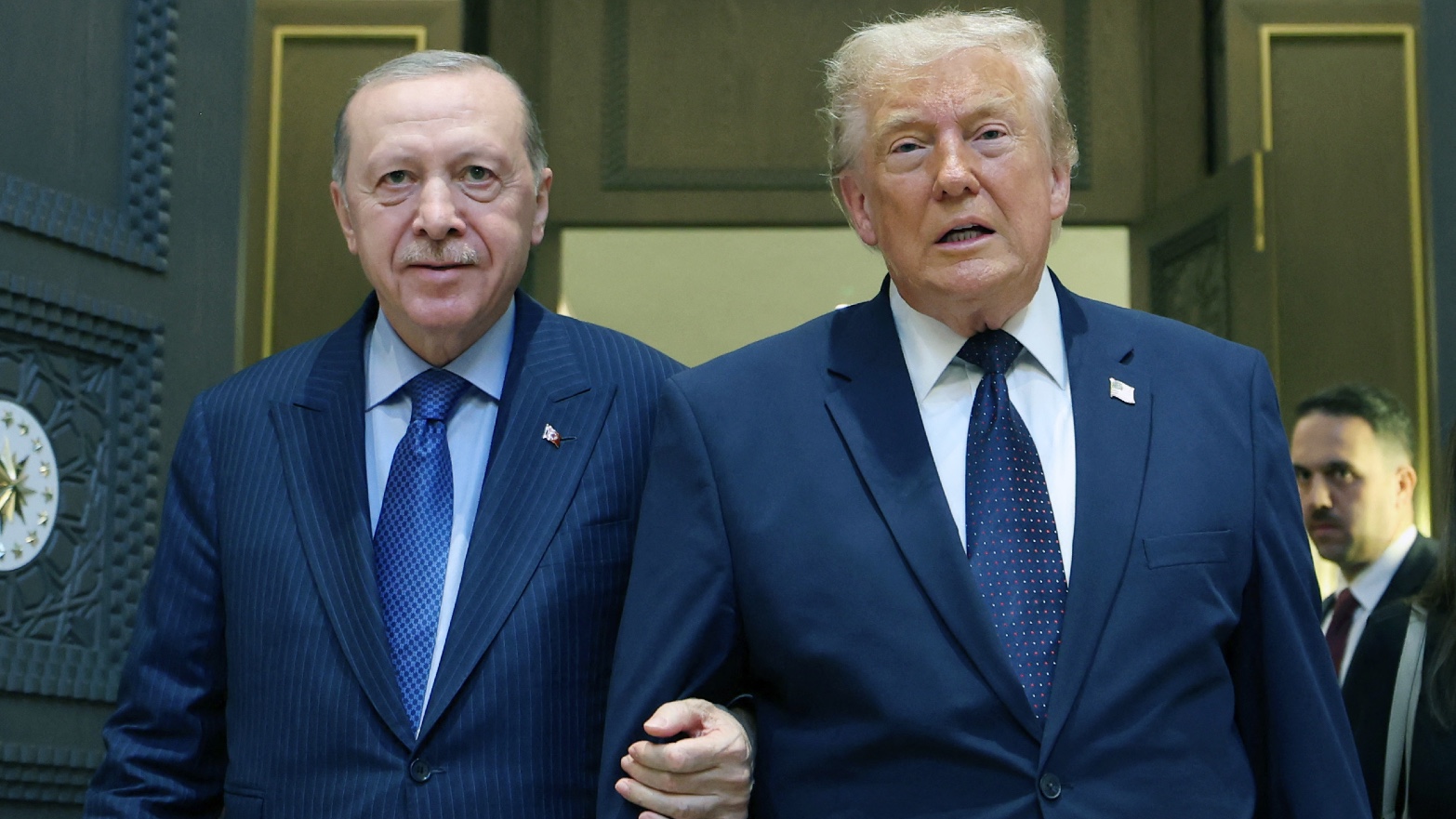
    Looking back at Britain’s first official diplomatic expedition to Qing Dynasty China in 1793, expedition participant Peter Auber left behind a telling observation: the delegation had been “received with the utmost politeness, treated with the utmost hospitality, watched with the utmost vigilance and dismissed with the utmost civility.” That centuries-old line came to mind as international relations expert Kerry Brown watched Donald Trump’s two-day 2025 state visit to China unfold, drawing clear parallels between two landmark diplomatic engagements separated by more than 200 years.

    Just like the 1793 British mission that sought to open new trade routes and establish a permanent diplomatic outpost in Beijing, Trump’s 2025 visit opened with elaborate ceremony and warm public gestures from both sides. Chinese President Xi Jinping opened the summit by welcoming his U.S. counterpart with conciliatory remarks, framing the bilateral relationship as “the most consequential in the world.” He even drew a connection between Trump’s signature political slogan, “Make America Great Again,” noting that U.S. growth aligned with China’s own development goals. Trump returned the praise in kind: in a social media post during his flight to Beijing, he wrote that President Xi commanded “respect from all,” and opened direct talks by telling Xi “You’re a great leader.”

    Beyond these carefully calibrated diplomatic niceties and mutual compliments, however, the visit produced far fewer concrete breakthroughs than many observers anticipated. Correcting the persistent bilateral trade imbalance has been a core policy goal for Trump across both of his presidential terms. 2025 trade data underscores the scale of the gap: the U.S. exported just $106 billion in goods to China, while importing $308 billion in Chinese products, leaving a roughly $200 billion trade deficit. During Trump’s 2017 state visit to China, Beijing agreed to expand purchases of U.S. soybeans as a major confidence-building measure. On this 2025 visit, the only high-profile trade deal announced was an agreement for China to purchase 200 Boeing aircraft. Even that announcement fell short of market expectations: Boeing’s share price dropped 4% immediately after the deal was made public, as analysts had projected a far larger order. Trump also confirmed that China had agreed in principle to purchase U.S. crude oil, but no concrete timeline or volume commitments were released.

    For the cohort of top U.S. tech CEOs that accompanied Trump on the trip—including Tesla’s Elon Musk, Nvidia’s Jensen Huang, and Apple’s Tim Cook—the visit delivered no major policy wins. China has long pursued a clear strategy of building up domestic indigenous technology capacity, a priority formalized in its latest 15th Five-Year Plan that reaffirms government support for homegrown innovation and domestic tech firms. With this strategic commitment in place, China made no major concessions to open its market further to U.S. tech firms during the summit.

    While tangible economic outcomes were limited, the visit produced more meaningful, if less visible, progress in geopolitical management and great power dialogue. President Xi emphasized that even when the two powers disagree on core issues, global stability depends on their ability to engage pragmatically. The Taiwan issue, long the most sensitive flashpoint in bilateral relations, saw both sides reaffirm their core red lines without escalating tensions. Xi repeated China’s longstanding demand for U.S. non-interference in the Taiwan issue, a clear implicit warning against planned U.S. arms sales to the island, which Beijing considers an inalienable part of its territory. For his part, Trump told reporters he had not yet made a final decision on moving forward with the proposed arms package, and the U.S. delegation reaffirmed the longstanding U.S. policy position, in place since the 1970s, that the issue must be resolved peacefully through cross-strait dialogue. In the context of widespread global geopolitical turbulence, maintaining the status quo on Taiwan, while unremarkable, counts as a constructive outcome. On the ongoing Iran conflict, Xi offered Chinese mediation assistance to help de-escalate tensions between the U.S. and Iran. China has little interest in taking on a high-profile frontline mediation role, given the risk of being drawn into the region’s persistent instability. Instead, Beijing’s core goal is a long-term truce that allows both Washington and Tehran to claim victory without a decisive, disruptive war—an outcome that aligns with China’s interest in avoiding prolonged economic disruption from regional conflict, hence its offer of limited diplomatic support.

    Looking back, history will likely frame this visit as another milestone in the gradual global shift toward a system where China holds greater international influence, while still acknowledging and respecting the U.S.’s current position as the world’s leading economic and military power. While Trump returned to Washington without a landmark policy win, it is a well-established truth of diplomacy that avoiding conflict and keeping dialogue open can be a positive outcome in itself. That the two leaders met, built a constructive personal rapport, avoided public clashes, and agreed to continue high-level talks may not be a transformative achievement, but in an era of unprecedented global instability, it is still a net positive for bilateral relations and global order.

  • Arrests made as Tommy Robinson’s far-right supporters rally in central London

    Arrests made as Tommy Robinson’s far-right supporters rally in central London

    On Saturday, thousands of far-right supporters gathered in central London for Tommy Robinson’s ‘Unite the Kingdom’ rally, a gathering marked by inflammatory rhetoric, hate messaging, and a massive coordinated police deployment that included the first use of live facial recognition technology for a UK public order operation. The event, organized by the convicted British far-right figure whose legal name is Stephen Yaxley-Lennon, drew attendees draped in Union Flags, alongside a wide array of symbols tied to both domestic extremism and international right-wing aligned movements.

    Attendees at the rally carried numerous placards targeting UK Prime Minister Keir Starmer, as well as materials carrying explicit anti-immigrant, Islamophobic, and antisemitic messaging. Beyond the official flags of the UK’s four constituent nations, attendees displayed Israeli flags and banners linked to the Iranian monarchist movement, one of several international political causes that drew support from the crowd. Video footage shared on social media showed participants carrying wooden crosses, with many banners featuring explicit Christian nationalist slogans.

    In what was one of the largest UK police deployments in recent memory for a series of public events, approximately 4,000 officers were assigned to monitor three simultaneous major gatherings: Robinson’s far-right rally, a parallel pro-Palestine demonstration, and the FA Cup Final held between Manchester City and Chelsea at London’s Wembley Stadium. Law enforcement deployed armoured vehicles, surveillance drones, and helicopters, and introduced a new operational tool: live facial recognition cameras, marking the first time the technology has been used to manage a public order event in the UK.

    Two arrests were announced by police early Saturday, carried out near Euston Station as the pair were traveling to the rally. In an official statement, police confirmed that one of the two men was taken into custody in connection with a high-profile earlier incident in Birmingham where a man was killed by being run over. The second arrested man was already wanted on an outstanding warrant for a separate charge of encouraging others to attack a police officer.

    Robinson framed the 2026 rally as an attempt to match the turnout of his September 2025 demonstration, which drew an estimated 150,000 attendees to central London and pushed a toxic mix of anti-Muslim bigotry, white supremacism, and Christian nationalist ideology. Human rights watchdog Amnesty International issued a sharp rebuke of the Saturday gathering, saying the rally “brings racism, violence and fear to the streets of London.”

    The event featured speeches from several high-profile conservative commentators, including former reality TV personality Katie Hopkins and Sharon Osbourne, wife of the late heavy metal icon Ozzy Osbourne. In his address to the crowd, Robinson called for his supporters to shift strategy from street demonstrations to systematic infiltration of mainstream and minor right-wing political parties. “We have to get political, we have to get involved,” he said. “I’m not going to tell you which political party you need to join. We’re a cultural movement. I’m going to tell you that you have to join a political party. I don’t care if it’s Reform, if it’s Advance, or it’s Restore, or it’s the Conservative party. We have to locally get involved in politics.”

    The rally drew together a broad coalition of far-right and extreme nationalist actors from across global political movements. Some attendees wore ‘Mega hats’, a UK spin on former U.S. President Donald Trump’s ‘Make America Great Again’ movement, while many Iranian monarchist attendees publicly expressed support for exiled leader Reza Pahlavi and called for the overthrow of Iran’s Islamic Republic. Multiple attendees told on-site reporters they sought a return of the Pahlavi monarchy, echoing chants and messaging seen in recent Iranian opposition protests.

    Robinson, who has multiple prior criminal convictions for violence, fraud, and contempt of court, had urged his supporters ahead of the rally to avoid wearing masks and to limit alcohol consumption during the event. The rally comes at a tense moment for UK politics, just one week after the right-wing anti-immigration party Reform UK secured major gains in local council elections across the country. Though Reform UK leader Nigel Farage has publicly distanced his party from Robinson and the rally, the timing of the event has raised concerns about the growing normalization of far-right ideology in UK mainstream political discourse.

    Ahead of the gathering, the UK government confirmed that it had barred 11 ‘foreign far-right agitators’ from entering the country to attend the rally, among them Colombian-American anti-Muslim campaigner Valentina Gomez.

  • Republican senator who voted to convict Trump battles for re-election

    Republican senator who voted to convict Trump battles for re-election

    As Louisiana voters head to the polls Saturday for a pivotal Republican Senate primary, one of the last remaining Senate Republicans who broke with former President Donald Trump over the 2021 Capitol riot impeachment faces a make-or-break fight to keep his seat.

  • Palestinian activist Ramy Shaath says France is seeking to deport him

    Palestinian activist Ramy Shaath says France is seeking to deport him

    PARIS – A prominent Palestinian-Egyptian pro-Palestinian activist has leveled serious accusations against French authorities, claiming the government is attempting to deport him under the guise of public security threats in retaliation for his vocal advocacy on behalf of Palestinian rights. Ramy Shaath, 54, made the claims in a pre-recorded video statement posted to social media platforms on May 14, arguing that the pending deportation order is not an isolated measure, but part of a wider coordinated effort to muzzle Palestinian voices and their supporters across France.

    Shaath co-founded the grassroots pro-Palestinian group Urgence Palestine shortly after the outbreak of the ongoing Israel-Hamas war, a role he says has put him directly in the crosshairs of French officials. He told viewers that the latest action comes after multiple previous legal attempts to target him fell short, leaving authorities to pursue deportation as an alternative tactic to silence his work.

    Born with dual Egyptian-Palestinian citizenship, Shaath has a long track record of nonviolent activism. In 2014, he established the Egyptian national chapter of the Boycott, Divestment and Sanctions (BDS) movement, an international campaign focused on pressure against Israeli occupation of Palestinian territories. His activism extends beyond Palestinian issues: he participated in Egypt’s 2011 pro-democracy uprising, and has long tied his support for Palestinian rights to opposition to authoritarian rule across the Arab world. He was arrested by Egyptian authorities in 2019, held for more than two and a half years without formal charges in degrading conditions – including a crowded, insect-infested cell and later isolated confinement in a windowless room – before being released in January 2022. His release drew public praise from French President Emmanuel Macron at the time.

    Shaath has deep family ties to France: he is married to a French national, and the couple shares a French-Palestinian daughter. Even with these connections, he says officials have already created significant barriers to his life in the country long before the deportation order was announced. He told reporters he faced extensive delays and hurdles when attempting to renew his French residency permit. Beyond immigration issues, he alleges his bank account was shut down without advance warning and his national health insurance card was suspended, administrative actions that have severely disrupted his ability to hold employment, travel across borders, and access critical medical care.

    As of Tuesday, France’s Interior Ministry has not issued any public response to Shaath’s allegations or answered requests for comment from news outlets. The activist says he and his legal team intend to mount a robust legal challenge to the deportation proceedings, bringing the case before both French national courts and the European Court of Human Rights to defend his right to remain in France and continue his nonviolent advocacy work.

  • Taiwan insists it is independent after Trump warning

    Taiwan insists it is independent after Trump warning

    Fresh tensions have emerged across the Taiwan Strait following remarks by former U.S. President Donald Trump during a Beijing summit, where he cautioned Taiwan against moving ahead with a formal declaration of independence from mainland China. The comments, delivered after two days of high-level talks with Chinese President Xi Jinping, have reignited debate over the long-standing fragile balance of power in one of the world’s most geopolitically volatile regions.

    During post-summit comments, Trump clarified that he had made no binding commitments one way or the other regarding the self-governing island, which Beijing has consistently claimed as an inalienable part of its sovereign territory and has never ruled out seizing by military force. The U.S. leader also noted he would soon make a final decision on a long-awaited $11 billion arms sales package to Taiwan, a deal that has drawn fierce opposition from Beijing.

    The United States is legally obligated under the Taiwan Relations Act to provide the island with the means to defend itself, but successive U.S. administrations have had to balance this unofficial security commitment with the need to maintain formal diplomatic and economic ties with Beijing, which adheres firmly to the one-China principle.

    In response to Trump’s remarks, Taiwanese President Lai Ching-te reaffirmed his long-held position that the island already views itself as a sovereign, independent state, meaning no formal declaration of independence is necessary. On Saturday, Lai’s spokesperson, Karen Kuo, emphasized that Taiwan’s status as a “sovereign, independent democratic country” is self-evident. However, she added that Taipei remains committed to upholding the long-standing cross-strait status quo, under which the island neither moves toward formal independence nor accepts unification with mainland China.

    Public opinion data consistently shows that while a large majority of Taiwan’s population identifies as separate from China, most favor retaining the current status quo over any abrupt change to cross-strait relations. Washington’s long-standing official policy remains unchanged: it does not support Taiwanese independence, and its formal relationship with Beijing is based on recognition of a single Chinese government.

    Trump told Fox News in an interview following his meetings with Xi that U.S. policy toward Taiwan had not shifted, and stressed he had no interest in provoking conflict with Beijing. “I’m not looking to have somebody go independent,” he said. “You know, we’re supposed to travel 9,500 miles to fight a war. I’m not looking for that. I want them to cool down. I want China to cool down.”

    Speaking to reporters on his return flight to Washington, Trump added that he and Xi had spoken extensively about the Taiwan issue, but declined to answer questions about whether the U.S. would militarily defend Taiwan in the event of an attack. He noted that Xi holds extremely strong views on the issue of the island, saying “[Xi] doesn’t want to see a movement for independence.”

    Beijing has repeatedly denounced Lai as a separatist “troublemaker” who undermines cross-strait peace, and has ramped up large-scale military drills around Taiwan in recent years. These exercises have significantly raised regional tensions and tested the delicate balance of power that Washington has sought to maintain for decades.

    Trump added that he planned to discuss the pending arms sales deal directly with Taiwan’s leadership, though he avoided referring to Lai by his official title, a long-standing convention for U.S. presidents due to the lack of formal diplomatic relations between the two sides. U.S. presidents traditionally do not hold direct public talks with Taiwan’s sitting leader, as such a step would almost certainly trigger a major diplomatic crisis with Beijing.

    Despite the warning on independence, Taipei expressed gratitude for Trump’s long-standing security support. “Our nation is grateful to President Trump for his continued support for security in the Taiwan Strait since his first term in office,” Taiwan’s presidential spokesperson said. “Taiwan will continue to deepen co-operation with the US to achieve peace through strength, ensuring that peace and stability across the Taiwan Strait are not threatened or undermined, which serves the common interests of Taiwan, the US, and the global democratic community.”

  • Thousands to march in parallel Nakba Day and far-right rallies in central London

    Thousands to march in parallel Nakba Day and far-right rallies in central London

    Central London is preparing for an extraordinary day of overlapping public events this Saturday, as tens of thousands of pro-Palestinian demonstrators gather to mark the 78th anniversary of the Nakba, a separate far-right rally convened by controversial activist Tommy Robinson gets underway nearby, and one of English football’s biggest annual fixtures kicks off just miles north. The convergence of three high-profile, potentially divisive gatherings has prompted London’s Metropolitan Police to launch what it describes as an unprecedented public order operation, deploying more than 4,000 officers to separate the opposing protest groups and prevent violent confrontation.

    The annual Nakba Day march, organized by a broad coalition of advocacy groups led by the Palestine Solidarity Campaign, commemorates a defining historical turning point for the Palestinian people. In 1948, as the state of Israel was established, more than 750,000 Palestinians were forcibly expelled from their ancestral lands, and an estimated 13,000 more were killed by Zionist militias — a catastrophe that Palestinians have memorialized annually for decades. Organizers have issued clear guidance to participants, urging them to avoid any confrontation with the opposing far-right demonstration.

    Robinson, the far-right organizer whose legal name is Stephen Yaxley-Lennon, will lead his own Unite the Kingdom rally on the same day. His last major event, held in September 2025, drew more than 150,000 attendees, but ended in chaos: far-right participants attacked police officers, chanted virulently anti-Muslim slogans, and left 23 people arrested on public order offences. This Saturday, Robinson’s rally is scheduled to proceed from Kingsway to Trafalgar Square, while the Nakba 78 rally, which was denied permission to march to Trafalgar Square after applying for the route, will travel from Kensington to Pall Mall. Police have structured the plans to keep the two groups on entirely separate routes to avoid clashes.

    Adding to the complexity of the operation, the FA Cup final between Chelsea and Manchester City will kick off at 3pm at Wembley Stadium in north London, requiring additional police resourcing to manage crowds and security for the match.

    To support the massive policing operation, officers have been granted extraordinary stop-and-search powers that allow them to search any individual without reasonable suspicion of a crime. For the first time ever in a UK public order policing operation, live facial recognition technology will also be deployed, though police confirmed the technology will not be used along the official march routes themselves.

    In comments ahead of the protests, Metropolitan Police Deputy Assistant Commissioner James Harman outlined a hardline approach to provocative expression at the gatherings. “We are committed to taking a more assertive approach to chanting and the displaying of phrases on placards or banners that incite hatred or indicate support for terrorism or other forms of extremism,” Harman said Wednesday. He added that in recent months, multiple people have been arrested and charged for calling for intifada at previous protests, with a number of those cases currently working through the UK court system.

    The 78th Nakba Day march marks the first major pro-Palestinian demonstration in the UK since Prime Minister Keir Starmer’s controversial April 30 statement calling for the prosecution of protesters who chant the phrase “globalise the intifada”, a move that drew widespread condemnation from pro-Palestinian advocacy groups across the country. Starmer made the comment in the wake of a April 29 stabbing attack in Golders Green, north London, where two Jewish men and one Muslim man were injured by an assailant who did not use the phrase during the attack. “If you stand alongside people who say globalise the intifada, you are calling for terrorism against Jews,” Starmer said at the time.

    In response, more than 50 prominent British Palestinian and Arab public figures released a joint statement Thursday calling on Starmer to guarantee equal protection for Palestinian and Arab communities from hate crimes during Saturday’s demonstrations. “It is painful to feel that our fears are treated as secondary, or worse, that our peaceful commemoration is viewed only as a policing problem,” the statement read, highlighting widespread concern that the rights of peaceful pro-Palestinian protesters are being disproportionately restricted amid heightened political tensions.

  • Democratic governor under fire over clemency for 2020 election denier

    Democratic governor under fire over clemency for 2020 election denier

    A controversial decision by Colorado Democratic Governor Jared Polis to cut short the prison sentence of former Mesa County clerk Tina Peters, a convicted 2020 election denier, has ignited fierce political backlash across party lines in the United States.

    Peters, a Republican, made national headlines as one of the highest-profile figures prosecuted for efforts to cast doubt on the 2020 presidential election results. In August 2024, a jury found her guilty on seven felony counts connected to a 2021 breach of local election computer systems. The scheme allowed an unauthorized outsider to access sensitive voting equipment and voter records, carried out to support unproven claims that widespread voter fraud cost Donald Trump the 2020 election – a false conspiracy theory Trump has pushed repeatedly since his loss.

    Polis announced the commutation Friday, confirming that Peters will be released on parole in June. The governor had previously characterized her original nine-year prison sentence as excessively harsh, and defended his decision in a detailed public Facebook post. He stressed that he was not issuing a full pardon and never considered one, acknowledging that Peters had clearly broken state law, violated public trust, lied to state election officials, and imposed significant financial costs on Mesa County through her illegal actions.

    “It’s one of my bedrock beliefs that our laws should be applied fairly, and I simply do not believe that was what happened in this case,” Polis wrote. “For a first-time, non-violent offender, this sentence is simply disproportionate.”

    But the move immediately drew harsh condemnation from most of Polis’ fellow Democrats, who argue the commutation undermines American democracy and the rule of law. Colorado Secretary of State Jena Griswold, the state’s top election official, called the decision “an affront to our democracy,” with other leaders warning it could embolden future efforts to undermine public confidence in U.S. elections.

    Senator John Hickenlooper, a Colorado Democrat, posted on X saying he strongly opposed the call to reduce Peters’ sentence, arguing it sends a dangerous message to bad actors seeking to erode election trust and does nothing to stop Trump’s ongoing illegal attacks on Colorado’s election system. Colorado Attorney General Phil Weiser, also a Democrat, described the move as “truly mind-boggling,” adding that “this commutation decision is wrong and is an affront to the rule of law.” The criticism extended to other top congressional Democrats including Senator Michael Bennet, New York Representative Joe Morelle, and Colorado Representative Jason Crow, among others.

    Unusually, the decision also drew anger from some Republicans. Matt Crane, executive director of the Colorado County Clerks Association and a registered Republican, said he was “furious, disgusted, and deeply disappointed by the Governor’s decision.” He accused Polis of capitulating to extremist political factions and conspiracy movements that actively work to weaken trust in U.S. democratic institutions.

    Not all Republicans condemned the move, however. Two high-profile conservative congressional Republicans – Marjorie Taylor Greene and Lauren Boebert – praised Polis’ action, calling it “great news” and a “long-overdue step toward justice” respectively. Former President Donald Trump, who had publicly pushed for Peters’ release for months, celebrated the announcement within minutes on social media with a simple, triumphant message: “FREE TINA!”

    On Saturday, Peters released a statement through her attorney to the BBC, expressing public remorse for her actions. “I made mistakes, and for those I am sorry,” she said. “I have learned and grown during my time in prison and going forward I will make sure that my actions always follow the law, and I will avoid the mistakes of the past.”

    The high-profile controversy comes as false 2020 election conspiracy theories continue to shape U.S. political discourse, with Trump again the leading Republican presidential candidate heading into the 2024 general election.