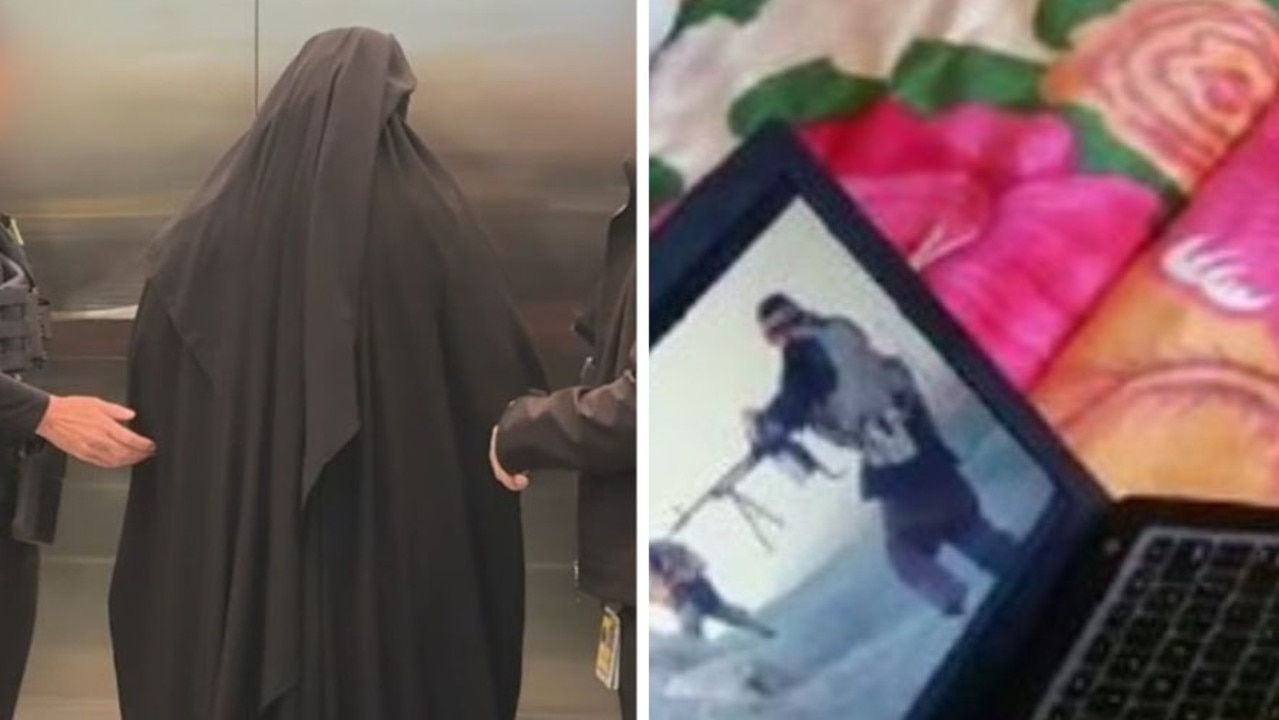
A 34-year-old Australian woman who stands accused of traveling to Syria to join the Islamic State (ISIS) terrorist group more than a decade ago is set to walk free on bail within hours, after a Melbourne magistrate ruled that exceptional circumstances justified her release ahead of trial.
Rayann El Houli, a Melbourne native, was formally charged in May this year with two key offenses: being a member of a designated terrorist organization and illegally entering a declared conflict zone. The charges were laid eight months after she returned to Australia from Syria alongside her four children, ending a six-year detainment in a Kurdish-run internally displaced persons camp following the collapse of the ISIS caliphate.
Court documents and prosecution allegations lay out a timeline of El Houli’s time in the Middle East: prosecutors claim she first traveled to Syria in 2014, when she was just 21 or 22 years old, alongside her first husband Allak Hamad, with the explicit intention of joining ISIS ranks. Hamad was killed fighting for the group by early 2015, and El Houli went on to marry two more ISIS-linked fighters, both of whom also died in conflict before she wed a third member in 2018, a marriage that ended in divorce within months.
In 2019, after the territorial defeat of ISIS, El Houli was captured by Kurdish forces and held in Syria’s Al-Hawl camp, a sprawling facility notorious for housing thousands of former ISIS supporters and their families. She was smuggled out of the camp in June 2023 and eventually made her way back to Australia, where she was taken into custody to face terror-related charges.
El Houli’s bail application was heard over a two-day hearing last week, with Melbourne Magistrate Brett Sonnet releasing his ruling on Monday afternoon. In his decision, Sonnet confirmed that he found clear exceptional circumstances to meet the requirements for bail, noting that the assessed risk El Houli poses to the Australian public is “relatively low”.
“In my view the application for bail must be granted,” Sonnet told the court.
Prosecutors had pushed back hard against bail, presenting disturbing evidence collected by Australian Federal Police that they argued demonstrated El Houli’s deep commitment to ISIS ideology during her time in Syria. Senior AFP Constable Paul Sherlock told the court that communications El Houli sent to family in Australia before 2019 clearly showed her active support for the terrorist group.
This evidence included messages encouraging other Australians to travel to Syria to join ISIS, as well as multiple videos filmed by El Houli that show her exposing her young children to extremist propaganda. One of the most disturbing videos, dated March 2016, captures El Houli questioning her then two-year-old eldest child about the killing of non-believers by ISIS fighters. Prosecutors say the video shows her asking the toddler to describe how mujahideen slaughtered “kuffar” (infidels) and “apostates” with knives, prompting the child to mimic the actions. Additional evidence presented to the court includes a photo allegedly showing El Houli teaching her child how to hold a toy rifle.
Despite the severity of the allegations and the disturbing nature of the evidence, the court heard arguments from El Houli’s defense that painted a picture of a young woman manipulated into joining the group, who has since renounced all ties to violent extremism. Her barrister, Peter Morrissey SC, told the court that El Houli was a naive young woman when she traveled to Syria, who “drank the Kool-Aid” and followed her husband into the conflict zone, without fully understanding the ideology she was aligning herself with.
Morrissey added that in the months since her return to Australia, El Houli has worked diligently to rebuild her life, addressing ongoing physical and mental health trauma, enrolling her four children in local schools and community sports programs, and completely cutting all ties to extremist groups. “She renounces ISIS and violent jihad, wanting nothing to do with it,” Morrissey told the court.
Magistrate Sonnet echoed many of these points in his ruling, noting that while the videos presented by prosecutors were unquestionably disturbing, he accepted the assessment of clinical psychologist Katie Seidler, who used standardized clinical assessment tools to evaluate El Houli and found her to be at low risk of reoffending or supporting extremism. Sonnet also highlighted a number of strong protective factors that support bail: El Houli has custody of her four minor children, has the consistent support of her extended family in Australia, has fully cooperated with federal law enforcement since her return, and has already accessed ongoing physical and mental health care to address the trauma she experienced during her time in Syria.
El Houli is expected to be released from custody on Monday afternoon, with strict bail conditions yet to be publicly announced ahead of her upcoming trial.