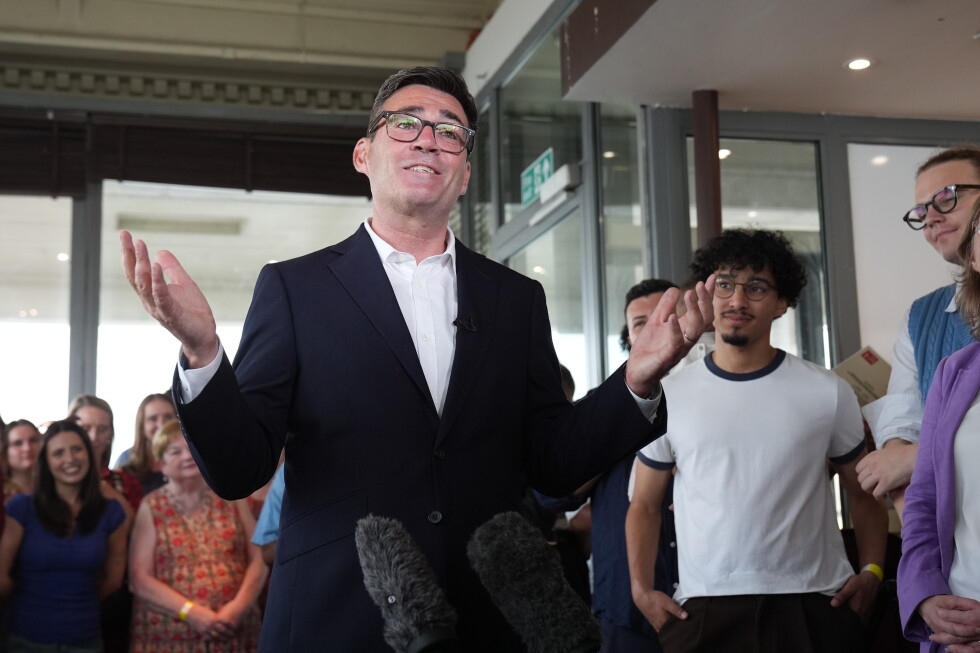
LONDON — After a decades-long political journey marked by setbacks, detours, and unexpected twists, 56-year-old Andy Burnham is set to be sworn in as the United Kingdom’s 59th prime minister on Monday, catapulted into Downing Street following the sudden resignation of Keir Starmer after just two years in office.
Ten years ago, Burnham walked away from a 20-year climb up Labour’s London-based party hierarchy to pursue a new role leading the northern English region of Greater Manchester as its mayor. Just one month ago, he reclaimed a seat in Parliament via a high-stakes special election, clearing the final hurdle to take the top job — a turn of events that has left the country with big questions about how the largely regionally focused leader will tackle national office.
### The Making of a Northern-Bred Progressive
Born in Liverpool and raised in a tight-knit working-class Catholic community in a commuter village between Liverpool and Manchester, Burnham’s political values were shaped early on by his family upbringing and the centre-left Labour Party. His father worked as a British Telecom engineer, and his mother as a receptionist; he and his brothers were the first generation of their family to attend university. Despite his own self-doubt that a working-class boy “did not belong” at the elite institution, he was persuaded to apply to the University of Cambridge, where he earned an English degree and met his wife, Marie-France van Heel, a Dutch marketing executive. The couple married in 2000 and share three children.
After graduating, Burnham cut his teeth as a trade magazine journalist before moving into political advisory work for Labour figures. Elected to Parliament for the Manchester-area constituency of Leigh in 2001, he rose steadily through the ranks under prime ministers Tony Blair and Gordon Brown, holding three senior Cabinet positions between 2007 and 2010: chief secretary to the Treasury, culture secretary, and health secretary. A defining turning point in his career came in 2009, when he was confronted by angry bereaved families at a commemoration for the 1989 Hillsborough Stadium disaster, which killed 97 Liverpool football fans. For decades, police had pushed a false narrative blaming unruly fans for the tragedy. Burnham stepped forward as a vocal advocate for the families, helping secure a new public inquest, a formal official apology, and landmark legislation imposing a legal duty of candor that requires public officials to disclose the full truth about tragedies, regardless of reputational damage.
### Building a Legacy as the ‘King of the North’
Following Labour’s national defeat in 2010, Burnham made two unsuccessful bids for the party leadership, in 2010 and 2015. At a low point for Labour nationally in 2017, he stepped down from Parliament to run for Greater Manchester mayor, a role that would ultimately let him showcase his political strengths and build a national profile.
As mayor, Burnham pioneered an approach dubbed “Manchesterism”: a brand of pragmatic, business-friendly socialism that combines private and public investment to upgrade transport, housing, and core infrastructure in the post-industrial region. Once the birthplace of the Industrial Revolution, Greater Manchester had suffered decades of economic decline after manufacturing collapsed; during Burnham’s tenure, the region experienced a sustained boom, with new skyscrapers rising on abandoned industrial lots. He earned widespread praise for bringing the region’s fragmented public transport system under public control and expanding access and reliability.
Burnham also cultivated a relatable public persona, swapping formal suits for jeans and graphic tees, openly sharing his love for iconic northern British bands like Oasis, The Smiths, and New Order, and spending free time playing football or spinning 1990s tracks in public DJ sets. His national profile surged during the COVID-19 pandemic, when he publicly blasted then-Conservative Prime Minister Boris Johnson for a “London-centric” pandemic response that disproportionately harmed northern cities. The confrontation earned him the nickname “King of the North,” a *Game of Thrones*-inspired moniker that cemented his reputation as a champion for regional equity and signaled his long-held national political ambition.
When Starmer was forced to resign by Labour lawmakers alarmed by the party’s plummeting approval ratings, Burnham saw his opening. To meet the requirement of holding a parliamentary seat to become prime minister and party leader, a sitting Labour legislator agreed to step down, triggering a special election in the Manchester-area seat of Makerfield. Burnham won by a landslide over the Reform UK candidate, proving his electoral appeal, and ran unopposed in the leadership contest to replace Starmer. He will formally take office after a required audience with King Charles III.
### High Expectations, Unanswered Questions
Burnham enters office carrying the soaring expectations of a Labour base hungry for change after years of political turbulence. “A whole range of people across the Labour movement and in the country have projected onto Andy Burnham their hopes and their fantasies about how the country should be run and what Labour should stand for and what Andy Burnham stands for,” explained Joshi Herrmann, founder of the Manchester-based news outlet The Mill. “He has got lots of people’s hopes up.”
In his first public remarks since securing the leadership, Burnham has pledged to deliver “a new politics based on unity and hope” and build “an economy that works for everybody, no matter where they live.” A core policy priority is devolving more power to regional leaders, a plan that includes moving a portion of the prime minister’s official office to a “No. 10 North” based in Manchester. He has spoken poignantly of his father, who lives with Alzheimer’s and cannot comprehend that his son has become prime minister: “The way I look at it, it’s his achievement as well. A whole family achievement, although he doesn’t know it.”
Supporters point to Burnham’s unique political strengths: a rare ability to connect with working-class voters, genuine empathy, and a deep commitment to reducing economic inequality. “He has got a set of principles about trying to make the country fairer, trying to bring people out of poverty, that he really does believe in,” Herrmann noted. Manchester music entrepreneur Sacha Lord, who served as Burnham’s nighttime economy advisor during his mayoral tenure, said the new prime minister hides a steely resolve behind his affable public persona. “He’s not scared of locking horns with people. Everybody thinks Andy’s this nice, cheeky-chappy guy. But trust me, when he wants something … he tends to get it.”
Still, critics warn that Burnham leaves many key policy pledges undefined, most notably how he will fund his proposed infrastructure and social programs. He inherits the same intractable challenges that derailed Starmer’s premiership: a stagnant national economy, overstretched public services, and a persistent cost-of-living crisis that has squeezed household budgets across the UK. He also has little experience at the national level on high-stakes foreign policy issues, from the ongoing war in Ukraine to managing the UK’s critical relationship with U.S. President Donald Trump. For Burnham, the decades-long climb to the top is over — now the race to prove he can handle the weight of the office has just begun.