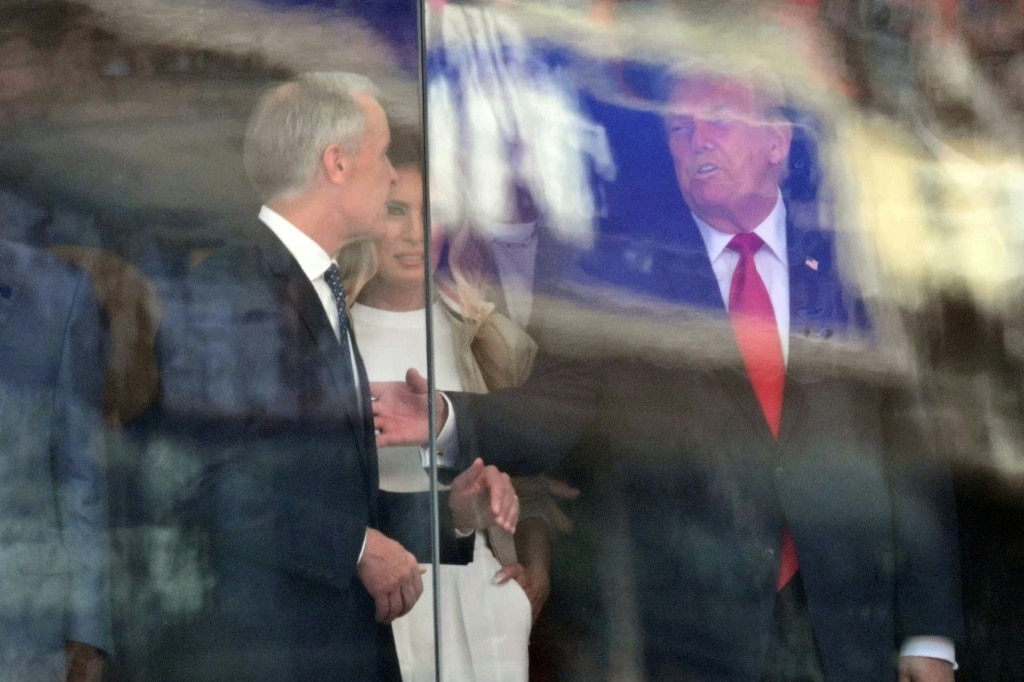
Just days after threatening Canada over cross-border wildfire smoke, U.S. President Donald Trump has announced sweeping new 50% tariffs on a wide range of Canadian goods, marking a historic escalation of trade tensions between the two neighboring North American nations. Signed into effect via executive order on Monday, the new duties are set to take effect in 30 days, and target Canadian imports that include wine, cement, and hockey sticks, according to official documentation released by the White House.
What makes this action unprecedented is Trump’s decision to rely on Section 338 of the 1930 Tariff Act — a never-before-tested legal provision that has long been viewed as obsolete by most trade policy experts. This move comes months after the U.S. Supreme Court struck down several of Trump’s earlier tariff measures, raising immediate questions about the legal standing of the new order. The White House justifies the tariffs by accusing the Canadian government of discriminatory trade practices against American products across three key sectors: alcohol, automobiles, and dairy.
Notably, the new tariffs will apply to goods that were previously granted duty-free access under the U.S.-Mexico-Canada Agreement (USMCA), the trilateral free trade pact that governs nearly all trade between the three North American nations. Energy products, potash, and goods already covered by separate sector-specific tariffs are the only categories exempted from the new duties. This breaks with Trump’s recent pattern of trade policy: since his return to the presidency last year, his broader tariff packages have largely spared goods covered by the North American trade agreement.
The White House further defended the action by noting Canada is one of only two countries — alongside China — that took retaliatory trade measures against Trump’s broad tariff rollout last year. Canadian provincial governments have halted official purchases of American alcohol in response to Trump’s earlier trade threats and his repeated public comments suggesting Canada should become the United States’ “51st state.” In an official statement outlining the administration’s position, U.S. Trade Representative Jamieson Greer laid out three core complaints against Ottawa: the removal of U.S. alcohol from Canadian retail shelves, improved market access granted by Canada to European Union dairy producers, and caps placed on U.S. vehicle exports from companies that have reshored manufacturing operations to the United States. Greer said the tariffs are intended to “hold Canada accountable for its retaliation and discrimination.”
Trade experts have immediately raised alarms over both the legal and economic risks of the policy. Scott Lincicome, a trade analyst at the libertarian Cato Institute, confirmed to Agence France-Presse that this is the first time Section 338 has ever been used to impose new tariffs, noting that most legal scholars believe the provision has been superseded by modern trade authority. “Trump has demonstrated a willingness to use and abuse any statute on the books,” Lincicome said.
Ryan Majerus, a former U.S. trade official and current partner at international law firm King & Spalding, echoed those concerns, noting the untested law carries significant “litigation risk.” He argued the 30-day delay before tariffs take effect is no coincidence, framing the move as a pressure tactic to speed up stalled USMCA negotiations with Canada. Talks with Mexico on USMCA adjustments have moved far faster than negotiations with Ottawa, Majerus noted, adding “this could be an effort to try to get them going.” Even so, he warned that if the tariffs go into effect as planned, the elimination of USMCA tariff exemptions will cause severe disruption to integrated North American supply chains and harm U.S. businesses as well as Canadian ones.
U.S. industry groups have already called for a negotiated de-escalation, warning of the risk of Canadian retaliation. Chris Swonger, president of the Distilled Spirits Council of the United States, said the industry welcomes recognition of Canada’s existing trade restrictions, but added: “We had hoped, however, that this issue could be resolved without further escalation.” Swonger noted that steep new tariffs and potential retaliation would come “at a time when many US hospitality businesses continue to face financial hardships,” and urged both sides to reach a negotiated settlement.
Lincicome also noted that U.S. claims over dairy market access discrimination are questionable, as Canada’s arrangement with the EU falls under agreed terms of existing trade agreements. Even if courts ultimately strike down the tariffs, he added, the process will take months, leaving businesses stuck in a period of massive uncertainty that will delay investment and hiring decisions across the border.