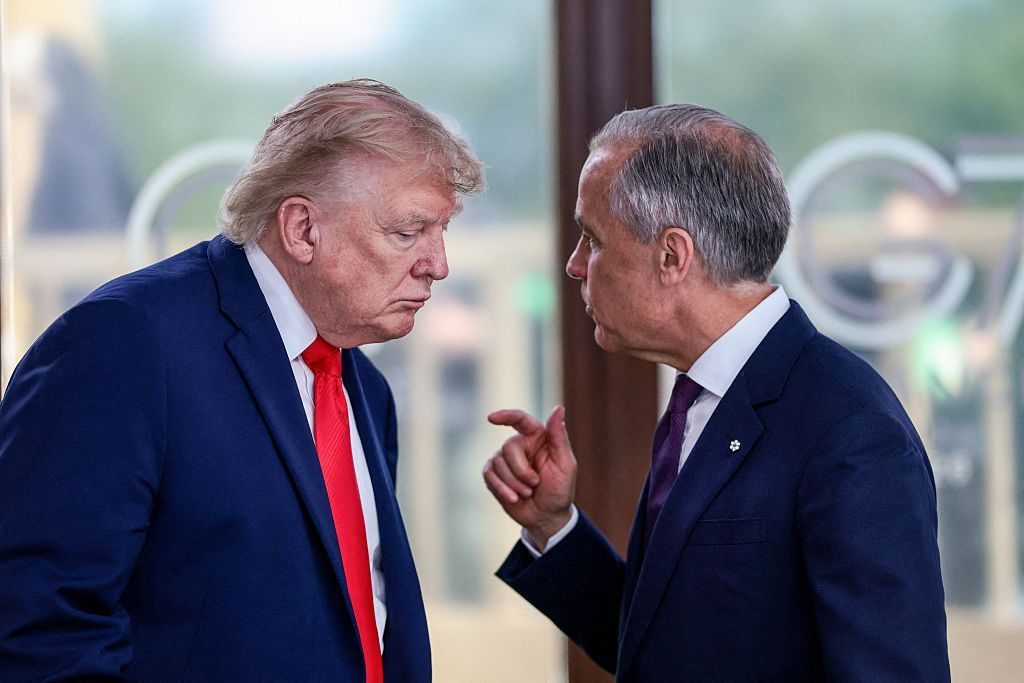
In a sharp escalation of trade frictions between the United States and Canada, US President Donald Trump has signed an executive order imposing a sweeping 50% tariff on a broad array of Canadian imports, framing the move as retaliation for what he calls longstanding unequal treatment of American automotive, dairy and alcohol products.
The new duties are scheduled to take effect on August 19, marking one of the most significant expansions of trade barriers between the two North American neighbors in modern history. White House officials have defended the tariffs as a critical measure to shield domestic American businesses from unfair trading practices.
The list of targeted goods runs the gamut from everyday consumer products including Canadian wine and hockey sticks to large-scale industrial materials such as commercial cement. Notably, several of Canada’s highest-value key exports have been excluded from the new tariffs: energy products, potash, critical minerals and Canadian seafood will all enter the US duty-free for the time being.
Monday’s announcement does not come out of nowhere. It builds on a growing stack of trade restrictions that have accumulated between the two countries over recent years. The US currently imposes active tariffs ranging from 15% to 50% on Canadian steel, aluminum and copper, a 35% duty on Canadian softwood lumber, and a 25% tax on non-North American automotive parts used in vehicle manufacturing. In response, Canada has imposed matching 25% counter-tariffs on a selection of US steel, aluminum and vehicle imports.
Observers had speculated that the new tariffs could be tied to Trump’s earlier threats to impose duties over smoke from Canadian wildfires drifting into northern US cities, but the text of the three executive proclamations makes no mention of the wildfire issue. Instead, the orders focus exclusively on three longstanding trade irritants that Canadian negotiators have been aware of for months: automotive market access, dairy supply management, and the provincial boycott of American alcohol. The omission of wildfire from the official order signals that the core breakdown is in ongoing bilateral trade negotiations, not environmental disputes.
On the automotive front, Trump argues that Canada levies discriminatory taxes on US passenger vehicles and parts that do not qualify for zero-tariff access under the United States-Mexico-Canada Agreement (USMCA), the current trilateral trade bloc governing North American trade. He calls the tax unreasonable, noting that Canada does not impose equivalent levies on automotive imports from other countries, creating an uneven playing field for American manufacturers. This is not a new grievance: Trump has repeatedly identified automotive trade as a core area of competing interest between the two countries, and Commerce Secretary Howard Lutnick has previously stated publicly that he believes Canadian trade interests should take a backseat to US priorities. This position has sparked friction, given that North American automotive production is one of the most integrated cross-border supply chains in the world, with components and vehicles moving freely across borders multiple times during the manufacturing process.
Dairy has been an even longerstanding point of contention. Canada’s longstanding domestic dairy supply management system, which sets quantitative quotas on foreign dairy imports and charges tariffs exceeding 300% for any imports that exceed those quotas, has drawn criticism from US agricultural producers and policymakers for decades.
The third irritant, the boycott of US alcohol by most Canadian provincial liquor boards, was launched last year in response to earlier US tariffs. Canadian provincial leaders have repeatedly stated that the boycott will remain in place until the US removes its existing tariffs on key Canadian industrial sectors including metals and automotive manufacturing.
Canadian trade negotiators had been working for months to reach a compromise deal that would roll back at least some of the existing US tariffs on Canadian goods. Monday’s announcement of broad new 50% duties makes clear that those talks have stalled, and trade relations between the two allies are moving toward further escalation rather than resolution.