分类: politics

  • Trump pivots to new 10% global tariff, new probes after Supreme Court setback

    Trump pivots to new 10% global tariff, new probes after Supreme Court setback

    In a swift response to a Supreme Court ruling that invalidated his previous tariff regime, President Donald Trump has enacted a new economic strategy centered on a temporary 10% global import duty. The executive action, signed late Friday, utilizes Section 122 of the Trade Act of 1974—a rarely invoked statute granting presidential authority to address balance of payments deficits.

    The temporary tariff measure will remain effective for 150 days, providing the administration breathing room to initiate multiple investigations under more conventional trade statutes. Treasury Secretary Scott Bessent confirmed the strategic shift would maintain comparable revenue levels despite the judicial setback, though through what he characterized as ‘a less direct and slightly more convoluted manner.’

    This transitional period enables the Office of the U.S. Trade Representative to launch fresh probes under Section 301 of the Trade Act targeting ‘unreasonable and discriminatory’ trade practices. While specific nations weren’t identified in the executive order, ongoing investigations concerning China and Brazil suggest continued focus on major trading partners, with Vietnam and Canada potentially facing increased scrutiny.

    The administration’s legal maneuvering leaves approximately $175 billion in previously collected tariffs subject to potential refunds, though officials indicated resolution would likely require extensive litigation lasting several years. Trade experts note that while the new approach creates prolonged uncertainty, it introduces more procedural regularity through established investigation frameworks requiring research, public commentary, and defined timelines.

    Former U.S. Trade Representative Robert Lighthizer advocated for congressional action to modernize trade tools, reflecting broader administration intentions to institutionalize more durable tariff authorities beyond temporary measures.

  • US business groups, lawmakers welcome Supreme Court ruling against Trump tariffs

    US business groups, lawmakers welcome Supreme Court ruling against Trump tariffs

    In a landmark judicial decision with profound implications for executive power, the U.S. Supreme Court has invalidated former President Donald Trump’s utilization of emergency authorities to impose sweeping tariffs. The 6-3 ruling, delivered on Friday, represents a significant judicial check on presidential trade policy and has been met with widespread approval from business communities and legislators across the political spectrum.

    The court determined that the executive branch had significantly overstepped its constitutional boundaries by declaring national emergencies to justify tariffs against numerous trading partners. This judicial finding renders a substantial portion of tariffs enacted the previous year unlawful, potentially triggering billions in duty refunds to affected companies.

    Neil Bradley of the U.S. Chamber of Commerce characterized the decision as “welcome news for businesses and consumers alike,” highlighting how the tariffs had precipitated substantial cost escalations and severe supply chain disruptions throughout the American economy. The Chamber immediately called upon the administration to expedite reimbursement of unlawfully collected duties and undertake a comprehensive overhaul of national tariff policy to foster economic expansion and reduce household expenses.

    This sentiment was echoed by ‘We Pay the Tariffs,’ a coalition representing small business interests, which demanded “full, fast and automatic” refunds for its members who had paid billions in duties that were, according to the Court’s ruling, improperly levied.

    The decision received notable bipartisan support, with Republican Senator Mitch McConnell of Kentucky welcoming the judicial reaffirmation of congressional authority in trade matters. “The American people already understand that when Washington establishes artificial trade barriers, domestic construction and consumer purchasing become markedly more expensive,” McConnell stated.

    Foreign policy experts suggested the ruling could curtail the executive’s ability to deploy tariffs as a rapid-response geoeconomic instrument, though alternative statutory pathways for implementing tariffs through conventional trade negotiations remain available. Some industry representatives expressed lingering concerns about potential future tariff implementations through different legal mechanisms, indicating that certain policy uncertainties persist despite this decisive judicial intervention.

  • Macron orders review of violent activist groups after fatal beating of far-right activist

    Macron orders review of violent activist groups after fatal beating of far-right activist

    French President Emmanuel Macron has announced an urgent governmental review of violent political activist groups following the fatal beating of a far-right student in Lyon, an incident that has intensified political hostilities ahead of France’s upcoming presidential election.

    Macron confirmed he will convene high-level meetings with ministers next week to evaluate extremist organizations with political affiliations, signaling potential disbandment of certain groups. “In the Republic, no violence is legitimate,” Macron declared during his appearance at the Paris agriculture fair. “There is no place for militias, wherever they come from. We must be absolutely uncompromising.”

    The crisis emerged after 23-year-old Quentin Deranque succumbed to brain injuries sustained during clashes between far-left and far-right activists outside a student event featuring far-left lawmaker Rima Hassan as keynote speaker. Seven individuals now face preliminary charges, with Lyon prosecutors seeking indictments for intentional homicide, aggravated violence, and criminal conspiracy. Six defendants face all three charges, while the seventh is charged with complicity.

    Deranque’s death has ignited fierce political recriminations, particularly targeting the France Unbowed party and its leader Jean-Luc Mélenchon. Among those implicated is a parliamentary aide to France Unbowed lawmaker Raphaël Arnault, who established the anti-fascist group The Young Guard. Opposition figures accuse the party of inciting violence through its confrontational far-left politics, though Mélenchon has vehemently denied responsibility and condemned the tragedy.

    The incident occurs against a backdrop of escalating political tensions, with municipal elections approaching next month and Macron’s final term concluding next year. Lyon, identified by intelligence services as the historical cradle of French far-right activism, has experienced increasing clashes between newly formed far-left groups and long-established far-right organizations.

    Despite planned memorial gatherings organized by far-right groups, Deranque’s parents have appealed for calm and declined participation. Authorities have permitted the demonstrations but will maintain significant police presence to prevent further violence.

  • Xiplomacy: Xi’s letter renews American friends’ commitment to better China-US ties

    Xiplomacy: Xi’s letter renews American friends’ commitment to better China-US ties

    In a significant demonstration of personal diplomacy, Chinese President Xi Jinping has reinvigorated cross-Pacific relations through heartfelt correspondence with American friends in Iowa. The exchange, occurring during the Spring Festival celebrations, underscores Beijing’s commitment to people-to-people diplomacy as the cornerstone of international relations.

    President Xi’s carefully crafted response to Luca Berrone and other Iowa residents emphasized four fundamental pillars of Sino-American relations: the centrality of citizens, societal foundations, youth-oriented future, and subnational exchanges. This philosophical framework arrived alongside traditional Chinese New Year greetings, creating a powerful symbolic gesture during the Year of the Horse celebrations.

    The correspondence traces back to relationships established during Xi’s first visit to Muscatine, Iowa in 1985, when he was a county-level official. These connections have remarkably endured for over four decades, with figures like Sarah Lande and Gary Dvorchak maintaining ties that have now evolved into diplomatic channels. Dvorchak, whose family hosted the young Xi during that initial visit, noted the expanding circle of participants in these exchanges, growing from intimate gatherings to broader community involvement.

    Central to this diplomatic effort is the “50,000 in 5 Years” Initiative, which has enabled approximately 40,000 American students to experience China firsthand. Participants like Charlie and Avery have reported transformative experiences, with the latter describing the journey as “the experience of a lifetime” that genuinely touched their heart. The program represents a strategic investment in cross-cultural understanding, creating a generation of Americans with personal connections to China.

    Dan Stein, chairman of the Muscatine-China Initiatives Committee, characterized Xi’s engagement as energizing and meaningful, providing crucial momentum for local efforts to strengthen international bonds. The consistent nature of these exchanges—from replied letters to student delegations to festive card exchanges—demonstrates a sustained commitment to relationship-building that transcends political cycles and geopolitical tensions.

    This diplomatic approach recognizes that while government policies may fluctuate, the fundamental desire for mutual understanding between citizens remains constant. By investing in youth exchanges and personal connections, China is cultivating a foundation of goodwill that could withstand political challenges, ensuring that future generations inherit both the friendship and the responsibility of maintaining this critical international relationship.

  • ROK’s Yoon apologizes after getting life sentence

    ROK’s Yoon apologizes after getting life sentence

    In an unprecedented judicial ruling, former South Korean President Yoon Suk-yeol has been sentenced to life imprisonment for orchestrating a December 2024 insurrection aimed at crippling the National Assembly. The Seoul Central District Court delivered the verdict on Thursday, finding the ousted leader guilty of attempting to paralyze the legislative body through military deployment.

    Presiding Judge Ji Gwi-yeon emphasized the severity of Yoon’s actions, stating the court found conclusive evidence that “the intention was to paralyze the assembly for a considerable period.” The judicial panel noted the declaration of martial law resulted in “enormous social costs” and highlighted Yoon’s failure to demonstrate adequate remorse for his actions.

    Following the sentencing, the 65-year-old former president issued a formal apology through his legal counsel on Friday. While acknowledging the “frustration and hardships” caused by his martial law decree, Yoon maintained his controversial measures were implemented “solely for the sake of the nation.” The disgraced leader expressed difficulty accepting the court’s decision but remained ambiguous about potential appeals.

    The constitutional crisis began when Yoon declared emergency martial law on December 3, 2024, which was subsequently revoked hours later by the National Assembly. This triggered a political upheaval that culminated in Yoon’s impeachment last April, making him the first sitting South Korean president to be arrested and indicted while in office.

    Prosecutors had sought capital punishment, though South Korea maintains an unofficial moratorium on executions since 1997. Correctional authorities indicate most life-term inmates become eligible for parole consideration after serving approximately 20 years.

  • Keeping calm and carrying on, the royal family weathers worst crisis in generations

    Keeping calm and carrying on, the royal family weathers worst crisis in generations

    Buckingham Palace faces its most severe constitutional crisis in nearly a century following the dramatic arrest of King Charles III’s brother, Andrew Mountbatten-Windsor, on allegations of misconduct in public office. The 66-year-old royal was detained for eleven hours before being released under ongoing investigation, creating unprecedented turmoil within the House of Windsor.

    Despite the seismic developments, senior royals maintained their public engagements with remarkable composure. King Charles attended London Fashion Week openings while Queen Camilla proceeded with a scheduled concert appearance. Princess Anne continued her duties with a prison visit, demonstrating the monarchy’s determination to project stability amid growing scandal.

    Historical parallels are being drawn to the 1936 abdication crisis of Edward VIII, though commentators note the current situation lacks clear resolution pathways. The crisis stems from recently released U.S. Justice Department documents detailing Andrew Mountbatten-Windsor’s relationship with convicted sex offender Jeffrey Epstein during his tenure as Britain’s special trade envoy.

    The palace has attempted institutional damage control by stripping the former prince of his titles and royal privileges. However, constitutional experts note he remains eighth in line to the throne unless Parliament passes specific legislation for his removal. At least eight British police forces are now examining evidence contained within the Epstein documents.

    Royal historian Ed Owens observes this crisis differs fundamentally from previous scandals: “There’s no blueprint to follow in terms of how the monarchy and associated organizations deal with these allegations.” The institution faces mounting pressure for transparency regarding what family members knew about Andrew’s activities during his controversial association with Epstein.

    This represents the first major test of King Charles’s reign, occurring amidst rapidly evolving public expectations for accountability from leadership figures. The monarchy’s response will likely determine its relevance in modern British society, with critics arguing the institution was slow to address concerns about Andrew’s connections that have circulated for over a decade.

  • Trump vows new tariffs, attacks Supreme Court justices for ruling

    Trump vows new tariffs, attacks Supreme Court justices for ruling

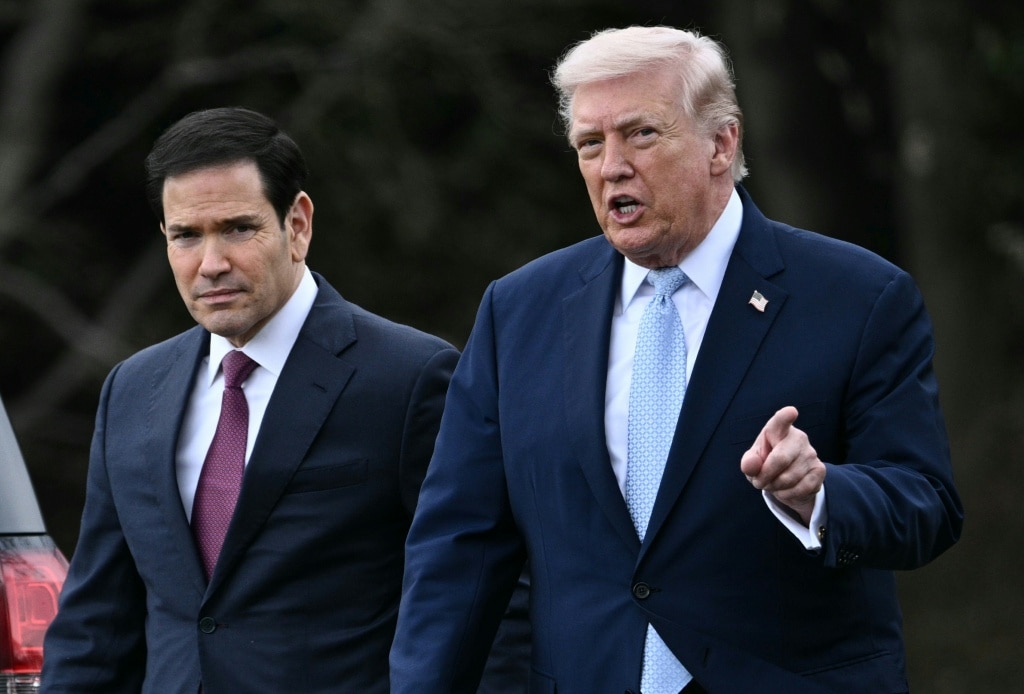
    WASHINGTON — In a striking defiance of judicial authority, former President Donald Trump announced his intention to preserve existing tariff structures through alternative legal mechanisms after the Supreme Court declared his previous use of presidential powers unconstitutional.

    The landmark 6-3 ruling determined that Trump had overstepped his authority under the International Economic Emergency Powers Act (IEEPA) when implementing tariffs. During an impassioned press conference at the White House briefing room, Trump delivered scathing criticism toward the six justices who formed the majority opinion, expressing profound disappointment in their decision.

    “The Supreme Court’s ruling on tariffs is deeply disappointing, and I’m ashamed of certain members of the Court—absolutely ashamed—for lacking the courage to do what’s right for our nation,” Trump stated. His condemnation extended specifically to Chief Justice John Roberts and Justices Amy Coney Barrett, Neil Gorsuch, Ketanji Brown Jackson, Elena Kagan, and Sonia Sotomayor, whom he described as “a disgrace to our nation” and “unpatriotic and disloyal to our Constitution.”

    Despite the judicial setback, Trump revealed plans to implement identical tariff measures under Section 122 authorities, asserting that alternative statutory frameworks provide even stronger presidential powers than IEEPA. He announced intentions to sign an executive order imposing a 10% global tariff overlay atop existing tariff structures.

    When questioned about restitution for billions collected under the invalidated tariffs, Trump indicated no immediate plans for reimbursement, noting that the Court’s opinion omitted specific guidance on redress. The matter would likely require extended litigation, potentially spanning years.

    The former president dismissed any necessity for congressional authorization, maintaining that existing statutes provide sufficient authority for tariff implementation. This development occurs amidst preparations for Trump’s upcoming address to a joint session of Congress, where several Supreme Court justices traditionally attend. Trump expressed indifference toward their potential attendance, suggesting they were “barely” still invited despite having no constitutional authority to exclude legislative branch guests.

  • US ambassador Huckabee says Israel has right to take over ‘all’ of Middle East

    US ambassador Huckabee says Israel has right to take over ‘all’ of Middle East

    In a televised exchange that has ignited significant controversy, US Ambassador to Israel Mike Huckabee engaged in a theological and geopolitical debate with conservative commentator Tucker Carlson regarding Israel’s territorial rights. The discussion, aired on Friday’s episode of The Tucker Carlson Show, centered on biblical interpretations of land promised to the Jewish people.

    Carlson directly questioned Huckabee about the boundaries described in Genesis 15, which references territory spanning from the Nile to the Euphrates rivers—encompassing approximately five modern nations alongside currently occupied Palestinian territories. When pressed on whether Israel held divine entitlement to this extensive region, Huckabee responded that “it would be fine if they took it all,” though he subsequently characterized this as “somewhat of a hyperbolic statement.

    The ambassador later clarified his position, asserting that Israel seeks only to protect its citizens rather than actively conquer neighboring states. However, he notably added that if Israel were attacked and subsequently victorious in such conflicts, the acquisition of additional territory would become “a whole other discussion.”

    This exchange occurs against the backdrop of Huckabee’s June statements to Bloomberg News, where he declared that establishing a Palestinian state in the occupied West Bank no longer represents US policy objectives. The ambassador suggested instead that Israel’s “Muslim neighbours” might surrender land to facilitate Palestinian statehood.

    The interview concluded with unexpected consequences for Carlson’s production team. Following his sit-down with Huckabee in Israel, Carlson reported that Israeli security officials detained him and confiscated passports, questioning his executive producer about the interview’s content. Carlson subsequently criticized both Israeli authorities and the American embassy for their handling of the incident, asserting that American citizens cannot expect their government to prioritize their interests over those of the Israeli government.

    The full 165-minute interview, released Friday, has sparked renewed debate about Christian Zionism, US foreign policy in the Middle East, and the appropriate role of religious texts in modern geopolitical discourse.

  • How will Trump’s new 10% global tariffs work and what’s next?

    How will Trump’s new 10% global tariffs work and what’s next?

    In a landmark constitutional decision, the U.S. Supreme Court has delivered a significant check on presidential authority, ruling 6-3 that former President Donald Trump exceeded his executive powers when implementing sweeping global tariffs. The February 20th ruling specifically addressed tariffs enacted under the International Emergency Economic Powers Act (IEEPA) of 1977, which Trump had invoked citing national emergencies including fentanyl trafficking and the U.S. trade deficit.

    The court’s majority opinion emphasized that Congress alone holds the power to create new taxes, determining that IEEPA authorization for trade regulation did not extend to revenue-raising measures. This decision potentially opens the door to refund claims totaling approximately $130 billion collected through these tariffs, though the high court provided no specific guidance on reimbursement procedures, likely setting the stage for extended legal battles.

    Within hours of the ruling, President Trump issued a proclamation utilizing Section 122 of the 1974 Trade Act—a previously unused provision—to implement a new 10% temporary tariff on imports from nearly all trading partners. This emergency measure can remain in effect for 150 days before requiring congressional approval, creating a temporary solution while the administration explores permanent alternatives.

    The White House indicated that even countries with existing trade agreements (including the UK, EU, and India) would be subject to the new blanket tariff rather than their negotiated rates. Certain exemptions apply for critical materials including pharmaceuticals, electronics, vehicles, aerospace products, and agricultural commodities deemed essential to the U.S. economy.

    Treasury Secretary Scott Bessent projected that combining Section 122 tariffs with enhanced duties under Section 232 (national security) and Section 301 (unfair trade practices) authorities would essentially offset revenue losses from the overturned IEEPA tariffs. The administration continues to investigate additional legal avenues for maintaining its protectionist trade agenda.

    The ruling represents a substantial judicial constraint on Trump’s economic nationalism agenda, though numerous industry-specific tariffs implemented under other statutes remain unaffected. Business communities expressed cautious optimism while acknowledging potential complications from the new temporary tariffs and uncertain refund processes that may disadvantage smaller enterprises lacking legal resources.

  • Supreme Court says little about redress for Trump tariff damages

    Supreme Court says little about redress for Trump tariff damages

    In a landmark 6-3 ruling on Friday, the US Supreme Court declared that former President Donald Trump overstepped his executive authority by invoking emergency powers to impose sweeping global tariffs. Chief Justice John Roberts, writing for the majority, asserted that the 1977 International Emergency Economic Powers Act (IEEPA) contains no provision granting unilateral tariff-imposing power to the president.

    The decision in Learning Resources, Inc. v. Trump represents a severe judicial blow to Trump’s signature trade policy, which triggered international trade conflicts and imposed substantial financial burdens on American consumers and businesses. The ruling specifically invalidates two major tariff categories: country-specific ‘reciprocal’ tariffs (ranging from 34% on China to 10% baseline rates) and a 25% levy on certain goods from Canada, China, and Mexico related to fentanyl policy disputes.

    According to congressional Democratic analysis released following the verdict, the average American family has absorbed over $1,700 in additional costs since the implementation of these tariffs during Trump’s second term. The policy also failed to achieve its stated economic objectives, with manufacturing jobs declining by approximately 108,000 in the first year of implementation and no measurable improvement in the US trade deficit.

    While businesses may pursue tariff refunds through lengthy administrative processes, consumers face minimal prospects for recovering their increased expenses. Policy experts warn that economic repercussions will persist for years, with Groundwork Collaborative’s Alex Jacquez noting that ‘any consumer looking for relief from tariff-driven price hikes did not find it at the Supreme Court today.’

    The ruling has prompted immediate evaluation of alternative legal mechanisms within the Trump administration, including Section 122 of the Trade Act of 1974, which provides broader tariff authority with fewer procedural constraints. Congressional Democrats have expressed concern that the decision may merely redirect rather than eliminate Trump’s tariff ambitions, with Representative Brendan Boyle warning of continued ‘unhinged economic sabotage’ through alternative statutory pathways.