分类: politics

  • Pakistan says it struck militant hideouts along Afghan border after surge in deadly attacks

    Pakistan says it struck militant hideouts along Afghan border after surge in deadly attacks

    ISLAMABAD — Pakistan’s military launched precision strikes along its volatile border with Afghanistan in the early hours of Sunday, targeting what it described as militant sanctuaries responsible for recent attacks within Pakistani territory. The operation marks a significant escalation in regional tensions between the neighboring nations.

    Information Minister Attaullah Tarar confirmed via social media platform X that Pakistani forces executed “intelligence-based, selective operations” against seven camps operated by the Pakistani Taliban (Tehrik-e-Taliban Pakistan, or TTP) and affiliated militant organizations. The minister further disclosed that an Islamic State affiliate was also neutralized during the border region offensive.

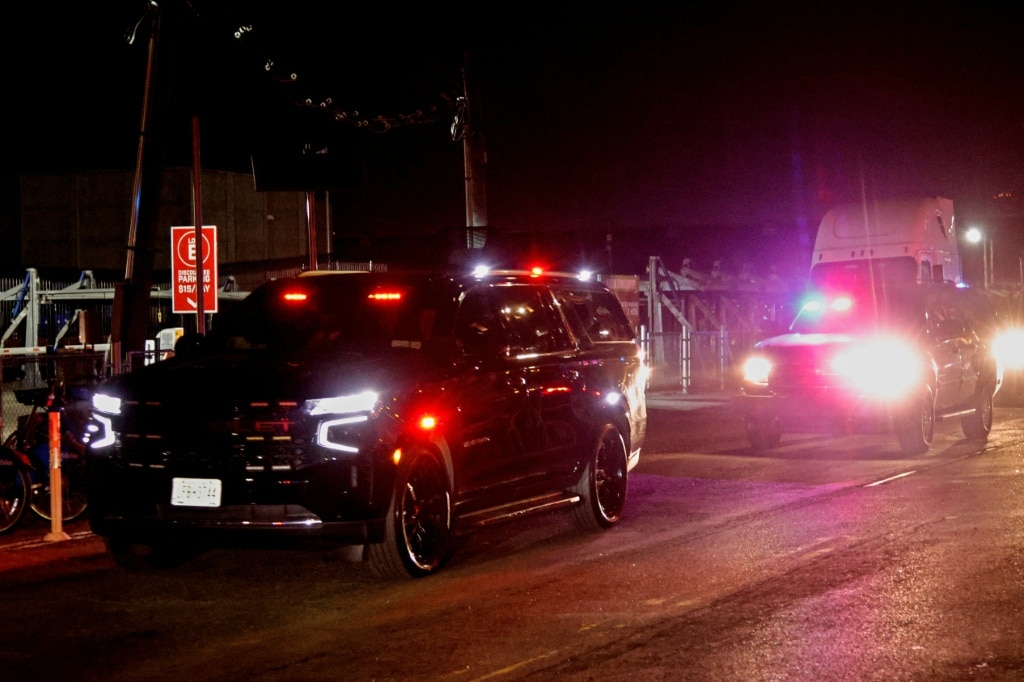
    The strategic military action follows a devastating suicide bombing in Bajaur district, where assailants detonated an explosives-laden vehicle against a security post, resulting in the deaths of 11 soldiers and one child. Authorities subsequently identified the perpetrator as an Afghan national. Hours preceding the border strikes, another suicide attack targeted a security convoy in Bannu district, claiming the lives of two soldiers including a lieutenant colonel.

    Minister Tarar presented what he termed “conclusive evidence” connecting recent attacks—including the massacre of 31 worshippers at a Shiite mosque in Islamabad earlier this month—to militant leadership operating from Afghan soil. The minister asserted that Pakistan had repeatedly urged Afghanistan’s Taliban administration to implement verifiable measures preventing cross-border militant activities, but alleged no substantive action had been taken.

    Pakistan’s military command issued a stern warning following Saturday’s violence, declaring it would not “exercise any restraint” and that counterterrorism operations would continue “irrespective of their location”—a clear indication of potential further cross-border actions.

    Bilateral relations have remained severely strained since October, when deadly border clashes resulted in numerous casualties among military personnel, civilians, and suspected militants. Although a Qatar-mediated ceasefire has generally maintained tenuous stability, diplomatic negotiations in Istanbul failed to produce a formal agreement, leaving tensions simmering.

    Pakistan has experienced a alarming surge in militant violence in recent years, primarily attributed to TTP and outlawed Baloch separatist groups. The TTP maintains close ideological and operational ties with Afghanistan’s Taliban government, which returned to power in 2021. Islamabad consistently alleges that the TTP operates with impunity from Afghan territory—accusations both the militant group and Kabul authorities deny.

    The Pakistani government is now urging the international community to pressure Taliban authorities in Afghanistan to honor commitments made under the Doha Agreement, particularly provisions prohibiting the use of Afghan territory for attacks against neighboring nations.

  • Trump open to ‘token’ Iran nuclear deal if every path to a bomb is blocked

    Trump open to ‘token’ Iran nuclear deal if every path to a bomb is blocked

    The Trump administration is evaluating a diplomatic proposal that would allow Iran to maintain minimal, symbolic levels of uranium enrichment, provided all potential pathways to nuclear weapons development are completely eliminated, according to an Axios report citing senior U.S. officials. This consideration represents a fragile diplomatic opening even as military strike options remain actively prepared.

    Despite the longstanding U.S. demand for ‘zero enrichment,’ both Iranian Foreign Minister Abbas Araghchi and American officials have indicated that limited enrichment might be negotiable if Iran can verifiably demonstrate no proliferation risk. The proposal faces significant skepticism within the administration and among regional allies, with one senior official stating Iran must present ‘an offer we can’t refuse’ to avoid military confrontation.

    Iran is expected to submit its comprehensive proposal within days, outlining both political commitments and technical measures developed with guidance from UN nuclear watchdog chief Raphael Grossi. The plan aims to guarantee Tehran’s nuclear program remains exclusively peaceful in exchange for sanctions relief.

    Meanwhile, military tensions continue to escalate. The Pentagon has drafted strike options that reportedly include targeting Supreme Leader Ali Khamenei and his son Mojtaba. The recent deployment of the USS Gerald R Ford aircraft carrier—the world’s largest—has brought additional thousands of U.S. troops and firepower to the region, mirroring pre-attack deployments from last year.

    Iran’s Revolutionary Guard Corps has responded with military exercises in the strategic Strait of Hormuz, testing drones, missiles, and deploying ships and helicopters. White House officials emphasize that only President Trump knows his final decision, with one adviser noting: ‘He might wake up tomorrow and say: That’s it.’

    The diplomatic maneuvering occurs against the backdrop of discreet talks between the two nations, with Khamenei recently warning Trump would be unable to ‘destroy’ the Islamic Republic. Both sides appear to be positioning themselves for either negotiated resolution or military escalation, with the senior U.S. official concluding: ‘The ball is in their court.’

  • Brazil and India agree to boost cooperation on rare earths

    Brazil and India agree to boost cooperation on rare earths

    In a significant move to strengthen South-South cooperation, Brazil and India have established a comprehensive framework for collaboration on critical minerals and rare earth elements. The agreement, finalized during Brazilian President Luiz Inácio Lula da Silva’s state visit to India, represents a strategic alignment between two founding members of the BRICS+ bloc seeking to diversify their global partnerships.

    The non-binding memorandum of understanding establishes pathways for reciprocal investment, joint exploration initiatives, mining operations, and artificial intelligence applications in mineral processing. Brazil, possessing the world’s second-largest reserves of rare earth minerals essential for manufacturing smartphones, electric vehicles, solar panels, and jet engines, brings substantial resources to this partnership.

    President Lula characterized the agreement as “pioneering” during his press statements, emphasizing that “increasing investments and cooperation in matters of renewable energy and critical minerals is at the core” of the newly signed accord. The Brazilian delegation, comprising 11 ministers and numerous business leaders, signaled the importance both nations place on this strategic alignment.

    International relations experts interpret this development as part of both countries’ broader strategy to achieve greater autonomy from China and the United States through diversification of partnerships. Professor Oliver Stuenkel of the Getulio Vargas Foundation noted that Brazil’s previous confrontation with the Trump administration over tariffs accelerated Brazil’s recognition of the geopolitical significance of these resources.

    The agreement comes amid growing global competition for critical minerals and follows Prime Minister Narendra Modi’s visit to Brazil in July 2023. Beyond mineral resources, the two nations also established legal frameworks covering entrepreneurship, health, scientific research, and education, indicating a comprehensive approach to bilateral relations.

  • Trump administration fires Virginia prosecutor hours after judges appointed him

    Trump administration fires Virginia prosecutor hours after judges appointed him

    In an unprecedented move that underscores deepening tensions between the executive and judicial branches, the Trump administration terminated James W. Hundley mere hours after his appointment as interim U.S. Attorney for the Eastern District of Virginia. A bipartisan judicial panel had unanimously selected Hundley—a seasoned litigator with over thirty years of legal experience—to fill the vacancy left by former prosecutor Erik Siebert, who resigned under presidential pressure in September.

    The dismissal was publicly announced by Deputy Attorney General Todd Blanche via social media, who asserted that presidential authority supersedes judicial appointments in designating U.S. Attorneys. This marks the second instance this month where the administration has ousted a judge-appointed prosecutor, igniting fresh concerns over adherence to constitutional appointment processes.

    Legal scholars highlight that the district court judges invoked a statutory provision permitting judicial appointments when a U.S. Attorney’s term expires. Conversely, the Justice Department maintains that the President and Attorney General retain ultimate authority over interim appointments. Critics accuse the administration of circumventing Senate confirmation procedures, a pattern observed in multiple states including New York, New Jersey, California, and Nevada, where courts have previously ruled Trump-appointed attorneys served unlawfully.

    The Virginia position holds particular significance due to its connection to high-profile investigations involving New York Attorney General Letitia James and former FBI Director James Comey. Siebert, who previously held the role, had overseen a mortgage fraud probe against James—a Democrat who previously sued Trump for civil fraud. After Siebert declined to pursue criminal charges citing insufficient evidence, Trump demanded his removal and replaced him with Lindsey Halligan, a White House aide and personal attorney. Halligan swiftly secured indictments against both James and Comey, though a federal judge dismissed these cases in November, declaring Halligan’s appointment illegal.

    Hundley, in a statement to the BBC, expressed honor in his brief appointment and pledged continued support for the justice system despite his abrupt dismissal. The conflict reflects broader struggles over the independence of judicial appointments and the administration’s approach to legal authority.

  • Ex-UK Prime Minister Johnson calls on allies to send noncombat troops to Ukraine ahead of ceasefire

    Ex-UK Prime Minister Johnson calls on allies to send noncombat troops to Ukraine ahead of ceasefire

    Former UK Prime Minister Boris Johnson has called for Western nations to immediately deploy noncombat military personnel to Ukraine, marking a significant departure from current allied strategy. Speaking ahead of the fourth anniversary of Russia’s full-scale invasion, Johnson advocated for positioning troops in peaceful regions of Ukraine to demonstrate unwavering Western commitment to Ukrainian sovereignty.

    The controversial proposal, outlined in a BBC interview scheduled for broadcast Sunday, challenges the current coalition approach that envisions troop deployment only after a ceasefire agreement. Johnson, who emerged as one of Ukraine’s most vocal supporters during his premiership, argued that delaying military presence effectively cedes initiative to Russian President Vladimir Putin.

    ‘If we are willing to do it in the context of a ceasefire, which of course puts all the initiative, all the power, in Putin’s hands, why not do it now?’ Johnson questioned. ‘There is no logical reason that I can see why we shouldn’t send peaceful ground forces there to show our support.’

    Western military planners have consistently avoided public discussion of such deployments due to concerns about Russian perceptions of escalation. Putin previously declared in September that any international troops entering Ukraine would be considered ‘legitimate targets.’

    In response to Johnson’s remarks, Britain’s Ministry of Defense reaffirmed its current strategy: ‘The multinational force Ukraine under UK leadership will secure peace for the long term, with the Prime Minister being clear that we will put British troops on the ground following the end of hostilities.’

    Johnson contextualized the current conflict within broader Western foreign policy failures, citing inadequate response to the 2014 Crimea invasion, failure to punish Bashar al-Assad for chemical weapons usage in Syria, and the chaotic withdrawal from Afghanistan. He asserted that these events collectively emboldened Putin’s aggressive actions in February 2022.

  • Trump says he will increase global tariffs to 15%

    Trump says he will increase global tariffs to 15%

    In a dramatic escalation of his trade policy agenda, former President Donald Trump has declared his intention to impose sweeping 15% tariffs on all imported goods entering the United States. This decisive move comes as a direct response to Friday’s Supreme Court decision that invalidated his previous tariff structure, which the court deemed an unconstitutional overreach of presidential authority.

    The announcement, made through Trump’s Truth Social platform on Saturday, represents a significant increase from the 10% global tariff he initially proposed just one day earlier. The new tariff regime, scheduled to take effect on Tuesday, February 24, will be implemented under provisions of a previously unused trade law that permits such measures without immediate congressional approval for approximately five months.

    This development creates immediate complications for several key U.S. trading partners, particularly the United Kingdom and Australia, which had previously negotiated bilateral agreements capping tariffs at 10%. The sudden policy shift undermines these carefully constructed diplomatic arrangements and threatens to destabilize existing trade relationships.

    Trump justified the aggressive tariff increase as a necessary response to what he characterized as a ‘ridiculous, poorly written, and extraordinarily anti-American decision’ by the Supreme Court. In remarkably blunt language, the former president expressed shame toward certain justices and labeled those who rejected his trade policy as ‘fools.’

    The court’s 6-3 ruling determined that Trump had exceeded his constitutional authority when implementing previous tariffs under the 1977 International Emergency Economic Powers Act. The majority opinion included an unusual coalition consisting of the court’s three liberal justices, Chief Justice John Roberts, and two Trump-appointed justices—Amy Coney Barrett and Neil Gorsuch. The dissent came from conservative justices Clarence Thomas, Brett Kavanaugh, and Samuel Alito.

    This tariff initiative represents a cornerstone of Trump’s economic nationalism agenda, which aims to incentivize domestic manufacturing and discourage offshore production through protectionist trade measures. The constitutional confrontation between the executive and judicial branches sets the stage for a significant test of presidential powers regarding international trade policy.

  • Opposition activists among 379 prisoners set for release under Venezuela’s amnesty

    Opposition activists among 379 prisoners set for release under Venezuela’s amnesty

    Venezuelan authorities have commenced a significant prisoner release initiative, with 379 individuals detained for political reasons expected to gain freedom this weekend under a newly enacted amnesty law. The measure, signed into law Thursday, represents a dramatic policy reversal for a government that has historically denied holding political prisoners.

    The amnesty legislation benefits opposition figures, activists, human rights defenders, and journalists who have been detained for periods ranging from months to years. Jorge Arreaza, president of the special commission overseeing the law’s implementation, announced on state television Friday that all received applications would be processed for release between Friday and Saturday, with additional releases possible within the next 15 days.

    This development follows last month’s U.S. military operation in Caracas that resulted in the capture of former President Nicolás Maduro. Current acting President Delcy Rodríguez characterized the law as demonstrating political leaders’ willingness to “let go of a little intolerance and open new avenues for politics in Venezuela.”

    However, the legislation contains significant exclusions for those convicted of homicide, drug trafficking, serious human rights violations, and military rebellion. Human rights organizations have criticized these limitations, arguing they prevent true national reconciliation.

    Alfredo Romero, president of prisoners’ rights group Foro Penal, declared on social media that excluding military personnel and prominent political figures makes the law “discriminatory and unconstitutional,” adding that genuine national coexistence cannot exist under these conditions.

    According to monitoring by Venezuela-based nonprofit Justice, Encounter and Forgiveness, 459 detainees held for political reasons were released between January 8 and February 20, though relatives and watchdogs have criticized the slow pace and restrictive conditions of releases.

  • US Supreme Court strikes down Trump’s global tariffs: What’s next?

    US Supreme Court strikes down Trump’s global tariffs: What’s next?

    The United States Supreme Court has delivered a landmark ruling striking down former President Donald Trump’s comprehensive global tariff regime, creating immediate economic turbulence and setting the stage for prolonged legal battles. While providing temporary relief to import-dependent industries, the decision has unleashed a complex aftermath of refund claims and policy uncertainty.

    The conservative-majority court’s rejection of tariffs imposed under emergency economic powers has invalidated approximately $133.5 billion in duties collected between January 2025 and December 2025. The ruling notably omitted guidance on refund procedures, transferring this contentious issue to lower courts. According to ING analysts Carsten Brzeski and Julian Geib, the U.S. Court of International Trade will likely oversee a fragmented reimbursement process requiring individual lawsuits from affected importers. Already, over 1,000 corporate entities have initiated legal actions, prompting Trump’s prediction of continuous litigation spanning five years.

    Within hours of the decision, Trump announced alternative measures including a new 10% import levy under Section 122 of the Trade Act of 1974. This temporary authority permits 150-day tariffs unless congressional extension occurs. Simultaneously, the administration has signaled intentions to pursue more permanent duties through Section 301 investigations targeting alleged unfair trade practices.

    Josh Lipsky of the Atlantic Council characterizes the development as merely opening “a new chapter” in Trump’s trade policy, forecasting continued volatility for businesses and complicated negotiations with international partners. The ruling effectively removes what Treasury Secretary Scott Bessent described as a “custom-made” tool for rapid leverage assertion against trading nations.

    While existing trade agreements likely remain intact according to Wendy Cutler of the Asia Society Policy Institute, ongoing negotiations may experience shifted power dynamics. The immediate consumer impact reflects a reduction in average effective tariff rates from 16.9% to 9.1%—still representing the highest levels since 1946 excluding 2025.

    Economists anticipate this judicial intervention will compel a comprehensive reset of tariff implementation strategies. Navy Federal Credit Union’s Heather Long projects that the ruling will likely result in lower overall duty rates and more methodical future trade policy execution, despite administrative intentions to establish enduring tariff structures.

  • UK should send non-combat troops to Ukraine now, former PM Johnson tells BBC

    UK should send non-combat troops to Ukraine now, former PM Johnson tells BBC

    Former British Prime Minister Boris Johnson has called for the immediate deployment of Western non-combat troops to Ukraine, arguing such a move could fundamentally alter Russian President Vladimir Putin’s strategic calculations. In an exclusive interview with BBC’s Sunday with Laura Kuenssberg, Johnson contended that if Western nations plan to station peacekeeping forces after a potential ceasefire, they should consider doing so immediately in peaceful regions of Ukraine.

    Speaking alongside former UK military chief Admiral Sir Tony Radakin, Johnson reflected on the fourth anniversary of Russia’s invasion, suggesting the conflict could have been prevented had Western allies responded more decisively to Putin’s 2014 annexation of Crimea. Both Johnson and Radakin acknowledged that Western support for Ukraine, while substantial, has often been delayed through months of cautious deliberation they described as ‘incrementalism.’

    Johnson characterized this hesitation as needless delay that has ultimately cost Ukrainian lives. ‘We’ve always delayed needlessly,’ he stated. ‘We’ve then ended up giving the Ukrainians what they have been asking for, and actually it’s always served to their advantage and to the disadvantage of Putin. The one person who suffers from escalation is Putin.’

    The former prime minister specifically proposed that UK and allied forces could be deployed to secure areas of Ukraine in non-combat roles, such as training, logistical support, or infrastructure protection. This presence, he argued, would demonstrate constitutional support for Ukrainian sovereignty without directly engaging in combat operations.

    Johnson also offered a critical assessment of Western foreign policy failures that he believes emboldened Putin, including the inadequate response to chemical weapons use in Syria, the chaotic withdrawal from Afghanistan, and what he termed ‘the general ambiguity of the Western position’ regarding Ukraine.

    Admiral Radakin separately addressed defense spending, urging the UK government to clarify its commitment to allocate 3.5% of national income to defense by 2035—a pledge made at last year’s NATO summit. He emphasized that while the UK remains secure as a nuclear power within NATO, sustained investment is essential for long-term security amid a ‘weak but dangerous’ Russia.

    The proposal to deploy troops represents a significant escalation beyond current Western policy, which has consistently ruled out direct military presence. The UK government is reportedly working with allies to plan a ‘coalition of the willing’ that would provide forces only after a formal peace agreement is established.

  • Hungary says it will block a key EU loan to Ukraine until Russian oil shipments resume

    Hungary says it will block a key EU loan to Ukraine until Russian oil shipments resume

    BUDAPEST, Hungary — In a significant escalation of regional tensions, Hungary has declared it will veto the European Union’s proposed €90 billion ($106 billion) financial assistance package for Ukraine until Russian oil shipments through the Druzhba pipeline are fully restored. The announcement came from Hungarian Foreign Minister Péter Szijjártó, who accused Ukrainian authorities of deliberately obstructing energy supplies to Central Europe.

    The diplomatic confrontation stems from the January 27 interruption of Russian oil deliveries to Hungary and Slovakia, which occurred after Ukrainian officials reported damage to the Druzhba pipeline following a suspected Russian drone attack. Both Central European nations, which maintain exemptions from EU sanctions on Russian oil imports, have alleged without presenting concrete evidence that Ukraine is intentionally delaying the resumption of flows.

    In a social media address delivered Friday evening, Minister Szijjártó characterized Ukraine’s actions as economic blackmail, stating: ‘We will not yield to this pressure tactic. While we don’t support Ukraine’s military efforts, we refuse to bear the cost. Until Ukraine permits oil transit to Hungary, we will obstruct EU decisions beneficial to Ukraine.’

    This funding blockade represents the latest in a series of confrontational moves from Budapest, coming just days after Hungary suspended diesel shipments to Ukraine and mere days before the fourth anniversary of Russia’s full-scale invasion. The position highlights Hungary’s outlier status within the EU and NATO, as nearly all other member states have dramatically reduced or completely eliminated Russian energy imports since February 2022.

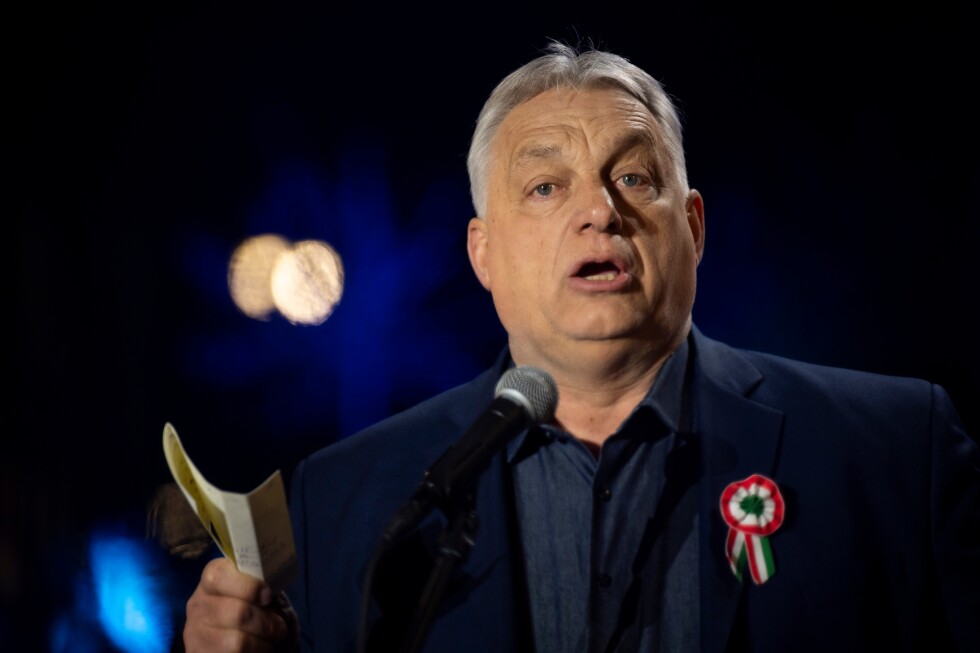
    Prime Minister Viktor Orbán’s government continues to maintain that Russian fossil fuels remain essential for Hungary’s economic stability, arguing that alternative energy sources would trigger immediate economic collapse—a position disputed by numerous energy experts. As the Kremlin’s most vocal supporter within the EU, Orbán has consistently opposed sanctions targeting Russia’s energy sector and repeatedly threatened to veto Union-wide support measures for Ukraine.

    The €90 billion loan package, approved by the EU in December to address Ukraine’s military and economic requirements over the next two years, already faced opposition from Hungary, Slovakia, and the Czech Republic. A compromise arrangement had previously been reached wherein these nations abstained from blocking the loan in exchange for financial safeguards.