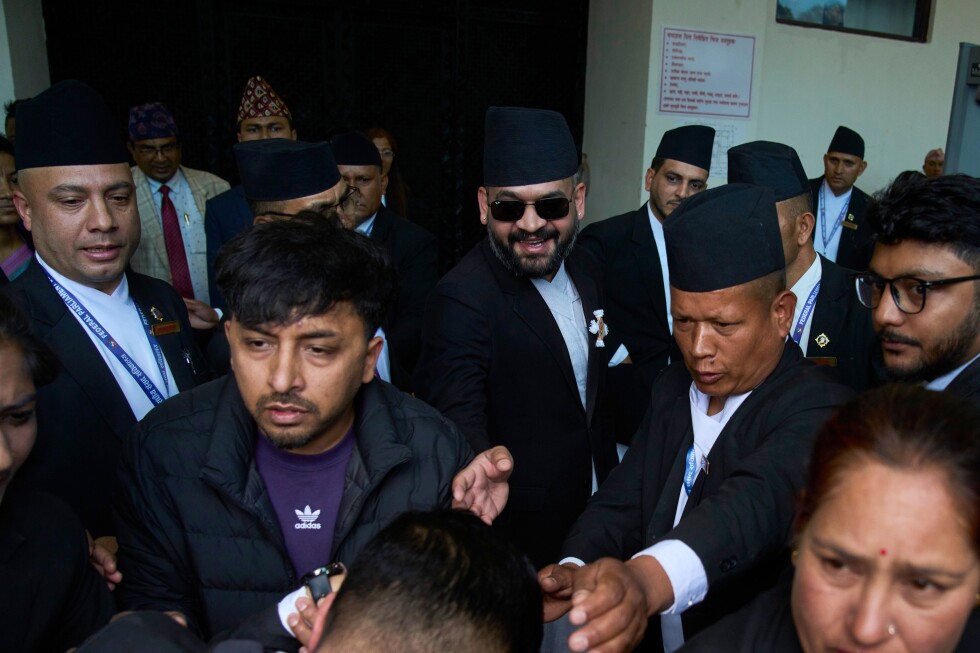
KATHMANDU, Nepal — Nepal’s political establishment witnessed an unprecedented transformation on Thursday as newly elected parliamentarians took their oaths of office, with a remarkable two-thirds majority belonging to a party established less than four years ago. The Rastriya Swatantra Party (RSP), fronted by former rapper turned political phenomenon Balendra Shah, achieved a landslide victory in the nation’s first electoral contest following last year’s youth-led uprising.
The 275-member House of Representatives, which constitutes the powerful lower chamber of Nepal’s parliament, will see these representatives serve five-year terms. The RSP secured an overwhelming mandate through both direct elections and proportional representation, capturing 125 directly elected seats supplemented by 57 additional seats through the proportional system. This combined total of 182 seats dramatically surpasses the second-place Nepali Congress party, which managed only 38 seats.
Shah, anticipated to be formally nominated as prime minister following a party leadership confirmation, is scheduled to assume office on Friday after presidential appointment. His political ascent began with a surprising victory in the 2022 Kathmandu mayoral race before emerging as a central figure in the 2025 popular revolt that ultimately unseated former Prime Minister Khadga Prasad Oli.
The RSP’s extraordinary electoral performance represents a direct challenge to Nepal’s traditionally dominant political forces, notably the Nepali Congress and the Communist Party of Nepal (Unified Marxist–Leninist). Last year’s widespread demonstrations, initially sparked by government-imposed social media restrictions, rapidly evolved into a full-scale uprising addressing systemic corruption and governance failures. The protests turned deadly when security forces opened fire on demonstrators attacking government installations, resulting in numerous fatalities and hundreds injured.