分类: politics

  • Trump pushes back against Supreme Court ruling, says will impose 10% more global tariffs

    Trump pushes back against Supreme Court ruling, says will impose 10% more global tariffs

    In a defiant response to a recent Supreme Court decision, former US President Donald Trump has announced his intention to impose a new 10% global tariff, leveraging alternative legal mechanisms to circumvent judicial limitations on his trade agenda.

    Speaking at a press conference on Friday, Trump characterized the Court’s 6-3 ruling against his previous sweeping tariffs as “deeply disappointing,” expressing particular dismay with the justices who formed the majority. The Court’s decision specifically invalidated the use of the International Emergency Economic Powers Act (IEEPA) as the legal basis for those tariffs.

    Undeterred, Trump revealed his administration’s alternative strategy: implementing the new across-the-board levy under Section 122 of the Trade Act of 1974. This statute empowers the president to impose duties of up to 15% for 150 days to address “large and serious” balance of payments deficits. “We have alternatives that could bring us more money,” Trump stated, emphasizing that “the Supreme Court did not overrule tariffs, they only overruled a particular use of IEEPA tariffs.”

    Addressing potential financial repercussions from the overturned tariffs, Trump suggested refund litigation could extend over five years. Concurrently, his administration is initiating multiple Section 301 investigations targeting alleged unfair trade practices by foreign nations and corporations, signaling an intensified approach to trade enforcement despite judicial constraints.

  • UK to consider removing Andrew from royal succession line, official says

    UK to consider removing Andrew from royal succession line, official says

    The British government is preparing to initiate unprecedented constitutional proceedings that could permanently remove Prince Andrew from the royal line of succession, according to an official statement released on Friday. This extraordinary measure, which would represent one of the most significant modifications to royal succession protocols in modern history, awaits the conclusion of the ongoing police investigation into the Duke of York’s associations with convicted sex offender Jeffrey Epstein.

    A senior UK official, speaking on condition of anonymity, revealed that legislative action would be contemplated once law enforcement authorities complete their examination of Andrew’s connections to the disgraced financier. The potential removal of a direct heir to the throne requires navigating complex constitutional channels, including obtaining consensus from all Commonwealth realms where King Charles III serves as head of state.

    This development marks a dramatic escalation in the royal crisis surrounding Prince Andrew, whose public standing has deteriorated substantially since his association with Epstein became subject to criminal investigation. The proposed legislative measure underscores the seriousness with which the government approaches the allegations and their potential impact on the monarchy’s integrity.

    The constitutional process involves intricate diplomatic coordination across multiple sovereign nations, including Australia, Canada, and New Zealand, all of which must ratify any alterations to the established line of succession. This multinational requirement reflects the complex nature of the Commonwealth’s shared constitutional monarchy system.

    The government’s consideration of this extraordinary step demonstrates the increasing pressure on the royal institution to address the controversies surrounding Prince Andrew’s conduct and associations. While the palace has previously distanced itself from the Duke’s activities, this potential constitutional action represents an unprecedented formal response to the ongoing scandal.

  • ‘Board of Peace’ debut sparks fears for Gaza’s future

    ‘Board of Peace’ debut sparks fears for Gaza’s future

    The inaugural session of the Trump-proposed Board of Peace for Gaza convened Thursday at the newly renamed Donald J Trump Institute for Peace in Washington DC, generating immediate controversy across multiple fronts. President Trump, designated as the board’s lifetime chairman, presided over a meeting that outlined a $7 billion commitment from nine nations toward Gaza relief efforts and revealed plans for a controversial $10 billion allocation of U.S. taxpayer funds for the board’s broader operations.

    Bulgarian diplomat Nickolay Mladenov, appointed to oversee Gaza’s demilitarization, reported that police recruitment with 2,000 Palestinian enlistments was already underway, emphasizing that reconstruction would not commence until Hamas was fully disarmed. The proceedings were immediately met with fierce criticism from lawmakers and social media users who questioned the legality of allocating federal funds without Congressional approval.

    The meeting featured several controversial moments, including Jared Kushner’s assertion that no participants would “personally” profit from Gaza’s reconstruction—a statement many observers found deliberately misleading given Kushner’s unofficial role as a government volunteer. Billionaire Apollo Global Management CEO Marc Rowan raised additional concerns by quantifying Gaza’s coastline as “$50 billion of value alone” that needed “unlocking and financing.”

    International reactions drew particular scrutiny, with Pakistan’s Prime Minister Shehbaz Sharif labeling Trump the “saviour of South Asia” and Kazakhstan’s president presenting an award to Trump—gestures critics described as “beyond parody” and emblematic of a servile diplomatic culture. The absence of any mention of “Gaza” or “Palestinian” in the board’s charter, combined with the seating of Palestinian representative Ali Shaath without an identified title, further fueled accusations that the initiative disregarded Palestinian interests.

    Palestinian journalist Motasem Dalloul, reporting from Gaza, condemned the proceedings as primarily benefiting Israel while ignoring essential issues like ending the siege, allowing entry of food and medicine, and conducting reconstruction without “blackmail.” The meeting’s peculiarities—including Trump briefly falling asleep during speeches and the YMCA song playing during a group photo—added surreal elements to what many critics characterized as a potentially unlawful appropriation of public funds for private interests.

  • Trump administration pursuing nuclear deal with Saudi Arabia, opening path to enrichment: Report

    Trump administration pursuing nuclear deal with Saudi Arabia, opening path to enrichment: Report

    The Trump administration has formally notified Congress of its intent to pursue a civil nuclear agreement with Saudi Arabia that notably omits stringent non-proliferation safeguards traditionally required by the United States, according to a Reuters exclusive. This proposed ‘123 Agreement’ marks a significant departure from established US policy by not explicitly prohibiting the kingdom from enriching uranium or reprocessing spent nuclear fuel.

    Unlike previous nuclear pacts with nations such as the United Arab Emirates (UAE), which made US cooperation conditional on a commitment to forgo enrichment, the preliminary document with Saudi Arabia stipulates only ‘additional safeguards and verification measures’ for the most sensitive areas of cooperation. This language leaves the door open for Riyadh to potentially develop domestic enrichment capabilities—a move analysts consider far more transformative for the region than the concurrent pursuit of advanced F-35 fighter jet sales.

    US law mandates that a 123 Agreement must be in place before significant nuclear exports can be licensed. Furthermore, lawmakers have historically insisted that partners also adopt the ‘Additional Protocol,’ which grants the International Atomic Energy Agency (IAEA) enhanced inspection powers. The UAE, the only other Gulf state with a US nuclear partnership, signed this protocol in 2009. However, the Trump administration’s November notification to congressional committee heads indicated it is not pursuing this protocol with Saudi Arabia.

    The administration’s report positions US industry at the forefront of Saudi Arabia’s civil nuclear development. The finalized agreement could be submitted to Congress as early as February 22nd, triggering a 90-day review period. During this time, both the House of Representatives and the Senate would need to pass resolutions of disapproval to block the pact in its current form.

    This diplomatic approach underscores President Trump’s deal-centric foreign policy, which often prioritizes economic exports over the non-proliferation concerns of the traditional foreign policy establishment. The concession on enrichment appears to be a key to securing the deal, aligning with Saudi Crown Prince Mohammed bin Salman’s ambition to capitalize on the kingdom’s vast uranium reserves. Energy Minister Prince Abdulaziz bin Salman has publicly stated the intent to enrich and sell uranium, framing it as both an economic imperative and a matter of national pride.

    The nuclear negotiations are part of a broader suite of potential deals with Riyadh. Concurrent discussions on F-35s have involved assurances to lawmakers regarding the maintenance of Israel’s Qualitative Military Edge (QME), with sources indicating the proposed sale involves a lower-grade variant of the jet. Simultaneously, Saudi Arabia is exploring alternative defense partnerships, including a fighter jet co-production deal with Turkey and potential investment in a UK-Italy-Japan next-generation fighter program.

  • Trump lashes out at Supreme Court justices over tariffs ruling

    Trump lashes out at Supreme Court justices over tariffs ruling

    In an extraordinary display of presidential ire, Donald Trump launched a deeply personal broadside against six Supreme Court justices who delivered a landmark ruling against his administration’s global tariff policies. The decision, handed down on Friday, represents one of the most significant judicial setbacks of Trump’s second term.

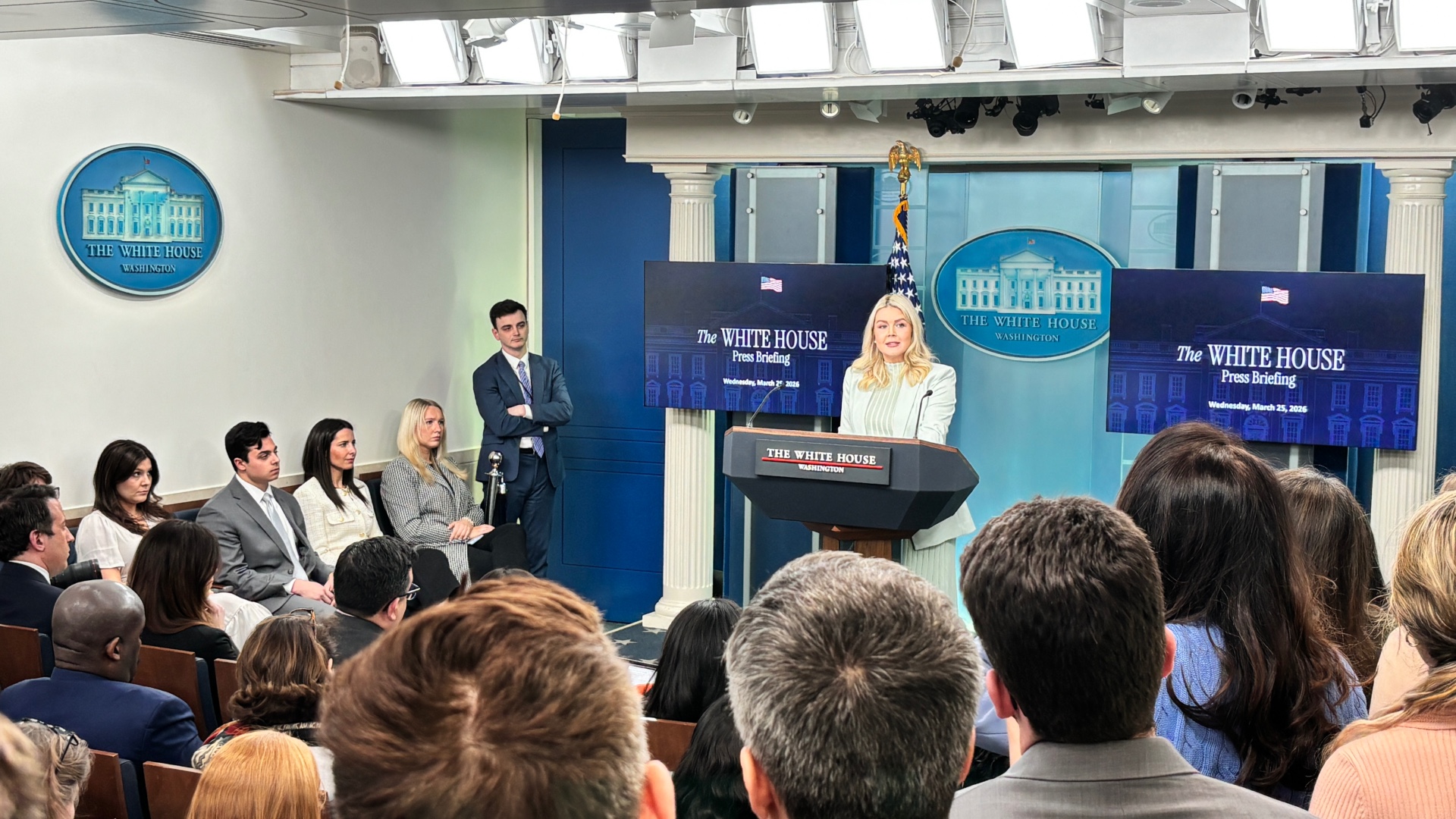
    Addressing reporters at a White House press conference just hours after the ruling, Trump expressed profound disappointment with the court’s majority opinion. ‘I’m ashamed of certain members of the court. Absolutely ashamed for not having the courage to do what’s right for our country,’ the president declared, initiating a sweeping critique of the judicial branch that lasted nearly 45 minutes.

    The court’s ruling established that presidents lack inherent constitutional authority to impose comprehensive tariffs on foreign nations without congressional approval. Trump’s response transcended typical political disagreements, evolving into a remarkable personal indictment of the justices themselves.

    Notably, the president’s criticism crossed ideological and appointment lines equally. The six justices in the majority comprised an unusual coalition: three Democratic-appointed liberals (Elena Kagan, Sonia Sotomayor, and Ketanji Brown Jackson) and three Republican-appointed conservatives, including two of Trump’s own nominees (Neil Gorsuch and Amy Coney Barrett), with Chief Justice John Roberts writing the majority opinion.

    Trump employed particularly harsh rhetoric, labeling the justices ‘fools and lapdogs for the Rhinos and the radical left Democrats’—using the derogatory term ‘RINOs’ (Republicans In Name Only) typically deployed by the far right against moderate Republicans. In an especially unusual move, the president suggested the decision reflected embarrassment to the justices’ families and made unsubstantiated claims about ‘foreign interests’ influencing the court’s deliberation, though he provided no evidence when pressed by reporters.

    Conversely, Trump lavished praise on the three dissenting justices—Clarence Thomas, Samuel Alito, and Brett Kavanaugh (another Trump appointee)—thanking them for ‘their strength and wisdom and love of our country.’ Justice Kavanaugh’s dissent warned of practical complications, predicting the government would face a ‘mess’ in refunding billions in tariff revenue.

    Legal and trade experts characterized the ruling as a victory for constitutional separation of powers and the rule of law. Colin Grabow of the Cato Institute noted the court simply determined Trump had ‘went too far’ in asserting executive authority, while Alan Wm Wolff, former WTO deputy director-general, observed the court was fully aware of the decision’s significance to the administration.

    The president vowed to pursue alternative methods to implement his protectionist trade agenda despite the judicial setback, signaling continued confrontation between the executive and judicial branches.

  • Killing of nationalist student leaves French far left in deep trouble as elections loom

    Killing of nationalist student leaves French far left in deep trouble as elections loom

    A fatal incident in Lyon has triggered a seismic shift in France’s political landscape, potentially upending decades of established norms. The killing of nationalist student Quentin Deranque on February 12th by suspected far-left militants has unleashed a political storm that threatens to redefine the boundaries of acceptable political discourse.

    Mobile footage captured the brutal attack near Sciences Po university, showing masked assailants repeatedly kicking and punching Deranque as he lay defenseless on the ground. The victim, who had been providing security for a small far-right feminist protest, succumbed to severe head injuries.

    The seven suspects charged in connection with the killing maintain ties to La Jeune Garde (The Young Guard), a recently banned organization that previously provided security for radical left party La France Insoumise (LFI). Notably, Jacques-Elie Favrot, charged with complicity to murder, served as parliamentary assistant to LFI deputy Raphaël Arnault, who established the controversial group in 2018.

    This tragedy has ignited intense scrutiny of LFI and its veteran leader Jean-Luc Mélenchon, whose party controls approximately 70 seats in the National Assembly. The political ramifications extend far beyond the courtroom, potentially reversing the long-standing dynamic where the National Rally (RN) traditionally faced isolation for extremist associations.

    The incident occurs just weeks before critical local elections, with potential implications for the 2027 presidential race. For decades, mainstream parties maintained a cordon sanitaire against the far right, but the Lyon killing threatens to legitimize RN while ostracizing the radical left. This paradigm shift could dismantle the anti-RN electoral alliances that previously blocked Marine Le Pen’s party from power.

    Commentator Guillaume Tabard observed in Le Figaro that the political landscape has fundamentally transformed, with Mélenchon’s party now facing the condemnation that historically targeted the far right. The conservative Republicans, with their 50 parliamentary seats, might now consider cooperation with RN, potentially bringing the far right into the political mainstream.

    The mainstream left faces an impossible dilemma: distance themselves from LFI without strengthening the far right. Former Prime Minister Dominique de Villepin warned that exclusive focus on LFI creates ‘a corridor of respectability for the RN,’ granting the far right the appearance of normality it has long sought.

  • Trump brings in new 10% tariff as Supreme Court rejects his global import taxes

    Trump brings in new 10% tariff as Supreme Court rejects his global import taxes

    In a dramatic escalation of tensions between the executive and judicial branches, President Donald Trump has announced a new 10% universal tariff immediately following a landmark Supreme Court ruling that struck down his previous global trade measures. The 6-3 decision, which found the president had exceeded his authority, represents one of the most significant judicial checks on presidential power in recent history.

    The court’s majority opinion, authored by Chief Justice John Roberts, determined that the International Emergency Economic Powers Act of 1977—cited by the administration as legal justification—contained no explicit congressional delegation of tariff-setting authority. ‘When Congress has delegated its tariff powers, it has done so in explicit terms and subject to strict limits,’ Roberts wrote, joined by the court’s three liberal justices and two Trump-appointed conservatives, Amy Coney Barrett and Neil Gorsuch.

    Speaking from the White House briefing room, Trump delivered an extraordinary rebuke of the judicial branch, characterizing the decision as ‘terrible’ and labeling dissenting Republican-appointed justices as ‘fools and lap dogs’ who demonstrated ‘unpatriotic and disloyal’ behavior. The president vowed to continue his trade policy through alternative legal mechanisms, including Section 122—a rarely invoked statute allowing temporary tariffs of up to 15% for 150 days without congressional approval.

    The ruling triggered immediate market reactions, with the S&P 500 gaining 0.7% as business leaders expressed relief. Beth Benike, owner of Minnesota-based Busy Baby products, described feeling ‘like a thousand-pound weight has been lifted off my chest,’ while Terry Precision Cycling CEO Nik Holm called the decision a ‘relief’ despite anticipating lengthy supply chain recovery.

    Legal experts warned that the path to tariff refunds—estimated at $130 billion already collected under the invalidated program—remains fraught with complexity. Diane Swonk, chief economist at KPMG US, cautioned that litigation costs could prevent smaller firms from recouping funds, while trade analyst Geoffrey Gertz noted the situation had ‘only gotten more complicated and more messy.’

    The administration indicated that even nations with existing trade agreements, including the UK, EU, and India, would now face the new universal levy, though officials expect these countries to maintain previously negotiated concessions. European Commission spokespersons stated they were ‘analyzing the ruling carefully’ amid concerns about renewed trade uncertainty.

    This constitutional clash sets the stage for prolonged legal battles and potentially far-reaching implications for presidential authority in international trade matters.

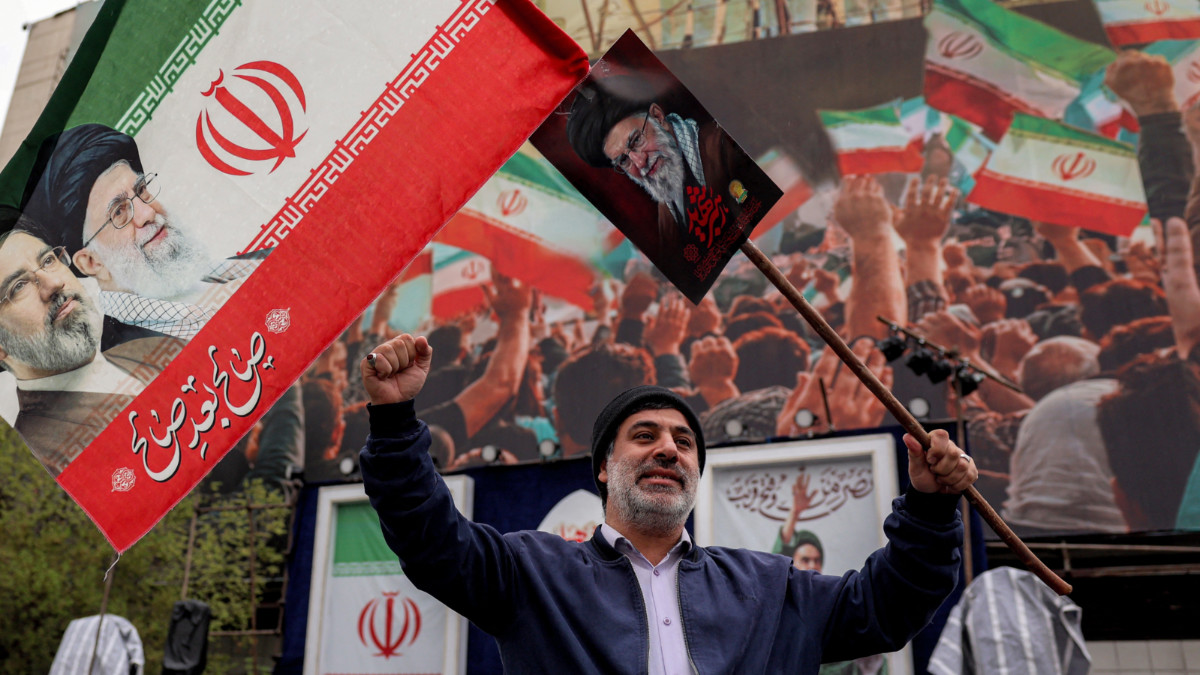
  • Trump says considering strike on Iran, day after ‘bad things’ would happen comment

    Trump says considering strike on Iran, day after ‘bad things’ would happen comment

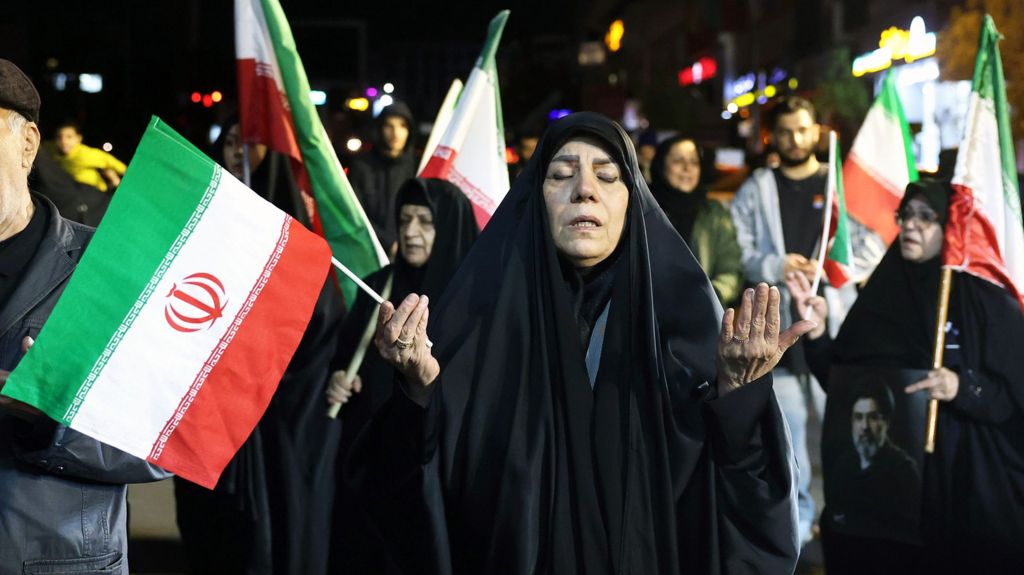
    Tensions between the United States and Iran have escalated dramatically as President Donald Trump confirmed he is contemplating limited military action against Tehran. This development follows his administration’s significant naval mobilization in the Middle East, designed to pressure Iran into accepting a nuclear agreement.

    The confrontation intensified after Trump’s Thursday remarks suggesting ‘bad things’ would occur if Tehran failed to reach a deal within an extended 15-day deadline. When pressed by journalists on Friday regarding potential military strikes, the president acknowledged, ‘The most I can say—I am considering it.’

    Diplomatic efforts continue simultaneously, with Iranian Foreign Minister Abbas Araghchi revealing that draft proposals for a potential agreement could be finalized within days. Following Geneva negotiations this week, Araghchi stated both parties agreed to exchange draft frameworks, describing this as the ‘next step’ in the process.

    Contradictions have emerged between official statements from both nations. While Trump has repeatedly insisted Iran must completely cease uranium enrichment, Araghchi asserted American negotiators haven’t demanded zero enrichment. ‘What we are now talking about is how to ensure that Iran’s nuclear programme, including enrichment, remains peaceful forever,’ the minister explained in an interview with MS NOW.

    The geopolitical standoff has triggered military posturing from both sides. Washington has deployed the USS Abraham Lincoln carrier group to the Gulf and ordered the Gerald Ford carrier to the region. Iran responded with naval exercises near the strategic Strait of Hormuz.

    Regional stability concerns heightened as Israel’s military announced being on ‘defensive alert’ regarding Iran, though public security guidelines remain unchanged. Meanwhile, Iran’s UN ambassador warned that US bases and assets would become ‘legitimate targets’ if America follows through with military threats.

    The economic dimension remains crucial, with Araghchi acknowledging Iran’s interest in swift sanctions relief. ‘We are under sanctions, obviously any day that sanctions are terminated sooner would be better for us,’ he noted, adding Tehran has ‘no reason to delay’ negotiations.

    This diplomatic crisis occurs against the backdrop of recent domestic unrest in Iran, where economic hardships sparked protests that authorities suppressed with force, resulting in significant casualties according to human rights organizations.

  • US Supreme Court rules Trump administration’s sweeping tariffs illegal

    US Supreme Court rules Trump administration’s sweeping tariffs illegal

    In a landmark ruling with significant implications for presidential authority and international trade, the US Supreme Court declared on Friday that the sweeping tariff regime implemented by former President Donald Trump violated established legal parameters. The Court determined that the administration’s application of a national emergency statute to justify broad-based import duties exceeded the law’s intended scope.

    The controversial tariffs, predominantly targeting Chinese goods alongside steel and aluminum imports from various nations, were originally enacted under Section 232 of the Trade Expansion Act of 1962. This provision traditionally authorizes the executive branch to impose trade restrictions specifically addressing genuine national security threats.

    Justice Elena Kagan, writing for the majority, emphasized that “while the presidency possesses considerable latitude in international affairs, this authority remains bounded by congressional statutes. The application of emergency powers to economic matters lacking clear national security dimensions constitutes an overreach of executive power.”

    The ruling represents a substantial judicial check on presidential trade authority and establishes a crucial precedent limiting the use of emergency economic powers. Legal analysts suggest the decision will likely reshape how future administrations justify and implement trade measures, particularly those affecting global supply chains and international relations.

    The Court’s decision emerged from a consolidated challenge brought by coalitions of affected businesses, manufacturing associations, and trading partners who argued the tariffs caused economic harm while lacking proper legal foundation. Industry representatives have welcomed the ruling as restoring predictability to international trade relationships.

  • US Supreme Court strikes down swath of Trump global tariffs

    US Supreme Court strikes down swath of Trump global tariffs

    In a landmark decision with profound implications for presidential trade powers, the US Supreme Court declared Friday that former President Donald Trump overstepped his constitutional authority by imposing sweeping global tariffs under emergency economic statutes. The 6-3 ruling from the conservative-majority court specifically invalidated tariffs implemented under the International Emergency Economic Powers Act (IEEPA), marking a significant check on executive trade authority.

    The court determined that IEEPA—legislation originally designed for national security emergencies—does not provide legal foundation for imposing broad tariff measures. Justice Samuel Alito, writing for the majority, emphasized that “had Congress intended to convey the distinct and extraordinary power to impose tariffs with IEEPA, it would have done so expressly, as it consistently has in other tariff statutes.”

    This ruling affects multiple tariff initiatives Trump enacted upon returning to office last year, including so-called “reciprocal” tariffs targeting trade practices deemed unfair by Washington, alongside separate duties imposed on Mexico, Canada, and China concerning drug trafficking and immigration issues. The decision upholds earlier findings from lower courts that had blocked these tariffs from taking effect pending appeal.

    Notably, the ruling does not impact sector-specific tariffs on steel, aluminum, and various other goods that Trump implemented through different legal mechanisms. Several formal investigations that could lead to additional sectoral tariffs remain ongoing. The White House has indicated it will explore alternative legislative pathways to address what it characterizes as unfair global trade practices.