分类: politics

  • EU hits pause on US trade deal as it seeks clarity over latest Trump maneuver

    EU hits pause on US trade deal as it seeks clarity over latest Trump maneuver

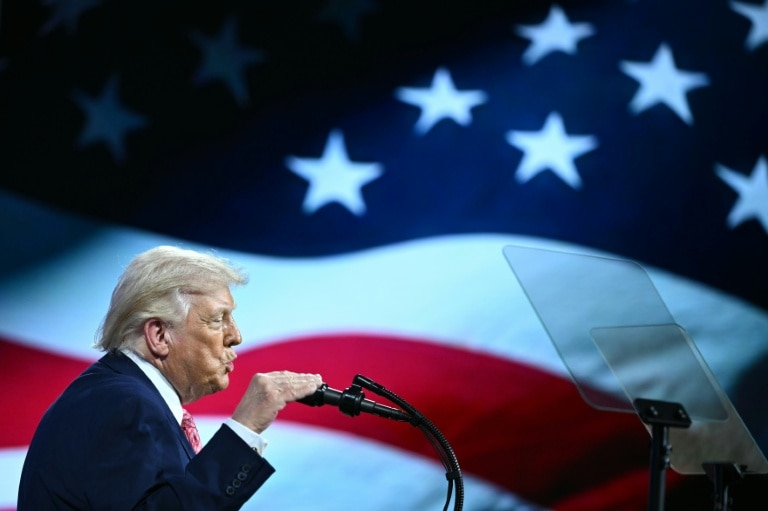
    European Union officials have suspended ratification of a critical trade agreement with the United States following President Donald Trump’s unexpected announcement of a universal 15% import tariff. The European Parliament’s trade committee postponed its scheduled vote on Tuesday, demanding immediate clarification from Washington regarding how this new tariff aligns with their previously negotiated pact.

    The agreement, finalized this summer, established a 15% ceiling on most European goods entering the US market while eliminating tariffs on American industrial exports to the EU. EU Commission spokesman Olof Gill emphasized the bloc’s position with the statement: “A deal is a deal. It is now up to the US to clearly demonstrate their commitment to honoring this agreement.”

    Trump’s tariff declaration came after the US Supreme Court invalidated his previous use of emergency powers to impose import taxes. The president subsequently invoked alternative trade legislation to implement the global tariff rate, effective immediately. This move creates particular complications for the EU agreement since the new tariff would be applied cumulatively with existing duties, effectively breaching the negotiated cap.

    The uncertainty extends beyond EU-US relations, potentially affecting bilateral trade agreements with Britain, Brazil, India, and Vietnam. These agreements established varying tariff ceilings through negotiations that initially utilized the now-invalidated emergency powers as leverage.

    US Trade Representative Jamison Greer asserted that the administration expects all partners to uphold their agreements regardless of the Supreme Court’s decision. However, economists note that the uniform global tariff creates disparate impacts—reducing rates for some nations like Brazil and China while increasing burdens for others.

    The tariffs are currently authorized for 150 days unless Congress extends them, providing Trump an opportunity to seek alternative legal justification. Economic analysts warn that prolonged trade policy uncertainty continues to pressure both European businesses and the US economy, where consumers ultimately bear the cost of import tariffs.

  • Israeli settlers join ‘safari’ tour of Palestinian prisoners

    Israeli settlers join ‘safari’ tour of Palestinian prisoners

    A significant controversy has erupted following revelations that Kobi Yaakobi, Commissioner of the Israel Prison Service (IPS), organized guided tours for Israeli settlers to observe handcuffed Palestinian detainees held in restrictive conditions. According to an investigative report by Israeli news outlet Shomrim, far-right residents from the illegal Har Homa settlement in East Jerusalem were granted exclusive access to Nitzan Prison near Ramla—one of Israel’s most secure detention facilities.

    The visit, characterized as a ‘safari tour’ by observers, included guided walks through multiple prison wings, including high-security sections housing alleged members of Hamas’s Nukhba elite unit. Witnesses reported detainees being forced to lie on the floor in restraints during the tour. While IPS sources defended this as standard procedure during ‘operational activities,’ critics condemned the practice as dehumanizing spectacle.

    The event featured a Torah lesson, extended Q&A session, and a specially prepared lavish lunch for the visiting settlers. This hospitality starkly contrasts with conditions described by Palestinian rights organizations, who report systematic malnutrition among detainees.

    The incident coincides with escalating concerns over prisoner treatment during Ramadan. The Commission of Detainees and Ex-Detainees Affairs alleges prison authorities are deliberately obscuring timekeeping to disrupt fasting rituals, with multiple reports confirming detainees were unaware of Ramadan’s commencement. Lawyers describe meals consisting of inadequate scraps, with denial of traditional suhoor (pre-dawn) and iftar (fast-breaking) provisions.

    This episode highlights broader tensions regarding IPS transparency. The service maintains stringent access restrictions, having recently intensified bans on Red Cross visits citing national security concerns, while simultaneously permitting non-essential civilian tours. The apparent selectivity in access permissions has drawn condemnation from human rights advocates who accuse IPS of prioritizing ideological tourism over humanitarian obligations.

  • Judge blocks release of  Smith’s report on Trump classified documents case

    Judge blocks release of Smith’s report on Trump classified documents case

    In a significant legal development, U.S. District Judge Aileen Cannon has issued a permanent injunction preventing the public release of Special Counsel Jack Smith’s comprehensive report on his investigation into former President Donald Trump’s handling of classified documents. The ruling came in response to a request from President Trump’s legal team seeking to shield the detailed findings from public view.

    Judge Cannon, who was appointed to the bench by Trump himself, determined that releasing the investigative report would result in “irreparable damage” to the former president and would fundamentally “contravene basic notions of fairness and justice.” The document in question chronicles Smith’s two-year probe into allegations that Trump improperly retained sensitive defense materials at his Mar-a-Lago estate after leaving the White House in 2021.

    The case originated in 2023 when Trump faced charges of illegally retaining classified defense information, but the prosecution was ultimately dismissed following Trump’s re-election to the presidency. Judge Cannon had previously granted a motion to dismiss the federal case in 2024, ruling that the Justice Department’s appointment of Smith as special counsel was unconstitutional, thereby invalidating his authority to bring charges.

    The investigation revealed that dozens of classified documents were discovered in various locations throughout Trump’s Florida residence, including a shower area and storage rooms. Smith, initially appointed by former Attorney General Merrick Garland, first appealed the dismissal but subsequently requested the case be dropped entirely in 2024, acknowledging that Justice Department regulations prohibit prosecuting a sitting president.

    In her Monday ruling, Cannon emphasized that Smith had been “acting without lawful authority” when he initially charged Trump, and noted that the defendants “still enjoy the presumption of innocence held sacrosanct in our constitutional order.” A representative from Trump’s legal team praised the decision, stating that broad disclosure of materials from a dismissed criminal case, along with “unproven accusations by an unconstitutional prosecutor, has no place in the American judicial system.”

  • How the former Prince Andrew could be removed from Britain’s line of succession

    How the former Prince Andrew could be removed from Britain’s line of succession

    The British government has initiated formal considerations to remove Andrew Mountbatten-Windsor from the royal line of succession, potentially marking the first such constitutional alteration in nine decades. This development follows the arrest of King Charles III’s younger brother on suspicion of misconduct in public office, though he was subsequently released without charge after eleven hours in custody.

    The controversial royal, who was stripped of his princely title and military affiliations in October due to his associations with convicted sex offender Jeffrey Epstein, currently maintains the eighth position in succession to the British throne. The allegations against him intensified following the recent release of millions of documents from the U.S. Justice Department’s Epstein investigation, which suggest he may have shared confidential trade information during his tenure as UK trade envoy from 2001 to 2011.

    Darren Jones, Prime Minister Keir Starmer’s chief secretary, confirmed to Parliament that the government remains open to taking action regarding the succession line once police investigations conclude. The process would require a complex legislative procedure involving not only the UK Parliament but also the cooperation of approximately a dozen Commonwealth nations where King Charles serves as head of state.

    Australia’s Prime Minister Anthony Albanese has already expressed support for excluding Andrew from succession, describing the allegations as “grave” and emphasizing the necessity of a full investigation. Other Commonwealth realms including Canada, New Zealand, and several Caribbean nations have yet to formally communicate their positions.

    Constitutional experts note that the procedure would be historically significant and legally intricate, potentially requiring years of diplomatic coordination. The last comparable adjustment occurred in 2013 with the Succession to the Crown Act, which established gender-neutral succession rules and required two years of multinational negotiations.

    The potential removal raises additional questions about the status of Andrew’s daughters, Princesses Beatrice and Eugenie, who currently occupy the ninth and twelfth positions in the line of succession. Historical precedent suggests legislation could be crafted to exclude Andrew without necessarily affecting his descendants, similar to the treatment of King Edward VIII following his 1936 abdication.

    While Buckingham Palace has not issued an official statement regarding the potential constitutional change, sources indicate the royal family would not obstruct parliamentary decisions on the matter, with the monarch emphasizing that “the law must take its course.”

  • Carney heading on overseas trade mission as Canada seeks to reduce its reliance on US

    Carney heading on overseas trade mission as Canada seeks to reduce its reliance on US

    Canadian Prime Minister Mark Carney embarks on a pivotal Pacific tour this week, visiting India, Australia, and Japan in a bold diplomatic maneuver to diversify Canada’s trade partnerships. This tri-nation journey represents a calculated shift from historical economic reliance on the United States amid persistent trade tensions.

    The itinerary begins Thursday in New Delhi, where Carney will meet Indian Prime Minister Narendra Modi, marking a significant thaw in bilateral relations that had frozen following former Prime Minister Justin Trudeau’s 2023 allegations of Indian involvement in a Sikh separatist’s killing on Canadian soil. The diplomatic reconciliation began when Carney extended an invitation to Modi for last year’s G7 summit in Alberta, followed by Foreign Minister Anita Anand’s productive visit to India that revived trade discussions.

    Carney’s office confirmed the agenda will extend beyond trade to encompass energy cooperation, artificial intelligence development, defense partnerships, critical minerals security, maritime security protocols, and food security initiatives. This comprehensive approach reflects Canada’s strategic vision for multilateral engagement.

    The Pacific initiative responds directly to what Carney termed ‘economic coercion’ by great powers during his World Economic Forum address in Davos—a clear reference to Trump administration policies. With approximately 75% of Canadian exports currently US-bound, Carney has articulated an ambitious goal to double non-US exports within the next decade.

    This reorientation has already produced tangible policy shifts, including Canada’s break from US trade policy through the removal of Chinese electric vehicle tariffs in exchange for reduced Chinese tariffs on Canadian agricultural products. The trade diversification strategy unfolds against a complex backdrop: while the US Supreme Court recently struck down broad Trump-era tariffs, sector-specific duties on Canadian steel, aluminum, and automobiles remain intact.

    Simultaneously, the United States-Mexico-Canada Agreement (USMCA) faces critical renegotiation, with all three nations required to decide on its extension this summer. While Canada and Mexico advocate for maintaining the trilateral pact, Trump administration officials have indicated preference for bilateral agreements, creating additional uncertainty for North American trade relations.

  • Police in Britain arrest former ambassador Mandelson in probe into Epstein ties

    Police in Britain arrest former ambassador Mandelson in probe into Epstein ties

    London’s Metropolitan Police have taken into custody Peter Mandelson, the former British ambassador to the United States, as part of an ongoing investigation into misconduct within public office. The arrest, which occurred at a north London residence, marks the second high-profile detention within days connected to the Jeffrey Epstein scandal, following the recent apprehension of the former Prince Andrew.

    The 72-year-old diplomat, who served under previous Labour administrations, faces allegations of improperly sharing sensitive government information with the disgraced financier Epstein during his tenure as a senior minister. While no sexual misconduct charges have been brought against Mandelson, the investigation centers on communications from 2009 that suggest he provided Epstein with confidential documents, including internal reports discussing post-financial crisis asset sales and potential tax policy changes.

    The arrest follows the release of over three million pages of Epstein-related documents by the U.S. Justice Department in January, which contained explosive revelations about Mandelson’s relationship with the convicted sex offender. Correspondence indicates Mandelson referred to Epstein as ‘my best pal’ and allegedly promised to lobby government colleagues regarding bankers’ bonus taxation.

    Prime Minister Keir Starmer had previously dismissed Mandelson from his ambassadorial position in September after evidence emerged showing continued contact with Epstein following his 2008 conviction. The appointment had already placed Starmer’s leadership under scrutiny, with his political future potentially hinging on the scheduled release of documents related to Mandelson’s selection in early March.

    Mandelson, a controversial figure nicknamed ‘Prince of Darkness’ for his political maneuvering, has resigned from the House of Lords but retains his lifetime peerage title. The investigation continues as police examine evidence gathered during searches of Mandelson’s properties in London and western England.

  • Colombia’s ELN rebels declare a unilateral ceasefire ahead of key congressional elections

    Colombia’s ELN rebels declare a unilateral ceasefire ahead of key congressional elections

    BOGOTA, Colombia — In a significant political development, Colombia’s National Liberation Army (ELN) has announced a unilateral ceasefire preceding next month’s crucial congressional elections. The country’s largest remaining rebel organization declared it would suspend hostilities against military and electoral authorities to facilitate public voting “in liberty,” though the ceasefire’s duration remains unspecified.

    The declaration emerges against a backdrop of escalating electoral violence targeting candidates in rural regions. The ELN utilized its official communication channels to refute longstanding allegations of political coercion and municipal fund manipulation, asserting they “do not finance any campaigns as drug traffickers do” and emphasizing voter autonomy in electoral decisions.

    This development follows the Colombian government’s termination of peace negotiations last year after ELN attacks in northeastern territories displaced over 50,000 civilians. The March 8 elections will determine composition of the Senate and House of Representatives, with more than 300 congressional seats contested. Simultaneously, primaries will select presidential candidates for left-wing and center-right coalitions ahead of May’s presidential race.

    President Gustavo Petro’s left-wing Historical Pact movement faces a pivotal test in establishing congressional support for potential constitutional reforms. However, electoral integrity has been compromised by violence, including recent incidents: Indigenous Senator Aida Quilcue’s temporary abduction in Cauca, the fatal shooting of two bodyguards protecting Senator Jairo Castellanos, and the assassination of presidential candidate Miguel Uribe last year—the first such attack in thirty years.

    Electoral monitoring organization Movement for Electoral Observation classifies 11% of Colombian municipalities at “extreme risk” for election-related violence, evaluating factors including armed group presence, forced displacements, and attacks on human rights defenders. This security assessment underscores the complex challenges facing Colombia’s democratic processes amid ongoing internal conflicts.

  • FBI director defends Winter Olympics celebration with USA hockey team

    FBI director defends Winter Olympics celebration with USA hockey team

    FBI Director Kash Patel has ignited controversy after being filmed celebrating with the U.S. Olympic hockey team in Italy, prompting scrutiny over his official travel during multiple domestic security emergencies. The footage, which circulated widely online, showed Patel drinking beer and cheering with athletes in their locker room following a historic victory against Canada in Milan.

    Patel addressed critics directly on social media platform X, stating he felt ‘extremely humbled’ by the invitation from the ‘newly minted Gold Medal winners’ and celebrating what he called ‘the greatest country on earth and greatest sport on earth.’

    The timing of his European trip raised particular concerns as it coincided with several critical developments: An armed intruder attempted to breach former President Donald Trump’s Mar-a-Lago resort, resulting in a fatal shooting by Secret Service agents; The State Department issued shelter-in-place warnings for Americans in Mexico following cartel-related violence; And the search continued for missing mother of NBC News anchor Savannah Guthrie, with FBI assistance requested.

    Official flight records indicate Patel traveled via government aircraft from Joint Base Andrews to a U.S. Air Force facility in Italy. The FBI maintained the trip was officially sanctioned months in advance, emphasizing the Bureau’s significant role in Olympic security coordination and Patel’s scheduled meetings with Italian law enforcement and diplomatic officials.

    Democratic Congressman Jason Crow condemned the excursion as ‘grift and corruption,’ while former Justice Department spokeswoman Xochitl Hinojosa criticized Patel’s conduct as inappropriate for an FBI director. This incident follows previous controversies regarding Patel’s use of government aircraft, including flights to personal events involving his country music star girlfriend and recreational trips to Texas and Scotland.

    Notably, Patel had previously criticized his predecessor Christopher Wray for personal use of FBI jets. While FBI directors are prohibited from commercial air travel for security reasons, regulations require reimbursement for personal use of government aircraft at equivalent commercial rates.

  • Panama orders occupation of 2 key canal ports after Supreme Court ruling

    Panama orders occupation of 2 key canal ports after Supreme Court ruling

    The Panamanian government has executed a decisive administrative takeover of two critical ports at the entrances to the Panama Canal, following a Supreme Court ruling that invalidated the operating concession held by Hong Kong conglomerate CK Hutchison. The Monday decree authorizes the Panama Maritime Authority to occupy all assets at the Balboa and Cristóbal terminals—including cranes, vehicles, and digital systems—citing ‘urgent social interest’ as the legal basis.

    The ports, strategically positioned at the Pacific and Atlantic gateways to the canal, have been operated by CK Hutchison’s subsidiary Panama Ports Company (PPC) since 1997. However, in January, Panama’s Supreme Court declared the concession contract unconstitutional and revoked a 2021 extension, stripping PPC’s operations of legal standing.

    This development occurs against a backdrop of escalating U.S.-China geopolitical competition in Central America. The situation intensified when a proposed sale of the ports to a consortium including U.S. investment firm BlackRock was blocked following intervention by the Chinese government.

    To ensure operational continuity, the Panamanian government has appointed APM Terminals, a subsidiary of Danish shipping giant A.P. Moller-Maersk, as temporary administrator pending a new contract award. Authorities have committed to maintaining port operations and preserving jobs.

    In response, CK Hutchison has initiated arbitration against Panama under International Chamber of Commerce rules and threatened legal action against APM Terminals if it assumes control. The company is simultaneously seeking a negotiated resolution with the government.

  • India’s Modi underscores ‘deep and enduring friendship’ with Israel ahead of visit

    India’s Modi underscores ‘deep and enduring friendship’ with Israel ahead of visit

    Indian Prime Minister Narendra Modi is poised to embark on a significant two-day diplomatic mission to Israel commencing Wednesday, February 24, marking his second official visit since 2017. The upcoming talks with Israeli counterpart Benjamin Netanyahu are anticipated to substantially enhance bilateral cooperation across multiple strategic domains.

    In a notable exchange on social media platform X, both leaders articulated the robust nature of Indo-Israeli relations. Prime Minister Modi characterized the partnership as “an enduring friendship built on trust, innovation and a shared commitment to peace and progress.” Netanyahu reciprocated by describing the alliance as “a powerful partnership between two global leaders” spanning innovation, security, and strategic vision.

    The diplomatic agenda features comprehensive discussions on defense technology collaboration, with Israel serving as a primary supplier of advanced military systems to India. Key initiatives under consideration include joint development of sophisticated defense mechanisms such as anti-ballistic missile systems, directed-energy laser weapons, long-range stand-off missiles, and next-generation unmanned aerial vehicles.

    Beyond military cooperation, the bilateral talks will address expanded technological partnerships in artificial intelligence, agricultural innovation, water resource management, and trade enhancement. The symbolic significance of Modi’s scheduled address to the Knesset—Israel’s parliamentary body—underscores the deepening diplomatic ties between the nations, an honor previously extended to only one other Indian leader.

    The strengthening relationship follows increased ministerial exchanges, with India’s External Affairs Minister S. Jaishankar and Commerce Minister Piyush Goyal recently visiting Israel, complemented by reciprocal visits from Israeli officials. This diplomatic momentum reflects a mutual commitment to establishing what Netanyahu termed “an axis of nations committed to stability and progress” in the region.