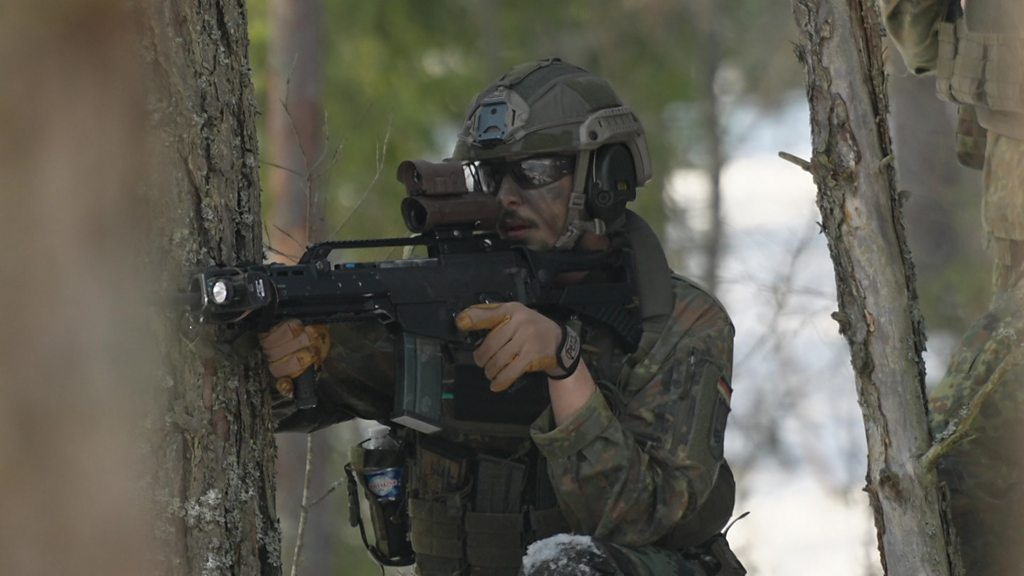
For decades after the end of World War II, Germany occupied a cautious, constrained position when it came to military leadership on the European continent, bound by historical guilt and a long-standing culture of strategic restraint. Today, however, a dramatic shift is underway: the once-reluctant European power is stepping into a critical role as the primary military anchor protecting NATO’s eastern border, the frontline dividing Western Europe from Russian influence. As the alliance grapples with heightened security threats following Russia’s full-scale invasion of Ukraine, the question that dominates defense corridors across Brussels and Berlin is whether Germany can actually live up to its newfound ambition of becoming Europe’s foremost military power.
Germany’s evolving role comes against a backdrop of shifting transatlantic security priorities. For years, the United States bore the bulk of NATO’s defense burden, while many Western European nations, including Germany, consistently failed to meet the alliance’s target of spending 2% of GDP on defense. The 2014 Russian annexation of Crimea, and more dramatically the 2022 invasion of Ukraine, upended that long-standing status quo. Berlin responded with a historic policy shift: it unveiled a €100 billion special defense fund to modernize its aging military hardware, committed to hitting the 2% GDP spending target permanently, and positioned itself as a key coordinator of military aid to Kyiv. At the same time, German troops have become a core component of NATO’s forward deployments in the Baltic states and Eastern Europe, taking on a lead role that would have been unthinkable for generations of German policymakers.
But significant challenges remain that threaten to derail Germany’s ambitions. Decades of underinvestment have left the Bundeswehr plagued by equipment shortages, slow procurement processes, and bureaucratic gridlock. Industrial bottlenecks in Germany’s defense sector also mean that expanding arms production to meet both domestic needs and the demands of supporting Ukraine is a slow, costly process. Political divides within Germany’s ruling coalition also create uncertainty: while the current government has committed to increased defense spending, skepticism of military escalation remains widespread among portions of the German public. Even so, NATO allies across Eastern Europe, who have long called for a more assertive German role in regional security, are watching the transition closely. For Europe’s security architecture, the outcome of Germany’s military buildup will shape the stability of the continent for decades to come, determining whether the eastern edge of Western Europe can be reliably defended against evolving security threats.