分类: politics

  • EU to engage Trump’s ‘Board of Peace’ despite internal split

    EU to engage Trump’s ‘Board of Peace’ despite internal split

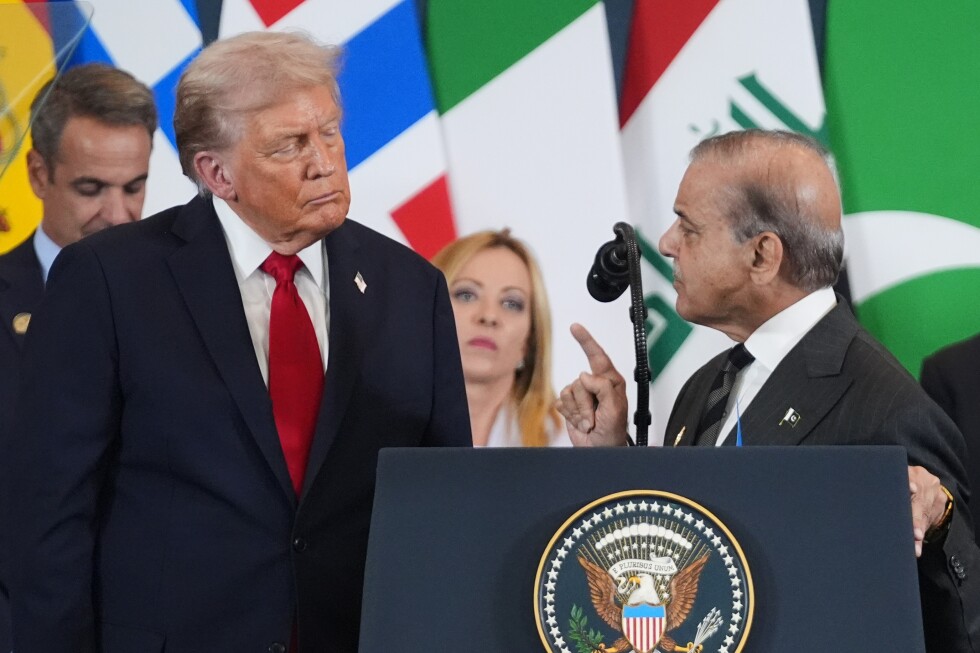
    The European Union finds itself navigating significant diplomatic turbulence following its engagement with the newly established Board of Peace for Gaza, an initiative spearheaded by US President Donald Trump. This development has exposed profound divisions within the bloc regarding its appropriate role in Middle Eastern peacemaking efforts.

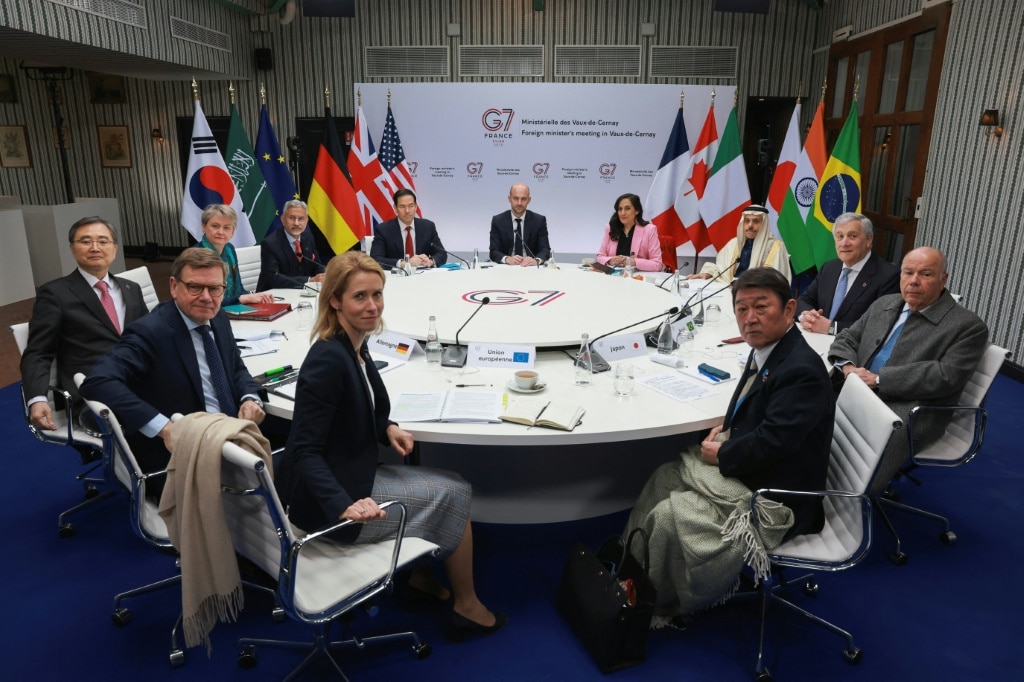
    According to Associated Press reports, EU diplomats are scheduled to meet with Nikolay Mladenov, the UN diplomat selected by President Trump to lead the Board. The meeting will include EU foreign policy chief Kaja Kallas and foreign ministers from member states. This engagement occurs despite the EU’s position as the primary donor to the Palestinian Authority and its crucial oversight role at the Rafah border crossing.

    The bloc’s participation has sparked considerable controversy, particularly after France expressed surprise at the European Commission’s decision to send Mediterranean Commissioner Dubravka Šuica as an observer without formal consultation with the European Council. French Foreign Minister Jean-Noel Barrot declared this move violated EU regulations, stating on social media platform X that “The European Commission should never have attended the Board of Peace meeting in Washington.”

    This diplomatic friction emerges amid broader concerns about the Board’s legitimacy and scope. Originally conceived to address the Gaza conflict within the framework of a 20-point ceasefire plan ratified in Davos on January 22, the Board has expanded its mandate to encompass global conflicts—a development critics suggest could position it as a potential rival to the United Nations.

    Several EU members, including Germany, Italy, the Netherlands, and Greece, opted to send observers to the inaugural Washington meeting, while Spain explicitly declined participation. Spanish Prime Minister Pedro Sanchez cited the Board’s divergence from international law and exclusion of the Palestinian Authority as primary reasons for refusal.

    The Board has secured substantial financial commitments, with member nations including Kazakhstan, Azerbaijan, UAE, Morocco, Bahrain, Qatar, Saudi Arabia, Uzbekistan, and Kuwait pledging approximately $7 billion toward Gaza relief efforts. Meanwhile, European leaders continue to question the Board’s governance structure, compatibility with the UN Charter, and its perceived function as a personal vehicle for President Trump, who is set to serve as chairman for life.

    Concurrently, the EU has called on Israel to reverse recent land registration measures in the occupied West Bank, which European officials characterize as illegal annexation and a “new escalation” in regional tensions. These developments underscore the complex diplomatic landscape the EU must navigate as it balances its commitment to multilateral institutions with engaging with emerging peace initiatives.

  • Welcome to Gaza Inc.

    Welcome to Gaza Inc.

    In a radical departure from conventional diplomacy, former U.S. President Donald Trump has initiated what analysts are calling the 21st century’s most unconventional geopolitical experiment. Through the establishment of the Board of Peace—which convened its inaugural summit on February 19, 2026—Trump has fundamentally transformed the approach to conflict resolution in the Gaza Strip.

    The initiative treats Gaza not as a political entity pursuing sovereignty but as a distressed strategic asset requiring international restructuring. Trump serves as permanent chairman of this board, wielding decisive control over more than $5 billion in reconstruction funds pledged by donor nations. This corporate-style approach reflects his trademark governance philosophy: transactional, skeptical of traditional multilateral institutions, and focused on measurable outcomes.

    Beyond the ambitious vision of a ‘New Gaza’ modeled after Dubai’s skyline, the initiative represents a strategic effort to marginalize the United Nations and replace it with a coalition of selectively admitted states willing to pay for influence. Indonesia’s participation under President Prabowo Subianto provides crucial legitimacy, driven by pragmatic calculations including trade negotiations and expanded peacekeeping roles.

    This model introduces the concept of ‘privatized sovereignty,’ where economic stabilization compensates for diminished political autonomy. Gaza functions as a laboratory for what analysts term ‘Pax Silica’—an emerging world order driven less by ideological blocs than by technological supply chains and capital flows.

    The governance structure includes a National Committee for the Administration of Gaza staffed by Palestinian technocrats, though actual authority resides with those controlling reconstruction budgets and the International Stabilization Force. This approach substitutes self-determination with economic management, operating on the assumption that prosperity—through employment, modern housing, and infrastructure—will diminish ideological resistance.

    Critics describe the result as a ‘gilded enclosure’: secure and modernized yet closely monitored. The initiative challenges the post-1945 multilateral order, creating a parallel diplomatic structure where influence must be purchased through capital or troop contributions. This pay-to-play model divides the international community between states seeking tangible benefits and those committed to traditional frameworks of international law.

    The long-term implications are profound. Should Gaza transform into a thriving Mediterranean commercial hub, Trump’s corporate approach to geopolitics could gain validation. However, if underlying grievances persist despite infrastructure development, the initiative may be remembered as an audacious but ultimately costly restructuring venture that redefined sovereignty as a conditional asset subject to performance metrics set by those commanding capital and force.

  • Why did Putin’s Russia invade Ukraine?

    Why did Putin’s Russia invade Ukraine?

    Four years after Russian President Vladimir Putin initiated Europe’s largest military offensive since World War Two, the conflict in Ukraine remains entrenched in a devastating stalemate. The initial February 2022 invasion, intended to swiftly seize Kyiv and topple the pro-Western government, has instead resulted in a protracted war of attrition, with approximately one-fifth of Ukrainian territory under Russian control.

    The geopolitical struggle is rooted in Putin’s longstanding rejection of Ukrainian sovereignty. Historical revisionism has been a central tenet of the Kremlin’s justification, with baseless allegations of Nazi influence and genocide used to legitimize the invasion. This narrative directly contradicts reality: President Volodymyr Zelensky is Jewish, with family members who perished in the Holocaust, and no far-right parties hold seats in Ukraine’s parliament.

    Diplomatic efforts to resolve the conflict have repeatedly faltered. Despite US President Donald Trump’s push for a settlement—including a high-profile August meeting with Putin in Alaska and subsequent trilateral negotiations in early 2026—fundamental disagreements persist. Moscow demands international recognition of its territorial acquisitions, including Crimea and four eastern regions annexed through sham referendums, while insisting on Ukraine’s permanent neutrality and abandonment of NATO aspirations. These conditions remain unacceptable to Kyiv, which seeks security guarantees against future Russian aggression.

    The human cost continues to mount dramatically. Conservative estimates suggest over 92,000 Ukrainian military casualties and at least 14,500 civilian deaths, though actual figures are likely substantially higher. Russian military losses are estimated between 243,000-352,000. The economic impact on both nations is severe, with Russia dedicating over 33% of its federal budget to defense and Ukraine suffering catastrophic infrastructure damage and industrial disruption.

    As the conflict enters its fifth year with no clear military resolution in sight, the prospects for a negotiated settlement appear increasingly remote, leaving millions displaced and a nation’s sovereignty hanging in the balance.

  • Supporters of jailed Ugandan opposition figure pray for him after president tries to stop it

    Supporters of jailed Ugandan opposition figure pray for him after president tries to stop it

    In a remarkable display of defiance, hundreds of Ugandan activists gathered Monday at Kampala’s Lubaga Cathedral for an impromptu prayer vigil demanding the release of imprisoned opposition leader Kizza Besigye. The event unfolded after Archbishop Paul Ssemogerere unexpectedly postponed a scheduled mass following alleged presidential intervention.

    The planned religious service was intended to highlight Besigye’s deteriorating health after more than a year in detention without trial on treason charges. Instead, supporters transformed the cathedral into a venue of peaceful resistance, singing hymns and praying under the leadership of Winnie Byanyima, Besigye’s wife and UNAIDS executive director.

    Byanyima revealed to attendees that President Yoweri Museveni had personally requested the postponement pending an investigation into the event’s political nature. ‘We are here unable to have the Mass because of the order of our president,’ she stated, while encouraging continued prayer.

    The 69-year-old opposition figure, once Museveni’s personal physician during the guerrilla war that brought him to power in 1986, now faces capital charges alleging he plotted to overthrow the government. Besigye has appeared recently in court using a wheelchair, with bail repeatedly denied despite growing calls for compassionate release due to his declining health.

    Presidential spokesperson Sandor Walusimbi offered no comment on the day’s developments. Meanwhile, Museveni’s son, General Muhoozi Kainerugaba, Uganda’s top military commander, has publicly labeled Besigye ‘a dead man walking’ and accused him of plotting presidential assassination.

    This incident occurs against the backdrop of Museveni’s recent election victory, where he secured a seventh term with 71% of votes amid allegations of electoral interference and the subsequent disappearance of main opposition rival Bobi Wine.

  • What’s at stake as ICC judges hear charges against ex-Philippine president Duterte?

    What’s at stake as ICC judges hear charges against ex-Philippine president Duterte?

    The International Criminal Court (ICC) has commenced a pivotal four-day hearing to determine whether former Philippine President Rodrigo Duterte should face trial for crimes against humanity, marking an unprecedented judicial reckoning for his brutal anti-narcotics campaign. Prosecutors allege Duterte orchestrated a systematic killing program that resulted in tens of thousands of extrajudicial executions during his tenure as mayor of Davao and later as president from 2016-2022.

    ICC prosecutor Mame Niang presented evidence alleging Duterte’s direct involvement in at least 76 murders, with charges encompassing murder, attempted murder, and crimes against humanity spanning November 2011 to March 2019. The court heard how Duterte’s ‘Operation Double Barrel’ allegedly utilized police officers and hired assassins to ‘neutralize’ individuals branded as criminals, primarily targeting urban poor communities while largely ignoring high-level drug traffickers.

    The 80-year-old former leader, who remains detained in The Hague since his dramatic arrest last March, waived his right to attend the proceedings, maintaining his innocence while rejecting the court’s jurisdiction. His lawyer cited health reasons and continued non-recognition of the ICC’s authority, echoing Duterte’s statement that the charges constitute ‘an outrageous lie.’

    This legal confrontation stems from a complex political unraveling between the Philippines’ two most powerful families. The once-formidable alliance between Duterte and current President Ferdinand Marcos Jr.—forged during the 2022 elections that saw Marcos win the presidency with Duterte’s daughter Sara as vice-president—has deteriorated into open hostility. Analysts suggest Marcos’s reversal on ICC cooperation, after initially refusing collaboration, enabled Duterte’s extradition amid their escalating power struggle.

    The case represents the first ICC prosecution of an Asian former head of state and tests the court’s ability to hold leaders accountable for domestic policies when national judicial systems fail to act. Human rights monitors estimate up to 30,000 fatalities during Duterte’s drug war, though the precise death toll remains uncertain. The court must now decide within 60 days of the hearing’s conclusion whether sufficient evidence exists to proceed to full trial, potentially setting a landmark precedent for international justice.

  • Australia backs removing Andrew from royal line of succession

    Australia backs removing Andrew from royal line of succession

    In a significant constitutional development, Australian Prime Minister Anthony Albanese has formally pledged his government’s support for removing Andrew Mountbatten-Windsor from the British royal line of succession. The commitment came through an official letter addressed to UK Prime Minister Sir Keir Starmer on Monday, marking a pivotal moment in the ongoing controversy surrounding King Charles III’s brother.

    The political endorsement follows Andrew’s recent arrest by Thames Valley Police on suspicion of misconduct in public office. Although released after eleven hours of questioning under ongoing investigation, the former prince faces intensified scrutiny following the January release of millions of documents related to convicted sex offender Jeffrey Epstein.

    Constitutional experts emphasize that removing Andrew from succession would require unprecedented coordination across the Commonwealth. Legislation must pass through the UK Parliament and receive royal assent, while simultaneously gaining approval from all fourteen Commonwealth realms where King Charles serves as head of state, including Canada, Jamaica, and New Zealand.

    The Australian leader’s correspondence stated: ‘These are grave allegations and Australians take them seriously,’ aligning with King Charles’s earlier statement advocating for ‘a full, fair and proper process’ in the investigation. Buckingham Palace has maintained silence regarding the potential legislative action, which would permanently bar Andrew from ascending to the throne.

    UK government officials confirmed receipt of Albanese’s letter while emphasizing the sensitivity of the ongoing police investigation. A spokesman for Prime Minister Starmer noted that authorities were ‘considering whether further steps are required’ and were ‘not ruling anything out.’

    The historical precedent for such action dates to 1936, when Parliament removed Edward VIII and his descendants from succession following his abdication. Defence Minister Luke Pollard publicly endorsed the move as ‘the right thing to do,’ while Treasury Secretary James Murray acknowledged the constitutional complexity involved.

    Police investigations continue at both Sandringham Estate, where Andrew was arrested, and his former Windsor residence, with unmarked police vehicles observed at the properties throughout the weekend. Andrew has consistently denied all allegations regarding his association with Epstein and has not responded to recent specific claims emerging from the released documents.

  • Rubio heads to Caribbean to reassert US interests after Venezuela strikes and Iran threats

    Rubio heads to Caribbean to reassert US interests after Venezuela strikes and Iran threats

    WASHINGTON — Secretary of State Marco Rubio is scheduled to undertake a strategic diplomatic mission to St. Kitts and Nevis this Wednesday, demonstrating the Trump administration’s sustained commitment to Western Hemisphere affairs despite escalating tensions with Iran. The one-day visit coincides with the Caribbean Community (CARICOM) leadership summit, where Rubio will engage in multilateral discussions addressing regional security, economic cooperation, and stability initiatives.

    This diplomatic outreach occurs precisely one month after U.S. military operations successfully deposed Venezuelan President Nicolas Maduro, who currently faces serious narcotics trafficking charges in American courts. Maduro has entered a not guilty plea to allegations of collaborating with drug cartels to facilitate the shipment of thousands of tons of cocaine into the United States.

    The administration’s hemispheric strategy—often characterized by officials as a modern interpretation of the Monroe Doctrine—emphasizes regional primacy and opposition to external influences. Recent operations including maritime interventions against suspected drug traffickers, embargo enforcement against Cuba, and the seizure of sanctioned oil tankers constitute what President Trump has termed the “Donroe Doctrine.”

    While the administration’s current foreign policy priority has visibly shifted toward Iran, with substantial military assets deployed to the Middle East, Rubio’s presence at the CARICOM summit underscores continued strategic interest in what officials frequently reference as “America’s backyard.” The Secretary’s agenda includes reinforcing partnerships to combat illicit narcotics networks and address migration challenges while promoting sustainable economic development throughout the region.

  • Rob Jetten becomes Netherlands’ youngest and first gay PM

    Rob Jetten becomes Netherlands’ youngest and first gay PM

    The Netherlands has entered a new political era with the inauguration of Rob Jetten as Prime Minister, marking dual historic milestones as both the nation’s youngest leader at 38 and its first openly gay head of government. King Willem-Alexander formally swore in Jetten at Huis ten Bosch Palace in The Hague on Monday, cementing a hard-won political victory after October’s intensely contested general election.

    Jetten’s Democrats 66 (D66) party secured a narrow victory over Geert Wilders’ anti-Islam populist movement, culminating in the formation of a center-right minority coalition. The governing alliance comprises Jetten’s D66, the People’s Party for Freedom and Democracy (VVD), and the Christian Democratic Alliance (CDA). This tripartite arrangement grants D66 seven ministerial portfolios, VVD six, and CDA five, supplemented by three state secretaries from each party.

    The minority status of this government introduces significant legislative challenges. Every major policy initiative outlined in the coalition agreement—including a substantial €19 billion defense spending increase coupled with austerity measures in healthcare and social benefits—will require individual negotiation and vote-by-vote support in both chambers of the Dutch parliament.

    Migration policy represents a cornerstone of the coalition’s agenda, particularly regarding asylum seekers. The government proposes implementing offshore asylum processing, requiring refugees to apply for protection outside European borders before arrival. This approach addresses what has become a deeply polarizing issue in Dutch politics, having contributed to the collapse of the two previous coalition governments.

    Jetten’s political persona has evolved significantly from his early “Robot Jetten” nickname, earned through initially stiff media appearances. His election night appearance in Leiden revealed a transformed leader—effortlessly engaging with enthusiastic young supporters in a vibrant, packed music venue. Many observers contrast his relatively youthful, pro-EU, socially liberal platform against Wilders’ hard-right establishment politics.

    In a pre-inauguration social media post, Jetten struck an optimistic tone: “Proud to be doing this together. In a new phase, with great responsibility and, above all, a shared promise to work for everyone in the Netherlands. By not dwelling on what’s wrong, but by building on what can be improved. That requires courage and collaboration.” His subsequent Instagram caption after confirmation was notably succinct: “Let’s get to work.

    However, governing challenges loom large. Wilders has pledged outright opposition to all government initiatives, while other political factions have expressed reservations about the coalition’s proposed policy directions.

  • Nigeria paid Boko Haram ransom for kidnapped pupils: intel sources

    Nigeria paid Boko Haram ransom for kidnapped pupils: intel sources

    Intelligence sources have revealed that Nigerian authorities conducted a clandestine multi-million dollar ransom payment to Boko Haram militants in exchange for the release of approximately 230 students and staff abducted from St. Mary’s Catholic boarding school in November. The transaction, which directly contradicts Nigeria’s official policy against negotiating with kidnappers, involved both financial compensation and the release of two high-ranking Boko Haram commanders.

    According to three separate intelligence officials who spoke on condition of anonymity, a substantial cash ransom was transported via helicopter to Boko Haram’s stronghold in Gwoza, northeastern Borno State. The payment was delivered to Ali Ngulde, a prominent militant commander operating along the Cameroon border. Due to communication limitations in the remote region, Ngulde reportedly crossed into neighboring Cameroon to verify receipt of the funds before authorizing the initial release of 100 captives.

    The mass abduction, initially not attributed to Boko Haram, is now confirmed to have been orchestrated by Sadiku, one of the organization’s most feared commanders. Sadiku previously masterminded the devastating 2022 attack on the Abuja-Kaduna train service, which resulted in substantial ransom payments for wealthy passengers including bankers and government officials.

    Despite categorical denials from Nigerian security agencies, four independent intelligence sources maintain that the government sanctioned a ‘huge’ ransom payment ranging between 40 million naira per captive or approximately two billion naira overall. The National Security Advisor’s office, led by Nuhu Ribadu who supervised negotiations, declined repeated requests for comment.

    This incident occurs against a complex geopolitical backdrop, with former U.S. President Donald Trump applying diplomatic pressure regarding Christian persecution in Nigeria. However, analysts note that Muslims constitute the majority of kidnapping victims in Nigeria’s multifaceted security crisis.

    The ransom payment controversy highlights Nigeria’s ongoing struggle with what experts describe as a ‘structured kidnap industry.’ According to recent data from SBM Intelligence, armed groups extracted approximately $1.66 million between July 2024 and June 2025 alone. Despite 2022 legislation imposing 15-year prison sentences for ransom payments, the practice continues unabated, with security personnel occasionally acting as intermediaries between families and kidnappers.

    The crisis has normalized crowdfunding initiatives among affected families, with recent online campaigns seeking substantial sums for hostage release. This case exemplifies the difficult balance between official policy and practical resolution in Nigeria’s persistent security challenges.

  • US tariff policy ‘hasn’t changed’, says Trump’s trade representative

    US tariff policy ‘hasn’t changed’, says Trump’s trade representative

    The Trump administration has initiated a rapid legal recalibration of its international trade policy following a landmark Supreme Court decision that struck down the primary mechanism used to impose sweeping global tariffs. Despite this judicial setback, White House officials maintain the president’s protectionist trade agenda remains fundamentally unchanged.

    On Friday, the Supreme Court ruled that President Donald Trump had exceeded his executive authority by utilizing the 1977 International Emergency Economic Powers Act (IEEPA) to implement a comprehensive tariff program last April. This legislation had served as the foundation for the majority of tariffs enacted during Trump’s second term.

    Within hours of the ruling, the administration deployed alternative legal provisions to announce a new 10% blanket tariff on imports from all nations, subsequently raising this rate to 15% on Saturday. This emergency tariff authority, while immediately effective, carries a 150-day limitation before requiring congressional consultation for extension.

    US Trade Representative Jamieson Greer characterized the administration’s response as a strategic adaptation rather than a policy shift. “The legal tool to implement it—that might change, but the policy hasn’t changed,” Greer stated during a Sunday interview with ABC News. He described the new tariff structure as “roughly equivalent” to the previous system despite reduced flexibility.

    The court’s decision has created significant uncertainty for numerous countries that had previously negotiated bilateral trade agreements with the United States following the original IEEPA tariff announcement. The White House has indicated these nations will now be subject to the new universal rate, while simultaneously expecting them to honor concessions made in their individual agreements.

    Among affected nations, the United Kingdom faces particular complications. Having secured a preferential 10% rate on most goods through bilateral negotiations, British exporters now confront the heightened 15% tariff. The UK government has expressed confidence that its “privileged trading position” will be preserved despite the legal developments.

    Commerce Secretary Scott Bessent addressed financial concerns surrounding the ruling, noting that while the Court determined the IEEPA tariffs were illegally implemented, it provided no guidance regarding potential refunds of approximately $130 billion already collected. Bessent predicted this matter would be adjudicated in lower courts while assuring that “tariff revenue will be unchanged this year and will be unchanged in the future.”

    The administration continues to defend its tariff philosophy as essential for national security and economic revitalization, arguing that protectionist measures bolster domestic manufacturing and address trade deficits perceived as threatening. Critics counter that tariffs primarily burden American consumers and businesses while creating destabilizing uncertainty in global markets.

    International businesses have reported severe operational challenges due to the constantly shifting tariff landscape. Fraser Smeaton, co-founder of a UK costume company that exports 60% of its products to the US, described experiencing rate fluctuations from 0% to 145% throughout the past year, with changes occurring sometimes within hours of court decisions or presidential announcements.

    President Trump himself denounced the Supreme Court’s ruling as “ridiculous, poorly written, and extraordinarily anti-American,” reflecting the administration’s determination to maintain its trade policy objectives through alternative legal avenues despite judicial opposition.