分类: politics

  • Trump denies top US officer warned of Iran strike risks

    Trump denies top US officer warned of Iran strike risks

    President Donald Trump has publicly contradicted media reports suggesting that the United States’ highest-ranking military officer expressed significant reservations about potential military action against Iran. Utilizing his Truth Social platform, Trump characterized reports about General Dan Caine, Chairman of the Joint Chiefs of Staff, as “100 percent incorrect,” asserting instead that the general would be “leading the pack” in any military engagement.

    Multiple major U.S. news outlets, including The Washington Post and The Wall Street Journal, had reported that General Caine raised serious concerns in White House and Pentagon discussions. These concerns reportedly highlighted the risks of munition shortages, a lack of international allied support, potential U.S. and allied casualties, and the danger of the U.S. becoming entangled in a prolonged, complex conflict. The Axios news outlet further reported that key advisors, including Trump’s roving negotiator Steve Witkoff and son-in-law Jared Kushner, had also advised pursuing diplomatic channels instead of military action.

    Trump dismissed these narratives as purposefully misleading. He stated that while he and General Caine would prefer to avoid war, he believes any conflict with Iran would be “easily won.” The President emphasized that he alone holds the authority to make the final decision, stating his preference for a diplomatic deal but warning that without one, it would be “a very bad day” for Iran.

    This exchange occurs amidst a significant U.S. military buildup in the Middle East, which includes the deployment of two aircraft carrier groups and numerous other assets. The tensions stem from the collapse of the 2015 nuclear deal, which Trump withdrew from in 2018. He has repeatedly threatened further military action if ongoing negotiations fail to produce a new agreement. Despite the heated rhetoric, a U.S. official confirmed that the next round of talks with Tehran is scheduled for Thursday, indicating that diplomatic efforts are continuing.

  • Watch: What to watch for during Trump’s State of the Union address

    Watch: What to watch for during Trump’s State of the Union address

    As President Trump prepares to deliver his pivotal State of the Union address, multiple political undercurrents are converging to shape one of the most anticipated presidential speeches of the year. According to analysis from BBC Washington correspondent Daniel Bush, several critical elements warrant close observation.

    The event may witness notable absences, with certain lawmakers potentially boycotting the presidential appearance. This prospect underscores the deeply polarized political climate characterizing current Washington dynamics.

    Simultaneously, the President’s reported frustration toward the Supreme Court introduces another layer of complexity to the upcoming address. This tension between the executive and judicial branches reflects broader constitutional tensions that may influence both the tone and content of the speech.

    Policy analysts are particularly attentive to which legislative areas might experience significant shifts following the address. While some policy domains appear poised for substantial overhaul, others seem likely to maintain their current trajectory despite presidential rhetoric. The address is expected to reveal administration priorities while testing the boundaries of presidential influence amid competing power centers in Washington.

  • Venezuelan foreign minister demands ‘immediate release’ of Maduro

    Venezuelan foreign minister demands ‘immediate release’ of Maduro

    In a forceful address before the United Nations Human Rights Council in Geneva, Venezuelan Foreign Minister Yvan Gil issued a formal demand for the liberation of former President Nicolas Maduro and First Lady Cilia Flores from U.S. custody. The diplomatic confrontation stems from the January 3rd operation conducted by American authorities that resulted in Maduro’s removal from power and subsequent detention.

    Minister Gil characterized Maduro as the ‘constitutional president’ of Venezuela while condemning what Caracas views as an unlawful seizure of its democratically elected leader. The Venezuelan delegation’s appearance at the UN’s premier human rights forum signals an escalation in diplomatic efforts to challenge Washington’s actions through international institutions.

    The development occurs alongside domestic unrest within Venezuela, where thousands have recently demonstrated to demand Maduro’s release. Concurrently, the administration led by Maduro’s allies has announced sweeping judicial reforms including a mass amnesty proposal and plans to shutter the notorious El Helicoide prison facility. These moves appear calculated to bolster governmental legitimacy amid the ongoing political crisis.

    According to independent monitoring organizations, at least 80 political prisoners have been freed in Venezuela recently, though the circumstances surrounding these releases remain unclear. The situation continues to evolve as both domestic and international actors maneuver for position in Venezuela’s protracted political struggle.

  • Iran would react ‘ferociously’ to any US attack, warns of regional conflict

    Iran would react ‘ferociously’ to any US attack, warns of regional conflict

    Tehran has issued a stark warning of severe retaliation against any potential military action by the United States, emphasizing that even limited strikes would trigger what it characterized as a ‘ferocious’ response. The escalating rhetoric emerges as both nations prepare for crucial indirect negotiations regarding Iran’s nuclear program, scheduled to resume in Geneva this Thursday under Omani mediation.

    Foreign Ministry spokesman Esmaeil Baqaei declared Monday that any form of aggression would be met with decisive action, stating that Iran maintains its historical stance of never capitulating to external pressure. This position directly responds to recent remarks from former President Donald Trump, who indicated he was considering limited strikes if diplomatic efforts failed.

    Simultaneously, Iranian Deputy Foreign Minister Kazem Gharibabadi described the renewed talks as presenting ‘a new window of opportunity’ while cautioning that military confrontation would not remain contained within regional boundaries. He emphasized that responsibility for such escalation would rest squarely with the initiating party.

    The heightened tensions have prompted several nations, including India, Sweden, Serbia, Poland, and Australia, to advise their citizens to depart Iran. The United States has similarly ordered non-emergency personnel to evacuate its embassy in Lebanon, where Iranian-backed Hezbollah maintains significant influence.

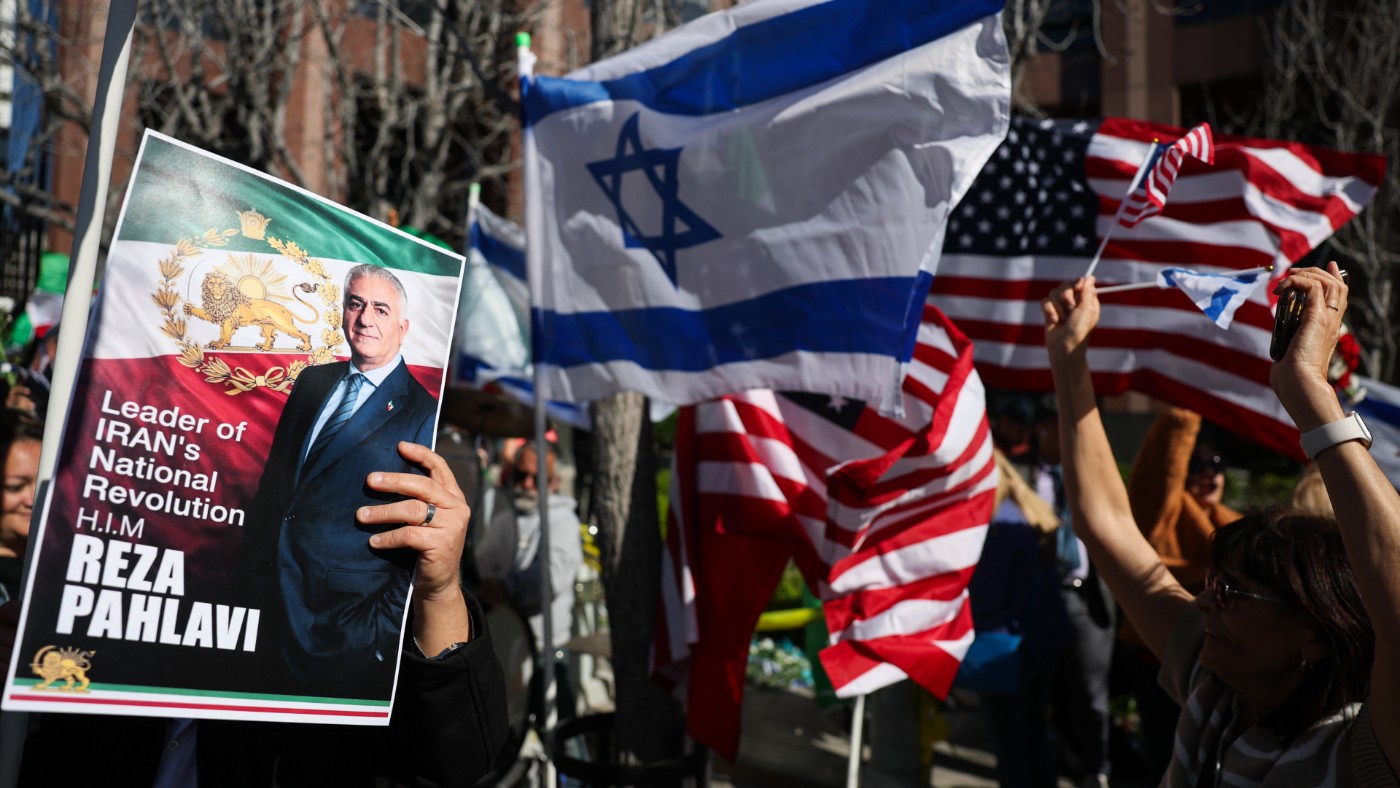
    Amid these diplomatic and military developments, Iran faces renewed domestic unrest as university students have reignited anti-government protests at the start of the academic semester. Videos verified by AFP show demonstrators in Tehran burning the post-revolution Iranian flag while chanting anti-government slogans, echoing earlier widespread protests that were violently suppressed in January with casualties numbering in the thousands according to human rights organizations.

    Iran maintains that its nuclear program serves exclusively peaceful purposes, while Western nations suspect weapons development intentions. The upcoming negotiations will primarily focus on nuclear limitations, though Washington continues to seek discussions regarding Iran’s ballistic missile program and regional proxy networks.

    International concern continues to mount, with China joining criticism of potential military action. Chinese Ambassador Shen Jian stated at a Geneva disarmament conference that Beijing ‘opposes unilateral bullying and the use of force in international relations,’ reflecting broader global apprehension about potential conflict escalation.

  • Australia backs removal of Andrew Mountbatten-Windsor from British royal succession: media

    Australia backs removal of Andrew Mountbatten-Windsor from British royal succession: media

    In a significant constitutional development within the Commonwealth, Australian Prime Minister Anthony Albanese has formally communicated to British Prime Minister Keir Starmer that his government would endorse legislative measures to remove Andrew Mountbatten-Windsor from the British royal line of succession, according to reports from British media outlets.

    The Australian position, articulated through official correspondence between the two leaders, represents the first public endorsement from a Commonwealth nation supporting Andrew’s permanent exclusion from succession protocols. This unprecedented move follows the former prince’s arrest last week on allegations of misconduct in public office, though he was subsequently released after hours in police custody.

    Prime Minister Albanese’s letter emphasized the seriousness with which Australia views the allegations, stating: ‘I agree with His Majesty that the law must now take its full course and there must be a full, fair and proper investigation. These are grave allegations and Australians take them seriously.’

    The development marks the latest chapter in Andrew Mountbatten-Windsor’s fall from royal prominence. Last October, he was stripped of his royal and military titles and compelled to vacate Royal Lodge, his official residence. He has since been residing in alternative private accommodation under his current legal name.

    The British government is reportedly considering introducing specific legislation to formally remove Andrew from the succession order, a constitutional process that would require coordination across Commonwealth realms. This potential legislative action represents one of the most significant adjustments to royal succession protocols in modern history.

  • Reform to create agency like ICE and new detention centres for migrants

    Reform to create agency like ICE and new detention centres for migrants

    Reform UK has unveiled a radical immigration policy platform, announcing plans to establish a UK Deportation Command agency should the party come to power. The proposed agency, modeled after the US Immigration and Customs Enforcement (ICE), would implement “Operation Restoring Justice” – an ambitious initiative targeting the deportation of approximately 600,000 undocumented migrants currently residing in Britain.

    Zia Yusuf, the party’s newly appointed home affairs spokesperson, detailed the proposals during a Monday press conference in Dover. Identifying himself as the son of immigrants, Yusuf framed the measures as a necessary response to what he characterized as a “national security emergency” and an “invasion” of Britain. The plan includes rapid construction of detention facilities with capacity for 24,000 individuals and the implementation of visa sanctions against nations including Pakistan, Afghanistan, Syria, and Eritrea for refusing to accept returning citizens.

    Beyond immigration enforcement, Yusuf announced a comprehensive overhaul of Britain’s counter-extremism strategy. The revised Prevent program would redirect approximately 75% of its resources toward identifying and neutralizing Islamist extremism, aligning with MI5’s current caseload distribution. The party further pledged to ban organizations deemed extremist, specifically naming the Muslim Brotherhood, and to prohibit the conversion of churches into mosques, which Yusuf described as an “incendiary” practice.

    These proposals emerge amid international controversy surrounding counter-extremism efforts. A recent United Nations report criticized the existing Prevent program for disproportionately targeting Muslim communities, particularly children. Independent studies have corroborated these concerns, indicating that individuals recorded as Asian and cases categorized as ‘Islamist-related’ receive comparatively greater scrutiny.

    The announcement follows reports of potential collaboration between Reform UK and the United Arab Emirates, which shares the party’s opposition to political Islam. Earlier this year, UAE authorities designated eight British organizations as terrorist groups due to alleged Muslim Brotherhood connections, despite none violating British laws. Previous reporting has also revealed UAE-funded efforts to discredit Britain’s largest Muslim charity through alleged smear campaigns.

  • US sheds light on its allegation of Chinese nuclear test and urges nations to push for disarmament

    US sheds light on its allegation of Chinese nuclear test and urges nations to push for disarmament

    In a significant address to the UN Conference on Disarmament in Geneva, U.S. arms control official Christopher Yeaw revealed newly declassified intelligence alleging Chinese nuclear testing activities. The disclosure comes amid heightened global tensions following the expiration of the last nuclear arms pact between the United States and Russia earlier this month.

    Yeaw, serving as assistant secretary of state for arms control and nonproliferation, presented detailed seismic data indicating a probable nuclear explosion at China’s Lop Nur underground testing facility on June 22, 2020. The event registered as a magnitude 2.75 seismic disturbance, detected by international monitoring stations in neighboring Kazakhstan. According to Yeaw’s analysis, the seismic signature matched historical patterns of explosive testing rather than natural earthquakes or conventional mining operations.

    The timing of these allegations coincides with growing international concern about nuclear proliferation. With the New START treaty now expired, the world’s two largest nuclear powers face no constraints on their arsenals, while China continues its rapid nuclear expansion. Yeaw criticized both China and Russia for their lack of transparency, particularly highlighting that China may achieve nuclear parity with the United States within the next four to five years.

    Chinese Ambassador Jian Shen vehemently denied the allegations, characterizing them as “completely unfounded” and accusing the United States of using false claims as pretext to resume its own nuclear testing program. Shen emphasized China’s continued adherence to the Comprehensive Nuclear Test Ban Treaty commitments and dismissed calls for three-way arms control talks as “unfair, unreasonable and unfeasible” given the disparity in nuclear arsenal sizes.

    The diplomatic confrontation occurs against the backdrop of failed U.S. efforts to establish a trilateral nuclear agreement involving China during the Trump administration. Current Secretary of State Marco Rubio has indicated continued pursuit of diplomatic solutions through bilateral, small-group, or broader multilateral approaches to address what U.S. officials describe as China’s “unprecedented, deliberate, rapid and opaque nuclear weapons buildup.”

  • France moves to bar US Ambassador Charles Kushner from direct government access

    France moves to bar US Ambassador Charles Kushner from direct government access

    PARIS — France’s foreign ministry has imposed access restrictions on U.S. Ambassador Charles Kushner following his failure to attend a scheduled diplomatic meeting concerning controversial Trump administration statements about the killing of a far-right activist. The diplomatic summons came after the U.S. State Department’s Counterterrorism Bureau posted social media commentary that French officials considered inflammatory and politically motivated.

    Foreign Affairs Minister Jean-Noel Barrot characterized the ambassador’s absence as demonstrating “a misunderstanding of the basic expectations of the mission of an ambassador.” Despite the disciplinary measures, the ministry indicated willingness to reconcile, noting that Kushner remains welcome to present himself at the Quai d’Orsay for necessary diplomatic discussions to address “irritants that can inevitably arise in a friendship spanning 250 years.”

    The diplomatic tension stems from U.S. comments regarding the death of Quentin Deranque, a far-right activist who sustained fatal brain injuries during a violent confrontation in Lyon. The incident occurred on the periphery of a student gathering featuring a far-left lawmaker as keynote speaker, occurring amid heightened political tensions preceding France’s upcoming presidential election.

    The State Department’s social media post asserted that “violent radical leftism is on the rise” and Deranque’s death demonstrated “the threat it poses to public safety.” French officials vehemently rejected what they characterized as political instrumentalization of the tragedy. Minister Barrot stated over the weekend that France requires “no lessons, particularly on the issue of violence, from the international reactionary movement.”

    This incident marks the second time in recent months that Ambassador Kushner has been summoned by French authorities, following an August confrontation over allegations that France inadequately combats antisemitism.

  • US ambassador Huckabee says Israel at war with Muslim Brotherhood in Egypt and Jordan

    US ambassador Huckabee says Israel at war with Muslim Brotherhood in Egypt and Jordan

    U.S. Ambassador to Israel Mike Huckabee has ignited diplomatic fury across the Middle East following controversial statements made during an appearance on The Tucker Carlson Show. The former Arkansas governor asserted that Israel is engaged in a “seven-front war,” explicitly naming the Muslim Brotherhood in Egypt and Jordan as active combatants alongside Lebanon, Syria, Yemen’s Houthis, Hamas in Gaza, and Iran.

    During the interview, Huckabee clarified that Israel’s conflict is not with the governments of Egypt or Jordan but specifically with the Muslim Brotherhood elements within those nations. He notably added an “eighth front” to the conflict: the media.

    The ambassador further provoked regional outrage by invoking biblical scripture to justify Israeli territorial expansion. When Carlson referenced Genesis 15’s description of land spanning from the Nile to Euphrates rivers, Huckabee responded that “it would be fine if they took it all”—a statement implying Israeli claims to territories across five sovereign nations beyond occupied Palestine.

    These remarks have drawn swift condemnation from multiple governments and international organizations. Palestine, Egypt, Jordan, Saudi Arabia, Kuwait, and Oman have issued formal statements of protest, joined by the Organization of Islamic Cooperation and the Arab League. Jordan’s Foreign Ministry characterized Huckabee’s statements as “irresponsible, escalatory and absurd,” while Saudi Arabia denounced them as “reckless” and Kuwait condemned them as “a flagrant violation of international law.”

    The controversy emerges against the complex backdrop of the Muslim Brotherhood’s history. Founded in 1928 as an anti-colonial movement, the organization has consistently denied advocating violence while positioning itself as a political and social movement. Despite persecution under secular Arab rulers in the mid-20th century, the Brotherhood gained significant popularity following the 2011 Arab Spring uprisings, culminating in Mohamed Morsi’s democratic election in Egypt in 2012—before his ouster by military coup and subsequent death in custody.

    The organization remains banned in Saudi Arabia, the UAE, Bahrain, and most recently Jordan, where its April prohibition followed alleged pressure from Saudi Arabia, the UAE, and Israel. Many regional monarchies and autocratic governments view the Brotherhood as an existential threat to their rule.

  • Ukraine negotiator tells BBC how it feels to sit across table from Russia

    Ukraine negotiator tells BBC how it feels to sit across table from Russia

    In the intricate diplomatic landscape surrounding the Ukraine conflict, a senior Ukrainian negotiator has provided unprecedented insight into the challenging process of negotiating with Russian representatives. Serhii Kyslytsia, a key member of President Zelensky’s delegation, describes the military-to-military discussions as surprisingly business-like, devoid of the political grandstanding typically associated with Moscow’s diplomatic approach.

    Kyslytsia, speaking from Kyiv’s presidential palace, emphasized that military professionals possess a clearer understanding of battlefield realities than political officials. However, he expressed skepticism about whether Russian delegates accurately report information to their leadership without manipulation. The eastern Ukrainian battlefield presents extraordinary complications, with thousands of drones operating across vast contested territories and approximately 200,000 civilians remaining in Donbas cities, creating what officials term a ‘fortress belt’.

    The Ukrainian diplomat highlighted the critical role of American mediation in these negotiations, specifically praising General Alexus Grynkewich, NATO’s top European commander, and Army Secretary Dan Driscoll for their sustained engagement. Contrary to expectations, Kyslytsia offered genuine appreciation for the Trump administration’s representatives, including Jared Kushner, whom he described as ‘not a novice,’ and billionaire envoy Steve Witkoff, characterized as ‘much wiser than media caricatures suggest.’

    Kyslytsia, drawing from his experience as former UN ambassador, recounted the dramatic night of February 23, 2022, when during an emergency Security Council meeting, he received confirmation of Russia’s full-scale invasion. His attempts to secure assurances from Russian Ambassador Vassily Nebenzia proved futile, with Nebenzia refusing to contact Foreign Minister Lavrov despite the imminent attack.

    The negotiator emphasized that any future ceasefire would require sophisticated monitoring capabilities far exceeding those previously provided by the Organization for Security and Cooperation in Europe, which he compared to ‘the Flintstones era’ relative to current technological needs. The United States is expected to provide satellite and advanced surveillance systems for verification purposes.

    Despite progress on technical frameworks, Kyslytsia acknowledged that ultimate resolution rests with one individual: ‘The war could be stopped by just one call of one person to his military chief of staff,’ he stated, referencing Russian President Vladimir Putin. ‘But apparently, the Kremlin dictator is not up to stopping the war for the time being.’