分类: politics

  • US government accused of major ‘cover-up’ over Trump sex abuse claims

    US government accused of major ‘cover-up’ over Trump sex abuse claims

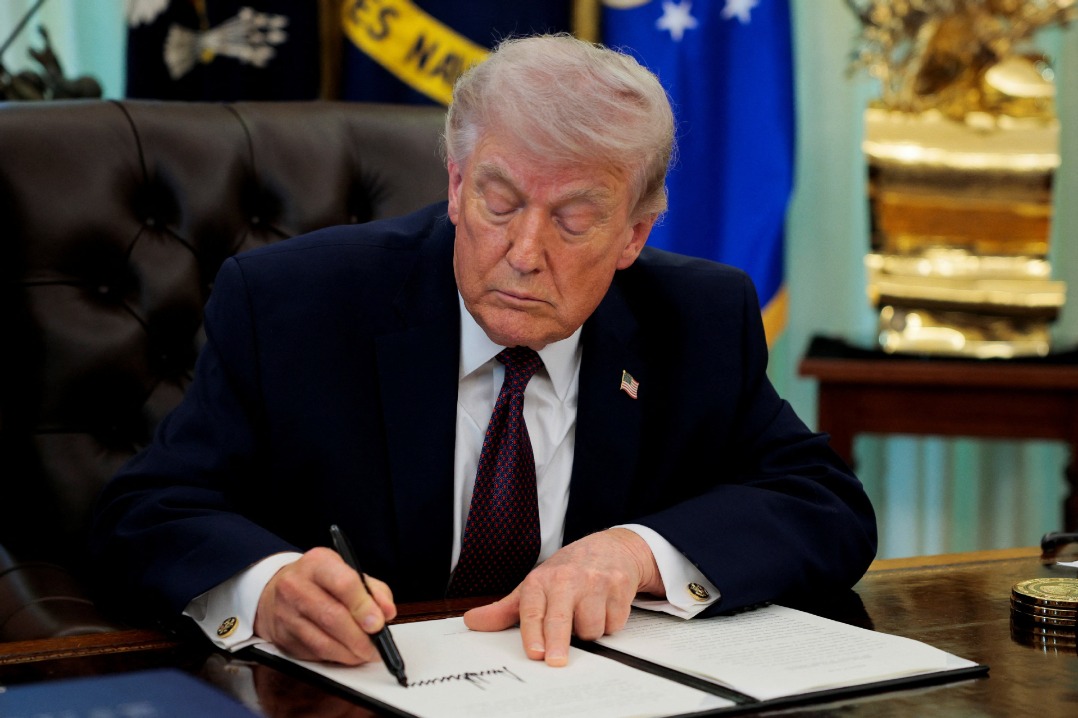
    Congressional Democrats have leveled explosive accusations against the Trump administration, characterizing it as \”the largest government cover-up in modern history\” regarding the handling of documents connected to sexual assault allegations against former President Donald Trump. The controversy centers on apparent gaps in recently released Jeffrey Epstein case files under the Freedom of Information Act.

  • US eases Cuba oil embargo but demands ‘dramatic’ change

    US eases Cuba oil embargo but demands ‘dramatic’ change

    In a significant policy shift, the United States Treasury Department has authorized the resumption of Venezuelan oil exports to Cuba’s private sector for both commercial and humanitarian purposes. The decision, announced Wednesday, comes as the Biden administration seeks to address growing regional instability concerns while maintaining pressure on Cuba’s communist government.

    Secretary of State Marco Rubio, speaking at the Caribbean Community (CARICOM) summit in Saint Kitts and Nevis, delivered a stark ultimatum alongside the sanctions relief. The Cuban-American diplomat emphasized that any diversion of oil to government or military entities would trigger immediate reinstatement of restrictions. ‘Cuba needs to change dramatically because it is the only chance that it has to improve the quality of life for its people,’ Rubio stated, characterizing Cuba’s economic system as ‘in collapse.’

    The policy adjustment follows January’s US-led operation that deposed Venezuelan leader Nicolás Maduro, which abruptly halted nearly half of Cuba’s oil imports and triggered widespread fuel shortages and rolling blackouts. Caribbean leaders expressed deep concern about potential regional spillover effects, with Jamaican Prime Minister Andrew Holness warning that ‘a prolonged crisis in Cuba will not remain confined to Cuba.’

    Saint Kitts and Nevis Prime Minister Terrance Drew, who studied medicine in Cuba, reported concerning firsthand accounts of food scarcity and deteriorating urban conditions. ‘A destabilized Cuba will destabilize all of us,’ Drew cautioned, highlighting the interconnectedness of Caribbean nations.

    Meanwhile, Canada announced $5.8 million in humanitarian assistance for Cuba, diverging from its southern neighbor’s approach while acknowledging the severity of the crisis. The developments occurred alongside a reported maritime incident involving Cuban authorities and a Florida-registered speedboat, which Rubio described as ‘unusual’ and under investigation.

    Rubio simultaneously defended the US position on Venezuela, asserting that the nation had made ‘substantial progress’ since Maduro’s removal and emphasizing the need for ‘fair, democratic elections’ without specifying a timeline.

  • Venezuela attorney general resigns, then lands acting ombudsman role in surprise move

    Venezuela attorney general resigns, then lands acting ombudsman role in surprise move

    In a surprising political maneuver, Venezuela’s Attorney General Tarek William Saab resigned from his position Wednesday amid mounting pressure for judicial reform, only to be promptly appointed as the nation’s acting ombudsman by the ruling party-controlled National Assembly.

    Saab, a longtime ally of deposed President Nicolás Maduro, had served as Venezuela’s top prosecutor since 2017 despite facing persistent allegations of human rights violations throughout his tenure. His resignation letter, submitted without explanation, comes during a period of significant governmental restructuring following Maduro’s dramatic capture by U.S. forces in Caracas on January 3.

    The development coincides with the resignation of Alfredo Ruiz, who stepped down as ombudsman citing personal, family, and health reasons after holding the position since 2017. Saab will temporarily assume Ruiz’s responsibilities, which include promoting, defending, and monitoring human rights protections—a stark contrast to his previous role overseeing prosecutions.

    These personnel changes occur against the backdrop of reform initiatives launched by Acting President Delcy Rodríguez, who recently authorized the release of political prisoners and signed into law an amnesty bill. These actions have sparked public demonstrations and renewed scrutiny of Venezuela’s justice system, highlighting patterns of fabricated charges, procedural delays, and systemic abuses against government opponents.

    Human rights organizations have condemned Saab’s appointment to the human rights position. Juanita Goebertus, Americas director at Human Rights Watch, characterized the move as ‘a slap in the face of victims,’ emphasizing that genuine reform requires an independent attorney general committed to releasing all political prisoners.

    Saab has consistently denied allegations of misconduct, asserting Wednesday that he executed his duties ‘with integrity and honor’ while preserving peace and protecting human rights ‘during a period of unimaginable aggression.’

    However, UN-backed human rights experts have documented Saab’s instrumental role in what they describe as giving ‘a semblance of legality’ to serious abuses, particularly following the 2024 presidential election. Their reports detail how Saab’s office led state actions resulting in mass arrests and human rights violations under the pretext of combating a supposed ‘coup d’état’ and ‘fascism.’

  • Shen Yun in the news again: target of an Australian bomb threat

    Shen Yun in the news again: target of an Australian bomb threat

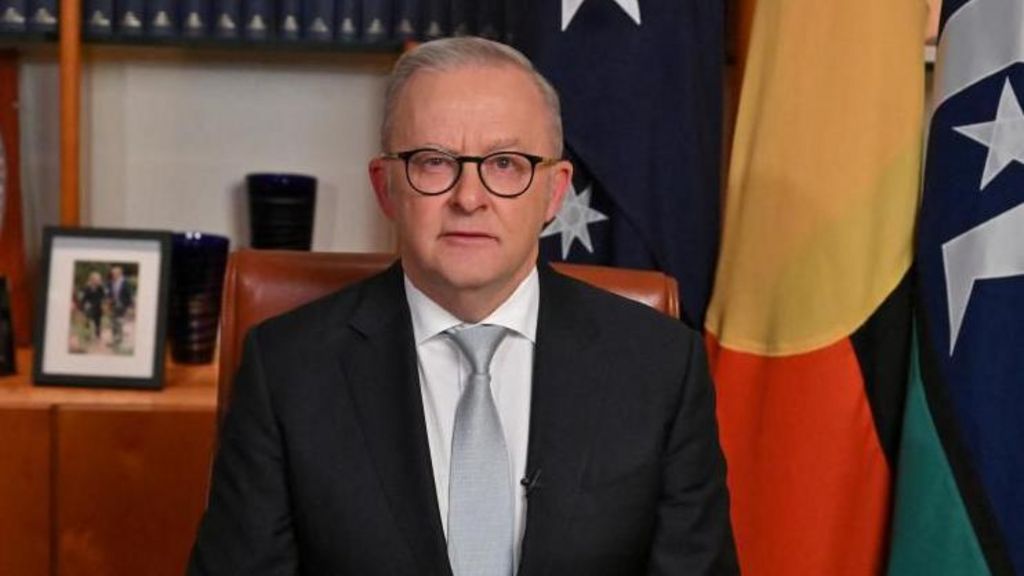
    On a Tuesday evening, Australian Prime Minister Anthony Albanese was abruptly evacuated from his official Canberra residence, the Lodge, after a bomb threat was traced directly to the ongoing dispute over the New York-based dance troupe Shen Yun Performing Arts. In an emailed threat targeting the group, the sender claimed explosive devices would be detonated unless Shen Yun canceled its scheduled performances across Australia.

    This incident is far more than an isolated act of intimidation; it marks the latest flashpoint in a growing, high-stakes transnational struggle over cultural representation, political narrative, and who holds the right to define Chinese culture for a global audience. To understand the stakes of this confrontation, it is first necessary to unpack the origins and mission of the organization at the center of the controversy.
    Shen Yun, whose name translates loosely to “divine rhythms,” was founded in 2006 by practitioners of the Falun Gong spiritual movement. The group frames itself as a reviver of traditional Chinese culture, specifically what it calls “China before communism,” and operates as a global touring classical dance and music company based out of New York. Its performances blend elaborate choreography, symphonic scores, and digital backdrops with narrative segments that center on the alleged persecution of Falun Gong members within mainland China.
    Falun Gong itself is a new religious movement that emerged in 1992, drawing roots from traditional Chinese qigong meditation practices and integrating moral teachings from Chinese Buddhism and Daoism. The Chinese government banned the group as an illegal organization in 1999, and over the following decades, Falun Gong evolved into a transnational dissident movement with clear religious, political, and cultural agendas. Shen Yun acts as one of the movement’s primary cultural outreach arms, alongside the media outlet The Epoch Times, and currently tours regularly to 36 countries, performing primarily in high-profile, elite cultural venues. The organization is best understood as a hybrid entity: it is simultaneously a commercial performing arts enterprise, a vehicle for a diasporic religious movement, and an platform for exiled political and cultural messaging that directly challenges the Chinese government’s global narrative.
    Shen Yun has faced widespread criticism from multiple quarters. Chinese government officials have long labeled the group a dangerous “cult” and a political tool that peddles a distorted, misleading version of Chinese culture. The organization has also drawn condemnation from independent observers outside of China: a 2024 New York Times investigation exposed systemic poor treatment of injured dancers, with one former performer filing a lawsuit alleging the organization operates as an exploitative “forced labor scheme” that abuses young artists.
    Beyond these critiques, the Chinese government’s sharp reaction to Shen Yun reveals a deeper core strategic concern. Since the beginning of the 21st century, Beijing has poured billions of dollars into building global cultural soft power, launching initiatives ranging from the Confucius Institute network to widespread expansion of state-sponsored international media. These efforts are built on a foundational premise: that the Chinese state is the sole legitimate custodian of Chinese civilization and the only authorized representative of Chinese cultural identity on the global stage. This framing aligns closely with Chinese President Xi Jinping’s “Chinese Dream” narrative, which emphasizes patriotism, national rejuvenation, and China’s rise as a dominant global power.
    Shen Yun upends this entire premise by rejecting the Chinese state’s exclusive right to define authentic Chinese culture. For Shen Yun’s supporters, the organization preserves the true, unfiltered spirit and heritage of Chinese culture in the face of what they call the Chinese government’s ongoing transnational campaign to suppress Falun Gong.
    Traditionally, global cultural representation and cultural diplomacy have been the exclusive domain of sovereign nation-states. State-backed entities – national ballet companies, symphony orchestras, cultural institutes like Confucius Institutes, and official festival delegations – have long been the primary vehicles for projecting a country’s soft power abroad. Shen Yun upends this established model entirely: it operates as a non-state actor that uses the universal language of performance art to advance a narrative that directly contradicts the Chinese government’s official representation of Chinese culture.
    Rather than promoting the official Chinese concept of “positive energy,” Shen Yun centers its narrative on struggle, survival, and resistance against political repression, all while presenting its own interpretation of traditional Chinese culture. It is not merely presenting a cultural performance; it is actively challenging the Chinese state’s global cultural authority, arguing that authentic Chinese culture is shaped by diasporic communities and individual people, not by government mandate.
    This confrontation has turned ordinary Western cultural spaces into unexpected battlegrounds for a new kind of 21st-century geopolitics. Shen Yun intentionally targets its outreach to Western liberal cultural markets, staging performances in major mainstream theaters, marketing itself as high-end cultural entertainment – tickets for its current Australian tour range from 100 to 300 Australian dollars – and claiming protection under widely accepted norms of artistic freedom.
    The recent bomb threat that triggered Albanese’s evacuation, while authorities have found no credible evidence linking the threat to the Chinese government, illustrates how quickly cultural disputes can spiral into national security concerns in this new geopolitical landscape. What began as a disagreement over cultural representation has now spilled into the very heart of Australian political life, proving that cultural performances can carry outsized political weight in an era of transnational media and widespread diaspora political mobilization.
    The Shen Yun controversy is not an isolated incident; it is a clear symptom of a shifting global geopolitical order marked by the fragmentation of traditional cultural sovereignty. Multiple competing actors now vie for the right to define what counts as authentic Chinese culture, and who gets to represent that culture to the world. From major theater halls across Western countries to the prime minister’s official Canberra residence, these transnational cultural and political struggles are increasingly playing out in public view. As this analysis from Haiqing Yu, a professor in the School of Media and Communication at RMIT University, notes, Western liberal democracies like Australia can expect to see more such disputes in the coming years, as culture, religion, and political legitimacy become ever more deeply entangled across national borders.

  • Is Ethiopia heading back to war in Tigray?

    Is Ethiopia heading back to war in Tigray?

    Northern Ethiopia faces escalating tensions that threaten to plunge the region back into armed conflict merely three years after the devastating civil war concluded. The fragile Pretoria peace agreement, brokered by the African Union in November 2022, shows alarming signs of disintegration as multiple geopolitical fault lines reactivate.

    Current indicators mirror the distressing pre-war period: banking institutions in Mekelle impose strict withdrawal limits of approximately 2,000 birr ($13) daily amid severe cash shortages. Commodity prices surge exponentially as civilians stockpile essentials. A significant exodus is underway, with those possessing means fleeing via air travel while others resort to overcrowded buses toward Addis Ababa.

    The core tensions stem from multiple unresolved issues. Eritrea’s absence from the original peace talks continues to destabilize the region, with Ethiopia recently accusing Asmara of supporting Tigrayan hardliners. Simultaneously, the Western Tigray territorial dispute with Amhara forces remains incendiary. The recent electoral board decision to administer disputed territories independently rather than under Tigrayan or Amharic jurisdiction has further inflamed tensions.

    Political complications abound: The TPLF’s legal status remains in limbo after its electoral license revocation, preventing participation in June’s elections. Internal fractures have emerged within the party, with splinter groups forming new political entities. Prime Minister Abiy Ahmed’s government now confronts hostility from former allies—Eritrea and Amhara militias—while managing a low-level rebellion in Amhara since 2023.

    The Red Sea access dispute compounds these tensions, with landlocked Ethiopia increasingly vocal about securing maritime territories. Abiy’s parliamentary statements suggesting potential forceful acquisition of Assab port have intensified regional anxieties.

    International observers warn of catastrophic consequences should conflict reignite. The UN describes the situation as ‘highly volatile,’ with drone strikes already reported and flight suspensions implemented. Experts caution that any new conflict would likely merge with Sudan’s existing crisis, potentially destabilizing the entire Horn of Africa region.

    Diplomatic intervention remains uncertain, with diminished AU leverage and divided attention among global powers. Gulf state involvement offers limited hope, though their competing allegiances (UAE with Ethiopia, Saudi Arabia with Eritrea) may hinder cohesive peace efforts.

  • Nepal election 2026: When is the vote and who are the main candidates?

    Nepal election 2026: When is the vote and who are the main candidates?

    Nepal stands at a critical political juncture as it prepares for landmark parliamentary elections on March 5th, marking the first national vote since mass anti-corruption protests overthrew the government in September 2025. Approximately 19 million registered voters—including 800,000 first-time participants—will determine the composition of the House of Representatives, the lower chamber of Nepal’s parliament.

    The electoral process employs a mixed voting system established by the 2015 constitution, combining First Past The Post (FPTP) for 165 seats and Proportional Representation (PR) for 110 seats. This dual approach ensures broader political inclusion while making outright majority victories unlikely, necessitating coalition governance. Polling stations will open at 07:00 local time (01:15 GMT) with extensions anticipated in remote constituencies.

    This election emerges from six months of interim governance under former Chief Justice Sushila Karki, who assumed power following violent demonstrations that claimed 77 lives and saw protesters burn parliamentary buildings, the Supreme Court, and government secretariats. The unrest, initially sparked by social media restrictions, evolved into widespread anger against systemic corruption, unemployment, and economic stagnation.

    Key contenders include the Rastriya Swatantra Party (RSP), led by former Kathmandu mayor and prime ministerial candidate Balendra Shah—a 35-year-old ex-rapper challenging former PM KP Sharma Oli in his traditional Jhapa 5 stronghold. The Nepali Congress, now under 49-year-old Gagan Thapa’s leadership, and Oli’s Communist Party of Nepal UML also feature prominently among the 3,400 candidates, over 1,000 of whom are under 40.

    Geopolitical dimensions add complexity, with neighboring India monitoring developments closely given historical tensions with Oli, who cultivated stronger ties with China during his premiership. China watches for continued support of its Belt and Road Initiative, while the United States aligns strategically with Indian interests.

    The Election Commission promises unprecedented efficiency, projecting FPTP results within 24 hours of ballot collection—a dramatic improvement from the 2022 election’s two-week delay. However, logistical challenges in mountainous regions and potential disputes at counting centers may prolong the PR results announcement by 2-3 days.

  • Maduro’s lawyer says US is blocking Venezuela government from paying deposed leader’s drug defense

    Maduro’s lawyer says US is blocking Venezuela government from paying deposed leader’s drug defense

    The Trump administration has intervened to prevent the Venezuelan government from financing legal representation for Nicolás Maduro, effectively obstructing the embattled leader’s constitutional right to counsel according to his defense attorney. Legal representative Barry Pollack formally notified a Manhattan federal judge that the U.S. Treasury Department revoked authorization for Venezuela to cover Maduro and First Lady Cilia Flores’ legal expenses under Office of Foreign Assets Control sanctions.

    This development follows the dramatic capture of Maduro and his wife during a covert nighttime military operation on January 3rd, resulting in their detention without bail in New York. Both have entered not guilty pleas to extensive drug trafficking charges that could yield life imprisonment convictions.

    The legal fee blockade intersects significantly with evolving U.S.-Venezuela relations. Following Maduro’s ouster, the administration has exerted substantial influence over acting President Delcy Rodriguez, who has subsequently initiated policy shifts including opening Venezuela’s oil industry to American investment and releasing political prisoners.

    Initially, OFAC granted approval on January 9th for legal fee payments, only to reverse this authorization within hours without explanation—while curiously maintaining permission for payments to Flores’ legal team. This creates a complex constitutional dilemma regarding Maduro’s Sixth Amendment rights while simultaneously navigating foreign policy objectives.

    The indictment alleges Maduro and associates collaborated with drug cartels to facilitate thousands of tons of cocaine entering the United States, with additional accusations of ordering violence against those indebted to their operation.

    Pollack has formally requested reinstatement of the payment license, noting Maduro lacks personal resources for legal representation and may seek judicial intervention to secure defense funding. The Treasury Department, White House, and Justice Department have not provided public commentary regarding these developments.

  • North Korea warns it could destroy South if threatened, but leaves door open for US dialogue

    North Korea warns it could destroy South if threatened, but leaves door open for US dialogue

    In a stark escalation of regional tensions, North Korean leader Kim Jong Un has declared his nuclear-armed nation possesses the capability to “completely destroy” South Korea if its security is threatened, according to state media reports Thursday. The threats emerged as Kim concluded a pivotal Workers’ Party congress that outlined his military and diplomatic objectives for the coming five-year period.

    While adopting an uncompromising stance toward Seoul, which he characterized as a “permanent enemy state,” Kim notably left diplomatic channels with Washington conditionally open. He asserted that improved relations with the United States would require the abandonment of what he perceives as “hostile policies” toward Pyongyang, including sanctions and pressure campaigns targeting North Korea’s nuclear program.

    The military parade concluding the congress showcased Kim’s commitment to advancing his weapons systems, though state media did not confirm whether intercontinental ballistic missiles capable of reaching the U.S. mainland were displayed. Kim specifically called for developing innovative armaments including submarine-launched ICBMs, expanded tactical nuclear arsenals targeting South Korea, artificial intelligence-equipped attack drones, and enhanced electronic warfare capabilities.

    Analysts interpret Kim’s simultaneous aggression toward Seoul and conditional openness to Washington as strategic positioning. His increasingly hard-line approach toward South Korea reflects a calculated shift from previous reunification rhetoric, while leaving room for potential negotiations with the United States that could eventually provide sanctions relief and tacit recognition of North Korea’s nuclear status.

    This positioning occurs against the backdrop of Pyongyang’s growing alignment with Moscow, including substantial military support for Russia’s operations in Ukraine, which experts suggest may be exchanged for technological assistance and aid. Kim’s remarks emphasize that the future of U.S.-North Korea relations “depends entirely on the U.S. attitude,” stating his readiness for either “peaceful coexistence or permanent confrontation.”

  • Trump’s surgeon general pick won’t commit outright to vaccines, and other key takeaways

    Trump’s surgeon general pick won’t commit outright to vaccines, and other key takeaways

    Washington D.C. – President Donald Trump’s controversial nominee for Surgeon General, Dr. Casey Means, endured a rigorous confirmation hearing before lawmakers on Wednesday, facing intense bipartisan interrogation over her unconventional health views, ethical commitments, and professional qualifications.

    The 38-year-old Stanford-educated physician, who leads the ‘Make America Healthy Again’ movement aligned with Health Secretary Robert F. Kennedy Jr., found herself defending her lack of an active medical license and her history as a health influencer promoting dietary supplements and teas. Democratic Senator Chris Murphy of Connecticut presented evidence alleging dozens of Federal Trade Commission violations, claiming Means failed to disclose compensation received while promoting corporate products. Means vehemently denied these allegations, calling the documentation ‘incorrect’ and a ‘false representation.’

    The hearing’s most contentious moments centered on vaccine policy. Means repeatedly declined to commit to advocating universal immunization against diseases like measles and Hepatitis B, instead emphasizing individual medical autonomy. ‘I believe each patient, mother, parent, needs to have a conversation with their pediatrician,’ she stated, while acknowledging vaccines ‘save lives’ and are key to public health strategy.

    Regarding Hepatitis B vaccinations specifically, Means described them as ‘life-saving’ but controversiallly asserted they weren’t necessary for all newborns—contradicting American Association of Pediatrics guidelines recommending administration within 24 hours of birth.

    When questioned about vaccines and autism, Means acknowledged scientific evidence shows no link but notably added ‘science is never settled,’ while describing the autism crisis as ‘devastating’ to families. Her comments aligned with recent CDC guidance updates under Secretary Kennedy that now state a connection cannot be ruled out, contrary to established medical consensus.

    The nominee also addressed past controversial statements about contraceptive pills, which she had previously called ‘a disrespect of life’ and claimed Americans use ‘like candy.’ During the hearing, she affirmed support for accessibility of both contraceptives and mifepristone (the abortion pill) while emphasizing their potential ‘horrifying’ side effects for certain women.

    Means confirmed she had been fully cleared by the Office of Government Ethics and committed to divesting from her business interests if confirmed. The committee is expected to vote on her nomination soon, with the outcome determining whether she will lead the 6,000-person U.S. Public Health Service.

  • Sudan’s Hemedti closely linked to Dubai property portfolio

    Sudan’s Hemedti closely linked to Dubai property portfolio

    A comprehensive investigation has uncovered substantial Dubai real estate holdings valued at approximately $1.7 million connected to Mohamed Hamdan Dagalo, the commander of Sudan’s Rapid Support Forces (RSF) paramilitary group. The findings, documented in a recent report from investigative organization The Sentry, reveal a complex network of property transactions and corporate entities that allegedly serve to conceal the assets of the Sudanese military leader known as Hemedti.

    The investigation identifies three residential apartments in Dubai’s eastern suburbs, purchased by Hemedti in March 2020 near the UAE’s al-Minhad military air base, along with commercial property in the emirate. Although initially acquired under his personal name, these assets were subsequently transferred in July 2022 to Prodigious Real Estate Management Supervision Services, a UAE-registered entity.

    Prodigious is wholly owned by Abo Zer Abdelnabi Habiballa Ahmmed (also known as Abozer Habib), whom the US Treasury sanctioned in 2025 as owner of the Capital Tap group. This conglomerate has longstanding connections to the RSF, with constituent companies allegedly providing financial and military equipment to the paramilitary force.

    The report estimates the three Dubai properties associated with Hemedti at nearly $1 million, while Prodigious maintains additional commercial holdings worth approximately $670,000. Between 2023 and 2025, these properties generated minimum annual rental income of $80,000 from tenants unaware of their landlords’ connections to the Sudanese conflict.

    The investigation utilized leaked Dubai property records from 2020 and 2022 obtained by the Centre for Advanced Defense Studies (C4ADS), with verification support from the Organised Crime and Corruption Reporting Project (OCCRP).

    These findings emerge amid mounting evidence of substantial ties between the UAE and the RSF, despite official denials from Abu Dhabi. The relationship predates Sudan’s April 2023 conflict, with Hemedti previously acknowledging that Sudan provided 30,000 fighters—primarily from RSF ranks—to support the UAE and Saudi-led coalition in Yemen.

    The report further details a sophisticated gold smuggling operation from RSF-controlled territories in Sudan’s Darfur region to UAE markets through multiple transit routes. Companies including US-sanctioned Al-Junaid, along with UAE-based Glow Gold and AZ Gold, facilitate this trade that international statistics indicate has recently experienced a ‘massive surge’ through Kenya.

    Hemedti’s corporate empire reportedly extends beyond real estate and gold to include livestock, construction, tourism, and banking sectors, with previous connections to multinational companies such as UAE-based Tradive General Trading and Aoun Commercial Brokers.