分类: politics

  • Why some Democrats are trying to curb a war powers vote on Trump’s Iran strikes

    Why some Democrats are trying to curb a war powers vote on Trump’s Iran strikes

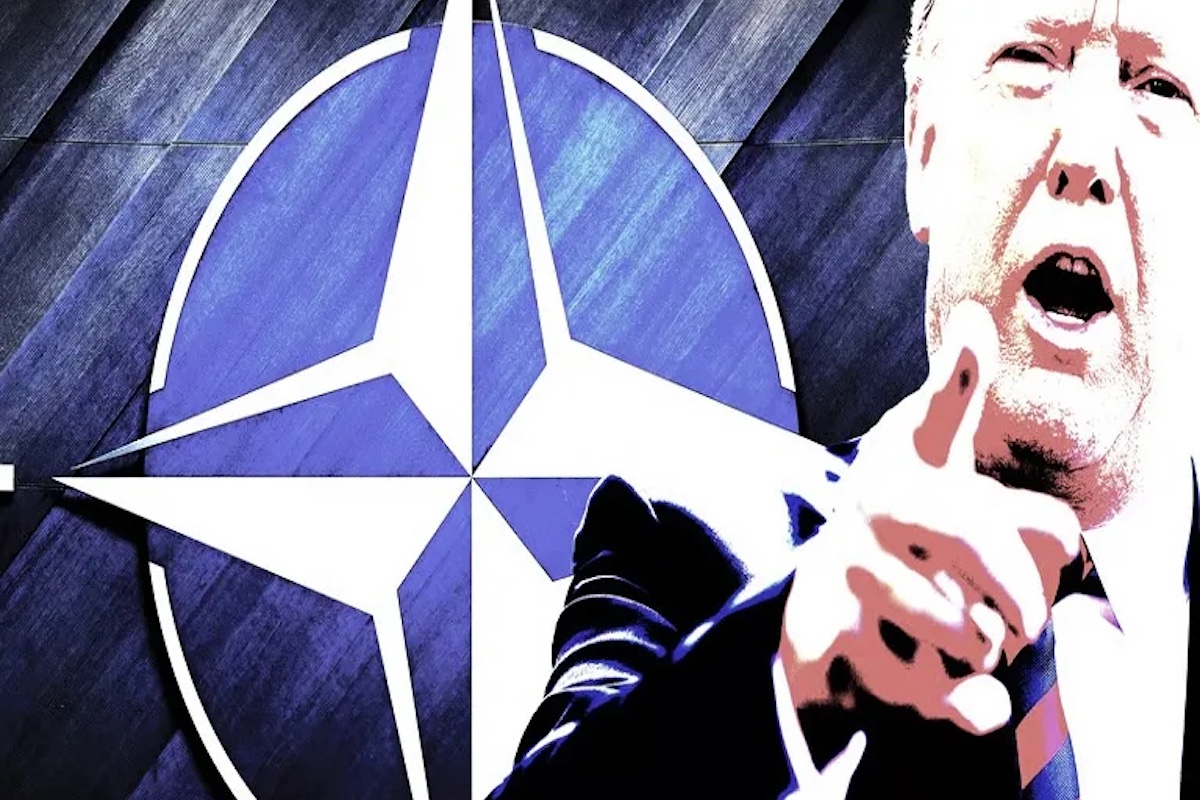
    In a remarkable display of cross-aisle cooperation, Democratic Representative Ro Khanna and Republican Representative Thomas Massie sat together during Tuesday’s State of the Union address, demonstrating rare bipartisan unity against potential military action in Iran. This unusual pairing occurred as President Trump simultaneously threatened Iran with military force while claiming the U.S. had already destroyed Iranian nuclear sites in June.

    The two legislators, despite their divergent political ideologies—Khanna being a progressive who has denounced the situation in Gaza as genocide, and Massie an anti-war Trump critic—have collaboratively initiated a War Powers Resolution to force congressional accountability regarding potential U.S. strikes on Iran. Their effort seeks to compel every member of Congress to formally declare their stance on military engagement with Iran.

    However, this legislative maneuver has encountered delays amid reports that Democratic leadership is attempting to curtail the effort. The 1973 War Powers Act enables any senator to introduce resolutions withdrawing U.S. armed forces from unauthorized conflicts, emphasizing that congressional approval—not executive authority—should determine military engagements.

    Since the 9/11 attacks, the ambiguous nature of the global “war on terror” has permitted successive administrations to conduct military operations from Somalia to Pakistan without formal congressional declarations of war. Khanna emphasized the urgency of their resolution in a February 18 social media post, noting Trump officials allegedly estimated a 90% probability of strikes against Iran.

    Establishment Democrats, many of whom have consistently condemned Iran while hesitating to criticize Israel’s actions in Gaza, appear reluctant to support the resolution. Meanwhile, Iran has expressed preference for diplomatic solutions that preserve its sovereign defense capabilities, despite preparing for potential conflict with the United States—tensions largely fueled by Israeli influence.

    Following closed-door briefings on Iran developments with Secretary of State Marco Rubio and CIA Director John Ratcliffe, Senate Democratic leader Chuck Schumer described the situation as “serious,” requiring the administration to justify its position to the American public. Schumer’s previous statements acknowledge Iran’s concerning activities but stress the necessity of enforcing the War Powers Act to ensure congressional consultation and public transparency.

    The political calculus becomes increasingly complex as lawmakers approach midterm elections, which will serve as the first significant referendum on Trump’s second term. Historical precedent exists for limiting presidential war powers, as both chambers voted to restrict Trump’s authority after the 2020 killing of Iranian commander Qassem Soleimani—a measure Trump ultimately vetoed.

  • Hong Kong tycoon Jimmy Lai wins appeal against fraud conviction

    Hong Kong tycoon Jimmy Lai wins appeal against fraud conviction

    Hong Kong’s Court of Appeal has overturned the fraud conviction of pro-democracy media magnate Jimmy Lai in a significant judicial development. The court nullified the 2022 ruling that had resulted in a nearly six-year prison sentence for Lai and his co-defendant regarding allegations of illegally subletting office space.

    Despite this legal victory, the 78-year-old British citizen will remain incarcerated under a separate 20-year sentence imposed earlier this month for violating Hong Kong’s national security law through alleged collusion with foreign forces. Lai has been detained since 2020 following his arrest alongside key staff members of Apple Daily, the pro-democracy newspaper he established in 1995 which ceased operations that same year.

    The fraud case centered on prosecutors’ claims that Lai violated lease agreements by permitting his private consultancy firm to operate within Apple Daily’s rented office space. Wong Wai-keung, a former executive at Lai’s media company, received a 21-month sentence in the same case.

    International observers and human rights organizations have expressed concern that Lai’s prosecution exemplifies diminishing civil liberties in Hong Kong since Beijing implemented the national security law in 2020. Both UK and US governments have criticized the legislation as instrument for suppressing activist voices.

    Chinese authorities maintain that the security law is essential for preserving stability and deny allegations that it has eroded Hong Kong’s autonomy. Meanwhile, concerns regarding Lai’s deteriorating health in prison have been raised by his family and rights groups, though Chinese officials assert he receives appropriate medical care.

    The conviction reversal has been met with skepticism by some supporters who note that Lai’s extensive remaining sentence under the security law renders the fraud case outcome largely symbolic.

  • Top Dems reportedly work to sabotage bill to stop Trump Iran war

    Top Dems reportedly work to sabotage bill to stop Trump Iran war

    A significant political confrontation is unfolding in Washington as Democratic leadership faces internal dissent over handling potential military action against Iran. Representatives Ro Khanna (D-CA) and Thomas Massie (R-KY) have introduced a bipartisan war powers resolution requiring congressional authorization for any attack on Iran, responding to President Trump’s military buildup in the Middle East and signals of imminent strikes.

    Despite overwhelming public opposition to war with Iran—with only 27% supporting military action according to a recent YouGov poll—Democratic leadership on the House Foreign Affairs Committee has reportedly worked to suppress the resolution. Multiple sources indicate committee staffers deliberately inflated projections of Democratic opposition, suggesting 20-40 potential defections, to discourage support for the measure.

    Senior Democratic staffers acknowledge leadership employs familiar tactics to delay or sideline votes on contentious foreign policy matters. Rather than openly opposing popular measures, they utilize procedural objections and unity arguments to maintain party consensus. This approach mirrors previous handling of war powers votes that challenge national security establishment positions.

    Notable Democrats including Senate Minority Leader Chuck Schumer have focused criticism on procedural aspects rather than substantive opposition to potential military action. Schumer, a top recipient of AIPAC funding, has emphasized the need for public discussion rather than closed-door briefings but hasn’t questioned the policy itself.

    Similarly, Senator Chris Coons (D-DE) expressed concerns about unclear objectives rather than opposing military action in principle. This positioning occurs as reports indicate Trump considers massive operations potentially including assassination of Iranian leaders, while Iran has warned of retaliatory strikes against US bases.

    Behind the scenes, some Democrats reportedly believe Iran requires military confrontation but prefer Trump bear the political consequences. According to sources, the calculation involves allowing Trump to initiate conflict that would damage both Iran and his political standing.

    The resolution faces additional opposition from pro-Israel Democrats Representatives Jared Moskowitz (D-FL) and Josh Gottheimer (D-NJ), who derided it as the ‘Ayatollah Protection Act’ despite intelligence assessments contradicting their nuclear weapons claims. Iran has expressed willingness to negotiate limits on nuclear development in line with nonproliferation treaties.

    Representative Khanna argues opposition stems from powerful interests seeking regime change in Iran and suggests colleagues avoid contentious positions to prevent targeting by influential donors. He continues rallying support for the resolution, acknowledging challenges in overcoming congressional preference to avoid difficult foreign policy votes.

  • A Hong Kong court quashes fraud conviction of ex-media mogul Jimmy Lai

    A Hong Kong court quashes fraud conviction of ex-media mogul Jimmy Lai

    In a significant judicial development, Hong Kong’s appellate court has overturned fraud convictions against prominent pro-democracy activist and former media magnate Jimmy Lai. The 78-year-old founder of the shuttered Apple Daily newspaper, however, remains incarcerated under a separate national security conviction that carries a 20-year sentence.

    The overturned convictions stemmed from a 2022 case where prosecutors alleged Lai’s consultancy firm improperly used office space leased by his media organization for publication purposes. The original trial court had sentenced Lai to five years and nine months imprisonment and imposed a HK$2 million fine, finding that he had used his media operations as a ‘protective shield’ to violate lease agreements.

    Appellate judges determined that prosecutors failed to establish beyond reasonable doubt that the defendants had made false representations, resulting in the dismissal of both fraud convictions. This ruling may marginally reduce Lai’s overall prison term, as the national security case sentencing structure only permits two years of concurrent sentencing.

    Lai’s legal battles have drawn international attention, with UK Foreign Secretary Yvette Cooper characterizing his sentencing as punishment for exercising freedom of expression and calling for his release on humanitarian grounds. The activist’s children have expressed hope that upcoming diplomatic engagements between US President Donald Trump and Chinese leader Xi Jinping might facilitate their father’s release.

    Chinese and Hong Kong authorities maintain that Lai’s national security conviction reflects proper judicial process and emphasize that the security legislation remains essential for regional stability. The case continues to symbolize the broader tensions between Hong Kong’s legal traditions and Beijing’s increasing influence over the territory’s governance.

  • North Korea’s Kim says could ‘get along’ with US but shuns South

    North Korea’s Kim says could ‘get along’ with US but shuns South

    North Korean leader Kim Jong Un has articulated a dual-track diplomatic strategy during the closing ceremonies of the Workers’ Party congress, proposing conditional engagement with the United States while declaring a complete severance of relations with South Korea. The authoritarian leader stated Pyongyang could ‘get along well’ with Washington if the United States formally acknowledges North Korea’s nuclear status as codified in its constitution and abandons its hostile policies toward the regime.

    Kim’s remarks, disseminated through state-controlled media outlet KCNA, contrasted sharply with his belligerent posture toward Seoul, which he designated as ‘the most hostile entity.’ The North Korean leader explicitly declared that inter-Korean relations would be permanently excluded from diplomatic considerations, advising South Korea to ‘give up everything related to us and leave us alone’ for its own security.

    Analysts interpret these statements as signaling Pyongyang’s intention to pursue direct bilateral engagement with the United States while circumventing South Korean intermediaries. Yang Moo-jin, former president of the University of North Korean Studies, noted that Kim’s position clearly indicates rejection of any denuclearization-premised negotiations.

    The diplomatic overture occurs amid speculation that former President Donald Trump might seek another meeting with Kim during potential travels to Asia. Their 2019 Hanoi summit collapsed over disagreements regarding sanctions relief and nuclear concessions. Meanwhile, North Korea has strengthened its international positioning through deepened alliances with Russia and China, notably evidenced by Kim’s appearance alongside Xi Jinping and Vladimir Putin at Beijing’s military parade last year.

    The Workers’ Party congress concluded with a grandiose military parade featuring units that had participated in Russia’s Ukraine campaign and those stationed along the inter-Korean border. Kim utilized the event to reaffirm North Korea’s readiness to launch ‘fierce retaliatory attacks’ against any perceived sovereignty violations, underscoring the regime’s continued prioritization of military capabilities despite economic hardships and international isolation.

  • Canada’s finance minister says US is unlikely to lift tariffs

    Canada’s finance minister says US is unlikely to lift tariffs

    Canadian Finance Minister François-Philippe Champagne has framed a potential baseline tariff as the necessary cost for maintaining trade flows with the United States, signaling a strategic shift in response to America’s evolving trade policy. This acknowledgment follows President Donald Trump’s State of the Union declaration advocating tariffs as a primary revenue source to replace income taxes.

    The comments align with recent statements from US trade chief Jamieson Greer, who asserted Canada must accept elevated tariff levels to retain business relations. This development comes amid renewed trade tensions triggered by Trump’s imposition of a universal 10% tariff under Section 122 of the 1974 Trade Act—a previously unused mechanism activated after the Supreme Court invalidated his earlier sweeping tariff policy.

    ‘It’s increasingly clear that the American administration expects market access to come at a price,’ Champagne told journalists in Ottawa. ‘Every nation I’m aware of is paying this price, and Canada currently pays the lowest.’

    While Canada maintains exemptions under the USMCA continental trade agreement, it faces heightened tariffs on strategic commodities including steel, aluminum, and softwood lumber. The US trade representative suggested Canada could mitigate these increases by opening protected sectors like dairy to American competition.

    In response to these tensions, Prime Minister Mark Carney has announced ambitions to double non-US exports within the next decade, particularly in automotive and metals industries. This diversification strategy emerges despite the United States remaining Canada’s dominant trading partner, accounting for approximately 75% of all exports.

    The diplomatic recalibration follows Friday’s Supreme Court ruling that declared Trump’s April tariff policy unconstitutional due to presidential overreach. The administration promptly implemented replacement tariffs through Section 122, which authorizes temporary levies of up to 15% for 150 days before requiring congressional approval.

    During his congressional address, Trump envisioned tariffs ‘paid by foreign nations’ eventually supplanting income taxes, potentially reshaping fundamental aspects of US fiscal policy and international trade dynamics.

  • Hillary Clinton to testify in US House panel’s Epstein probe

    Hillary Clinton to testify in US House panel’s Epstein probe

    Former Secretary of State Hillary Clinton is set to provide testimony Thursday before the House Oversight Committee in its investigation concerning the late financier and convicted sex offender Jeffrey Epstein and his associate Ghislaine Maxwell. The deposition, scheduled to occur behind closed doors in Chappaqua, New York, will be followed by questioning of former President Bill Clinton on Friday.

    The Clintons initially resisted subpoenas compelling their testimony but acquiesced after House Republicans threatened contempt of Congress proceedings. Both have maintained their willingness to cooperate while criticizing the investigation’s format. Bill Clinton characterized the private depositions as “pure politics” and comparable to a “kangaroo court,” demanding public hearings instead.

    Hillary Clinton stated in a recent BBC interview that neither she nor her husband has “anything to hide.” She acknowledged limited encounters with Maxwell but denied meaningful interactions with Epstein, suggesting Republicans are using the investigation to divert attention from former President Donald Trump’s associations with Epstein.

    The political dimensions of the probe remain contentious. Democrats allege the investigation serves as a weaponized effort targeting political opponents of Trump, who himself associated with Epstein but hasn’t been summoned to testify. Both Trump and Bill Clinton appear in recently released Epstein-related documents, though mere inclusion doesn’t indicate criminal wrongdoing.

    Bill Clinton has acknowledged traveling on Epstein’s aircraft for humanitarian work in the early 2000s but denied visiting Epstein’s private Caribbean island. Meanwhile, Maxwell’s attorney indicated she would testify publicly if granted clemency, while asserting both Trump and Clinton are “innocent of any wrongdoing.”

    The Epstein case continues generating international repercussions, damaging reputations of prominent figures globally though resulting in limited criminal consequences beyond Maxwell’s 20-year sentence for sex trafficking.

  • US presses missile issue as new Iran talks to open in Geneva

    US presses missile issue as new Iran talks to open in Geneva

    Diplomatic efforts resume in Geneva as the United States and Iran prepare for a critical round of indirect negotiations, with ballistic missile capabilities emerging as a central point of contention. The talks, mediated by Oman, follow a significant military buildup by the U.S. in the region and repeated threats from President Donald Trump regarding potential military action.

    President Trump utilized his recent State of the Union address to accuse Iran of pursuing “sinister nuclear ambitions” and developing missile technology capable of threatening European allies and U.S. overseas installations. These assertions were immediately dismissed by the Iranian foreign ministry as “big lies,” with Tehran maintaining that its nuclear program serves purely peaceful purposes.

    The technical specifications of Iran’s missile program remain disputed. While Iranian officials publicly acknowledge a maximum range of 2,000 kilometers (1,200 miles), the U.S. Congressional Research Service estimates capabilities extending to approximately 3,000 kilometers—still insufficient to reach the continental United States but posing significant regional threats.

    Secretary of State Marco Rubio emphasized that Iran’s refusal to negotiate its ballistic missile program represents “a big, big problem,” though he reiterated the administration’s preference for diplomatic solutions. Conversely, Iranian leadership has explicitly limited negotiations to nuclear matters and the lifting of crippling economic sanctions, rejecting broader discussions about its regional activities or missile development.

    Iranian President Masoud Pezeshkian expressed cautious optimism, stating his “favourable outlook for the negotiations” that might finally resolve the prolonged “neither war nor peace” situation. Foreign Minister Abbas Araghchi, leading Tehran’s delegation, characterized the talks as “a historic opportunity” with an agreement “within reach.”

    The U.S. delegation will be represented by envoy Steve Witkoff and senior advisor Jared Kushner. These discussions follow previous rounds in Oman and Geneva that were disrupted by military actions, including Israel’s surprise strikes on Iranian facilities last June that triggered a 12-day conflict.

    Regional security analysts express growing concern about escalating tensions. Emile Hokayem of the International Institute for Strategic Studies noted that “the region seems to expect a war at this point,” despite diplomatic efforts by Middle Eastern states to prevent military escalation. Among Tehran residents, opinions remain divided regarding the potential for renewed conflict, with some expressing grim acceptance of whatever outcome might clarify the nation’s uncertain future.

  • Scam centres ‘destroying’ Cambodia’s economy, PM tells AFP

    Scam centres ‘destroying’ Cambodia’s economy, PM tells AFP

    In a rare international media interview, Cambodian Prime Minister Hun Manet has delivered a stark assessment of the cyber scam operations proliferating within his nation’s borders, characterizing them as a destructive force undermining Cambodia’s economic foundation and global reputation. Speaking with AFP in Brussels during a diplomatic tour addressing border tensions with Thailand, the leader acknowledged the indirect economic benefits these criminal networks have generated while vehemently denying any governmental profiteering.

    The Prime Minister described the multibillion-dollar fraud industry as a ‘black economy’ that actively damages Cambodia’s legitimate economic sectors, particularly through diminished tourism and foreign investment. Despite conceding that scam centers have stimulated certain business activities—including real estate development and employment opportunities—Hun Manet insisted that the vast majority of illicit proceeds never enter government coffers.

    Cambodia has emerged as a regional epicenter for sophisticated cyber fraud operations, with experts estimating approximately 100,000 individuals—many trafficked victims—perpetrating global scams from dozens of compounds nationwide. These operations initially targeted Chinese-speaking populations but have expanded to multilingual schemes extracting billions from victims worldwide through fake romantic relationships and fraudulent cryptocurrency investments.

    The government’s recent crackdown has resulted in thousands of arrests, highlighted by the high-profile extradition to China of Chen Zhi, a former adviser to both Hun Manet and his father. The Chinese-born tycoon, described by US authorities as the kingpin of a ‘sprawling cyber-fraud empire’ operating under the guise of legitimate business through his Prince Group conglomerate, was stripped of his Cambodian citizenship after authorities discovered he obtained it through fraudulent documentation.

    Hun Manet claimed ignorance of Chen’s alleged criminal activities, stating that to Cambodian officials, he appeared merely as a business contributor until allegations surfaced. The Prime Minister explained that Chen’s extradition to China rather than the United States was necessitated by his exclusive Chinese citizenship following the revocation of his Cambodian status.

    While some industry experts question the authenticity of Cambodia’s anti-fraud efforts—pointing to alleged connections between officials and cyber scam networks—Hun Manet maintains that the nation’s economic stability relies not on criminal enterprises but on legitimate sectors including tourism and manufacturing. The government continues its push to dismantle what it characterizes as an existential threat to Cambodia’s economic integrity and international standing.

  • Modi flatters Netanyahu, assures support to Israel in landmark Knesset address

    Modi flatters Netanyahu, assures support to Israel in landmark Knesset address

    Indian Prime Minister Narendra Modi received an unprecedented welcome at Israel’s Knesset on Wednesday, where lawmakers erupted in synchronized chants of his name before falling into complete silence for his address. The ceremonial spectacle revealed the profound strategic recalibration occurring between both nations as they forge alliances beyond traditional Western partnerships.

    Modi opened his landmark speech by delivering India’s strongest condemnation to date of Hamas’ October 7, 2023 attacks, stating, “I carry with me the deepest condolences of the people of India for every life lost and for every family whose world was shattered in the barbaric terrorist attack.” His declaration that “India stands with Israel firmly with full conviction in this moment and beyond” triggered another standing ovation from assembled lawmakers.

    The visit featured meticulously orchestrated symbolism, including the Knesset illuminated in India’s tricolor flag and children waving both nations’ flags. Israeli Prime Minister Benjamin Netanyahu broke diplomatic protocol by repeatedly calling Modi “my brother” and acknowledging, “I’ve never been more moved than by your visit here with us.”

    Netanyahu highlighted their personal chemistry, recalling their 2017 Mediterranean wading incident in Haifa that became emblematic of the relationship’s warmth. He praised India’s consistent support following October 7, noting Modi was the first world leader to call him after the attacks.

    Significantly, most Israeli opposition parties returned to the Knesset specifically to honor Modi after boycotting Netanyahu’s speech, underscoring the cross-party importance placed on Indo-Israeli relations despite domestic political divisions over judicial reforms.

    The leaders announced resumed negotiations on a bilateral Free Trade Agreement, with trade already reaching $3.62 billion in the 2024-2025 period. Modi emphasized this would “unlock the vast untapped potential in our trade relationship” across defense, agriculture, cybersecurity, and technology sectors.

    While Modi endorsed the US-backed Gaza Peace Initiative endorsed by the UN Security Council as offering “a pathway to just and durable peace,” he notably avoided direct reference to Palestinian casualties or Israel’s military operations in Gaza.

    The Prime Minister framed the partnership as having “civilisational affinity” stretching back “thousands of years,” referencing Biblical texts that mention India. The timing of his birth coinciding with India’s recognition of Israel in 1950 provided symbolic resonance to what Netanyahu characterized as a relationship built on “trust, history, and political chemistry.”