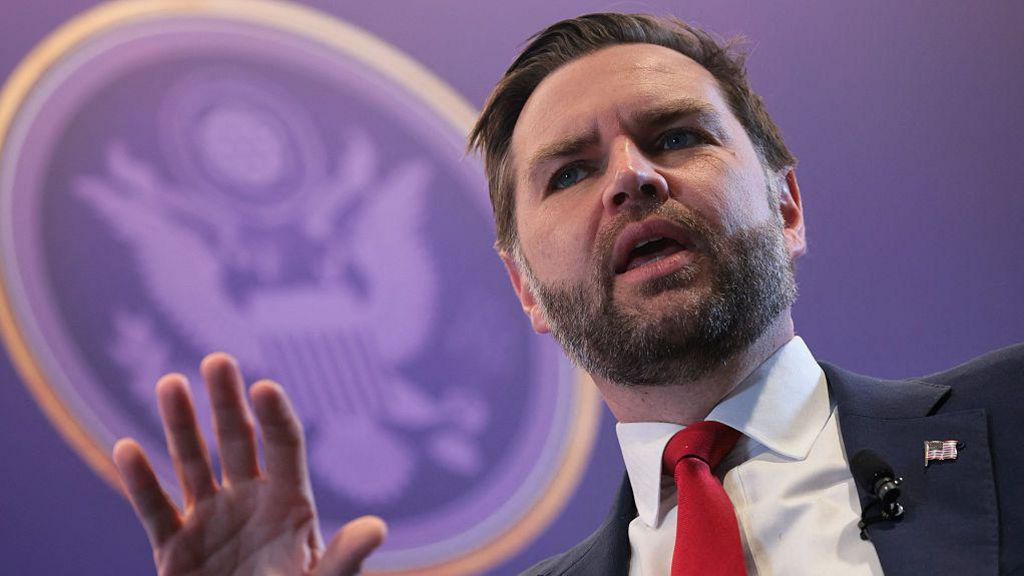
The White House has officially announced that U.S. Vice President JD Vance will lead a high-profile American delegation to face-to-face negotiations with Iranian representatives in Pakistan, with talks set to kick off on April 11. The announcement comes in the wake of a newly implemented ceasefire between the two nations, which White House Press Secretary Karoline Leavitt says has created a rare diplomatic opening that could pave the way for long-term stability across the Middle East.
Despite this optimistic framing, key details surrounding the negotiation agenda, specific peace proposals, and the current status of maritime traffic through the strategically critical Strait of Hormuz remain shrouded in uncertainty. Just days before the ceasefire, Iranian military officials issued stark public warnings that any vessel attempting to traverse the strait without explicit Tehran authorization would be targeted and destroyed. Leavitt pushed back on this public posture, however, noting that Iran’s private diplomatic messaging differs significantly from its public rhetoric.
During Wednesday’s White House press briefing, Leavitt declared that the U.S. had secured its core military objectives in what Washington has dubbed Operation Epic Fury. She confirmed that the operation, which preceded the ceasefire, successfully dismantled Iran’s naval forces, unmanned aerial vehicle program, and ballistic missile infrastructure, meeting the campaign’s primary goals. Joining Vance on the U.S. negotiating team will be special envoy Steve Witkoff and Jared Kushner, who will meet their Iranian counterparts in Islamabad on Saturday.
Leavitt dismissed widespread media reports of a 10-point peace proposal put forward by Iran as inaccurate, revealing that an initial Iranian proposal was rejected out of hand for being “fundamentally unserious.” According to Leavitt, Tehran submitted a revised offer only after President Donald Trump issued an extraordinary threat that “a whole civilization will die” if no acceptable deal was reached. She emphasized that the Trump administration would never accept a deal that simply codified Iran’s existing policy demands, calling that outcome unthinkable.
Contrary to Iran’s public warnings to shipping, Leavitt confirmed that Tehran has privately agreed to reopen the Strait of Hormuz, a chokepoint through which roughly 20% of the world’s daily oil supplies pass. When pressed on the clear disconnect between the White House’s positive framing and Iran’s public threats to shipping, Leavitt said Trump remains committed to holding Iran accountable for its commitments and expects the strait to be opened “quickly and safely.”
Trump’s pre-ceasefire threat, posted on his social platform Truth Social, drew widespread backlash from across the U.S. political spectrum, with critics raising urgent concerns about the humanitarian fallout of expanded U.S. strikes on Iranian civilian and military infrastructure. Leavitt defended the president’s blunt language, arguing that his uncompromising negotiating style and tough rhetoric are directly responsible for bringing Iran to the negotiating table. She added that Trump retains the moral high ground in the standoff against what the White House calls Iran’s “rogue regime.”
Later Wednesday, Trump is scheduled to hold a meeting with NATO Secretary-General Mark Rutte that Leavitt described as “very frank and candid.” The meeting comes amid escalating friction between the alliance and the U.S., its largest military and political contributor. Trump has repeatedly criticized NATO for failing to support the U.S. during the Iran conflict and for not assisting in efforts to reopen the Strait of Hormuz. Leavitt directly quoted a letter from Trump in which the president stated, “NATO was tested and they failed.”
She also confirmed that Trump has discussed the possibility of the U.S. withdrawing from the 75-year-old security alliance, though she offered no additional details on the scope or timeline of any potential exit. Tensions between Trump and NATO predate the Iran conflict, rooted in long-running disagreements over defense spending and, more recently, Trump’s public interest in acquiring Greenland, an autonomous Danish territory. European NATO allies have repeatedly rejected any possibility of a transfer of sovereignty over the island, deepening the rift between Washington and the alliance.