分类: politics

  • Canadian PM Mark Carney takes veiled swipe at Trump, urges closer Australia ties

    Canadian PM Mark Carney takes veiled swipe at Trump, urges closer Australia ties

    Canadian Prime Minister Mark Carney has delivered a strategic address in Sydney advocating for strengthened cooperation among middle-power nations, while offering subtle critiques of American unilateralism under Donald Trump’s leadership. Speaking at the Lowy Institute during his multi-day state visit, Carney outlined Canada’s vision for a \”no regret strategy\” that prioritizes diversified international partnerships over dependence on any single global hegemon.\n\nThe Prime Minister articulated concerns about the current \”rupture in the international system,\” emphasizing that traditional norms of the rules-based order are being systematically erased. He positioned Canada and Australia as pivotal players in a coalition of democracies that collectively possess economic and strategic advantages exceeding those of the United States. \”When we only negotiate bilaterally with the hegemon, we negotiate from weakness,\” Carney stated, in what observers interpreted as a reference to U.S. dominance.\n\nCarney revealed significant economic leverage held by the proposed coalition, noting that Canada and Australia collectively control a $25 billion investment fund for critical minerals projects, one-third of global lithium and uranium reserves, and 40% of iron ore supplies. He further highlighted that the broader coalition including Japan, South Korea, and European nations represents a GDP larger than the United States, triple China’s trade flows, and the world’s largest research and development expenditure.\n\nOn defense matters, the Canadian leader disclosed that 70 cents of every dollar spent on defense capital currently goes to the United States, underscoring the need for strategic diversification. He praised the Coalition of the Willing supporting Ukraine as demonstrating the effectiveness of ad hoc international groupings that value sovereignty and territorial integrity.\n\nWhen pressed about managing relations with a potential Trump administration, Carney advocated for an approach of \”respect, but not obsequiousness,\\” noting that private directness proves more effective than public confrontation. He expressed measured criticism of recent U.S. and Israeli actions against Iran undertaken without UN consultation, while simultaneously affirming Canada’s support for regime change in Tehran.\n\nThe address positioned middle powers as having underestimated influence in shaping a more prosperous and just international order through variable geometry cooperation—forming different coalitions for different global challenges.

  • Khamenei’s son reportedly chosen as Iran’s next supreme leader

    Khamenei’s son reportedly chosen as Iran’s next supreme leader

    Iran faces a critical leadership vacuum following the death of Supreme Leader Ayatollah Ali Khamenei during ongoing military operations by the United States and Israel. Opposition channel IranIntl reports that the Assembly of Experts has elected Mojtaba Khamenei, the late leader’s eldest son, as successor, though official confirmation remains pending.

    The constitutional succession mechanism has been activated through the Assembly of Experts—88 Islamic scholars rigorously vetted for loyalty to the regime. This body now faces the extraordinary challenge of selecting leadership during active warfare, with the explicit goal of US-Israeli operations being regime change in Iran.

    Potential candidates include Mojtaba Khamenei, who has recently increased his public visibility; Hassan Khomeini, grandson of the Islamic Republic’s founder; and Alireza Arafi, a member of the Guardian Council with significant religious and political standing. The unexpected death of President Ebrahim Raisi in a 2024 helicopter accident eliminated what many considered the most likely successor.

    An interim council consisting of Arafi, moderate President Masoud Pezeshkian, and hardline judiciary head Gholam-Hossein Mohseni-Eje’i is currently governing. However, the Islamic Revolutionary Guard Corps (IRGC) appears to be driving military strategy, closing the Strait of Hormuz and launching attacks on neighboring states hosting US bases.

    These aggressive actions have damaged Iran’s recently improved relations with Arab neighbors, including Saudi Arabia, with whom diplomatic ties were only restored in 2023. Gulf Cooperation Council members now reportedly consider abandoning neutrality and striking back against Iranian attacks.

    The regime’s survival strategy appears to focus on enduring aerial strikes while inflicting sufficient economic and military damage to undermine US resolve. Tehran calculates that prolonged conflict will demonstrate the impracticality of regime change, potentially causing the Trump administration to reconsider its military campaign.

  • Kathmandu empties as around 800,000 Nepalis head home to vote

    Kathmandu empties as around 800,000 Nepalis head home to vote

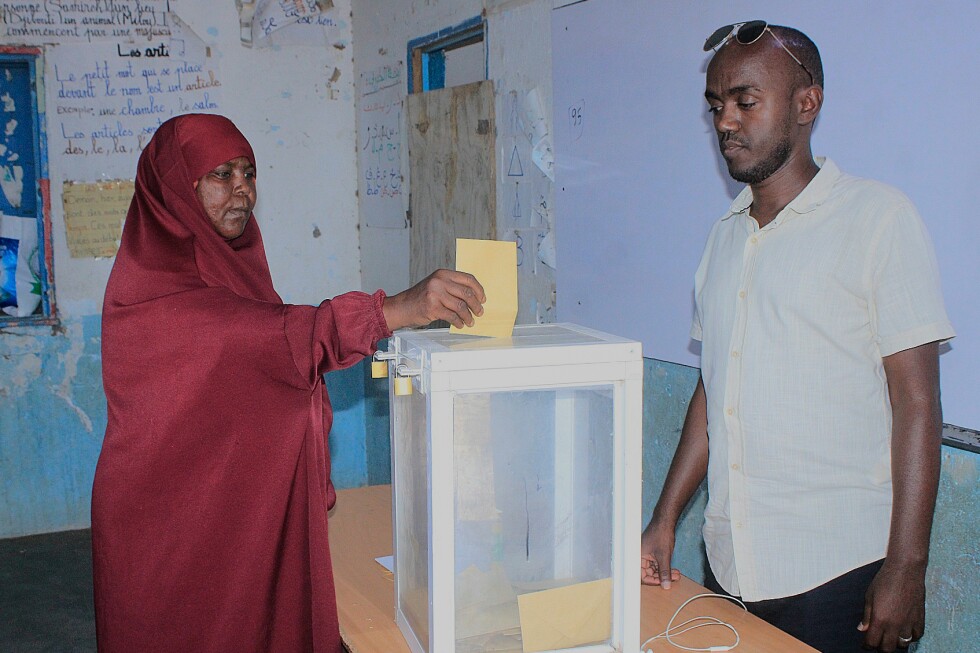
    Nepal is witnessing an unprecedented domestic migration as approximately 800,000 citizens have departed the densely populated Kathmandu Valley over the past week, undertaking arduous journeys to their ancestral hometowns to participate in Thursday’s pivotal parliamentary elections. This massive movement represents a significant portion of the valley’s population, where about 10% of Nepal’s 30 million residents reside for employment and educational opportunities.

    The extraordinary exodus has created remarkable scenes across the Himalayan nation, with photographs capturing extensive crowds congregating along major highways amidst fleets of jeeps, minibuses, and vans. Transportation authorities have reported severe traffic congestion lasting several hours throughout the weekend as citizens comply with electoral regulations requiring them to vote in their registered constituencies—typically their birthplaces.

    This election marks Nepal’s first national vote since September 2025, when youth-led anti-corruption demonstrations successfully toppled the previous government. The political significance of this moment is not lost on voters like Saroj Chapagain, who endured a 14-hour bus journey from Kathmandu to his hometown in Bardiya district. “I have come home to cast my ballot in order to safeguard the constitution and the system,” the 38-year-old stated, emphasizing that while his single vote might not determine the outcome, it carries profound symbolic importance for Nepal’s democratic foundations.

    However, electoral enthusiasm is not universal. Ophthalmologist Rabindra Singh Thakuri represents a segment of the population expressing skepticism toward political newcomers. He and his colleagues prefer established political parties, fearing that inexperienced leadership might hinder national progress.

    The electoral process will involve approximately 19 million eligible voters, including nearly one million first-time participants. They will select 275 parliament members through a mixed electoral system: 165 via first-past-the-post voting and the remainder through proportional representation. Notably, nearly one-third of the 3,400 candidates are under 40 years old, reflecting a generational shift in Nepalese politics.

    In preparation for the election, authorities have suspended all non-essential public and private transportation from Wednesday through Thursday, while air travel continues uninterrupted. The government has additionally declared Wednesday through Friday as public holidays, coinciding with both the election and the Fagu festival (also known as Holi), celebrated by South Asian communities worldwide.

    Among the most closely monitored races is the Jhapa-5 constituency, traditionally a stronghold of former Prime Minister KP Sharma Oli, who resigned during last year’s protests. He faces a formidable challenge from ex-rapper Balendra Shah, who gained initial prominence through provocative musical critiques targeting Nepal’s political establishment.

  • Texas tests party fault lines as US midterms begin

    Texas tests party fault lines as US midterms begin

    The American political landscape entered a pivotal phase as Texas Republicans advanced to a runoff election, revealing profound internal divisions within President Donald Trump’s party during Tuesday’s primary elections. This electoral battleground has emerged as a critical testing ground for both major parties as they strategize for the remainder of Trump’s second term and prepare for November’s consequential congressional elections.

    Voters across the Lone Star State participated in selecting U.S. Senate candidates through contests that effectively measure the political temperament of the electorate. These races serve as a barometer for whether voters prioritize legislative experience and stability or favor candidates who embody political confrontation, even when such positioning might compromise general election viability.

    The primary season commenced with Texas anchoring the initial slate of contests, accompanied by simultaneous elections in North Carolina and Arkansas. These early votes will significantly influence the impending struggle for congressional control. The November general election will determine all 435 House seats and 35 Senate positions, ultimately deciding whether President Trump will govern with a cooperative legislative branch or face a Democratic majority capable of blocking presidential initiatives and launching investigative proceedings.

    Republicans begin this electoral cycle defending a narrow 53-47 Senate majority and an exceptionally slim House advantage. Democratic strategists seek to leverage any public backlash against the Trump administration’s policy agenda to regain legislative power.

    According to Peter Loge, Professor of Political Communication at George Washington University, “Donald Trump remains the central figure in all these primary contests, regardless of individual candidates’ preferences.”

    The electoral proceedings occurred shortly after the United States entered armed conflict alongside Israel against Iran, though political analysts remain uncertain whether this geopolitical development will substantially affect voter turnout or sentiment during the early campaign period.

    In the marquee Texas contest, four-term Republican Senator John Cornyn faced a formidable challenge from Texas Attorney General Ken Paxton, a dedicated Trump ally who has cultivated substantial grassroots support despite enduring multiple ethics controversies and a 2023 impeachment trial. Major news networks projected that neither candidate achieved the required 50 percent threshold, forcing a May runoff election. Cornyn has cautioned party members that nominating Paxton could potentially jeopardize a Senate seat that Republicans cannot afford to lose in November.

    Meanwhile, Democratic primary voters weighed strategic alternatives between U.S. Representative Jasmine Crockett’s confrontational approach and state representative James Talarico’s appeal to moderate conservatives. Crockett maintains her combative style can energize Democratic turnout in a state where the party hasn’t won statewide office in three decades, while Talarico positions himself as capable of attracting disaffected Republicans and independent voters.

    The potential for extended runoff campaigns raises concerns about prolonged intraparty conflicts and the depletion of crucial financial resources needed for the general election battles ahead.

  • Nepalis are set to vote in the first election after protests ousted the previous government

    Nepalis are set to vote in the first election after protests ousted the previous government

    KATHMANDU, Nepal — Nepal stands at a pivotal political crossroads as millions of citizens prepare to participate in transformative parliamentary elections this Thursday. These landmark polls mark the first national vote since a massive youth-led uprising toppled the previous administration, signaling a profound shift in the Himalayan nation’s political landscape.

    Security measures have been significantly enhanced nationwide, with authorities deploying thousands of temporary police officers alongside regular forces. Army troops, typically restricted to barracks, are now conducting street patrols and securing polling stations. The government has instituted a three-day public holiday to facilitate voter mobility, while educational institutions and public buildings have been repurposed as voting centers spanning from remote Himalayan villages to southern plains communities.

    Youth voters are positioned to fundamentally reshape the electoral outcome, with over one million new registrants added since the 2022 national election. Many first-time voters participated in last year’s protests that ultimately unseated former Prime Minister Khadga Prasad Oli. Independent political analyst Bhojraj Pokharel, Nepal’s former chief election commissioner, notes: “This election represents a seismic shift in our electoral history—all political entities, both established and emerging, are prioritizing youth engagement.”

    The electoral landscape reflects widespread public demand for change, with voters expressing frustration toward traditional political structures. Many cite governance failures and systemic corruption as primary concerns. Swastika Lamichane, a 28-year-old office worker, summarizes the prevailing sentiment: “Citizens seek primarily corruption containment and effective governance rather than extravagant promises.”

    This election features a competitive three-way contest between the newly formed National Independent Party (established 2022) and the historically dominant Nepali Congress and Communist Party of Nepal (Unified Marxist–Leninist). The emerging party’s prime ministerial candidate, Balendra Shah—a rapper-turned-politician who gained prominence during the 2025 youth protests and later won Kathmandu’s mayoral race—has attracted substantial crowds during campaigning, particularly among younger demographics seeking alternatives to traditional politics.

    Meanwhile, monarchist factions are anticipating potential parliamentary gains, citing perceived growing public sympathy for the former king. Thousands of monarchy supporters recently rallied around ex-king Gyanendra Shah, advocating his restoration as constitutional head of state and celebrating his symbolic role for Nepal’s Hindu majority. However, analysts suggest immediate royal restoration remains improbable due to limited broad-based support.

    The incoming administration will confront formidable challenges including addressing protest-driven demands, combating entrenched corruption, and navigating delicate diplomatic relations with neighboring powers India and China. As Guna Raj Luitel, editor of prominent newspaper Nagarik, observes: “Public expectations substantially exceed available resources, presenting considerable difficulties for the new government in fulfilling aspirational objectives.”

  • ‘Asset or liability?’: Gulf’s US security dependence under scrutiny as Iran lands blows

    ‘Asset or liability?’: Gulf’s US security dependence under scrutiny as Iran lands blows

    President Donald Trump’s expressed astonishment at Iran’s aggressive strikes against Arab Gulf states has revealed significant fissures in longstanding security partnerships, according to regional analysts and officials. This surprise declaration comes despite explicit warnings from Gulf rulers and intelligence briefings about precisely such retaliatory measures.

    The current escalation contrasts sharply with Trump’s May speech in Riyadh, where he praised the region’s ‘gleaming marvels’ while criticizing interventionist policies. Gulf leaders initially welcomed this stance as supporting their autonomous regional management approaches, whether through diplomatic channels or forceful measures as demonstrated in Sudan.

    However, the unfolding conflict has fundamentally challenged the security framework between the United States and its Gulf partners. Military analysts confirm that Gulf states are effectively utilizing advanced American-made air defense systems to protect their urban centers and energy infrastructure—the very systems originally purchased as protection against Iranian aggression, now deployed against strikes resulting from US-initiated hostilities.

    Regional officials express deepening concerns about America’s strategic reliability, citing historical precedents including the Trump administration’s inadequate response to the 2019 assault on Saudi oil facilities and the Biden administration’s inaction regarding Houthi attacks on the UAE. These incidents prompted Saudi Arabia and the UAE to pursue diplomatic reconciliation with Iran, though these efforts have proven ineffective against current military actions.

    Defense capabilities are becoming increasingly strained as Gulf countries report critical shortages of interceptor missiles amid global supply constraints. Simultaneously, Gulf states find their substantial US investments and business connections to Trump’s family provide no leverage in securing additional protection or preventing conflict escalation.

    Regional security experts note the Gulf’s precarious position: to reestablish deterrence, they may need to join US offensive operations, potentially becoming entangled in an undesirable regime-change conflict that leaves them vulnerable should American commitment wane. While Saudi Arabia acquiesced to US attacks on Iran following Trump administration lobbying, it has refrained from joining offensive operations despite direct attacks on Riyadh and energy infrastructure.

    The presence of US military bases—established post-Saddam Hussein’s invasion of Kuwait rather than as specific counter-Iran measures—now faces reassessment. Some analysts suggest Iran deliberately targets Gulf states to reposition these bases as strategic liabilities rather than assets, though others maintain they continue providing valuable shared knowledge and capacity-building benefits despite current tensions.

  • Carney says he supports Iran strikes ‘with regret’

    Carney says he supports Iran strikes ‘with regret’

    Canadian Prime Minister Mark Carney has issued a complex diplomatic stance regarding the escalating Middle Eastern conflict during his Indo-Pacific tour, calling for rapid de-escalation while maintaining support for military actions against Iran—a position he characterized as being held “with regret.”

    Speaking to journalists in Sydney on Tuesday, Carney articulated Canada’s longstanding position regarding Iran’s nuclear program, describing it as “a grave global threat” that necessitates neutralization. The Prime Minister notably criticized the methodology of the strikes initiated by the United States and Israel, highlighting their failure to consult with the United Nations or key allies, including Canada, before launching operations over the weekend.

    “We take this position with regret because the current conflict represents another failure of the international order,” Carney stated, emphasizing the tragic nature of the escalating violence. He characterized Iran’s regime as “the biggest exporter of terror in the world” and referenced its nuclear ambitions as particularly concerning, noting that “nobody has a civil nuclear programme that’s buried a mile beneath the desert.”

    The Prime Minister’s press conference also addressed Canada’s delicate diplomatic re-engagement with India, following significant tensions that arose after former Prime Minister Justin Trudeau publicly accused Delhi of involvement in the 2023 assassination of Sikh separatist Hardeep Singh Nijjar. Carney described his recent discussions with Indian Prime Minister Narendra Modi as “frank” and indicated that high-level security dialogues had been reestablished.

    Despite Canadian officials previously suggesting that Indian-linked threats on Canadian soil had ceased, some Canadian Sikh communities continue to express concerns about ongoing risks—claims that India consistently denies. The diplomatic thaw has yielded concrete results, with both nations announcing a landmark nuclear energy agreement alongside partnerships in critical minerals, space, defense, and education sectors.

  • The Trump administration can’t align on a reason for going to war with Iran

    The Trump administration can’t align on a reason for going to war with Iran

    The Trump administration’s justification for military engagement with Iran has exhibited significant inconsistencies, creating a landscape of diplomatic confusion and congressional concern. In a striking contradiction to Secretary of State Marco Rubio’s previous statements, President Trump asserted that he potentially “forced Israel’s hand” into conflict, claiming preemptive action was necessary based on his assessment of negotiation dynamics.

    This narrative starkly contrasts with Oman’s perspective as a mediating ally, which indicated negotiations were progressing favorably with Iran offering concessions beyond the 2015 nuclear agreement. Jeffrey Prescott, former diplomat and national security aide to President Biden, characterized the administration’s approach as displaying a “remarkable lack of seriousness” in diplomatic engagement.

    The administration’s justification has evolved considerably since initial strikes. While Trump claimed to have “obliterated” Iran’s nuclear capabilities, his lead negotiator simultaneously asserted Iran was “a week away” from developing nuclear weapons—a claim that has persisted among US and Israeli officials for decades without materialization.

    Secretary Rubio presented alternative reasoning, emphasizing preemptive action against imminent threats and Iran’s potential to achieve “immunity” through missile and drone capabilities within 18 months. These claims were directly contradicted by Senate Intelligence Committee members who stated no evidence indicated imminent threat to American interests.

    Congress has responded with planned votes to curtail presidential war powers, though successful override of a potential veto remains unlikely. Meanwhile, administration officials have introduced additional justifications including naval threats in the Strait of Hormuz and ballistic missile concerns—issues that experts note were not previously emphasized.

    The conflict has triggered significant humanitarian concerns, with approximately one million Americans across 13 countries advised to evacuate immediately. Despite administration claims of 9,000 successful departures, Democratic senators report panicked citizens receiving “zero evacuation support,” demanding comprehensive evacuation planning for what Senator Chris Coons termed “their war of choice.”

  • Iran will not ‘automatically’ fall after Khamenei’s death, shah’s widow tells AFP

    Iran will not ‘automatically’ fall after Khamenei’s death, shah’s widow tells AFP

    Farah Pahlavi, the exiled widow of Iran’s last monarch, has delivered a nuanced assessment of Iran’s political future following the death of Supreme Leader Ali Khamenei. In an exclusive interview with AFP conducted from her Paris residence, the former empress emphasized that while Khamenei’s demise represents a moment of profound historical significance, it does not guarantee the automatic dissolution of the Islamic Republic’s governing structure.

    ‘The departure of any single individual, regardless of their centrality within the power framework, does not mechanically precipitate the termination of an entire system,’ Pahlavi stated, referencing recent U.S.-Israeli military actions that resulted in Khamenei’s death. These events have plunged the Middle East into heightened instability while raising fundamental questions about Iran’s political trajectory.

    The 87-year-old royal figure urged the global community to honor Iranian sovereignty and support citizens in determining their own national destiny. She identified the critical factor as ‘the capacity of Iran’s population to coalesce around a peaceful, orderly transition toward a constitutional government operating under established legal principles.’

    Addressing her son’s political aspirations, Pahlavi confirmed that Reza Pahlavi—who has emerged as a potential alternative leader should the current government fall—is actively preparing transition frameworks. The U.S.-based crown prince gained international recognition during nationwide demonstrations earlier this year, where protesters frequently voiced support for the monarchist cause.

    In a parallel development, Reza Pahlavi utilized social media platform X to advocate for national cohesion among Iran’s diverse ethnic communities, many of which face systemic discrimination. He specifically discouraged separatist movements from exploiting the current crisis for territorial fragmentation.

    The former empress, exiled since the 1979 revolution that overthrew her pro-Western husband Mohammad Reza Pahlavi, called for international actors to prioritize Iranian self-determination over geopolitical strategizing. ‘My fundamental desire is for global powers to unequivocally support Iranians’ basic rights: selecting their leadership, expressing opinions freely, and pursuing dignified existence with economic prosperity,’ she articulated.

    Pahlavi additionally appealed to Tehran’s authorities to exercise restraint and avoid violent suppression of dissent. This warning carries particular resonance following January’s unrest, which according to the U.S.-based Human Rights Activists News Agency (HRANA) resulted in over 7,000 fatalities—primarily protesters—with actual numbers likely higher. The organization additionally documented more than 53,000 arrests during this period.

    The former monarch remains convinced that Iran’s protest movement represents an irreversible force whose success would contribute to global peace and security, echoing comments she made during January’s upheaval.

  • What to know about the ‘two sessions’,  China’s biggest political meeting

    What to know about the ‘two sessions’, China’s biggest political meeting

    Beijing prepares to host China’s most significant annual political event this week as the dual assemblies known as the ‘Two Sessions’ convene to outline the nation’s policy direction. The Chinese People’s Political Consultative Conference (CPPCC) begins its deliberations on Thursday, followed by the National People’s Congress (NPC) launching proceedings on Friday, with both gatherings expected to span approximately two weeks.

    These highly orchestrated meetings serve as a crucial barometer for understanding the priorities of the world’s second-largest economy. International observers are particularly focused on whether China will maintain ambitious growth targets amidst ongoing challenges in stimulating domestic consumption. The proceedings will also unveil China’s next Five-Year Plan (2026-2030), providing critical insights into President Xi Jinping’s strategic roadmap for national development.

    The political landscape surrounding this year’s sessions has been notably shaped by recent high-level military purges within the People’s Liberation Army, where numerous senior officers have been dismissed as part of Xi’s persistent anti-corruption campaign. These developments have raised questions about potential absences among delegate ranks during the gatherings.

    While the CPPCC functions as an advisory body comprising over 2,000 members from diverse sectors beyond the Communist Party, its discussions offer valuable perspectives on policy debates despite lacking formal legislative authority. The NPC, established in 1954, technically wields extensive powers including constitutional amendments and budget approvals, though it primarily serves to ratify decisions predetermined by Party leadership behind closed doors.

    This year’s agenda features several significant legislative items, including a controversial ‘ethnic unity’ law that human rights organizations warn could further suppress minority cultures by prioritizing Mandarin over regional languages. The legislation also promotes interethnic marriage and mandates patriotic education for minors. Additionally, delegates will consider the comprehensive Ecological and Environmental Code addressing pollution control and sustainable development.

    The centerpiece remains Premier Li Qiang’s Government Work Report, which will review past performance and establish economic targets for the coming year. Analysts will scrutinize whether China maintains its approximately 5% growth target or shifts toward more moderate, quality-focused expansion. The proceedings occur against a backdrop of renewed Western diplomatic engagement, with multiple world leaders recently seeking stabilized relations with Beijing amid global geopolitical uncertainties.