分类: politics

  • China’s development dividend highlighted

    China’s development dividend highlighted

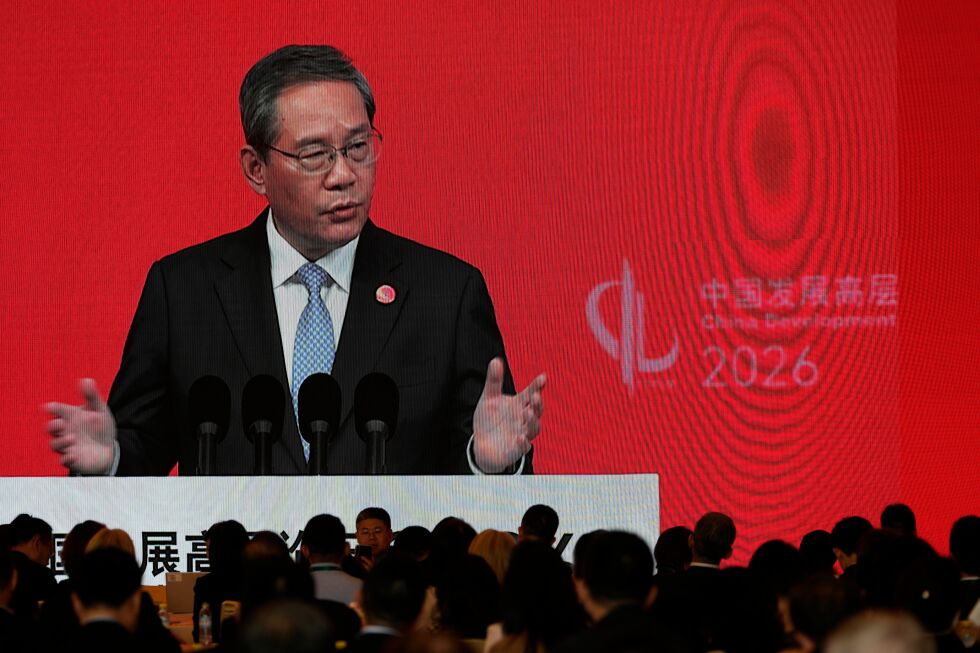
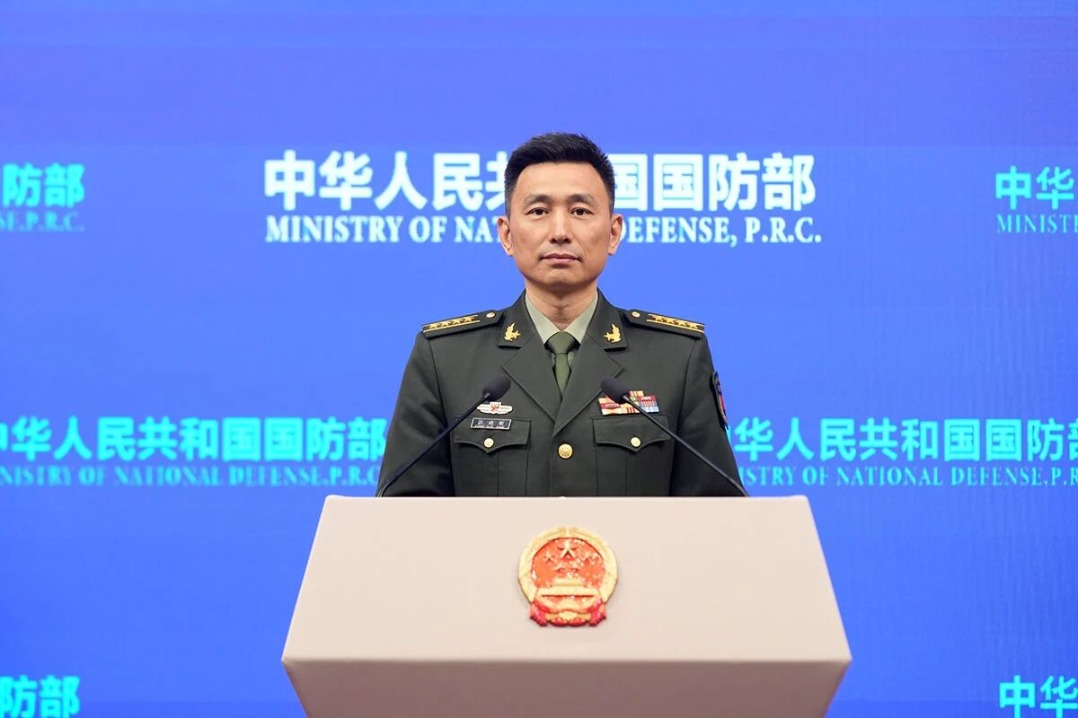
    China has emerged as the world’s most stable and constructive power amid increasing global turbulence, according to statements made at the opening of China’s top political advisory body’s annual session. Liu Jieyi, spokesman for the 14th National Committee of the Chinese People’s Political Consultative Conference (CPPCC), articulated China’s commitment to high-quality development and expanded openness during a Tuesday press conference in Beijing.

    Against a backdrop of accelerating global changes and interconnected challenges, Liu emphasized China’s dedication to building a shared future for humanity through an equal, multipolar world order and inclusive economic globalization. The approach aims to foster lasting peace, universal security, and common prosperity worldwide.

    The CPPCC’s diplomatic engagements throughout the past year included delegation visits to over 10 countries across Asia, Africa, and Latin America, alongside hosting numerous international conferences. These exchanges facilitated knowledge sharing on critical issues including the formulation of China’s 15th Five-Year Plan (2026-30), poverty reduction strategies, and environmental protection initiatives.

    International participants reportedly reached consensus that addressing global challenges requires both visionary leadership and substantive responsibility. Liu noted that China’s proposed concepts and solutions have provided guiding principles and significant momentum for collective global advancement.

    The current seven-day session will prioritize deliberation on the 15th Five-Year Plan, with approximately 2,100 national political advisers participating. The CPPCC National Committee has undertaken extensive research on Chinese modernization factors throughout 2025, submitting more than 480 proposals and 200 informational documents to inform the planning process.

    Over the past five years, the CPPCC’s specialized committees have conducted supervision activities addressing key implementation aspects of the 14th Five-Year Plan (2021-25), including business environment optimization, black soil conservation, and infrastructure adaptation for aging societies. Committee members participated in 779 supervision activities and submitted 323 formal suggestions to facilitate the plan’s execution.

    Liu characterized CPPCC democratic supervision as fundamentally consultative, focusing on national priorities and public concerns to ensure effective policy implementation and continuous improvement.

  • US Troops were told Iran war is for ‘Armageddon,’ return of Jesus

    US Troops were told Iran war is for ‘Armageddon,’ return of Jesus

    The United States military is confronting an unprecedented internal crisis as numerous service members report commanders framing the Iran conflict through apocalyptic religious rhetoric rather than strategic military objectives. According to documents obtained from the Military Religious Freedom Foundation (MRFF), over 110 formal complaints have been filed across all military branches since Saturday, alleging widespread promotion of Christian nationalist ideology within command structures.

    The complaints originated from more than 40 different units spanning at least 30 military installations, with service members reporting that commanders are characterizing military operations against Iran as fulfillment of biblical prophecy. One particularly disturbing account from a non-commissioned officer describes a unit briefing where a combat commander asserted that President Trump had been ‘anointed by Jesus to light the signal fire in Iran to cause Armageddon and mark his return to Earth.’

    MRFF President Mikey Weinstein, a veteran of both the Air Force and Reagan White House, reported being ‘inundated’ with complaints describing command personnel expressing ‘unrestricted euphoria’ about how the conflict aligns with fundamentalist Christian end-times theology. Service members from diverse religious backgrounds—including Christians, Muslims, and Jews—have expressed alarm about these developments, citing violations of constitutional principles and military regulations.

    The situation appears connected to broader institutional shifts under Defense Secretary Pete Hegseth, who has implemented monthly prayer meetings throughout the Pentagon and participates in weekly White House Bible studies. Hegseth has publicly embraced Christian nationalist rhetoric, including false claims that America was founded as a Christian nation. These developments represent a significant departure from traditional military norms regarding religious neutrality.

    Legal experts note that these actions potentially violate both the Uniform Code of Military Justice and constitutional establishment clause principles. The MRFF has called for swift prosecution of personnel who advance religious agendas through military channels, particularly those exploiting current combat operations to promote apocalyptic narratives.

    This crisis emerges against a historical backdrop of similar concerns following the October 2023 Hamas attacks, when some commanders similarly referenced Revelation to frame Middle East conflicts. The current scale and intensity of complaints, however, suggest a more systematic problem that could fundamentally undermine military cohesion and effectiveness.

  • China to unveil priorities for coming 5 years at major annual political meeting

    China to unveil priorities for coming 5 years at major annual political meeting

    BEIJING — China’s annual political gathering, known as the Two Sessions, commenced Thursday with the National People’s Congress (NPC) and Chinese People’s Political Consultative Conference (CPPCC) convening in the capital. The meetings, which set the nation’s policy agenda and economic objectives for the coming year, occur against a backdrop of economic headwinds and increasingly scripted political proceedings.

    The NPC, comprising nearly 3,000 delegates, serves as China’s legislative body that formally ratifies decisions already determined by Communist Party leadership. While technically performing voting procedures, the assembly consistently demonstrates near-unanimous approval of party directives. The parallel CPPCC gathering brings together elite members of Chinese society—including business leaders, athletes, and minority representatives—though this advisory body wields minimal influence on substantive policy matters.

    Under President Xi Jinping’s leadership, these once-contentious forums have transformed into carefully orchestrated events with diminished room for genuine debate. “Historically, these sessions served as venues for substantive policy deliberation, including controversial discussions,” noted Alfred Wu, public policy professor at the National University of Singapore. “They have now evolved into predominantly ceremonial showcases for propaganda purposes.

    Economic priorities dominate this year’s agenda, with Premier Li Qiang expected to announce China’s GDP growth target and other key economic indicators. Observers particularly await details regarding the 15th five-year plan, initially drafted in October, which emphasizes technological advancement and self-sufficiency—a continuation of China’s planned economy legacy through five-year planning cycles.

    The Chinese economy faces significant challenges including elevated youth unemployment, depressed housing markets, sluggish domestic consumption, and ongoing trade tensions with the United States. Economic analysts suggest Beijing must navigate a complex balancing act between advancing technological manufacturing capabilities in robotics, renewable energy, and artificial intelligence, while simultaneously stimulating consumer spending amid widespread financial pressure among ordinary citizens.

    Policy experts at the Asia Society project China may establish its lowest-ever growth target, signaling a strategic pivot from rapid expansion toward qualitative economic development. Meanwhile, recent personnel changes within military ranks—including the dismissal of 19 legislative members and high-profile military officials—have drawn attention, though no significant leadership announcements are anticipated during the current sessions. President Xi has reportedly removed approximately 100 senior PLA officials over the past four years, with January witnessing the prominent dismissal of General Zhang Youxia.

  • US commerce secretary to testify before Congress about Epstein ties

    US commerce secretary to testify before Congress about Epstein ties

    U.S. Commerce Secretary Howard Lutnick will provide voluntary testimony before the House Oversight Committee as part of its ongoing investigation into connections with convicted sex offender Jeffrey Epstein. Committee Chairman James Comer (R-KY) announced on Tuesday that Lutnick had “proactively agreed to appear voluntarily” for a transcribed interview.

    The development follows recent depositions from former President Bill Clinton and former Secretary of State Hillary Clinton, who both testified about their associations with Epstein. While Lutnick has acknowledged visiting Epstein’s private Caribbean island in 2012—years after Epstein’s conviction for sex crimes—the commerce secretary has not been accused of any wrongdoing by Epstein’s victims.

    Justice Department documents released earlier this month confirm Lutnick’s December 23, 2012 visit to Little St. James Island. Correspondence shows Lutnick’s wife, Allison, emailed Epstein’s assistant on the eve of their visit: “We are looking forward to visiting you” and “We would love to join you for lunch.”

    Lutnick previously testified to Congress that he severed ties with Epstein in 2005 after the financier—then his New York neighbor—used sexual innuendo to explain why he kept a massage table in a room of his home. The commerce secretary, recognized as the architect of Trump’s global tariffs policy, maintains this position despite the documented 2012 visit.

    No specific date has been announced for Lutnick’s testimony. Chairman Comer commended Lutnick’s “demonstrated commitment to transparency” and expressed appreciation for his willingness to cooperate with the committee’s investigation.

  • Mahmood to stop study visas from four countries due to ‘abuse’

    Mahmood to stop study visas from four countries due to ‘abuse’

    The United Kingdom has announced stringent visa restrictions targeting nationals from Afghanistan, Cameroon, Myanmar, and Sudan in response to what authorities describe as systematic abuse of immigration pathways. Home Secretary Shabana Mahmood unveiled the policy shift that will suspend study visas for these countries while additionally terminating skilled work visa provisions for Afghan citizens.

    Official statistics reveal alarming patterns of asylum claims originating from these nations. Data indicates that 95% of Afghan students who entered the UK since 2021 subsequently filed asylum applications, while Myanmar students demonstrated a sixteen-fold increase in asylum claims. Students from Cameroon and Sudan showed over 330% growth in asylum applications during the same period.

    The Home Office justification centers on preserving the integrity of Britain’s asylum framework, noting that approximately 13% of all asylum claims now originate from individuals who initially entered through study visas. Government analysis further indicates that asylum seekers from these four nations disproportionately cite destitution in their applications, with currently 16,000 individuals from these countries receiving state support.

    A government spokesperson emphasized: “This decisive action against visa exploitation ensures Britain maintains its capacity to uphold its proud tradition of assisting those with legitimate humanitarian needs.”

    The policy transformation follows mounting political pressure to address immigration levels, particularly from right-leaning factions including the Conservative Party and Reform UK. This hardening stance has manifested through recent measures including the reduction of refugee protection periods to 30 months and successful negotiation of deportation agreements with Angola, Namibia, and Democratic Congo through visa leverage tactics.

    Home Secretary Mahmood characterized the move as “an unprecedented decision to refuse visas for those nationals seeking to exploit our generosity,” vowing to “restore order and control to our borders.” The changes will be formally implemented through Immigration Rules revision on March 5th.

    Despite these restrictions, the UK maintains its position as the sixth-largest recipient of UNHCR-referred refugees globally, demonstrating continued commitment to international protection obligations alongside enhanced immigration enforcement.

  • Khamenei killing plays into Shiite Islam’s reverence for martyrs

    Khamenei killing plays into Shiite Islam’s reverence for martyrs

    Following the death of Ayatollah Ali Khamenei, Iran has become a nation visibly divided along ideological lines. The government’s official declaration of 40 days of public mourning—a traditional Shiite practice—and its characterization of Khamenei’s death as martyrdom stand in stark contrast to spontaneous celebrations erupting among segments of the population. This polarization reflects profoundly divergent perceptions of Khamenei’s nearly four-decade rule: viewed by supporters as a principled martyr and by opponents as a repressive autocrat.

    The theological foundation of martyrdom in Shiite Islam traces back to the 7th century Battle of Karbala, where Hussain ibn Ali, grandson of Prophet Muhammad, was slain after refusing to pledge allegiance to Caliph Yazid, whom he considered unjust. This historical narrative of righteous resistance against oppression became central to Shiite identity and was systematically incorporated into Iran’s political framework following the 1979 Islamic Revolution.

    Khamenei’s leadership was defined by confrontational foreign policy and domestic authoritarianism. He maintained unwavering support for regional proxies including Hamas and Hezbollah while rejecting diplomatic compromises during three rounds of U.S.-Iran negotiations. Domestically, his regime responded to recurrent protest waves with brutal suppression, including the lethal crackdown on January 2026 demonstrations that resulted in thousands of casualties.

    The supreme leader accumulated substantial personal power and wealth during his 37-year reign, commanding military forces, judiciary appointments, and media oversight through parallel governance structures. His personal wealth, managed through the Setad organization, was estimated at $95 billion as of 2013.

    The recent military strikes that killed Khamenei and several family members represent the culmination of escalating tensions with the United States and Israel. While government institutions continue to reinforce the narrative of martyrdom, contrasting public reactions reveal deep societal fractures that will inevitably shape Iran’s political future.

  • Trump says ‘someone from within’ Iranian regime might be best choice to lead once war ends

    Trump says ‘someone from within’ Iranian regime might be best choice to lead once war ends

    In a significant departure from his previous stance, President Donald Trump indicated on Tuesday that an internal figure from within Iran’s existing power structure might constitute the most suitable leadership option once military operations conclude. This marks a notable evolution from his weekend call for citizens to seize control of their government following the U.S.-Israel campaign that eliminated Supreme Leader Ali Khamenei and numerous senior officials.

    Speaking during German Chancellor Friedrich Merz’s Oval Office visit—the first foreign leader engagement since hostilities commenced—Trump revealed that most potential successors previously identified by his administration had perished in the ongoing conflict. “Most of the people we had in mind are dead,” the president stated. “Now we have another group, they may be dead also, based on reports. So you have a third wave coming. Pretty soon we’re not going to know anybody.”

    The administration explicitly dismissed Reza Pahlavi, the exiled crown prince seeking to position himself for a potential return, as a serious contender. Instead, Trump suggested that “somebody from within maybe would be more appropriate,” particularly “somebody that’s there, that’s currently popular, if there is such a person.” He emphasized concerns about installing leadership equally problematic as the previous regime, warning against a scenario where “in five years you realize you put somebody in who was no better.”

    Concurrently, the White House intensified efforts to justify its decision to initiate hostilities, revealing through an anonymous senior official that negotiators Jared Kushner and Steve Witkoff had believed an enhanced version of the Obama-era nuclear agreement was achievable, though potentially requiring months of additional diplomacy. Despite this assessment, they reportedly advised Trump that Iran remained unwilling to meet U.S. demands satisfactorily.

    The president simultaneously escalated tensions with European allies, threatening to sever all trade with Spain after it denied U.S. access to jointly operated bases for strikes not sanctioned by the UN charter. He additionally criticized British Prime Minister Keir Starmer’s initial reluctance to permit base usage, sarcastically noting “this is not Winston Churchill that we’re dealing with.”

    Trump further contradicted Secretary of State Marco Rubio’s assertion that the U.S. acted preemptively due to anticipated Israeli action, insisting instead that he “might have forced Israel’s hand” based on intelligence suggesting an imminent Iranian attack.

    Chancellor Merz emphasized Germany’s interest in collaborating on a post-conflict strategy, noting the conflict’s damaging impact on global oil prices. Trump acknowledged temporary energy price increases but predicted they would ultimately fall “lower than even before” once hostilities cease.

  • Is the UK’s intervention in Iran war legal?

    Is the UK’s intervention in Iran war legal?

    In the aftermath of coordinated US-Israeli offensive strikes against Iran and subsequent Iranian retaliatory measures targeting US installations in the Gulf region, British Prime Minister Keir Starmer has articulated a dual-strategy approach to the escalating conflict. Addressing Parliament on March 1, 2026, Starmer emphasized that the United Kingdom would maintain a defensive posture while supporting regional allies through targeted military cooperation.

    The UK’s intervention framework comprises two principal components: first, the interception of Iranian drones and missiles to protect non-combatant states in the region; second, permitting US forces to utilize British military installations for ‘specific and limited’ defensive operations against Iranian missile sites that have targeted Gulf partners. Starmer explicitly stated that Britain would not participate in offensive actions but would focus exclusively on defensive measures to ‘destroy the missiles at source’ while preventing further escalation.

    The Prime Minister justified these actions as necessary to protect British interests and citizens, asserting that such measures represent ‘the best way to eliminate the urgent threat’ and facilitate a return to diplomatic solutions. However, this position has raised significant legal questions regarding its compliance with international law, particularly the United Nations Charter.

    Middle East Eye consulted five distinguished international law experts to examine the legality of Britain’s stance. The central legal argument presented by the UK government maintains that its actions constitute lawful, proportionate collective self-defense at the formal request of Gulf states. Officials issued a legal summary describing Iran’s actions as ‘reckless’ and ‘indiscriminate,’ requiring coordinated defensive response to restore regional security.

    Legal scholars present divergent interpretations regarding the legitimacy of Iran’s initial response to US-Israeli strikes. Professor Janina Dill (University of Oxford) acknowledged Iran’s right to self-defense against aggressor states, while Professor Marko Milanovic (University of Reading) argued that Iran’s retaliation exceeded permissible boundaries by targeting civilian infrastructure in neutral territories. The debate extends to whether Gulf states genuinely possess the right to collective self-defense given the complex chain of escalation.

    Further legal complications emerge regarding Britain’s authorization of US base usage. Professor Oona Hathaway (Yale Law School) noted that UK assistance might inadvertently prolong unlawful US-Israeli operations against Iran, creating obligations for Britain to demand cessation of the original aggression. Professors Adil Haque (Rutgers University) and Ben Saul (University of Sydney) contended that facilitating US strikes constitutes participation in ongoing unlawful campaigns, regardless of defensive framing.

    The legal consensus indicates that Britain’s actions exist in a gray area of international law, where determinations of legality depend on interpretations of necessity, proportionality, and the inseparable nature of defensive and offensive operations in active conflict scenarios.

  • ‘They will get me killed’: Mothin Ali slams Starmer and Tory MP over smears in parliament

    ‘They will get me killed’: Mothin Ali slams Starmer and Tory MP over smears in parliament

    Mothin Ali, co-deputy leader of the Green Party, has revealed he fears for his safety after receiving approximately twenty death threats. This alarming development follows controversial remarks made in Parliament by Conservative MP Alec Shelbrooke, which were subsequently endorsed by Prime Minister Keir Starmer.

    During Monday’s parliamentary session, Shelbrooke falsely alleged that Ali had been ‘protesting in support of the ayatollah’ at a recent anti-war demonstration. The event, organized by Stop the War Coalition, was primarily focused on protesting US-Israeli military actions against Iran. Shelbrooke further claimed that Ali had whipped up ‘hatred and fear’ throughout Leeds, describing the councillor’s alleged actions as ‘a disgrace.’

    Prime Minister Starmer responded by expressing shock at the Green Party official’s behavior, adding that he was ‘perhaps not surprised, given that party’s recent turn of direction.’

    Ali, who enjoys no parliamentary protection against defamation, told Middle East Eye that the MP’s privileged position enabled him to make damaging claims without legal consequence. ‘They will get me killed,’ Ali stated, emphasizing the real-world impact of political rhetoric. He challenged Shelbrooke to repeat the allegations outside Parliament, where standard defamation laws would apply.

    The Green Party councillor clarified that his attendance at the demonstration was motivated by humanitarian concerns following a strike on a school in Iran that reportedly killed more than 153 people, including numerous children. ‘A whole load of little girls had just been blown to bits,’ Ali explained. ‘I’m not supposed to feel anything about that?’

    Green Party leader Zack Polanski condemned the Prime Minister’s response as ‘blatant Islamophobia’ and characterized the incident as an establishment attack on ‘a calm, kind, thoughtful gardener who happens to be a Muslim man in politics.’

    Neither Downing Street nor Shelbrooke’s office responded to requests for comment or clarification regarding the allegations.

  • Trump threatens Spain ties over Iran war refusal

    Trump threatens Spain ties over Iran war refusal

    In a striking diplomatic confrontation, former U.S. President Donald Trump issued severe economic threats against Spain during discussions with German Chancellor Friedrich Merz at the White House. The controversy emerged from Spain’s refusal to permit American military aircraft to utilize its bases for potential offensive operations against Iran.

    Spain’s left-leaning administration under Prime Minister Pedro Sánchez has maintained that U.S. forces may only employ Spanish installations for activities aligning with the United Nations Charter. This stance has positioned Sánchez among Europe’s most resistant leaders toward Trump’s foreign policy initiatives.

    “Spain has been terrible,” Trump declared to assembled journalists, further criticizing Sánchez’s rejection of NATO allies’ commitment to elevate defense expenditures to five percent of GDP—a benchmark aggressively promoted by Trump who contends that the United States shoulders disproportionate alliance costs.

    The former president asserted, “So we’re going to cut off all trade with Spain. We don’t want anything to do with Spain,” claiming he had instructed Treasury Secretary Scott Bessent to terminate all economic engagements with the European nation. Legal experts question Trump’s authority to unilaterally dismantle trade relations, particularly after Supreme Court limitations on his emergency powers regarding arbitrary tariffs.

    Spain’s government promptly responded, emphasizing the “mutually beneficial” nature of existing trade relationships and underscoring that any review must respect corporate autonomy, international law, and established EU-U.S. agreements. Officials confirmed Spain’s preparedness to mitigate potential impacts through sectoral support and supply chain diversification.

    Simultaneously, Trump expressed dissatisfaction with Britain’s cooperation level, particularly regarding base accessibility. While Prime Minister Keir Starmer permitted limited defensive use of certain facilities, he restricted operations from Cypriot bases following drone incidents. Trump contrasted Starmer’s leadership unfavorably with Winston Churchill’s legacy and criticized British handling of Diego Garcia base negotiations.