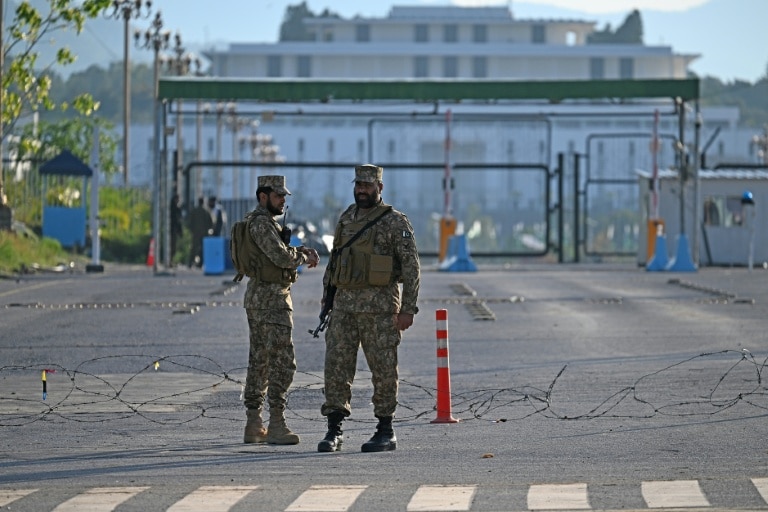
As diplomatic envoys from the United States and Iran prepare to convene in Islamabad for high-stakes negotiations aimed at ending the ongoing Middle East conflict, official insiders and regional analysts agree: China’s behind-the-scenes influence cleared the path for the talks, and it will remain indispensable to securing a durable, long-term truce.
Pakistan has earned international acclaim – and no small amount of surprise – for pulling off a last-minute temporary ceasefire between the warring parties, an achievement that looked all but impossible as late as Tuesday night. But senior Pakistani officials emphasize that China’s quieter, less publicized contribution was just as critical to securing the preliminary deal as Islamabad’s own frontline efforts.
“By ceasefire night, hope was all but gone,” a senior anonymous Pakistani official with direct knowledge of the closed-door negotiations told Agence France-Presse. “It was China that stepped in and convinced Iran to sign on to the preliminary truce. Our work was central, but we were stuck without a breakthrough – that only came after Beijing’s intervention with Tehran.”
This account echoes comments made by former U.S. President Donald Trump, who shortly after announcing the two-week ceasefire on social media confirmed to AFP that China had been the key factor in persuading Iran to join the negotiating table.
The planned Islamabad talks have sparked fragile new optimism for ending a conflict that broke out in late February, when Israel and the U.S. launched strikes against Iran, prompting retaliatory attacks from Iran across the Persian Gulf and targeting Israeli cities. The war has already killed thousands of people and sent shockwaves through the global economy.
Pakistan, which shares deep cultural and religious ties with Iran and has long-standing close personal relations between its leadership and former U.S. President Trump, was tapped to serve as the neutral facilitator for the talks. To reach a lasting peace deal, Islamabad will have to guide the two rival sides through a minefield of intractable issues, including the reopening of the strategically vital Strait of Hormuz and the future status of Iran’s nuclear program.
According to a second anonymous diplomatic source, Pakistan has assembled a specialized team of technical experts to support negotiations on navigation, nuclear affairs, and other core contentious topics. As Islamabad lays the groundwork for the talks, the source and a cohort of regional experts and former officials agree that all attention remains focused on China’s upcoming role.
“Iran has specifically requested that China act as a guarantor for any final deal – Iran needs a trusted third party to hold up its end of the agreement,” the source explained. The main alternative, Russia, remains bogged down in its ongoing war in Ukraine and was unacceptable to Western powers, particularly the European Union, leaving China as the only viable option.
Beijing already maintains exceptionally close ties to both Islamabad and Tehran. For years amid crippling U.S.-led sanctions on Iran, China has been Tehran’s largest trading partner. In Pakistan, China has poured tens of billions of dollars into large-scale infrastructure projects under President Xi Jinping’s Belt and Road Initiative, a partnership so close the two countries refer to each other as “ironclad brothers.”
Mushahid Hussain Sayed, a former Pakistani senator who previously chaired the upper house’s defence and foreign affairs committee, noted that Pakistan and China have coordinated closely on ceasefire efforts from the very start of the hostilities. “Given that Iran does not trust the Trump-Netanyahu duo,” Sayed said, referring to Israeli Prime Minister Benjamin Netanyahu, “China’s role as the ultimate guarantor will remain irreplaceable for reaching any final peace agreement.”
Weeks ago, after Pakistan’s foreign minister held de-escalation talks with counterparts from Saudi Arabia, Turkey, and Egypt, he traveled directly to Beijing to coordinate strategy, after which China publicly expressed its full backing for Islamabad’s mediation efforts. More recently, Beijing has also stepped in to help ease Pakistan’s own escalating border conflict with Afghanistan, hosting peace talks between Afghan government delegates and Pakistani officials in Urumqi following weeks of cross-border fighting.
Hours before the preliminary ceasefire was announced, China also joined Russia in vetoing a United Nations Security Council resolution that would have called for the immediate reopening of the Strait of Hormuz – a move widely viewed as a significant gesture of goodwill to Tehran, which had imposed an effective blockade on the strategic waterway since the war began.
Unlike Pakistan’s high-profile mediation, China has intentionally avoided the public spotlight, only reiterating that it has worked behind the scenes to encourage an end to hostilities. A Chinese foreign ministry spokesperson noted that Foreign Minister Wang Yi has held 26 phone calls with counterparts from regional and world powers, while Beijing’s special Middle East envoy has shuttled repeatedly across the conflict zone to facilitate talks.
Even so, analysts and officials remain uncertain whether China will agree to take on a formal, public guarantor role in the final peace deal. “China has its own strategic considerations,” the second diplomatic source said. “It does not want to be publicly dragged into this conflict,” even as it continues to play an outsized behind-the-scenes role.
The negotiations themselves face steep odds to resolve the massive gaps between the two sides’ positions. One major unresolved sticking point is the inclusion of Lebanon in any permanent ceasefire: Pakistan’s prime minister and Iran have both insisted Lebanon must be covered by the truce, a demand Israel has rejected. Israel, which Pakistan does not formally recognize, has continued to carry out deadly airstrikes targeting the Iran-backed Hezbollah group in Lebanon, while the U.S. has announced it will host separate bilateral talks between Israeli and Lebanese officials in Washington next week.
“These negotiations are incredibly complex and sensitive,” the second source added. “For all sides to reach a consensus, everyone will have to make painful compromises and difficult concessions.”