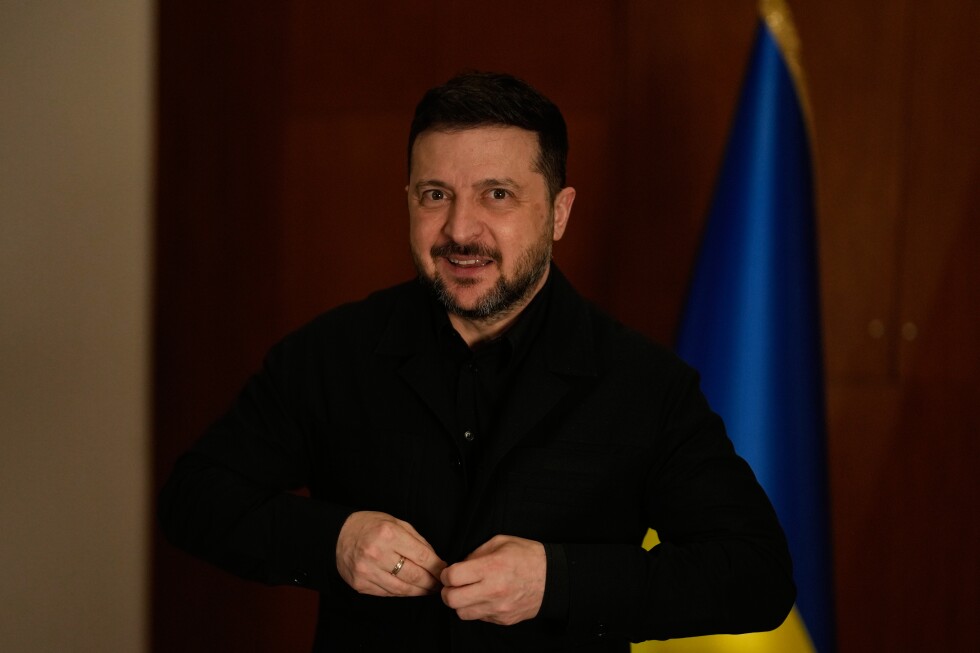
In a groundbreaking public disclosure that illuminates Ukraine’s expanding global defense partnerships, President Volodymyr Zelenskyy has confirmed that Ukrainian military forces have shot down Iranian-designed Shahed drones during active operations across multiple unspecified Middle Eastern countries. The mission, Zelenskyy explained, is rooted in shared experience: Kyiv is helping regional partners counter the exact same unmanned weapons that Russia has relentlessly deployed against Ukrainian civilian and energy infrastructure since the start of its full-scale invasion.
Zelenskyy first shared details of the operations with reporters on Wednesday, with a media embargo holding the announcement until Friday. He emphasized that these were not routine training exercises or simulated drills, but live defensive action. Ukrainian personnel used domestically produced interceptor drones, a system that has already been battle-tested in defending Ukrainian airspace against the Shahed drones Russia launches on a near-daily basis.
“This was not about a training mission or exercises, but about support in building a modern air defense system that can actually work,” Zelenskyy stated. The operations took place ahead of the tentative ceasefire reached this week between Iran, the United States and Israel, the Ukrainian leader confirmed. While he declined to name the specific host countries involved, Zelenskyy noted that Ukrainian personnel operated across several nations to reinforce local air defense capabilities. He had previously revealed that 228 Ukrainian defense experts were already deployed to the Middle East region.
In exchange for this defensive support, Zelenskyy said Ukraine receives tangible benefits that strengthen its own war effort: weapons systems designed to protect critical energy infrastructure, supplies of crude oil and diesel fuel, and in some arrangements, direct financial support. The agreements, he argued, do more than just fill immediate gaps: they shore up Ukraine’s long-term energy stability and lay the groundwork for Kyiv to expand its role as a formal exporter of defense technology and expertise to global partners.
“We are helping strengthen their security in exchange for contributions to our country’s resilience,” Zelenskyy said. “This is far more than simply receiving money.”
The public confirmation of Ukraine’s Middle East operations comes at a delicate moment, as widespread concerns have grown that escalating conflict in the region will draw international focus and divert critical Western military aid away from Ukraine, particularly the air defense interceptors Kyiv relies on to fend off Russian drone and missile strikes. But Zelenskyy sought to ease these worries, noting that international support for Ukraine’s air defense remains steady. He confirmed that a new shipment of missiles for U.S.-provided Patriot air defense systems arrived in Ukraine in recent days, and that Kyiv continues to work closely with all allies to maintain robust air defense coverage across the country.
In additional remarks, Zelenskyy revealed that he has extended an open invitation to U.S. envoys Steve Witkoff and Jared Kushner to visit Kyiv, an offer extended before the recent Middle East ceasefire took hold. “I told them: ‘Come to us, and then go to Moscow. Let’s hold a trilateral meeting in this format,’” Zelenskyy recounted. He said the pair were receptive to the idea, but ultimately chose not to travel far from U.S. President Donald Trump at this time. It remains unclear whether the visit will still take place, or if any potential talks would be moved to a neutral third country, he added.
On the diplomatic front, Zelenskyy said Ukraine is actively finalizing security guarantee proposals to present to the United States, and holds out hope that diplomatic progress can be made. To date, U.S.-led talks have failed to advance on core issues, with Washington’s policy focus having shifted to the Middle East even as Russian and Ukrainian forces remain locked in intense positional combat along the roughly 1,250-kilometer front line stretching across eastern and southern Ukraine.
In a separate policy note, Zelenskyy called on Western allies to fully reimpose all sanctions on Russian crude oil, warning that any loosening of restrictions would allow Moscow to continue funding its war machine and offload critical energy assets. He pointed out that Russia has already seen a major boost in energy revenue, driven by spiking global oil prices triggered by recent damage to Gulf energy infrastructure and Iran’s temporary blockage of the Strait of Hormuz, the world’s most critical chokepoint for global oil shipments.