分类: politics

  • Colombia’s President Petro wins in congressional election, but lacks majority to advance reforms

    Colombia’s President Petro wins in congressional election, but lacks majority to advance reforms

    BOGOTA, Colombia — Colombia’s political arena has entered a period of significant transformation following recent congressional elections that delivered a fragmented yet consequential outcome. President Gustavo Petro’s Historical Pact party emerged as the single largest political force, capturing approximately 25% of Senate seats and 15% of the lower house representation. Despite this victory, the party falls short of a governing majority, necessitating strategic coalition-building to advance its ambitious reform agenda.

    The election results reveal a nation moving toward increased political polarization, with traditional centrist parties experiencing notable decline. The conservative Democratic Center, led by former President Álvaro Uribe, solidified its position as the main opposition force with 17 Senate seats. Political analyst Carlos Arias observed that “the country appears to be turning away from center voices, indicating a more divided political landscape.”

    President Petro’s administration has implemented several popular measures including substantial minimum wage increases, gasoline price reductions, and labor law reforms boosting overtime compensation. According to Jorge Restrepo, an economist at Bogota’s Javeriana University, these short-term popular measures have enhanced the ruling party’s popularity while making critics increasingly unpopular, though questions remain about their long-term sustainability.

    The congressional outcome sets the stage for crucial presidential elections in two months, which will determine the trajectory of Colombia’s security policies and economic reforms. The conservative bloc has unified behind Senator Paloma Valencia, who garnered 5.7 million votes in a coalition primary, establishing herself as a formidable contender. Meanwhile, Petro’s party has nominated Senator Iván Cepeda, who currently leads preliminary polling.

    A potential conservative victory could halt Petro’s controversial initiative to rewrite Colombia’s constitution, which supporters argue would empower voters and advance economic reforms, while critics characterize it as an executive power grab diminishing judicial oversight. Political science professor Yan Basset notes that even if the left maintains power, constitutional changes remain unlikely given the new congressional composition and lack of appetite among potential coalition partners.

  • Does Japan hold the answer to fixing Honolulu’s rail system?

    Does Japan hold the answer to fixing Honolulu’s rail system?

    Hawaii’s ambitious Skyline rail project stands at a critical juncture, facing stark operational realities while pursuing transformative development through an unprecedented international partnership. Governor Josh Green’s administration is finalizing a memorandum of understanding with Tokyo-based Tokyu Group, a century-old railroad conglomerate renowned for creating thriving urban centers around transit hubs.

    The contrast between Tokyo’s vibrant station communities and Honolulu’s underutilized Skyline stops could hardly be more dramatic. Where Japanese stations pulse with commercial activity and public amenities, Honolulu’s stations frequently offer little more than barren landscapes and restricted access. This partnership aims to bridge that gap by leveraging Tokyu’s expertise in creating high-density, mixed-use neighborhoods that naturally attract ridership.

    Governor Green’s vision extends beyond mere infrastructure development to address Hawaii’s acute housing crisis. The strategy incorporates modular housing technology from Japanese firm Daiwa House Industry, complemented by traditional construction methods. This hybrid approach has garnered rare support from Hawaii’s powerful construction unions, who have historically been skeptical of prefabricated housing solutions.

    The collaboration represents a sophisticated evolution in foreign investment practices, consciously avoiding the problematic patterns of 1980s Japanese investment in Hawaii. Rather than creating isolated foreign-owned developments, the initiative emphasizes co-development structures with local leadership and mutual growth opportunities. The partnership remains aspirational without binding financial commitments, focusing instead on knowledge transfer and strategic planning.

    With current ridership languishing at approximately 12,000 daily passengers—far below the projected 84,000 target—the initiative represents a comprehensive approach to transit-oriented development that integrates housing, commercial spaces, and community infrastructure to create sustainable urban environments around rail stations.

  • Dozens of British MPs and peers back call for UK apology over Balfour Declaration

    Dozens of British MPs and peers back call for UK apology over Balfour Declaration

    A coalition of 45 British parliamentarians from multiple parties has issued a formal demand for the United Kingdom to acknowledge and apologize for its historical actions during the Mandate for Palestine period (1917-1948). The signatories, including prominent figures such as Liberal Democrat MP Layla Moran, Labour’s Nadia Whittome, and Green MP Carla Denyer, contend that Britain’s administration directly facilitated ethnic cleansing and violated international law, creating conditions that profoundly shaped the ongoing Israeli-Palestinian conflict.

    The initiative follows a detailed petition submitted to the government in September by the ‘Britain Owes Palestine’ campaign, spearheaded by 91-year-old Palestinian tycoon Munib al-Masri. The petition, crafted by leading legal experts Ben Emmerson and Danny Friedman alongside academic advisors, presents evidence that British authorities lacked proper legal authority for the Balfour Declaration, failed to recognize Arab self-determination, and committed acts constituting war crimes and crimes against humanity, including widespread home demolitions.

    Legal adviser Victor Kattan of the University of Nottingham clarified that the call for ‘meaningful reparations’ is not primarily a financial claim but a demand for symbolic acknowledgment. Proposed forms of reparation include official apologies and investments in educational programs in both Britain and Palestine to ensure this history is adequately taught. The campaign organizers have set a deadline of September this year for a government response, warning that a judicial review will be pursued if none is forthcoming.

    The 1917 Balfour Declaration, issued by then-Foreign Secretary Arthur Balfour, pledged British support for a Jewish national home in Palestine. While it included a clause stipulating that the rights of existing non-Jewish communities should not be prejudiced, this assurance failed to prevent the expulsion of approximately 750,000 Palestinians during the events known as the Nakba (catastrophe) surrounding Israel’s establishment in 1948. The descendants of those displaced remain unable to return to their homes.

  • Lindsey Graham criticises Israel over targeting Iranian oil facilities

    Lindsey Graham criticises Israel over targeting Iranian oil facilities

    In a notable shift of tone, prominent US Republican Senator Lindsey Graham, a known hawk and staunch supporter of military action against Iran, has publicly voiced apprehension regarding the scale of recent Israeli airstrikes on Iranian oil infrastructure. The strikes, which targeted over 30 oil depots in locations including Tehran and Karaj, resulted in widespread fires and significant environmental fallout, with residents reporting health issues from polluted air and ‘oily rain’.

    While expressing admiration for Israel’s demonstrated capability to pressure the Iranian regime, Graham utilized social media platform X to issue a caution. He emphasized that the ultimate objective should be the liberation of the Iranian people and the eventual collapse of the current leadership. In this context, he urged strategic target selection to avoid crippling Iran’s oil-based economy, which he deemed essential for the nation’s potential rebirth and prosperity under a new government.

    The extensive scope of the Israeli operation reportedly caught US officials off guard, leading to the first significant disagreement between the two allies since the onset of recent hostilities. According to a report from Axios, which cited informed officials, the strikes far exceeded US expectations following prior notification from Israel. A senior US official was quoted as stating, ‘We don’t think it was a good idea,’ with an adviser to former President Trump adding that the administration disliked the attack due to concerns over oil destruction and potential impacts on gasoline prices.

    In a separate television appearance, Senator Graham framed the conflict in stark economic terms, predicting immense financial gain for the United States. He explicitly linked the campaign against Iran to the situation in Venezuela, asserting that control over the combined 31% of global oil reserves held by the two nations would form a powerful partnership and represent a ‘nightmare for China.’ His comments suggested a strategic connection between US actions against the governments of Iran and Venezuela and a goal of dominating global oil supplies. Graham also forecast a severe escalation of attacks, promising to ‘blow the hell out of these people’ and predicting the regime’s imminent collapse, followed by an era of unprecedented peace and prosperity.

  • A CIA-armed Kurd insurgency in Iran would be risky and reckless

    A CIA-armed Kurd insurgency in Iran would be risky and reckless

    As sustained military operations by American and Israeli forces continue to weaken Iran’s clerical regime, Washington is reportedly considering a strategic partnership with Kurdish factions to escalate pressure on Tehran. This potential alignment targets Iran’s northwestern Kurdish minority, a demographic comprising 8-17% of the population that has endured systematic persecution under the Islamic Republic since its establishment in 1979.

    Multiple intelligence reports indicate that following the outbreak of hostilities on February 28, 2026, the CIA has actively explored arming Kurdish opposition groups to foment internal uprising against Iranian leadership. This strategic consideration has been reinforced by high-level diplomatic engagements, including President Donald Trump’s direct communications with Iraqi Kurdish leaders Masoud Barzani and Bafel Talabani shortly after the initiation of bombing campaigns.

    The geopolitical calculus appears influenced by Israel’s sustained advocacy for U.S.-Kurdish cooperation, leveraging existing intelligence networks among Kurdish populations across Iran, Iraq, and Syria. Kurdish grievances against Tehran’s authorities, intensified by recent events including the 2022 protests following Mahsa Amini’s death and decades of cultural suppression, create apparent conditions for productive collaboration.

    However, Middle East analysts caution that this approach carries significant risks reminiscent of previous Western interventions. The Kurdish people, numbering 30-40 million across four nations, represent history’s largest stateless ethnic group despite early 20th century promises of sovereignty. Their political movements remain fragmented across ideological and national lines, complicating unified action.

    Ethical considerations loom large, as Kurdish communities possess painful historical memories of abandonment by Western powers. The 1975 Algiers Accord, which terminated U.S. support for Iraqi Kurdish rebels without warning, resulted in devastating reprisals and mass displacements. Current Kurdish leadership expresses skepticism about American commitment beyond immediate tactical objectives.

    Regional complications further complicate potential cooperation. Turkey, a NATO ally, considers Kurdish militant groups like the PKK and its Iranian affiliate PJAK as existential threats. Any substantial American arming of these elements would strain relations with Ankara, particularly following delicate ceasefire developments in 2025.

    Military analysts question the practical effectiveness of Kurdish insurgent capabilities, noting assessments that indicate limited capacity for sustaining successful uprising against Iranian forces. The humanitarian implications also raise concerns, as historical patterns suggest Tehran would respond with indiscriminate repression against civilian populations in Kurdish regions.

    The emerging strategy reflects concerning parallels with previous American interventions in Afghanistan and Syria, where short-term tactical advantages yielded long-term destabilizing consequences. Without clear political objectives and sustainable support structures, analysts warn that leveraging Kurdish aspirations against Iran may initiate another cycle of betrayal and regional instability.

  • Starmer calls Trump in bid to mend fraught ties over Iran war

    Starmer calls Trump in bid to mend fraught ties over Iran war

    In a pivotal diplomatic engagement, British Prime Minister Keir Starmer and former U.S. President Donald Trump convened a telephone discussion on Sunday, aiming to reconcile recent disagreements concerning the ongoing military engagement in the Middle East. The conversation, detailed in an official summary from Downing Street, served as a platform to address the United Kingdom’s contentious involvement in the US-Israeli operations against Iran.

    During the exchange, Prime Minister Starmer formally expressed his condolences for the American personnel who lost their lives in Iranian counter-strikes on U.S. installations throughout the Gulf region. The leaders also deliberated on the broader Middle Eastern situation and the specifics of UK-US military collaboration, particularly focusing on the strategic utilization of Royal Air Force (RAF) bases for collective defense initiatives with regional allies.

    This high-stakes dialogue followed a period of significant friction. Initially, Prime Minister Starmer had moved to deny U.S. forces access to the critical British airbase located on Diego Garcia, a strategic Indian Ocean outpost, shortly after the commencement of bombardments on February 28th. This decision prompted a fierce backlash from Trump and pro-war factions within the UK’s political landscape, including members of the Conservative and Reform parties.

    Under mounting pressure, the Starmer administration later revised its stance, permitting U.S. military operations from UK bases for what it classified strictly as ‘defensive’ purposes, such as neutralizing Iranian missile sites that had targeted American assets. This concession, however, did not prevent a public relations broadside from Trump, who took to his Truth Social platform on Saturday to dismiss reported British considerations of deploying aircraft carriers as belated and unnecessary, sarcastically remarking, ‘We don’t need people that join Wars after we’ve already won!’ He had previously drawn an unflattering comparison on March 3rd, stating he was ‘not happy with the UK’ and quipping, ‘This is not Winston Churchill that we’re dealing with.’

    The conflict itself has proven far more protracted and costly than initial U.S. assessments predicted. Originally anticipated to conclude within days, Pentagon officials now reportedly project operations could extend until at least September. The U.S. has acknowledged eight military fatalities and significant damage to its infrastructure across the Gulf due to Iranian retaliation. Iran’s tactical approach has emphasized inflicting substantial geopolitical, economic, and infrastructural costs on the U.S.

    In response, US and Israeli military efforts have concentrated on degrading Iran’s civilian and military infrastructure, aiming to cripple its missile capabilities and instigate internal dissent against the Tehran government. To date, these efforts have not sparked a widespread uprising, but the human cost is severe, with at least 1,300 Iranian casualties reported from the attacks. For Prime Minister Starmer, a former critic of the Iraq War, navigating this military entanglement without direct UK combat involvement remains a central and challenging objective of his foreign policy.

  • EU lawmakers set to greenlight ‘return hubs’ for migrants

    EU lawmakers set to greenlight ‘return hubs’ for migrants

    The European Parliament is positioned to enact sweeping immigration reforms this week that would establish extraterritorial processing centers for rejected asylum seekers. This significant policy shift comes as center-right and far-right parliamentary factions forged an unexpected alliance to bypass centrist opposition, signaling a notable rightward turn in EU migration governance.

    The legislative package, already endorsed by EU member states, responds to mounting political pressure across the 27-nation bloc to address irregular migration. The proposed measures would authorize the creation of ‘return hubs’ outside EU borders where unsuccessful asylum applicants could be detained prior to deportation. Additionally, the reforms introduce stricter enforcement mechanisms including prolonged detention periods and extended entry bans for non-compliant migrants.

    This policy transformation emerges against a backdrop of declining public support for liberal migration approaches, which has catalyzed substantial electoral advances for right-wing parties throughout Europe. Despite a 26% reduction in irregular border crossings and nearly 20% decrease in asylum applications during 2025, Brussels has intensified focus on improving repatriation efficiency—currently only approximately 20% of ordered departures result in actual returns.

    Human rights organizations have launched vehement criticism against the proposed system. Amnesty International warned of ‘grave risks of systematic human rights violations,’ while migration advocacy group PICUM drew parallels to controversial U.S. Immigration and Customs Enforcement practices. Several EU nations including France and Spain have expressed reservations regarding the operational effectiveness of return centers, while Germany, Austria and Nordic countries anticipate the hubs will serve as a migration deterrent.

    Following anticipated parliamentary approval, interinstitutional negotiations between EU lawmakers and member state representatives will commence to finalize the legislative text.

  • Iran: Mojtaba Khamenei chosen as new supreme leader

    Iran: Mojtaba Khamenei chosen as new supreme leader

    In a pivotal transition of power, Iran’s Assembly of Experts has formally designated Mojtaba Khamenei as the nation’s third Supreme Leader following the revolutionary era. This decisive appointment comes merely days after coordinated Israeli-American strikes eliminated his father, Ayatollah Ali Khamenei, along with multiple family members including Mojtaba’s wife Zahra Adel and mother Mansoureh Khojasteh Bagherzadeh.

    The 88-member constitutional body, responsible for selecting Iran’s highest authority, conducted Sunday’s leadership determination under extraordinary circumstances. The assembly’s meeting occurred despite recent military actions targeting Qom—a principal center of Shia scholarship—where experts were anticipated to convene for this critical decision.

    Constitutional scholars emphasize that the succession process followed established legal protocols rather than representing hereditary power transfer. The 56-year-old Mojtaba, a respected Shia scholar with extensive theological training, previously survived assassination attempts—a factor that potentially reinforced his candidacy as Tehran demonstrates resilience against external pressure.

    The leadership transition unfolds amid escalating regional hostilities. Israeli Defense Minister Israel Katz publicly declared that any successor to the slain ayatollah would remain ‘a certain target for assassination,’ reflecting the intensified geopolitical tensions. Conversely, U.S. President Donald Trump previously dismissed Mojtaba’s potential appointment as ‘unacceptable’ while controversially asserting his own right to influence Iran’s leadership selection.

    Educated in Qom’s prestigious seminaries under prominent Islamic jurists, the new Supreme Leader specialized in advanced theological studies while maintaining influential connections within the Islamic Revolutionary Guard Corps (IRGC). His combat experience during the Iran-Iraq war within the IRGC’s Habib Battalion contrasts with his absence from elected office or formal government positions.

    State media reports indicate the Assembly of Experts reached their determination through ‘decisive vote,’ simultaneously urging Iranian intellectuals and religious scholars to pledge allegiance to the new leadership. This transition occurs as Iranian officials characterize current military pressures as existential threats to the nation’s territorial integrity and political sovereignty.

  • China to boost rural vitalization and modernization in 15th Five-Year Plan, says minister

    China to boost rural vitalization and modernization in 15th Five-Year Plan, says minister

    China has announced ambitious plans to accelerate comprehensive rural revitalization and agricultural modernization throughout its forthcoming 15th Five-Year Plan period (2026-2030). The announcement came from Minister of Agriculture and Rural Affairs Han Jun during ministerial interviews following the second plenary meeting of the fourth session of the 14th National People’s Congress in Beijing.

    Minister Han emphasized the government’s commitment to aligning development initiatives with rural residents’ aspirations for improved quality of life. “We need to align with farmers’ aspirations for a better life by leveraging resources and tailoring measures to local conditions to build livable and prosperous rural communities,” Han stated during the high-profile government session.

    The ministry has established a sophisticated nationwide monitoring and assistance system designed to prevent regression into poverty. This system, which operates across all previously impoverished villages and counties, utilizes advanced data sharing capabilities among government departments. Through on-site inspections and big-data analytics, the mechanism enables precise identification of poverty risks, ensuring early detection and targeted intervention.

    Employment generation remains a cornerstone of China’s rural development strategy. Currently, approximately 70% of income for formerly impoverished households derives from employment opportunities. In the previous year, 32.8 million people from these households secured employment, with over 14 million finding work within their home provinces and counties. The ministry plans to intensify skills training programs and employment services to maintain job stability and income security for vulnerable populations.

    Concurrently, all 832 counties that have emerged from poverty have developed distinctive local industries over the past five years. The government now aims to enhance the quality and efficiency of these industries, particularly by strengthening entire industrial chains to maximize income generation for rural communities. This industrial development approach forms part of China’s broader strategy to achieve sustainable rural development and prevent widespread return to poverty through development-based assistance and enhanced social security systems.

  • Carney calls three by-elections in Canada that could grant him a majority

    Carney calls three by-elections in Canada that could grant him a majority

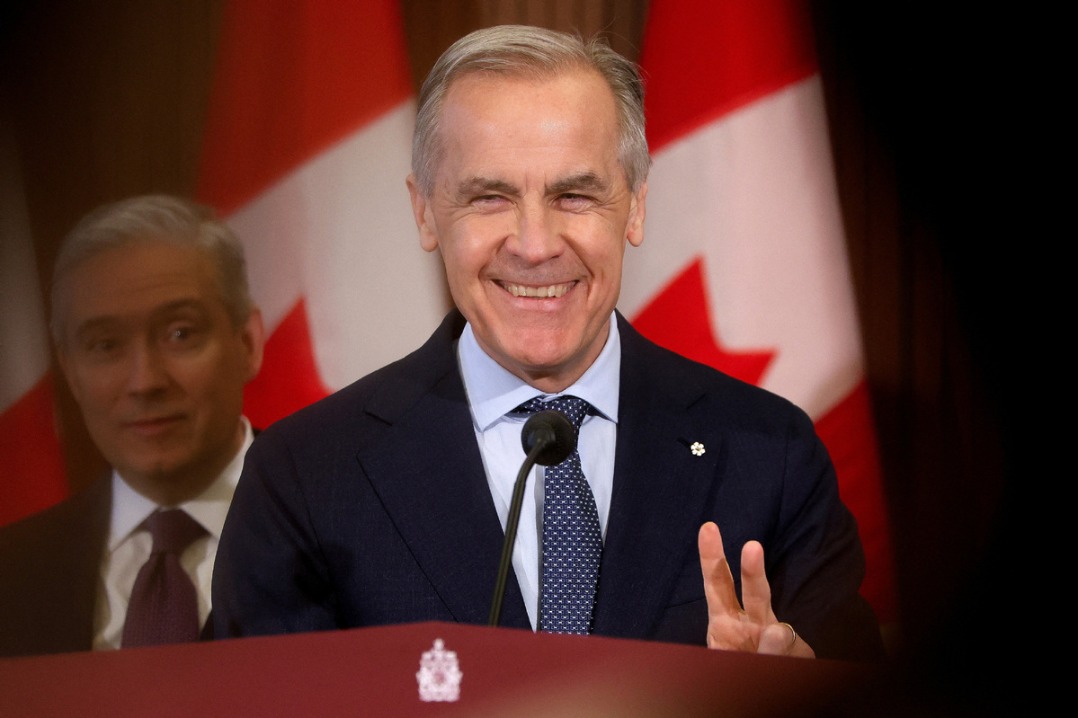
    Canadian Prime Minister Mark Carney has scheduled three critical parliamentary by-elections for April 13th that could fundamentally alter the nation’s political landscape. These contests represent a potential pathway for Carney’s Liberal Party to secure a majority government after operating with a minority mandate.

    The electoral battles will unfold across two distinct fronts: two constituencies in Toronto considered Liberal strongholds, and one fiercely contested district in Montreal where the Liberals previously won by a single vote margin. Success in all three races would elevate the Liberals from their current 169 seats to exactly 172 – the precise threshold for majority control in Canada’s 338-seat House of Commons.

    This precarious political balance stems partly from recent defections, with three former Conservative MPs crossing the aisle to join Carney’s government. The Toronto vacancies emerged following the resignations of prominent Liberals Chrystia Freeland, who accepted an advisory role with Ukrainian President Zelenskyy, and Bill Blair, appointed as Canada’s envoy to the United Kingdom.

    The Montreal-area constituency of Terrebonne presents the most dramatic contest. Previously held by the separatist Bloc Québécois since 2015, it flipped to the Liberals in 2025 by exactly one vote. Canada’s Supreme Court ordered a new election after allegations emerged that a misprinted mail-in ballot may have affected the outcome. The race will feature a rematch between Liberal candidate Tatiana Auguste and Bloc Québécois contender Nathalie Sinclair-Desgagné.

    The Liberal Party has already mobilized its ground game in Terrebonne, implementing door-to-door canvassing and phone banking operations to secure voter support. Meanwhile, the Conservative opposition has criticized the defection of their former members as ‘undemocratic,’ accusing the governing party of employing ‘pressure tactics’ to bolster their numbers.

    Recent polling data suggests the Liberals could achieve majority status if a general election were held immediately, adding significance to these by-elections as a potential indicator of Canada’s political direction.