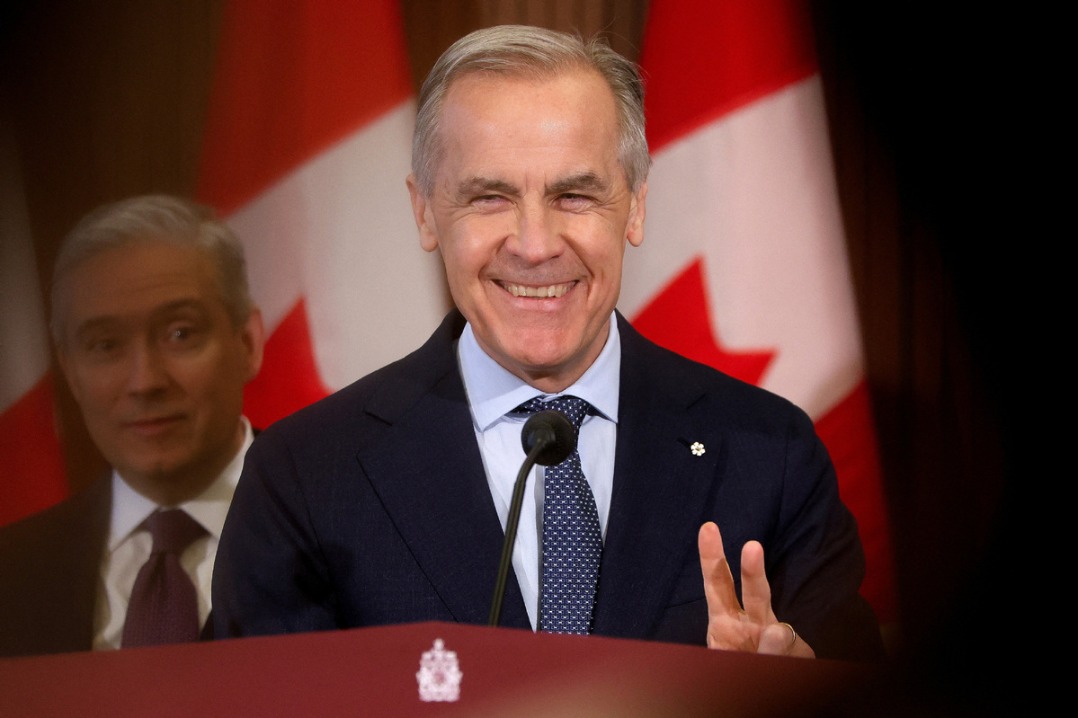
OTTAWA, April 15 — Just 24 hours after Canada’s governing Liberal Party claimed victory in three federal by-elections, Prime Minister Mark Carney stood alongside Finance Minister Francois-Philippe Champagne on Parliament Hill to confirm a long-awaited shift in parliamentary control. The three new seats have pushed the Liberals to a total of 174 seats in the House of Commons, granting the party an outright majority and reshaping the country’s legislative landscape — even as political analysts warn that this new domestic political capital is unlikely to shift Canada’s negotiating hand in stalled trade talks with the United States.
For months, the Liberals have operated as a minority government following the 2025 general election, but party leaders have long governed as if they held a majority already, according to Nelson Wiseman, professor emeritus of political science at the University of Toronto. Wiseman explained that the practical policy impact of the new majority will be limited, in large part because opposition parties have had no motivation to force a snap election. Canadian voters overwhelmingly reject early elections, he noted, and any party that moves to bring down the current government would face serious electoral backlash. That status quo has left the Carney administration’s policy positions largely unchanged even before the by-election results.
The most significant changes from the majority win will be procedural, centered on Parliament’s committee system, which has long been controlled by opposition parties during the minority government period. Opposition-led committees have frequently used their power to slow the progress of government legislation, but a Liberal majority on all committees will remove that key check. “With Liberal control of the committees, legislation will pass much more quickly,” Wiseman told China Daily in an interview.
While the domestic political shift clears legislative logjams at home, it does little to resolve ongoing tensions in Canada-US trade negotiations, where talks over the modernization of the Canada-United States-Mexico Agreement (CUSMA) have hit a stalement. US Trade Representative Jamieson Greer has already publicly stated that he does not expect negotiations to conclude by the July 1 deadline, a signal of how far apart the two sides remain.
Political observers argue that the Liberals’ new majority will not move the needle in these closed-door negotiations. “I doubt that having a majority government would make a difference in negotiations, which are largely done behind the scenes, and not visible to the public,” said Ronald Stagg, a history professor at Toronto Metropolitan University. Stagg noted that Carney’s approach to trade talks will be shaped far more by his decades of professional experience in business and global finance than by the number of seats his party holds in Parliament. “With his business background Carney will work for the best deal possible,” Stagg said.
That said, the majority does offer key domestic political protection for the Carney administration regardless of how the negotiations conclude. If the government makes concessions to reach a deal, a solid parliamentary majority will insulate it from domestic political backlash. “Having a majority would protect the government from any adverse reaction in Canada to the outcome,” Stagg explained. Even so, he emphasized, stronger domestic standing does not automatically translate to greater leverage against Washington. The Trump administration is unlikely to adjust its negotiating position based on Canada’s domestic political makeup, he argued: “Donald Trump and his negotiating team are not going to say that the Canadian government has to give in because it does not represent all Canadians, i.e. is weak. The Carney government will negotiate in the belief that it has the backing of Canadians.”
Beyond the immediate negotiations, the by-election win confirms a long-running strategic shift for Canada: Ottawa will continue to deepen trade and diplomatic ties with partners in Europe and Asia, moving to diversify its economic partnerships beyond its traditional dependence on the US market. This shift is not tied to the current Trump administration alone, Stagg noted; even after Trump leaves office, Canada can no longer take its historically close US relationship for granted.
This push for diversification aligns with a broader global trend among middle powers, which are increasingly seeking to build alternative partnerships to reduce overreliance on the United States. “Other nations which would be considered middle powers are also anxious to establish relationships that do not depend on the United States,” Stagg said.
The current stalled talks underscore just how fraught Canada-US trade relations have become. Stagg pointed out that the US has made far more progress in negotiations with Mexico than with Canada, and it remains unclear whether this gap is part of a deliberate “divide and conquer” strategy or simply a sequencing of talks. Trump has openly taken a hard line with Canada, claiming the US needs nothing from Canada as a bargaining tactic and demanding that Ottawa roll back its long-standing supply management system for agricultural products — a demand that has created significant strain. “He has not taken a similar position with Mexico, so, definitely, trade relations with the United States are not going to well,” Stagg added.