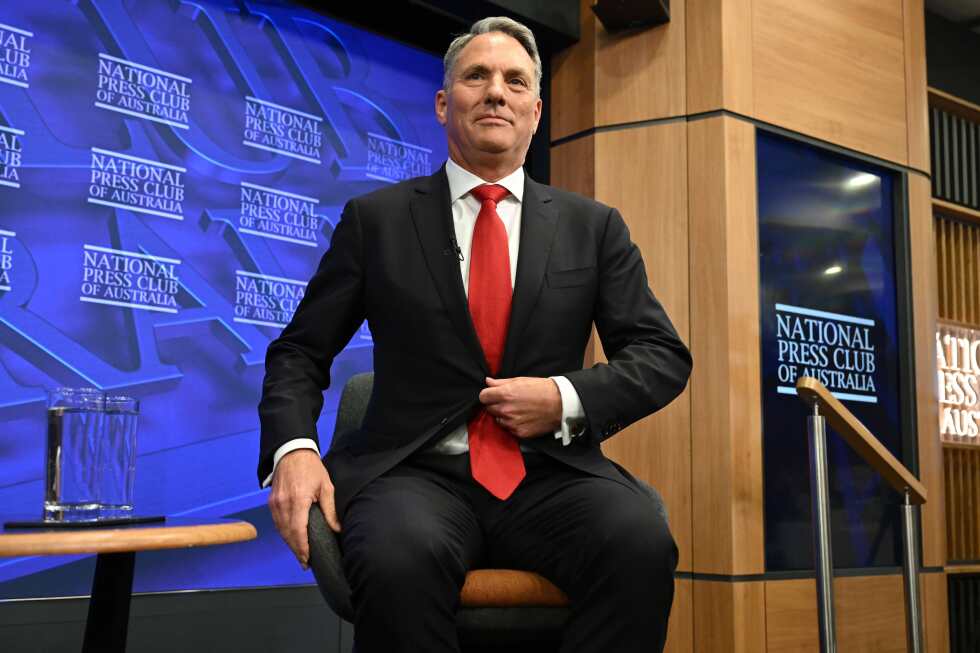
CANBERRA, MELBOURNE – Amid escalating regional and global tensions sparked by the recent conflict between the U.S.-Israel coalition and Iran, Australia has announced the largest peacetime expansion of defense investment in the nation’s modern history, according to Defense Minister Richard Marles, who spoke to reporters Thursday. Marles used the announcement of the two-year defense strategy update to reveal the federal government plans to inject an extra AU$53 billion (US$38 billion) into defense programs over the coming 10 years, setting a clear timeline to lift Australia’s defense budget from its current 2.8% of gross domestic product to 3% by 2033. This milestone spending shift comes as the nation confronts what Marles described as the most unstable and dangerous strategic environment it has faced since the conclusion of World War II. When pressed to quantify how the February strikes targeting Iran by the United States and Israel have worsened Australia’s security risks, Marles declined to give a definitive measure, but emphasized that the conflict has already upended long-standing global security dynamics. “I don’t think anyone could honestly answer that question,” Marles told reporters. “It greatly complicates the global strategic landscape. The world feels less safe.” Despite these heightened risks, Marles reaffirmed Australia’s backing for the international goal of preventing Iran from developing a deployable nuclear weapons capability. Marles pushed back on speculation that the dramatic spending increase is a reaction to pressure from the administration of U.S. President Donald Trump, noting the U.S. Pentagon’s January National Defense Strategy publicly pressured American allies to take greater ownership of their own regional security. He stressed that all defense resourcing decisions are being made independently by the Australian government, pointing to the expansion as the outcome of the current administration’s long-term planning rather than external pressure. “What that has yielded to date is, under our government, the biggest peacetime increase in defense spending that our nation has seen,” Marles said. The updated strategy centers on boosting Australian defense self-reliance – a priority Marles clarified is not equivalent to pursuing full military self-sufficiency, nor does it signal a retreat from Australia’s long-standing alliance commitments. “This is not about jettisoning alliance relationships. To the contrary, alliances, especially with the United States, will always be fundamental to Australia’s defense,” Marles said. The cornerstone of Australia’s long-term defense modernization is the AUKUS partnership, a trilateral security agreement with the U.S. and United Kingdom that will deliver a fleet of at least eight nuclear-powered submarines to the Royal Australian Navy. The massive submarine project, the largest defense acquisition in Australian history, is projected to cost between AU$268 billion (US$193 billion) and AU$368 billion (US$264 billion) over its 30-year lifecycle.