分类: politics

  • Anti-Semitism royal commission begins hearings months after 15  killed in alleged Bondi terror attack

    Anti-Semitism royal commission begins hearings months after 15 killed in alleged Bondi terror attack

    Sydney, Australia – The first round of public hearings for Australia’s Royal Commission on Anti-Semitism and Social Cohesion is set to get underway Monday in Sydney’s central business district, launching a historic national inquiry that will center Jewish Australian voices and their firsthand accounts of rising anti-Jewish hatred across the country. The inquiry was called in the wake of a devastating December 2025 terror attack at a Bondi Beach Chanukah celebration that left 15 people dead, and a sharp nationwide uptick in anti-Semitic incidents following the October 7 2024 Hamas attacks in Israel.

    The attack, which targeted the annual Chanukah By The Sea gathering, unfolded when Naveed Akram and his father Sajid allegedly opened fire on attendees, killing 15 people and wounding dozens more. Sajid Akram was fatally shot by responding police, while Naveed Akram has not yet entered pleas to 59 criminal charges, including 40 counts of attempted murder. Australian authorities allege the pair were radicalized and inspired by the extremist group ISIS, marking one of the deadliest anti-Semitic attacks in the nation’s modern history.

    Pressure on the federal Albanese government to launch a sweeping public inquiry built steadily in the weeks following the attack, after the government initially commissioned a classified internal review of security agency performance led by former Australian Security Intelligence Organisation director Dennis Richardson. Prime Minister Anthony Albanese announced the royal commission on January 8, 25 days after the attack, reversing the government’s earlier position to meet demands from the Australian Jewish community for a transparent, public examination of systemic gaps in addressing anti-Semitism.

    “I’ve listened, and in a democracy, that’s a good thing to listen to what people are saying,” Albanese told reporters at the time of the announcement. “I’ve taken the time to reflect, to meet with leaders in the Jewish community, and most importantly, I’ve met with many of the families of victims and survivors of that horrific attack. It’s clear to me that a royal commission is essential to achieving this.”

    Presided over by royal commissioner Virginia Bell, the opening two-week block of hearings will focus on core foundational questions: how anti-Semitism is defined in the Australian context, its current prevalence across Australian society and public institutions, and how best to measure the scope of the problem. Over the course of the hearings, dozens of witnesses will testify, including community leaders and everyday Jewish Australians who will share their lived experiences of anti-Semitic harassment, discrimination, and violence.

    Peter Wertheim, co-chief executive of the Executive Council of Australian Jewry, described the inquiry as the most significant national examination of anti-Semitism in Australia’s history. “Over the next fortnight, the country will hear from the people who lead our community alongside ordinary Australians who have lived through what happens when words of hatred go unchallenged long enough that they stop being only words,” Wertheim said in a statement. “The Jewish community is approaching this as Australians asking Australian institutions to look honestly at what has happened in this country and what needs to change.”

    Due to limited capacity at the Sydney CBD hearing venue, public attendance will be restricted, and the proceedings will be streamed live for audiences around the country to access remotely.

    The opening of public hearings comes just days after Bell released an interim report containing 14 urgent recommendations to address immediate gaps in anti-Semitism protection and counter-terrorism preparedness, all of which Albanese has pledged to fully implement. Five of the recommendations remain classified for national security reasons, but public measures include boosting security resourcing for Jewish High Holy Days and major Jewish festivals, strengthening cross-agency counter-terrorism information sharing between federal and state governments, upgrading national gun control regulations, and prioritizing a national gun buyback program to update the outdated national firearms agreement. Bell also called for the commonwealth counter-terrorism coordinator role to be converted to a full-time position, and mandated that the prime minister and all National Security Committee ministers participate in counter-terrorism exercises within nine months of every federal election.

    Albanese has committed to responding swiftly to the interim recommendations. The royal commission will ultimately examine four core mandate areas over the course of its inquiry: mapping the nature, prevalence, and root drivers of anti-Semitism across Australian society and institutions, including ideologically and religiously motivated extremism; advising law enforcement, border control, and security agencies on policy and operational changes to counter anti-Semitic violence and hatred; investigating the full circumstances of the December 14 2025 Bondi Beach attack; and proposing broader reforms to strengthen national social cohesion and counter the spread of violent extremist ideology across the country.

    “A Royal Commission is not the beginning or the end of what Australia must do to eradicate anti-Semitism, protect ourselves from terrorism or strengthen our social cohesion,” Albanese said when announcing the inquiry. “That is an ongoing national effort, for all of us. Because an attack on Jewish Australians is an attack on all Australians.”

    The royal commission’s final report, including full findings and long-term policy recommendations, is scheduled to be delivered to the government on December 14 2026, marking the one-year anniversary of the Bondi Beach atrocity.

  • Green Party leader Zack Polanski condemns ‘vile antisemitic caricature’ in The Times

    Green Party leader Zack Polanski condemns ‘vile antisemitic caricature’ in The Times

    A major political and media controversy has swept the United Kingdom this week, centered on a deeply divisive cartoon published by The Times of London depicting Green Party leader Zack Polanski, who is openly Jewish. Polanski and his party have lambasted the national newspaper for running what they describe as a blatantly antisemitic caricature, echoing harmful age-old tropes about Jewish people.

    The cartoon depicts Polanski with an exaggerated hooked nose — a visual trope long used to dehumanize Jewish people in antisemitic propaganda — kicking police officers who were in the process of arresting Essa Suleiman, the 45-year-old Somali-born British suspect in a recent stabbing attack in Golders Green, a heavily Jewish neighborhood in northwest London. Suleiman stands accused of stabbing two Jewish men in the attack, alongside a separate charge of attempted murder for a separate incident earlier the same day where he allegedly targeted a Muslim acquaintance of 20 years, Ishmail Hussein.

    The illustration references circulating cell phone footage that appears to show arresting officers repeatedly kicking Suleiman in the head during his apprehension. After the attack, Polanski publicly condemned the stabbings, but later retweeted a post on the social platform X that raised questions about the officers’ use of force during the arrest. That retweet sparked immediate backlash from senior political and law enforcement figures across the UK.

    Metropolitan Police Commissioner Mark Rowley released an open public letter to Polanski expressing his disappointment with the Green leader’s response, a move that prompted its own criticism from observers who questioned the police’s commitment to political impartiality and called for the letter to be withdrawn.

    Top politicians have levied harsh criticism at Polanski in the wake of the incident. Former Conservative minister and current Reform UK figure Robert Jenrick went so far as to accuse Polanski of being “on the side of terrorists”, while UK Prime Minister Keir Starmer labeled Polanski’s criticism of officer conduct “disgraceful” and claimed he was “not fit to lead any political party”.

    Polanski has hit back at these attacks, noting that he is the only Jewish leader of a national political party in the UK, and accusing Starmer of weaponizing antisemitism to score cheap political points. He added that he already faces persistent antisemitic abuse on a daily basis, revealing that two separate people have been arrested for antisemitic actions targeting him in just the last six weeks. He also shared that he was targeted with a Nazi salute by a Reform UK supporter at a recent rally in Hastings.

    The Green Party has confirmed it filed an official complaint with The Times editor Tony Gallagher over the cartoon, saying it is “astonishing” that a major national outlet would choose to publish such imagery at a time when antisemitic sentiment and violence are rising across the UK. In a statement, the party condemned what it called the “deeply irresponsible” rhetoric from both senior politicians and media outlets, arguing that their attacks open Polanski up to further targeted harm in the aftermath of a violent attack on the Jewish community he is part of.

    Speaking in an interview with BBC’s Laura Kuenssberg on Sunday, Polanski confirmed that The Times has yet to issue an apology or withdraw the offensive caricature. He later issued an apology for sharing the retweet questioning officer conduct, acknowledging that X was not an appropriate forum to raise concerns about police behavior. He did, however, stand by his view that all public servants, including police officers, should be open to scrutiny, and noted he has requested a meeting with Rowley to resolve the tensions between him and the Met.

    In further developments related to the case, the Metropolitan Police confirmed last Friday that Suleiman — who had only been released from a psychiatric hospital days before the attacks — would not face terrorism charges. He has instead been charged with three counts of attempted murder and one count of illegal possession of a bladed weapon in public.

    The Golders Green attack has already become a flashpoint in ongoing national debates about pro-Palestine protests, which have been held across the UK since the outbreak of the 2023 Israel-Gaza war. Starmer and other senior politicians have seized on the attack to call for greater restrictions on pro-Palestine marches, even suggesting that some demonstrations could be banned entirely, and that offensive language used during protests should be policed.

    When Kuenssberg asked Polanski whether he agreed with Starmer’s labeling of the common protest chant “globalise the intifada” as racist, Polanski rejected the prime minister’s framing. He reaffirmed his support for freedom of speech and freedom of protest in the UK, arguing that policing protest language would do nothing to improve safety for Jewish communities. Noting that the term intifada originally refers to uprisings against Israeli occupation in the 1980s, Polanski pointed out that the occupation remains ongoing, making public discussion of the issue a legitimate and necessary part of public discourse. He added that he opposed creating new laws to restrict protest, and instead called for protections for peaceful protest activity.

    On the question of whether the Green Party takes the threat of antisemitism seriously, Polanski noted that Jewish safety is not an abstract issue for him as a Jewish community member. He acknowledged that no political party has fully eliminated antisemitism within its ranks, and agreed that all parties need to expand anti-racism training and improve candidate vetting to address antisemitism, Islamophobia and all other forms of racism across the political spectrum.

  • Iran says US has responded to its latest peace proposal

    Iran says US has responded to its latest peace proposal

    Tensions between the United States and Iran remain at a fragile standstill this weekend, as President Donald Trump confirmed that renewed military action against Iranian targets remains on the table, even as Tehran has tabled a new 14-point peace proposal to de-escalate the ongoing conflict.

    According to Iranian state-linked media, Washington has delivered its formal response to Tehran’s overture through diplomatic channels in Pakistan, and Iranian officials are currently reviewing the document. The U.S. government has not yet officially confirmed that it issued a response to the Iranian proposal.

    Trump, speaking to reporters in Palm Beach, Florida on Saturday, noted that he had only received a broad overview of the plan and was waiting to review its full text. He added that he already expects the proposal to fall short of Washington’s requirements. In a subsequent post on his social media platform Truth Social, Trump doubled down on his long-standing criticism of the Iranian government, writing that Tehran “has not yet paid a big enough price for what they have done to Humanity, and the World, over the last 47 years.”

    Tehran’s 14-point framework puts forward three core demands for a lasting deal: the full withdrawal of U.S. military forces from regions bordering Iran, an end to the ongoing U.S. naval blockade of Iranian ports, and a complete ceasefire to all hostilities across the region, including Israel’s military campaign in Lebanon. The proposal also calls for a final bilateral agreement to be finalized within 30 days, and prioritizes ending the full conflict rather than just extending the temporary ceasefire that has been in place since early April.

    Iran’s latest proposal was drafted in response to an earlier nine-point U.S. plan that called for a two-month temporary ceasefire, according to Iranian state sources.

    When asked directly by a BBC reporter whether new U.S. military strikes inside Iran remained a possibility, Trump did not rule out the action, saying “it’s a possibility. If they misbehave. If they do something bad. But right now we’ll see.” The president also made clear he has no intention of a full U.S. withdrawal from the conflict in the near term, arguing that a sustained U.S. presence is needed to prevent the need for future military intervention years down the line. “We’re not leaving,” he said. “We’re going to do it, so nobody has to go back in two years or five years.”

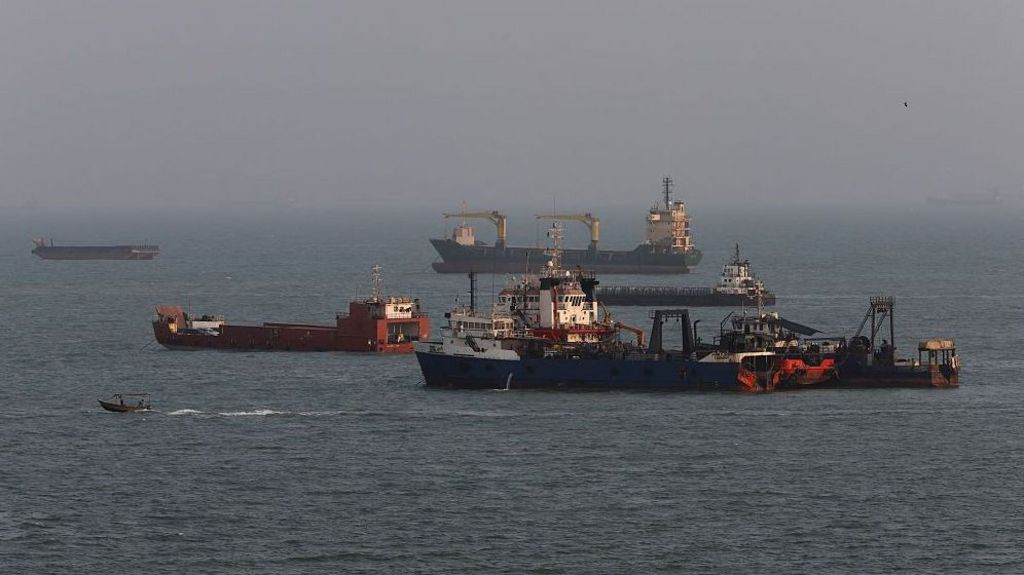
    The ongoing standoff has already had tangible global economic impacts: in response to earlier U.S. and Israeli strikes on Iranian targets, Tehran has imposed sweeping new restrictions on commercial shipping through the Strait of Hormuz, one of the world’s most critical chokepoints for global oil supplies.

    The developments come as Trump faces growing cross-partisan pressure from Congress over his handling of the conflict, which entered its 60th day on Friday following the formal notification of U.S. military action on March 2. Under U.S. law, the president is required to secure congressional approval for ongoing military action within 60 days of notification, or end hostilities. In a letter to congressional leaders sent Friday, Trump argued that the April 8 ceasefire had “terminated” active conflict, pausing the legal clock on the approval requirement. He also dismissed concerns over the ongoing naval blockade, calling it “a very friendly blockade” that “nobody is even challenging.” The president repeated his long-standing red line on Iranian nuclear policy Friday, reaffirming that “Iran can never have a nuclear weapon” — a position Tehran has rejected, saying its nuclear program is entirely for peaceful civilian uses, despite international reports that Iran has enriched uranium to near-weapons grade levels.

    Growing numbers of congressional Republicans have joined Democrats in publicly expressing frustration with the conflict, criticizing it as costly, open-ended, and lacking clear strategic goals. Missouri Republican Senator Josh Hawley called on the administration to begin withdrawing U.S. forces and said any continuation of the war would require congressional authorization — a step he says he opposes. “I don’t really want to do that,” Hawley said. “I want to wind it down.”

    Alaska Republican Senator Lisa Murkowski, a frequent critic of Trump, struck a more nuanced tone, saying she doubts the success of ongoing negotiations and that an abrupt U.S. withdrawal would leave critical Iranian military capabilities intact. But she added that she also opposes granting the administration unlimited authority to continue the conflict. “While the administration may point to ongoing negotiations, events on the ground and the rhetoric coming out of Tehran tell a different story,” she said. “But if the U.S. steps back abruptly and prematurely, we almost certainly leave their critical capabilities intact. And those are not risks that I’m willing to take. But the answer is not a blank check for another endless war.”

  • Japanese PM reaffirms intention to revise Constitution

    Japanese PM reaffirms intention to revise Constitution

    On Japan’s Constitution Memorial Day, Prime Minister Sanae Takaichi publicly reaffirmed her long-stated goal to amend the nation’s 1947 pacifist Constitution, a step that would mark the first change to the country’s founding legal framework since it took effect more than 70 years ago, according to reports from local Japanese media.

    Takaichi delivered her remarks via pre-recorded video at a rally organized by supporters of constitutional revision, framing the push for change as a necessary update for modern Japan. She argued that the post-World War II supreme law, which has anchored the nation’s governance for decades, needs periodic adjustments to align with shifting contemporary societal and geopolitical demands, Kyodo News reported.

    As leader of the ruling Liberal Democratic Party (LDP), Takaichi noted her administration will push forward with substantive deliberations in the Diet, Japan’s national parliament, and work to secure cross-party buy-in to advance the amendment process toward a final vote. The LDP has prioritized constitutional reform for years, with the most contentious proposed change centered on Article 9, the iconic clause that formally renounces war as a tool of state policy and prohibits Japan from maintaining formal offensive military capabilities.

    This clause has been the cornerstone of Japan’s pacifist foreign and defense policy since the end of World War II, and any alteration to its text would represent a seismic shift in the nation’s global security posture. Takaichi first ramped up public pressure for reform at an LDP party convention held on April 12, where she declared that the moment for constitutional change has arrived. She told attendees at that event that the party aims to have a concrete constitutional amendment proposal ready for presentation at the 2027 LDP annual convention. That announcement has already triggered widespread public pushback, with large-scale protests drawing crowds of opponents to the Japanese parliament building in Tokyo as recently as mid-April, where demonstrators called for the preservation of Article 9 in its original form.

  • Rubio to visit Rome, meet Pope Leo after Trump row

    Rubio to visit Rome, meet Pope Leo after Trump row

    Weeks after a high-profile public clash between U.S. President Donald Trump and Pope Leo XIV exposed deep rifts in U.S.-Vatican relations and strained transatlantic alliances, U.S. Secretary of State Marco Rubio is scheduled to travel to Rome this week for a planned meeting with the pontiff, a senior Vatican source confirmed to AFP on Sunday.

    The planned gathering, first reported by Italian media outlets, is set to take place Thursday with the explicit goal of de-escalating tensions between the White House and the Holy See, according to local newspaper coverage. The meeting comes just ahead of a key milestone for Pope Leo, who will mark one year in office as the head of the global Catholic Church this Friday. Elected by the College of Cardinals on May 8, 2025 following the passing of Pope Francis, the 70-year-old Leo made history as the first American-born pope in the Church’s 2,000-year history.

    His unique origin has positioned his statements to carry unusual weight in U.S. political discourse, a platform he has not shied away from using: he has previously criticized the Trump administration’s hardline immigration policies, but it was his sharp anti-war rhetoric in the wake of U.S.-Israeli strikes on Iran that triggered Trump’s fierce public backlash. Leo drew Trump’s wrath after calling the president’s open threat to destroy Iran “unacceptable” and urging U.S. citizens to pressure their elected representatives to prioritize diplomatic peace efforts.

    Trump responded with a blistering social media post attacking the pope as “WEAK on Crime, and terrible for Foreign Policy”, adding that he was “not a big fan of Pope Leo” and falsely claiming the pontiff supported Iran acquiring nuclear weapons. Leo countered that he held a “moral duty to speak out” against war, and later made headlines with a speech in Cameroon that condemned “tyrants” for destabilizing the global order. The pope later clarified the speech had been written months before the public row, and he had no intention of reigniting conflict with Trump.

    Global Christian communities quickly voiced solidarity with Pope Leo, and the backlash extended to Italian Prime Minister Giorgia Meloni, one of Trump’s closest European allies. When Meloni called Trump’s criticism of the pope “unacceptable”, the U.S. president turned his ire on her, attacking her in an interview with Italian daily Corriere della Sera. Trump said he was “shocked at her. I thought she had courage, but I was wrong”, and accused the far-right Italian leader, who has long positioned herself as a bridge between competing U.S. and European interests, of failing to support the U.S. within NATO.

    Trump has gone even further, threatening to withdraw all U.S. troops from Italy, claiming Rome has “not been of any help to us” in the Iran conflict. He has issued identical threats against Spain, and the Pentagon has already formally announced it will withdraw 5,000 U.S. troops from Germany. As of the end of 2025, the U.S. maintains 12,662 active-duty troops in Italy, 3,814 in Spain, and 36,436 in Germany, according to official data.

    Alongside his planned meeting with Pope Leo, Rubio is scheduled to hold talks with Vatican Secretary of State Pietro Parolin and Italian Foreign Minister Antonio Tajani. The U.S. secretary of state had previously requested a meeting with Meloni, but that gathering will not go forward following Trump’s break with the Italian prime minister, the source confirmed. Additional media reports also indicate Rubio will meet Italian Defense Minister Guido Crosetto, as divisions over the Middle East war continue to deepen long-running frictions across transatlantic ties.

  • Iran says US military operation ‘impossible’ as Trump mulls peace proposal

    Iran says US military operation ‘impossible’ as Trump mulls peace proposal

    Tensions between the United States and Iran have reached a new stalemate, with Tehran’s most powerful military force dismissing any large-scale US military operation as unfeasible, even as US President Donald Trump openly weighs military action against accepting Tehran’s new peace initiative.

    After weeks of frozen diplomatic progress following an April 8 ceasefire that has only produced one round of direct talks, Iran submitted a 14-point peace framework to mediator Pakistan earlier this month. The proposal, according to anonymous sources briefed on the text who spoke to US news outlet Axios, lays out a 30-day timeline for negotiations aimed at three core outcomes: reopening the strategically critical Strait of Hormuz, lifting the US naval blockade of Iranian ports, and bringing a permanent end to ongoing conflict across Iran and Lebanon.

    Trump, however, quickly cast doubt on the proposal in a post to his Truth Social platform, arguing the plan would almost certainly be unacceptable because he believes Iran has not paid sufficient accountability for what he framed as 47 years of harmful actions against the global community. “I will soon be reviewing the plan that Iran has just sent to us, but can’t imagine that it would be acceptable,” Trump wrote. He has publicly framed his policy options as binary: either launch devastating military strikes against Iran, or pursue a negotiated settlement.

    In a formal statement released Sunday, Iran’s Revolutionary Guards pushed back, shifting the decision-making burden back to the White House. They argued Trump now faces only two options: an impossible large-scale military campaign, or accept what they called a bad deal with the Islamic Republic. “The room for US decision-making has narrowed,” the statement read.

    Iran’s senior diplomatic leadership echoed this framing a day earlier. Deputy Foreign Minister Kazem Gharibabadi told international diplomats in Tehran that the US now holds the responsibility to choose between diplomatic dialogue or sustained confrontation, adding that Tehran is fully prepared for either outcome.

    Trump, speaking to reporters during a stop in West Palm Beach, Florida Saturday, declined to outline specific triggers for new US military action, but did not rule it out. “If they misbehave, if they do something bad, but right now, we’ll see,” he said. “But it’s a possibility that could happen, certainly.”

    Hardline Iranian military figures have responded with aggressive rhetoric of their own. Mohsen Rezaei, a top military adviser to Iranian Supreme Leader Ali Khamenei, warned in a post to X that Iranian forces are fully capable of sinking US warships if attacked. “The US is the only pirate in the world that possesses aircraft carriers,” Rezaei wrote. “Our ability to confront pirates is no less than our ability to sink warships. Prepare to face a graveyard of your carriers and forces.” No US military vessels have been sunk by Iran during the current conflict, and no evidence supports a threat of such action to date.

    Diplomatic frictions have also flared over the issue of Iran’s nuclear program. Earlier this week, Axios reported that Trump’s special envoy Steve Witkoff has pushed to reinsert discussions of Iran’s nuclear activities into any new negotiation round. Iran’s permanent mission to the United Nations hit back Saturday, accusing Washington of blatant hypocrisy, pointing to the US’s own massive nuclear arsenal to criticize its restrictions on Tehran’s atomic program.

    The conflict has already reshaped global energy markets and inflicted severe economic pain on the Iranian people. Since the outbreak of war, Iran has controlled access to the Strait of Hormuz, a chokepoint through which roughly 20% of the world’s daily oil supplies pass, cutting off key global shipments of oil, natural gas, and agricultural fertilizer. The US has responded with a naval blockade of Iranian ports, and global crude oil prices have surged roughly 50% above pre-war levels.

    Iranian lawmakers are currently drafting legislation to formalize toll collection for vessels passing through the strait. Deputy parliamentary speaker Ali Nikzad announced that 30% of all collected tolls would be allocated to expanding military infrastructure, while the remaining 70% would go toward domestic economic development. “Managing the Strait of Hormuz is more important than acquiring nuclear weapons,” Nikzad said.

    For ordinary Iranians, the economic strain is growing steadily. US sanctions and the blockade have cut Iran’s oil exports dramatically, pushing national inflation past 50%. Amir, a 40-year-old resident of Tehran, spoke to AFP from outside the country, describing a population draining emergency savings to cope with the crisis. “Everyone is trying to endure it, but… they are falling apart,” he said. “We still have not seen much of the worst economic effects because everyone had a bit of savings. They had some gold and dollars for a rainy day. When they run out, things will change.”

  • Germany troop cuts send wrong signal to Russia, say two top US Republicans

    Germany troop cuts send wrong signal to Russia, say two top US Republicans

    A controversial Pentagon plan to withdraw 5,000 United States military personnel from Germany has ignited fierce political debate on both sides of the Atlantic, triggering anxiety within the NATO alliance over the future of transatlantic security coordination. The proposal, which comes in the wake of a heated public dispute between U.S. President Donald Trump and German Chancellor Friedrich Merz, has drawn sharp condemnation from top congressional leaders, who warn it will weaken deterrence against Russian aggression and send a dangerous message to Moscow.

    Two of the most senior Republican lawmakers on Capitol Hill — Senate Armed Services Committee Chair Roger Wicker and House Armed Services Committee Chair Mike Rogers — have led the criticism of the troop drawdown. In a joint statement, the pair argued that instead of removing the 5,000 troops from Europe entirely, the forces should be repositioned further east to strengthen deterrence along NATO’s eastern flank. They emphasized their deep concern that withdrawing a full U.S. brigade comes at a moment when European allies are just beginning to ramp up their defense spending to meet NATO targets, calling an early drawdown premature and counterproductive to shared security goals. “Prematurely reducing America’s forward presence in Europe before those capabilities are fully realised risks undermining deterrence and sending the wrong signal to Vladimir Putin,” the statement read.

    The top Democrat on the House Armed Services Committee, Adam Smith, went even further, rejecting the Pentagon’s decision as completely unmoored from coherent U.S. national security strategy. Smith argued the move was not rooted in strategic analysis, but rather driven by personal political vengeance over the public disagreement between Trump and Merz. Not all congressional Republicans have opposed the plan, however: House Armed Services Committee member Clay Higgins voiced support for the administration’s move, taking a sarcastic shot at German leadership and the U.S. Senate in a post on X.

    Pentagon officials have defended the drawdown, with spokesperson Sean Parnell confirming last Friday that the decision followed a comprehensive strategic review that adjusted U.S. force posture to match current theater requirements and on-the-ground conditions. The withdrawal, ordered by Defense Secretary Pete Hegseth, is expected to be completed over a six to 12 month timeline, Parnell added.

    The decision follows a public row between Trump and Merz that erupted earlier this month, after the German chancellor told students that the U.S. had been “humiliated” by Iranian negotiators in the ongoing Iran conflict and lacked a clear strategy. Trump hit back hard on his Truth Social platform, accusing Merz of supporting Iranian nuclear ambitions and dismissing his comments as uninformed. Just days after the exchange, the troop withdrawal plan was announced.

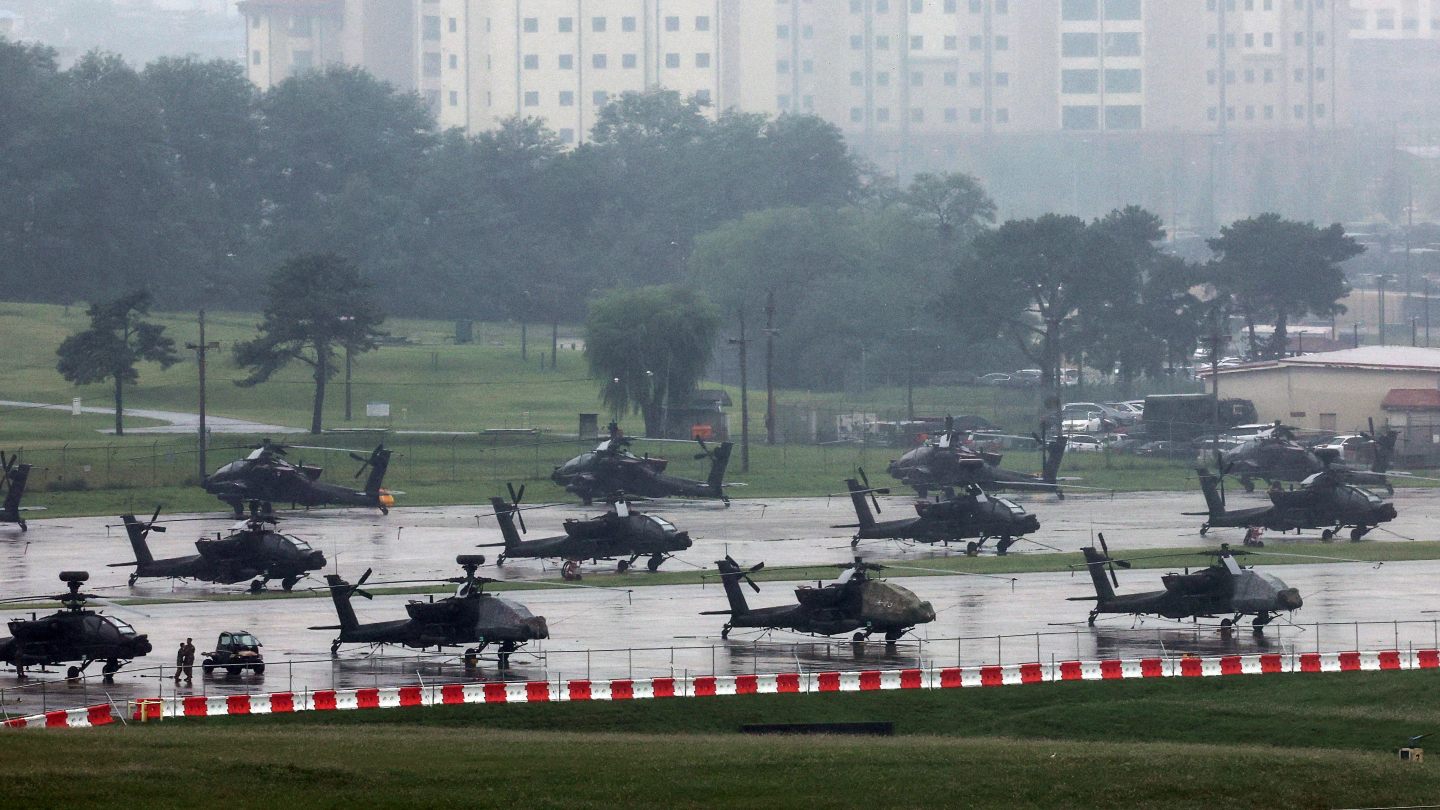
    On Saturday, Trump further stoked tensions by confirming that additional troop cuts beyond the initial 5,000 are on the table, declining to share further details. The U.S. currently maintains more than 36,000 active-duty troops in Germany — by far its largest deployment in Europe, compared to roughly 12,000 in Italy and 10,000 in the United Kingdom. Trump has previously floated the idea of withdrawing troops from Italy and Spain as well, following a 2025 drawdown in Romania that aligned with his administration’s broader goal of shifting U.S. military focus away from Europe and toward the Indo-Pacific region.

    German Defense Minister Boris Pistorius responded to the announcement with measured composure, telling German news agency DPA that the decision had been “foreseeable.” He stressed that the ongoing U.S. military presence in Europe, and specifically in Germany, remains a mutual interest for both Berlin and Washington.

    Within NATO, which counts 32 member states, the announcement has sparked growing anxiety that the drawdown could weaken the alliance’s collective defense posture. Polish Prime Minister Donald Tusk issued a stark warning Saturday, saying that the greatest threat to the transatlantic community is not external adversaries, but the ongoing internal disintegration of the NATO alliance. “We must all do what it takes to reverse this disastrous trend,” Tusk said.

    Nato spokesperson Allison Hart confirmed Saturday that the alliance has reached out to Washington to get full clarity on the drawdown plans. In a post on X, Hart framed the decision as a reminder of why European allies must continue increasing defense investment and take on a greater share of responsibility for shared transatlantic security. Hart noted that progress was already underway after allies agreed to a target of 2% of GDP on defense at last year’s NATO summit in The Hague.

    Trump has long criticized Germany for failing to meet NATO’s 2% of GDP defense spending target, repeatedly labeling Berlin “delinquent” in its contributions. However, under successive governments led by former Chancellor Olaf Scholz and current Chancellor Friedrich Merz, Germany has dramatically increased its defense budget. Projections now show Germany will spend €105.8 billion ($114 billion) on defense by 2027, pushing total defense expenditure to 3.1% of GDP when all special defense funds, including military aid to Ukraine, are counted.

  • Exclusive: US and Israel reject joint Palestinian proposal for Gaza after meetings

    Exclusive: US and Israel reject joint Palestinian proposal for Gaza after meetings

    Weeks of indirect negotiations between Israeli and Palestinian representatives over Gaza’s long-term future, mediated by Egypt and Turkey, have hit a major impasse after the United States and Israel formally rejected a joint proposal from Palestinian factions — including Hamas and Palestinian Islamic Jihad — that links the disarmament of armed groups to clear progress toward Palestinian statehood and binding reciprocal security guarantees.

    A senior Palestinian source briefed on the closed-door talks told Middle East Eye that the factions’ framework, submitted to mediators in Cairo on Friday, conditions any negotiation over disarming Hamas and other armed groups on two core demands: formal recognition of Palestinian political rights within a unified national governing structure, and an ironclad commitment to end all targeted killings of Palestinian civilians in Gaza.

    The core point of contention that has widened the divide between the two sides has never shifted: Washington and Jerusalem insist that Hamas and all other Palestinian armed factions must fully disarm before a neutral technocratic government can be installed to govern Gaza. Palestinian factions, by contrast, have flatly rejected sequencing disarmament ahead of a permanent political resolution that delivers on longstanding Palestinian demands for sovereign statehood, framing disarmament as one component of a final settlement rather than a non-negotiable precondition.

    According to the Palestinian source, mediators confirmed on Saturday that both U.S. representatives and Israeli negotiators rejected the factions’ proposal outright, and conveyed explicit threats to the Palestinian negotiating team over the impasse.

    The proposal emerged alongside parallel talks hosted in Cairo led by a Hamas delegation headed by Gazan movement leader Khalil al-Hayya, focused on advancing implementation of the U.S.-brokered October 2025 ceasefire agreement that paused active large-scale combat. That original deal, which was published in full by Middle East Eye when it took effect, laid out a six-phase roadmap including expanded humanitarian access, the withdrawal of Israeli forces to pre-agreed boundary lines, and the creation of an international task force to oversee implementation.

    In the six months that have passed since the ceasefire was signed, however, United Nations data confirms Israel has killed 738 Palestinians in Gaza, and has failed to meet the agreement’s requirement to allow up to 600 trucks of critical aid — including food, fuel, medicine, shelter materials, and commercial goods — to enter the enclave daily. The overall Palestinian death toll from the conflict has now surpassed 72,000, with thousands more missing and presumed dead under rubble from Israeli airstrikes and ground operations.

    A full review of the Palestinian proposal, obtained by Middle East Eye, shows factions explicitly appreciate mediation efforts to reach a consensus aligned with the terms of U.S. President Donald Trump’s regional peace framework. The document demands that Israel immediately and fully implement all its obligations under the October ceasefire (officially the Sharm el-Sheikh agreement) on an agreed timeline, end all violations of the truce, reverse its recent military expansion into western Gaza beyond the pre-agreed “yellow line” boundary, honour the agreed daily humanitarian aid shipment quota, and complete a full withdrawal from all of Gaza.

    Under the original ceasefire terms, the “yellow line” split Gaza into an eastern half under Israeli control and a western zone where Palestinian civilians could remain, with Israel holding roughly 53 percent of the enclave’s territory. Multiple on-the-ground reports confirm Israeli forces have now pushed past this boundary into western Gaza, establishing a new “orange line” of control that alters the territory’s security and geographic status quo.

    The Palestinian framework endorses a mediation roadmap presented on April 19 as a basis for further talks, and calls for a swift final deal that cement a permanent ceasefire, end Gaza’s catastrophic humanitarian crisis, and enable full reconstruction of the enclave. It also calls for the entry of an international peacekeeping force to monitor the ceasefire, and the full transfer of governing authority over Gaza to a unified Palestinian national committee with full sovereign powers.

    On the core issue of weapons, the proposal explicitly ties any progress on disarmament to progress on Palestinian political rights within a unified national framework, with reciprocal security guarantees for both Palestinians and Israelis. It reaffirms the Palestinian people’s inalienable right to self-determination and the establishment of a sovereign Palestinian state, a goal the document says mediators and all relevant parties are committed to delivering under Trump’s peace plan.

    The U.S.-Israeli rejection of the proposal has raised immediate fears of a resumption of full-scale war: Israeli public media reported Sunday that the country’s security cabinet will convene to discuss restarting active military operations in Gaza. An unnamed Israeli official told Israel’s public broadcaster Kan on Saturday evening that “Hamas is not standing by the agreement on disarmament. We are holding discussions with mediators.”

    The current impasse dates back to March, when Nickolay Mladenov, the former Bulgarian foreign minister leading Trump’s “Board of Peace” initiative, held weeks of talks with Hamas leaders and gave the group until April 11 to begin a gradual handover of weapons. Mladenov’s original mandate was to oversee the transition of Gaza from Hamas rule to a new technocratic administration led by former Palestinian Authority deputy minister Ali Shaath. A previous disarmament proposal presented by mediators in Cairo demanded all armed groups in Gaza surrender all weapons within 90 days, including heavy weaponry such as missiles and rocket launchers, along with full maps of Hamas’s underground tunnel network. Israeli Prime Minister Benjamin Netanyahu has further demanded that even individual members of Palestinian factions surrender their personal weapons.

    Palestinian negotiators push back that Israeli violations of the existing ceasefire — including ongoing military raids, expansion into new territory, and repeated delays to humanitarian aid — have already gutted confidence in the peace process. They argue that political progress on statehood and self-determination must move in lockstep with security arrangements, rather than being treated as an afterthought to disarmament.

  • Kenya battles to stop the ‘goons and guns’ as fears of political violence grow

    Kenya battles to stop the ‘goons and guns’ as fears of political violence grow

    NAIROBI, Kenya — On a mild Wednesday last month in Kisumu, a lakeside western Kenyan city, Senator Godfrey Osotsi stepped out of a barbershop and stopped for a routine coffee break. What came next was anything but ordinary: a mob of hooded young men launched an unprovoked, brutal assault, beating the senator with punches and kicks, stealing his phones and personal valuables before melting into the busy surrounding streets.

    Surveillance camera footage of the attack spread across Kenyan social media and traditional news outlets within hours, sparking national outrage that forced parliament to summon the country’s top security leaders for urgent questioning. For Osotsi, the attack was no random robbery — he alleges it was politically motivated, saying his attackers explicitly questioned why he refused to back President William Ruto’s 2027 re-election campaign. For millions of Kenyans, the high-profile assault was not an isolated shocking incident, but confirmation of a growing, deeply feared trend: the country is once again sliding toward the cycles of deadly political violence that have scarred its modern democratic history.

    Kenya’s pattern of political parties patronizing criminal youth gangs stretches back to the early 1990s, when multiparty democracy was reintroduced after decades of one-party rule. Politicians across the ideological spectrum have long hired unemployed young people as tools of electoral intimidation, a practice that escalated into the catastrophic nationwide post-election violence of 2007, when clashes linked to these groups killed an estimated 1,500 people and displaced hundreds of thousands.

    Fifteen months out from the next mandatory general election, scheduled for August 2027 at the latest, political tensions are already rising faster than many observers expected. The assassination of veteran opposition leader Raila Odinga in October 2024 triggered a major political realignment, splitting Odinga’s long-dominant Orange Democratic Movement (ODM) into two feuding camps split over whether to back Ruto’s re-election. Most notably, former Deputy President Rigathi Gachagua, who was impeached and removed from office in 2024, is running for president against Ruto bearing a deep public grudge, opening a damaging rift within the ruling Kenya Kwanza coalition.

    Against this fragmented political landscape, attacks by hired youth gangs — widely known locally as “goons” — have grown more open and brazen. Testifying before a parliamentary committee this month, Interior Cabinet Secretary Kipchumba Murkomen acknowledged that the government is struggling to rein in the groups, which have evolved from disorganized street gangs into what he described as “sophisticated and decentralized networks.” Murkomen, appearing alongside other top security officials, confirmed that more than 104 active criminal gangs operate across the country, the vast majority of which are backed and funded by sitting politicians.

    “These gangs are owned by political leaders who play a central role in mobilizing them. The situation is chaotic, and an irresponsible leader is a direct threat to national security,” Murkomen told lawmakers, declining to name specific politicians linked to the groups. Authorities have launched a widespread crackdown, arresting at least 300 suspected gang members, seizing illegal weapons and seizing communications devices during raids — but no politicians have been taken into custody so far. Successive Kenyan administrations have repeatedly banned these groups ahead of elections, but the problem has persisted: gangs simply rebrand, mutate their structures, and reemerge under new names ahead of each electoral cycle. A senior anonymous security source told the BBC that the groups have now become permanent, formally structured organizations rather than temporary election-era mobilizations.

    Gachagua, the former deputy president and 2027 presidential challenger, has been a repeated target of this violence. Since his impeachment, he has faced more than two dozen targeted attacks by armed gangs at campaign events and church appearances, with Gachagua and his allies blaming state-sponsored criminal networks for trying to derail his presidential bid before the official campaign begins. Opposition leaders and civil society groups have long accused Kenya’s police force of either colluding with politically linked gangs or intentionally turning a blind eye to their attacks, many of which unfold in plain sight of uniformed officers. In February, a 28-year-old supporter of the anti-Ruto ODM faction was shot and killed during clashes between police and rally attendees, leading the faction to condemn what it called “state-sponsored acts of violence by police and hired goons.”

    Government spokesperson Isaac Mwaura rejected all claims of state sponsorship of gang violence, saying “the use of criminal gangs to intimidate or silence individuals undermines our democracy and will not be tolerated. Anyone found financing, supporting, or engaging in such acts will be held fully accountable under the law.”

    Attacks are not limited to opposition figures, either. In February, a senatorial candidate aligned with the ruling Kenya Kwanza alliance was forcibly dragged out of a church service and attacked by a mob in Kakamega, another western Kenyan city. During November 2024 by-elections in western and central Kenya, voting was marred by widespread violence: polling agents were assaulted, armed gang factions clashed during vote counting, and police fired tear gas to disperse crowds of voters.

    Security analysts warn that the growing frequency of these attacks is pushing Kenya toward a crisis it has barely survived once before. “These incidents paint a troubling picture of a country where political rivalry increasingly spills into organised street violence executed by hired gangs operating with precision and impunity,” said Robert Chege, a Nairobi-based security analyst. Taken individually, single attacks can sometimes be dismissed as isolated crime, but collectively they point to a nation edging back toward the violence that traumatized the country in 2007.

    Makau Mutua, a prominent legal scholar and advisor to President Ruto, wrote that the normalization of political gang violence has become a systemic problem, noting “the worrying problem in Kenya is that this is now a near norm carried out by all major political parties. It is, to wit, a Kenyan culture, an epidemic.” A 2024 report from Kenya’s state-funded National Crime Research Centre backed this assessment, finding that hundreds of criminal gangs are active nationwide, with more than 120 directly linked to politicians. Unlike the temporary election formations of the 1990s and 2000s, the report found that these groups are now deeply entrenched, permanent institutions within their local communities.

    Inspector General of Police Douglas Kanja told parliament that security forces have made progress identifying the political leaders funding and directing the gangs, promising that “this issue of goons and guns is going to stop soon. We have clearly investigated. We have seen where they come from, who funds, who does what, who is the grassroots organiser and so forth.” Responding to longstanding allegations of police complicity and inaction, Interior Minister Murkomen acknowledged that “operational challenges” including corruption and repeated information leaks have hampered enforcement, saying the government takes all allegations of officer misconduct seriously.

    Critics argue that the government’s response has been heavy on rhetoric but weak on enforcement, pointing to the lack of any arrests of politically connected gang backers despite hundreds of detentions of low-level youth. Chege described Kenya’s current security crisis as self-inflicted, sustained by decades of political patronage networks and state systems “that thrive on violence and inequality.” He added, “The question is no longer who the goons are, but who sends them, funds them and protects them? The real architects of Kenya’s rising wave of organised violence remain in the shadows.”

    As Kenya counts down to next year’s general election, ordinary citizens and civil society groups are calling for urgent action to rein in political violence before tensions escalate even further, hoping authorities can hold the powerful architects of this violence accountable before the country repeats the mistakes of its past.

  • UK Muslim groups slam government for ‘scapegoating’ Gaza anti-genocide protests as antisemitism

    UK Muslim groups slam government for ‘scapegoating’ Gaza anti-genocide protests as antisemitism

    Britain’s largest representative body for Muslim communities has launched a sharp rebuke of the UK government over what it calls misleading and damaging narratives that falsely tie pro-Palestine solidarity demonstrations to a recent surge in antisemitic violence across the country.

    In an official statement released Sunday, the Muslim Council of Britain (MCB) — an umbrella organization encompassing more than 500 affiliated groups including mosques, educational institutions, local representative bodies, professional networks and advocacy organizations — first condemned the late April stabbing of two Jewish men in a northwest London neighborhood with a large established Jewish population. The organization emphasized that it stands unwavering in solidarity with the British Jewish community, which has faced an alarming and abhorrent uptick in antisemitic attacks in recent months.

    The core of the MCB’s pushback centers on the UK government’s recent framing of the rising hate crime trend. The organization stressed that attempts to hold British Muslims, and all people who advocate for Palestinian human rights, collectively responsible for growing antisemitism are both factually inaccurate and politically counterproductive. While the statement did not name specific officials, it is widely understood to target the administration of Prime Minister Keir Starmer, who earlier the same week drew a direct connection between antisemitic attacks and pro-Palestine protests opposing Israeli military operations in Gaza.

    A key detail the MCB highlighted that has been largely omitted from mainstream public discussion is the attacker’s additional targeting of a Muslim man earlier on the same day of the London stabbings. The 29 April attack suspect, who had recently been discharged from a psychiatric care unit, is accused of carrying out three separate attempted murders that day: first targeting Ishmail Hussein, a Muslim resident of Southwark, at his home, before carrying out the attacks on the two Jewish men. The MCB pointed out that the near-total lack of media and political attention to the attack on Hussein exposes a troubling disparity that demands serious scrutiny.

    That gap in coverage has been challenged by other public figures as well. Ayoub Khan, a Member of Parliament for Birmingham, raised the issue on social media platform X, noting that the suspect faces three charges of attempted murder for an attack that targeted both Jewish and Muslim communities. He called the media’s widespread erasure of the Muslim victim deeply disturbing. Award-winning journalist Owen Jones echoed that criticism, questioning what editorial justification could exist for failing to even acknowledge the third charge of attempted murder and the Muslim victim of the attack.

    The Muslim Association of Britain (MAB) issued its own separate statement echoing the MCB’s criticism, arguing that the attack is being intentionally weaponized to advance a pre-written political narrative targeting Muslim communities, pro-Palestine solidarity organizing, and the fundamental right to political dissent. MAB added that the wave of anti-Muslim rhetoric that has flooded mainstream media in the wake of the attack is not accidental or subtle — it is the entire point of the misleading narrative.

    The organization further noted that repeated calls to ban pro-Palestine marches, while far-right extremist groups are allowed to march through central London with no restrictions, makes the government’s selective approach to civil liberties clear. What is being framed as a public safety measure is in fact a targeted attack on fundamental rights, MAB argued, warning that when hatred is deliberately instrumentalized for political gain, no community in the UK is ultimately safe.