分类: politics

  • The Iran war has strengthened Ukraine in surprising ways. Could a ceasefire with Russia be closer?

    The Iran war has strengthened Ukraine in surprising ways. Could a ceasefire with Russia be closer?

    When Ukrainian President Volodymyr Zelensky walked across a lilac carpet at a high-profile event in Saudi Arabia earlier this year, the moment caught many international observers off guard. What seemed like an unlikely detour for a leader mired in a full-scale war with Russia actually marked the start of a shrewd strategic gambit: leveraging the ongoing Iran conflict to turn an initially bad situation for Kyiv into a series of tangible gains.

    When the conflict in Iran escalated, early forecasts painted a grim picture for Ukraine. The crisis threatened to pull U.S. attention away from Russian-Ukrainian peace talks, and the disruption to global oil markets handed Moscow an unexpected financial windfall. As shipping through the Strait of Hormuz, a critical global energy chokepoint bordering Iran, was disrupted, Russia was able to sell its oil at elevated prices to more buyers. The Trump administration, facing soaring global energy costs, even renewed a waiver that allowed nations to purchase sanctioned Russian crude, further padding Russia’s war budget. More revenue for Moscow meant a longer, more brutal war in Ukraine, a reality that spelled disaster for Kyiv’s position.

    But since Russia’s full-scale invasion in February 2022, Ukraine has repeatedly defied gloomy international projections, and this moment proved no exception. Zelensky quickly moved to capitalize on the shared threat Gulf states faced from Iranian drone and missile attacks – the same type of assault Russia has pounded Ukraine with for years. Today, Kyiv confirms it has signed new agreements with Saudi Arabia, the United Arab Emirates, and Qatar to share battlefield-honed drone defense expertise and technology. The partnerships deepen Kyiv’s alliances with wealthy U.S.-aligned Gulf nations, open new business opportunities, and lay the groundwork for future defense deals Zelensky hopes will follow.

    “We want to help [Gulf states] defend themselves. And we will continue building such partnerships with other countries,” Zelensky said of the new agreements. He has emphasized that Ukraine’s hard-won knowledge of countering low-cost Iranian-designed attack drones, like the Russian-used Shahed-136, fills a critical gap for nations targeted by Tehran. Zelensky points out that Ukraine has developed interception methods that cost as little as $10,000 per drone, a fraction of the multi-million-dollar price tag of traditional air defense missiles – a value proposition that has drawn attention not just from Gulf states, but from NATO members facing growing Russian drone threats across Europe.

    The benefits of this outreach run both ways. Zelensky has made clear he is seeking reciprocal support from Gulf nations to bolster Ukraine’s own air defenses, at a moment when U.S. military stockpiles are strained by commitments to the Middle East. The Trump administration has openly acknowledged it is reallocating defense supplies between regions, leaving Ukraine scrambling to secure alternative sources of critical air defense missiles that Kyiv already lacks.

    Beyond diplomatic and defense gains, the Iran conflict has also let Ukraine apply a key lesson on its own soil: targeting Russia’s critical energy export infrastructure. Using domestically produced long-range drones, Kyiv has made Russian energy facilities a top priority. While higher oil prices and eased sanctions boosted Russian export revenues to 2.3 times their pre-conflict levels in the third week of the Iran crisis, Ukrainian strikes in the following week erased roughly two-thirds of those gains, cutting $1 billion from Moscow’s earnings in a single week. Zelensky says Russia is already suffering billions of dollars in critical losses to its energy sector as a result of the campaign.

    One of the most significant wins to come out of the crisis for Ukraine is the long-stalled release of a €90 billion EU-backed loan, which Kyiv says it urgently needs to purchase and manufacture military equipment over the next year. The loan had been blocked for months by Hungary’s pro-Kremlin former prime minister Viktor Orbán, a close ally of Donald Trump. But growing public anger over energy price hikes driven by the Iran conflict contributed to Orbán’s resounding election defeat last month, and his successor has adopted a far less Russia-friendly stance. The path is now clear for the funds to flow to Kyiv.

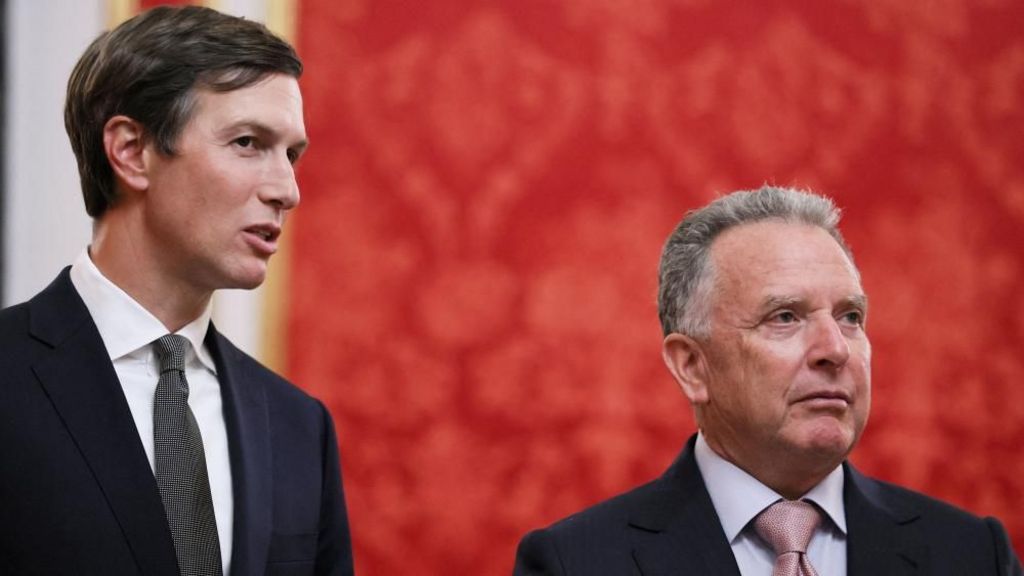
    These cumulative gains have shifted Kyiv’s negotiating position ahead of any potential future peace talks with Russia. For months, Ukraine was forced onto the back foot as the Trump administration’s promised peace efforts stalled. Before his re-election, Trump pledged to end the war in 24 hours; since taking office, his administration’s focus has shifted entirely to the Middle East, and the president’s designated peace envoys – Jared Kushner and Steve Witkoff – have repeatedly postponed planned trips to Kyiv. The pair have made multiple trips to Moscow, however, and Witkoff, who has a long history of private business in Russia, has met Putin on multiple occasions.

    Trump has recently claimed he remains confident a solution for Ukraine can be reached “relatively quickly” following a “very good” conversation with Putin, adding that “some people” have made a deal difficult for the Russian leader – comments widely interpreted as implicit criticism of Zelensky. Ukraine’s president has called the repeated absence of Trump’s envoys from Kyiv “disrespectful,” noting that only low-level technical talks are ongoing, and no real progress can be expected until the Iran conflict is resolved – a timeline that remains entirely unclear.

    Compounding Kyiv’s concerns is the Trump administration’s broader policy shift toward Russia. The recent U.S. National Security Strategy notably declined to label Russia a security threat, a position that stands in direct contrast to the view of Washington’s NATO allies, and drew public praise from the Kremlin. The document frames ending the war not as a push for a durable, fair peace for Ukraine, but as a step toward achieving “strategic stability” and a potential future partnership with Moscow that would free up U.S. resources for other priorities. Under Trump, harsh new sanctions that could force Russia to the negotiating table on acceptable terms have failed to materialize, and U.S. military and economic assistance for Ukraine has all but dried up.

    With the world distracted by events in Iran, Russia has only stepped up its attacks on Ukrainian civilians and civilian infrastructure. European intelligence officials broadly believe the intensified assaults reflect Moscow’s ongoing determination to continue the war, not a last-minute push before negotiations. While Russia’s economy is stagnant under sanctions, it has fully transitioned to a war footing and is not collapsing. Many European leaders and analysts warn that if Russia secures a favorable peace in Ukraine, it will quickly turn to destabilizing other parts of Europe, potentially even targeting a NATO member.

    Many international analysts argue that Putin’s imperial ambitions, not just economic considerations, are driving the conflict. “If Russia had a rational government, it would end the war,” explained Luke Cooper, Associate Professorial Research Fellow in International Relations at the London School of Economics and Director of the Ukraine programme at pro-peace consortium PeaceRep. “The economy is stagnant or in recession. Russia is sending enormous numbers of men to die who could be in work, the private commercial civilian economy is suffering by the imposition of the war economy… and what has Russia achieved? A sliver of Ukrainian territory. Surely, a ceasefire would be advantageous, if it included sanctions relief? But Putin isn’t thinking in those terms. This is all about the decisions of one person, with imperial ambitions, running an autocratic system.”

    Privately, many Ukrainian officials say they are skeptical that the Trump administration will ever deliver the hard action or ironclad security guarantees Kyiv needs to ensure any peace deal is permanent and lasting. Analysts note that reaching a consensus on reliable security guarantees that satisfies all parties – Ukraine, Russia, the U.S., and European nations – remains an enormous hurdle.

    European leaders are under growing pressure to take more decisive action, analysts say. Tom Keatinge, Director of the Finance & Security Centre at the Royal United Services Institute, argues that Trump’s well-documented impatience could lead him to pivot away from the Iran conflict at any moment if a solution there proves elusive, making it critical for Europe to act now. Keatinge criticizes European leaders for timidity in confronting Russia, noting that while the EU is one of the world’s largest trading blocs, it has hesitated to use the full weight of the €210 billion in frozen Russian central bank assets held in EU jurisdictions, instead opting for a €90 billion loan underwritten by European taxpayers. Critics argue Europe has prioritized managing the conflict over aggressively pursuing a just peace.

    Despite the many challenges Zelensky and Ukraine face, the recent string of wins has left Kyiv in a far stronger position than it was just months ago. While the Trump administration has reacted coolly to Ukraine’s drone technology deals in the Gulf, declining to take up Zelensky’s offer to share Kyiv’s expertise publicly, Zelensky says he remains undeterred. For him, the visibility of these deals serves a core purpose: keeping Ukraine on the global agenda at a moment when all eyes are on the Middle East, and pushing Washington to turn its attention back to Eastern Europe sooner rather than later.

  • NATO, top Republicans question US troop withdrawal from Germany

    NATO, top Republicans question US troop withdrawal from Germany

    A new wave of transatlantic tension has emerged after U.S. Defense Secretary Pete Hegseth ordered the withdrawal of approximately 5,000 American military personnel from Germany, a move that has drawn pushback from NATO leadership and top congressional Republicans alike. The decision unfolds against a backdrop of growing friction between the second Trump administration and European capitals, rooted in disagreements over the ongoing Middle East conflict, trade policy, and burden-sharing for regional collective defense.

    The Pentagon’s withdrawal order, announced Friday by spokesman Sean Parnell, is projected to wrap up over a six to 12-month timeline. As of the end of 2025, the U.S. maintained 36,436 active-duty troops stationed in Germany — by far the largest American force footprint in any European NATO member, dwarfing the 12,662 troops in Italy and 3,814 in Spain. The withdrawal marks the first major step forward on a threat Trump has wielded against European allies across both of his presidential terms, centered on his demand that European nations take ownership of their own defense rather than relying on U.S. security guarantees.

    In a statement posted to X Saturday, NATO confirmed it was collaborating with U.S. officials to parse the details of the new force posture adjustment. NATO spokeswoman Allison Hart framed the shift as a reminder of the urgency for European allies to ramp up their defense investment and carry a larger share of responsibility for shared transatlantic security. German officials have struck a measured tone in response, with Defense Minister Boris Pistorius noting that a drawdown of U.S. troops from Germany and broader Europe was an anticipated development. Foreign Minister Johann Wadephul added that Berlin has been preparing for the reduction and is holding structured, trust-based discussions on the change across all NATO bodies. He did, however, draw a clear line around large strategic American installations, noting that critical hubs like Ramstein Air Base — which serves as a linchpin for both U.S. and NATO operations across the region — are not on the table for any changes, as they serve an irreplaceable role for both sides.

    The decision has already faced skepticism from senior Republican lawmakers who oversee U.S. military policy. In a joint public statement released Saturday, Senate Armed Services Committee Chair Roger Wicker and House Armed Services Committee Chair Mike Rogers warned that pulling thousands of troops from Germany sends a dangerous, misaligned signal to Russian President Vladimir Putin at a moment of heightened global security tension. The pair acknowledged that Germany has already followed Trump’s calls to increase defense spending, and has granted U.S. aircraft access to German bases and airspace for operations tied to the ongoing Iran conflict. Still, they argued that even with increased European investment, it will take years for allies to convert that spending into the conventional military capability needed to take full ownership of deterrence on the continent.

    The troop drawdown comes on the heels of a public verbal clash between Trump and German Chancellor Friedrich Merz, who earlier this week claimed Iran was “humiliating” Washington at the negotiating table over the conflict in the Middle East. It also coincides with a separate escalation in transatlantic trade tensions: Trump announced this week that tariffs on EU-produced cars and trucks will rise from 15% to 25% starting next week, arguing the bloc has failed to honor the terms of a trade agreement reached between the two sides last summer. Analysts view the dual moves as a clear sign of the Trump administration’s willingness to use economic and military leverage to force European allies to align with its foreign policy priorities, particularly in the Middle East.

    Trump has made no secret of his willingness to extend troop cuts beyond Germany to other European NATO allies that have refused to back U.S. policy in the Iran conflict. Speaking to reporters Thursday, he confirmed he is considering pulling U.S. troops from both Italy and Spain, citing their lack of support for Washington’s efforts in the region. “Italy has not been of any help to us and Spain has been horrible, absolutely horrible,” Trump told reporters. “Yeah, probably, I probably will. Why shouldn’t I?” He added that the drawdown is in part targeted at allies that have refused to contribute to a U.S.-backed peacekeeping force for the Strait of Hormuz, a critical global energy waterway that Tehran has effectively closed in recent months. The continuing rift over the Middle East war has already deepened divides between Washington and many European capitals, and the troop withdrawal is expected to accelerate negotiations over the future of the NATO alliance’s force posture across the continent.

  • Pro-Palestine coalition condemns Starmer for suggesting ban on marches

    Pro-Palestine coalition condemns Starmer for suggesting ban on marches

    A coalition of major British campaign groups coordinating nationwide pro-Palestine demonstrations has pushed back aggressively against growing political and media efforts to discredit their movement and impose a full ban on planned protests, affirming that the fundamental democratic right to protest remains non-negotiable.

    In an official statement released Friday evening, the coalition — which includes the Palestine Solidarity Campaign (PSC), Stop the War Coalition, and Friends of al-Aqsa — confirmed that the annual Nakba Day commemoration march scheduled for central London on May 16 will go ahead as planned, despite mounting pressure from Prime Minister Keir Starmer’s administration to cancel the event.

    The backlash against the protests erupted in the wake of a fatal stabbing attack earlier this month in Golders Green, a majority-Jewish neighbourhood in northwest London. A 45-year-old Somali-born British national, Essa Suleiman, was arrested on suspicion of stabbing two Jewish men, aged 34 and 76, shortly after he was accused of attempting to murder a Muslim acquaintance he had known for 20 years. London’s Metropolitan Police confirmed Friday that Suleiman, who had been released from a psychiatric facility just days before the attacks, has been charged with three counts of attempted murder and one count of illegal public possession of a bladed weapon, with no terrorism charges brought against him.

    Despite the lack of any proven link between the attack and pro-Palestine demonstrations, senior political figures including Prime Minister Starmer have publicly tied the violence to the marches, called for sweeping restrictions on protest activity, and opened the door to a full national ban. In an interview with the BBC’s *Today* programme Saturday, Starmer argued that law enforcement should crack down on rhetoric used during marches, specifically calling out the chant “globalise the intifada”, and suggested a legal case existed to ban the demonstrations entirely. Though no antisemitic attacks in the UK have ever been linked to use of this chant, British police forces launched a policy in December 2023 allowing arrests for anyone chanting the phrase or displaying it on protest placards.

    When asked about a proposed moratorium on all pro-Palestine marches — a suggestion put forward by Jonathan Hall, the UK government’s independent reviewer of terrorism legislation — Starmer said his administration would explore expanding state powers to restrict repeated protests, citing feedback from members of the UK Jewish community about the cumulative impact of regular demonstrations. The prime minister acknowledged that views on the Gaza conflict are widely held and legitimate, but maintained that new restrictions were necessary.

    Starmer’s remarks have drawn fierce condemnation not only from protest organisers, but also from senior community leaders and policy analysts who warn that tying the unrelated Golders Green attack to peaceful pro-Palestine protest is a dangerous distortion of facts. Senior north London rabbi Herschel Gluck, a prominent Jewish community figure, rejected any causal link between the marches and the stabbing, noting that banning protests over antisemitism concerns would be counterproductive given the high participation rate of Jewish activists in the rallies. “There are many Jews who participate in the marches. Pro rata, there are more Jews than any other community. And the idea of banning speech is something that is a very un-Jewish thing to do,” Gluck told Middle East Eye.

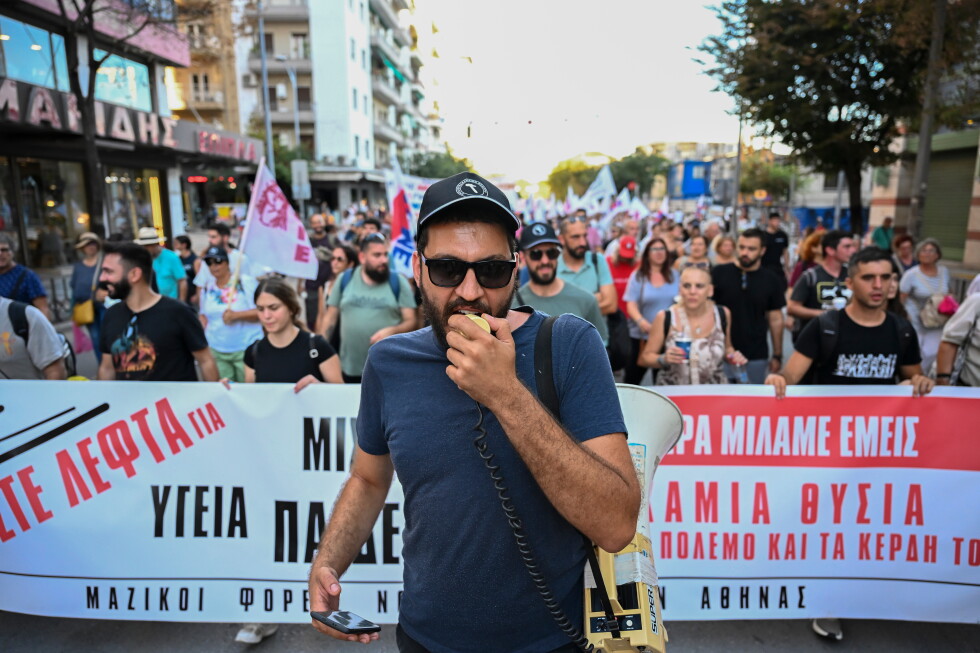
    Lindsey German, convenor of the Stop the War Coalition, framed Starmer’s call for a ban as a direct attack on core British democratic freedoms. “The marches are protests at the role of the Israeli government in its genocidal attacks on Gaza, and at the complicity of Starmer’s own government in supporting Israel,” German said. “This is an attack on our freedom of speech and long held right to assembly and we will not give up that right.”

    Global Justice Now director Nick Dearden accused Starmer of cynical political opportunism tied to upcoming UK local elections, arguing the prime minister is stoking division to avoid electoral losses rather than fostering national unity. “Demanding Israel stops its genocidal rampage on Palestine is clearly not antisemitic, and by trying to draw the comparison, Starmer is belittling antisemitism,” Dearden said. “Starmer’s government is utterly complicit in Israel’s war crimes. He has blood on his hands and now risks further fuelling antisemitism, rather than taking the important steps necessary to undermine it.”

    PSC director Ben Jamal added that using an isolated act of violence to strip citizens of their democratic right to protest weakens, rather than strengthens, global anti-racist efforts. Daniel Levy, a British-Israeli analyst and former advisor to the Israeli government, called the call for a moratorium on protest “appalling”, warning that it risks increasing antisemitism rather than increasing community safety. “You can’t have a false dichotomy between Jewish safety and Palestinian rights,” Levy told Channel 4 News. “First we’ll be told you can’t protest on this and then you won’t be able to protest on anything and then we’re living in a fundamentally different society.”

    In their formal statement, the protest coalition reaffirmed the purpose of the May 16 rally: to mark the annual commemoration of the Nakba, the displacement of hundreds of thousands of Palestinians during the 1948 establishment of the state of Israel, and to oppose the British government’s ongoing diplomatic and military support for what the groups call Israel’s ethnic cleansing, apartheid, and genocidal campaign in Gaza. The rally will also counter a far-right march organised by British agitator Tommy Robinson, scheduled to take place in London the same day.

    Organisers stressed that as with all previous pro-Palestine marches, thousands of Jewish activists will participate, including a dedicated Jewish Bloc, with many Jewish organisers and speakers featured on the event program. The ongoing Israeli military campaign in Gaza, which began after the October 7, 2023 Hamas attacks, has killed at least 72,601 Palestinians and wounded more than 172,400, according to Gaza-based medical officials. Since a recent ceasefire ended, Israeli strikes have killed an additional 824 Palestinians, wounded 2,316, and left 764 people dead under destroyed buildings, local health authorities report.

  • UK PM says some pro-Palestinian marches could be banned

    UK PM says some pro-Palestinian marches could be banned

    Against a backdrop of surging antisemitic incidents across the United Kingdom and growing political pressure to respond, Prime Minister Keir Starmer has publicly backed justified bans on specific pro-Palestinian demonstrations, singling out events that incite violence with chants calling for a global intifada. Starmer, who leads the Labour Party, has found himself in a precarious position after a recent stabbing attack in a major London Jewish neighborhood left two people injured. The incident, which took place in Golders Green – an area well-known for its large, longstanding Jewish community – has amplified calls for the new prime minister to take stronger action to protect Jewish residents.

    On Friday, the 45-year-old suspect, a British national born in Somalia, made his first court appearance on attempted murder charges and was remanded into custody ahead of further proceedings. The attack came amid months of ongoing pro-Palestinian protests across UK cities that began in the wake of Hamas’ October 7, 2023, attack on Israel, which triggered the ongoing Israel-Gaza war. During a visit to the attack scene and a local Jewish volunteer ambulance service on Thursday, Starmer faced public backlash from local residents, who booed him and accused his administration of failing to take adequate steps to keep the community safe. Many of those critics also blamed ongoing pro-Palestinian marches for creating a climate of fear.

    In a broadcast interview with the BBC on Saturday, Starmer, a former human rights lawyer and ex-chief public prosecutor who is married to a woman of Jewish descent, said repeated protests had left a profound negative impact on many British Jewish people. “I’m a big defender of freedom of expression, peaceful protests,” he told the outlet. “But when there are chants like ‘globalise the intifada’, that’s completely off limits. Clearly, there should be tougher action in relation to that.”

    The term intifada refers to two historical Palestinian uprisings against Israeli occupation, the first running from 1987 to 1993 and a second occurring in the early 2000s. Starmer emphasized that the chant is viewed as deeply threatening by the UK Jewish community, and argued for much stricter enforcement of acceptable language at demonstrations. He confirmed that there are scenarios where entire protests should be prohibited, and that senior government officials have been holding ongoing discussions with policing leadership for weeks about what additional regulatory and enforcement action can be implemented.

    This stance aligns with a position police in London and Manchester first took last December, when officers announced they would arrest any person chanting “globalise the intifada” at public demonstrations. In a related development Thursday, UK security officials upgraded the national terror alert level to “severe” – the second-highest tier on the country’s threat scale. Officials cited the Golders Green attack, alongside persistent threats from both Islamist extremism and far-right extremism, as core factors driving the upgrade. UK police have confirmed that they will conduct enhanced, thorough reviews of all notifications for upcoming protests to assess potential risks to public safety.

  • US-Germany spat over Iran intensifies as Hegseth orders troop removal

    US-Germany spat over Iran intensifies as Hegseth orders troop removal

    Diplomatic tensions between the United States and Germany have escalated sharply in recent days, driven by stark public disagreements over Washington’s war on Iran that culminated in the Trump administration’s formal announcement of a 5,000-troop withdrawal from U.S. military bases across Germany.

    The public clash between the two NATO allies began earlier this month when German Chancellor Friedrich Merz launched a series of sharp critiques of U.S. strategy in Iran. Merz argued that the United States has been outmaneuvered by Tehran’s leadership at negotiating tables, going so far as to say that Washington is facing humiliation on the global stage over its handling of the conflict. The chancellor doubled down on his criticism, faulting the U.S. for entering the war without a clear exit strategy – a mistake, he noted, that echoed disastrous past interventions in Afghanistan and Iraq that dragged on for decades.

    “The problem with conflicts like these is always the same: it’s not just about getting in; you also have to get out. We saw that all too painfully in Afghanistan, for 20 years. We saw it in Iraq,” Merz stated publicly last week.

    Merz’s unvarnished criticism drew an immediate furious response from U.S. President Donald Trump, who took to social media to lash out at the German leader earlier this week. “The Chancellor of Germany, Friedrich Merz, thinks it’s OK for Iran to have a Nuclear Weapon. He doesn’t know what he’s talking about!” Trump wrote. Following the verbal rebuke, the president followed through on a previous threat to pull American forces from German territory in retaliation.

    In response to the order issued Friday by U.S. Defense Secretary Pete Hegseth, German Defense Minister Boris Pistorius struck a measured but firm tone Saturday, emphasizing that European nations must now step up to own full responsibility for their own security. Pistorius added that the partial drawdown had long been anticipated by Berlin, noting that Germany already has a roadmap in place to strengthen its own military capabilities.

    For decades, Germany has hosted the largest contingent of U.S. troops deployed in Europe, with current estimates placing the total active-duty force between 35,000 and 40,000. The New York Times, citing unnamed senior U.S. defense officials, underscored the outsize strategic importance of these German bases to U.S. military operations spanning three continents. Key installations including the massive Ramstein Air Base and the Landstuhl Regional Medical Center have played a central logistical and support role for the current war on Iran, as well as previous conflicts in Iraq and Afghanistan. This means the drawdown could impact Washington’s ability to project power across the Middle East in the coming months.

    Pistorius pushed back against any suggestion that the withdrawal leaves Germany vulnerable, arguing that Berlin is already on the right path to bolster its own defense. Germany currently has plans to expand its active-duty army from 185,000 to 260,000 personnel, accelerate military procurement processes, and upgrade critical defense infrastructure – though even these targets have drawn criticism from observers who say more drastic action is needed to counter perceived growing security threats from Russia.

    The troop withdrawal announcement aligns with Trump’s longstanding position that U.S. allies have taken advantage of American security guarantees for decades. Long before entering politics, as a real estate developer in 1987, Trump spent nearly $100,000 on full-page newspaper advertisements critiquing U.S. foreign policy. At the time, he argued that wealthy U.S. allies such as Japan were failing to compensate the U.S. for the billions of dollars and American lives spent protecting their strategic interests in the Persian Gulf, a region he framed as only marginally important to U.S. oil supplies at the time.

    While all NATO member states have formally pledged to take on greater responsibility for their own territorial defense in recent years, persistent budget constraints and widespread gaps in military capability mean that European allies will likely require years of investment before they can fully meet their own security needs without heavy U.S. support.

  • Taiwan president visits Eswatini days after blaming China for cancelled trip

    Taiwan president visits Eswatini days after blaming China for cancelled trip

    After days of unpublicized behind-the-scenes planning that overcame repeated diplomatic hurdles, Taiwan’s leader Lai Ching-te has successfully landed in Eswatini, the self-governing island’s sole formal diplomatic ally on the African continent. The last-minute trip comes one week after the Taiwanese government confirmed the original scheduled journey was scrapped, when multiple Indian Ocean island nations — Seychelles, Mauritius, and Madagascar — withdrew overflight clearance for Lai’s official aircraft under explicit pressure from Beijing.

    Lai offered few details on the adjusted travel route that allowed his delegation to reach Eswatini, only noting that the arrival followed “days of careful arrangements by the diplomatic and national security teams”. Photographic records from the visit show Lai exchanging official greetings with Eswatini Prime Minister Russell Dlamini, inspecting a formal guard of honor, and high-fiving local Taiwanese compatriots during a welcoming ceremony. Joining Lai on the delegation are Taiwanese Foreign Minister Lin Chia-lung and National Security Council Adviser Alex Huang, per statements from the Taiwanese presidential office.

    Neither Taipei nor Mbabane pre-announced the surprise visit to avoid further disruptions from external pressure. The trip was initially planned for April 22–26 to mark the 40th anniversary of King Mswati III’s ascension to the Eswatini throne. Writing on his social media channels after landing, Lai reaffirmed the Taiwanese government’s commitment to global engagement, saying “Taiwan will never be deterred by external pressures. Our resolve and commitment are underpinned by the understanding that Taiwan will continue to engage with the world — no matter the challenges faced.”

    He also praised Eswatini for standing firm against Beijing’s diplomatic and economic coercion to cut ties with Taipei, noting the African nation has “spoken out for Taiwan’s international place through concrete actions.” Lai added that he hopes the visit will deepen bilateral cooperation across economic, agricultural, cultural, and educational sectors, while expanding Taiwan’s overall global partnerships. Per the presidential office’s released itinerary, Lai will hold bilateral talks with King Mswati III during his stay and oversee the signing of a joint customs cooperation agreement.

    Eswatini, formerly known as Swaziland, is one of only 12 small UN member states that maintain full formal diplomatic relations with Taiwan, a status that the Taipei government prioritizes heavily amid Beijing’s long-running campaign to isolate the island diplomatically. For decades, China has pressured governments across the globe to sever official ties with Taipei, as Beijing adheres to the One China principle that holds Taiwan is an inalienable part of Chinese territory, with no legal right to conduct state-to-state diplomatic relations.

    Beijing has issued harsh condemnation of Lai’s visit, with Chinese foreign ministry officials labeling the trip a “stowaway-style escape farce” and dismissing Lai as “an international laughing stock.” In an official statement, the ministry said, “No matter how the Democratic Progressive Party authorities collude with external forces or in what form they ‘buy the loyalty of others’, it is all a futile effort that cannot change the fact that Taiwan is part of China.” Beijing also called on Eswatini to “see clearly the general trend of history” and avoid “pulling chestnuts out of the fire for a handful of ‘Taiwan independence’ separatists.”

    In a move widely interpreted as retaliation just days before Lai’s arrival, China announced Friday it would eliminate all import tariffs for products from all African countries — explicitly excluding Eswatini from the preferential trade policy.

  • Germany focuses on shared interests after US announces troop drawdown

    Germany focuses on shared interests after US announces troop drawdown

    BERLIN – The Pentagon’s recent announcement that it will withdraw roughly 5,000 U.S. troops from Germany over the next 6 to 12 months has been met with measured calm from German defense leadership, even as the move signals a fresh erosion of trust between Washington and its key European allies amid a series of escalating tensions under the second Trump administration.

    German Defense Minister Boris Pistorius framed the drawdown as a long-expected development, echoing years of warnings from the White House that it would reduce U.S. military commitments in Europe. In comments Saturday to Germany’s national news agency dpa, Pistorius emphasized that the decades-long U.S. military presence on German soil has long served mutual strategic interests for both nations. “The presence of American soldiers in Europe, and especially in Germany, is in our interest and in the interest of the U.S.,” Pistorius said. He added that European NATO members have already acknowledged and acted on the need to take greater ownership of regional collective defense, with Germany ramping up military spending, accelerating weapons procurement, and expanding defense infrastructure in recent years to meet shifting security demands.

    The 5,000-troop pullout accounts for approximately 14% — or one-seventh — of the 36,000 U.S. service members currently stationed in Germany. While the drawdown is sizable enough to shift the trans-Atlantic security dynamic, it is not viewed as a critical cut to U.S. force posture. Pentagon officials have so far released no detailed information about which units, facilities, or operations will be affected by the withdrawal. Across the entire European theater, the U.S. normally maintains between 80,000 and 100,000 military personnel, a number that rose after Russia launched its full-scale invasion of Ukraine in February 2022. European allies have anticipated a post-escalation drawdown of this temporary reinforcement for more than a year.

    Pentagon spokesperson Sean Parnell said in an official statement that the decision came after a comprehensive review of U.S. force positioning across Europe, and was made to align with current theater requirements and on-the-ground security conditions. Germany hosts some of the most critical U.S. military infrastructure outside of North America, including the joint headquarters for U.S. European Command and U.S. Africa Command, Ramstein Air Base — a key logistics and command hub for operations across the Middle East and Africa — the Landstuhl Regional Medical Center that treated thousands of casualties from the Afghanistan and Iraq wars, and deployed U.S. nuclear weapons.

    NATO spokesperson Allison Hart noted Saturday in a post on X that the alliance is collaborating with U.S. officials to work through the details of the force posture adjustment. “This adjustment underscores the need for Europe to continue to invest more in defense and take on a greater share of the responsibility for our shared security,” Hart said, adding that allies have made steady progress toward the alliance’s new target of each member devoting 5% of gross domestic product to defense spending.

    Despite the measured official response from Berlin and NATO, the withdrawal marks a clear new low in U.S.-German relations and ties between Washington and European allies more broadly. For years, Trump has publicly floated the idea of cutting U.S. troop numbers in Germany, and has repeatedly attacked NATO for refusing to back U.S. policy in the conflict with Iran that began with U.S.-Israeli strikes on the country in late February. The president has also openly expressed frustration that NATO allies have declined to join his anti-Iran campaign, and has launched verbal attacks on multiple top European leaders, including German Chancellor Friedrich Merz, Spanish Prime Minister Pedro Sánchez, and British Prime Minister Keir Starmer.

    Just last week, Merz publicly criticized U.S. strategy in Iran, saying Washington is being “humiliated” by the Iranian leadership and has no clear policy for the region. The trans-Atlantic rift has spilled over into trade as well: Trump recently accused the European Union of failing to comply with its existing trade agreement with the U.S., and announced plans next week to raise tariffs on all EU-produced cars and trucks to 25%. The new tariffs would hit Germany particularly hard, as the country’s economy relies heavily on automotive exports to the U.S. At least one senior EU lawmaker has already labeled the planned tariff hike “unacceptable,” accusing Trump of breaking yet another major U.S. trade commitment.

    NATO allies have been preparing for a U.S. troop drawdown in Europe since Trump began his second term, after repeated warnings from Washington that Europe will need to take full responsibility for its own security in the coming years — including security support for Ukraine. The reporting for this article was contributed by Sarah Burrows from London, with additional reporting from Jamey Keaten in Lyon, France.

  • Rights summit in Zambia is canceled after Chinese pressure to exclude Taiwanese activists

    Rights summit in Zambia is canceled after Chinese pressure to exclude Taiwanese activists

    Just days before RightsCon 2026, a major annual international human rights and digital freedom summit, was set to open its doors in Lusaka, Zambia, U.S.-based organizers announced the full cancellation of the event, citing foreign interference and pressure from Beijing that forced Zambian officials to bar Taiwanese civil society delegates from participating.

    Access Now, the New York-headquartered digital rights advocacy group that hosts the yearly summit, confirmed the cancellation late Friday, reversing months of planning that was expected to draw more than 3,700 in-person and online attendees from over 150 countries around the globe. The organization said the cancellation followed a last-minute announcement from the Zambian government that the summit would be postponed, with informal communications later revealing the condition for lifting the postponement: Access Now would have to censor specific discussion topics and bar at-risk communities, including Taiwanese participants, from joining both in-person and virtually.

    “We believe foreign interference is the reason RightsCon 2026 won’t proceed in Zambia,” Access Now said in its official statement. The group added that it repeatedly rejected any demands to exclude delegates based on political pressure, making the summit unable to move forward.

    Initially, the Zambian government framed its move as a routine check to ensure the summit’s themes aligned with the country’s “national values, policy priorities and broader public interest considerations.” But the context of Zambia’s deep political and economic ties to China, rooted in large-scale Chinese investment in the country’s lucrative mining sector, makes the reported pressure consistent with Beijing’s long-standing diplomatic position on Taiwan.

    China adheres to the one-China principle, which claims the self-governing island of Taiwan as an inalienable part of its territory, and requires all countries that maintain formal diplomatic relations with Beijing to cut off official and formal engagements with Taipei. China has built extensive economic and diplomatic influence across the African continent over the past two decades, giving it significant leverage over policy decisions in many African nations.

    The cancellation of RightsCon marks the second high-profile incident involving Chinese diplomatic pressure on Taiwan in southern Africa in less than two weeks. Just one week prior, Taiwanese President Lai Ching-te’s planned official visit to Eswatini — the only African country that maintains formal diplomatic relations with Taipei — was derailed after China pressured Madagascar, Mauritius and Seychelles to withdraw overflight clearance for Lai’s aircraft. After that initial setback, Lai announced a surprise, unannounced arrival in Eswatini on Saturday, posting on social media platform X that “Taiwan will never be deterred by external pressures.”

    Taiwan’s Digital Minister Lin Yi-jing linked the two incidents, saying in a Facebook statement Saturday that the cancellation of RightsCon, which was hosted last year in Taipei, exposes Beijing’s discomfort with the values of freedom, democracy and rule of law that both Taiwan and the summit represent. RightsCon has built a reputation over its years of operation as a leading global forum to discuss pressing digital rights issues including internet censorship, electronic mass surveillance, the global rise of cyberwarfare, and digital exclusion of marginalized communities.

    Human Rights Watch, the leading global non-profit human rights organization, has called on Zambian authorities to issue a full public explanation for their decision to postpone and ultimately scuttle the summit. As of Sunday, the Zambian government has not issued any further comment responding to the allegations of pressure from China.

  • Donroe Doctrine is becoming everything China feared

    Donroe Doctrine is becoming everything China feared

    On April 28, the U.S. State Department released a joint statement purporting to stand “in solidarity with Panama” after an alleged increase in detentions of Panama-flagged ships at Chinese ports. The statement frames these detentions as a “blatant attempt to politicize maritime trade” — a framing that collapses under scrutiny when examined against the backdrop of recent U.S. and Panamanian actions targeting Chinese-controlled logistics infrastructure across the region. This diplomatic move is just the latest step in a broader, coordinated U.S. geostrategic push that includes blockades of the Strait of Hormuz, new defense partnerships with Indonesia, and aggressive rhetoric targeting China-backed infrastructure projects like Peru’s Port of Chancay.

    Five Latin American and Caribbean nations joined the U.S. as co-signatories: Costa Rica, Bolivia, Paraguay, Guyana, and Trinidad and Tobago. A closer look at this group reveals a deliberate alignment with longstanding U.S. economic and security priorities in the Western Hemisphere, rather than a random collection of like-minded states.

    The irony of the U.S.’s sudden stance on Panama is difficult to overstate. Just a few months prior, Washington executed a coordinated two-pronged campaign to oust Chinese operators from key Panamanian ports: diplomatic coercion through high-stakes bilateral security dialogues, and a politicized legal campaign targeting Chinese concession agreements near the Panama Canal. This effort culminated in a widely expected Panamanian Supreme Court ruling that forced Hong Kong-based port operator CK Hutchinson to exit its operations at the Balboa and Cristobal terminals. The contract was subsequently awarded to a subsidiary of Danish logistics giant Maersk. This history of interference undermines the State Department’s claims of defending neutral maritime trade: even as far back as the Trump administration, U.S. negotiators openly threatened to retake the Panama Canal by force if Washington’s demands were not met, turning hollow the rhetoric about defending Panamanian sovereignty and opposing politicization of trade.

    Breaking down the co-signatories further exposes the strategic logic behind the joint statement. Guyana, one of the world’s fastest-growing producers of high-quality sweet light crude, has attracted major new downstream investment as a result of U.S. blockades of Persian Gulf oil exports. Trinidad and Tobago is a leading regional producer of critical petrochemicals including urea and ammonia. Costa Rica has long been a dependable U.S. ally and hosts the Caribbean’s most technologically advanced commercial port. Paraguay, meanwhile, remains the only South American nation that recognizes Taiwan, a longtime point of alignment with U.S. foreign policy goals.

    The most surprising co-signatory is Bolivia, a landlocked Andean nation that would seem to have no direct stake in Caribbean maritime security. This move makes strategic sense, however, when viewed through the lens of global green energy competition: Bolivia holds the world’s largest proven lithium reserves, a critical mineral for manufacturing electric vehicle batteries and large-scale grid energy storage. Extraction of Bolivian lithium, however, faces major barriers: the country’s brine deposits have an unusually high magnesium-to-lithium ratio, requiring costly, largely unproven extraction technology. There is also the massive logistical challenge of moving extracted lithium hundreds of kilometers over rugged terrain to Pacific ports in neighboring Chile, before shipments travel north through the Panama Canal to reach major consumer markets. These constraints push up the cost of every ton of exported Bolivian lithium dramatically.

    Bolivia’s new President Rodrigo Paz has signaled a clear shift away from the previous socialist government’s partnerships with China and Russia. His recent decision to replace the leadership of state-owned lithium producer Yacimientos de Litio Bolivianos indicates a willingness to scrap existing deals in favor of new agreements with Western capital, provided Western markets offer guaranteed access for Bolivian lithium exports. For Paz’s administration, signing onto the U.S.-led statement framing Panama as a “pillar of our maritime trading system” is a low-cost, transactional diplomatic gesture to curry favor with Washington.

    As a landlocked nation, Bolivia’s ability to become a major lithium export powerhouse depends entirely on access to ports through Chile, its longstanding historical rival that borders the Pacific. Chile already has a thriving, profitable lithium sector of its own, and was the source of Bolivia’s loss of coastline in the 19th century War of the Pacific. By aligning with the U.S. against China’s trade and infrastructure presence in the region, Bolivia is signaling to Chile, Panama, and other Latin American states that it will abide by Washington’s rules of the game in exchange for access to their critical maritime logistics networks.

    This coordinated U.S. diplomatic push in Panama and Bolivia cannot be separated from broader global geostrategic shifts. In the Persian Gulf, the U.S. military has enforced a blockade that blocks most crude oil exports from reaching key Asian markets. At the same time, the State Department has worked aggressively across the Caribbean and Latin America to oust Chinese-owned logistics assets through a mix of diplomatic pressure and politicized legal campaigns. This pattern of activity makes clear that the modern iteration of U.S. dominance in the Western Hemisphere, sometimes called the “Donroe Doctrine” (a updated take on the 19th century Monroe Doctrine), does not aim to benevolently integrate the U.S. and Latin American economies. Instead, its core goal is to redirect global commodity supply chains away from West Asia and back into the Western Hemisphere by establishing U.S.-controlled maritime trade routes.

    While it remains too early to tell whether Washington’s gambit will succeed, the pattern is deliberate: the State Department has actively built a new U.S.-aligned maritime consensus with Latin American countries that produce critical energy, agricultural, logistics, and green mineral inputs, many of which have already rejected recent Chinese investment offers. Any framing of the U.S. as a neutral guardian of free global maritime trade ignores clear, on-the-ground reality: the U.S. military is seizing commercial ships in West Asia to enforce its blockade, while the State Department simultaneously demands that China adhere to Washington’s rules for trade in Central and South America. When the Trump administration abandoned the longstanding Carter Doctrine commitment to secure free trade through the Persian Gulf, the myth of a neutral, free global maritime commons died.

    In the long term, this power play is likely to work to the advantage of China and other coastal emerging economies seeking a more multipolar global order. But in the short term, it has created unprecedented instability in the global maritime trading system — instability that the U.S. State Department is actively exploiting to advance American energy, agricultural, and mining interests across the Western Hemisphere.

  • Taiwan’s president lands in Eswatini in a trip delayed by lack of overflight clearance

    Taiwan’s president lands in Eswatini in a trip delayed by lack of overflight clearance

    After a weeks-long delay driven by cross-border pressure from Beijing, Taiwanese President Lai Ching-te announced his arrival in Eswatini on Saturday, marking the completion of a trip that became a high-stakes symbol of Taipei’s efforts to maintain international diplomatic space.

    Lai’s journey to Eswatini — Taiwan’s last remaining formal diplomatic ally on the African continent — was originally scheduled to begin on April 22, but the trip was put on hold after three regional nations, Seychelles, Mauritius and Madagascar, withdrew prior approval for Lai’s aircraft to cross their airspace. Taiwanese officials attributed the permit revocations directly to heavy political and economic coercion from Chinese authorities, who have long demanded that no country grant official access to Taiwanese leaders.

    In a public post on the social platform X following his arrival, Lai emphasized the purpose of his visit: to reaffirm the deep, decades-long diplomatic friendship between Taipei and Mbabane. “Taipei is a self-governing democracy that Beijing claims as its own territory, but we will never be deterred by external pressure,” Lai wrote. In an additional Facebook post, he credited his diplomatic and national security teams with the careful behind-the-scenes planning that made the visit possible, noting that the trip would deepen bilateral cooperation across key sectors including economic development, agriculture, cultural exchange and education. “Our resolve and commitment are rooted in one core truth: Taiwan will continue engaging with the global community, no matter what obstacles we face,” he added. Notably, Taiwanese authorities chose not to pre-announce the final itinerary of Lai’s trip for security reasons, keeping the revised travel plans confidential until he landed in Eswatini.

    Beijing responded quickly and sharply to the news of Lai’s arrival. A spokesperson for China’s Ministry of Foreign Affairs dismissed the visit as a “laughable stunt” staged for the global public, dismissing Lai’s journey as an act of “smuggling” out of Taiwan. The spokesperson reiterated Beijing’s longstanding position that Taiwan is an inalienable part of Chinese territory, stating that Lai’s “undignified” visit is a losing cause that can never alter that core fact. “We urge Eswatini and other individual countries to recognize the natural arc of history, and stop acting as props for ‘Taiwan independence’ separatist forces,” the statement read.

    For decades, China has leveraged economic and political influence to shrink Taipei’s network of formal diplomatic allies, and has not ruled out the use of military force to bring Taiwan under Beijing’s control. Currently, only 11 United Nations-recognized states maintain full official diplomatic ties with Taipei, down from 29 in 2000. Eswatini, a small landlocked southern African nation with a population of roughly 1.2 million, has held out as Taipei’s only ally on the African continent since 2018, when Burkina Faso switched diplomatic recognition to Beijing. In recent years, Eswatini has also faced economic consequences for its alliance with Taiwan: it is the only African country excluded from China’s duty-free market access program for developing nations.

    The visit comes amid a sharp recent escalation of cross-strait and Sino-U.S. tensions. Just one day before Lai’s arrival, Beijing warned Washington that the Taiwan issue remains the single biggest potential flashpoint for conflict between the two global powers, with Chinese Foreign Minister Wang Yi telling newly confirmed U.S. Secretary of State Marco Rubio in a phone call that Taiwan is the “biggest risk” to bilateral relations. Taiwan’s government issued a formal statement of concern in response to Wang’s remarks.

    The last visit by a sitting Taiwanese president to Eswatini took place in 2023, when Lai’s predecessor Tsai Ing-wen traveled to the country for diplomatic talks.