分类: politics

  • Germany focuses on shared interests after US announces troop drawdown

    Germany focuses on shared interests after US announces troop drawdown

    BERLIN – The Pentagon’s recent announcement that it will withdraw roughly 5,000 U.S. troops from Germany over the next 6 to 12 months has been met with measured calm from German defense leadership, even as the move signals a fresh erosion of trust between Washington and its key European allies amid a series of escalating tensions under the second Trump administration.

    German Defense Minister Boris Pistorius framed the drawdown as a long-expected development, echoing years of warnings from the White House that it would reduce U.S. military commitments in Europe. In comments Saturday to Germany’s national news agency dpa, Pistorius emphasized that the decades-long U.S. military presence on German soil has long served mutual strategic interests for both nations. “The presence of American soldiers in Europe, and especially in Germany, is in our interest and in the interest of the U.S.,” Pistorius said. He added that European NATO members have already acknowledged and acted on the need to take greater ownership of regional collective defense, with Germany ramping up military spending, accelerating weapons procurement, and expanding defense infrastructure in recent years to meet shifting security demands.

    The 5,000-troop pullout accounts for approximately 14% — or one-seventh — of the 36,000 U.S. service members currently stationed in Germany. While the drawdown is sizable enough to shift the trans-Atlantic security dynamic, it is not viewed as a critical cut to U.S. force posture. Pentagon officials have so far released no detailed information about which units, facilities, or operations will be affected by the withdrawal. Across the entire European theater, the U.S. normally maintains between 80,000 and 100,000 military personnel, a number that rose after Russia launched its full-scale invasion of Ukraine in February 2022. European allies have anticipated a post-escalation drawdown of this temporary reinforcement for more than a year.

    Pentagon spokesperson Sean Parnell said in an official statement that the decision came after a comprehensive review of U.S. force positioning across Europe, and was made to align with current theater requirements and on-the-ground security conditions. Germany hosts some of the most critical U.S. military infrastructure outside of North America, including the joint headquarters for U.S. European Command and U.S. Africa Command, Ramstein Air Base — a key logistics and command hub for operations across the Middle East and Africa — the Landstuhl Regional Medical Center that treated thousands of casualties from the Afghanistan and Iraq wars, and deployed U.S. nuclear weapons.

    NATO spokesperson Allison Hart noted Saturday in a post on X that the alliance is collaborating with U.S. officials to work through the details of the force posture adjustment. “This adjustment underscores the need for Europe to continue to invest more in defense and take on a greater share of the responsibility for our shared security,” Hart said, adding that allies have made steady progress toward the alliance’s new target of each member devoting 5% of gross domestic product to defense spending.

    Despite the measured official response from Berlin and NATO, the withdrawal marks a clear new low in U.S.-German relations and ties between Washington and European allies more broadly. For years, Trump has publicly floated the idea of cutting U.S. troop numbers in Germany, and has repeatedly attacked NATO for refusing to back U.S. policy in the conflict with Iran that began with U.S.-Israeli strikes on the country in late February. The president has also openly expressed frustration that NATO allies have declined to join his anti-Iran campaign, and has launched verbal attacks on multiple top European leaders, including German Chancellor Friedrich Merz, Spanish Prime Minister Pedro Sánchez, and British Prime Minister Keir Starmer.

    Just last week, Merz publicly criticized U.S. strategy in Iran, saying Washington is being “humiliated” by the Iranian leadership and has no clear policy for the region. The trans-Atlantic rift has spilled over into trade as well: Trump recently accused the European Union of failing to comply with its existing trade agreement with the U.S., and announced plans next week to raise tariffs on all EU-produced cars and trucks to 25%. The new tariffs would hit Germany particularly hard, as the country’s economy relies heavily on automotive exports to the U.S. At least one senior EU lawmaker has already labeled the planned tariff hike “unacceptable,” accusing Trump of breaking yet another major U.S. trade commitment.

    NATO allies have been preparing for a U.S. troop drawdown in Europe since Trump began his second term, after repeated warnings from Washington that Europe will need to take full responsibility for its own security in the coming years — including security support for Ukraine. The reporting for this article was contributed by Sarah Burrows from London, with additional reporting from Jamey Keaten in Lyon, France.

  • Rights summit in Zambia is canceled after Chinese pressure to exclude Taiwanese activists

    Rights summit in Zambia is canceled after Chinese pressure to exclude Taiwanese activists

    Just days before RightsCon 2026, a major annual international human rights and digital freedom summit, was set to open its doors in Lusaka, Zambia, U.S.-based organizers announced the full cancellation of the event, citing foreign interference and pressure from Beijing that forced Zambian officials to bar Taiwanese civil society delegates from participating.

    Access Now, the New York-headquartered digital rights advocacy group that hosts the yearly summit, confirmed the cancellation late Friday, reversing months of planning that was expected to draw more than 3,700 in-person and online attendees from over 150 countries around the globe. The organization said the cancellation followed a last-minute announcement from the Zambian government that the summit would be postponed, with informal communications later revealing the condition for lifting the postponement: Access Now would have to censor specific discussion topics and bar at-risk communities, including Taiwanese participants, from joining both in-person and virtually.

    “We believe foreign interference is the reason RightsCon 2026 won’t proceed in Zambia,” Access Now said in its official statement. The group added that it repeatedly rejected any demands to exclude delegates based on political pressure, making the summit unable to move forward.

    Initially, the Zambian government framed its move as a routine check to ensure the summit’s themes aligned with the country’s “national values, policy priorities and broader public interest considerations.” But the context of Zambia’s deep political and economic ties to China, rooted in large-scale Chinese investment in the country’s lucrative mining sector, makes the reported pressure consistent with Beijing’s long-standing diplomatic position on Taiwan.

    China adheres to the one-China principle, which claims the self-governing island of Taiwan as an inalienable part of its territory, and requires all countries that maintain formal diplomatic relations with Beijing to cut off official and formal engagements with Taipei. China has built extensive economic and diplomatic influence across the African continent over the past two decades, giving it significant leverage over policy decisions in many African nations.

    The cancellation of RightsCon marks the second high-profile incident involving Chinese diplomatic pressure on Taiwan in southern Africa in less than two weeks. Just one week prior, Taiwanese President Lai Ching-te’s planned official visit to Eswatini — the only African country that maintains formal diplomatic relations with Taipei — was derailed after China pressured Madagascar, Mauritius and Seychelles to withdraw overflight clearance for Lai’s aircraft. After that initial setback, Lai announced a surprise, unannounced arrival in Eswatini on Saturday, posting on social media platform X that “Taiwan will never be deterred by external pressures.”

    Taiwan’s Digital Minister Lin Yi-jing linked the two incidents, saying in a Facebook statement Saturday that the cancellation of RightsCon, which was hosted last year in Taipei, exposes Beijing’s discomfort with the values of freedom, democracy and rule of law that both Taiwan and the summit represent. RightsCon has built a reputation over its years of operation as a leading global forum to discuss pressing digital rights issues including internet censorship, electronic mass surveillance, the global rise of cyberwarfare, and digital exclusion of marginalized communities.

    Human Rights Watch, the leading global non-profit human rights organization, has called on Zambian authorities to issue a full public explanation for their decision to postpone and ultimately scuttle the summit. As of Sunday, the Zambian government has not issued any further comment responding to the allegations of pressure from China.

  • Donroe Doctrine is becoming everything China feared

    Donroe Doctrine is becoming everything China feared

    On April 28, the U.S. State Department released a joint statement purporting to stand “in solidarity with Panama” after an alleged increase in detentions of Panama-flagged ships at Chinese ports. The statement frames these detentions as a “blatant attempt to politicize maritime trade” — a framing that collapses under scrutiny when examined against the backdrop of recent U.S. and Panamanian actions targeting Chinese-controlled logistics infrastructure across the region. This diplomatic move is just the latest step in a broader, coordinated U.S. geostrategic push that includes blockades of the Strait of Hormuz, new defense partnerships with Indonesia, and aggressive rhetoric targeting China-backed infrastructure projects like Peru’s Port of Chancay.

    Five Latin American and Caribbean nations joined the U.S. as co-signatories: Costa Rica, Bolivia, Paraguay, Guyana, and Trinidad and Tobago. A closer look at this group reveals a deliberate alignment with longstanding U.S. economic and security priorities in the Western Hemisphere, rather than a random collection of like-minded states.

    The irony of the U.S.’s sudden stance on Panama is difficult to overstate. Just a few months prior, Washington executed a coordinated two-pronged campaign to oust Chinese operators from key Panamanian ports: diplomatic coercion through high-stakes bilateral security dialogues, and a politicized legal campaign targeting Chinese concession agreements near the Panama Canal. This effort culminated in a widely expected Panamanian Supreme Court ruling that forced Hong Kong-based port operator CK Hutchinson to exit its operations at the Balboa and Cristobal terminals. The contract was subsequently awarded to a subsidiary of Danish logistics giant Maersk. This history of interference undermines the State Department’s claims of defending neutral maritime trade: even as far back as the Trump administration, U.S. negotiators openly threatened to retake the Panama Canal by force if Washington’s demands were not met, turning hollow the rhetoric about defending Panamanian sovereignty and opposing politicization of trade.

    Breaking down the co-signatories further exposes the strategic logic behind the joint statement. Guyana, one of the world’s fastest-growing producers of high-quality sweet light crude, has attracted major new downstream investment as a result of U.S. blockades of Persian Gulf oil exports. Trinidad and Tobago is a leading regional producer of critical petrochemicals including urea and ammonia. Costa Rica has long been a dependable U.S. ally and hosts the Caribbean’s most technologically advanced commercial port. Paraguay, meanwhile, remains the only South American nation that recognizes Taiwan, a longtime point of alignment with U.S. foreign policy goals.

    The most surprising co-signatory is Bolivia, a landlocked Andean nation that would seem to have no direct stake in Caribbean maritime security. This move makes strategic sense, however, when viewed through the lens of global green energy competition: Bolivia holds the world’s largest proven lithium reserves, a critical mineral for manufacturing electric vehicle batteries and large-scale grid energy storage. Extraction of Bolivian lithium, however, faces major barriers: the country’s brine deposits have an unusually high magnesium-to-lithium ratio, requiring costly, largely unproven extraction technology. There is also the massive logistical challenge of moving extracted lithium hundreds of kilometers over rugged terrain to Pacific ports in neighboring Chile, before shipments travel north through the Panama Canal to reach major consumer markets. These constraints push up the cost of every ton of exported Bolivian lithium dramatically.

    Bolivia’s new President Rodrigo Paz has signaled a clear shift away from the previous socialist government’s partnerships with China and Russia. His recent decision to replace the leadership of state-owned lithium producer Yacimientos de Litio Bolivianos indicates a willingness to scrap existing deals in favor of new agreements with Western capital, provided Western markets offer guaranteed access for Bolivian lithium exports. For Paz’s administration, signing onto the U.S.-led statement framing Panama as a “pillar of our maritime trading system” is a low-cost, transactional diplomatic gesture to curry favor with Washington.

    As a landlocked nation, Bolivia’s ability to become a major lithium export powerhouse depends entirely on access to ports through Chile, its longstanding historical rival that borders the Pacific. Chile already has a thriving, profitable lithium sector of its own, and was the source of Bolivia’s loss of coastline in the 19th century War of the Pacific. By aligning with the U.S. against China’s trade and infrastructure presence in the region, Bolivia is signaling to Chile, Panama, and other Latin American states that it will abide by Washington’s rules of the game in exchange for access to their critical maritime logistics networks.

    This coordinated U.S. diplomatic push in Panama and Bolivia cannot be separated from broader global geostrategic shifts. In the Persian Gulf, the U.S. military has enforced a blockade that blocks most crude oil exports from reaching key Asian markets. At the same time, the State Department has worked aggressively across the Caribbean and Latin America to oust Chinese-owned logistics assets through a mix of diplomatic pressure and politicized legal campaigns. This pattern of activity makes clear that the modern iteration of U.S. dominance in the Western Hemisphere, sometimes called the “Donroe Doctrine” (a updated take on the 19th century Monroe Doctrine), does not aim to benevolently integrate the U.S. and Latin American economies. Instead, its core goal is to redirect global commodity supply chains away from West Asia and back into the Western Hemisphere by establishing U.S.-controlled maritime trade routes.

    While it remains too early to tell whether Washington’s gambit will succeed, the pattern is deliberate: the State Department has actively built a new U.S.-aligned maritime consensus with Latin American countries that produce critical energy, agricultural, logistics, and green mineral inputs, many of which have already rejected recent Chinese investment offers. Any framing of the U.S. as a neutral guardian of free global maritime trade ignores clear, on-the-ground reality: the U.S. military is seizing commercial ships in West Asia to enforce its blockade, while the State Department simultaneously demands that China adhere to Washington’s rules for trade in Central and South America. When the Trump administration abandoned the longstanding Carter Doctrine commitment to secure free trade through the Persian Gulf, the myth of a neutral, free global maritime commons died.

    In the long term, this power play is likely to work to the advantage of China and other coastal emerging economies seeking a more multipolar global order. But in the short term, it has created unprecedented instability in the global maritime trading system — instability that the U.S. State Department is actively exploiting to advance American energy, agricultural, and mining interests across the Western Hemisphere.

  • Taiwan’s president lands in Eswatini in a trip delayed by lack of overflight clearance

    Taiwan’s president lands in Eswatini in a trip delayed by lack of overflight clearance

    After a weeks-long delay driven by cross-border pressure from Beijing, Taiwanese President Lai Ching-te announced his arrival in Eswatini on Saturday, marking the completion of a trip that became a high-stakes symbol of Taipei’s efforts to maintain international diplomatic space.

    Lai’s journey to Eswatini — Taiwan’s last remaining formal diplomatic ally on the African continent — was originally scheduled to begin on April 22, but the trip was put on hold after three regional nations, Seychelles, Mauritius and Madagascar, withdrew prior approval for Lai’s aircraft to cross their airspace. Taiwanese officials attributed the permit revocations directly to heavy political and economic coercion from Chinese authorities, who have long demanded that no country grant official access to Taiwanese leaders.

    In a public post on the social platform X following his arrival, Lai emphasized the purpose of his visit: to reaffirm the deep, decades-long diplomatic friendship between Taipei and Mbabane. “Taipei is a self-governing democracy that Beijing claims as its own territory, but we will never be deterred by external pressure,” Lai wrote. In an additional Facebook post, he credited his diplomatic and national security teams with the careful behind-the-scenes planning that made the visit possible, noting that the trip would deepen bilateral cooperation across key sectors including economic development, agriculture, cultural exchange and education. “Our resolve and commitment are rooted in one core truth: Taiwan will continue engaging with the global community, no matter what obstacles we face,” he added. Notably, Taiwanese authorities chose not to pre-announce the final itinerary of Lai’s trip for security reasons, keeping the revised travel plans confidential until he landed in Eswatini.

    Beijing responded quickly and sharply to the news of Lai’s arrival. A spokesperson for China’s Ministry of Foreign Affairs dismissed the visit as a “laughable stunt” staged for the global public, dismissing Lai’s journey as an act of “smuggling” out of Taiwan. The spokesperson reiterated Beijing’s longstanding position that Taiwan is an inalienable part of Chinese territory, stating that Lai’s “undignified” visit is a losing cause that can never alter that core fact. “We urge Eswatini and other individual countries to recognize the natural arc of history, and stop acting as props for ‘Taiwan independence’ separatist forces,” the statement read.

    For decades, China has leveraged economic and political influence to shrink Taipei’s network of formal diplomatic allies, and has not ruled out the use of military force to bring Taiwan under Beijing’s control. Currently, only 11 United Nations-recognized states maintain full official diplomatic ties with Taipei, down from 29 in 2000. Eswatini, a small landlocked southern African nation with a population of roughly 1.2 million, has held out as Taipei’s only ally on the African continent since 2018, when Burkina Faso switched diplomatic recognition to Beijing. In recent years, Eswatini has also faced economic consequences for its alliance with Taiwan: it is the only African country excluded from China’s duty-free market access program for developing nations.

    The visit comes amid a sharp recent escalation of cross-strait and Sino-U.S. tensions. Just one day before Lai’s arrival, Beijing warned Washington that the Taiwan issue remains the single biggest potential flashpoint for conflict between the two global powers, with Chinese Foreign Minister Wang Yi telling newly confirmed U.S. Secretary of State Marco Rubio in a phone call that Taiwan is the “biggest risk” to bilateral relations. Taiwan’s government issued a formal statement of concern in response to Wang’s remarks.

    The last visit by a sitting Taiwanese president to Eswatini took place in 2023, when Lai’s predecessor Tsai Ing-wen traveled to the country for diplomatic talks.

  • Iran military official says renewed war with US ‘likely’

    Iran military official says renewed war with US ‘likely’

    Tensions between Iran and the United States have spiked sharply in recent days, with a senior Iranian military commander warning that a resumption of open hostilities between the two nations is increasingly likely, just hours after former President Donald Trump publicly rejected Tehran’s latest peace proposal as unsatisfactory. The current ceasefire, which has paused the full-scale war launched jointly by the U.S. and Israel in late February 2026, has held since April 8, following one unsuccessful round of negotiation mediated by Pakistan earlier this spring.

    Iran submitted its updated negotiating draft to Pakistani mediators on Thursday evening, according to Iranian state media, though no specifics about the draft’s content have been released to the public. Speaking to reporters on Saturday, Trump reiterated his disappointment with Iran’s offer, blaming the stalled talks on deep internal divisions within Iran’s top leadership. “Do we want to go and just blast the hell out of them and finish them forever — or do we want to try and make a deal?” Trump asked reporters, adding that he would “prefer not” to launch a full-scale offensive “on a human basis”.

    Early Saturday, Mohammad Jafar Asadi, a high-ranking official in Iran’s central military command, echoed the rising pessimism in comments published by Iran’s semi-official Fars News Agency. Asadi stated plainly that “a renewed conflict between Iran and the United States is likely”, adding that “evidence has shown that the United States is not committed to any promises or agreements”.

    A day earlier, Iran’s judiciary chief Gholamhossein Mohseni Ejei pushed back against U.S. framing of the stalled talks, noting that Iran had “never shied away from negotiations” but would never accept externally imposed peace terms. While the White House has refused to release details of Iran’s latest proposal, U.S. news outlet Axios has reported that U.S. envoy Steve Witkoff has submitted amendments to an earlier draft that would place Iran’s nuclear program back on the negotiating table. Key U.S. demands include restrictions barring Iran from moving enriched uranium out of bombed nuclear sites or resuming enrichment activity at those locations while negotiations continue.

    The geopolitical standoff has already sent ripples through global energy markets: news of Iran’s proposal briefly pushed international oil prices down by nearly 5 percent, though prices remain roughly 50 percent higher than pre-war levels, due to the ongoing closure of the Strait of Hormuz, one of the world’s most critical energy chokepoints. Since the war began, Iran has maintained a tight blockade on the strait, cutting off global supplies of oil, natural gas, and fertilizer, while the U.S. has implemented a reciprocal blockade on all Iranian commercial ports. Speaking at a campaign rally Friday, Trump made unorthodox comments comparing U.S. naval operations in the region to piracy, while describing a recent helicopter raid on an oil tanker operating under the blockade.

    Even with the ceasefire in place in the Gulf, violence continues to escalate in Lebanon, where Israeli forces have carried out repeated deadly airstrikes despite a separate ceasefire agreement with Iran-backed Hezbollah. Lebanon’s Ministry of Public Health confirmed Friday that 13 people were killed in Israeli strikes across southern Lebanon, including multiple fatalities in the town of Habboush, where the Israeli military had ordered civilian evacuations ahead of the attack.

    On Friday evening, the U.S. State Department announced it had approved a series of major new arms sales to regional U.S. allies, including a $4 billion Patriot missile defense deal with Qatar and a nearly $1 billion sale of advanced precision weapons systems to Israel.

    Back in Washington, the Trump administration is embroiled in a heated legal and political dispute with congressional opposition over the legality of the ongoing war. Under U.S. war powers law, the president must obtain congressional authorization for any military action lasting longer than 60 days. Administration officials argue that the current ceasefire pauses the 60-day clock, a claim that is fiercely contested by opposition Democrats. In a letter to congressional leaders released Saturday, Trump pushed back against criticism, claiming that “there has been no exchange of fire between United States Forces and Iran since April 7, 2026,” adding that hostilities “have terminated”. The president faces growing domestic pressure as inflation continues to climb, no clear military victory has been achieved, and U.S. midterm elections approach in late 2026.

    For Iran, the economic damage from the war and U.S. sanctions continues to deepen. The Trump administration recently imposed new sanctions on three major Iranian currency exchange firms, and has warned global shipping companies against paying the passage tolls demanded by Iran for transit through the Strait of Hormuz. U.S. military officials estimate their port blockade has cut off $6 billion in Iranian oil exports, while Iranian inflation, already at high levels before the war began, has now surged past 50 percent.

    “Everyone is trying to endure it, but… they are falling apart,” Amir, a 40-year-old Tehran resident, told an Agence France-Presse reporter reporting from outside Iran. “We still have not seen much of the worst economic effects because everyone had a bit of savings. They had some gold and dollars for a rainy day. When they run out, things will change.”

    On Saturday, Iran’s judiciary announced that authorities had executed two men convicted of spying for Israel, marking the latest in a string of executions of alleged spies in recent weeks. One of the two men was convicted of assisting Israeli intelligence during the 12-day border war between Iran and Israel in June 2025.

  • Trump likes the idea of the government owning some US companies but took a pass on Spirit Airlines

    Trump likes the idea of the government owning some US companies but took a pass on Spirit Airlines

    WASHINGTON — In a striking break from decades of Republican ideological orthodoxy, U.S. President Donald Trump has embraced a new role for the federal government as an activist investor in the private sector — a policy shift that recently led to the collapse of a potential government rescue of cash-strapped budget carrier Spirit Airlines, which ceased operations Saturday after talks reached an impasse.

    For years, Trump has railed against political opponents as communists, framing himself as a defender of the free-market principles that turned the U.S. into a global superpower. But since returning to the Oval Office, he has openly championed government ownership of equity stakes in major domestic companies, casting the strategy as a way to both shore up U.S. economic security and turn a profit for American taxpayers.

    The demise of Spirit highlights how this new approach operates. The discount airline was pushed to the brink of collapse by spiking fuel costs tied to the ongoing Iran war, and the Trump administration had weighed a $500 million deal that would give the federal government a controlling stake in the Florida-based carrier. Speaking to reporters Friday, a day before Spirit halted operations, Trump insisted any government investment would only move forward “only if it’s a good deal.” “If we can help them, we will,” he said. “But we have to come first.” He did not immediately issue a public statement addressing the airline’s shutdown after it was finalized.

    Trump has pointed to his administration’s earlier investment in chip giant Intel as proof of concept for the strategy. He has monitored the company’s stock performance closely, and this week took to social media to boast that the U.S. government had netted more than $30 billion in gains from the Intel stake over the previous 90 days. That investment, which converted loans and grants allocated under the Biden administration’s 2022 CHIPS and Science Act into an $11.1 billion equity purchase, came even as Trump used his 2025 address to Congress to label the CHIPS Act a “horrible, horrible thing” and called on Republican congressional majorities to claw back unspent funding to reduce the federal deficit.

    The Spirit and Intel deals are far from isolated moves. A review of the Trump administration’s actions shows a growing portfolio of government equity holdings and state-backed interventions across key U.S. economic sectors:
    – The administration holds a “golden share” in U.S. Steel that limits operational autonomy for new owner Japan’s Nippon Steel
    – Officials brokered an agreement that gives the U.S. government a cut of chip sales to China made by American firms Nvidia and AMD
    – The government has invested in MP Materials, a U.S. rare earths producer, to break China’s dominant grip on the supply of critical minerals needed for smartphones, electric vehicles and advanced defense technologies
    – Additional equity stakes have been taken in Lithium America, Trilogy Metals and Vulcan Elements, with preferential financing extended to energy and nuclear firms Westinghouse and ReElement Technologies
    – The administration abandoned plans to end federal conservatorship of mortgage giants Fannie Mae and Freddie Mac, a policy Trump initially pursued during his first term. Speaking Friday, Trump argued that holding onto the companies had increased their value, noting “If I would have sold it, I would have felt like a schmuck.”

    Beyond equity investments, Trump has built close, often transactional ties with corporate leadership. He speaks regularly with CEOs by phone, but has also pressured firms to align with his policy agenda: he ordered retail giant Walmart not to raise prices to offset costs from his tariffs, and suggested he would “remember” favorably companies that declined to seek refunds after the U.S. Supreme Court ruled his tariffs were illegal.

    The ideological contradiction at the heart of Trump’s policy has drawn intense scrutiny from both supporters and critics. During his 2024 presidential campaign, Trump repeatedly labeled the Biden administration communist and socialist, telling a Pennsylvania crowd in April 2024 “We will cast out the communists… We will liberate our country from these tyrants and villains once and for all.” In contrast, Joe Biden consistently framed himself as a committed capitalist who supported corporate profit so long as companies paid their fair share of taxes; while the Biden administration did extend loans and grants to domestic chipmakers as part of industrial policy, those investments were structured to follow formal legislation passed by Congress.

    Critics argue Trump’s approach is driven more by a pursuit of power and personal ego than coherent policy. “This is entirely a reflection of a transactional-minded president who wants unilateral control of the economy,” said Tad DeHaven, a policy analyst at the libertarian Cato Institute. “At the end of the day, it is about power, it is about leverage and it is about control.” Even some congressional Republicans have pushed back: Sens. Ted Cruz of Texas and Tom Cotton of Arkansas publicly objected to the proposed Spirit Airlines bailout.

    But supporters counter that the strategy is a pragmatic response to growing Chinese economic competition, pointing out that Chinese state-supported firms can operate with little regard for short-term profits, undercutting U.S. manufacturers and threatening America’s standing as a global technological and military leader.

    “This is a strategic move, necessitated by the growth of China as an economic peer and rival,” said Sujai Shivakumar, a senior fellow at the Washington-based Center for Strategic and International Studies. “The key point is that we should not sacrifice our national economic and industrial framework in the name of ‘free markets’ or other ideologies. Pragmatism, in various forms of industrial and innovation policy, have always been a feature of our economic system since the very beginning of our republic.”

    Outside analysts agree with the core logic of leveling the playing field against subsidized foreign competitors but warn that Trump’s unilateral, ad-hoc approach carries significant risks. “It is unclear whether the Trump administration has fully grasped the risks of ‘making some bad bets,’” said Monica Gorman, a managing director at Crowell Global Advisors who led manufacturing and industrial policy work in the Biden White House. Gorman stressed that a formal legislative framework is needed to govern these investments, rather than relying on the president’s personal discretion. “Congress really needs to step in and design a legislative framework for U.S. industrial policy that governs equity stakes as well as other mechanisms such as loans and grants,” she said. “All of these are important tools in the U.S. industrial policy toolkit, but we need more guidance on when and how to use them.”

  • Starmer urges tougher action against Gaza protests in UK following antisemitic attacks

    Starmer urges tougher action against Gaza protests in UK following antisemitic attacks

    LONDON – In the wake of a terror-linked stabbing attack that injured two Jewish men in a London neighborhood with a large Jewish population, United Kingdom Prime Minister Keir Starmer has called for stricter enforcement against inflammatory rhetoric at pro-Palestinian demonstrations, acknowledging that the rise in antisemitic violence across the country has put British Jewish communities on high alert. The incident, which took place on Wednesday in Golders Green – a longstanding hub of British Jewish life – left two men hospitalized, and a 45-year-old suspect has already been charged with attempted murder. London’s Metropolitan Police have formally classified the attack as an act of terrorism, marking the latest in a growing string of antisemitic incidents targeting Jewish people and sites across the capital, including recent arson attempts at local synagogues.

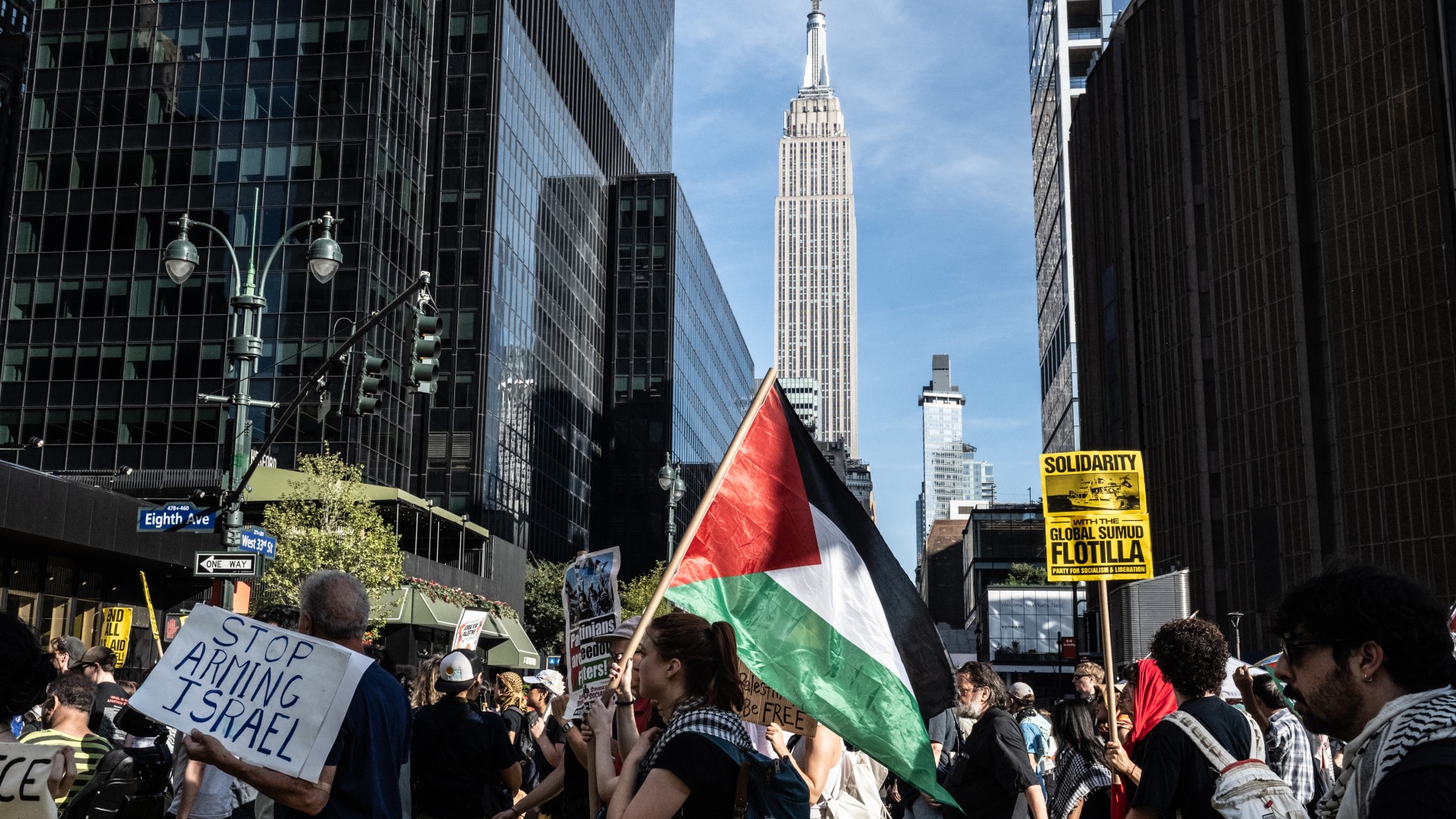
    Speaking to the BBC on Saturday, Starmer emphasized that while the UK upholds the fundamental right to peaceful protest, authorities must not tolerate language that incites violence and hatred. He specifically called out the chant “globalize the intifada” – a phrase that translates to “globalize the uprising” – as an example of rhetoric that demands far tougher legal action. Starmer also noted that repeated large-scale pro-Palestinian marches have created a cumulative effect that has contributed to the sharp spike in antisemitic incidents recorded across the nation. When pressed on whether future protests could be restricted, the prime minister did not rule out formal bans for demonstrations that cross the line from peaceful protest to hate speech and intimidation.

    The severity of the current threat to British Jews was underscored by the UK’s most senior law enforcement official, Metropolitan Police Commissioner Mark Rowley, who warned Friday that Jewish communities are now facing the most sustained and widespread security challenge in modern British history. Rowley blamed the proliferation of antisemitic content on social media platforms for normalizing anti-Jewish hatred in mainstream public discourse, noting that Jewish people have become a shared target for almost every extremist faction operating in the UK today. “The ghastly fact is that Jews are on everybody’s list, all of those hateful groups – whether you’re extreme right, whether you’re extreme left, whether you’re Islamist terrorist, whether you’re right-wing terrorist, and some hostile states as well now with some sort of Iranian-related threats,” Rowley told The Times. “There’s a ghastly Venn diagram that they’re at the middle of.”

    Following Wednesday’s stabbing attack, UK authorities raised the country’s official terror threat level from “substantial” to “severe” – the second-highest ranking on the government’s five-point threat scale. A “severe” classification indicates that intelligence agencies assess a terrorist attack to be highly likely within the next six months. Government officials clarified that the adjustment was not triggered solely by the Golders Green incident, but reflects a broader increase in risk from both Islamist and far-right extremist actors, most of whom are individuals or small independent groups based within the UK.

    Data from the Community Security Trust, a charity that monitors antisemitism and protects Jewish communities across the UK, confirms that hate incidents have skyrocketed since the October 7, 2023, Hamas attack on southern Israel and the subsequent outbreak of war in Gaza. The organization recorded 3,700 antisemitic incidents nationwide in 2025, a more than 120% increase from the 1,662 incidents recorded in 2022 before the current conflict began.

  • Cuba condemns new US sanctions as ‘illegal’ and ‘abusive’

    Cuba condemns new US sanctions as ‘illegal’ and ‘abusive’

    On International Workers’ Day, thousands of Cuban demonstrators gathered outside the United States Embassy in Havana to protest against a fresh round of punitive sanctions imposed by the Trump administration, paired with an ongoing US oil blockade that has brought widespread disruption to daily life across the island nation.

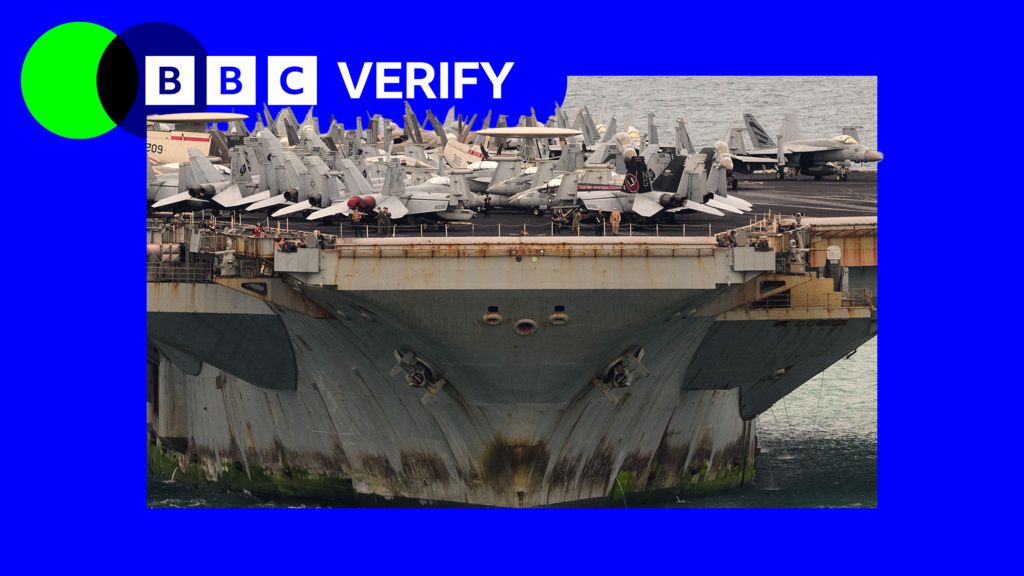
    The new executive order, signed by former President Donald Trump during a Florida campaign appearance Friday, expands US restrictions to target Cuban officials working in the country’s energy, defense, financial and security sectors, as well as individuals the administration accuses of human rights violations and corruption. Speaking to supporters in Florida, Trump doubled down on his aggressive anti-Cuba rhetoric, claiming the US would “take over” the Caribbean island – located just 90 miles off the coast of Florida – “almost immediately.” In a provocative boast, he suggested that the USS Abraham Lincoln, the US Navy’s massive aircraft carrier, could be deployed off Cuban shores to force the country’s leadership into surrender.

    Cuba’s top diplomat, Foreign Minister Bruno Rodriguez, immediately condemned the new measures as “illegal and abusive,” writing on the social platform X that the unilateral coercive measures violate core tenets of the United Nations Charter. Rodriguez emphasized the sanctions amount to deliberate collective punishment of the Cuban people, and shared footage of the May Day demonstrations, framing the protests as a defensive stand for national sovereignty. “Our people do not cower,” he added. Cuban President Miguel Díaz-Canel echoed that criticism, pointing to the intimidation and arrogance of the world’s largest military power as the root of continued hardship for Cuban citizens. The new sanctions come as a surprise reversal of tentative bilateral talks: Díaz-Canel confirmed as recently as March that Cuban officials were in negotiations with the US to reset strained bilateral relations.

    The ongoing US oil blockade has already triggered crippling fuel shortages and rolling nationwide blackouts that have disrupted critical public services, from hospital operations to public transit and school sessions. Since the blockade was implemented, only one Russian oil tanker has successfully docked in Cuba to deliver supplies. Trump has further threatened to impose steep tariffs on any country that chooses to export oil to Cuba, raising the stakes for the island’s already fragile economy.

    Bilateral tensions between the US and Cuba have persisted for more than six decades, dating back to 1959, when Fidel Castro’s communist revolution overthrew a US-backed authoritarian government. A sweeping US economic and trade embargo has been in place since 1960, and this year Cuba is marking the 100th anniversary of Castro’s birth. The latest escalation of US pressure comes as the Trump administration has made dismantling Cuba’s communist leadership a core foreign policy priority for a second term.

  • Board of top Arab-American advocacy group refuses to resign amid growing dispute

    Board of top Arab-American advocacy group refuses to resign amid growing dispute

    The American-Arab Anti-Discrimination Committee (ADC), a leading U.S. civil rights organization advocating for Arab-American communities, is facing unprecedented internal upheaval following the April 27 ousting of its longtime national executive director Abed Ayoub, a controversy that has exposed deep rifts over governance, workplace culture and accountability.

    In the wake of Ayoub’s termination, growing public and internal pressure has mounted for the entire ADC board to step down to make way for a full organizational overhaul. But Board Chair Safa Rifka, an 80-year-old infertility and reproductive endocrinologist, has rejected these calls in an emailed statement to Middle East Eye (MEE), provided through the public relations firm Poston Communications. Rifka argues that any mass board resignation would capitulate to what he calls a social media-driven campaign of misinformation, and would betray ADC’s core mission at a moment of heightened urgency for Arab-Americans.

    The chain of events that led to Ayoub’s removal began on April 1, when he submitted a 39-page formal restructuring proposal to the full ADC board. The document, titled *ADC/ADCRI Transformational Restructuring and Compliance Strengthening Plan* (ADCRI is ADC’s research arm), called for a 90-day institutional reset to address longstanding structural flaws. Ayoub’s plan centered on clarifying the long-muddled line between board governance and day-to-day management — a gap that he wrote had generated repeated concerns from community members over inconsistent treatment and unclear accountability. He proposed building a disciplined institutional framework that aligns organizational purpose, staffing, systems, authority and oversight, and shifting ADC from a personality-led operation to a transparent, accountable institutional model. Ayoub also called for full transparency around donation collection and expenditure, staff roles and compensation, and major decision-making processes.

    Ayoub argued that the restructuring was critical because ADC had grown exponentially following the October 7 attacks on Israel and the subsequent Israeli military campaign in Gaza, events that upended U.S. civil society and triggered a sharp rise in anti-Arab and anti-Palestinian hate crimes, workplace retaliation and campus censorship across the country. Even critics of Ayoub acknowledge that ADC stepped up dramatically to defend its community during this period: the organization’s legal team has intervened in high-profile cases, from fighting the deportation of former Columbia University student Mahmoud Khalil to defending University of Michigan students and staff disciplined for pro-Palestine advocacy, and filing a lawsuit against anti-Muslim Republican lawmaker Randy Fine. Ayoub noted in his proposal that while this rapid growth was a marker of the organization’s vital work, it had left outdated systems and governance structures unable to keep pace, creating a liability that undermined the group’s impact.

    Three days after submitting his plan, on April 4, Ayoub filed an internal complaint alleging ongoing harassment and a hostile work environment at ADC. “I cannot effectively lead with board members who force us to fight internally and externally. No Executive Director can,” he wrote in the complaint, a copy of which MEE has reviewed. Ayoub told MEE that the board appointed an investigation committee staffed by the very members he had accused of misconduct, comparing the process to “Israel investigating itself.” He also alleged a pattern of personal belittlement during his tenure, as well as anti-Shia sentiment from some board members — claims that Rifka has denied, saying his leadership has always prioritized open dialogue across all segments of the Arab-American diaspora.

    On April 11, Ayoub left for a pre-planned family vacation, and requested medical leave for an undisclosed health condition on April 21. Rifka claims that after Ayoub could not be reached to confirm a specific return date, the board had “no other choice but to assume [Ayoub’s] voluntary resignation.” The same day, the board appointed stewardship director Nabil Mohamed as Ayoub’s replacement, a change that was not announced publicly until May 1, despite being finalized in late April. Ayoub’s email access was revoked on April 23, and he received his formal termination notice four days later. He is now suing ADC, represented by the Nisar Law Group, calling his firing “unjust” and “unlawful,” the outcome of an orchestrated “smear campaign” against him. Ayoub has stated that if he receives any financial compensation from the lawsuit, he will donate all funds to create a “Survivor’s Fund” for more than a dozen women who have accused ADC of verbal abuse, sexual harassment and sexual assault dating back to 2006.

    Internal accounts of Ayoub’s tenure are divided. A current part-time ADC staffer, connected to MEE by the organization’s PR firm, described the workplace as “chaotic” under Ayoub, claiming he often disappeared from the office and ignored staff concerns. Ayoub countered that he was always available to staff during working hours, and noted that he took second and third jobs in evenings and weekends to support his family. Ed Hasan, a governance expert appointed to the ADC board by Rifka in December who was himself ousted in April, told MEE that the organization suffers from an unprofessional work environment marked by conflicts of interest and lax handling of discrimination claims — but placed the blame not on Ayoub, but on board leadership.

    The crisis deepened in late April, when U.S. Representative Rashida Tlaib, the only Palestinian-American member of Congress, resurfaced decades-old allegations of misconduct against women at ADC that date back to 2006 and 2013 in an Instagram video. Since then, multiple current and former female staffers have shared their experiences on social media, with some defending Ayoub and others accusing him of downplaying harassment claims — claims Ayoub outright rejects. A group of anonymous current Arab-American female ADC employees launched an Instagram account on April 25 demanding the organization be returned to the community it serves. Since Jenin Younes was named the organization’s public face on April 24, the board has defended its actions, saying it maintains a zero-tolerance policy for harassment, discrimination, intimidation and retaliation, and encouraging anyone with concerns to submit reports directly to the organization. In a May 1 statement posted to its website, the board said it is “actively strengthening ADC’s structure and strategy to maximize our impact at a time when our community continues to face intensifying civil rights challenges.” Rifka also told MEE that the board had already been pursuing governance reforms, including bylaw updates and clearer separation of board and executive functions, and claimed these efforts may have prompted Ayoub to leave — a claim Ayoub rejects, asking “Why would I put that full plan together just to leave?”

    The internal chaos now threatens ADC’s funding, as the organization’s largest individual donor has threatened to pull her support. In a May 1 email to Rifka and ADC staff obtained by MEE, California-based donor Diane Shammas — who has given a total of $500,000 to ADC over her years of support — said she is “frankly outraged by the abrupt removal of Abed Ayoub.” Shammas, who previously left the ADC board over complaints of dismissiveness and unequal treatment of female employees in the DC office, added that the ongoing concerns about governance, workplace culture and internal culture are “equally troubling.” Her longstanding support for the organization, she wrote, is “notably compromised,” and she will “regrettably have to reassess my continued involvement and financial support.” ADC’s latest public tax filing shows the organization recorded $675,000 in revenue in 2024, and has seen a dramatic budget boost in recent months, drawing some of its largest donations in a decade amid rising demand for its civil rights and advocacy work following the 2024 U.S. election.

  • US to shut centre intended to monitor Gaza ceasefire as peace plans stall: Report

    US to shut centre intended to monitor Gaza ceasefire as peace plans stall: Report

    In a clear indication that the Trump administration’s attention on the war-ravaged Gaza Strip is fading as it prioritizes its military campaign against Iran, the United States is moving forward with plans to close down the joint civil-military monitoring hub it set up in Israel to oversee the 2025 Gaza ceasefire agreement, according to recent regional reporting.

    Reuters first confirmed the shutdown of the Civil-Military Coordination Centre (CMCC) in a Friday report, noting that the body’s core functions – which include monitoring ceasefire compliance and coordinating humanitarian aid deliveries to Gaza – will be transferred to a US-led international stabilization task force that has been mandated to deploy to the besieged Palestinian enclave. The operation will be brought under the umbrella of the International Stabilisation Force (ISF), headed by US Major General Jasper Jeffers, but the future of that broader multinational force remains far from settled.

    Per the report, the drawdown of US personnel at the former CMCC is already underway: the troop count will fall from roughly 190 service members to just 40, before those remaining military roles are ultimately taken over by civilian employees from third-party countries. To date, it remains unclear what tangible effects the closure will have on on-the-ground conditions in Gaza.

    When the CMCC was first established, its primary mandate centered on facilitating and verifying the delivery of humanitarian aid to Palestinian civilians in the territory, which was heavily damaged by months of conflict. However, anonymous senior officials told Reuters that aid flows into Gaza have remained largely frozen since the center launched, even with the monitoring body in operation. While Germany, France, the United Kingdom, Egypt and the United Arab Emirates took part in initial planning sessions at the hub in its first months of operation, most of these partner nations have all but stopped sending permanent representatives to the site in recent months.

    The ceasefire agreement that the CMCC was tasked to upholding has been systematically violated by Israeli forces since it took effect in October 2025, leading to a complete halt in all progress on reconstruction efforts across Gaza. Official data and UN reports confirm that more than 800 Palestinian civilians and fighters have been killed in ongoing Israeli strikes and incursions since the ceasefire was signed.

    When the truce was first announced, then-President Donald Trump celebrated the deal with high-profile fanfare, embarking on a Middle East victory tour to mark the breakthrough. Speaking at a landmark peace summit hosted in the Egyptian Red Sea resort of Sharm el-Sheikh, Trump declared publicly that “The war in Gaza is over…now the rebuilding begins.” But even at that time, diplomats and independent analysts warned Middle East Eye (MEE) that the White House would quickly lose interest in the agreement, and that the US would step back from enforcing Israeli compliance with its ceasefire commitments.

    This week, Khaled Khiari, United Nations Assistant Secretary-General for the Middle East, issued a stark warning reaffirming that the blockaded enclave continues to face “ongoing and deadly Israeli strikes” despite the US-brokered ceasefire arrangement. Critics have long noted that even when the CMCC was fully staffed and operational, there were almost no meaningful checks in place to prevent Israeli violations of the truce, and Israeli officials exercised disproportionate control over the center’s operations.

    A December 2025 report from The Guardian exposed that Israeli intelligence carried out such extensive surveillance activities within the CMCC that US and other international partners formally lodged complaints. The Israeli military was found to be recording both open and closed discussions and meetings at the hub through overt and covert means, prompting the CMCC’s US commander, Lieutenant General Patrick Frank, to privately confront his Israeli counterpart and demand that the espionage campaign end.

    The US secured a United Nations Security Council mandate to launch the ISF back in November 2025. Earlier this year, the initiative appeared to gain momentum: regional sources indicated Indonesia was preparing to deploy up to 8,000 troops to the force, while Jordan and Egypt began training security personnel aligned with the Palestinian Authority to support operations in Gaza. However, the recent US-Israeli military offensive against Iran has dramatically altered regional priorities, throwing the entire ISF deployment plan into doubt. A senior anonymous US official told MEE that key Arab and Muslim states that had previously committed to joining the force are now reassessing their participation in the project.

    Middle East Eye, which provides independent, in-depth coverage of the Middle East and North Africa region, first reported on the growing uncertainty surrounding the monitoring center and the ISF deployment.