分类: politics

  • What to expect from Zelensky and Netanyahu’s visit to Washington

    What to expect from Zelensky and Netanyahu’s visit to Washington

    Two of the most high-profile global leaders, Ukrainian President Volodymyr Zelensky and Israeli Prime Minister Benjamin Netanyahu, are both heading to Washington D.C. this week, with their visits coordinated around the funeral service for longtime Republican Senator Lindsey Graham. While the memorial service serves as the formal occasion bringing both figures to the U.S. capital, the trip will include key bilateral engagements at the White House that carry major implications for two of the world’s most urgent active conflicts.

    Neither leader will hold a joint meeting with U.S. President Joe Biden; instead, each will sit down separately with the American commander-in-chief to delve into the ongoing wars shaping their respective regions. For Zelensky, the discussions will center on Ukraine’s 3-year defense against Russia’s full-scale invasion, with priorities likely including continued U.S. military aid, new security commitments, and coordination on Kyiv’s latest battlefield strategies amid shifting frontline dynamics.

    For Netanyahu, the agenda will focus heavily on Israel’s ongoing military campaign in Gaza against Hamas, as well as rising cross-border tensions with Hezbollah in northern Israel and broader regional security risks linked to Iranian-backed militant groups. The separate visits come at a politically sensitive moment for the Biden administration, which has maintained strong support for both Ukraine and Israel while facing growing domestic pressure over the scale and direction of U.S. involvement in both conflicts.

    The overlapping visits also put a spotlight on U.S. foreign policy priorities across two critical geostrategic regions, as the Biden administration works to shore up alliances while navigating competing political pressures at home heading into the next U.S. election cycle.

  • US looks to boost anti-China spending worldwide by hundreds of millions, documents say

    US looks to boost anti-China spending worldwide by hundreds of millions, documents say

    Months after rolling back a slate of international initiatives amid sweeping budget and personnel cuts, the Trump administration is moving to dramatically expand funding for programs targeted at countering China’s expanding global footprint, multiple U.S. government sources and official documents confirm.

    In a formal notification sent to Capitol Hill late last week, the White House outlined plans to allocate $175.8 million to replace aging, obsolete undersea telecommunications cables across the Caribbean and Central America. The explicit goal of the project, dubbed the “Countering CCP Control of Caribbean and Central America Undersea Cables project,” is to block Chinese firms from gaining a strategic foothold in the region’s digital infrastructure, according to the notification, a copy of which was obtained by the Associated Press on Monday.

    The Trump administration has repeatedly raised alarms over China’s growing economic and diplomatic activity in the Americas, pushing back against Chinese ownership of port facilities at both entrances of the Panama Canal, opposing infrastructure projects developed under China’s Belt and Road Initiative, and scrutinizing Chinese investment in the region’s telecommunications sector.

    A senior State Department official, speaking on condition of anonymity due to restrictions on discussing the policy publicly, argued that China’s infrastructure and investment offerings across the Western Hemisphere pose tangible risks to U.S. national security and long-term economic prosperity. The official noted that while Chinese projects often appear more affordable upfront, they frequently end up costing host nations far more over time due to unanticipated cost overruns, hidden long-term maintenance fees, and substandard construction and performance.

    The undersea cable initiative is just the first visible component of a far broader administration push to revive counter-influence programs that were cut last year. Internal State Department planning documents reviewed by AP show the White House is considering allocating an additional $340 million to fund more than 50 separate counter-China projects across the Western Hemisphere, Africa, and Asia, bringing total new proposed spending to hundreds of millions of dollars.

    The renewed push comes even as the Trump administration prepares for a high-profile meeting between President Donald Trump and Chinese President Xi Jinping on the sidelines of the United Nations General Assembly in New York this coming September, with top diplomats already holding pre-summit talks. Last week, Secretary of State Marco Rubio met with Chinese Foreign Minister Wang Yi at a regional security conference in the Philippines to lay groundwork for the leaders’ meeting. President Trump has long taken an inconsistent approach to his relationship with Xi, vacillating between public criticism and expressions of amity even as Beijing advances global priorities that run counter to the Trump administration’s strategic goals.

    Last year, the Elon Musk-led Department of Government Efficiency (DOGE) implemented deep cuts to federal government spending and staffing that dismantled the U.S. Agency for International Development and eliminated hundreds of diplomatic positions worldwide. Those cuts also put on hold dozens of previously approved projects, many of which were explicitly designed to counter Chinese influence across the globe. The new proposal would resurrect many of these paused initiatives.

    A senior U.S. official, granted anonymity to discuss internal administration planning, confirmed the White House’s intent to boost funding for counter-China programs but declined to share specific details, noting that most projects remain in the proposal and discussion phase.

    Beyond the Caribbean and Central American undersea cable project, the proposed new spending covers a wide range of activities, documents show. Funding is set to benefit projects in El Salvador, Guatemala, Honduras, Nicaragua, and Haiti, though the U.S. will not work directly with the Nicaraguan government due to strained bilateral relations.

    Other proposed initiatives include building new cyber security operations centers in Argentina and Belize to monitor what the U.S. frames as Chinese threats to regional critical infrastructure and digital networks. Additional programs would work to protect Ecuador, Jamaica, Mexico, Paraguay, Peru, and Uruguay from alleged Chinese attempts to infiltrate national port operations, gain unauthorized access to critical mineral reserves, and conduct unregulated offshore fishing.

    The planning documents also outline more globally focused efforts, including developing specialized secure communications and intelligence collection technology to counter Chinese influence over the selection of a successor to the Dalai Lama. Other proposed projects aim to reduce international support for China’s space program and block Chinese technology firms from exporting surveillance and censorship tools to governments worldwide. Details of most of these initiatives remain undisclosed in the document.

    The Trump administration has prioritized countering Chinese influence in the Western Hemisphere alongside its other foreign policy priorities, which currently include ongoing conflict with Iran and diplomatic efforts to de-escalate tensions in Gaza and Lebanon. In recent months, the administration has captured Venezuelan leader Nicolás Maduro, ramped up pressure on Cuba’s socialist government, and imposed sweeping sanctions on the Nicaraguan government.

    China’s embassy in Washington, D.C. has not yet issued a response to requests for comment on the proposed new funding initiative. The full impact of the proposed programs, if approved, will not be clear for many months or even years, as projects are rolled out and implemented across multiple regions.

  • New oil refinery planned for WA to secure Australia’s fuel supply

    New oil refinery planned for WA to secure Australia’s fuel supply

    For the first time in six decades, Australia is set to add a new domestic oil refinery to its national energy infrastructure, with Prime Minister Anthony Albanese scheduled to announce a major pre-feasibility study for the project during a visit to Karratha, Western Australia, on Monday.

    As global energy markets grapple with heightened volatility driven by geopolitical unrest, the Australian government has earmarked $4 million to assess the technical and economic viability of constructing the country’s third operational oil refinery, which would join existing facilities in Geelong and Brisbane. If advanced to construction, the new plant will be developed by Perdaman, an Australian chemical and fertiliser producer with a track record of delivering large-scale resource projects.

    Resources Minister Madeleine King expressed confidence in the proposal, noting that Perdaman’s established industry credibility gives the ambitious plan solid underlying momentum. “For a company like Perdaman to come to government and say we’re going to look at this … it’s got to have some strength behind it, and I believe it has,” King stated. The project has secured cross-party support in principle, but has also sparked debate over the federal government’s conflicting energy policy stances and climate regulations.

    Foreign Affairs Minister Penny Wong backed the initiative, framing it as a critical step to rebuild domestic refining capacity and shore up national resilience against global supply shocks. “We need to look at what we can do here in Australia to shore up our resilience,” Wong said, confirming that the announcement advances the government’s goal of restoring domestic fuel processing capability.

    Treasurer Jim Chalmers tied the push for enhanced fuel security directly to the ongoing conflict in the Middle East, which has sent global oil prices soaring and added upward pressure on Australian inflation. Chalmers noted that Australian households have already borne excessive financial burdens from the market fallout of the conflict, warning that prolonged instability will further erode economic growth and lift inflation both domestically and globally. “From an economic point of view, a proper and permanent end to the war can’t come soon enough,” he said.

    While federal opposition parliamentarians have signaled they support the underlying goal of expanding domestic refining capacity, they have highlighted significant policy barriers erected by the current Labor government. Nationals leader Matt Canavan said the government’s carbon pricing policy would undermine the economic viability of the new refinery, noting that both existing and new refining operations face heavy carbon tax liabilities that make large-scale fossil fuel infrastructure investment unfeasible. “We’re not going to get a new oil refinery in this country while this government imposes a massive carbon tax on existing refineries and new ones would be subject to the same,” Canavan told reporters on Monday.

    Opposition foreign affairs spokesman Ted O’Brien went further, calling out a clear contradiction at the heart of Labor’s national energy policy. He pointed to Energy Minister Chris Bowen’s public international statements ruling out new fossil fuel development, which directly conflict with the government’s support for the new oil refinery. “The contradiction in Labor’s energy policy explains why Australians are paying higher prices for energy than they ever have and why energy markets are now pulling back investments from Australia,” O’Brien argued.

    The launch of the pre-feasibility study comes as Australian policymakers across the political spectrum increasingly prioritize domestic fuel security, after global supply chain disruptions in recent years exposed the nation’s heavy reliance on imported refined fuel products. If the study confirms the project is viable, it will mark the first new oil refinery constructed in Australia since the 1960s, representing a generational shift in the nation’s energy infrastructure strategy.

  • ‘Woke agenda’, Liberal Party branch takeover in day two of NSW ICAC probe

    ‘Woke agenda’, Liberal Party branch takeover in day two of NSW ICAC probe

    An eight-week public corruption investigation into internal operations of the New South Wales Liberal Party entered its second day Tuesday, with a prominent local hotelier telling the Independent Commission Against Corruption (ICAC) he never expected his tens of thousands in donations to a right-wing party faction would land him in the anti-corruption dock.

    The inquiry centers on the activities of a self-identified conservative group called “the reformers”, which formed to grow the share of ideologically conservative and Christian-aligned members within the NSW Liberal Party and shift the party’s overall policy positioning. The probe is examining multiple key allegations: that members of the group solicited and accepted undeclared political donations, including from prohibited donors, to fund membership recruitment and renewal; that fugitive property developer Jean Nassif allegedly channeled donations to oust Liberal MP David Elliott and remove Building Commissioner David Chandler; and that several local Labor councillors engaged in breaches of public trust, including alleged blackmail and illegal surveillance.

    Among those named in the probe is 83-year-old hotelier Michael O’Hara, a cancer patient who has long donated to conservative and Christian political causes. O’Hara, who faces no personal wrongdoing allegations, admitted he donated a total of $25,000 to the reformers between 2020 and 2021 through his company Paslibdan Pty Ltd and Jeremy Greenwood’s now-deregistered lobbying firm Beckington Group, with the donations routed to group organizer Christian Ellis. The total amount exceeded the legal disclosure threshold, and O’Hara acknowledged the donations would have violated prohibited donor and donation cap rules if formally designated as contributions to the NSW Liberal Party.

    Giving continued testimony on Tuesday, O’Hara told the commission he had no knowledge of how the reformers ultimately used his donations, and only learned of the group’s alleged activities from witness evidence and media reports this week. He described himself as shocked by what has come to light, saying, “I am absolutely astounded by where it all ended up, which I had absolutely no knowledge of.” He compared his support for the faction to operating his hotel business, explaining that he entrusted trusted organizers to manage day-to-day activities without his interference. “I thought they were good people… since, after hearing what happened, what you went through yesterday … it was disgusting. But, anyway… I made a mistake supporting them because they went off the track,” he said.

    Pressed about whether he communicated via encrypted app Signal with former premier Dominic Perrottet’s brother Jean-Claude Perrottet, one of the figures under investigation, O’Hara said his heavy workload as a hotelier left him unable to recall specific communications. “I probably have 20 or 30 or 50 phone calls a day. I’ll probably get 100 emails. I was a very busy person,” he said. “I gave money to this. Go ahead and do what you’re supposed to be doing. And, I forget about it. I didn’t anticipate it ending up in a corruption inquiry.”

    Counsel assisting the inquiry Peggy Dwyer SC presented text message evidence showing that in 2018, reformer figure Robert Assaf updated O’Hara with the message: “good news – the NSW reformers have officially taken their first branch. Coffs Harbour branch is now out.” O’Hara confirmed he recalled this exchange.

    The commission also heard that O’Hara cut off funding to the reformers in 2021 over their opposition to COVID-19 vaccine mandates, particularly from then-state MP Tanya Davies. In a 2021 email copied to NSW Liberal upper house leader Damien Tudehope, O’Hara wrote that prolonged lockdowns were harming children, increasing youth suicide rates, and placing unbearable strain on businesses and families, adding that vaccinations were the only logical path to reopening. “I cannot support while you are indirectly, actively working against that outcome,” he wrote.

    O’Hara also told the hearing he split from then-premier Dominic Perrottet over what he viewed as overly liberal policy stances, and criticized former Prime Minister Scott Morrison for adopting what he called a “woke agenda” that he said had harmed the party.

    Beyond the activities of the reformers, the inquiry is probing allegations tied to fugitive property developer Jean Nassif, who is a prohibited donor under NSW electoral law. Dwyer outlined in her opening address that the commission will examine whether Nassif’s political goals – removing David Elliott and David Chandler – aligned with the ambitions of the right-wing faction, which allegedly accepted his financial support in exchange for advancing mutually beneficial actions. “We expect that the commission may see the confluence of personal greed and political ambitions,” Dwyer said.

    The probe also examines allegations against two Strathfield Labor councillors employed by Nassif: Sharangan Maheswaran and Karen Pensabene, who stand accused of breaching public trust, potential blackmail, and violating surveillance device laws. Maheswaran is alleged to have built a “dirt file” on independent rival councillor Matthew Blackmore and threatened professional retaliation if Blackmore did not comply with his demands, using material collected by the same private investigator Nassif hired to target Chandler.

    None of the individuals named in the inquiry have been found guilty of misconduct, and former premier Dominic Perrottet, Catholic Schools NSW, and O’Hara all face no allegations of wrongdoing. ICAC does not issue criminal convictions; following the conclusion of the eight-week probe, the commission may refer individuals to the NSW Director of Public Prosecutions for further action.

  • Trump says ‘good chance’ of progress in Iran talks as foes hold fire

    Trump says ‘good chance’ of progress in Iran talks as foes hold fire

    A fragile three-day ceasefire between the United States and Iran has raised cautious hopes for diplomatic progress, after 13 consecutive nights of renewed US airstrikes brought the two long-standing adversaries back to the brink of open conflict. In remarks made aboard Air Force One on Monday, former President Donald Trump expressed guarded optimism that a negotiated peace deal could end the months-long war that broke out in late February with a joint US-Israeli military campaign that sent shockwaves across the Middle East and global energy markets. “I think there is a good chance that something could happen,” Trump stated, adding that he retained patience to see diplomatic efforts through. If talks fail, however, the president confirmed the US would quickly resume its previous military operations.

    Trump pushed back against growing concerns over dwindling US ammunition stockpiles five months into the conflict, asserting that the US military retains more than sufficient munitions, including mid-range weaponry, to sustain any future operations. Despite Trump’s claims of ongoing negotiations, Iranian officials have pushed back publicly on any active talks with Washington. Iranian Foreign Ministry Spokesman Esmaeil Baqaei clarified Monday that while mediators may relay communications between the two sides, Tehran is not currently engaged in direct negotiations with the US. Baqaei also launched a scathing attack on US policy in the region, comparing Washington’s conduct over recent years to that of a “mafia gang” that rejects international rules and norms.

    Even as the US and Iran hold their fire, regional instability persists. On Monday, Saudi Arabia’s defense ministry announced it had intercepted multiple drones launched from Iraqi territory by Iran-aligned militant groups, targeting key Saudi oil facilities. While no group immediately claimed the attack, Riyadh called on Iraqi authorities to crack down on militant groups operating from its soil to prevent further incursions. Iraqi Prime Minister Ali al-Zaidi has since ordered a full investigation into Saudi Arabia’s claims. Yemen’s Iran-backed Houthi rebels later claimed responsibility for a separate drone strike on Saudi oil infrastructure, launched in retaliation for recent Saudi drone incursions, though Riyadh has not yet responded to the claim. Pakistan, which has served as a key mediator in efforts to de-escalate the conflict, condemned the attacks, warning they pose a severe threat to regional peace and security. In a separate development, the Israeli military announced it intercepted two unmanned aerial vehicles near the Jordanian border, and is currently working to trace their origin. Israel has not taken part in the latest round of fighting between the US and Iran.

    The ceasefire has delivered immediate relief to global energy markets, which have been roiled by tensions around the Strait of Hormuz – the world’s most critical chokepoint for global oil and gas trade. Global stock markets rallied on Monday, while benchmark Brent crude prices tumbled 6% to settle around $86 per barrel, bringing much-needed respite to Gulf shipping operators and the global energy industry.

    Despite the diplomatic opening, the future of the strategically vital Strait of Hormuz remains the single largest hurdle to a lasting peaceful resolution. Iran has repeatedly insisted on full regulatory control over the waterway, and in recent days the country’s powerful Revolutionary Guards have halted multiple commercial vessels attempting to transit outside Tehran’s designated shipping lane, with six such vessels detained as of Monday. Tehran confirmed it has held recent discussions with Oman, the other major littoral state bordering the strait, to establish joint principles and operational mechanisms to ensure commercial shipping safety. Back in June, Muscat and Tehran announced they would discuss imposing transit service fees for the strait – a proposal that has been firmly opposed by Washington. Recent tensions between Oman and Iran flared after Muscat announced commercial vessels could transit the strait through Omani territorial waters, a move that prompted Iranian forces to attack transiting ships. Baqaei confirmed Monday that the US is not involved in the recent Oman-Iran discussions, reiterating Tehran’s position that Washington has no role to play in regulating the strait.

  • UK Supreme Court says no state immunity for Bahrain in surveillance case

    UK Supreme Court says no state immunity for Bahrain in surveillance case

    In a landmark ruling that sets a critical precedent for holding foreign states accountable for transnational repression, the UK Supreme Court has dismissed a appeal by the government of Bahrain for state immunity in a hacking case brought by two exiled Bahraini pro-democracy dissidents. The 3-2 majority decision cleared the way for a full civil damages claim to proceed, a outcome that opposition campaigners have described as a watershed moment for activists targeted by authoritarian regimes outside their home borders.

    The two claimants, Saeed Shehabi and Moosa Mohammed, launched their legal battle at London’s High Court back in 2020. Both long-term exiles opposed to Bahrain’s ruling Al Khalifa royal family, they allege that Bahraini intelligence operatives planted malicious spyware on their personal laptops in 2011, while the devices were located on UK soil. The surveillance, they claim, allowed Manama to track not just their own activities in exile, but also collect information on other overseas critics of the Bahraini government. The pair are seeking financial compensation for deliberate psychiatric harm inflicted by the years of unlawful monitoring.

    Writing in a post-ruling statement, Shehabi, who has spent decades in exile for his pro-democracy advocacy, called the decision the end point of a grueling multi-year legal fight. “It has taken many long and difficult years to reach this moment. The hardest part of being targeted by state-sponsored hacking is the feeling that nowhere is safe,” he said. The veteran dissident framed the ruling as a victory that extends far beyond his own case, extending to every activist targeted by authoritarian governments operating beyond their official national boundaries. He dedicated the outcome to the people of Bahrain and the families of those killed during the kingdom’s post-2011 crackdown on dissent, who he said lost their lives under torture and repression solely for demanding justice and an end to authoritarian rule.

    The legal action comes against a long backdrop of sustained repression of opposition voices in Bahrain, which intensified after the 2011 Arab Spring pro-democracy uprisings that swept across the Middle East and North Africa. In the wake of those protests, Bahraini authorities launched a widespread crackdown that led to the arrest of thousands of pro-democracy campaigners and activists. The repression has not been limited to the kingdom’s borders: security services have repeatedly been documented targeting exiled dissidents who have built new lives in Europe, the UK, and North America.

    Mohammed, the second claimant, echoed Shehabi’s praise for the court’s decision, noting that he has been targeted by the Bahraini regime since he was a teenager, experiencing torture, imprisonment, and transnational pursuit. He dedicated the ruling to political detainees still held in Bahraini prisons, who continue to face abuse behind bars. “Today should give them hope that accountability is possible,” he said. Bahrain’s government has repeatedly and categorically denied all allegations of hacking and unlawful surveillance put forward by the two dissidents.

    Legal analysts note that the ruling marks a significant shift in how UK courts address transnational repression, confirming that acts of espionage and harm committed on UK soil by foreign states cannot be shielded by claims of state immunity. For pro-democracy campaigners, the outcome opens a new pathway for legal recourse for activists targeted by foreign governments on British territory.

  • As the US pauses the war with Iran, is Trump really running out of weapons?

    As the US pauses the war with Iran, is Trump really running out of weapons?

    In a high-profile appearance earlier this month at the Pennsylvania Defense and Innovation Summit, U.S. President Donald Trump stood alongside chief executives of the nation’s largest defense contractors and delivered a clear, urgent call: ramp up weapons production and accelerate manufacturing timelines to rebuild dwindling stockpiles.

    Addressing a gathering of arms industry leaders at the U.S. Army War College, with Secretary of Defense Pete Hegseth at his side, Trump emphasized, “We have the best quality in the world, but we need a little more speed.” The Trump administration framed the summit as a core component of a dual strategy to rejuvenate domestic defense manufacturing and strengthen the country’s warfighting capacity, what Hegseth has called America’s “arsenal of freedom.”

    What went largely unmentioned during the summit, however, is the core driver of this new push: massive stockpile depletion from nearly 40 days of intense combat during this year’s Operation Epic Fury in Iran, paired with ongoing tit-for-tat cross-border strikes in the region. To date, the U.S. government pegs total war costs at $37.5 billion, the vast majority of which has gone toward expended munitions. By the time a fragile ceasefire took hold on April 8, U.S. forces had struck more than 13,000 targets across Iran and intercepted more than 1,700 Iranian drones and ballistic missiles, White House data shows.

    Today, U.S. offensive strikes against Iran are paused to allow diplomatic negotiations to proceed. A recent New York Times report revealed that Trump’s military advisors urged him to abandon plans for conflict escalation, warning that further action would only deepen stockpile shortfalls. The president has pushed back on these concerns, telling The Wall Street Journal, “We have far more munitions than anyone in the world, and far more than we need.”

    The issue of depleted stockpiles has been a point of internal tension within the administration for months. Last month, Hegseth rejected claims that supplies were running low. But his position shifted dramatically last week, when he told the Senate Appropriations Committee the Pentagon requires an additional $87 billion to address “critical shortfalls” in equipment and munitions.

    While exact figures for expenditure and remaining stockpiles remain classified, publicly available analysis from the Center for Strategic and International Studies (CSIS), a Washington D.C.-based think tank, outlines a stark landscape of depleted inventories that cannot be quickly replenished. “It depends on the munition, but one to five years [to manufacture a single advanced missile] is the bottom line,” explained Mark Cancian, a retired Marine Corps colonel and senior CSIS adviser who researches defense stockpiles. “And there’s nothing you can do to speed that up.”

    The munitions most heavily drawn down during the Iran conflict fall into two critical categories: long-range land-attack systems and air and missile defense interceptors used to neutralize incoming Iranian attacks. The most widely used offensive weapon was the Tomahawk Land Attack Missile (TLAM), a sea-launched precision weapon capable of striking targets more than 1,000 miles inland, allowing the U.S. to destroy hardened military sites like command bunkers without risking manned aircraft. CSIS estimates more than 1,000 Tomahawks were fired during the operation, and stockpiles may not return to pre-war levels until 2031. Each new TLAM variant costs approximately $2.6 million.

    On the defense side, the Patriot interceptor — a ground-based missile designed to shoot down aircraft, ballistic missiles and cruise missiles — saw the heaviest use. CSIS estimates that as many as 1,430 Patriots were fired during the conflict, drawn from a pre-war stock of roughly 2,330. Each Patriot interceptor costs around $4 million, a steep price to pay to shoot down low-cost Iranian drones that only cost between $20,000 and $50,000 apiece. Like Tomahawks, Patriots require years to replace: “If you put funding into production today, you wouldn’t take delivery of finished missiles for three or four years. Sometimes even five,” Cancian said, noting that current deliveries are for missiles funded back in 2023.

    The more advanced Terminal High Altitude Area Defense (THAAD) system, which offers longer range and higher-altitude intercept capabilities than the Patriot, was also deployed. Pre-war stockpiles of THAAD interceptors were already limited, with CSIS estimating that 190 to 290 interceptors were fired from a pre-war total of 360. Only nine THAAD batteries exist globally, seven of which are operated by the U.S. Sustained expenditure leaves open the risk that U.S. forces could lack this critical capability for defending against ballistic missile threats from major powers like Russia, China, or North Korea.

    This depletion comes at a particularly sensitive geopolitical moment, ahead of the so-called “Davidson window” — a timeframe when many U.S. military planners assess that China is more likely to move to take control of self-governing Taiwan, which Beijing claims as a breakaway province. The concept originated from a 2021 congressional hearing where then-Indo-Pacific commander Admiral Philip Davidson warned a Chinese invasion could come “within six years,” and then-CIA Director William Burns echoed the assessment in 2023, predicting China would be militarily prepared by 2027.

    Cancian warns that current stockpile shortfalls create a “window of vulnerability” that leaves the U.S. without the full inventory of preferred munitions it would need for a large-scale Pacific conflict. This unpreparedness, he argues, increases the risk that U.S. forces would be outmatched by China’s massive arsenal of advanced missiles and aircraft. U.S. officials note China has closely studied U.S. air defense operations during the Iran conflict, and has invested heavily in advanced missile technology including hypersonic glide vehicles far more capable than Iran’s conventional missiles and low-cost drones, alongside developing large-scale drone swarm tactics.

    Not all analysts frame depleted stockpiles as a pure liability, however. Jacob Olidort, a former CIA analyst and former Middle East policy adviser at the Pentagon, argues that the use of these weapons in combat sends a powerful deterrent signal. “Weapons create deterrence, not merely because nations have them, but also because they demonstrate a willingness to use them,” said Olidort, now director for American security policy at the America First Policy Institute. He added that the U.S. campaign’s success in eroding Iran’s military capabilities in a compressed timeframe sends a clear message to other adversaries, including China, about American military prowess.

    The tension between preserving U.S. stockpiles and supplying allied nations already played out publicly ahead of the Iran conflict, when Trump rejected Ukrainian requests for Tomahawk missiles in October 2025, citing the need to protect U.S. reserve inventories. That episode previewed the difficult trade-offs now shaping debate over U.S. global military posture. Ukrainian President Volodymyr Zelensky told the BBC in March that the Iran conflict has exacerbated critical weapons shortages for his country, which is facing relentless Russian drone and missile strikes and urgently needs additional Patriot air defense systems.

    Zelensky outlined the stark mismatch between production and demand: the U.S. produces roughly 60 to 65 Patriot missiles per month, or 700 to 800 per year — and 803 Patriots were expended on the first day of Operation Epic Fury alone. More recently, Trump surprised European officials by announcing a deal that would allow Ukraine to produce Patriot missiles domestically, a licensing arrangement already in place with Germany and Japan.

    Some defense analysts see the dual lessons from Ukraine’s war against Russia and the U.S. campaign against Iran as a catalyst for rethinking how the U.S. designs and produces air defense systems. Elaine McCusker, a 13-year veteran of the Pentagon who now works as an expert at the American Enterprise Institute, said these experiences could drive development of cheaper, mass-produced alternatives to complement high-cost advanced interceptors. “We’ve known for a long time that we don’t want to be shooting $6 million interceptors at $1,000 drones,” she said. “I think we now have more focus on that solution, and more people focusing on manufacturing more attritable solutions that don’t cost so much.”

    Even with significant stockpile drawdowns, there is little immediate concern that the U.S. would run out of munitions if the Iran ceasefire collapses — not because U.S. stockpiles are unlimited, but because Iran’s stockpiles and production capacity are in far worse shape. “The United States military has more than enough munitions, ammo, and stockpiles to serve all of President Trump’s strategic goals and beyond, and Operation Epic Fury has exposed what happens when you mess with the United States,” White House spokesperson Anna Kelly said in a statement. “Even still, the president has urged our defence contractors to constantly produce more made-in-America weapons.”

    Recent U.S. strikes carried out by Central Command have focused heavily on degrading Iran’s ability to disrupt shipping in the Strait of Hormuz, the vital global oil shipping lane that has seen repeated blockades by both sides. After waves of U.S. and Israeli strikes, Iran’s military losses far outpace American losses, and the country has almost no ability to quickly replenish its lost weapons systems. “A lot of commentary portrays Iran as having an almost unlimited amount of weaponry,” said Jason Brodsky, policy director of United Against Nuclear Iran. “I think we have to realise that there are limitations there, and that the U.S. has degraded their defence industrial base to a very significant extent.” Brodsky added that Iran’s capacity to mass-produce missiles, drones and other critical weapons has been largely destroyed.

    Brodsky noted that Iran’s remaining stockpiles are now concentrated almost entirely on its ability to threaten shipping through the Strait of Hormuz, a capability that is rapidly fading. “The Iranian regime is running out of time here,” he said. For the Biden administration, the ongoing, manageable conflict with Iran remains the immediate priority, even as officials acknowledge that ignoring long-term stockpile challenges would be irresponsible. “The Indo-Pacific is a more distant threat right now,” Brodsky said. “Policymakers have to prioritise, and the Middle East right now has the president’s attention.”

    For now, every missile fired against Iranian targets, delivered to Ukrainian frontlines, or held in reserve for a potential Taiwan conflict draws from a steadily shrinking national inventory. The U.S. is betting that it can manage current commitments while defense manufacturers ramp up production to replenish stockpiles over the coming years.

  • The tough choices Andy Burnham faces on Iran war as US pushes for more UK involvement

    The tough choices Andy Burnham faces on Iran war as US pushes for more UK involvement

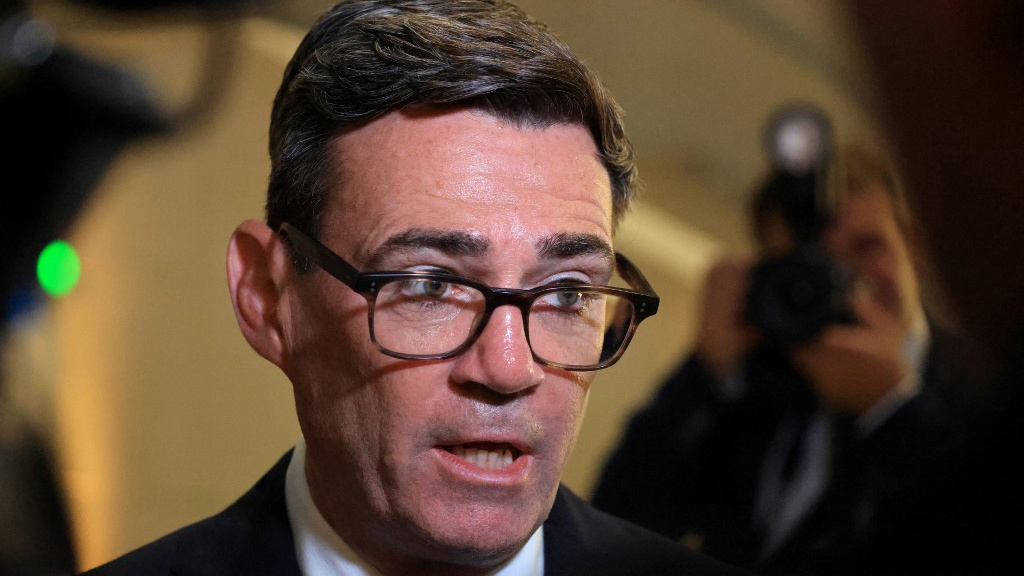
    When Andy Burnham campaigned to become Britain’s prime minister, he centered his platform on a sharp pivot to domestic priorities, promising a break from the previous Keir Starmer administration’s foreign policy approach that had alienated much of the party’s base. But barely seven days into his tenure, a sudden dramatic escalation of tensions between the United States and Iran has forced the new leader to confront an unexpected geopolitical crisis that immediately throws his policy agenda off course and tests his political judgment.

    In the lead-up to taking office, Burnham had already signaled a clear break from Starmer’s stance on Middle Eastern affairs. He issued a public apology for Labour’s early backing of Israel’s military campaign in Gaza and announced his government would explore banning imports of goods produced in Israeli-occupied settlements. Political observers widely framed the remarks as a calculated move to win back disillusioned Labour voters who had abandoned the party over its perceived unwavering pro-Israel policy amid the Gaza humanitarian crisis. No one anticipated, however, that a major US-Iran escalation would arrive before Burnham could advance any of his promised domestic reforms.

    As the new government moved to rapidly assess its position, Burnham immediately opened diplomatic consultations with key Gulf allies over the weekend. In a phone call with United Arab Emirates President Mohammed bin Zayed Al Nahyan, the prime minister thanked the UAE leadership for its ongoing support for the roughly 200,000 British citizens residing in the country amid rising regional unrest. He also spoke with Qatari Emir Tamim bin Hamad Al Thani, where he commended the two nations’ deep defense partnership—a cooperation that saw British fighter jets deploy to defend Qatar against Iranian missile strikes earlier this year. Finally, Burnham reaffirmed UK backing for Kuwait against potential Iranian attacks in a call with Kuwaiti Emir Sheikh Meshal.

    The central political and diplomatic challenge for Burnham, however, remains his fraught relationship with US President Donald Trump. Earlier this year, Trump and former prime minister Starmer entered a very public falling out after Starmer delayed approval for US forces to use British military bases to launch strikes against Iranian missile sites. Trump responded with relentless public criticism and mockery of Starmer on social media, creating an extremely tense dynamic between the two allies.

    Complicating Burnham’s choice is stark public opposition: a YouGov poll released just last week found a majority of British voters oppose allowing the US to use UK military bases to launch attacks on Iranian targets. To avoid a high-profile clash with Trump that would overshadow the start of his premiership, Burnham would have to openly contradict the will of the British public. Ultimately, the new prime minister opted to maintain Starmer’s original policy, granting the US access to RAF Fairford, a Royal Air Force base in Gloucestershire, to carry out strikes on Iranian missile infrastructure.

    Critics have already argued Burnham failed his first major test of standing up to the White House. The prime minister pushed back on these accusations in a weekend interview, declining to say he trusts Trump and insisting he will not hesitate to publicly call out the US president when their positions diverge. While the decision has helped Burnham avoid an immediate public confrontation with Washington, it has opened the UK up to new security risks.

    The Burnham government maintains that US strikes on Iranian missile sites are defensive in nature, meaning Britain is not party to any offensive military action against Iran. That interpretation is rejected outright by Tehran. The Islamic Revolutionary Guard Corps (IRGC) last week labeled Britain an “accomplice” to US aggression and warned that it considers British military bases in the region legitimate military targets.

    In response to Iran’s threat, new British Defence Secretary Wes Streeting affirmed that the UK is “ready to respond to any attacks Iran wishes to wage against this country or our allies and we will continue to do that.” Streeting clarified that “we have not joined and will not join offensive US military action in Iran. That’s an area where we have not agreed with the United States. But when it comes to securing maritime freedom and free commercial shipping in the Strait of Hormuz, that’s where we are absolutely aligned.”

    Over the weekend, US Defense Secretary Pete Hegseth held a call with Streeting, where he reportedly urged the UK to host a London summit for a new multinational maritime coalition tasked with protecting commercial shipping through the Strait of Hormuz, a critical global chokepoint for energy trade. Hegseth also confirmed he would attend the summit if it moves forward. The proposal faces significant headwinds, however: major European nations have so far been reluctant to join the effort, fearing it will draw them deeper into the escalating conflict.

    The previous Starmer government had committed to deploying British naval assets to the strait only after a lasting ceasefire was in place. But Streeting announced over the weekend that the UK is now prepared to lead a naval mission “when the conditions are right.”

    It remains uncertain whether the proposed summit will actually take place, but analysts warn the Burnham government could struggle to resist growing US pressure to deepen British involvement in the conflict if hostilities continue to escalate. If the UK does expand its role, it will face renewed criticism from opposition groups including the Green Party, which has opposed granting the US access to British bases for strikes on Iran from the start.

    Green Party leader Zack Polanski slammed Burnham’s position in comments Sunday, saying: “The illegal war in Iran should do a lot more than ‘concern’ Andy Burnham. And if he’s not holding back – when is he going to tell Donald Trump that the UK wants nothing to do with this war and to ban the US military from UK soil?”

    Burnham also faces growing unrest within his own party: many Labour backbenchers who supported his bid for the premiership have already called on him to take a much firmer stance against Israel’s actions in Gaza, and are likely to oppose deeper involvement in the US-Iran conflict. Last week alone, 80 cross-party MPs and peers—including dozens of Labour politicians—issued an open letter urging Burnham to formally recognize Israel’s actions in Gaza as genocide, impose sanctions on Israel, and ban all trade that supports illegal Israeli settlements.

    The issue of UK-Israel military cooperation also creates internal tension: last year, while serving as Starmer’s health secretary, Wes Streeting privately accused Israel of committing war crimes and backed imposing sanctions on the country. Now, Streeting is facing growing calls from within his own party to suspend Britain’s long-running secret military agreement with Israel.

    Chris Doyle, director of the Council for Arab-British Understanding, predicted in an assessment that Burnham will largely maintain the cautious path set by his predecessor. “I think Prime Minister Burnham will continue to navigate a similar policy to his predecessor, namely that he will not wish to have British forces engage actively on any war on Iran and will continue to allow limited use of RAF Fairford and Diego Garcia,” Doyle said. On the topic of the UK’s potential role in the Strait of Hormuz, Doyle added: “There may be some sort of role in terms of de-mining and escorting in a very defensive capacity, but not one that is offensive. I think that’ll be where they draw the line.”

    For the Burnham government, which campaigned on putting domestic issues front and center, the sudden escalation of Middle Eastern conflict has already created an unavoidable early crisis. What the new prime minister hoped would be a first week focused on his domestic agenda has instead become a high-stakes balancing act: caught between majority public opposition to deeper involvement, pressure from the left of his own party to take a harder line against both the US and Israel, and relentless pressure from Washington to back the US campaign against Iran. For a new administration eager to set its own agenda, the crisis has already emerged as a severe early political and diplomatic headache that will not fade anytime soon.

  • Trump defends tariffs in hard-hit Michigan as Canada tax hike looms

    Trump defends tariffs in hard-hit Michigan as Canada tax hike looms

    On a high-stakes campaign-focused stop in Michigan, a critical Rust Belt battleground that shifted to Republican control in 2024, former and current U.S. President Donald Trump doubled down on his signature economic agenda, defending the sweeping tariffs that have roiled the state’s dominant automobile manufacturing sector.

    Speaking to workers at a General Motors facility in Milford, Trump framed his so-called “historic” tariff measures as a transformative intervention for American auto manufacturing, arguing that the import levies are pushing multinational companies to shift production facilities back to U.S. soil from overseas locations. “The rule is straightforward: Build your trucks or cars outside the United States and you’ll pay a fee for the right to sell them here and profit,” Trump told the assembled crowd Monday. “Build your plant in Michigan or anywhere else in America and produce the vehicles right here at home, and you’ll face no tariff at all.”

    The White House sought to back up the president’s claims ahead of his appearance, pointing to a $6 million investment in domestic U.S. manufacturing by General Motors, alongside smaller production commitments from other major U.S.-based automakers including Ford, Stellantis and Detroit Diesel as tangible proof of the policies’ success.

    But the reality on the ground in Michigan tells a far more complicated story. The state’s economy is deeply interconnected with neighboring Canada, the United States’ largest trading partner in the auto sector, which has been targeted by a series of escalating Trump administration tariffs. Under current rules, a 25% levy applies to non-U.S. content in Canadian-assembled passenger vehicles and auto parts that do not meet origin requirements under the U.S.-Mexico-Canada Agreement (USMCA), with additional tariffs on imported steel that have pushed up production costs for domestic manufacturers across Michigan. Tensions are set to rise further in August, when the administration plans to implement a planned increase to 50% tariffs on a range of Canadian goods, including finished automobiles. Canada has already retaliated with matching 25% tariffs on U.S.-built vehicles and non-compliant auto content, creating a tit-for-tat trade dispute that has disrupted cross-border supply chains.

    Official labor data underscores the growing economic strain on the state. Over the 12-month period ending this past June, Michigan added just 500 net new jobs, a stark contrast to booming growth in other major industrial states like Texas, which added nearly 178,000 jobs over the same window. In May, Michigan’s unemployment rate ticked up to 5.1%, placing it among a small group of just seven U.S. states with unemployment rates at or above 5%. A recent TD Bank analysis also found that vehicle production fell across all three North American nations last year, with Canada recording the steepest drop at 5.4%, prompting major automakers to restructure their cross-border production networks.

    For Michigan communities, the trade friction has been compounded by broader economic headwinds: persistent inflation, soaring gas prices driven by the ongoing conflict in Iran, and slowing consumer demand for new vehicles have all combined to deepen economic anxiety across the state.

    Undeterred by the grim economic data, Trump used his appearance to frame his policies as a long-overdue win for blue-collar auto workers, blaming decades of “globalist” policies from previous Washington administrations for selling out American manufacturing jobs. “Now, at long last, Michigan finally has a president who stands up for Michigan autoworkers,” he said.

    The president’s Michigan visit, which comes as he ramps up rally-style campaign events to boost Republican candidates ahead of November’s midterm elections, coincided with a landmark moment in cross-border infrastructure: the official opening of the new Gordie Howe International Bridge, which connects Detroit and Windsor, the core auto manufacturing hubs of the U.S. and Canada. The first commercial truck carrying auto parts bound for Michigan crossed the bridge just hours before Trump spoke at the GM plant, a symbolic moment that highlights both the deep interconnectedness of the two nations’ auto sectors and the growing trade tensions that threaten that relationship.

  • Ahead of Israel’s elections, Bennett rejects two-state solution as Eisenkot surges in polls

    Ahead of Israel’s elections, Bennett rejects two-state solution as Eisenkot surges in polls

    As Israel prepares for one of the most consequential general elections in its modern history on October 27, opposition figure and former Prime Minister Naftali Bennett has drawn a sharp line in his policy platform, stating he will block the creation of an independent Palestinian state even if it derails potential normalization agreements with Saudi Arabia. In an exclusive interview with Israeli Channel 12, Bennett doubled down on his long-held hardline stance, saying plainly, “I am not giving up territory, period.”

    The upcoming election is widely framed as a referendum that could end the decade-long tenure of incumbent Prime Minister Benjamin Netanyahu and his right-wing Likud Party, as shifting polling numbers show opposition factions gaining momentum ahead of the vote. A recent survey published by Israeli daily Maariv puts Netanyahu’s Likud in second place with a projected 20 seats in parliament, trailing former Israeli army chief Gadi Eisenkot’s Yashar Party, which hit a record high of 23 projected seats. Bennett’s own Together party sits third in current polling with 17 projected seats, positioning him as a key power broker in any post-election coalition negotiations.

    Bennett used the interview to position himself as the only leader capable of sweeping institutional reform in Israel, declaring, “I am the most suitable person to lead the historical correction that needs to be made here in the State of Israel.” Beyond his foreign policy stances, Bennett outlined his top domestic priority: advancing sweeping reforms to integrate ultra-Orthodox Haredi communities into the national workforce and end their long-standing exemption from compulsory military service. The exemption has been one of the most contentious domestic political issues in Israel for decades, as successive governments have failed to reach a consensus on reform amid growing Haredi population growth. Netanyahu has consistently protected the exemption to preserve his political alliance with Haredi political parties, a position both Bennett and Eisenkot have publicly criticized.

    During the interview, Channel 12’s presenter repeatedly pressed Bennett on his refusal to answer questions about the Palestinian statehood issue and whether his 2021–2022 coalition government with centrist former Prime Minister Yair Lapid was a failure, accusing Bennett of dodging key questions. Bennett deflected the criticism, reiterating that his sole focus is overhauling Israeli leadership and advancing long-stalled domestic reforms that have not been addressed since the country’s founding.

    Bennett’s opposition to a two-state solution is consistent with his long political record: he has spent decades advocating for policies that block Palestinian statehood. In 2018, while serving in a previous government, he went as far as to say that if he held the defense minister post, he would implement a “shoot-to-kill” policy for all Palestinians attempting to cross the Gaza-Israel border. When pressed on whether that policy would extend to children, Bennett infamously replied, “They are not children. They are terrorists.”

    Unlike Bennett, who has held multiple senior cabinet positions including prime minister, defense minister, economy minister and education minister, Eisenkot hails from an exclusively military background, serving as the Israel Defense Forces Chief of Staff from 2015 to 2019. Born to Moroccan immigrants, Eisenkot is best known as the architect of the controversial “Dahieh doctrine,” an Israeli military strategy that calls for the use of disproportionate force against civilian infrastructure in areas where armed groups are believed to operate. Eisenkot has gained widespread public sympathy across Israel after his son and two nephews were killed serving in the Israeli military during offensives in Gaza.

    On foreign policy, Eisenkot has broken with Bennett, publicly pushing for closer diplomatic and security ties with Saudi Arabia, which has not yet joined the U.S.-backed Abraham Accords normalization agreements between Israel and Arab states. A two-state solution to the Israeli-Palestinian conflict remains a core requirement for any Saudi normalization with Israel, making Bennett’s hardline stance a potential major barrier to a future coalition that advances normalization talks. Eisenkot has said Israel is willing to share intelligence with Riyadh to counter what both parties frame as Iranian regional aggression.

    Eisenkot currently faces a critical political dilemma as he works to build a coalition majority. While he needs the parliamentary support of Israeli Arab parties to secure a governing majority, inviting those parties into a coalition would almost certainly alienate his centrist and right-wing base of voters. The shifting dynamics of the election leave Israel at a crossroads, with the outcome set to reshape both the country’s domestic policy and its regional diplomatic prospects for years to come.